Claude icon

Claude Opus 4.8

Opus 4.8Verified

Catch more issues with stronger honesty and judgment — Opus 4.8 is roughly 4× less likely than Opus 4.7 to let code flaws pass unremarked, and is the first model to break 10% all-pass on the Legal Agent Benchmark Drive browser and computer-use agents further with 84% on Online-Mind2Web and more efficient tool-calling that reaches the same result in fewer steps across long agentic sessions Upgrade from Opus 4.7 at the same $5/$25 per-million-token pricing, with better context retention and style consistency across extended sessions

Reviewed by ToolWorthy Editors·updated 1 month ago·Opus 4.8 released 1 month ago

Pricing:From $10/per use
Visit Site
Newer version available·View latest
Jump to section
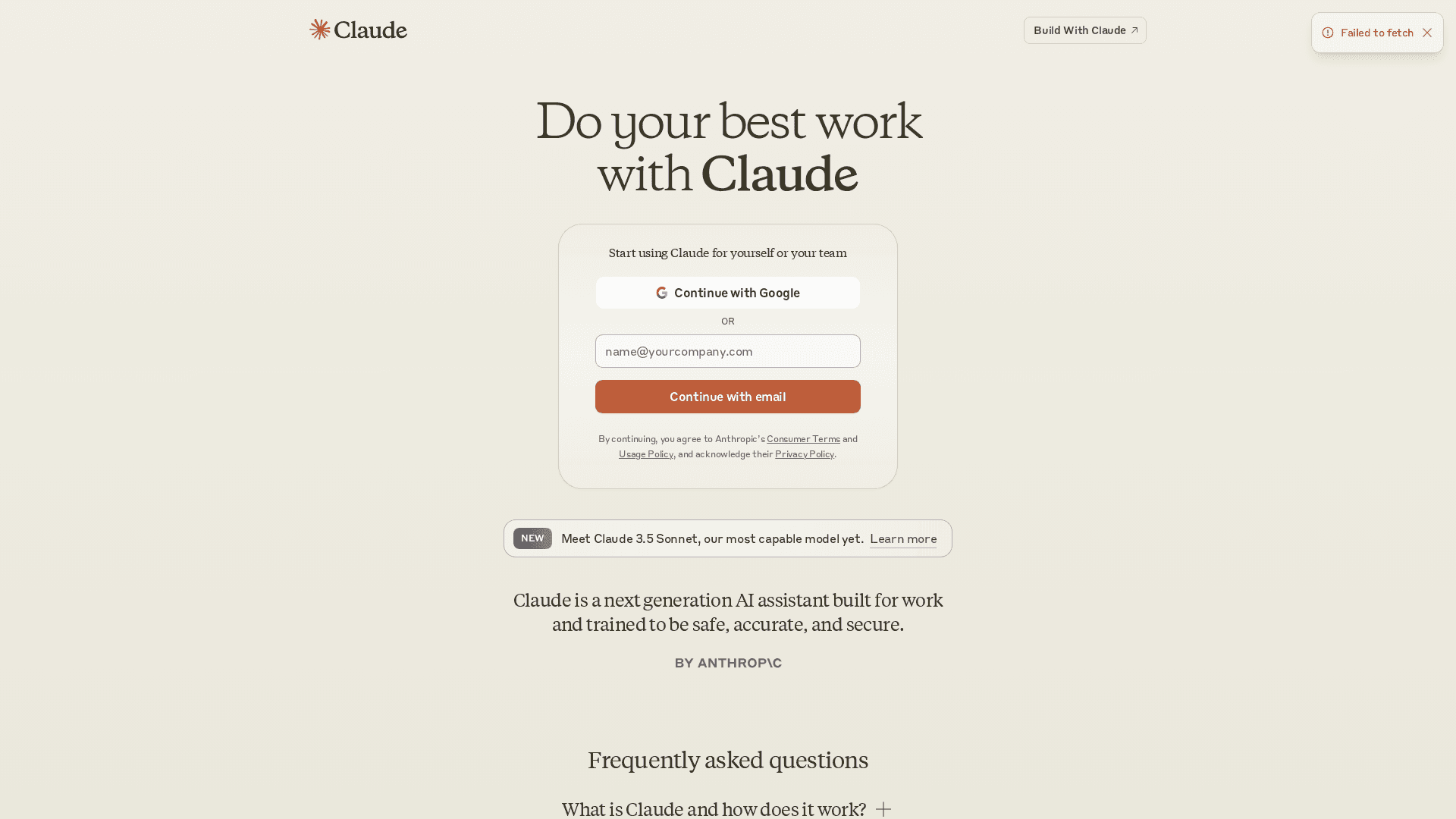
Claude screenshot

Featured alternatives

MakersClaw icon

MakersClaw

TypingMind icon

TypingMind

Doubao icon

Doubao

Z.ai icon

Z.ai

Slashy icon

Slashy

Odysseus icon

Odysseus

Pros & Cons

Editor-reviewed

Pros

  • Roughly 4× less likely to let code flaws pass unremarked than Opus 4.7
  • First model to break 10% all-pass on the Legal Agent Benchmark
  • Strong computer-use performance (84% on Online-Mind2Web) for browser agents
  • More efficient tool-calling lowers latency and cost on agentic tasks
  • Same $5/$25 pricing and tokenizer as Opus 4.7 — a low-friction upgrade
  • Available same-day across Claude.ai, Claude Code, the API, Bedrock, Vertex AI, and Foundry

Cons

  • No longer Anthropic's most capable model after Fable 5 shipped on June 9, 2026
  • Fast mode doubles the price to $10/$50 for faster output
  • 200k context window on Microsoft Foundry instead of the 1M available elsewhere
  • No free API tier; Claude.ai free access is usage-limited and varies by account

Overview

Claude Opus 4.8 is Anthropic's May 28, 2026 Opus-tier flagship — an upgrade over Opus 4.7 that improves across benchmarks while holding the same $5/$25 per-million-token pricing. Anthropic frames it as "a more effective collaborator": better honesty and judgment, stronger agentic decision-making, and more efficient tool use, rather than a single headline capability jump. Opus 4.8 remained Anthropic's most capable model until Claude Fable 5 shipped on June 9, 2026 — and it is still the model Anthropic recommends for most complex Opus-tier work, and the launch fallback target when Fable 5 declines a request.

The model is available on claude.ai, the Claude API as claude-opus-4-8, Claude Code, Amazon Bedrock, Google Cloud Vertex AI, and Microsoft Foundry (where the context window is 200k rather than 1M). It carries a 1M-token context window and up to 128k output tokens by default, with the effort parameter defaulting to high on all surfaces.

What's New

Stronger Honesty and Judgment

The headline improvement is reliability of judgment. Opus 4.8 is roughly 4× less likely than Opus 4.7 to let code flaws pass unremarked — a direct win for code review and agentic engineering, where a model that silently approves a broken change is worse than one that flags uncertainty. It is also the first model to break the 10% all-pass standard on the Legal Agent Benchmark, a demanding measure of end-to-end correctness on professional legal tasks.

More Capable Agents

Opus 4.8 makes better decisions and catches more of its own errors across long agentic tasks, and it calls tools more efficiently — reaching equivalent results in fewer steps. For teams running multi-step agents, fewer wasted tool calls means lower latency and cost per completed task on top of the quality gain.

Stronger Computer Use

On Online-Mind2Web, an evaluation of real-world browser and computer-use tasks, Opus 4.8 scores 84% — a meaningful improvement over Opus 4.7 and a competitive result against other frontier models. This makes it a stronger backbone for browser agents and screen-driven automation.

Better Long-Session Consistency

Opus 4.8 retains context and holds a consistent style across extended sessions more reliably than Opus 4.7. Combined with CursorBench results that exceed prior Opus models across every effort level, it is positioned as a steadier choice for long-running coding and knowledge work.

Performance Benchmarks

Headline numbers from Anthropic's release (vs. Opus 4.7 unless noted):

Benchmark / Task Claude Opus 4.8 Baseline
Code-flaw oversight ~4× less likely to miss vs. Opus 4.7
Legal Agent Benchmark First to break 10% all-pass
Online-Mind2Web (computer use) 84% Improvement over Opus 4.7 and GPT-5.5
CursorBench Exceeds prior Opus at every effort level Prior Opus models

The honesty and computer-use gains matter most for teams running autonomous AI agent and AI code checker pipelines, where a model that flags rather than hides problems changes how much it can be trusted unattended.

Migration Guide

Opus 4.8 is a drop-in upgrade from Opus 4.7 at the same price, and it preserves Opus 4.7 platform compatibility. A few notes when moving over:

  • Same tokenizer as Opus 4.7. Token counts are consistent with Opus 4.7, so context budgets and cost estimates carry over without the re-estimation needed when 4.7 first changed the tokenizer.
  • Effort defaults to high. On all surfaces, including the Claude API and Claude Code, effort defaults to high. Set it explicitly if you need a different latency/quality point.
  • Adaptive thinking, not extended thinking. Opus 4.8 uses adaptive thinking; the older extended-thinking mode is not used on this model.

Pricing & Plans

Plan Price
API – Input (regular) $5 per million tokens
API – Output (regular) $25 per million tokens
API – Fast mode $10 input / $50 output per million tokens
Claude.ai Pro / Max Included within plan limits
Team / Enterprise Contact Anthropic for volume pricing
Cloud availability Amazon Bedrock, Google Cloud Vertex AI, Microsoft Foundry (200k context)

Fast mode note: Opus 4.8's optional fast mode doubles the per-token price to $10/$50 in exchange for faster output. Standard requests stay at $5/$25 — the same as Opus 4.7.

Best For

  • Engineering teams running code review and autonomous coding agents that need a model which flags problems instead of silently approving them
  • AI agent and browser-automation platforms that depend on strong computer-use performance
  • Legal, finance, and professional-services teams needing end-to-end correctness on multi-step agentic tasks
  • Developers on Claude Code who want better long-session consistency at Opus 4.7 pricing
  • Teams that need an Opus-tier model below the cost of Fable 5 — including as the fallback target when Fable 5 declines a request
  • Anyone on Sonnet 4.6 who needs Opus-tier judgment on their hardest workloads

FAQ

How is Claude Opus 4.8 different from Opus 4.7?

Opus 4.8 is an across-the-board upgrade at the same $5/$25 pricing. The biggest gains are in honesty and judgment (roughly 4× less likely to let code flaws pass), agentic decision-making and error detection, tool-calling efficiency, computer use (84% on Online-Mind2Web), and long-session consistency. It uses the same tokenizer as Opus 4.7, so costs and context budgets carry over.

Is Opus 4.8 still Anthropic's most capable model?

No. Opus 4.8 was the flagship until Claude Fable 5 launched on June 9, 2026. Opus 4.8 remains Anthropic's recommended Opus-tier model for most complex work and is the launch fallback target when Fable 5's safety classifiers decline a request.

How much does Claude Opus 4.8 cost?

Standard pricing is $5 per million input tokens and $25 per million output tokens — the same as Opus 4.7. An optional fast mode delivers faster output at $10 input / $50 output per million tokens. On claude.ai it is included within Pro, Max, Team, and Enterprise plan limits.

Where can I use Claude Opus 4.8?

Opus 4.8 is available on claude.ai, the Claude API as claude-opus-4-8, Claude Code, Amazon Bedrock, Google Cloud Vertex AI, and Microsoft Foundry. On Microsoft Foundry the context window is 200k tokens rather than the 1M available on other surfaces.

Should I upgrade from Opus 4.7 to Opus 4.8?

For most teams, yes — it is the same price and tokenizer with measurable gains in honesty, agentic reliability, and computer use, and it preserves Opus 4.7 platform compatibility. Test high-volume prompts on a sample first, but the migration is low-friction compared with earlier Opus transitions.

Version History

Fable 5

Released on June 9, 2026

View Update
+What's new
3 updates
  • Run the most demanding reasoning and long-horizon agentic work on Anthropic's most capable widely released model — one Fable 5 session compressed a 50M-line Ruby migration from two months of manual work into a single day
  • Stay focused across a 1M-token context window while solving complex vision problems end-to-end — including completing Pokémon FireRed from pixels alone — with persistent file-based memory that helped 3× more than it helped Opus 4.8 in Slay the Spire testing
  • Deploy with general-availability safeguards that fall back to Opus 4.8 on sensitive prompts in under 5% of sessions, priced at $10 per million input and $50 per million output tokens

Mythos 5

Released on June 9, 2026

View Update
+What's new
3 updates
  • Access Fable 5-level capability with safeguards lifted in some areas through Project Glasswing — the successor to Claude Mythos Preview, delivering the strongest cybersecurity capabilities of any model in the world
  • Accelerate scientific discovery with ~10× faster protein design (9 of 14 strong drug candidates) and autonomous single-cell genomics across 138 species, with novel hypotheses preferred by scientists ~80% of the time over Opus-class models
  • Access in limited availability only for approved cyberdefenders and infrastructure providers, with a trusted biology access program planned — same 1M-token context window and $10/$50 per-million-token pricing as Claude Fable 5

Opus 4.8

Current Version

Released on May 28, 2026

+What's new
3 updates
  • Catch more issues with stronger honesty and judgment — Opus 4.8 is roughly 4× less likely than Opus 4.7 to let code flaws pass unremarked, and is the first model to break 10% all-pass on the Legal Agent Benchmark
  • Drive browser and computer-use agents further with 84% on Online-Mind2Web and more efficient tool-calling that reaches the same result in fewer steps across long agentic sessions
  • Upgrade from Opus 4.7 at the same $5/$25 per-million-token pricing, with better context retention and style consistency across extended sessions

Opus 4.7

Released on April 16, 2026

View Update
+What's new
3 updates
  • Handle harder production coding agents with stronger autonomy and instruction following — CursorBench rises from 58% to 70%, while Rakuten-SWE-Bench resolves 3× more production tasks than Opus 4.6
  • Analyze dense visual content like chemical diagrams, technical screenshots, and patents with 3× higher image resolution (up to 2,576 pixels) and XBOW visual acuity climbing from 54.5% to 98.5%
  • Tune reasoning effort with the new xhigh control level between high and max, giving teams finer latency/quality tradeoffs while instruction-following becomes more literal across tool use

Mythos Preview

Released on April 7, 2026

+What's new
3 updates
  • Discover zero-day vulnerabilities in major operating systems and web browsers autonomously — including a 27-year-old bug in OpenBSD — by applying frontier code reasoning to security-critical software analysis at scale
  • Construct multi-step exploit chains combining up to four vulnerabilities into functional attacks, including JIT heap sprays, ROP chains, privilege escalation, and remote code execution against fully patched targets
  • Achieve 181 successful Firefox JavaScript exploits versus 2 for Opus 4.6, with 595 crash discoveries and 10 full control-flow hijacks in OSS-Fuzz testing — capabilities that emerged from improvements in code reasoning rather than explicit security training

Mythos Preview

Released on April 7, 2026

View Update
+What's new
3 updates
  • Preview a gated frontier model for cybersecurity research, with Project Glasswing offering early access and major gains in zero-day discovery, exploit development, and reverse engineering
  • Analyze complex program behaviors and surface edge-case issues through multi-step reasoning workflows designed for research and testing environments
  • Improve automated code analysis performance in fuzzing and debugging scenarios, helping developers detect crashes and stability issues more efficiently

Sonnet 4.6

Released on February 17, 2026

View Update
+What's new
3 updates
  • Write better code and complete complex multi-step tasks at Opus-level intelligence — developers in Claude Code prefer Sonnet 4.6 over Sonnet 4.5 roughly 70% of the time
  • Navigate spreadsheets, fill out multi-step web forms, and complete browser-based workflows with significantly improved computer use capabilities and stronger resistance to prompt injection attacks
  • Process entire codebases, long contracts, or dozens of research papers in a single request with the new 1M token context window in beta

Opus 4.6

Released on February 5, 2026

View Update
+What's new
3 updates
  • Plan and sustain complex agentic tasks for longer, operate more reliably in larger codebases, and catch more mistakes with improved code review and debugging skills for professional engineering workflows
  • Work with up to 1 million tokens in a single conversation — perfect for analyzing large document sets, long contracts, and extended multi-step agentic task sequences without hitting context limits
  • Achieve top scores on Terminal-Bench 2.0 agentic coding and Humanity's Last Exam, while outperforming frontier competitors by ~144 Elo points on economically valuable professional knowledge work

Opus 4.5

Released on November 24, 2025

+What's new
3 updates
  • Execute long-horizon agentic workflows with improved reasoning and planning — delivering higher pass rates on held-out tests while using up to 65% fewer tokens than earlier models for equivalent results
  • Apply frontier reasoning to everyday work tasks including deep research, multi-step code migrations, and creating slides and spreadsheets — meaningfully better at common professional knowledge work
  • Generate more reliable code solutions with better error handling and stronger self-correction, delivering 50–75% reductions in tool calling and build errors on complex automated engineering tasks

Haiku 4.5

Released on October 15, 2025

+What's new
3 updates
  • Run fast, low-cost coding and agent workloads with near-frontier intelligence, matching Sonnet 4 on coding, computer use, and agent tasks at lower cost
  • Power latency-sensitive customer support, classification, and sub-agent workflows with faster responses and stronger quality than earlier Haiku models
  • Use a current Haiku model across Claude.ai, Claude Code, API, Bedrock, Vertex AI, and Microsoft Foundry for high-volume workloads that need speed and cost control

Sonnet 4.5

Released on September 29, 2025

+What's new
3 updates
  • Balance intelligence and speed with near-Opus-level performance on coding, analysis, and writing at Sonnet pricing — making Opus-class capability accessible for everyday complex workloads at lower cost
  • Generate more accurate responses across coding, writing, and analytical tasks with improved reasoning that matches or exceeds predecessor models on most real-world professional benchmarks
  • Handle larger context windows efficiently while maintaining consistent response quality throughout long conversations — ideal for document-heavy workflows and extended agentic task sessions

Sonnet 4.5

Released on September 29, 2025

+What's new
3 updates
  • Balance intelligence and speed with Opus-level performance at Sonnet pricing for everyday complex tasks
  • Generate more accurate responses across coding, writing, and analytical work with improved reasoning
  • Handle larger context windows efficiently while maintaining consistent quality throughout conversations

Opus 4.1

Released on August 5, 2025

+What's new
3 updates
  • Upgrade Opus 4 coding and agent workflows with better real-world code changes, stronger reasoning, and 74.5% on SWE-bench Verified at the same Opus 4 pricing
  • Track details more reliably in deep research and data analysis, especially when following instructions across large codebases, files, and multi-step agentic searches
  • Improve multi-file refactors and everyday debugging by pinpointing exact corrections in large codebases without making unnecessary changes or introducing new bugs

Opus 4

Released on May 22, 2025

+What's new
3 updates
  • Run long-horizon coding agents for complex, multi-step software work, with Opus 4 leading SWE-bench and Terminal-bench and sustaining focused work over thousands of steps
  • Build more capable agents with new API features including code execution, MCP connector support, Files API, and improved tool use for multi-tool workflows
  • Use frontier reasoning for research, technical analysis, and enterprise workflows with the highest Claude 4 capability tier, while planning around Opus-class cost and ASL-3 safeguards

Sonnet 4

Released on May 22, 2025

+What's new
3 updates
  • Upgrade everyday coding and reasoning workflows from Sonnet 3.7 with stronger instruction following, better software engineering, and faster, lower-cost responses than Opus
  • Use the same Claude 4 platform features, including code execution, MCP connector support, Files API, and improved tool use, for practical agent and app-building workflows
  • Run production workloads at Sonnet pricing with a strong balance of speed, cost, and intelligence for coding assistants, document analysis, and multi-step business tasks

3.7 Sonnet

Released on February 24, 2025

+What's new
3 updates
  • Use one model for quick answers or extended thinking, with API controls over thinking budget so teams can trade latency, cost, and depth on harder reasoning tasks
  • Delegate coding work through the first Claude Code research preview, letting developers ask Claude from the terminal to inspect files, edit code, run tests, and fix bugs
  • Build stronger front-end and coding workflows at the same $3/$15 Sonnet pricing, with extended thinking available on paid Claude surfaces and major cloud platforms

3.5 Sonnet (Upgraded)

Released on October 22, 2024

+What's new
3 updates
  • Control computers, interact with software UIs, and automate desktop workflows through the first publicly available Claude computer use capability for agentic browser and desktop automation tasks
  • Write better code with significantly improved SWE-bench Verified scores versus the original 3.5 Sonnet, making it more reliable for real-world software engineering and complex programming tasks
  • Maintain strong vision and image input capabilities while delivering major improvements in coding quality and computer use for practical software engineering and workflow automation use cases

3.5 Haiku

Released on October 22, 2024

+What's new
3 updates
  • Get fast, cost-effective responses approaching higher-tier model performance for high-volume pipelines, customer support, and content moderation tasks at a fraction of the per-token cost
  • Process high-volume tasks at faster speeds than larger Claude models, enabling real-time customer support, content moderation, and classification pipelines without meaningfully sacrificing accuracy
  • Run fast coding, tool use, data extraction, and content-moderation workloads in a lightweight, budget-friendly 200K-context model — text-only in the Claude API — built for high-throughput production at scale

3.5 Sonnet

Released on June 21, 2024

+What's new
3 updates
  • Outperform Claude 3 Opus on complex tasks including coding and data analysis while maintaining the response speed and lower per-token cost that makes Sonnet practical for production-scale workflows
  • Generate high-quality code with graduate-level reasoning capabilities for sophisticated programming and analytical tasks, matching or exceeding the performance of previous-generation flagship models
  • Handle nuanced instructions across writing, summarization, and Q&A tasks while producing more natural, contextually appropriate responses compared to earlier Claude generations

3 Haiku

Released on March 13, 2024

+What's new
3 updates
  • Process tasks at lightning speed with near-instant response times — ideal for high-volume customer interactions, live chat support, and real-time classification pipelines where latency matters
  • Handle complex multi-step instructions across summarization, Q&A, and coding at a lower cost point than Claude 3 Sonnet while maintaining strong quality for most production use cases
  • Analyze images and documents quickly with multimodal vision capabilities, bringing image understanding to high-throughput workflows in a fast, resource-efficient production model

3 Opus

Released on March 4, 2024

+What's new
3 updates
  • Tackle the most complex reasoning, analysis, and writing tasks with the highest comprehension and fluency of the Claude 3 family — suited for research, legal, financial, and technical domains
  • Analyze images alongside text for comprehensive multimodal understanding, enabling visual Q&A, document extraction, and chart interpretation at the highest quality level in the Claude 3 lineup
  • Generate sophisticated content with improved accuracy, meaningfully fewer unnecessary refusals, and stronger instruction following for nuanced, long-form creative and analytical tasks

3 Sonnet

Released on March 4, 2024

+What's new
3 updates
  • Balance capability and cost with strong performance across writing, analysis, summarization, and coding — a reliable workhorse for most business and enterprise production workflows at scale
  • Process both text and images seamlessly with new multimodal understanding capabilities, enabling document analysis, visual Q&A, and image-grounded reasoning in a single API request
  • Generate reliable, consistent responses for data processing, customer support, and content creation workflows at scale — suited for both high-volume automated pipelines and direct user interactions

2.1

Released on November 21, 2023

+What's new
3 updates
  • Process up to 200K tokens — approximately 500 pages — in a single conversation, enabling comprehensive analysis of lengthy legal documents, research reports, and multi-chapter texts
  • Get more accurate responses with 2× fewer hallucinations than Claude 2.0 when analyzing complex, multi-source information, reducing the risk of fabricated facts in high-stakes professional workflows
  • Integrate Claude with external tools, databases, and APIs through the new beta tool use capability, enabling structured data retrieval and action execution in early agentic task workflows

2

Released on July 11, 2023

+What's new
3 updates
  • Handle longer conversations with a 100K token context window — enough to analyze entire books, lengthy legal documents, or multiple research papers in a single coherent session
  • Write better code with 71.2% performance on the Codex HumanEval benchmark, up from 56% in Claude 1.3, reflecting a meaningful jump in functional code generation and debugging capabilities
  • Receive safer responses with improved Constitutional AI training — approximately 2× reduction in harmful outputs compared to prior versions while maintaining helpfulness and response accuracy

1

Released on March 14, 2023

+What's new
3 updates
  • Access Anthropic's first publicly available AI assistant — built with Constitutional AI training to be helpful, honest, and harmless across conversational and text processing use cases
  • Engage in natural multi-turn conversations for summarization, search, creative writing, Q&A, and coding tasks — with Constitutional AI making responses more predictable and steerable for developers
  • Direct Claude's personality, tone, and behavior to fit your use case — Claude's design emphasizes steerability, allowing more precise customization than earlier AI systems of the same generation

Top alternatives

Related categories

From the blog

View all →

Track Claude in ToolWorthy Weekly

Important tool updates, better alternatives, and selected AI signals in one weekly brief.

Weekly only. Unsubscribe anytime.