
11 Best AI Stock Picker Tools 2026 — Rankings Without Hype
Compare 11 AI stock picker tools for explainable rankings, screeners, alerts, and research, with current pricing and clear limits on every pick.

On this page
You can find an AI-generated stock list in seconds. The hard part is deciding whether the ranking is explainable, current, and relevant to your market—or simply a confident-looking output built on unclear data. The best AI stock picker tools narrow a stock or ETF universe, show why an idea made the list, and let you monitor what changed. They do not remove market risk, and they do not turn a backtest into a guaranteed return.
We reviewed 36 products and selected 11 that best support stock discovery, scoring, screening, or research. Pricing and feature claims were checked against official product pages on August 27, 2026. We treated vendor-reported win rates, alpha, and simulated returns as marketing claims rather than independent performance evidence. For platforms that also automate trades, this article evaluates the research workflow—not execution quality.
| Tool | Best For |
|---|---|
| Danelfin | Explainable daily stock and ETF scores |
| Kavout | Global factor-based stock discovery |
| TipRanks | Mature research with AI and analyst context |
| AltIndex | Alternative-data stock signals |
| AInvest | Active traders combining AI screens and news |
| Seeking Alpha | Quant ratings plus broad editorial research |
| PortfolioPilot | Theme discovery within a portfolio workflow |
| TrendSpider | Technical scanning and model-driven setups |
| WallStreetZen | Fundamental investors who want simple ratings |
| Intellectia AI | Stock picks, signals, and mobile alerts in one product |
| Prospero.ai | Free mobile-first stock signals |
How We Evaluated AI Stock Pickers
We included products that can repeatedly produce a stock or ETF score, ranked list, filtered candidate set, research-backed idea, or ongoing signal. We excluded pure crypto and forex bots, newsletters without usable software, generic chatbots without a market-data workflow, and execution-first platforms whose research layer is secondary. That distinction matters: our broader AI trading tools guide compares execution, bots, and multi-asset workflows, while the AI trading bot directory is better for browsing automation products.
Each product was assessed across five weighted dimensions:
- Stock-picking functionality (25%) — Rankings, screeners, watchlists, alerts, explainability, market coverage, and update frequency.
- User experience (25%) — Web availability, learning curve, data-delay disclosure, mobile support, and workflow clarity.
- Meaningful differentiation (20%) — Documented factor models, alternative data, event detection, natural-language screening, or source-linked research.
- Value for money (20%) — The price of the useful AI layer, free-tier restrictions, credits, alerts, renewal terms, and add-on costs.
- Public user evidence (10%) — Attributed app-store or other independent feedback, discounted when sample sizes were small.
We used official documentation and public product surfaces rather than relying on a vendor's headline performance number. We did not place live trades, audit proprietary models, or independently reproduce historical returns. Prices can change by billing term, promotion, region, tax, and app-store channel; verify the checkout total before subscribing. This comparison is research, not personalized investment advice.
Top 11 AI Stock Picker Tools Compared
The tools fall into three practical groups. Danelfin, Kavout, TipRanks, AltIndex, WallStreetZen, and Intellectia provide direct scores or picks. AInvest, TrendSpider, and Prospero focus more on screening or signals. Seeking Alpha and PortfolioPilot place AI discovery inside a broader research or portfolio workflow. Choose the group that matches the decision you are trying to make before comparing feature counts.
| Tool | Primary Output | Market Scope | Starting Price | Key Constraint |
|---|---|---|---|---|
| Danelfin | Daily 1–10 AI Score | US stocks/ETFs, European stocks | Free; Plus $22/mo annual | Full signals require paid plan |
| Kavout | AI pickers, factors, signals | 30+ global stock/ETF markets on Pro | Free; Pro $16/mo annual | Credit limits apply |
| TipRanks | 0–100 AI rating and Smart Score | Public stocks covered by TipRanks | Free; paid price varies | Strongest tools are paywalled |
| AltIndex | AI picks using alternative data | Primarily US equities | Free; Starter $29/mo | Full AI-picks feed requires paid plan |
| AInvest | AI screener, signals, portfolios | US stocks, ETFs, options, crypto | Free; Pro $34.99/mo | Many overlapping modules |
| Seeking Alpha | Quant Ratings and AI reports | 4,000+ stocks and ETFs | Free; Premium $299/year | Dense editorial signal mix |
| PortfolioPilot | Natural-language stock baskets | Broad stock universe | Free; Gold $29/mo | Equity research requires Platinum or Pro |
| TrendSpider | Technical scans and model signals | Stocks, ETFs, options, futures, more | $52.38/mo first-year promo | Steep setup and renewal cost |
| WallStreetZen | Zen Ratings and stock lists | US stocks | $19.50/mo annual | Limited global coverage |
| Intellectia AI | Picks, screeners, swing signals | Stocks plus other asset modules | Free; Basic $14.95/mo | Credits and alerts vary by plan |
| Prospero.ai | Daily picks and proprietary signals | US-focused stock workflow | Free | Mobile-first; weaker Web workflow |
Detailed Reviews
Danelfin
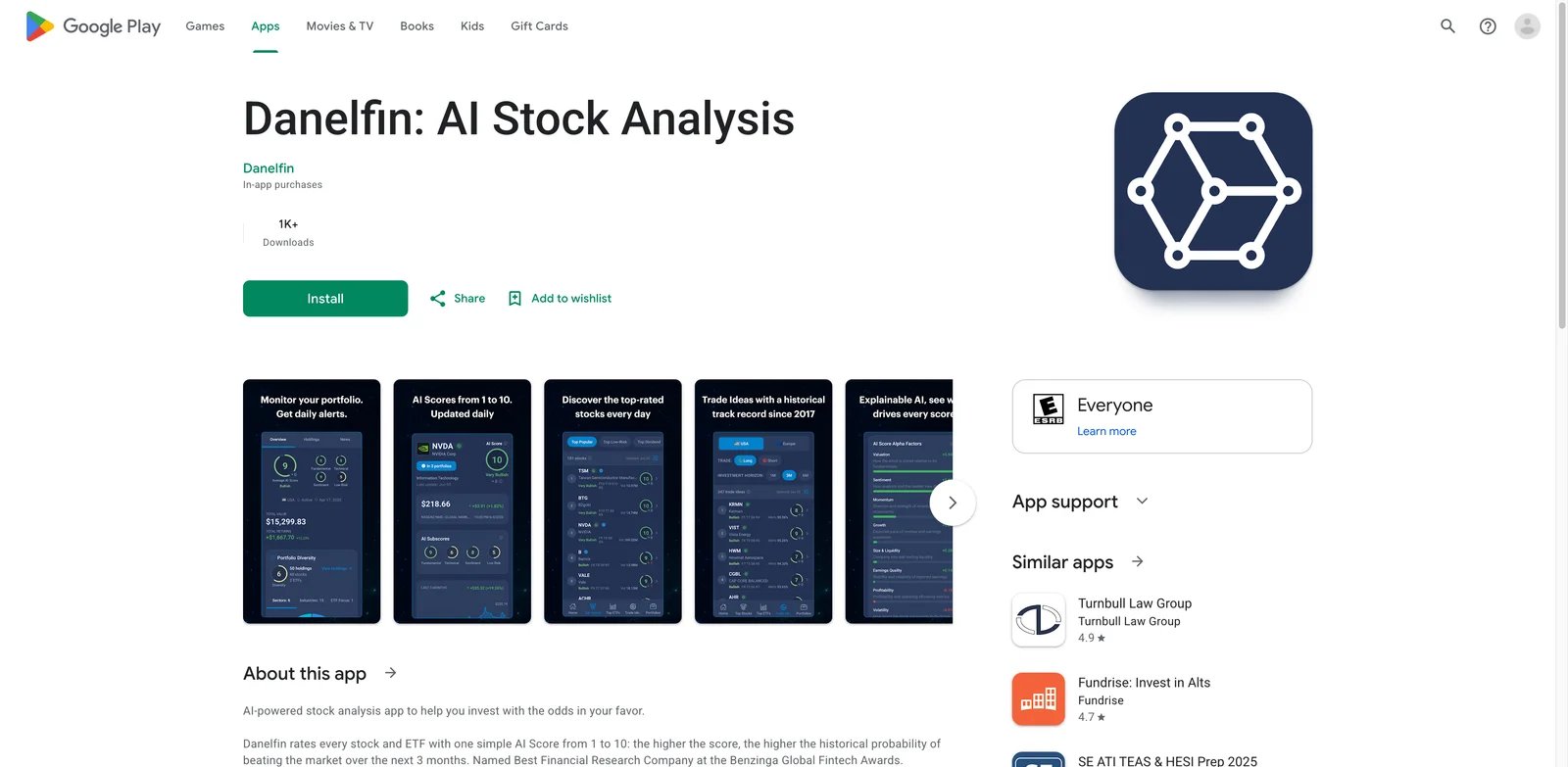
If you want a ranked list but refuse to accept a black-box “buy” label, Danelfin offers the clearest starting point in this comparison. It assigns a 1–10 AI Score and separates technical, fundamental, sentiment, and risk-related signals. Rankings refresh daily, and the product covers US stocks and ETFs plus European equities. The free tier is useful enough to test the scoring logic before paying.
What stands out
- Daily rankings make it easy to build a repeatable review routine instead of chasing one-off chat answers.
- Score histories and alpha-signal explanations show what changed, although complete explainability is reserved for paid plans.
- Portfolio monitoring adds upgrade and downgrade alerts; Plus can sync supported US brokerage accounts.
Pricing and limits: Free includes top-10 rankings, 10 reports per month, and a five-security portfolio. Annual pricing is $22/month for Plus, $59/month for Pro, and $134/month for Elite. Plus and above include a 14-day trial; Danelfin advertises a 30-day money-back guarantee. Historical performance shown in the product is backtested and should not be treated as a forecast.
Best for: Investors who want transparent daily scores and a low-friction Web workflow. Not the right fit if you need autonomous execution or a model you can independently inspect and reproduce.
Kavout
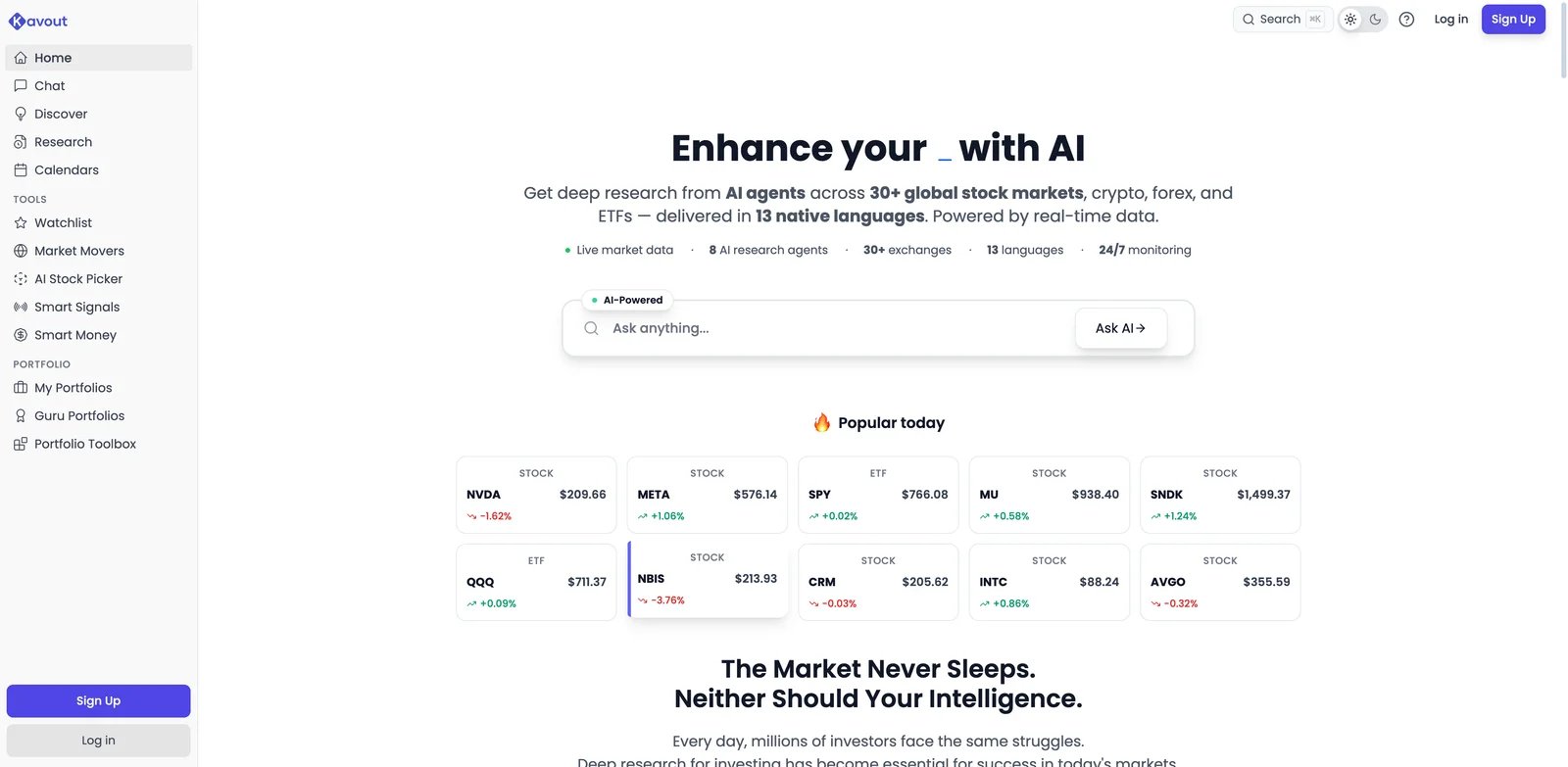
Investors screening beyond US exchanges often discover that a low-cost tool's “global” coverage is only a thin quote feed. Kavout's Pro plan applies its AI picker, factor analysis, research agents, and alerts across more than 30 stock and ETF markets. Its picker combines established investment frameworks with quality, value, and momentum factors, which makes the output easier to interrogate than an unexplained conversational recommendation.
What stands out
- AI Stock Picker and Smart Signals sit beside research agents, insider activity, analyst ratings, and portfolio tools.
- Pro covers major markets across North America, Europe, Australia, and Asia, rather than limiting the ranking workflow to US equities.
- Research is credit-based, so usage is measurable before you choose a plan.
Pricing and limits: Free includes 10 research credits per month and limited US stock/ETF access, but not the full stock picker. Annual plans are $16/month for Pro with 1,000 credits and $39/month for Premium with 3,000 credits. Vendor testimonials are not a substitute for a large independent review sample.
Best for: Investors who need one discovery workflow across multiple countries. Not the right fit if you want an unlimited free picker or dislike monitoring monthly AI credits.
TipRanks

When a model score needs to sit beside analyst forecasts, insider activity, financials, and market sentiment, TipRanks has the most mature surrounding research system here. Its 2026 AI Equity Research layer generates a 0–100 score and an Outperform, Neutral, or Underperform label, while Smart Score provides a separate daily-updated ranking. That breadth helps users challenge an AI output instead of treating it as the only signal.
What stands out
- AI reports break a score into company profile, key performance indicators, positive factors, and risks.
- Smart Score, analyst consensus, hedge-fund activity, insider transactions, and technical signals can be compared in one account.
- Its large consumer footprint produces more public user evidence than most specialist pickers.
Pricing and limits: A free account exposes limited research. Premium pricing varies by Web promotion, billing cycle, region, and app-store channel, so the checkout page is the reliable current quote. Most high-value screening and report features require a paid plan. TipRanks explicitly describes Smart Score history as backtested performance, not returns an investor actually received.
Best for: Investors who want AI analysis embedded in a broad, established research stack. Not the right fit if you only need a cheap, simple ranked list.
AltIndex
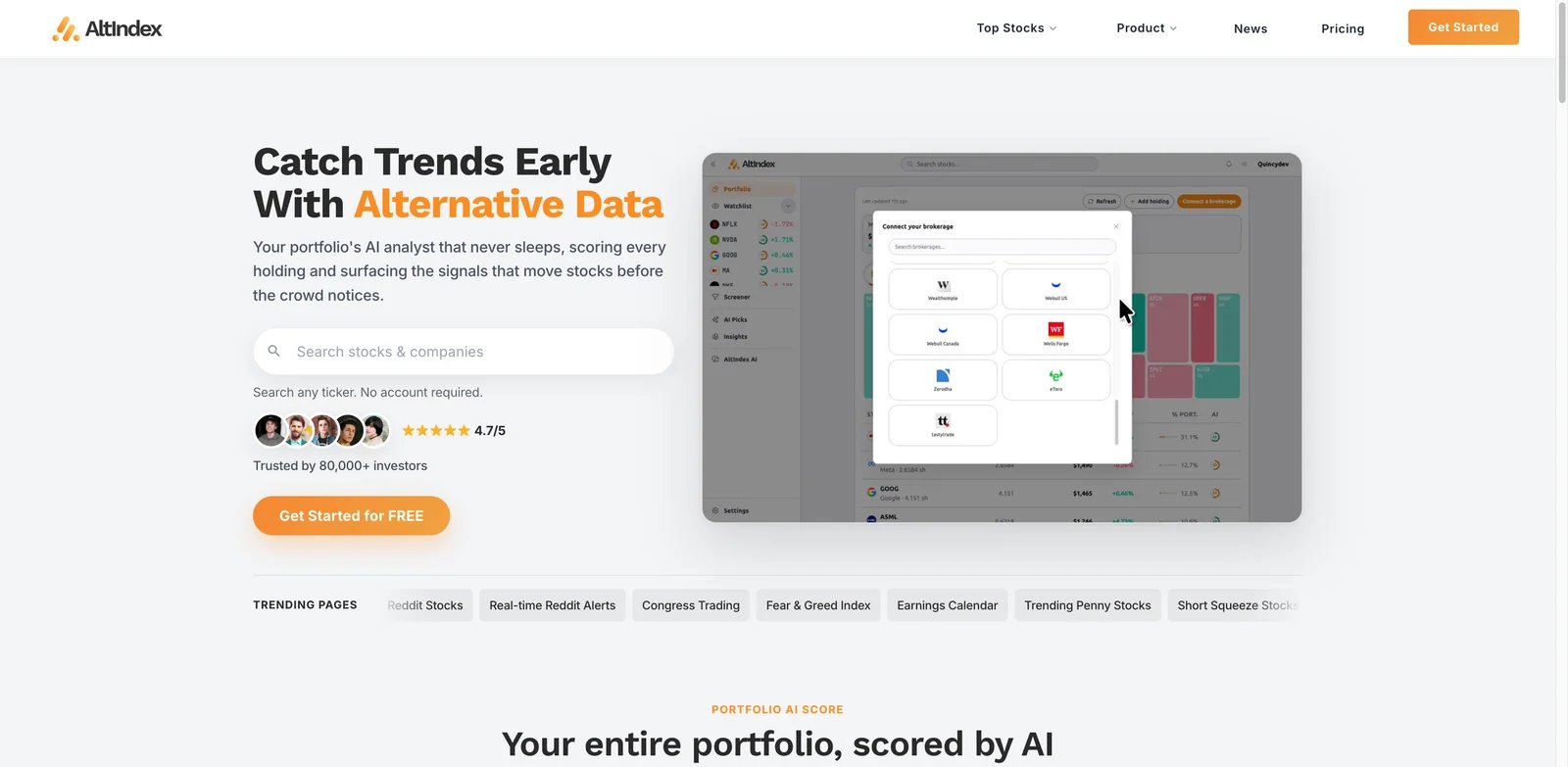
Traditional factor screens can miss demand changes that appear first in hiring, Web traffic, app downloads, social activity, or insider behavior. AltIndex uses those alternative datasets alongside financial information to produce a daily 0–100 AI Score and timestamped stock picks. The product is most useful when you specifically want a nontraditional signal layer—not another fundamental screener.
What stands out
- Alternative-data categories are visible enough to explain why a score is moving.
- Timestamped picks and stock alerts create an auditable idea stream instead of a list that silently changes.
- The screener and portfolio insights connect discovery to ongoing monitoring.
Pricing and limits: Starter costs $29/month or $199/year and includes the top 25 picks, 10 portfolio stocks, alerts, and an unlimited screener. Pro costs $99/month or $499/year for unlimited picks, 100 portfolio stocks, an AI chatbot, API access, and exports. AltIndex's own advertised win-rate claims were not used to rank it.
Best for: Investors who already understand conventional fundamentals and want an alternative-data overlay. Not the right fit if you need free access to the full AI-picks feed, broad international coverage, or independently audited predictions; AltIndex does offer free core stock analysis and daily AI Scores.
AInvest
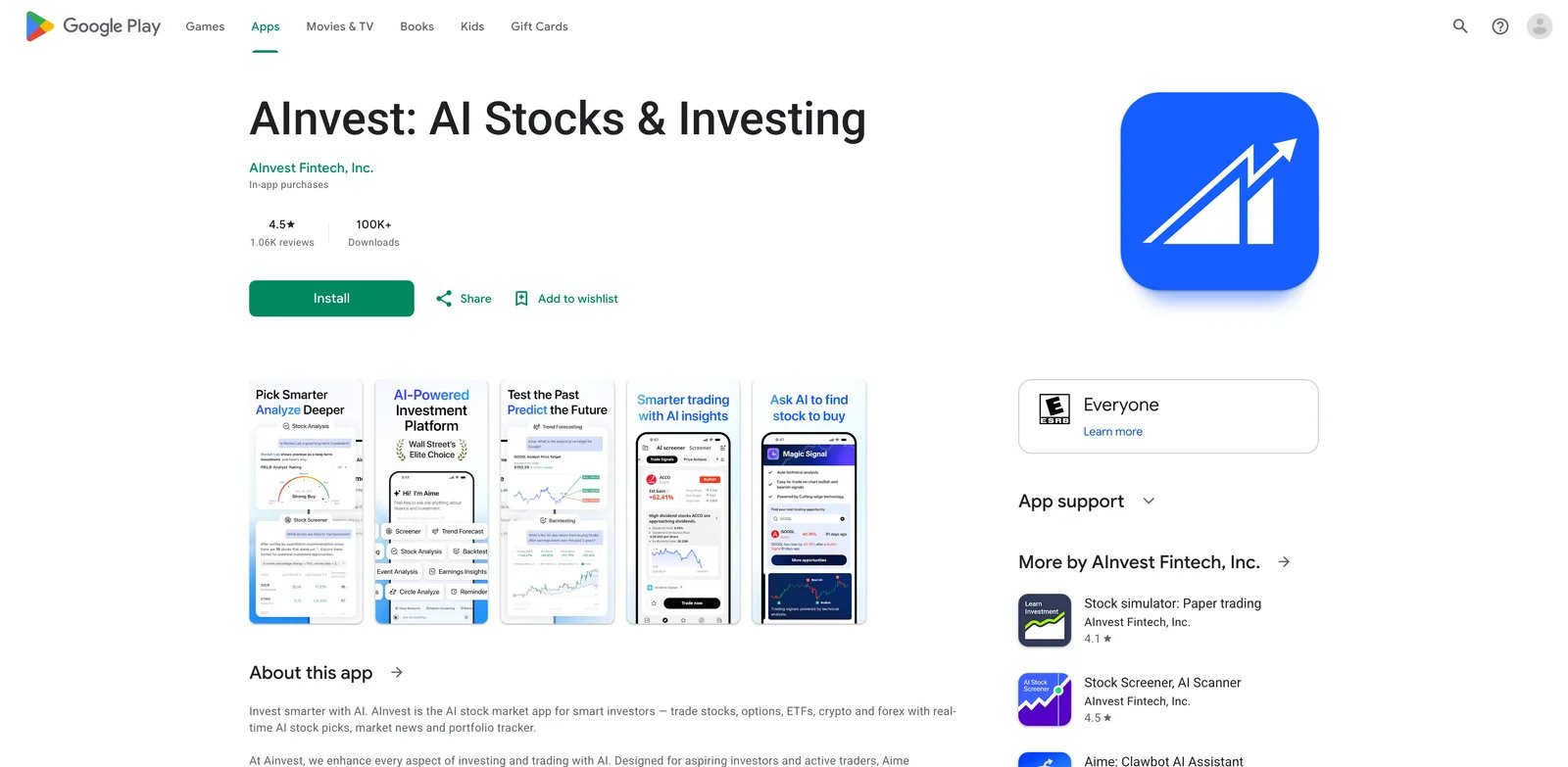
Active investors often lose context when their screener, live news, chart signals, and research assistant live in separate subscriptions. AInvest combines those surfaces through AIME+, an AI screener, Magic portfolios, technical signals, real-time market data, and broker-connected tools. It is broader than a pure stock picker, but its stock selection workflow is concrete enough to earn a place here.
What stands out
- The AI screener supports more than 30 tactics and a large library of natural-language questions.
- Magic Day Trading, Magic Signal, and model portfolios provide several ways to generate a candidate list.
- AIME can answer fast questions or run deeper research against AInvest's market context.
Pricing and limits: Basic is free. AIME+ Pro is $34.99/month and Premium is $74.99/month, with a three-day trial currently advertised. Prompt limits range from 150 fast answers per day on Basic to 1,000 on Premium. AInvest publishes simulated historical results for several modules; we did not treat those numbers as independently verified performance.
Best for: Active traders who want screening, news, chart signals, and AI research together. Not the right fit if you prefer a single, stable ranking methodology or want a minimal interface.
Seeking Alpha
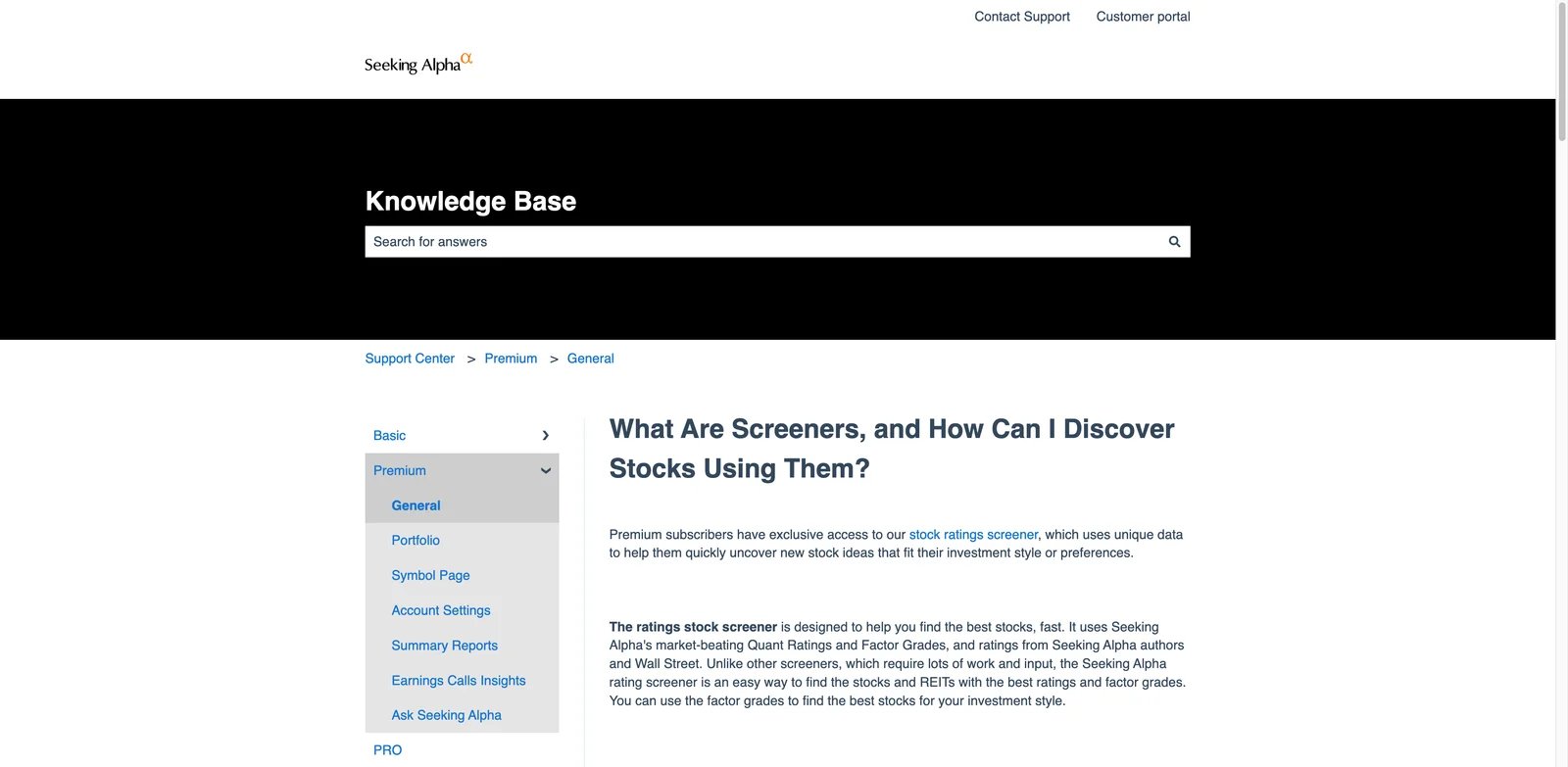
Reading dozens of bullish and bearish articles can create more noise than conviction. Seeking Alpha adds a systematic layer through Quant Ratings, stock and ETF screeners, AI Virtual Analyst reports, and AI-assisted earnings-call insights. Its advantage is not a standalone generative picker; it is the ability to compare quantitative ratings with financial data and a large editorial library covering more than 4,000 stocks and ETFs.
What stands out
- Quant Ratings provide a consistent factor-driven filter across a large coverage universe.
- AI reports and earnings-call tools compress research that would otherwise require several documents.
- Portfolio tools and alerts make it practical to monitor changes after a stock reaches your shortlist.
Pricing and limits: Basic access is free, but Quant Ratings, the ratings screener, and AI-powered Virtual Analyst tools require Premium, currently $299 per year before applicable taxes or VAT. The dense mix of contributor opinions, ratings, and alerts takes time to configure. Public reviews also show recurring complaints around renewal pricing and app or portfolio behavior, so confirm billing terms and test the workflow during any trial.
Best for: Long-term investors who want quant signals and deep research in one subscription. Not the right fit if you want a lightweight picker or purely model-generated rankings.
Get started with Seeking Alpha
PortfolioPilot
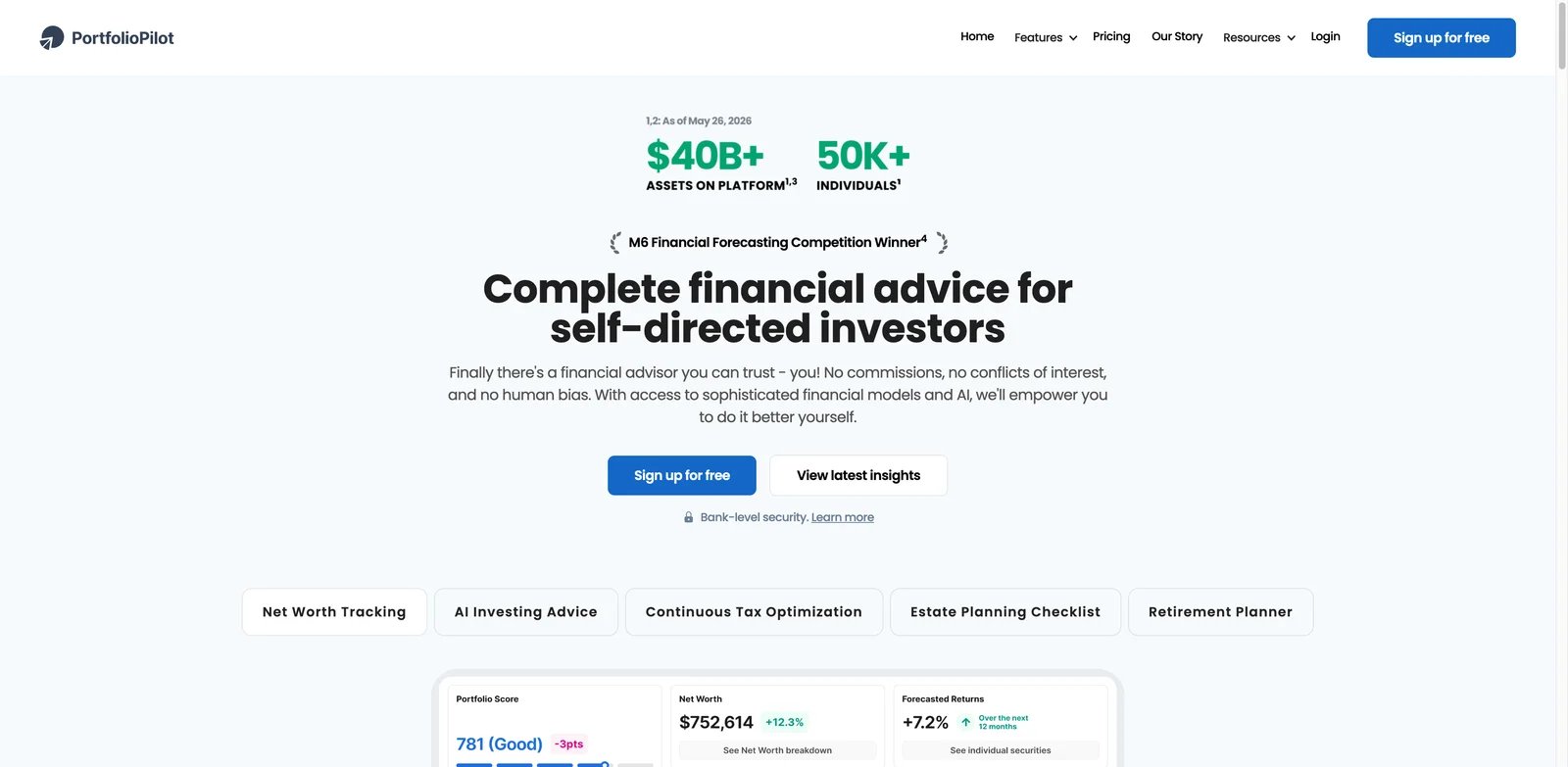
A promising stock idea can still be a poor addition if it duplicates risks already concentrated in your portfolio. PortfolioPilot's AI Equity Search turns a natural-language theme into a basket of matching stocks, then evaluates that basket alongside benchmarks, portfolio risk, and existing holdings. That portfolio context is the reason to choose it over a standalone stock-list generator.
What stands out
- Natural-language search replaces a long chain of screener filters when researching themes or business characteristics.
- Generated baskets connect directly to benchmark and portfolio analysis.
- Account aggregation, risk scoring, tax, and planning tools extend the workflow beyond initial discovery.
Pricing and limits: A free plan is available. Paid plans are Gold at $29/month ($20/month billed annually), Platinum at $99/month ($49/month billed annually), and Pro at $149/month ($99/month billed annually). AI Equity Research requires Platinum or Pro, and every paid plan includes a 10-day Pro-level free trial with no credit card required. Personalized advisory features require a client agreement with Global Predictions, a registered investment adviser. Generated baskets and estimated alpha remain model outputs, not guarantees.
Best for: Investors who want to test a theme against their actual portfolio. Not the right fit if you only want a ranked list without connecting holdings or using broader planning features.
Get started with PortfolioPilot
TrendSpider
Technical traders rarely need another generic stock score; they need a repeatable way to scan, test, and monitor their own setup. TrendSpider combines strategy-based scanning, machine-learning model creation, Sidekick analysis, backtesting, and multi-factor alerts. It is the most configurable technical product in this list, but that flexibility comes with the highest learning burden and a material subscription cost.
What stands out
- Scanners can search for symbols where a strategy has or has not worked historically.
- Quant Model Lab supports model training, feature engineering, and deployment to charts, alerts, and bots.
- Sidekick analyzes charts and market context, while no-code backtesting helps challenge a setup before monitoring it.
Pricing and limits: Current first-year promotional prices start at $52.38/month for Standard, $56.42 for Premium, $73.20 for Enhanced, and $128.40 for Advanced. Promotions apply to new customers and renewals can be higher; certain data feeds cost extra. All plans include only 25 Sidekick messages monthly before an AI add-on. Trial purchases and promotional subscriptions can have different refund terms.
Best for: Experienced technical traders who want to define and test their own signals. Not the right fit if you want a simple fundamental ranking, a free tier, or predictable low renewal costs.
WallStreetZen
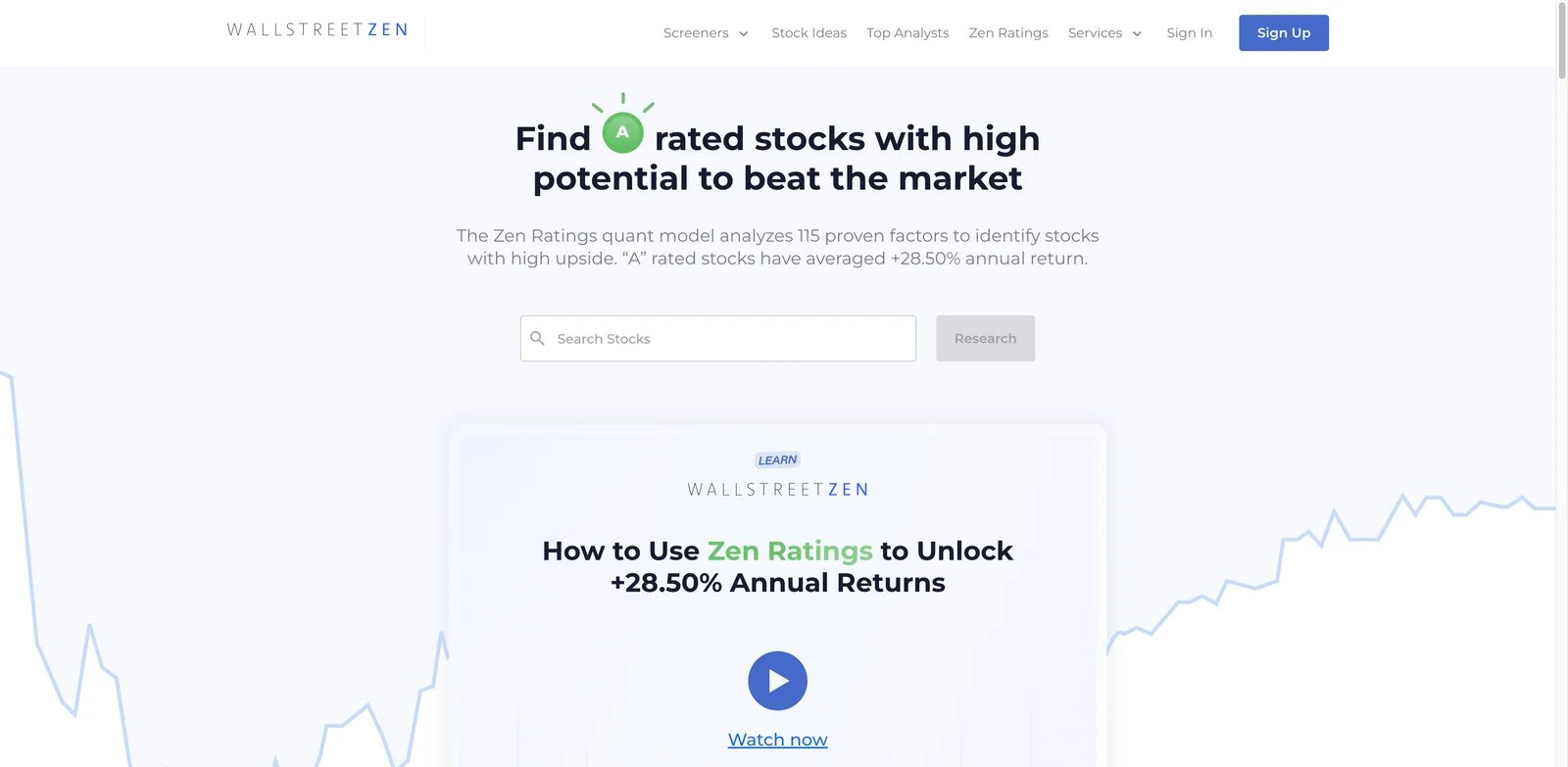
Fundamental investors can spend hours translating ratios into a simple “research next or discard” decision. WallStreetZen's Zen Ratings condense value, growth, momentum, sentiment, safety, and other factors into letter grades, ranked stock lists, and a screener. The interface is less intimidating than a professional terminal, making it a practical first filter for US equities.
What stands out
- Zen Ratings provide a consistent multi-factor grade rather than isolated ratio thresholds.
- A-rated stock lists shorten the initial candidate-building step.
- Due-diligence checks, forecasts, and screener filters make it easy to inspect why a company passed.
Pricing and limits: Many stock pages and limited screening functions are free. Premium is advertised at $19.50/month when billed annually. Coverage is centered on US-listed stocks, and independent public feedback is thinner than for larger research platforms. The neural-network description does not make the underlying model independently auditable.
Best for: Individual US stock investors who want a readable fundamental shortlist. Not the right fit if you need international exchanges, intraday signals, or a customizable quantitative model.
Get started with WallStreetZen
Intellectia AI
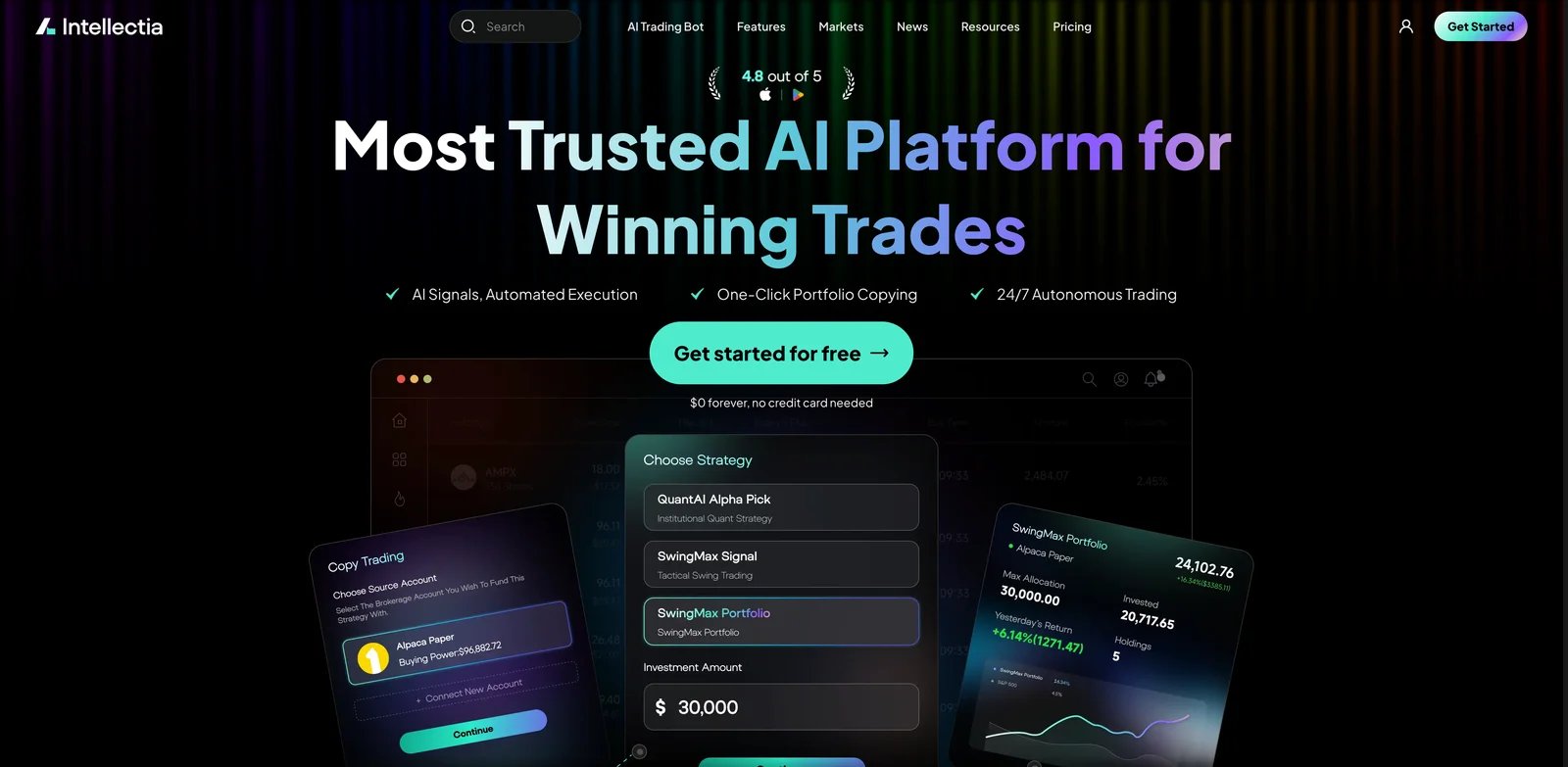
Traders who want picks, screeners, swing signals, and alerts often end up paying for several mobile apps with overlapping data. Intellectia AI combines those functions with technical analysis, stock monitoring, congressional-trade data, and optional broker connections. It provides more direct stock-picking features than most conversational research assistants, though the breadth of modules makes plan selection less straightforward.
What stands out
- AI Stock Picker, screener, swing signals, and real-time alerts all support candidate discovery.
- Technical and news analysis can be checked without leaving the same account.
- Supported broker connections can bridge research and execution, but users should keep those decisions separate.
Pricing and limits: Intellectia now lists Free at $0, Basic at $14.95/month ($11.96/month billed annually), Pro at $29.95 ($23.96 annually), Max at $49.95 ($39.96 annually), and Expert at $89.95 ($71.96 annually). Annual billing is 20% lower than monthly, while trial terms vary by offer. Monthly usage is now credit-based: Basic includes 2,500 credits, Pro 5,000, Max 10,000, and Expert 22,500 per month. The Free plan includes 400 total credits. App feedback is generally positive but includes complaints about paywalls, extra charges, bugs, and subscription recognition.
Best for: Mobile-oriented traders who value a broad signal toolkit and frequent alerts. Not the right fit if you want a focused long-term research product or minimal subscription complexity.
Get started with Intellectia AI
Prospero.ai
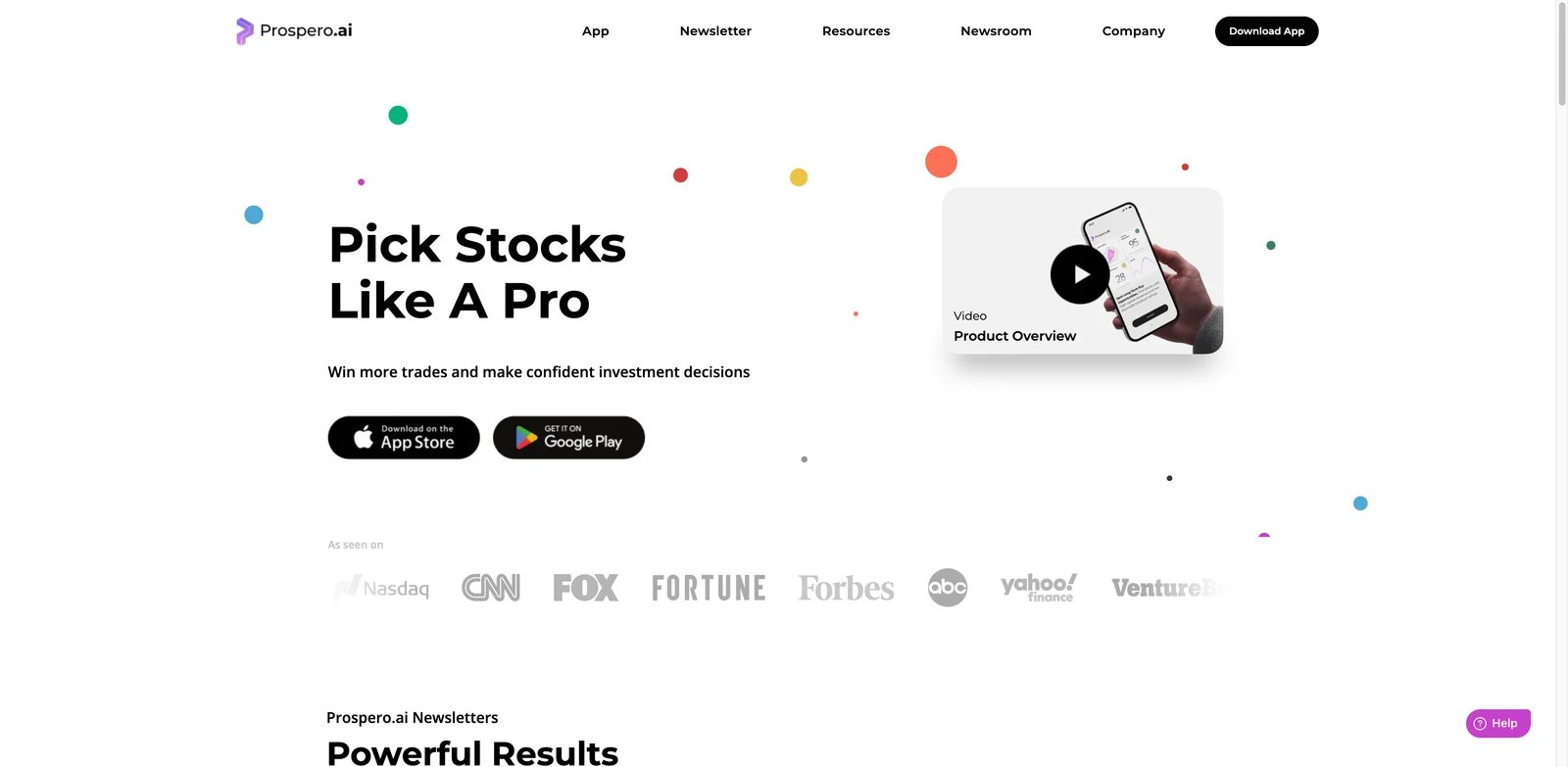
New investors who want to test AI signals without entering a card number have few credible options. Prospero.ai offers daily picks, proprietary signals, sentiment and institutional indicators, and screeners without a subscription fee. Its trade-off is platform fit: the strongest experience is on iOS and Android rather than a complete desktop Web research surface.
What stands out
- Daily stock ideas and multiple signal types provide an immediate workflow for building a watchlist.
- Sentiment and institutional indicators add context beyond a single directional label.
- Free access removes the pressure to justify a recurring fee before learning how the signals behave.
Pricing and limits: The core app is free. That improves value but does not prove prediction quality, and the vendor's performance claims were not included in our assessment. The mobile-first workflow is less suitable for comparing many companies on a large screen, exporting research, or integrating a desktop process. Public feedback volume is also smaller than for mature financial platforms.
Best for: Beginners who want to observe stock signals on mobile at no cost. Not the right fit if you need a Web-first research terminal, broad export options, or independently audited performance.
Best AI Stock Picker by Workflow
For building a transparent daily shortlist
Choose Danelfin if you want a fixed daily score with visible technical, fundamental, and sentiment components. WallStreetZen is the simpler alternative for fundamental US stock research. Both are easier to operationalize than a conversational assistant because yesterday's and today's candidate lists can be compared.
For screening stocks across countries
Choose Kavout when global exchange coverage matters: its paid picker and research workflow spans more than 30 stock and ETF markets. For narrower US-only research, WallStreetZen is simpler, while TipRanks adds analyst-consensus context.
For testing nontraditional signals
Choose AltIndex when alternative data is the point of the purchase. It exposes signals from areas such as Web traffic, app activity, hiring, social interest, and insider behavior. Treat those inputs as an additional research layer, not a replacement for financial statements or risk analysis.
For technical setup discovery
Choose TrendSpider if you already have a technical thesis and want to scan, backtest, and monitor it. AInvest is easier to approach when you prefer ready-made screens and signals alongside real-time news. Neither should be evaluated solely by a vendor's best historical chart.
For stock ideas inside a broader research process
Choose TipRanks or Seeking Alpha when you need analyst, quant, financial, and editorial context around each idea. Choose PortfolioPilot when the central question is whether a theme improves or worsens an existing portfolio. For adjacent research software outside investing, the AI market research directory covers a different business-research use case.
How to Choose Without Outsourcing the Decision
- Define the output you will actually use. A daily score, configurable screener, technical alert, and research report are different products. Pick one primary output before comparing plans.
- Check market and data coverage. Confirm the exchanges, ETFs, data delay, update schedule, and whether real-time feeds cost extra. “Global” can mean quotes are available, not that the full model covers every market.
- Demand an explanation trail. Prefer factor breakdowns, cited source documents, score histories, or timestamped picks. A confident paragraph without sources is not a repeatable process.
- Separate discovery from execution. Use a picker to create and challenge a shortlist. If you later automate orders, evaluate the trading bot landscape separately for broker access, risk controls, and failure modes.
- Price the usable tier, not the homepage. Check which plan unlocks full picks, alerts, exports, markets, or AI credits. Record renewal pricing and data add-ons before starting a discounted term.
- Run a paper workflow first. Track picks, score changes, false positives, and your own decision rules for several weeks. Do not judge a product from one winning idea or the vendor's selected backtest.
Frequently Asked Questions
Can an AI stock picker reliably beat the market?
What is the difference between an AI stock picker and an AI trading bot?
Which AI stock picker has the most useful free plan?
Are AI stock scores investment advice?
How often should I recheck pricing and rankings?
Get ToolWorthy Weekly
New AI tools, practical guides, and selected AI signals in one weekly brief.
For AI tool founders
Built a tool that belongs in this decision set?
Request an editorial evaluation for possible inclusion in ToolWorthy.
Submit your tool for reviewPaid submission does not guarantee a ranking, recommendation, inclusion, or editorial outcome.