Overview
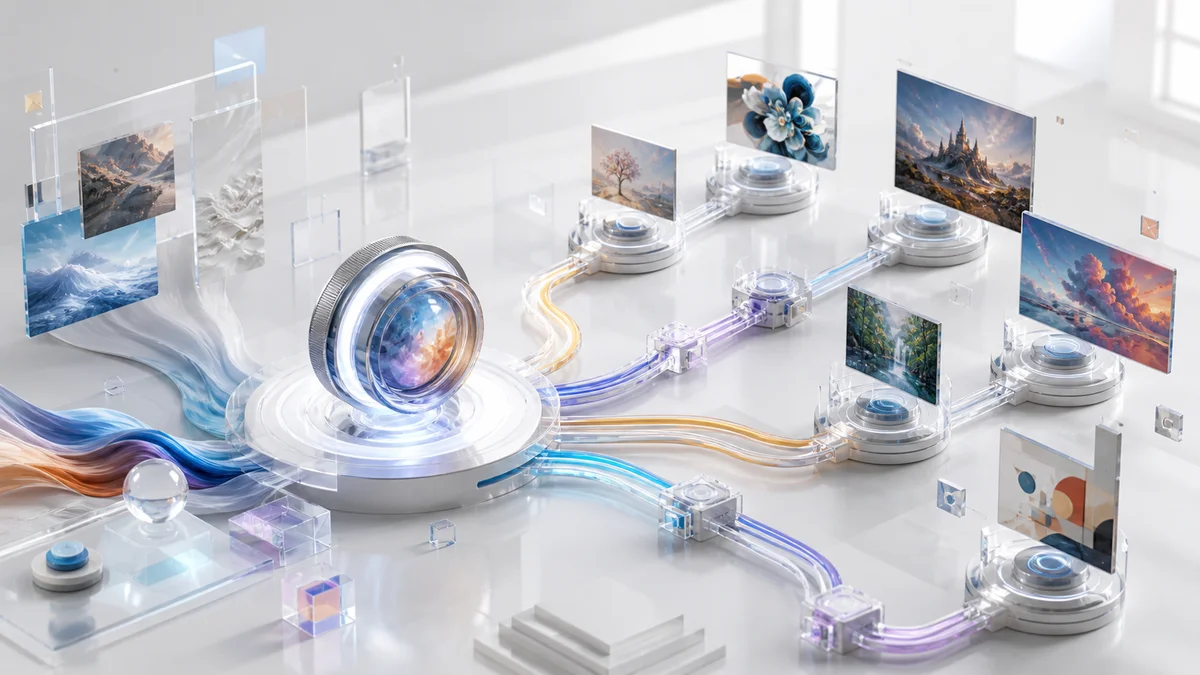
Released on September 20, 2026, Qwen-Image-2.1 is an open-weight model for both text-to-image generation and image editing. It adds native transparent-image workflows and more flexible reference-image editing. Qwen also documents a 32-layer, single-stream architecture with cache reuse, without establishing that the architecture itself first appeared in 2.1. The visual generation component has 7 billion parameters; the official repository also documents a separate Qwen3-VL 8B text encoder. Those figures should not be combined into a single advertised model size.
Qwen had already announced the higher-numbered Qwen-Image-3.0 in July 2026 and offers it through hosted services. The later 2.1 release is relevant especially to teams evaluating downloadable weights; it is not the highest-numbered model in the family. For teams deploying those weights, the license is equally important: the released model uses the Qwen Research License, which requires a separate agreement for commercial use. The older Qwen-Image project's Apache 2.0 notice does not establish rights for the 2.1 weights.
What Changed in Qwen-Image 2.1
Native transparent images
Qwen-Image-2.1 can generate an RGBA image directly from a text prompt, edit transparent layers, and extract a subject from a photograph. This supports stickers, product cutouts, and other assets that need a transparent background. Its official examples use an explicit transparency instruction in the prompt; users should check the resulting alpha channel before relying on an asset in production.
This differs from Qwen-Image Layered, a separate model released in 2025 to decompose an existing image into independently editable RGBA layers. Native transparent output in 2.1 does not mean every output is automatically split into Layered's semantic layers.
More controlled editing across references
The official 2.1 workflow accepts up to 10 reference images. It also supports local edit guidance through circles, painted annotations, or separate masks. These controls are useful when combining people, products, and styling references or changing one region while trying to retain subject identity. The supported input limit is a model capability, not a guarantee that every 10-image composition will preserve every detail.
Updated architecture and deployment options
The 2.1 visual generator uses a 32-layer, single-stream diffusion transformer. Its mixed-granularity attention and prefix key-value cache reuse are designed to avoid recomputing unchanged conditioning information across denoising steps. Qwen provides no single, controlled speed comparison against 2.0 in the cited release material, so actual latency should be measured on the target hardware.
The official repository documents native 2K output and day-one support in Diffusers and ComfyUI. It also lists serving paths through vLLM-Omni and SGLang. Native 2K resolution already appeared in Qwen-Image-2.0; the new reasons to evaluate 2.1 are its transparency, editing controls, and deployment options rather than resolution alone.
Compared With Qwen-Image 2.0
Qwen announced Qwen-Image-2.0 on February 10, 2026. Its stated advances included prompts of up to 1,000 tokens for text-heavy slides and posters, native 2K output, and generation and editing in one model. Qwen-Image-2.1 builds on that direction with native RGBA creation and editing, multi-reference input up to 10 images, and explicit local-edit guidance.
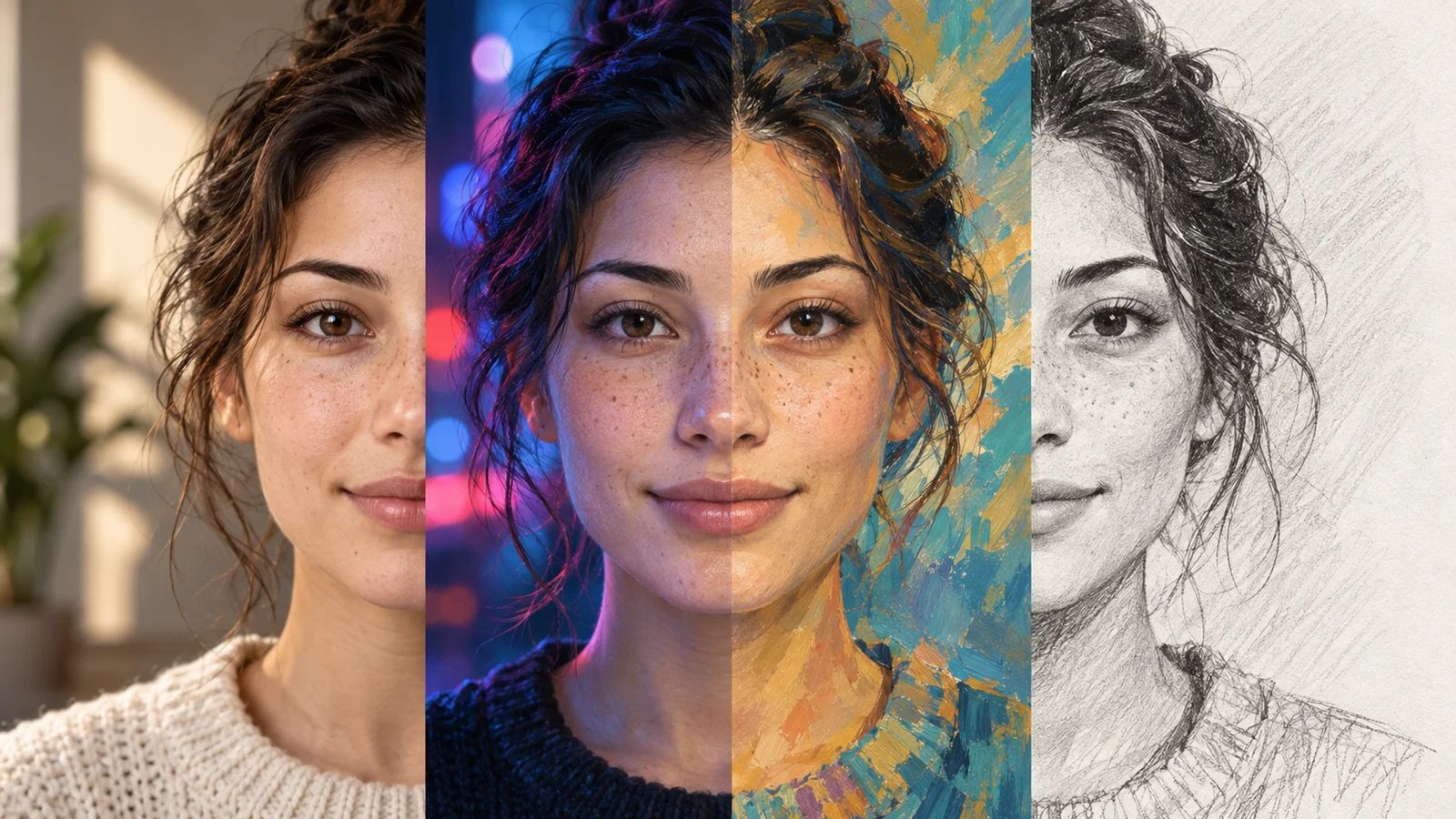
The 2.1 announcement also claims better typography, lighting, and fine detail. The cited official material does not provide a controlled, like-for-like numeric comparison with 2.0, so teams should test their own typography and subject-fidelity prompts before switching a production workflow.
Qwen announced Qwen-Image-3.0 as a separate, higher-numbered model on July 21, 2026. Alibaba Cloud Model Studio lists hosted qwen-image-3.0 and qwen-image-3.0-pro models. Its announced focus includes long, information-dense prompts and fine multilingual text rendering. A team already using a 3.0 service should compare 2.1's transparent editing and downloadable-weight workflow against that service rather than assuming the September date makes 2.1 a direct upgrade.
Availability, Compatibility, and License
Qwen provides the 2.1 weights and examples through its model repository and official GitHub repository. Its Diffusers examples use QwenImage21Pipeline, so existing code that loads an earlier Qwen-Image checkpoint should be checked for pipeline and dependency changes. ComfyUI users can use the separately documented compatible weights and example workflows.
The 2.1 weights carry the Qwen Research License Agreement. The agreement defines non-commercial use as research or evaluation, grants use of the released materials for those purposes, and requires a separate license from Qwen for commercial use. This is a material access condition for agencies, SaaS products, and internal commercial deployments; review the actual agreement before using the weights in those settings. Hosted services may have their own terms, which the model license alone does not describe.
Who Should Upgrade or Wait
- Evaluate 2.1 if you regularly need transparent assets, subject extraction, or edits guided by multiple reference images.
- Pilot 2.1 if your team serves image models with Diffusers, ComfyUI, vLLM-Omni, or SGLang and can benchmark the new pipeline on its own hardware.
- Wait for a commercial license or an approved hosted route if your planned use of the weights is commercial and you have not obtained the required permission.
- Keep a 2.0 workflow while testing if long, text-heavy prompts and native 2K output already meet your needs; these were established 2.0 capabilities.
- Compare with hosted 3.0 first if your priority is the highest-numbered Qwen-Image family model rather than local 2.1 weights.