

Overview
Sonix AI is an ai transcription option for transcription teams, podcasters, researchers, and support operators. It is best evaluated as a product workflow for turning speech into searchable text, not as a generic AI prompt or a one-off demo.
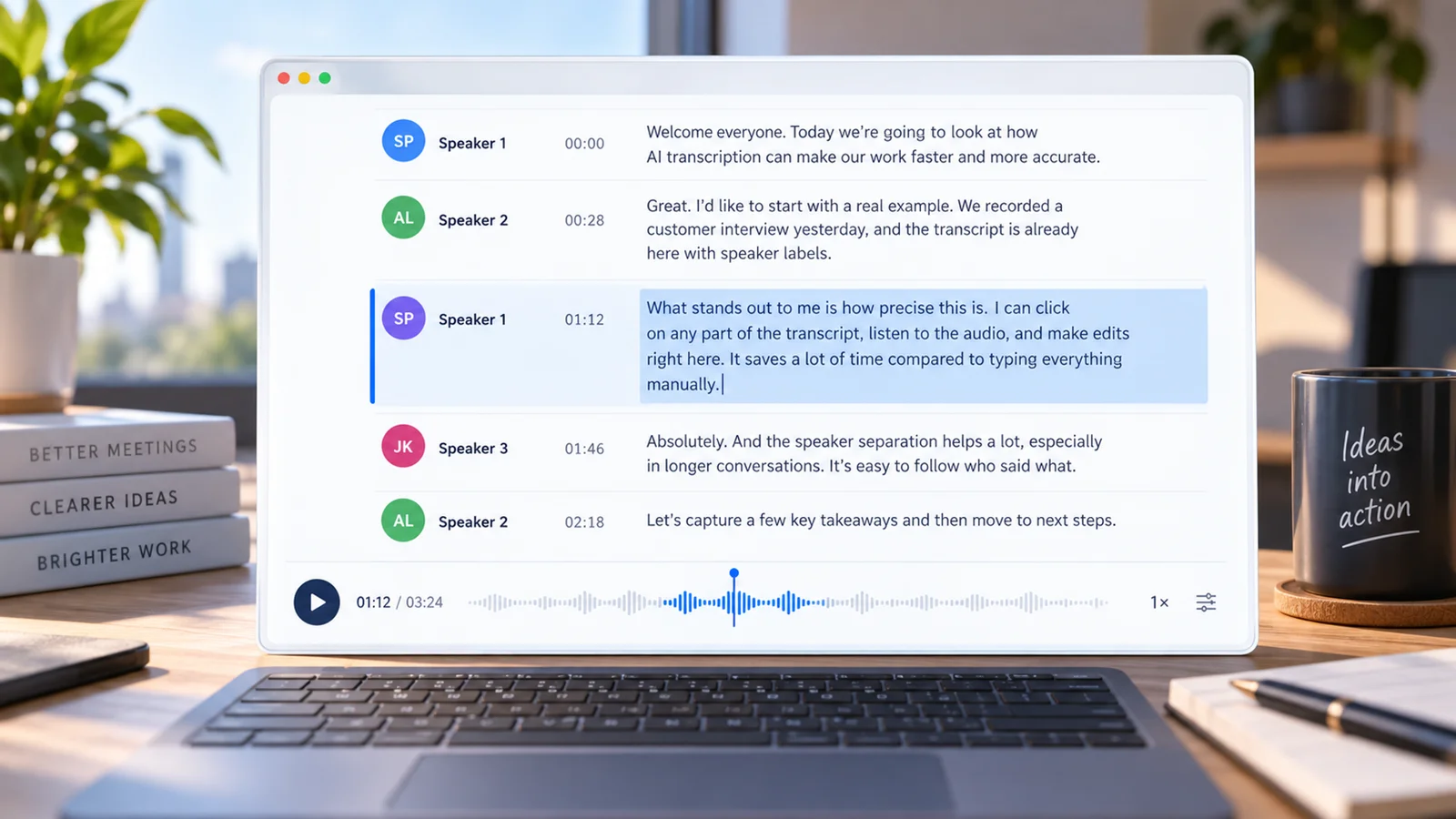
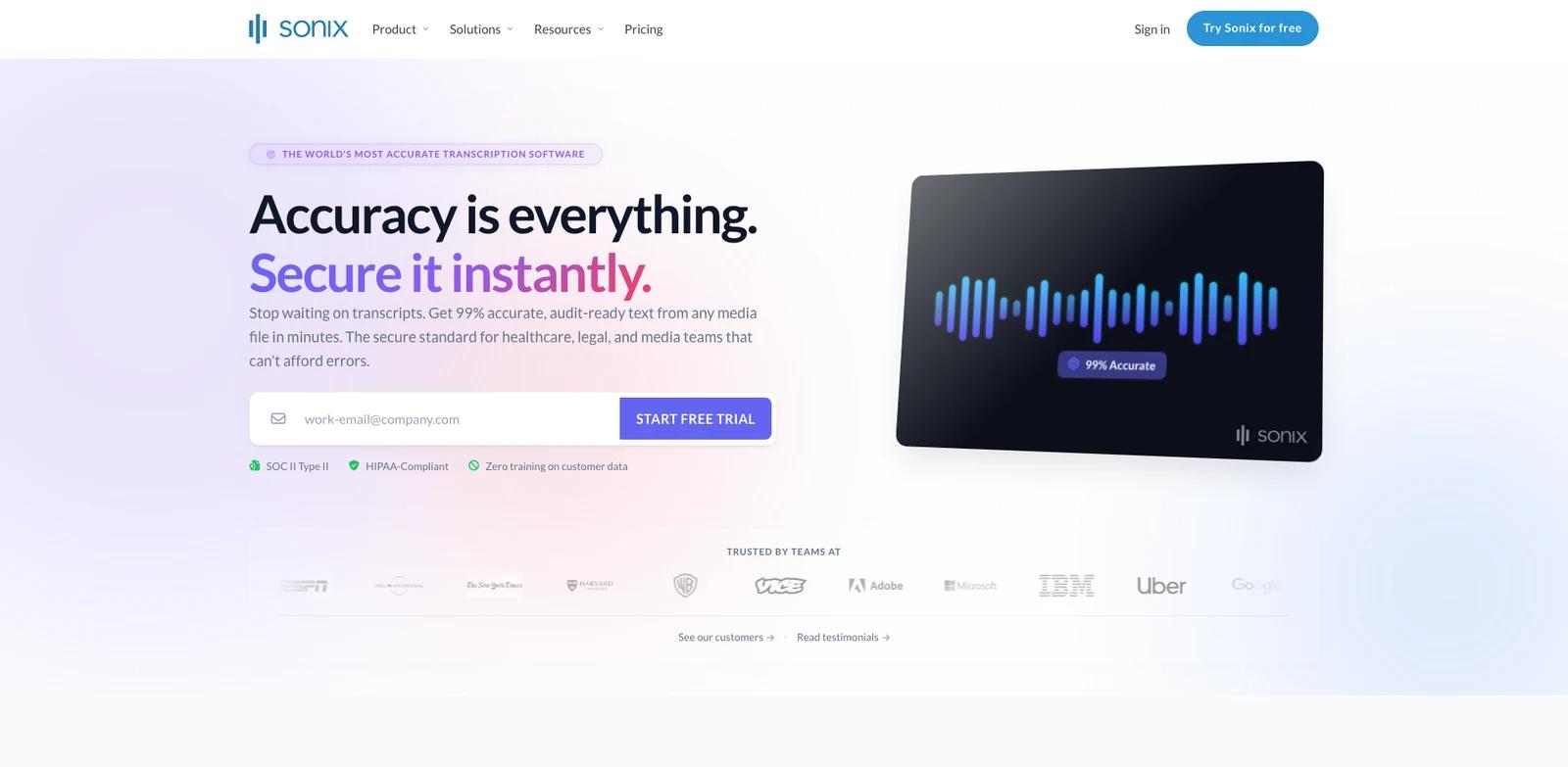
The public product page indicates this positioning: Transcribe audio and video to text in minutes with 99% accuracy. In practice, buyers should test Sonix AI with real inputs, realistic constraints, and the final handoff they expect to use in production. A polished first result is useful, but the better signal is how much time remains after review, cleanup, export, and team approval.
For teams comparing AI tool rankings, Sonix AI should be judged against the workflow it replaces. Look at setup time, output quality after editing, pricing limits, data handling, collaboration needs, and whether non-experts can use the product safely without creating extra review work.
Sonix AI also belongs in a broader stack decision. Many teams pair specialist tools with AI productivity tools for planning, documentation, automation, or follow-up work. The right fit depends on whether you need a dedicated surface for turning speech into searchable text or a broader assistant that can handle many loosely related tasks.
Key Features
- Input capture and processing - Sonix AI helps users start from the right source material and move into a structured workflow instead of rebuilding the setup each time.
- AI-assisted cleanup or generation - The product supports the core AI step in turning speech into searchable text, helping users create, analyze, transform, or improve output faster than a fully manual process.
- Export-ready output - Users can continue editing results after the first AI pass, which matters when accuracy, brand fit, or final approval is required.
- Workflow controls - Sonix AI gives teams a clearer path from initial output to finished deliverable, reducing scattered work across unrelated tools.
- Team review support - The workflow is easier to repeat when prompts, templates, project settings, or review steps can be reused across similar jobs.
- Integration fit - Teams can evaluate whether Sonix AI fits their existing stack by testing exports, integrations, permissions, and handoff quality.
These features matter most when the product is tested with real material. A short demo can show the interface, but a serious evaluation should include messy inputs, revision loops, edge cases, and the final format your team needs.
How to Get Started
- Open the official site - Start from https://sonix.ai/ so you are using the current onboarding, feature set, and pricing flow.
- Define one narrow workflow - Pick a specific job for Sonix AI, such as creating, editing, summarizing, analyzing, planning, or exporting one real deliverable.
- Prepare realistic inputs - Use actual files, prompts, documents, images, recordings, datasets, product requirements, or campaign briefs instead of a generic sample.
- Run a short pilot - Compare the output with your current process and measure time saved after cleanup, not just the first result.
- Review accuracy and rights - Check factual accuracy, formatting, style, privacy, commercial-use rights, and whether human approval remains necessary.
- Confirm rollout details - Before wider adoption, verify pricing limits, team permissions, exports, integrations, security terms, and support expectations.
Pricing & Plans
Sonix AI shows a public pricing signal from about $5 per month. Treat that as a starting point and confirm the current pricing page before buying.
| Option | Pricing signal | Best fit |
|---|---|---|
| Evaluation | Free-start or trial access may be available | Testing the core workflow with real material |
| Team / professional | From about $5 per month, subject to current plan terms | Users who need higher limits, collaboration, exports, or commercial usage |
| Enterprise | Contact sales where applicable | Organizations needing procurement, security review, admin controls, SSO, or custom support |
Pricing can change by region, billing cycle, usage volume, and product bundle. Verify the current plan page, renewal terms, export rights, and overage rules before building a recurring workflow around Sonix AI.
Best For
- Transcription teams, podcasters, researchers, and support operators who need turning speech into searchable text on a recurring basis.
- Teams comparing Sonix AI against broader AI platforms and specialist alternatives.
- Operators who need repeatable output, editable drafts, visible review steps, and clear handoff.
- Managers who care about cost, adoption friction, security review, and workflow fit before rollout.
- Individual users who want a dedicated product surface instead of maintaining a collection of prompts.
FAQ
What is Sonix AI used for?
Sonix AI is used for turning speech into searchable text. It gives users a more structured product workflow than a generic AI prompt.
Who should use Sonix AI?
Sonix AI is best for transcription teams, podcasters, researchers, and support operators who need repeatable results, editable outputs, and a clear path from input to finished work.
Does Sonix AI have a free plan?
Sonix AI has a free-start signal in the captured public material, but limits and paid-plan boundaries should be confirmed on the official site.
How much does Sonix AI cost?
The lowest captured public price signal is about $5 per month, but current pricing should be verified directly with the vendor.
What should I test first in Sonix AI?
Start with one real workflow, one realistic input, and one expected final deliverable. Compare the result against your current process after cleanup and review.
How does Sonix AI compare with generic AI tools?
Generic AI tools can help with ideas and drafts, while Sonix AI offers a more focused workflow for turning speech into searchable text. The dedicated workflow is usually easier to repeat and review.
Is Sonix AI good for teams?
It can be, especially if the team needs shared templates, consistent outputs, exports, permissions, or review steps. Confirm collaboration and admin features before rollout.
What are the main limitations of Sonix AI?
The main limitations are pricing uncertainty, possible feature gates, output quality variance, and the need for human review before important work is published or delivered.
What alternatives should I compare?
Compare Sonix AI with other tools in AI Transcription, especially Deepgram, AssemblyAI, Sonix, and Rev AI when you need to test adjacent workflows before committing. Broader AI productivity tools and the current ToolWorthy AI rankings are useful for stack-level comparisons.