



Overview
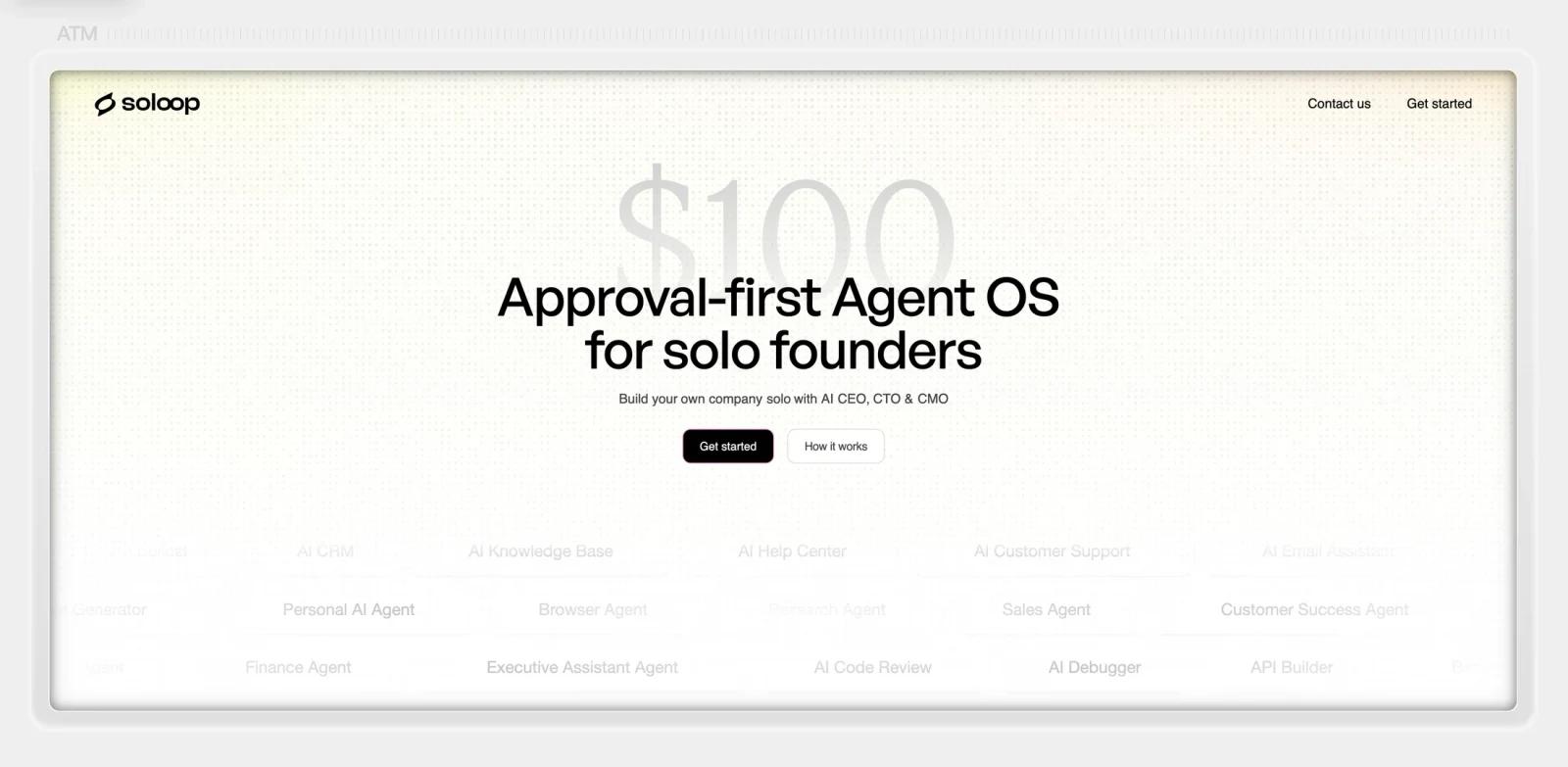
Soloop is an agent operating system for solo founders. The official site describes a workspace where a founder brings an idea, URL, repo, landing page, demo, deck, or rough product. Soloop then proposes one next move, asks for approval, and sends the right agent to do the work.
The product is built around a useful constraint: approval before action. Posts, research runs, spending, deploys, and code changes wait for the founder's call. That makes Soloop different from generic autonomous agent demos, because it keeps the founder in control while still delegating unfamiliar work to an agent team.
Soloop belongs near ToolWorthy's AI agent, AI productivity, and AI workflow generator categories. Its most interesting audience is not large companies adopting enterprise automation. It is solo builders who have already created something but need help finding users, learning from signals, improving the product, and turning attention into revenue.
Key Features
Approval-first operating loop - Soloop turns founder input into one recommended move, shows the reason, then waits for approval before agents act.
Plan Agent - Decides what should happen next and why now, helping the founder avoid managing a menu of vague agent options.
Research Agent - Reads competitors, market complaints, and public signals so the founder can understand where real demand may exist.
Social Agent - Drafts or publishes approved posts and replies, with Twitter/X highlighted as the current social channel on the about page.
Coding Agent - Works in a sandbox to change code, check work, and prepare a deployable result after approval.
Workspace memory - Results such as replies, users, code changes, task notes, and failed attempts stay in the workspace and influence the next recommendation.
Pricing & Plans
Soloop did not publish a visible pricing table on the pages reviewed for this listing. The public pages focus on product positioning, the approval loop, the current agent team, and the founder story rather than plan limits or subscription tiers.
Because no official self-serve price was visible, this ToolWorthy page does not list a starting price. Prospective users should check Soloop's current signup flow or contact the team before relying on it for a business-critical operating system.
| Pricing detail | Status during review |
|---|---|
| Free plan | Not clearly published |
| Paid plans | Not clearly published |
| Credit or usage limits | Not clearly published |
| Enterprise or team plan | Not clearly published |
Best For
- Solo founders with a repo, landing page, demo, waitlist, or rough product already in motion
- Builders who need demand generation and user proof more than another prototyping tool
- Founders who want an AI workflow generator that keeps approval in front of risky actions
- Indie hackers testing public positioning, user replies, and small product changes every week
- Operators who want one agent workspace for planning, research, social distribution, and code tasks
FAQ
What is Soloop?
Soloop is an approval-first agent operating system for solo founders. It helps decide the next move, asks for approval, and sends agents to handle research, social, or coding work.
Who is Soloop for?
Soloop is for solo founders who already have something tangible, such as a repo, demo, landing page, deck, waitlist, product, or strong idea that needs pressure from real users.
What agents does Soloop include?
Soloop's public pages describe planning, research, social, and coding agents. The homepage also frames the system as an AI CEO, AI CMO, and AI CTO working around the founder.
Does Soloop act without approval?
The about page emphasizes approval before action. Posts, research runs, code changes, and deploys wait for the founder's call.
How much does Soloop cost?
Soloop did not show a clear public pricing table during this review. Users should check the current signup flow or contact the team for pricing and availability.
How is Soloop different from a normal AI chatbot?
A chatbot usually answers prompts. Soloop is structured around an operating loop: understand the founder's current artifact, propose one next move, execute through a specialist agent after approval, then feed results back into the next call.