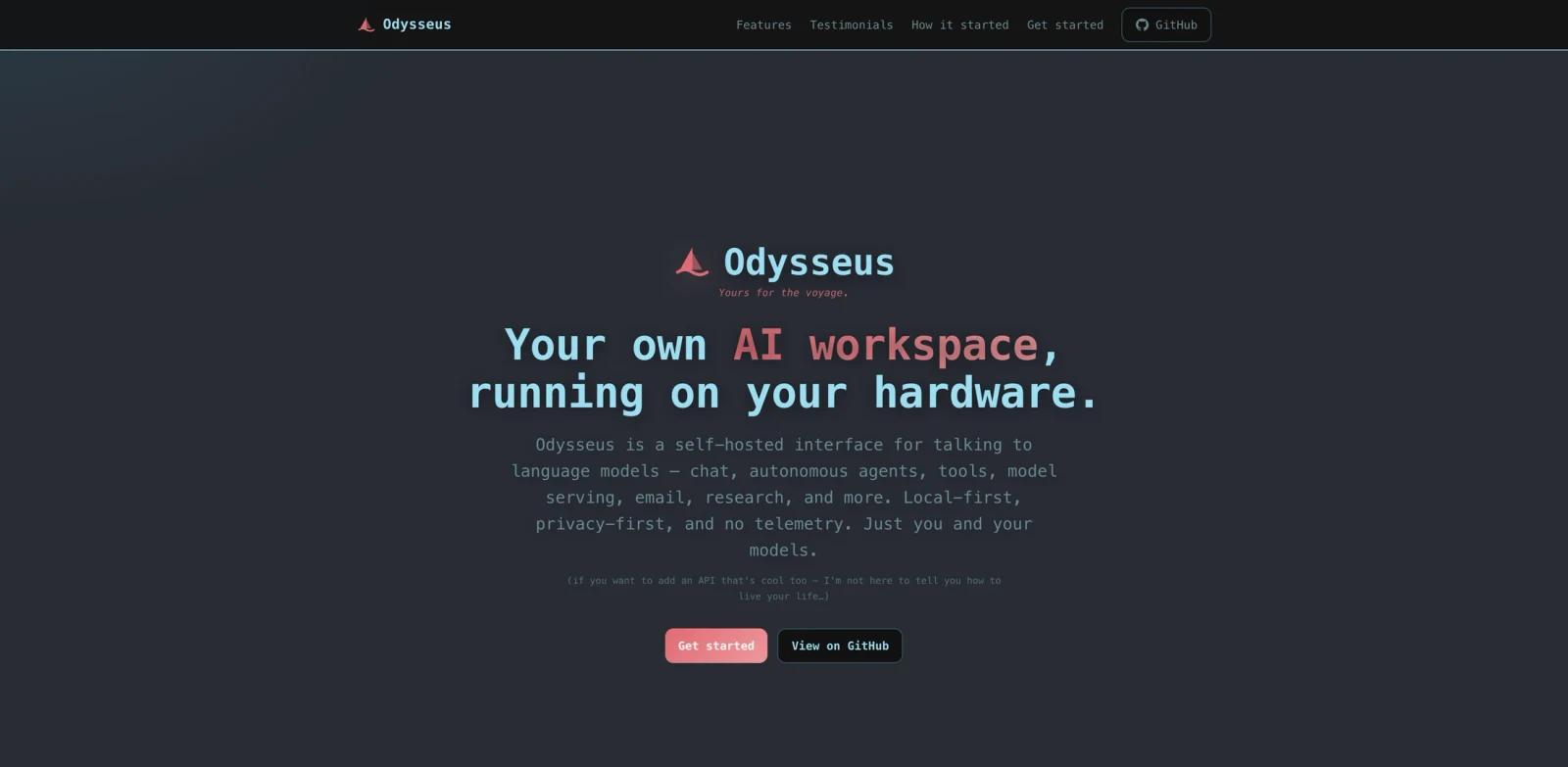

Overview
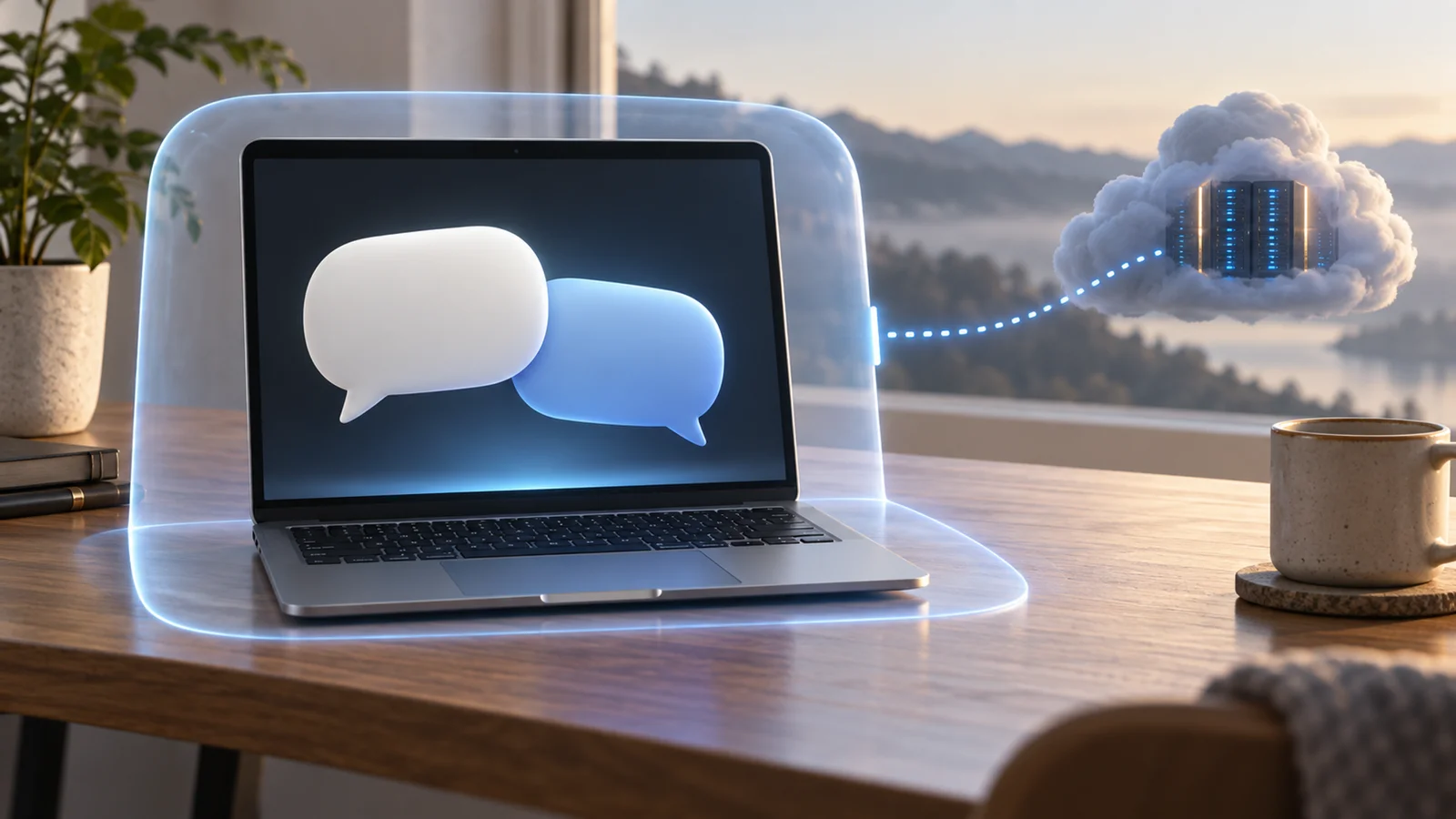
Odysseus is a self-hosted AI workspace for people who want a ChatGPT- or Claude-style interface without handing every workflow to a hosted SaaS. It combines chat, autonomous agents, model comparison, deep research, documents, email triage, calendar, notes, memory, and local model serving in one web app that runs on your own machine or private infrastructure.
That makes it different from a narrow local model chat UI. Odysseus is closer to an operating console for personal or team AI work: connect local models through Ollama, llama.cpp, vLLM, or remote APIs; hand an agent tools such as web, files, shell, skills, memory, and MCP; then keep the resulting chats, documents, tasks, and reminders in a local-first workspace. It belongs in the broader AI agents category, but its value is not only automation. The product also targets users who want privacy, local storage, hardware-aware model selection, and a more complete everyday workspace.
The project is MIT-licensed and open source. It has attracted unusually high GitHub attention shortly after launch, but it is also very new and has no formal release tags at the time reviewed. Treat it as a fast-moving self-hosted project, not a polished enterprise SaaS with guaranteed support.
Key Features
Self-hosted AI workspace - Odysseus runs as a local web app, giving users control over the interface, data directory, model providers, settings, and deployment boundary.
Multi-provider chat - The chat interface can connect to local or API-backed models, including Ollama, llama.cpp, vLLM, OpenRouter, OpenAI, and GitHub Copilot-style provider paths documented by the project.
Agent mode with tools - The agent layer can work with MCP, web access, files, shell, skills, and memory, making it closer to a task-executing agent than a plain AI chatbot.
Hardware-aware model Cookbook - The Cookbook scans local hardware, recommends models, and supports model download and serving workflows across GGUF, FP8, AWQ, vLLM, and llama.cpp-oriented setups.
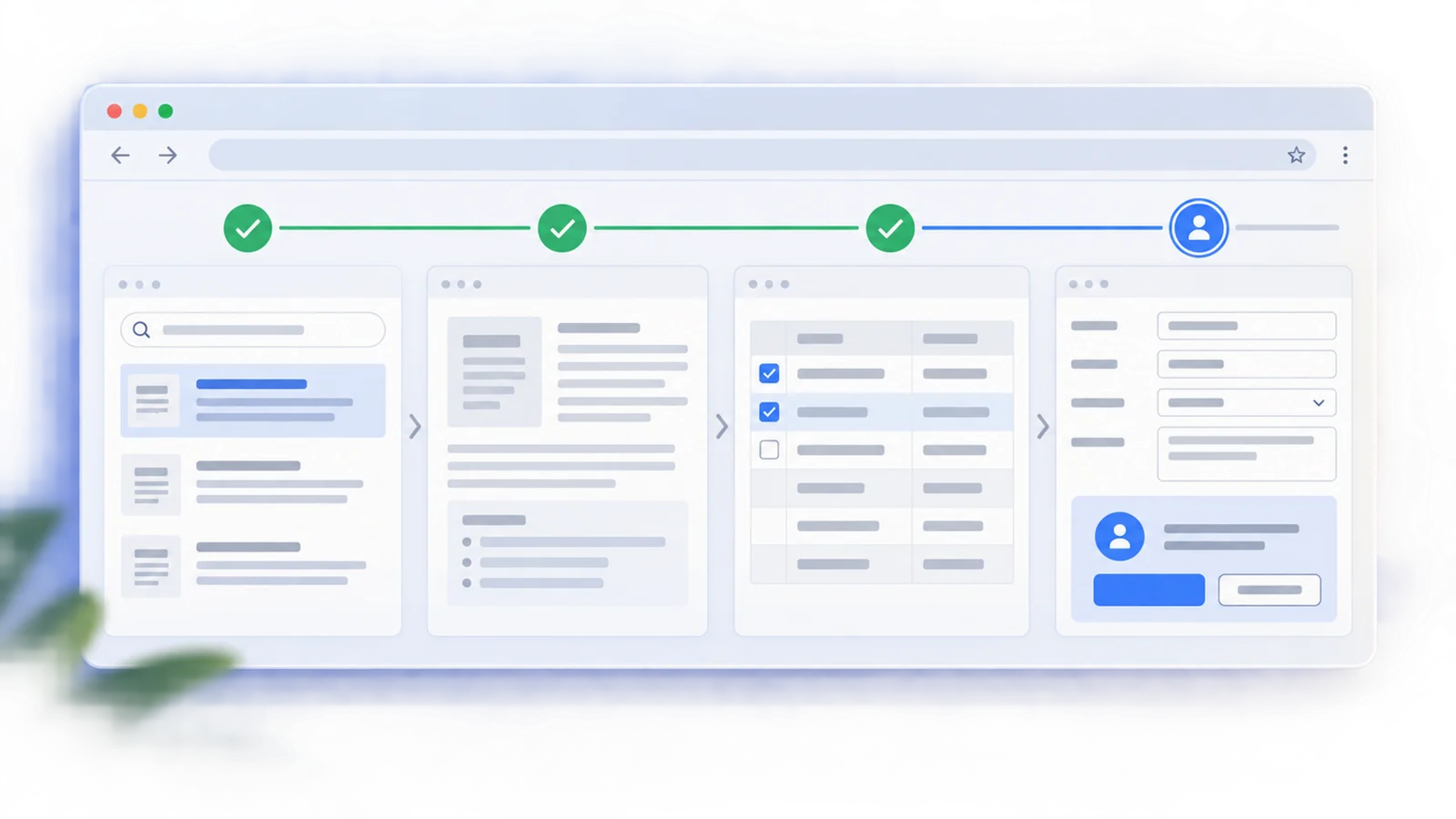
Deep Research workflow - Odysseus includes a multi-step research mode that gathers, reads, and synthesizes sources into a visual report, useful for users comparing it with agentic research systems such as DeerFlow.
Documents, memory, and skills - The workspace includes a multi-tab document editor, markdown and file support, persistent memory, vector and keyword retrieval, and import/export flows so the agent can retain useful context over time.
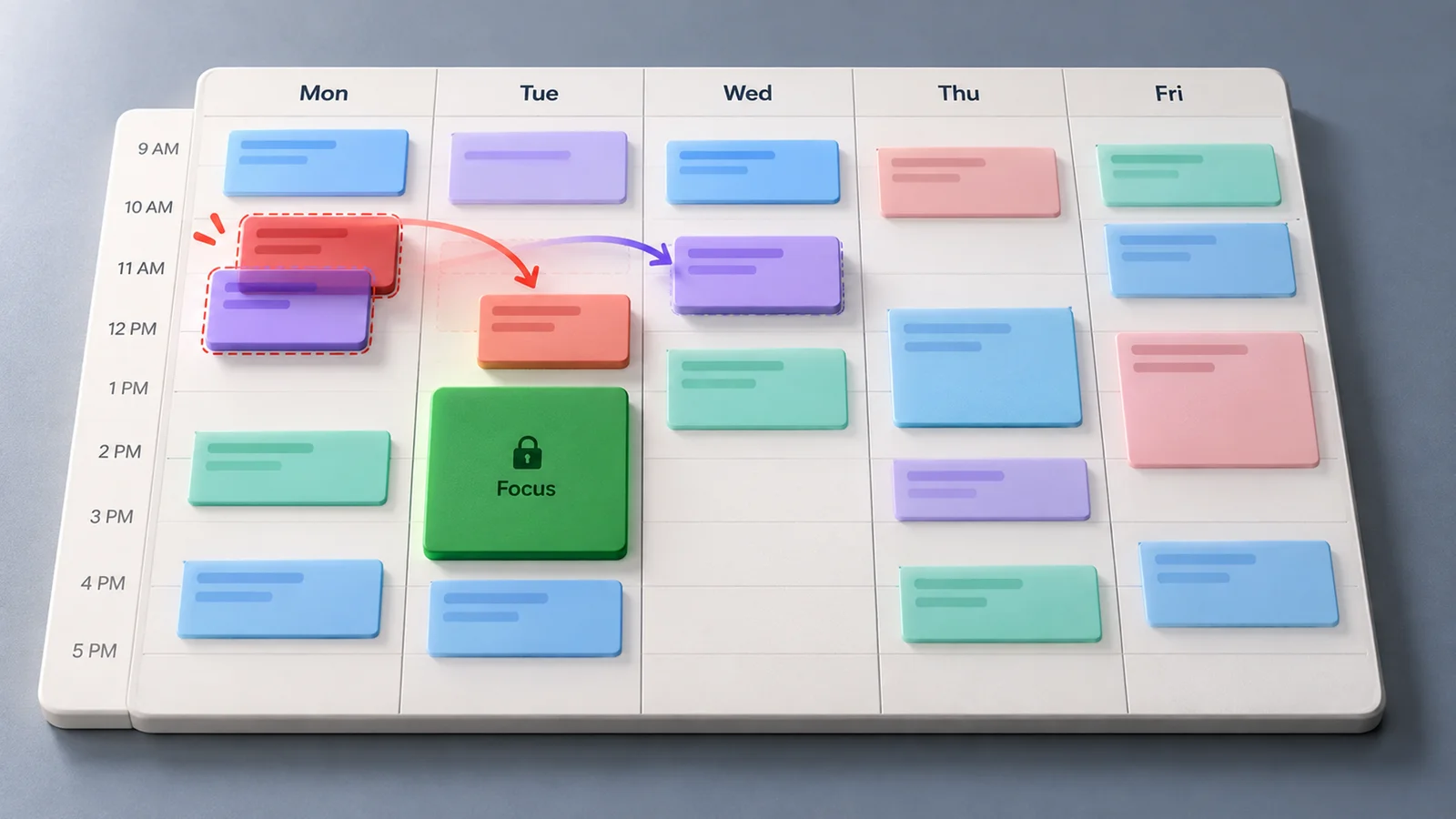
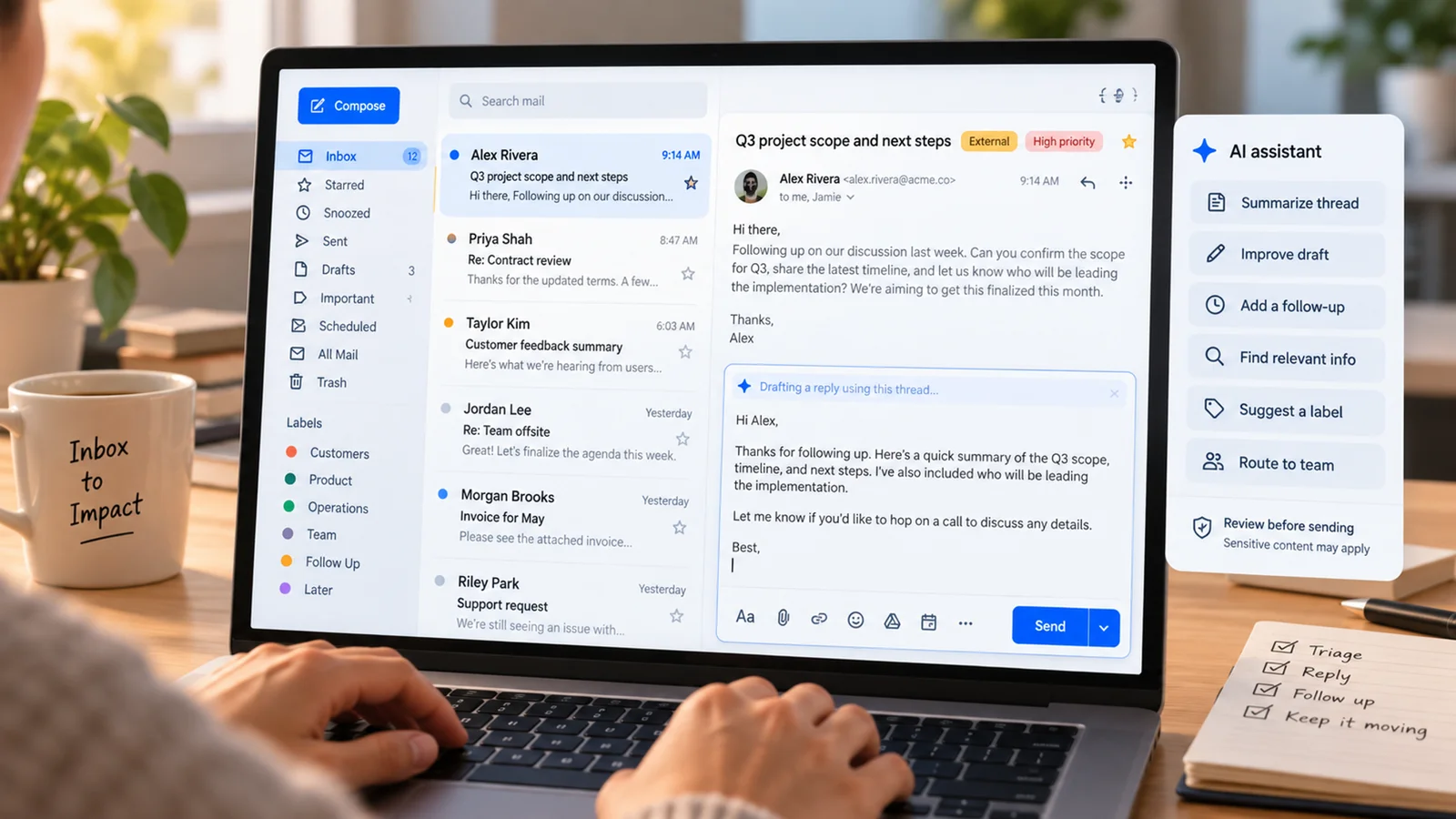
Email, calendar, notes, and tasks - IMAP/SMTP email triage, CalDAV calendar sync, reminders, scheduled tasks, notes, todos, and notification channels turn Odysseus into a personal productivity console rather than a chat-only frontend.
Mobile-friendly PWA interface - The official README describes mobile support, responsive UI behavior, installable PWA behavior, and touch gestures for users who want to access the workspace from a phone on a trusted LAN or VPN.
How to Get Started
The recommended path is Docker. Clone the repository, copy the environment template, and start the stack:
git clone https://github.com/pewdiepie-archdaemon/odysseus.git
cd odysseus
cp .env.example .env
docker compose up -d --build
The default Docker setup exposes the web UI on http://localhost:7000 and binds it to 127.0.0.1. On first boot, Odysseus creates an admin account and prints a temporary password in the terminal or Docker logs.
Native installation is also available for Linux, macOS, and Windows with Python 3.11+. On macOS, the project recommends native execution for Apple Silicon GPU acceleration because Docker on macOS cannot use Metal. Windows users can run the core app natively, while full local GPU serving for vLLM or SGLang generally needs Linux or WSL2. Existing Ollama users can connect Odysseus to an Ollama endpoint instead of serving models inside Odysseus.
For network access, keep the security posture conservative. Odysseus is a powerful workspace with shell tools, file uploads, model downloads, email/calendar integrations, API tokens, and private data. The README explicitly warns against exposing it directly to the public internet and recommends localhost, LAN/VPN, or a trusted reverse proxy/private access layer with authentication enabled.
How It Compares
Odysseus is best understood as a self-hosted workspace, not just another chat frontend. Compared with hosted agent products such as Manus, it gives you more infrastructure control but also makes you responsible for installation, upgrades, authentication, backups, model routing, and security. That tradeoff is attractive for developers and privacy-conscious users, but it is not ideal for nontechnical teams that want a managed service.
Compared with coding-oriented agent tools such as Claude Code, Odysseus is broader and less specialized. Claude Code focuses on software development workflows in a codebase, while Odysseus brings together chat, research, documents, personal productivity, local model management, email, calendar, notes, and general agent tooling.
Compared with open-source agent frameworks, Odysseus is more user-interface oriented. It packages an everyday workspace around the agent loop instead of only providing a framework for developers to build against. Its MCP support also matters for readers following the MCP vs A2A protocol ecosystem, because tool access is a central part of how modern agents become useful outside the chat box.
Pricing & Plans
Odysseus is free and MIT-licensed. There are no subscription tiers, hosted usage limits, or vendor credit packages attached to the public project.
| Component | Price | Notes |
|---|---|---|
| Odysseus software | Free | MIT-licensed open-source repository |
| Self-hosted deployment | Variable | You pay for your own hardware, server, storage, proxy, and maintenance |
| Local models | Variable | Free to run if you have the hardware; GPU, electricity, and storage costs still apply |
| API models | Variable | OpenAI, OpenRouter, GitHub Copilot-style, or other provider costs depend on your account and usage |
| Optional dependencies | Free / license-dependent | Some optional packages unlock extra document or speech features; review their licenses before production use |
The practical cost is operational rather than licensing-based. A small user can connect Odysseus to API providers or Ollama on a laptop. A heavier user running local model serving, ChromaDB, SearXNG, ntfy, and GPU-backed inference should budget for hardware, storage, security, and ongoing maintenance.
Community & Ecosystem
Odysseus has become a high-visibility GitHub project shortly after its public launch, with a large star and fork count visible through the GitHub repository API. That attention suggests strong interest in self-hosted AI workspaces, local-first agent tools, and personal AI operating environments.
The ecosystem angle is also important. Odysseus integrates ideas and components from existing open-source AI infrastructure, including model serving workflows, ChromaDB-backed memory, SearXNG search, ntfy notifications, CalDAV, IMAP/SMTP, and MCP. Its deep research workflow is described as adapted from Alibaba's Tongyi DeepResearch, while the agent stack references opencode and tool access patterns common in current agent frameworks.
At the same time, community momentum is not the same as maturity. The repository is moving quickly, the open issue count is significant, and there are no stable releases to anchor production upgrade plans. Teams should test a fresh install, inspect the security defaults, and track upstream changes before relying on it for sensitive work.
Best For
- Developers and technical users who want a self-hosted AI workspace rather than another hosted AI productivity SaaS
- Local model users who want to combine Ollama, llama.cpp, vLLM, or API providers inside one interface
- Privacy-conscious users who want chats, documents, memory, notes, and workflow data to stay under their own control
- AI builders experimenting with MCP tools, agent skills, shell/file workflows, memory, and deep research
- Small teams willing to operate a private AI console behind localhost, Tailscale, Cloudflare Access, or a trusted reverse proxy
FAQ
What is Odysseus?
Odysseus is a self-hosted AI workspace that combines chat, agents, deep research, model comparison, documents, email triage, calendar, notes, tasks, memory, skills, and local or API-backed model providers.
Is Odysseus open source?
Yes. The public repository is licensed under the MIT License, which is a permissive open-source license. Users should still review optional dependency licenses before enabling extra document or media features in production.
Does Odysseus run local models?
Yes. The project documents local model paths through Ollama, llama.cpp, vLLM, GGUF, FP8, AWQ, and hardware-aware Cookbook workflows. Users can also connect API-backed model providers instead of serving models locally.
Is Odysseus free?
The software is free. Your actual cost depends on infrastructure, local hardware, electricity, storage, optional GPU resources, and any external model APIs you connect.
Can Odysseus replace ChatGPT or Claude?
It can provide a self-hosted workspace with a similar broad AI interface, but it is not a hosted model provider. You still need local models or API providers, and you are responsible for setup, security, and maintenance.
Is Odysseus ready for production?
It is promising but early. The repository is active and high-profile, but there were no formal release tags at the time reviewed. Teams should treat it as a fast-moving open-source project and test carefully before using it with sensitive data.
What are the main security concerns?
Odysseus can touch files, shell tools, uploads, emails, calendars, API tokens, web research, and local model services. Keep authentication enabled, avoid public exposure, protect .env and data/, and put network deployments behind a trusted private access layer or reverse proxy.
Who should avoid Odysseus?
Nontechnical users who want a managed, support-backed AI service may find Odysseus too operational. It is strongest for users comfortable with Git, Docker or Python, model providers, local networking, and self-hosted security.