
19 Best AI Recruiting Tools 2026 - Hiring Stack Fit

Recruiting leaders are being asked to fill roles faster while proving that every AI-assisted sourcing, screening, and interview decision is fair, reviewable, and worth the cost. The hard part is not finding AI recruiting tools. It is deciding whether your team needs a modern ATS, a sourcing engine, a recruiting CRM, interview intelligence, conversational screening, or a full enterprise talent platform before another vendor demo turns into a six-month implementation.
This guide compares 19 AI recruiting tools across the main buying paths: applicant tracking, AI sourcing, recruiting CRM, candidate engagement, high-volume hiring, interview intelligence, assessments, and enterprise talent intelligence. We used ChatGPT deep research, official product pages, pricing signals, and review evidence from July 2026. If you are researching adjacent categories, compare our AI recruiting category, candidate-side AI resume builders, AI CRM tools, and broader AI agent tools.
| Tool | Best For |
|---|---|
| Ashby | Modern teams that want ATS, sourcing, scheduling, and analytics together |
| hireEZ | Recruiters prioritizing AI sourcing, enrichment, and outbound candidate discovery |
| Gem | Talent teams running recruiting CRM, sourcing campaigns, and pipeline analytics |
| Workable | SMB and mid-market teams needing a practical ATS with clearer pricing |
| Metaview | Teams improving interview notes, scorecards, coaching, and hiring evidence |
| Zoho Recruit | Budget-conscious recruiters that need ATS and CRM basics |
| SeekOut | Sourcing teams building talent pools and market maps from candidate data |
| Loxo | Agencies and search firms combining ATS, CRM, sourcing, and outreach |
| Greenhouse | Structured hiring teams that need mature ATS workflows and integrations |
| Humanly | Teams automating candidate screening, scheduling, and interview follow-up |
| Paradox | High-volume frontline hiring teams using chat and SMS automation |
| Eightfold AI | Enterprises connecting external hiring, internal mobility, and talent intelligence |
| LinkedIn Recruiter + Hiring Assistant | Recruiters already sourcing heavily from LinkedIn talent data |
| Phenom | Enterprises improving career sites, candidate experience, CRM, and automation |
| SmartRecruiters | Global teams that want enterprise ATS, marketplace, and collaboration tools |
| BrightHire | Hiring teams standardizing interviews, coaching, and feedback quality |
| Findem | Teams needing attribute-based sourcing and automated talent discovery |
| iCIMS | Large enterprises managing ATS, CRM, career sites, and engagement at scale |
| HireVue | High-volume teams using video interviews and structured assessments |
How We Selected and Tested
We selected tools that clearly serve recruiting teams, TA operations, HR leaders, agencies, or hiring managers. Included products had to support at least one real recruiting workflow: sourcing, screening, matching, candidate engagement, scheduling, interview intelligence, assessment, ATS work, recruiting CRM, career-site automation, or talent intelligence. We excluded job-seeker resume builders, cover-letter generators, generic HRIS/payroll systems, recruiting agencies, directories, open-source demos, and generic chatbots unless recruiting workflows were a primary product surface.
Our research combined ChatGPT deep research, official product pages, public pricing pages where available, product documentation, privacy or compliance pages, and third-party review signals. We scored each tool across five practical dimensions: recruiting workflow depth, recruiter and candidate experience, AI differentiation, value for money, and user feedback. The overall score follows the research formula: 25% functionality, 25% user experience, 20% innovation, 20% value for money, and 10% user feedback. Unknown pricing, missing compliance detail, and unclear limits were conservatively penalized; third-party review evidence was treated as directional rather than a fabricated star rating. Those dimensions map to the questions buyers actually ask: Does this replace or complement our ATS? Can recruiters trust the matching logic? Will hiring managers use it? What happens to cost when seats, candidates, messages, interviews, or AI credits grow?
Testing scope: This is public-evidence research rather than a paid implementation of every platform. We did not fabricate ROI, time-to-hire reductions, model accuracy, bias-audit results, or customer satisfaction metrics. Quote-only pricing reduced the value score because it makes budgeting harder. When a platform is enterprise-heavy, that implementation burden is reflected in the recommendation.
Top 19 AI Recruiting Tools Compared
The market splits into six groups. Ashby, Workable, Greenhouse, SmartRecruiters, iCIMS, and Zoho Recruit are ATS or recruiting suite choices. hireEZ, SeekOut, Findem, and LinkedIn Recruiter are sourcing-led. Gem, Loxo, Phenom, and Eightfold AI lean into recruiting CRM, talent intelligence, or candidate experience. Metaview and BrightHire focus on interview intelligence. Humanly and Paradox automate screening and scheduling conversations. HireVue is strongest for high-volume video interviews and structured assessments.
| Tool | Best For | Core Workflow | Pricing Signal | Main Caveat |
|---|---|---|---|---|
| Ashby | Modern teams that want ATS, sourcing, scheduling, and analytics together | ATS + sourcing + analytics | Foundations starts at $400/month for companies with up to 100 employees; Plus and Enterprise are custom-priced | Public entry pricing is available, but larger plans, add-ons, and contract terms still require confirmation. |
| hireEZ | Recruiters prioritizing AI sourcing, enrichment, and outbound candidate discovery | Agentic sourcing + screening + outreach + scheduling | Quote-based, seat-based pricing | It complements the ATS across multiple recruiting stages rather than operating only before handoff. |
| Gem | Talent teams running recruiting CRM, sourcing campaigns, and pipeline analytics | ATS + recruiting CRM + sourcing + scheduling + analytics | Public startup pricing; custom pricing for larger deployments | Gem can connect to an existing ATS or provide a built-in ATS through Gem All-in-One. |
| Workable | SMB and mid-market teams needing a practical ATS with clearer pricing | ATS + job posting + screening | About $299/month and up, depending on scale | Its AI depth is more practical than frontier. |
| Metaview | Teams improving interview notes, scorecards, coaching, and hiring evidence | Interview intelligence + sourcing + outreach + application review | Free entry; paid pricing varies by selected agents | Metaview does not replace an ATS, but its platform now extends beyond interview notes. |
| Zoho Recruit | Budget-conscious recruiters that need ATS and CRM basics | ATS + recruiting CRM | About $30/recruiter/month and up | The interface and configuration can feel dense, and the AI differentiation is lighter than specialist recruiting AI platforms. |
| SeekOut | Sourcing teams building talent pools and market maps from candidate data | AI sourcing and recruiting workflows | Recruit Core costs $149/month annually or $179 month-to-month; advanced plans are custom | Recruit Core excludes some ATS integration and full-funnel capabilities. |
| Loxo | Agencies and search firms combining ATS, CRM, sourcing, and outreach | Agency ATS + CRM + sourcing | Free forever; Basic costs $169/user/month billed annually; higher plans are custom | The broad workflow is attractive for agencies, but teams should model contact limits, enrichment quality, and outreach deliverability. |
| Greenhouse | Structured hiring teams that need mature ATS workflows and integrations | Structured enterprise ATS | Quote-based pricing | Greenhouse is mature but enterprise-weighted. |
| Humanly | Teams automating candidate screening, scheduling, and interview follow-up | AI Recruiter + AI Interviewer + ATS | Quote-based pricing | Humanly is designed primarily for hourly, frontline, and high-volume hiring workflows. |
| Paradox | High-volume frontline hiring teams using chat and SMS automation | High-volume chat hiring | Quote-based pricing | Paradox can be overbuilt for low-volume hiring. |
| Eightfold AI | Enterprises connecting external hiring, internal mobility, and talent intelligence | Enterprise talent intelligence | Quote-based pricing | Eightfold is a strategic platform, not a quick recruiting widget. |
| LinkedIn Recruiter + Hiring Assistant | Recruiters already sourcing heavily from LinkedIn talent data | LinkedIn sourcing | Contract-based pricing | LinkedIn data is a strength, but it does not replace an ATS, CRM, or broader talent operations stack. |
| Phenom | Enterprises improving career sites, candidate experience, CRM, and automation | Candidate experience + CRM | Quote-based pricing | Phenom has deep enterprise candidate-experience coverage, but rollout scope and module packaging can be substantial. |
| SmartRecruiters | Global teams that want enterprise ATS, marketplace, and collaboration tools | Enterprise recruiting suite | Essential starts at $14,995; Professional, High Volume, and Complete require quotes | SmartRecruiters is strongest as a suite. |
| BrightHire | Hiring teams standardizing interviews, coaching, and feedback quality | Interview intelligence + automated AI screening | Quote-based pricing | BrightHire does not replace sourcing, an ATS, or pipeline management, but BrightHire Screen supports automated first-round interviews. |
| Findem | Teams needing attribute-based sourcing and automated talent discovery | Attribute-based sourcing | Quote-based pricing | Findem needs buyer confidence in its data coverage and attribute model. |
| iCIMS | Large enterprises managing ATS, CRM, career sites, and engagement at scale | Enterprise TA suite | Quote-based pricing | iCIMS suits complex organizations, but smaller teams may struggle with system complexity and quote-only economics. |
| HireVue | High-volume teams using video interviews and structured assessments | Video interview + assessment | Quote-based pricing | HireVue requires careful governance around assessments, candidate communication, and regional hiring rules. |
Detailed Reviews
Ashby
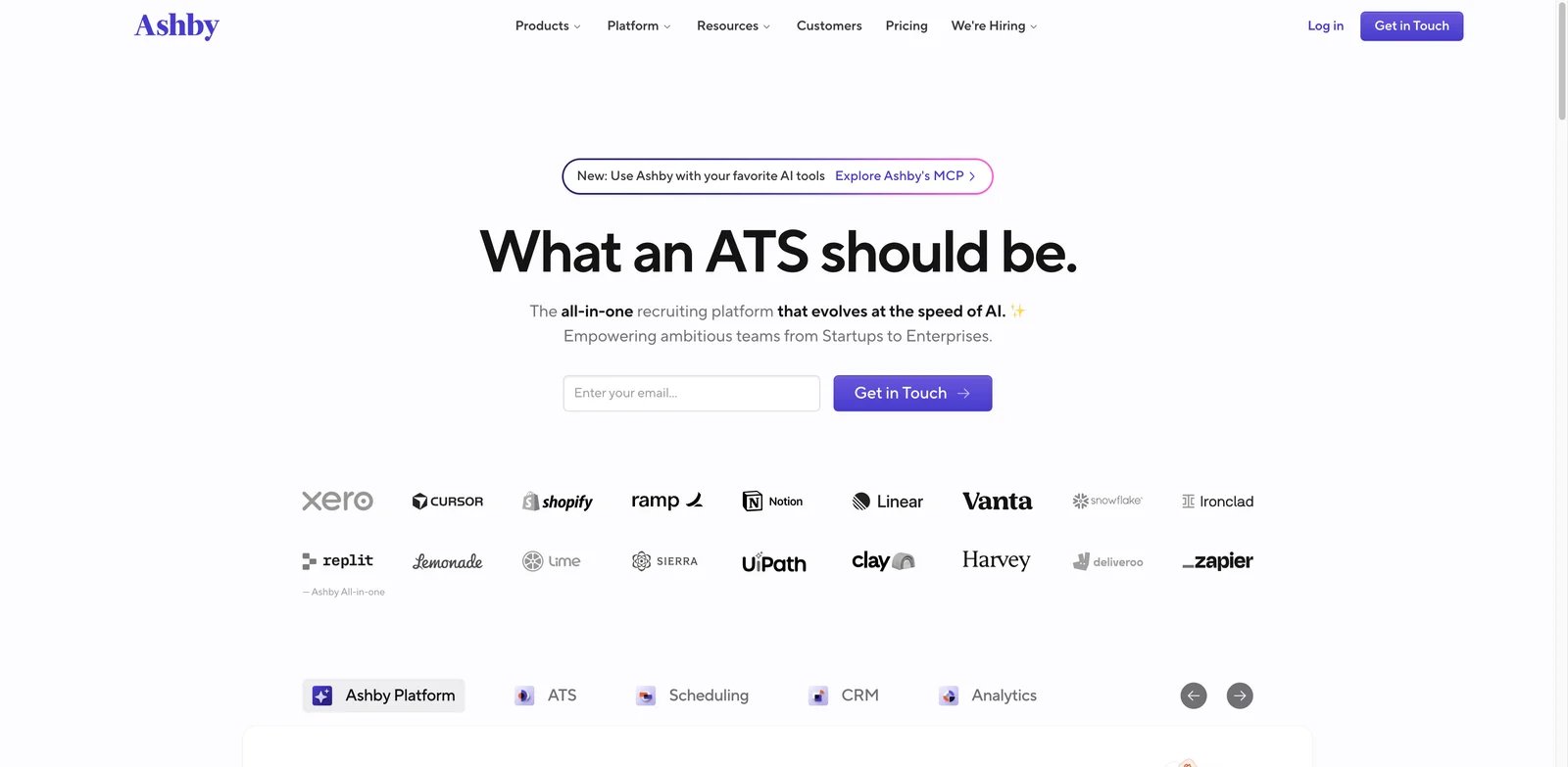
Recruiting operations teams usually hit a wall when the ATS, sourcing tracker, scheduling process, and analytics dashboard all tell different stories. Ashby is strongest for modern teams that want ATS, sourcing, scheduling, and analytics together. Its 87.3 overall score comes from 92.0 functionality, 91.0 user experience, 90.0 AI innovation, 72.0 value for money, and 91.0 user feedback.
Key Features
- Unified hiring workflow: ATS, sourcing, scheduling, analytics, and collaboration sit close together so recruiters are not reconciling separate spreadsheets and point tools.
- Pipeline reporting: Modern reporting helps teams see source performance, process bottlenecks, and hiring-manager responsiveness without exporting every requisition to BI.
- Operations fit: Ashby is strongest when recruiting operations wants one system for recruiter work, hiring-manager visibility, and pipeline accountability.
Pricing & Plans
Ashby's Foundations plan starts at $400/month for companies with up to 100 employees, with a 10% discount available for annual commitments. Plus and Enterprise use custom pricing, while Advanced Scheduling and AI Notetaker may be priced as optional add-ons. Ask for recruiter-seat costs, hiring-manager access, requisition or candidate limits, AI usage limits, implementation fees, contract length, data-processing terms, and whether advanced AI modules are packaged separately.
Pros & Cons
- Pros: strong modern ATS coverage; reporting and scheduling reduce operations sprawl.
- Cons: advanced modules and larger plans need contract confirmation; migration discipline still matters.
Limitations
Plan-based pricing and some compliance details are not fully public, so buyers should confirm contract terms before standardizing. The practical risks depend on the product and may include implementation effort, ATS data quality, recruiter adoption, usage-based charges, integration limits, candidate consent, or governance requirements.
Best For
Ashby is best for modern teams that want ATS, sourcing, scheduling, and analytics together. Not the right fit if your real need is a different layer of the recruiting stack, such as a simple resume parser, a candidate-side job application tool, or a generic HR system with only light recruiting support.
Get started with Ashby
hireEZ
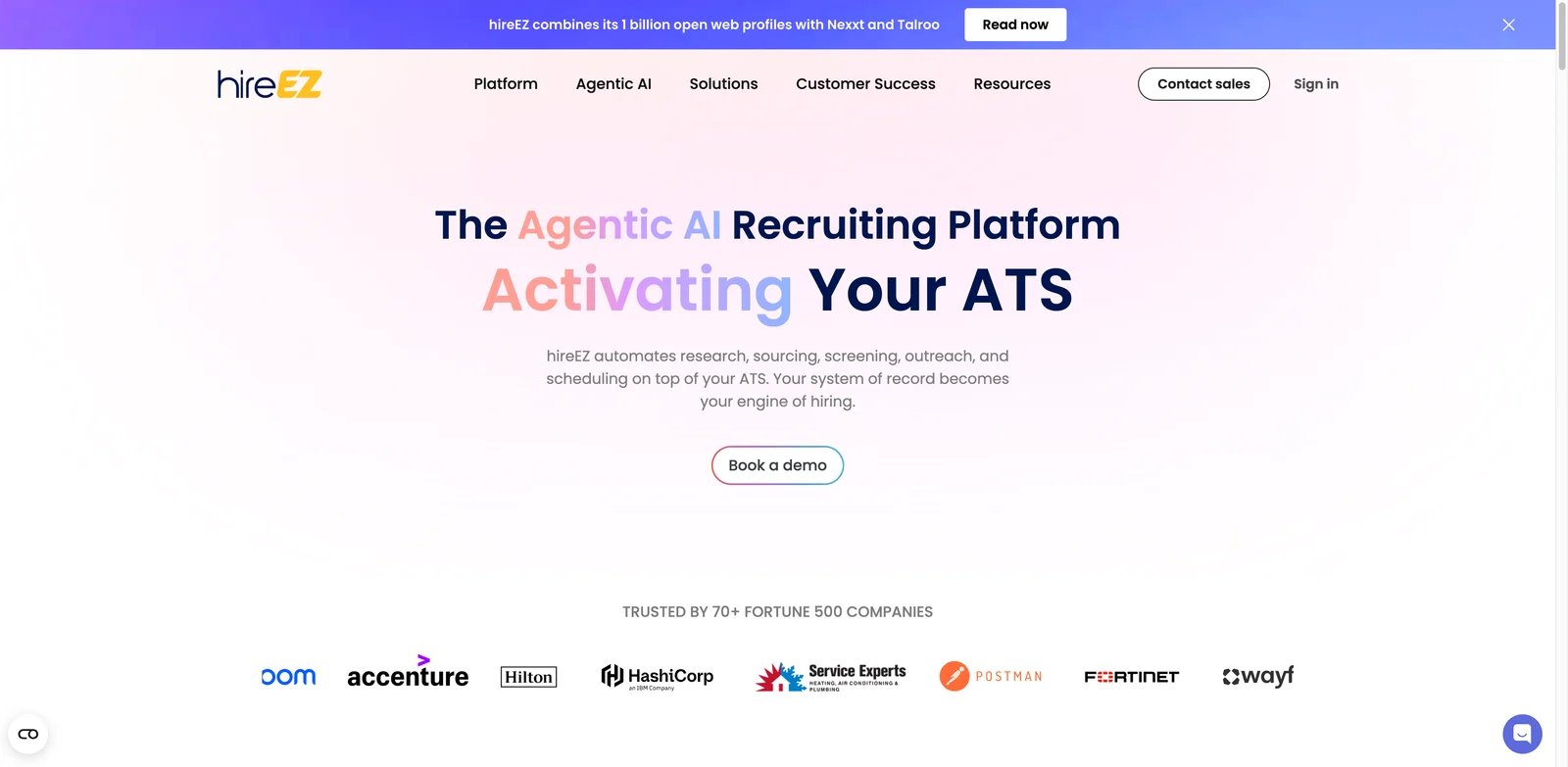
Sourcers do not need another Boolean search box when the real problem is finding qualified people, enriching profiles, and turning outreach into pipeline. hireEZ is strongest for recruiters prioritizing AI sourcing, enrichment, and outbound candidate discovery. Its 87.1 overall score comes from 95.0 functionality, 88.0 user experience, 94.0 AI innovation, 68.0 value for money, and 89.0 user feedback.
Key Features
- AI talent discovery: Search and matching help sourcers build qualified lists faster than manual Boolean search alone.
- Candidate enrichment and outreach: Recruiters can move from profile discovery to engagement without immediately handing every prospect to the ATS.
- Market coverage: hireEZ is useful when the sourcing team needs competitive talent coverage, not just applicant tracking.
Pricing & Plans
hireEZ uses quote-based pricing rather than a simple public monthly rate. Ask for recruiter-seat costs, hiring-manager access, requisition or candidate limits, AI usage limits, implementation fees, contract length, data-processing terms, and whether advanced AI modules are packaged separately.
Pros & Cons
- Pros: deep sourcing automation; expands into screening, outreach, scheduling, and analytics.
- Cons: still depends on an ATS as final record; seat and usage details need procurement review.
Limitations
hireEZ remains an automation layer on top of the ATS rather than the final system of record, but its current scope extends across research, sourcing, screening, outreach, scheduling, and analytics. The practical risks depend on the product and may include implementation effort, ATS data quality, recruiter adoption, usage-based charges, integration limits, candidate consent, or governance requirements.
Best For
hireEZ is best for recruiters prioritizing AI sourcing, enrichment, and outbound candidate discovery. Not the right fit if your real need is a different layer of the recruiting stack, such as a simple resume parser, a candidate-side job application tool, or a generic HR system with only light recruiting support.
Get started with hireEZ
Gem
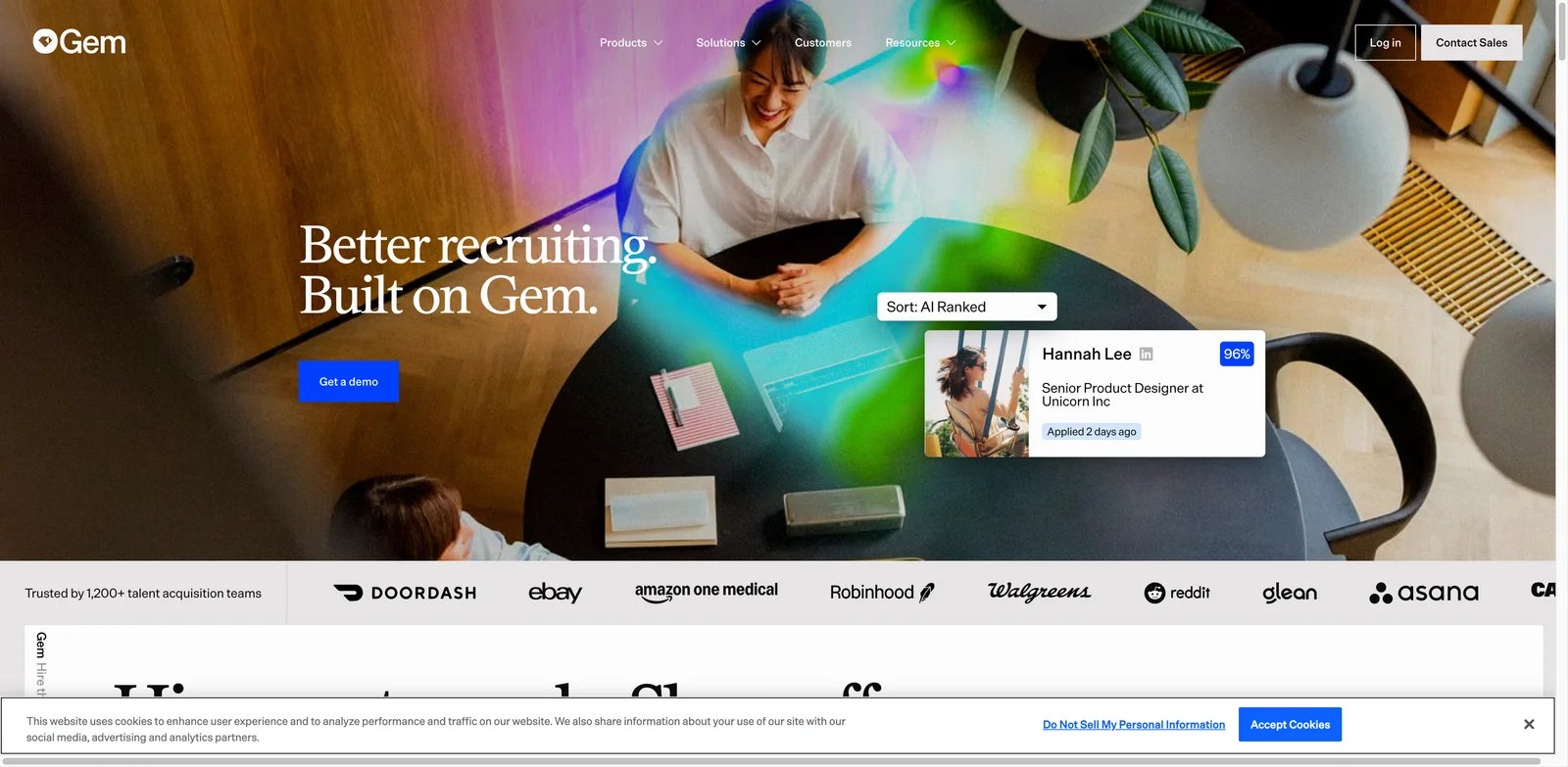
Talent teams with healthy outbound volume often lose candidates because CRM, email sequences, ATS stages, and reporting live in different systems. Gem is strongest for talent teams running recruiting CRM, sourcing campaigns, and pipeline analytics. Its 86.7 overall score comes from 94.0 functionality, 89.0 user experience, 91.0 AI innovation, 68.0 value for money, and 91.0 user feedback.
Key Features
- Recruiting CRM: Gem helps teams nurture passive candidates and talent communities instead of restarting every search from scratch.
- Outbound analytics: Campaign and pipeline reporting connect sourcing activity to actual hiring outcomes.
- ATS-connected execution: Gem is strongest when a team already has ATS discipline but needs better top-of-funnel motion.
Pricing & Plans
Gem publishes a startup program and selected pricing examples. Companies with fewer than 30 employees can receive Gem All-in-One free for six months, followed by discounted paid access, while larger organizations and existing-ATS deployments generally require custom quotes. Ask for recruiter-seat costs, hiring-manager access, requisition or candidate limits, AI usage limits, implementation fees, contract length, data-processing terms, and whether advanced AI modules are packaged separately.
Pros & Cons
- Pros: combines CRM, sourcing, scheduling, analytics, and optional built-in ATS; strong for outbound teams.
- Cons: data quality and campaign governance affect results; larger deployments still require custom quotes.
Limitations
Gem can operate as an overlay for an existing ATS or as an all-in-one platform with its own ATS. Data quality and recruiting-process discipline still matter, especially for CRM campaigns, reporting, and migration. The practical risks depend on the product and may include implementation effort, ATS data quality, recruiter adoption, usage-based charges, integration limits, candidate consent, or governance requirements.
Best For
Gem is best for talent teams running recruiting CRM, sourcing campaigns, and pipeline analytics. Not the right fit if your real need is a different layer of the recruiting stack, such as a simple resume parser, a candidate-side job application tool, or a generic HR system with only light recruiting support.
Get started with Gem
Workable
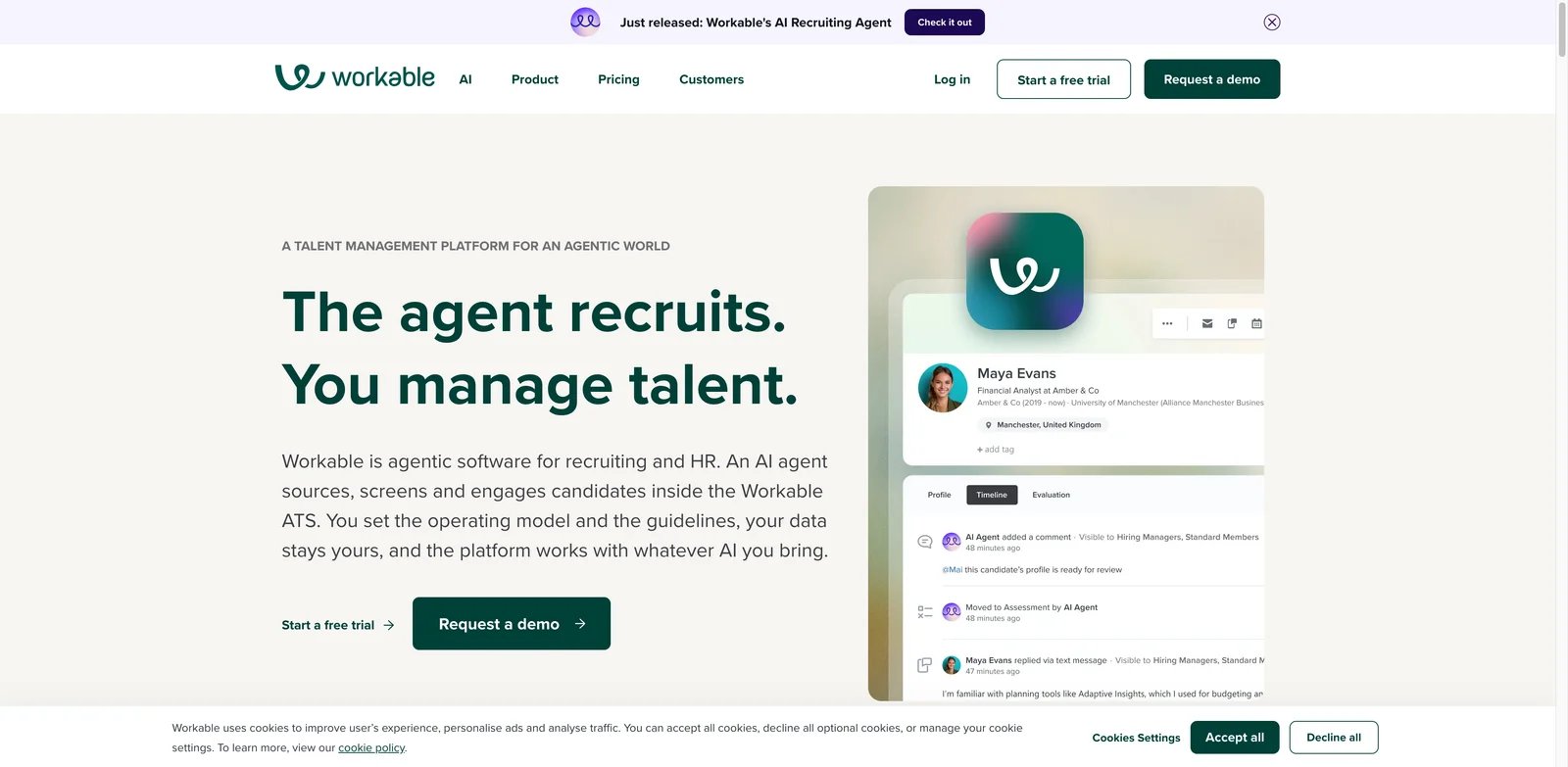
Smaller hiring teams rarely have time for a six-month talent-platform rollout; they need a practical ATS that recruiters and hiring managers can use quickly. Workable is strongest for SMB and mid-market teams needing a practical ATS with clearer pricing. Its 86.5 overall score comes from 90.0 functionality, 90.0 user experience, 86.0 AI innovation, 78.0 value for money, and 87.0 user feedback.
Key Features
- Practical ATS coverage: Job posting, screening, collaboration, and reporting cover the daily workflow for teams that need one hiring system.
- Budget visibility: Clearer public pricing signals help smaller teams compare before a sales call.
- Hiring-manager workflow: Workable is best when scorecards, templates, and feedback loops matter more than advanced talent intelligence.
Pricing & Plans
Workable has a clearer public pricing signal than many enterprise recruiting platforms: About $299/month and up, depending on scale. Confirm billing terms, included recruiter seats, AI feature availability, usage limits, and whether sourcing or automation requires a higher tier.
Pros & Cons
- Pros: practical ATS coverage with clearer public pricing; easier fit for smaller teams.
- Cons: AI talent intelligence is less deep than specialist sourcing platforms; plan limits need checking.
Limitations
Its AI depth is more practical than frontier. Teams that mainly need advanced sourcing intelligence may outgrow it. The practical risks depend on the product and may include implementation effort, ATS data quality, recruiter adoption, usage-based charges, integration limits, candidate consent, or governance requirements.
Best For
Workable is best for SMB and mid-market teams needing a practical ATS with clearer pricing. Not the right fit if your real need is a different layer of the recruiting stack, such as a simple resume parser, a candidate-side job application tool, or a generic HR system with only light recruiting support.
Get started with Workable
Metaview
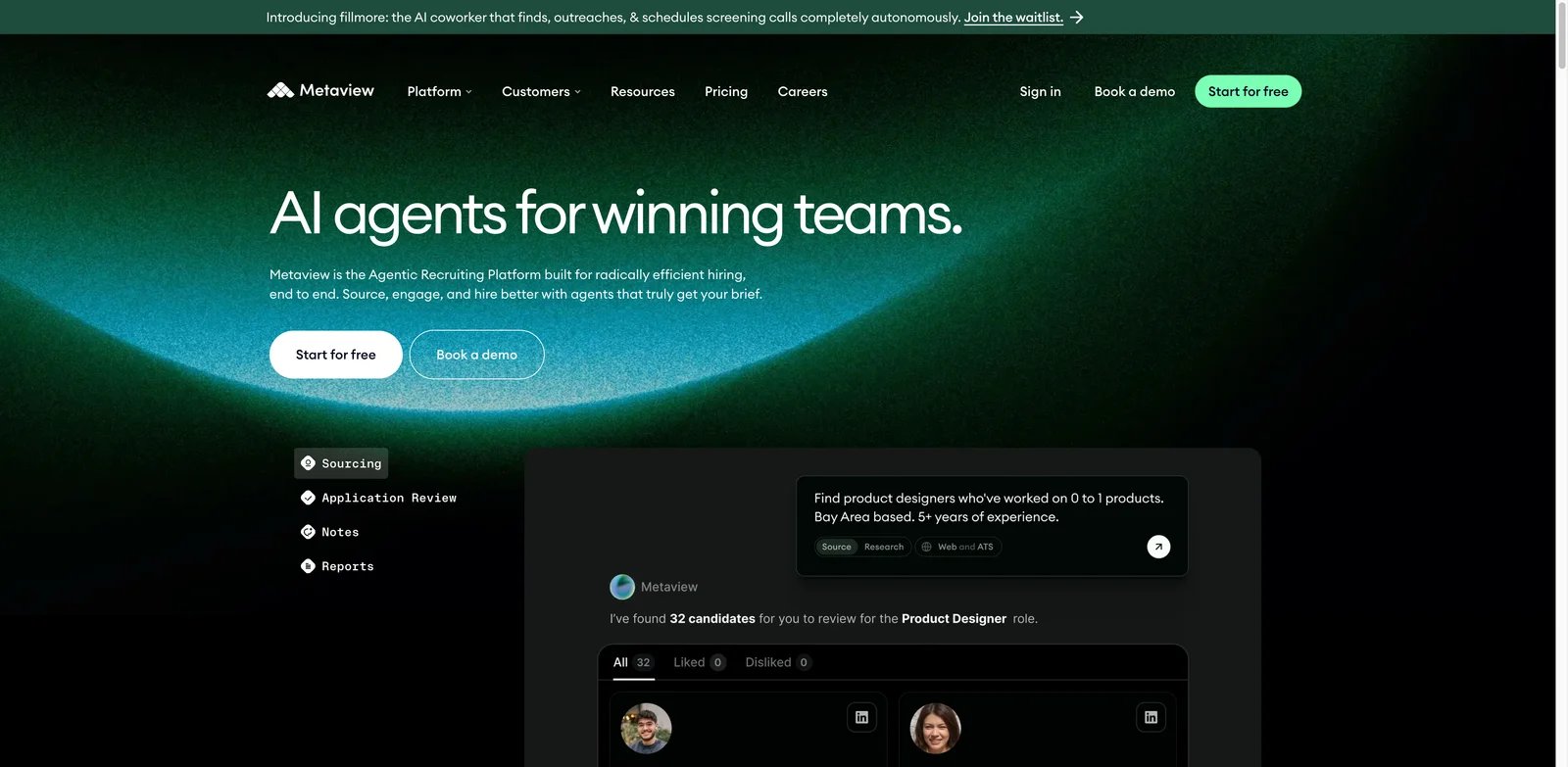
Interviewers are often asked to listen carefully, ask better follow-ups, sell the role, and capture perfect notes at the same time. Metaview is strongest for teams improving interview notes, scorecards, coaching, and hiring evidence. Its 86.4 overall score comes from 82.0 functionality, 92.0 user experience, 94.0 AI innovation, 74.0 value for money, and 93.0 user feedback.
Key Features
- Automated interview notes: Interviewers can focus on the candidate while Metaview captures notes and evidence.
- Structured feedback: Summaries and scorecard support help reduce reliance on memory and rushed debriefs.
- ATS and meeting fit: Meeting and ATS integrations keep interview intelligence connected to the hiring record.
Pricing & Plans
Metaview has a limited free entry signal, but the real cost depends on paid usage, recruiter seats, contacts, integrations, and whether the free tier includes the AI workflow your team needs.
Pros & Cons
- Pros: strong interview evidence and notes; newer agents broaden the platform beyond interviews.
- Cons: not a full ATS replacement; buyers must evaluate agent packaging and ATS write-back.
Limitations
Metaview does not replace an ATS, but it now supports sourcing, outreach, job posts, application review, interview notes, and reporting. Buyers should evaluate agent packaging, usage limits, ATS write-back, and adoption. The practical risks depend on the product and may include implementation effort, ATS data quality, recruiter adoption, usage-based charges, integration limits, candidate consent, or governance requirements.
Best For
Metaview is best for teams improving interview notes, scorecards, coaching, and hiring evidence. Not the right fit if your real need is a different layer of the recruiting stack, such as a simple resume parser, a candidate-side job application tool, or a generic HR system with only light recruiting support.
Get started with Metaview
Zoho Recruit
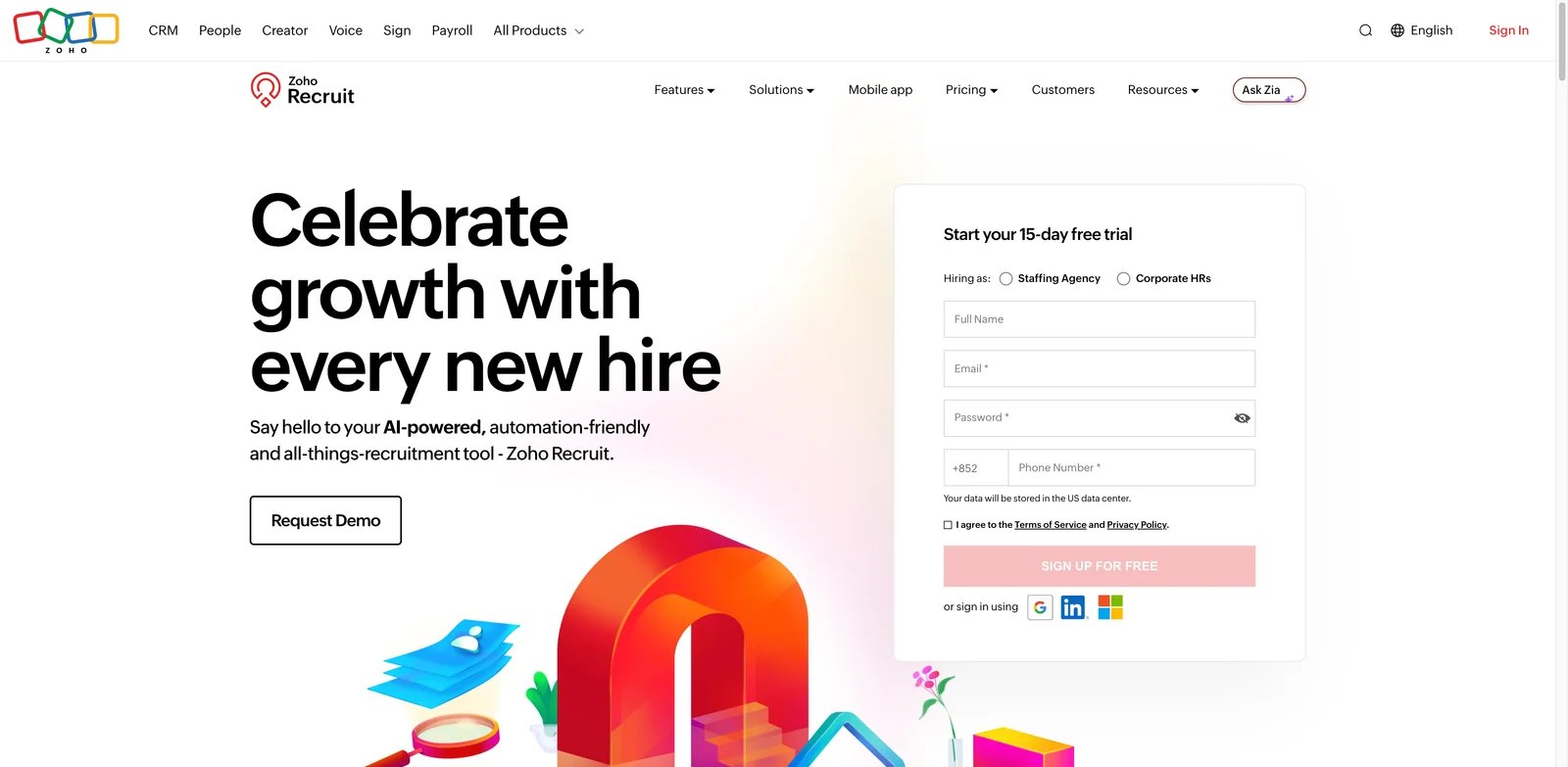
Budget-sensitive recruiting teams still need an ATS, candidate database, and basic automation without paying enterprise platform prices. Zoho Recruit is strongest for budget-conscious recruiters that need ATS and CRM basics. Its 85.6 overall score comes from 88.0 functionality, 82.0 user experience, 80.0 AI innovation, 92.0 value for money, and 87.0 user feedback.
Key Features
- Low-cost ATS and CRM: Recruiting teams get applicant tracking and candidate relationship basics at a lower entry point.
- Zoho ecosystem: Teams already using Zoho apps can connect recruiting with broader business operations.
- Web and mobile access: Recruiters can manage candidate work across office, field, and mobile contexts.
Pricing & Plans
Zoho Recruit has a clearer public pricing signal than many enterprise recruiting platforms: About $30/recruiter/month and up. Confirm billing terms, included recruiter seats, AI feature availability, usage limits, and whether sourcing or automation requires a higher tier.
Pros & Cons
- Pros: low-cost ATS and CRM basics; useful for teams already in the Zoho ecosystem.
- Cons: denser setup experience; AI differentiation is lighter than specialist recruiting tools.
Limitations
The interface and configuration can feel dense, and the AI differentiation is lighter than specialist recruiting AI platforms. The practical risks depend on the product and may include implementation effort, ATS data quality, recruiter adoption, usage-based charges, integration limits, candidate consent, or governance requirements.
Best For
Zoho Recruit is best for budget-conscious recruiters that need ATS and CRM basics. Not the right fit if your real need is a different layer of the recruiting stack, such as a simple resume parser, a candidate-side job application tool, or a generic HR system with only light recruiting support.
Get started with Zoho Recruit
SeekOut
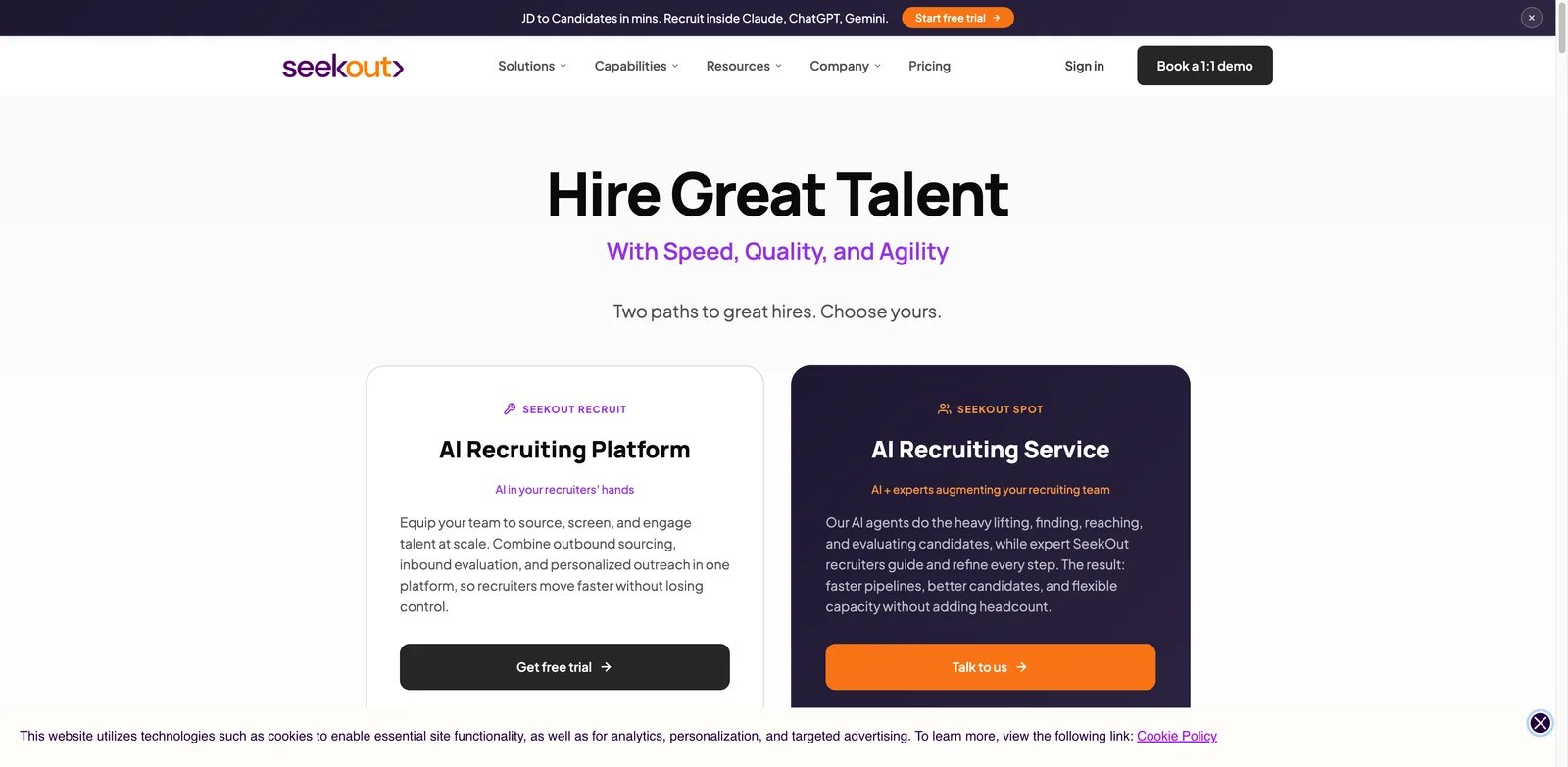
When inbound applicants are not enough, recruiters need a way to map the talent market before competitors reach the same candidates. SeekOut is strongest for sourcing teams building talent pools and market maps from candidate data. Its 85.3 overall score comes from 87.0 functionality, 88.0 user experience, 89.0 AI innovation, 75.0 value for money, and 87.0 user feedback.
Key Features
- Talent search: SeekOut helps recruiters find candidate profiles beyond inbound applicants.
- Talent pools: Recruiters can organize prospects and market maps before candidates become active applicants.
- Strategic sourcing: The product is useful for diversity, niche-skill, and competitive market research.
Pricing & Plans
SeekOut Recruit Core costs $149/month when paid annually or $179/month when billed monthly and includes a 14-day trial. Recruit Sourcing, integration, and full-funnel plans require custom quotes. Ask for recruiter-seat costs, hiring-manager access, requisition or candidate limits, AI usage limits, implementation fees, contract length, data-processing terms, and whether advanced AI modules are packaged separately.
Pros & Cons
- Pros: strong talent sourcing and market mapping; public Recruit Core entry price improves budget visibility.
- Cons: advanced full-funnel capabilities and integrations require custom plans; not a hiring system of record.
Limitations
It is a sourcing and talent-intelligence layer, not a full hiring operating system. Pricing and usage limits require discovery. The practical risks depend on the product and may include implementation effort, ATS data quality, recruiter adoption, usage-based charges, integration limits, candidate consent, or governance requirements.
Best For
SeekOut is best for sourcing teams building talent pools and market maps from candidate data. Not the right fit if your real need is a different layer of the recruiting stack, such as a simple resume parser, a candidate-side job application tool, or a generic HR system with only light recruiting support.
Get started with SeekOut
Loxo
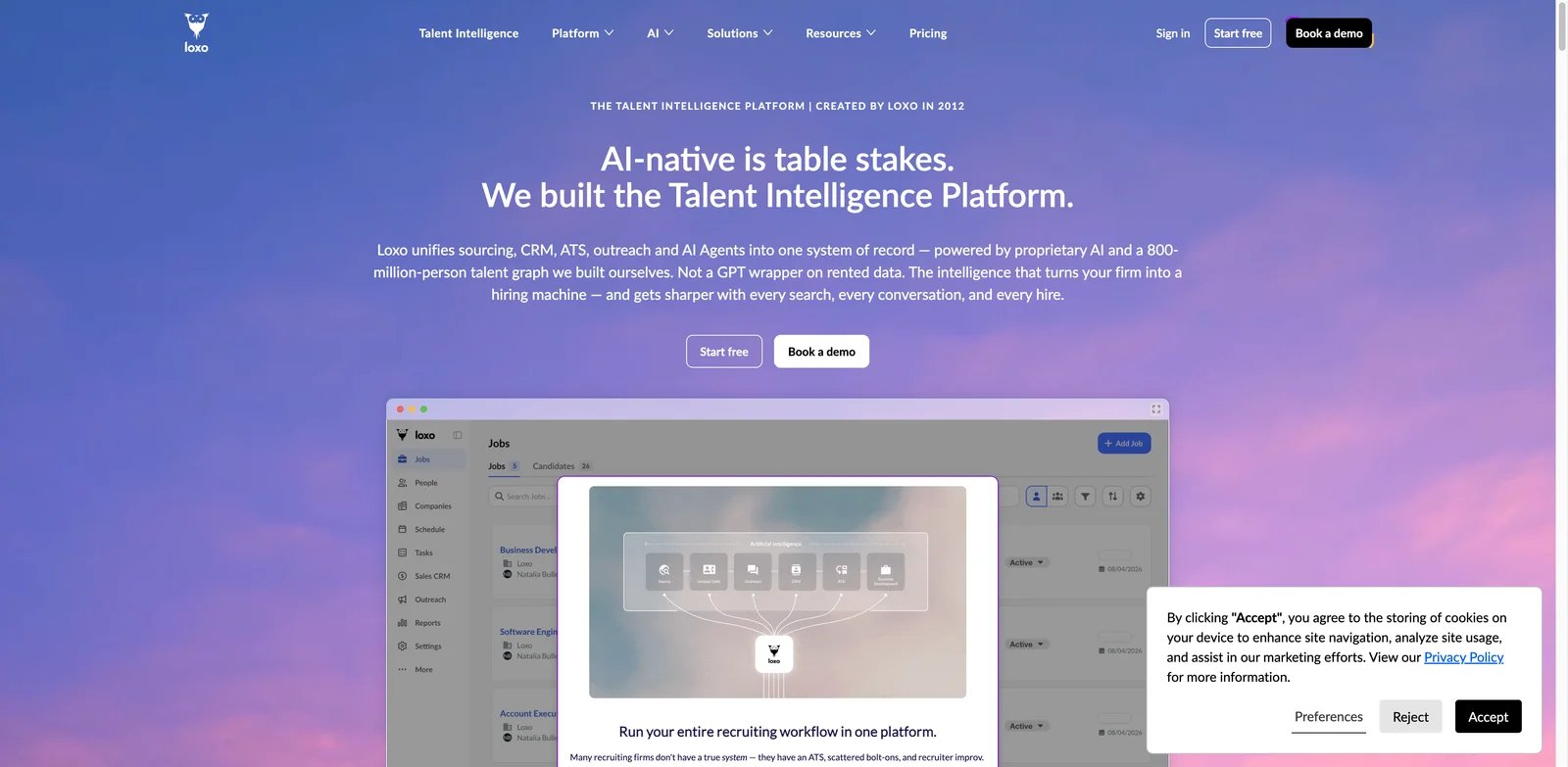
Recruiting agencies have a different workflow from in-house TA teams: candidates, clients, outreach, and placements all have to move together. Loxo is strongest for agencies and search firms combining ATS, CRM, sourcing, and outreach. Its 84.9 overall score comes from 93.0 functionality, 82.0 user experience, 89.0 AI innovation, 72.0 value for money, and 89.0 user feedback.
Key Features
- Agency workflow: ATS, CRM, sourcing, and outreach support the candidate-client rhythm of search firms.
- Broad platform coverage: Teams can reduce tool sprawl across sourcing, pipeline, and communication.
- Entry testing: The limited free tier makes initial evaluation easier than pure enterprise quote motions.
Pricing & Plans
Loxo offers a Free plan for one user and a Basic plan at $169 per user per month, billed annually. Professional and Enterprise require quotes, while contact data, AI usage, sourcing features, and fair-use limits can affect total cost. The real cost depends on paid usage, recruiter seats, contacts, integrations, and whether the free tier includes the AI workflow your team needs.
Pros & Cons
- Pros: agency-friendly ATS, CRM, sourcing, and outreach in one workflow; free and Basic tiers are public.
- Cons: contact data, sourcing usage, AI limits, and fair-use rules can affect real cost.
Limitations
The broad workflow is attractive for agencies, but teams should model contact limits, enrichment quality, and outreach deliverability. The practical risks depend on the product and may include implementation effort, ATS data quality, recruiter adoption, usage-based charges, integration limits, candidate consent, or governance requirements.
Best For
Loxo is best for agencies and search firms combining ATS, CRM, sourcing, and outreach. Not the right fit if your real need is a different layer of the recruiting stack, such as a simple resume parser, a candidate-side job application tool, or a generic HR system with only light recruiting support.
Get started with Loxo
Greenhouse
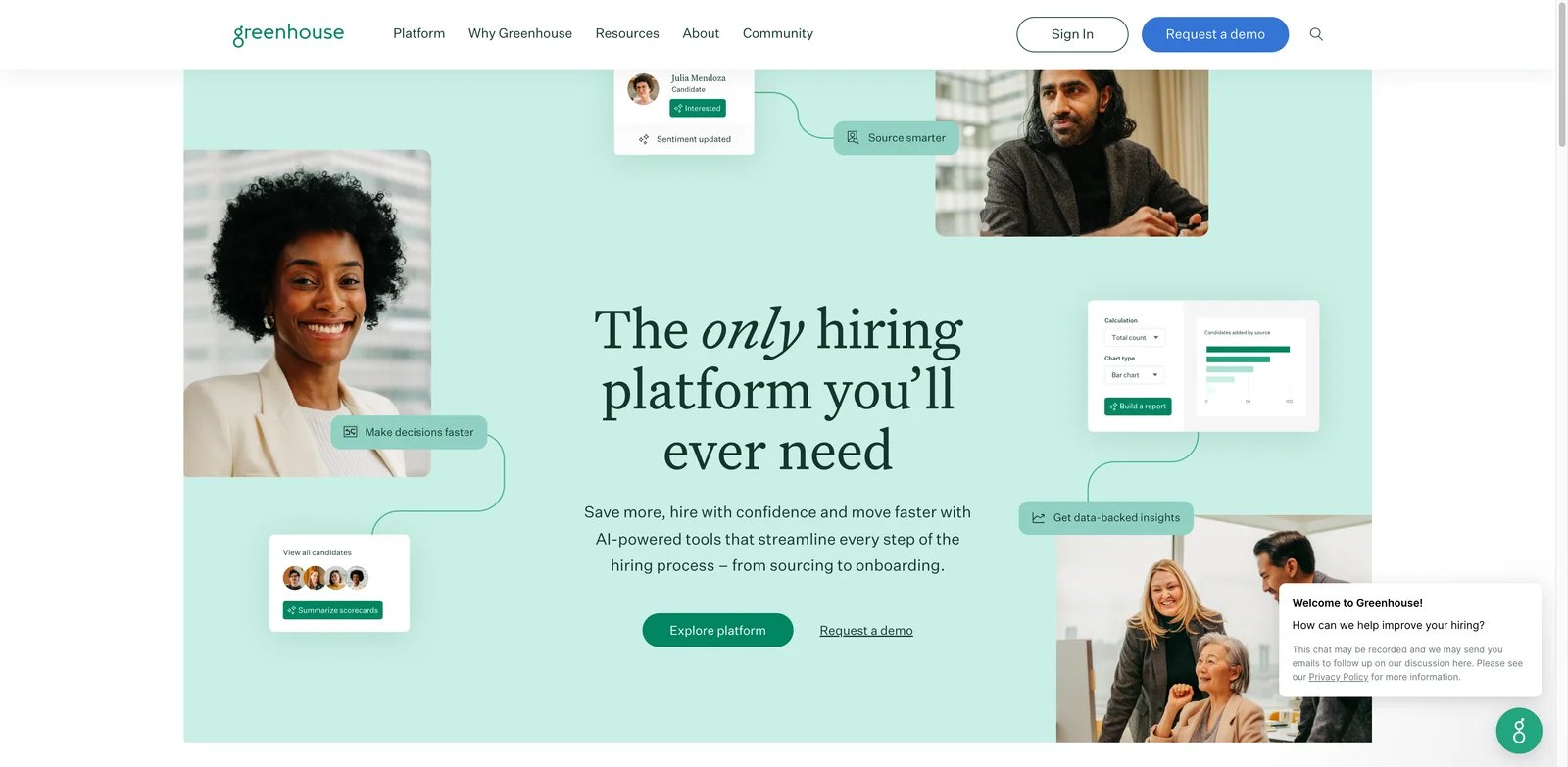
Structured hiring breaks down when scorecards, approvals, interview plans, and integrations become optional side processes. Greenhouse is strongest for structured hiring teams that need mature ATS workflows and integrations. Its 84.5 overall score comes from 93.0 functionality, 90.0 user experience, 85.0 AI innovation, 65.0 value for money, and 87.0 user feedback.
Key Features
- Structured hiring: Scorecards, approvals, interview plans, and workflows help teams reduce ad hoc hiring decisions.
- Integration ecosystem: A mature marketplace connects assessments, HRIS, scheduling, background checks, and analytics tools.
- AI inside ATS process: AI enhancements support an existing hiring workflow instead of forcing a separate recruiting system.
Pricing & Plans
Greenhouse uses quote-based pricing rather than a simple public monthly rate. Ask for recruiter-seat costs, hiring-manager access, requisition or candidate limits, AI usage limits, implementation fees, contract length, data-processing terms, and whether advanced AI modules are packaged separately.
Pros & Cons
- Pros: mature structured hiring workflow; deep integration ecosystem.
- Cons: enterprise implementation and add-on costs need planning; not a sourcing-first product.
Limitations
Greenhouse is mature but enterprise-weighted. Implementation, migration, and add-on costs need planning. The practical risks depend on the product and may include implementation effort, ATS data quality, recruiter adoption, usage-based charges, integration limits, candidate consent, or governance requirements.
Best For
Greenhouse is best for structured hiring teams that need mature ATS workflows and integrations. Not the right fit if your real need is a different layer of the recruiting stack, such as a simple resume parser, a candidate-side job application tool, or a generic HR system with only light recruiting support.
Get started with Greenhouse
Humanly
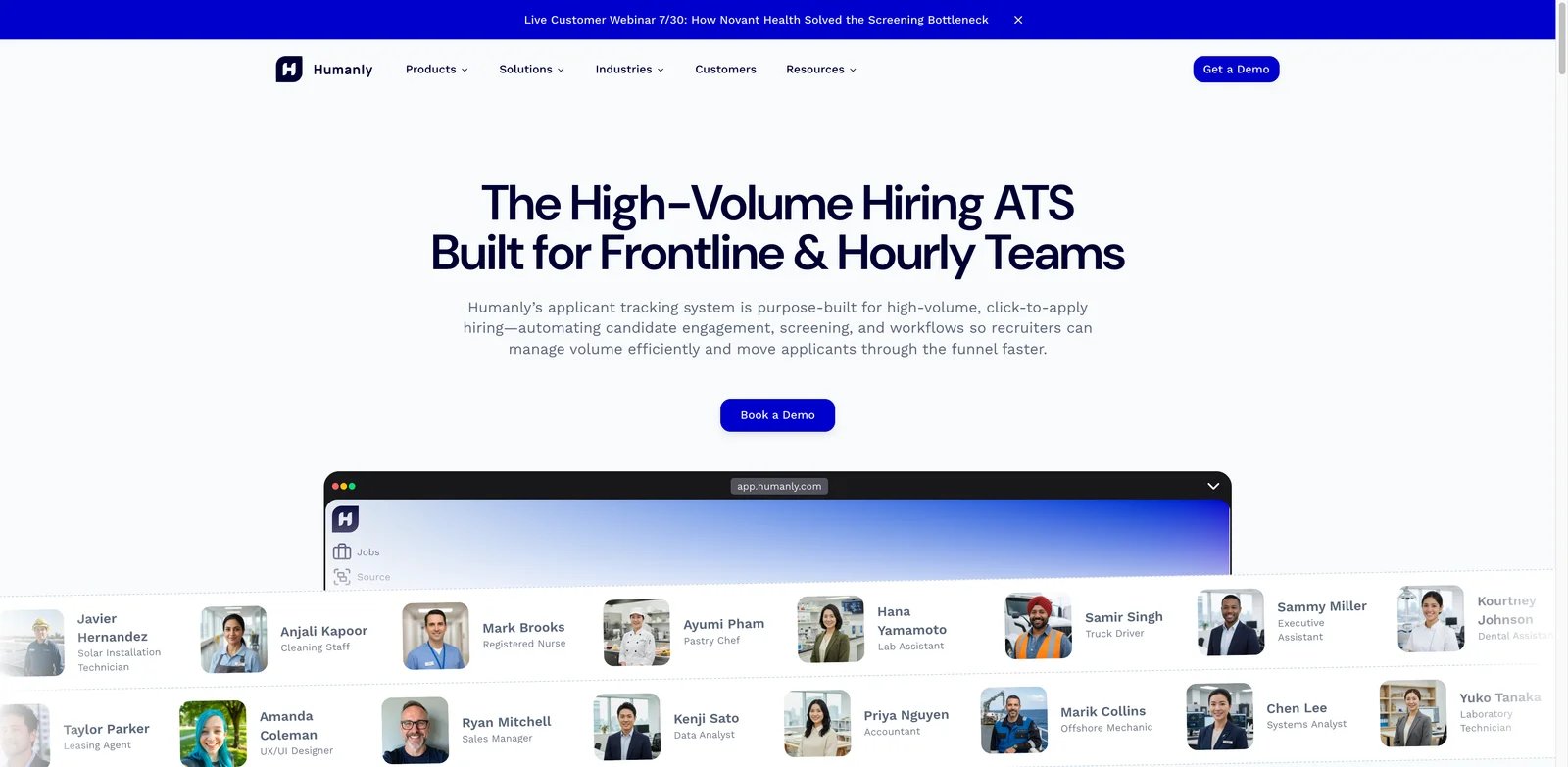
High applicant volume creates a simple operational problem: candidates expect fast answers, but recruiters cannot manually screen and schedule everyone. Humanly is strongest for teams automating candidate screening, scheduling, and interview follow-up. Its 83.4 overall score comes from 88.0 functionality, 88.0 user experience, 90.0 AI innovation, 61.0 value for money, and 92.0 user feedback.
Key Features
- Conversational screening: AI conversations help teams respond to applicants faster when recruiters cannot manually screen everyone.
- Scheduling automation: Candidate engagement and scheduling reduce repetitive coordination work.
- Interview intelligence: Humanly can connect screening conversations and interview insights back to ATS workflows.
Pricing & Plans
Humanly uses quote-based pricing rather than a simple public monthly rate. Ask for recruiter-seat costs, hiring-manager access, requisition or candidate limits, AI usage limits, implementation fees, contract length, data-processing terms, and whether advanced AI modules are packaged separately.
Pros & Cons
- Pros: high-volume candidate engagement plus AI interviewer and ATS capabilities; strong frontline hiring fit.
- Cons: scoring governance, escalation, and candidate-notice controls need careful validation.
Limitations
Humanly combines candidate engagement, screening, scheduling, structured AI interviews, and ATS capabilities for high-volume hiring. Buyers should test candidate drop-off, escalation, scoring governance, integrations, and candidate-notice controls. The practical risks depend on the product and may include implementation effort, ATS data quality, recruiter adoption, usage-based charges, integration limits, candidate consent, or governance requirements.
Best For
Humanly is best for teams automating candidate screening, scheduling, and interview follow-up. Not the right fit if your real need is a different layer of the recruiting stack, such as a simple resume parser, a candidate-side job application tool, or a generic HR system with only light recruiting support.
Get started with Humanly
Paradox
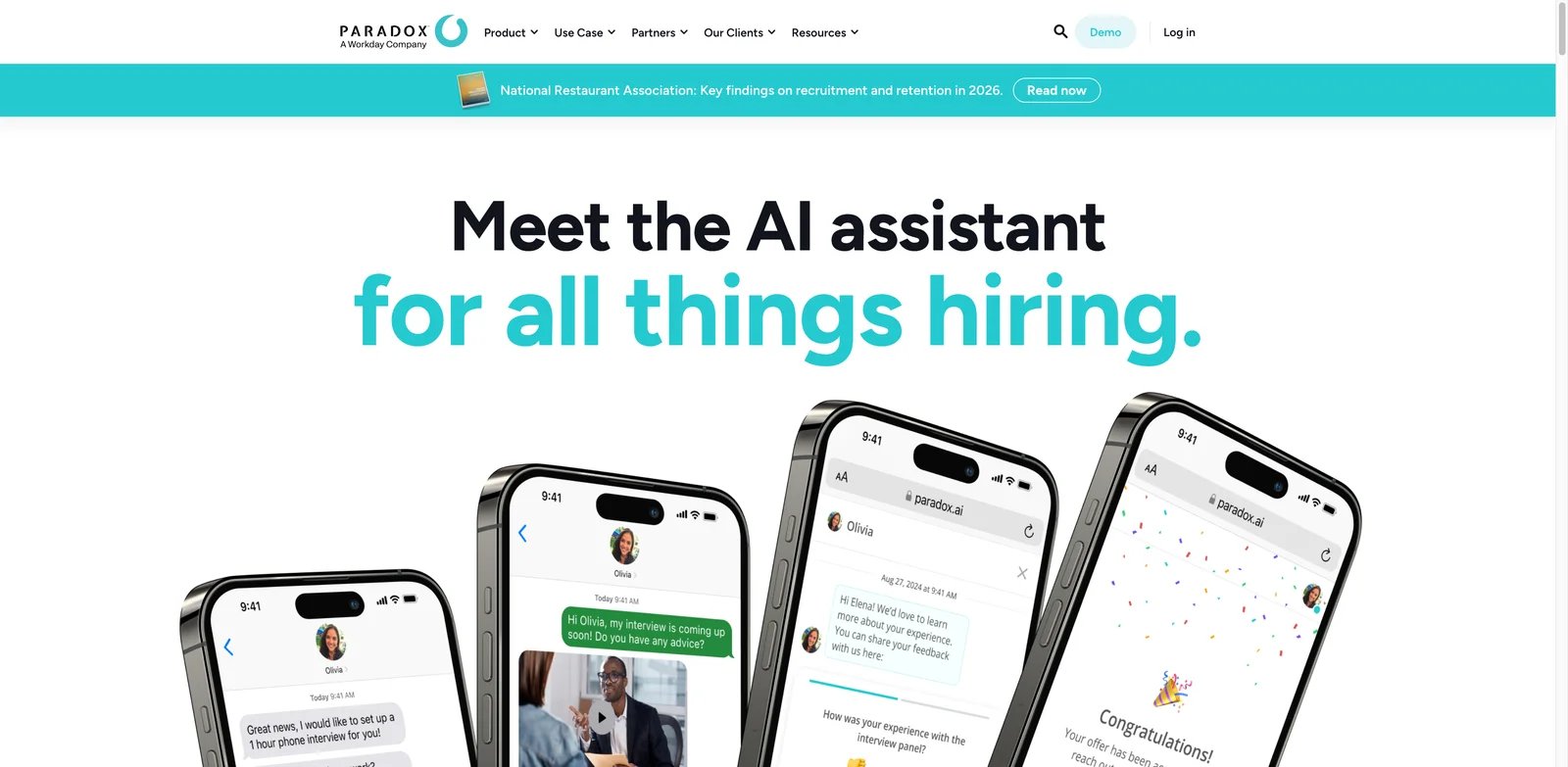
Frontline hiring often fails in the gap between candidate interest and recruiter response, especially when applicants live on mobile chat and SMS. Paradox is strongest for high-volume frontline hiring teams using chat and SMS automation. Its 83.0 overall score comes from 88.0 functionality, 88.0 user experience, 91.0 AI innovation, 61.0 value for money, and 86.0 user feedback.
Key Features
- Mobile candidate communication: Chat and SMS workflows fit hourly and frontline candidates who expect fast responses.
- Screening and scheduling: Automation reduces manual recruiter touches across repetitive roles.
- High-volume fit: Paradox is designed around candidate communication, not generic chatbot prompts.
Pricing & Plans
Paradox uses quote-based pricing rather than a simple public monthly rate. Ask for recruiter-seat costs, hiring-manager access, requisition or candidate limits, AI usage limits, implementation fees, contract length, data-processing terms, and whether advanced AI modules are packaged separately.
Pros & Cons
- Pros: strong chat and SMS workflow for hourly hiring; useful for screening and scheduling at scale.
- Cons: can be overbuilt for low-volume teams; rollout depends on candidate communication rules.
Limitations
Paradox can be overbuilt for low-volume hiring. Buyers should validate implementation scope and escalation rules. The practical risks depend on the product and may include implementation effort, ATS data quality, recruiter adoption, usage-based charges, integration limits, candidate consent, or governance requirements.
Best For
Paradox is best for high-volume frontline hiring teams using chat and SMS automation. Not the right fit if your real need is a different layer of the recruiting stack, such as a simple resume parser, a candidate-side job application tool, or a generic HR system with only light recruiting support.
Get started with Paradox
Eightfold AI
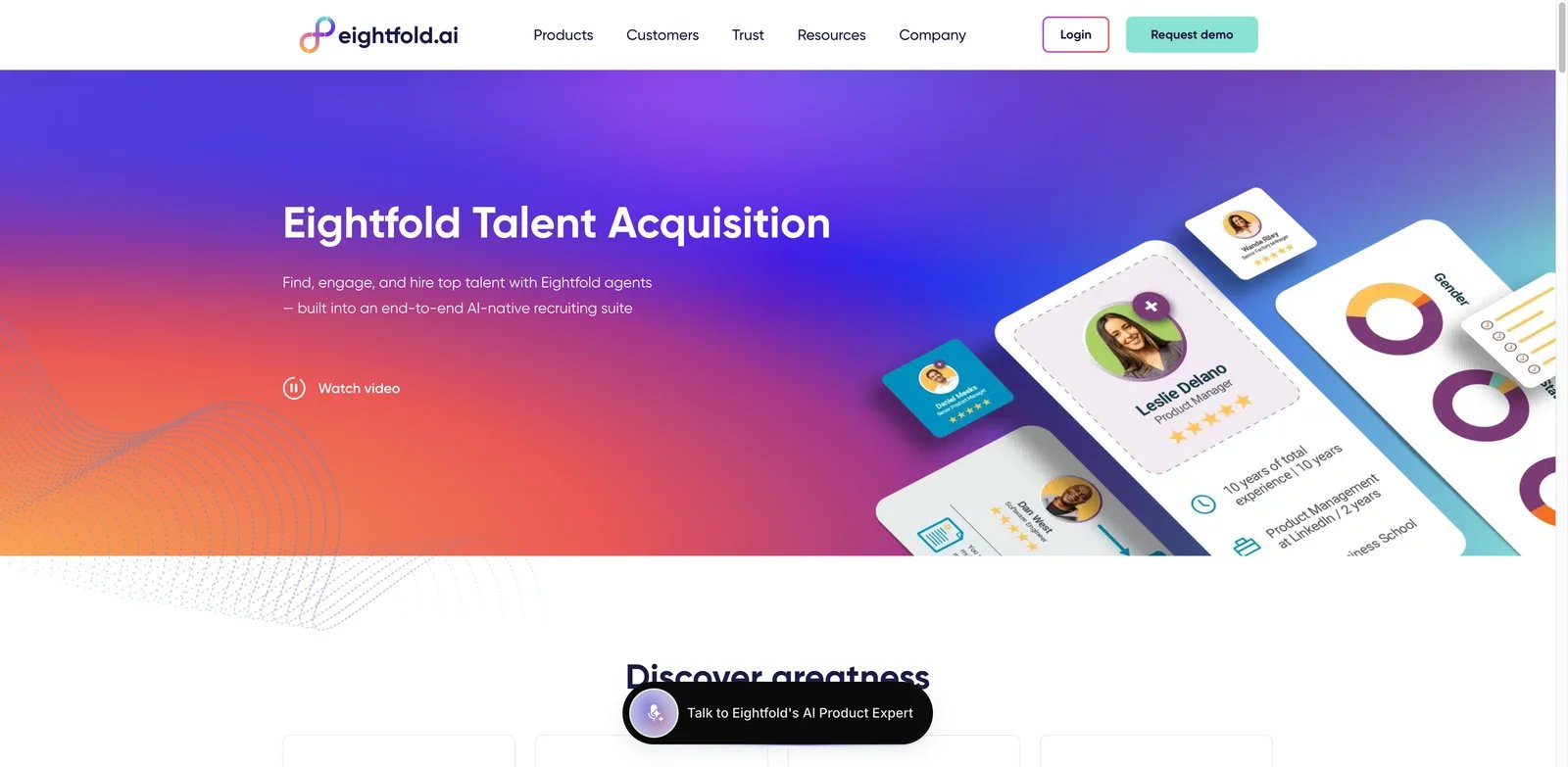
Large enterprises rarely struggle with one open role; they struggle to understand skills, internal mobility, and talent supply across the organization. Eightfold AI is strongest for enterprises connecting external hiring, internal mobility, and talent intelligence. Its 82.2 overall score comes from 94.0 functionality, 80.0 user experience, 96.0 AI innovation, 58.0 value for money, and 79.0 user feedback.
Key Features
- Talent intelligence: Skills and matching data connect external hiring with internal mobility and workforce planning.
- AI matching: The platform can go beyond job titles when matching candidates and employees to opportunities.
- Enterprise data model: Eightfold is most useful when talent leaders need one intelligence layer across hiring and mobility.
Pricing & Plans
Eightfold AI uses quote-based pricing rather than a simple public monthly rate. Ask for recruiter-seat costs, hiring-manager access, requisition or candidate limits, AI usage limits, implementation fees, contract length, data-processing terms, and whether advanced AI modules are packaged separately.
Pros & Cons
- Pros: strong talent intelligence across hiring and internal mobility; useful for skills-based workforce planning.
- Cons: strategic platform rollout requires data governance, integrations, and change management.
Limitations
Eightfold is a strategic platform, not a quick recruiting widget. Data governance, change management, and integration work matter. The practical risks depend on the product and may include implementation effort, ATS data quality, recruiter adoption, usage-based charges, integration limits, candidate consent, or governance requirements.
Best For
Eightfold AI is best for enterprises connecting external hiring, internal mobility, and talent intelligence. Not the right fit if your real need is a different layer of the recruiting stack, such as a simple resume parser, a candidate-side job application tool, or a generic HR system with only light recruiting support.
Get started with Eightfold AI
LinkedIn Recruiter + Hiring Assistant
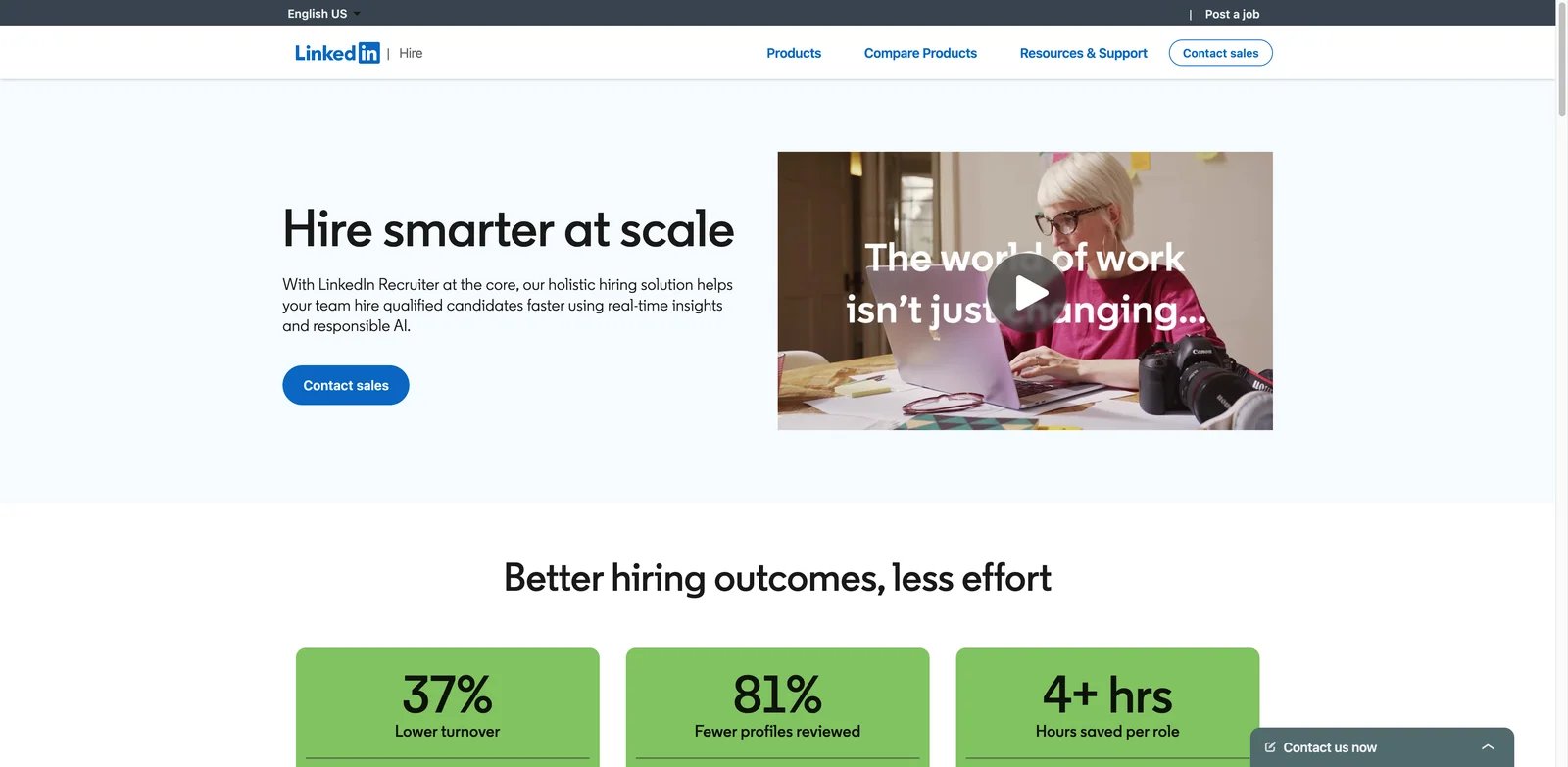
Many recruiting teams already source on LinkedIn, so the question is whether AI can make that familiar workflow faster without adding another sourcing database. LinkedIn Recruiter + Hiring Assistant is strongest for recruiters already sourcing heavily from LinkedIn talent data. Its 81.5 overall score comes from 90.0 functionality, 86.0 user experience, 92.0 AI innovation, 52.0 value for money, and 87.0 user feedback.
Key Features
- LinkedIn talent graph: Recruiters get a large sourcing surface with familiar candidate context.
- AI-assisted workflow: Hiring Assistant can support discovery and workflow acceleration inside a tool many recruiters already use.
- Recruiter adoption: The learning curve can be lower for teams already standardized on LinkedIn sourcing.
Pricing & Plans
LinkedIn Recruiter + Hiring Assistant uses contract-based pricing rather than a simple public monthly rate. Ask for recruiter-seat costs, hiring-manager access, requisition or candidate limits, AI usage limits, implementation fees, contract length, data-processing terms, and whether advanced AI modules are packaged separately.
Pros & Cons
- Pros: familiar recruiter workflow with LinkedIn talent data; AI assistance sits where many sourcers already work.
- Cons: does not replace ATS or CRM; contract, seat, and contact limits require modeling.
Limitations
LinkedIn data is a strength, but it does not replace an ATS, CRM, or broader talent operations stack. The practical risks depend on the product and may include implementation effort, ATS data quality, recruiter adoption, usage-based charges, integration limits, candidate consent, or governance requirements.
Best For
LinkedIn Recruiter + Hiring Assistant is best for recruiters already sourcing heavily from LinkedIn talent data. Not the right fit if your real need is a different layer of the recruiting stack, such as a simple resume parser, a candidate-side job application tool, or a generic HR system with only light recruiting support.
Get started with LinkedIn Recruiter + Hiring Assistant
Phenom
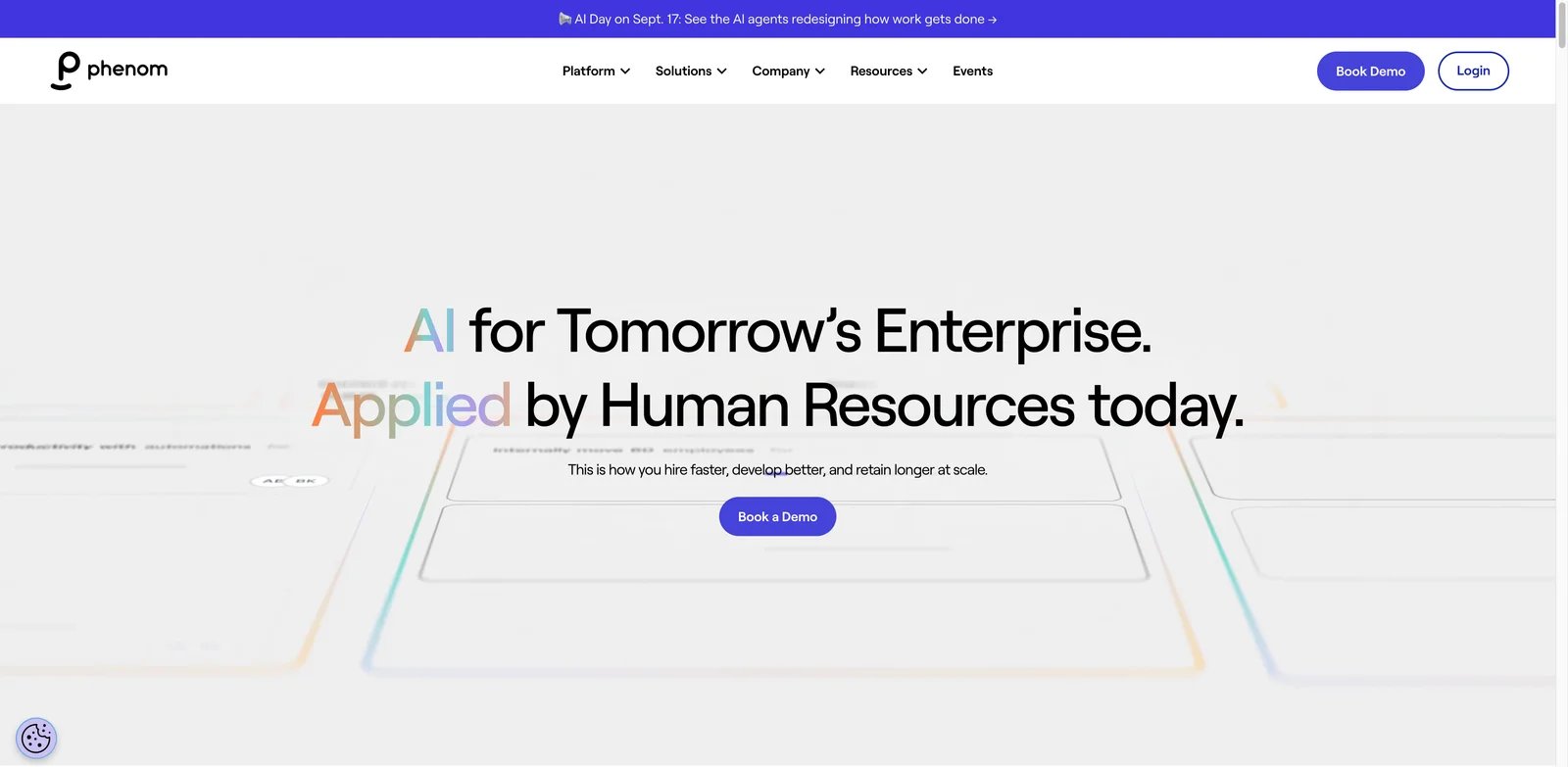
Enterprise candidate experience is not just a career site problem; it touches CRM, personalization, automation, and recruiter follow-up. Phenom is strongest for enterprises improving career sites, candidate experience, CRM, and automation. Its 81.3 overall score comes from 94.0 functionality, 80.0 user experience, 92.0 AI innovation, 56.0 value for money, and 82.0 user feedback.
Key Features
- Candidate experience: Career site, CRM, automation, and personalization help enterprises manage the pre-application journey.
- Talent CRM: Recruiters can nurture prospects and personalize communication across campaigns.
- Enterprise system fit: Phenom is strongest when candidate experience is treated as an operating system, not a landing page project.
Pricing & Plans
Phenom uses quote-based pricing rather than a simple public monthly rate. Ask for recruiter-seat costs, hiring-manager access, requisition or candidate limits, AI usage limits, implementation fees, contract length, data-processing terms, and whether advanced AI modules are packaged separately.
Pros & Cons
- Pros: broad candidate experience, career site, CRM, and automation coverage.
- Cons: enterprise module packaging and implementation scope can be substantial.
Limitations
Phenom has deep enterprise candidate-experience coverage, but rollout scope and module packaging can be substantial. The practical risks depend on the product and may include implementation effort, ATS data quality, recruiter adoption, usage-based charges, integration limits, candidate consent, or governance requirements.
Best For
Phenom is best for enterprises improving career sites, candidate experience, CRM, and automation. Not the right fit if your real need is a different layer of the recruiting stack, such as a simple resume parser, a candidate-side job application tool, or a generic HR system with only light recruiting support.
Get started with Phenom
SmartRecruiters
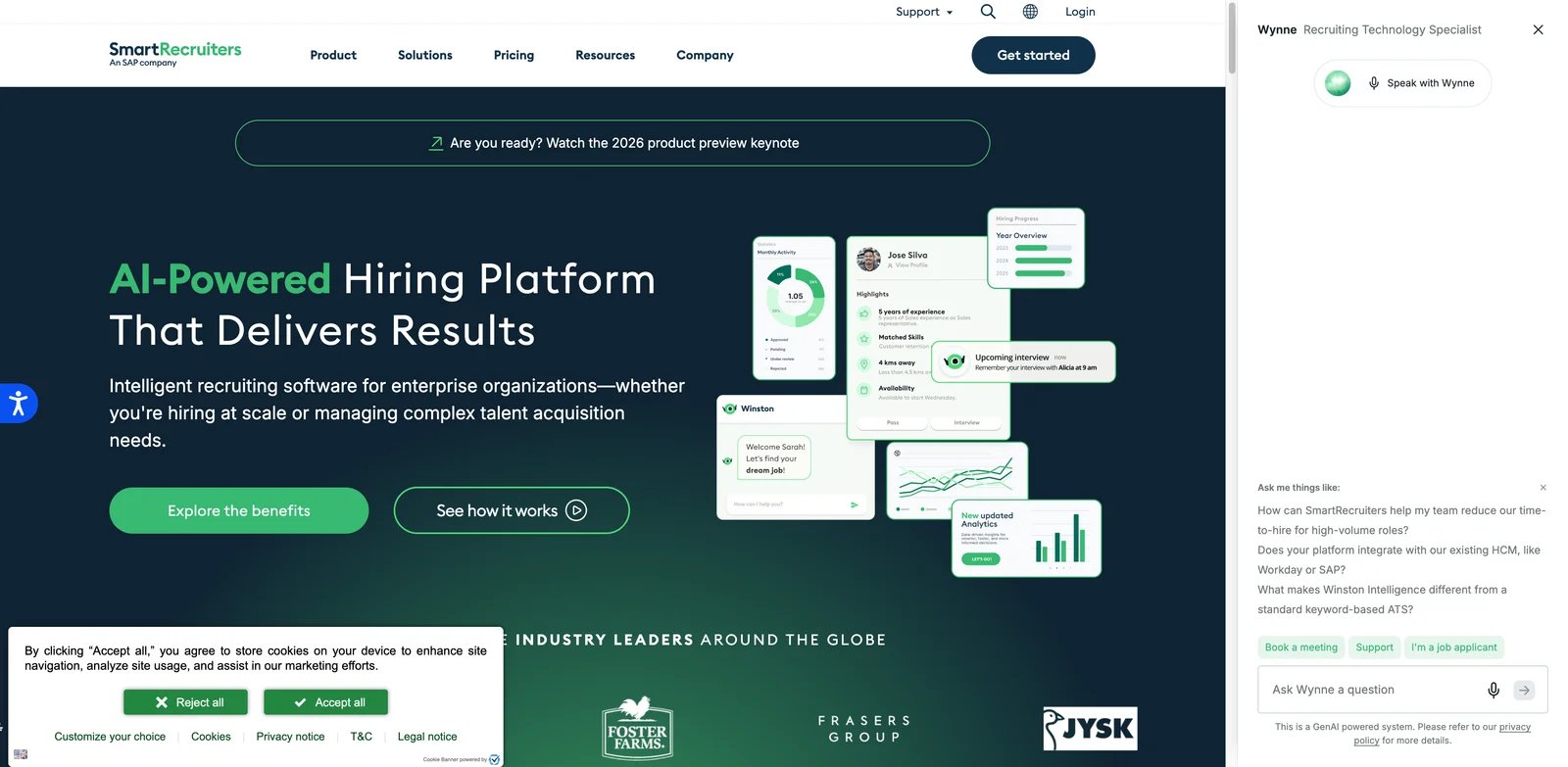
Global hiring teams need more than applicant tracking when approvals, marketplaces, collaboration, and compliance vary by region. SmartRecruiters is strongest for global teams that want enterprise ATS, marketplace, and collaboration tools. Its 81.1 overall score comes from 92.0 functionality, 81.0 user experience, 90.0 AI innovation, 58.0 value for money, and 82.0 user feedback.
Key Features
- Enterprise recruiting suite: ATS, collaboration, marketplace integrations, and mobile support help distributed teams standardize hiring.
- AI-assisted hiring: Matching and workflow assistance can improve efficiency inside a broader recruiting suite.
- Marketplace model: Teams can extend the core platform without rebuilding every recruiting process.
Pricing & Plans
SmartRecruiters publicly lists its Essential plan starting at $14,995, while Professional, High Volume, and Complete require custom quotes. The public page does not specify the billing period attached to the starting price. Ask for recruiter-seat costs, hiring-manager access, requisition or candidate limits, AI usage limits, implementation fees, contract length, data-processing terms, and whether advanced AI modules are packaged separately.
Pros & Cons
- Pros: enterprise ATS suite with marketplace and collaboration depth; Essential starting price is public.
- Cons: higher tiers require quotes; the starting price billing period must be confirmed.
Limitations
SmartRecruiters is strongest as a suite. Teams only needing AI sourcing or interview notes may find it too broad. The practical risks depend on the product and may include implementation effort, ATS data quality, recruiter adoption, usage-based charges, integration limits, candidate consent, or governance requirements.
Best For
SmartRecruiters is best for global teams that want enterprise ATS, marketplace, and collaboration tools. Not the right fit if your real need is a different layer of the recruiting stack, such as a simple resume parser, a candidate-side job application tool, or a generic HR system with only light recruiting support.
Get started with SmartRecruiters
BrightHire
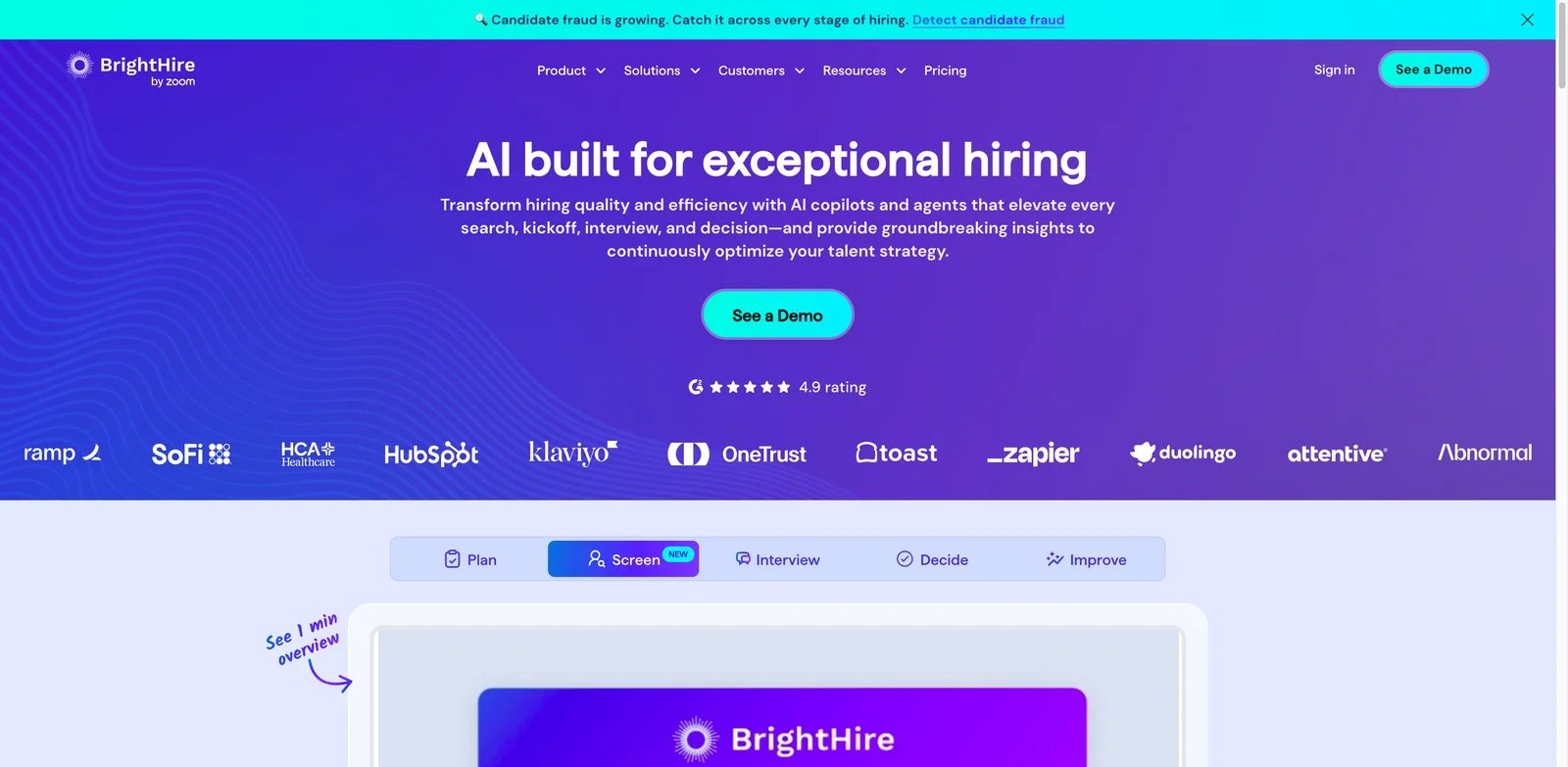
Interview quality is hard to improve when feedback depends on rushed notes, inconsistent debriefs, and uneven interviewer habits. BrightHire is strongest for hiring teams standardizing interviews, coaching, and feedback quality. Its 80.8 overall score comes from 78.0 functionality, 89.0 user experience, 90.0 AI innovation, 60.0 value for money, and 90.0 user feedback.
Key Features
- Interview evidence: Recording and notes help teams capture signal without relying on memory.
- Interviewer coaching: Quality controls and coaching support consistent interviewer behavior.
- Workflow connection: Meeting and ATS integrations keep interview insights attached to the candidate record.
Pricing & Plans
BrightHire uses quote-based pricing rather than a simple public monthly rate. Ask for recruiter-seat costs, hiring-manager access, requisition or candidate limits, AI usage limits, implementation fees, contract length, data-processing terms, and whether advanced AI modules are packaged separately.
Pros & Cons
- Pros: interview intelligence plus automated first-round screening; useful for coaching and evidence capture.
- Cons: not a sourcing or ATS platform; recording consent and candidate experience need governance.
Limitations
BrightHire does not replace candidate sourcing, an ATS, or pipeline management. However, BrightHire Screen can automate structured first-round voice or video interviews alongside its interview notes, evidence, and coaching features. The practical risks depend on the product and may include implementation effort, ATS data quality, recruiter adoption, usage-based charges, integration limits, candidate consent, or governance requirements.
Best For
BrightHire is best for hiring teams standardizing interviews, coaching, and feedback quality. Not the right fit if your real need is a different layer of the recruiting stack, such as a simple resume parser, a candidate-side job application tool, or a generic HR system with only light recruiting support.
Get started with BrightHire
Findem
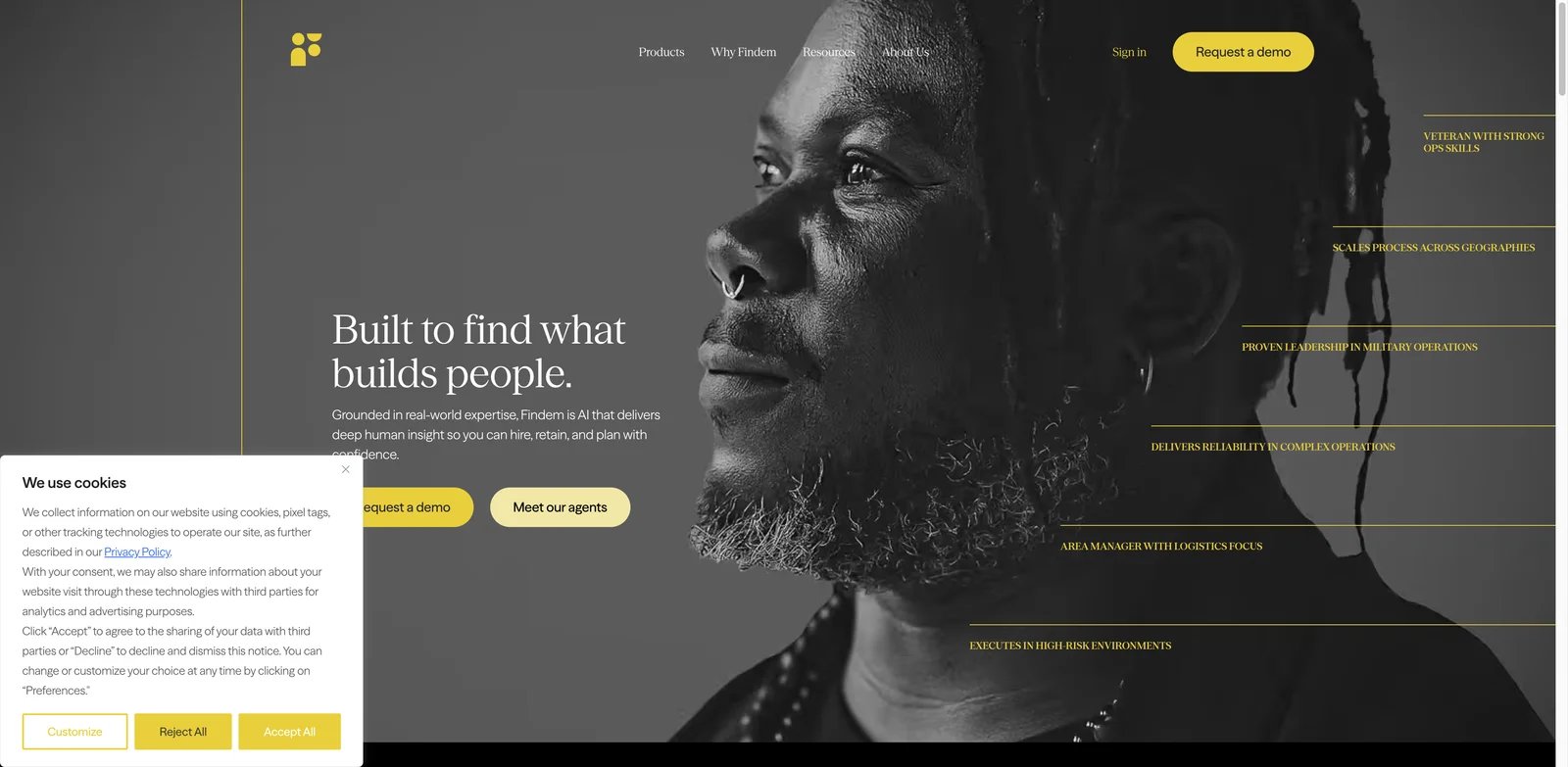
Hard-to-fill searches often start with vague titles, but sourcing teams actually need precise attributes, skills, and experience patterns. Findem is strongest for teams needing attribute-based sourcing and automated talent discovery. Its 79.9 overall score comes from 86.0 functionality, 78.0 user experience, 94.0 AI innovation, 57.0 value for money, and 87.0 user feedback.
Key Features
- Attribute-based search: Teams can define talent by skills, experiences, and signals rather than only job titles.
- Automated sourcing: Recruiters can reduce manual discovery work for hard-to-fill roles.
- Talent intelligence: Findem is differentiated when precise matching and market intelligence matter.
Pricing & Plans
Findem uses quote-based pricing rather than a simple public monthly rate. Ask for recruiter-seat costs, hiring-manager access, requisition or candidate limits, AI usage limits, implementation fees, contract length, data-processing terms, and whether advanced AI modules are packaged separately.
Pros & Cons
- Pros: attribute-based sourcing can uncover candidates missed by title-based search; strong market-intelligence angle.
- Cons: value depends on data coverage and matching confidence; public price transparency is limited.
Limitations
Findem needs buyer confidence in its data coverage and attribute model. Public price transparency is limited. The practical risks depend on the product and may include implementation effort, ATS data quality, recruiter adoption, usage-based charges, integration limits, candidate consent, or governance requirements.
Best For
Findem is best for teams needing attribute-based sourcing and automated talent discovery. Not the right fit if your real need is a different layer of the recruiting stack, such as a simple resume parser, a candidate-side job application tool, or a generic HR system with only light recruiting support.
Get started with Findem
iCIMS
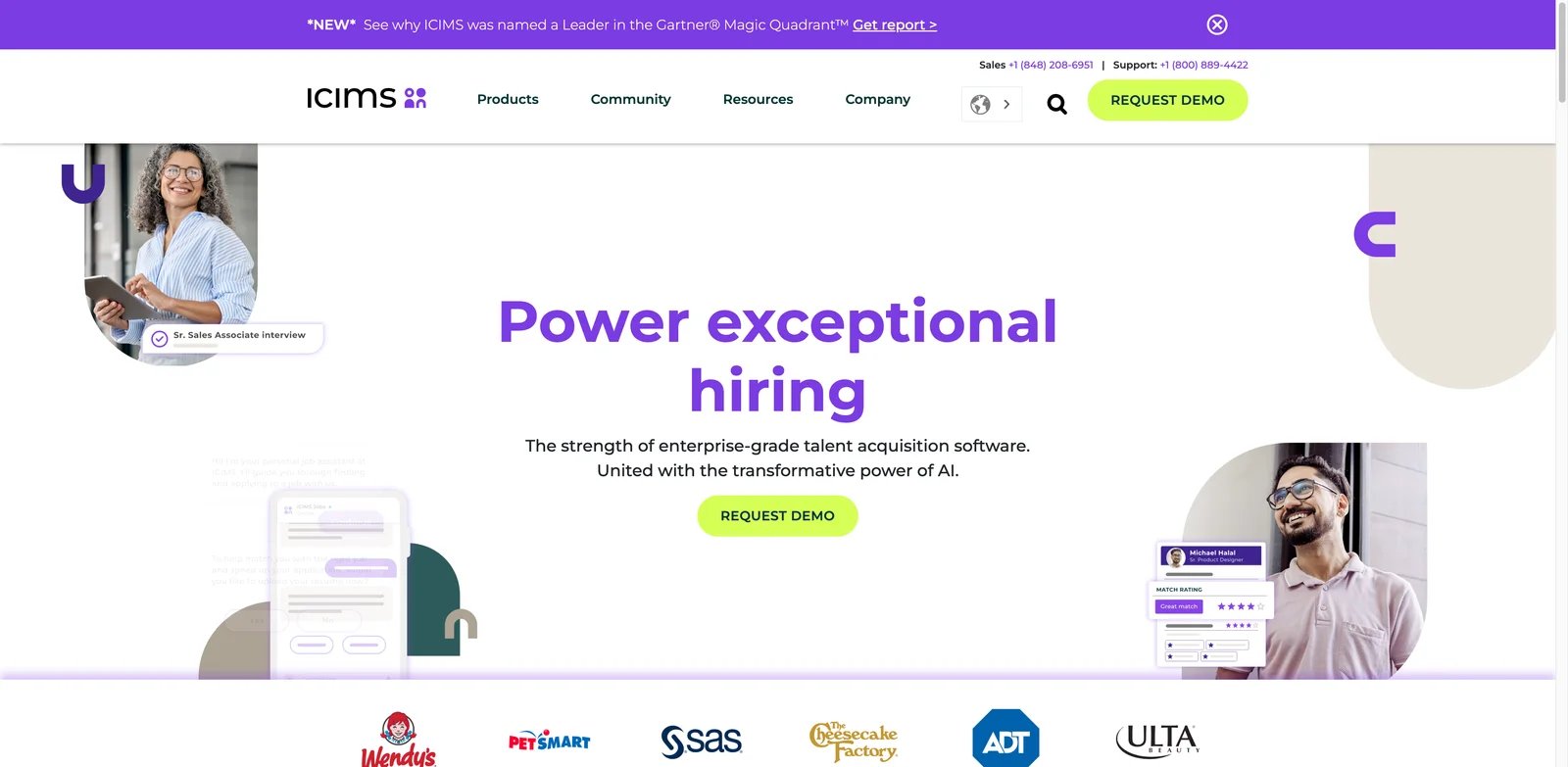
Large talent acquisition organizations need systems that can absorb complexity across brands, regions, candidate journeys, and compliance requirements. iCIMS is strongest for large enterprises managing ATS, CRM, career sites, and engagement at scale. Its 79.7 overall score comes from 95.0 functionality, 77.0 user experience, 89.0 AI innovation, 55.0 value for money, and 79.0 user feedback.
Key Features
- Enterprise TA coverage: ATS, CRM, career sites, engagement, and recruiting marketing support large talent operations.
- Complex workflow support: The platform can handle multiple brands, regions, approvals, and candidate journeys.
- AI in mature operations: AI is most useful when paired with existing enterprise recruiting process discipline.
Pricing & Plans
iCIMS uses quote-based pricing rather than a simple public monthly rate. Ask for recruiter-seat costs, hiring-manager access, requisition or candidate limits, AI usage limits, implementation fees, contract length, data-processing terms, and whether advanced AI modules are packaged separately.
Pros & Cons
- Pros: broad enterprise TA suite for ATS, CRM, career sites, engagement, and marketing.
- Cons: complexity and quote-only economics can be too heavy for smaller teams.
Limitations
iCIMS suits complex organizations, but smaller teams may struggle with system complexity and quote-only economics. The practical risks depend on the product and may include implementation effort, ATS data quality, recruiter adoption, usage-based charges, integration limits, candidate consent, or governance requirements.
Best For
iCIMS is best for large enterprises managing ATS, CRM, career sites, and engagement at scale. Not the right fit if your real need is a different layer of the recruiting stack, such as a simple resume parser, a candidate-side job application tool, or a generic HR system with only light recruiting support.
Get started with iCIMS
HireVue
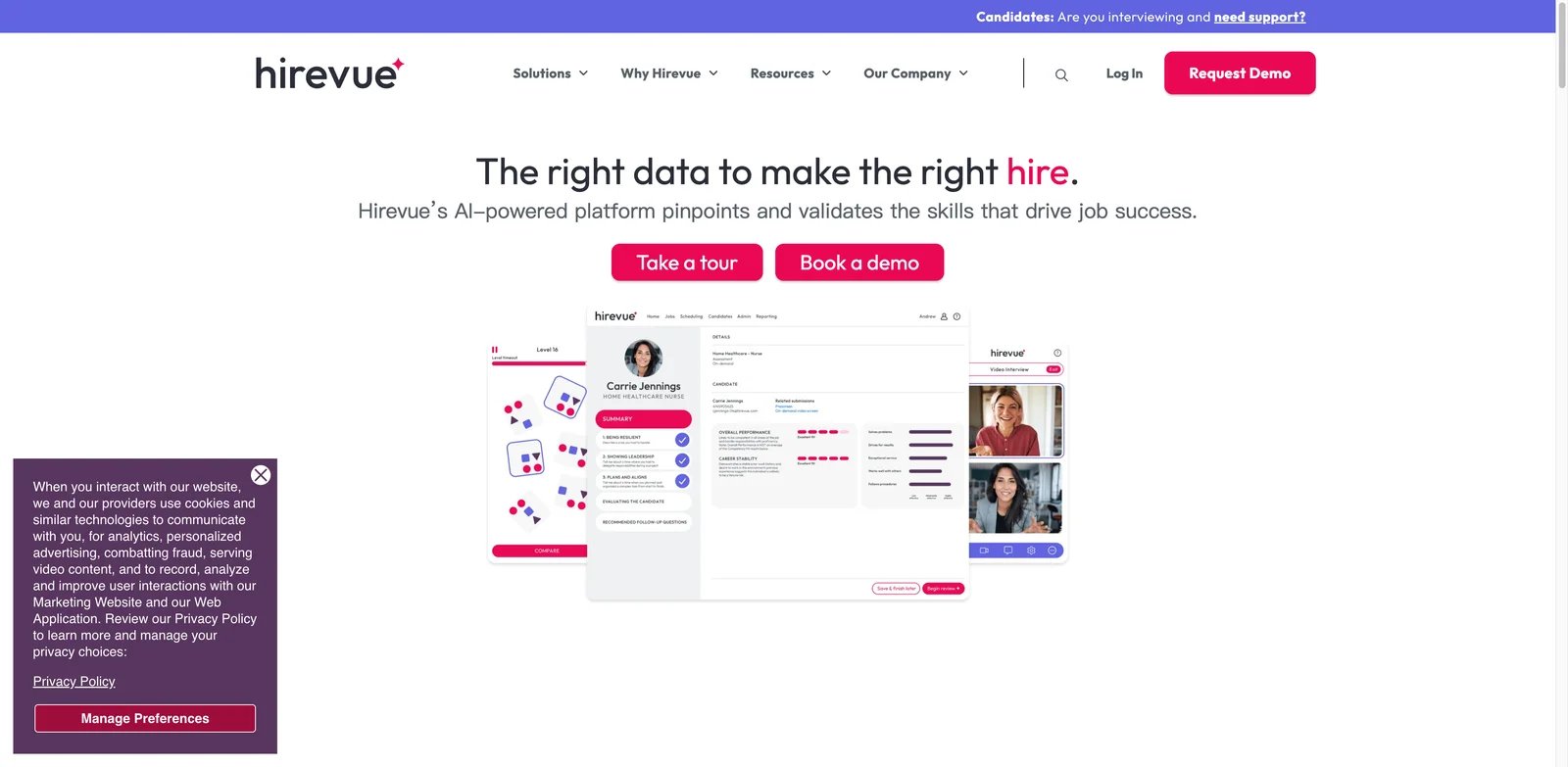
High-volume screening gets risky when speed, consistency, candidate experience, and assessment governance are all competing priorities. HireVue is strongest for high-volume teams using video interviews and structured assessments. Its 76.8 overall score comes from 87.0 functionality, 79.0 user experience, 91.0 AI innovation, 48.0 value for money, and 75.0 user feedback.
Key Features
- Video interview workflow: Video interviews and assessments support consistent early-stage evaluation.
- Structured screening: Scheduling and evaluation workflows reduce recruiter coordination load.
- Assessment depth: HireVue differs from interview-note tools because it focuses on screening and assessment, not only documentation.
Pricing & Plans
HireVue uses quote-based pricing rather than a simple public monthly rate. Ask for recruiter-seat costs, hiring-manager access, requisition or candidate limits, AI usage limits, implementation fees, contract length, data-processing terms, and whether advanced AI modules are packaged separately.
Pros & Cons
- Pros: mature video interview and assessment workflow for high-volume screening.
- Cons: assessment governance, candidate notice, and regional legal review are essential.
Limitations
HireVue requires careful governance around assessments, candidate communication, and regional hiring rules. The practical risks depend on the product and may include implementation effort, ATS data quality, recruiter adoption, usage-based charges, integration limits, candidate consent, or governance requirements.
Best For
HireVue is best for high-volume teams using video interviews and structured assessments. Not the right fit if your real need is a different layer of the recruiting stack, such as a simple resume parser, a candidate-side job application tool, or a generic HR system with only light recruiting support.
Get started with HireVue
Best AI Recruiting Tools by Use Case
For teams replacing spreadsheets and legacy ATS work
If the core pain is requisition workflow, hiring-manager collaboration, approvals, reporting, and structured interviews, start with Ashby, Greenhouse, Workable, SmartRecruiters, Zoho Recruit, or iCIMS. Ashby is the strongest modern all-around option in this research set. Workable and Zoho Recruit are easier to evaluate when public pricing matters. Greenhouse, SmartRecruiters, and iCIMS fit larger organizations with mature TA operations and integration requirements.
For sourcing teams that cannot rely on applicants alone
hireEZ, SeekOut, Findem, LinkedIn Recruiter, Gem, and Loxo are better fits when the recruiting team needs to discover, enrich, engage, and nurture candidates before they apply. hireEZ and SeekOut are sourcing-led. Findem is strongest when attribute-based matching matters. Gem and Loxo connect sourcing to CRM and outreach workflows. LinkedIn Recruiter remains hard to ignore when the team already depends on LinkedIn talent data.
For teams fixing interview quality and hiring-manager consistency
Metaview and BrightHire are the best fits when interview notes, structured feedback, coaching, and hiring evidence are the bottleneck. They do not replace an ATS, but they can improve a stage where many recruiting processes lose signal. HireVue is the stronger choice for high-volume video interviews and assessment workflows, especially when early-stage screening needs to be standardized.
For high-volume and frontline hiring
Humanly and Paradox are the clearest fits when candidates need fast chat or SMS responses, screening, scheduling, and follow-up at scale. Paradox is especially relevant for hourly and frontline workflows. Humanly is better when conversational engagement and interview intelligence need to connect to ATS workflows. In both cases, governance and candidate communication rules should be tested before broad automation.
For enterprise talent intelligence and candidate experience
Eightfold AI, Phenom, and iCIMS fit organizations that treat recruiting as part of a broader talent system. Eightfold AI is strongest for talent intelligence and internal mobility. Phenom is strongest for career site, CRM, personalization, and candidate experience. iCIMS is a broad enterprise suite for organizations that need multiple TA modules under one vendor relationship.
How to Choose the Right AI Recruiting Tools
Start by naming the workflow you are buying for. If the pain is requisition management, choose an ATS or recruiting suite before buying an AI sourcing layer. If the pain is top-of-funnel candidate discovery, shortlist hireEZ, SeekOut, Findem, Gem, Loxo, or LinkedIn Recruiter before evaluating interview tools.
Next, map what system must remain the source of truth. Teams already committed to Greenhouse, iCIMS, or SmartRecruiters may only need interview intelligence, sourcing, or conversational screening around the ATS. Teams replacing a fragmented stack should look harder at Ashby, Workable, Loxo, or Zoho Recruit.
Then model cost using your real hiring motion. Count recruiter seats, hiring-manager seats, open jobs, candidate records, sourced contacts, interviews, SMS messages, AI credits, implementation fees, and contract length. Quote-only pricing is not automatically bad, but it should trigger a proof of value with your own roles and data.
Finally, evaluate governance before automation. Ask how the vendor handles human review, bias controls, audit logs, candidate notice, data retention, integrations, and regional hiring rules. A tool that accelerates screening without clear review controls can create more risk than time savings.
Frequently Asked Questions
What are AI recruiting tools?
Are AI recruiting tools the same as an ATS?
Which AI recruiting tool is best overall?
How much do AI recruiting tools cost?
Which AI recruiting tools are best for sourcing?
Which AI recruiting tools help with interviews?
Are AI recruiting tools safe for hiring decisions?
Should small teams use enterprise AI recruiting platforms?
Get ToolWorthy Weekly
New AI tools, practical guides, and selected AI signals in one weekly brief.
Related Posts

Best AI Career Coach Tools: Choose by Career Bottleneck
Compare AI career coach tools by the career bottleneck they actually solve: exploration, a career pivot, job-search execution, market signal, or interview rehearsal.

Best AI Browser Agents for Everyday Work and Automation
Compare AI browser agents for everyday browsing, supervised assistance, managed web tasks, hosted runtimes, and code-first automation.

Best AI PDF Generators for Visual Docs and Automation
Compare AI PDF generators for visual documents, ebooks, form-to-PDF automation, and developer APIs by input, editing, export, limits, and price.
For AI tool founders
Built a tool that belongs in this decision set?
Request an editorial evaluation for possible inclusion in ToolWorthy.
Submit your tool for reviewPaid submission does not guarantee a ranking, recommendation, inclusion, or editorial outcome.
Discover More AI Tools
Browse maintained AI tool listings and source-based editorial guides, then verify current product details with the vendor for your use case.