Overview
Version note (October 7, 2026): This page covers the February 2026 Nano Banana 2 release. Its successor is Nano Banana 2.1; see that page for current changes and API migration guidance. The statements below describe the earlier release.
Nano Banana 2 (officially Gemini 3.1 Flash Image) is Google DeepMind's latest state-of-the-art image generation model, released on February 26, 2026. It bridges the gap between the original Nano Banana Pro's advanced intelligence and the rapid iteration speed of Gemini Flash, making previously Pro-exclusive image-generation capabilities available to a wider Gemini audience.
The model introduces real-time web-search grounding, subject consistency across complex multi-character scenes, production-ready resolution controls up to 4K, and significantly improved visual fidelity. Nano Banana 2 rolled out across the Gemini app and Google Search AI Mode and Lens, became Flow's default image model, and replaced Nano Banana Pro across Gemini app modes. It also powers creative suggestions during campaign creation in Google Ads.
What's New
Flash-Speed Intelligence with World Knowledge Grounding
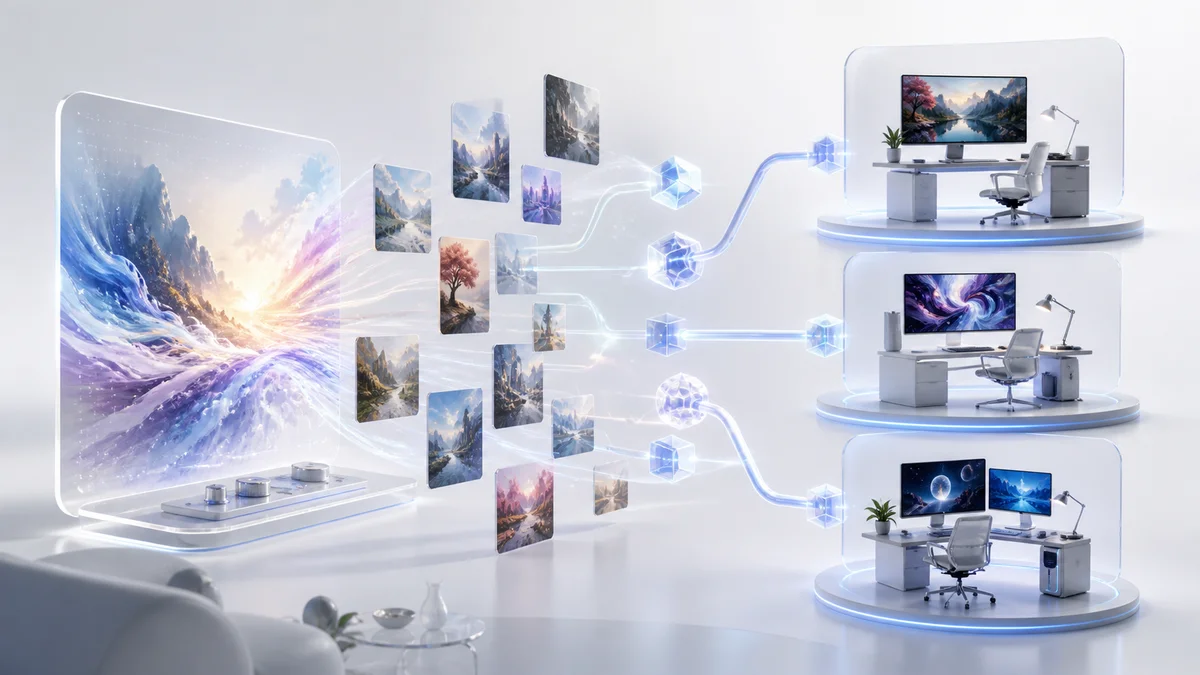
Nano Banana 2 brings Gemini Flash's speed together with search-grounded generation — making real-time web grounding available at Flash-tier latency. When generating specific subjects — landmarks, products, public figures, or branded assets — the model is informed by real-time text and image search results, producing more accurate and detailed results than earlier Nano Banana versions. This grounding also enables new use cases like generating data visualizations, infographics, and note-to-diagram conversions that require factual accuracy.
Subject Consistency at Scale
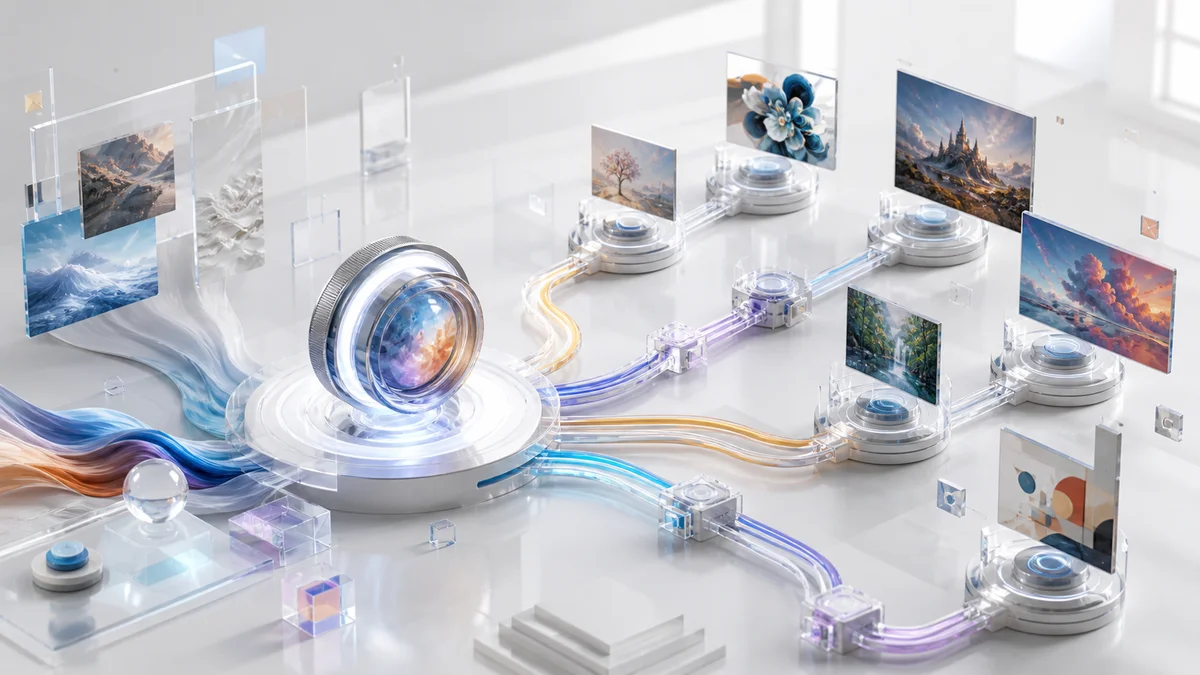
One of the most significant upgrades over the original Nano Banana is subject consistency. Nano Banana 2 can maintain the visual identity of up to 5 characters and the fidelity of up to 14 objects across a single multi-image workflow. This makes it practical for storyboarding, sequential content, character sheets, and multi-angle product catalogs where visual continuity is critical.
Precise Instruction Following
Nano Banana 2 demonstrates significantly improved adherence to complex, multi-layered prompts. The model captures nuanced compositional details — specific angles, lighting conditions, spatial relationships, stylistic references — with stronger adherence to the requested composition. For mockups, advertising visuals, and editorial content, Google describes the upgrade as stricter adherence to complex, multi-layered prompts.
Production-Ready Specs: 512px to 4K
Output resolution and aspect-ratio controls range from 512px to 4K across supported formats. Users can select from a wide range of supported aspect ratios — including 1:1, 16:9, 9:16, 4:1, 1:4, 8:1, and 1:8 — covering standard, vertical, wide, and panoramic layouts for varied output needs. These controls give Nano Banana 2 native support for a broad range of output resolutions and aspect ratios.
Precision Text Rendering and Translation
Nano Banana 2 inherits Nano Banana Pro's text rendering capabilities at Flash speed. It generates legible, accurately placed text for posters, greeting cards, UI mockups, and marketing materials. Crucially, the model can localize text within an image — translating copy into a target language while preserving layout, style, and visual context — useful for multilingual campaigns without requiring additional design tools.
Visual Fidelity Upgrade
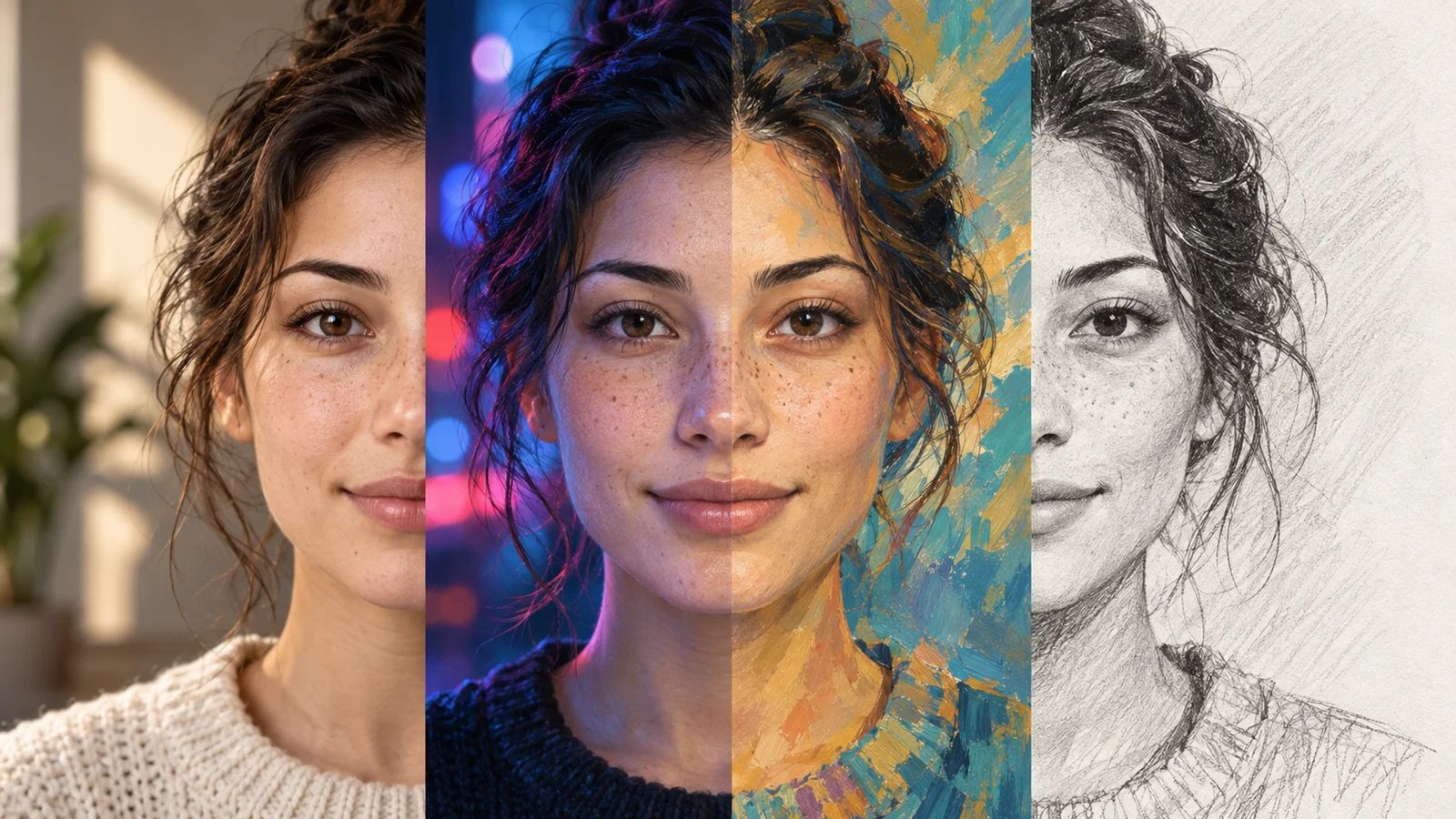
Beyond speed improvements, Nano Banana 2 delivers vibrant lighting, richer textures, and sharper details compared to the original Nano Banana. Google specifically describes the visual upgrade as vibrant lighting, richer textures, and sharper details while retaining Flash-speed generation. The upgrade reduces the visual quality gap previously observed between Nano Banana and Nano Banana Pro.
Pricing & Plans
Nano Banana 2 is available through multiple access points, with pricing depending on the platform.
Gemini App (Free tier) — Nano Banana 2 is the new default image model across Fast, Thinking, and Pro model modes at no additional cost. Availability and generation quotas vary by region and plan.
Google AI Plus / AI Pro / AI Ultra — Tiered monthly plans (see Gemini subscriptions for current pricing; promotional rates may apply). Google AI Pro and Ultra subscribers retained access to Nano Banana Pro for specialized tasks at launch by using the three-dot regeneration menu in the Gemini app. Nano Banana 2 serves as the default for standard workflows.
Gemini API / AI Studio (Preview) — Pay-per-use, billed at $60 per 1M output tokens. Output cost varies by resolution at Standard rates: ≈$0.045 (512px), ≈$0.067 (1K), ≈$0.101 (2K), ≈$0.151 (4K); Batch pricing is lower. Image Search Grounding incurs an additional charge. See the Gemini API pricing table for details. Also accessible via Google Antigravity.
Google Cloud / Vertex AI (Preview) — Available in public preview at launch through the Gemini API in Vertex AI; Google Cloud publishes usage-based pricing for the model.
Flow — Nano Banana 2 is the default image model in Google's Flow platform, available to all Flow users at zero credits.
Google Ads — Available at launch to power creative suggestions while creating campaigns in Google Ads.
Best For
- Content creators publishing 10+ visuals weekly across social media, YouTube thumbnails, and editorial images who need consistent quality without long wait times.
- Marketing teams prototyping multilingual campaign assets — posters, ad creatives, localized visuals — without dedicated design tools or translation workflows.
- Product teams and e-commerce operators maintaining visual consistency across product catalogs, multi-angle shots, and lifestyle scene compositions.
- Storytellers and storyboard artists requiring character continuity across multi-scene workflows without manually fixing visual drift between frames.
- Developers integrating image generation into apps via the Gemini API who need a high-quality, cost-efficient Flash-tier model with production-ready specs.
- Google Ads advertisers seeking automated, on-brand creative suggestions during campaign setup without additional tooling.
FAQ
How does Nano Banana 2 differ from Nano Banana Pro?
Nano Banana Pro is optimized for maximum quality and factual accuracy at higher computational cost — suited for high-fidelity tasks where maximum factual accuracy matters more than generation speed. Nano Banana 2 (Gemini 3.1 Flash Image) brings several Pro-oriented capabilities into a faster Flash model, making it well suited to iterative workflows, bulk content creation, and real-time editing. Google AI Pro and Ultra subscribers can still access Nano Banana Pro via the Gemini app's three-dot regeneration menu.
Is Nano Banana 2 available in my country?
Nano Banana 2 is rolling out in 141 new countries and territories at launch, across eight additional languages, via AI Mode and Lens in Google Search. Gemini app availability follows the existing Gemini app availability map. Check Google's availability page for the latest regional status.
Does Nano Banana 2 watermark generated images?
Yes. All images generated by Nano Banana 2 carry an invisible SynthID digital watermark. Google is also coupling SynthID with C2PA Content Credentials, providing metadata that shows not just whether AI was used but how. A visible watermark may appear depending on the platform. The Gemini app's SynthID verification feature has been used over 20 million times since its launch in November 2025.
What is the maximum resolution I can generate with Nano Banana 2?
Nano Banana 2 supports output resolutions from 512px up to 4K, with full control over aspect ratio. This covers vertical social formats, standard 16:9 wide-screen, square compositions, and custom ratios — all within a single generation workflow without needing to re-prompt for different sizes.
Can Nano Banana 2 translate text within images?
Yes. The model can localize and translate text embedded in an image to a target language while preserving the original layout, style, and visual context. This is useful for adapting marketing materials, signage, or informational graphics across multiple markets without recreating designs from scratch.