

Overview
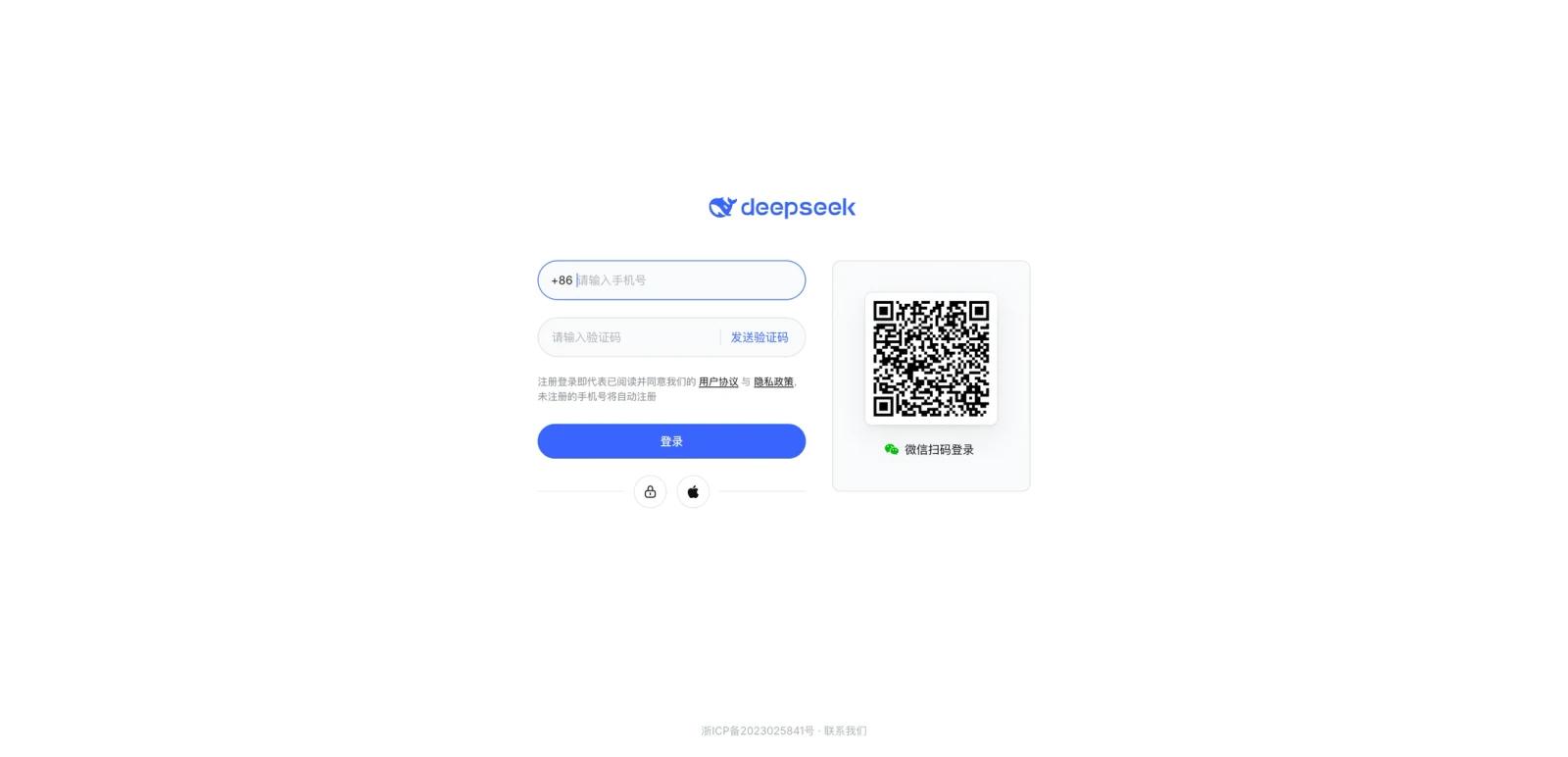
DeepSeek combines a free consumer AI assistant with a separately billed developer API. The official website links to browser chat, mobile apps, the API platform, documentation, and the company's model research.
DeepSeek’s October 17, 2026 announcement confirms that its website, app and API were updated to DeepSeek-V4.1-Flash-1017. The hosted API uses the deepseek-flash identifier; the V4.1 Flash model guide covers the model family separately from the self-hosted inference framework.
For developers, V4.1 Flash brings reasoning, coding, tool use, long context, and native image understanding into one API model. For everyday users, the browser and mobile apps remain the simplest way to try DeepSeek without managing tokens or API credentials.
Key Features
- Free consumer chat - DeepSeek promotes free access to its current flagship model through the official web and mobile apps.
- Unified text and vision API -
deepseek-flashaccepts text and image input, replacing separate earlier Flash and Vision experimental endpoints. - One-million-token context - The current Flash API lists a 1M context window and a maximum output of 384K tokens.
- Thinking and non-thinking modes - Developers can choose reasoning behavior based on quality, latency, and cost requirements.
- Agent integration support - The API supports tool calls, JSON output, the Responses API, and Anthropic-compatible access.
- Multiple image input methods - Applications can send supported images with base64 data, external URLs, or Files API IDs.
- Time-based API pricing - Flash rates are lower outside two weekday peak windows, making scheduling relevant for flexible batch workloads.
Current API Model
DeepSeek-V4.1-Flash-1017 is the current Flash API snapshot, announced on October 17, 2026. DeepSeek describes it as the first and smallest released model in a new architecture family, with native multimodal understanding and a design intended to improve inference speed, throughput, and future scaling.
The canonical model ID is deepseek-flash. Legacy IDs deepseek-v4-flash and deepseek-v4-flash-vision-exp temporarily route to V4.1 Flash and use its pricing. Developers should migrate configuration rather than rely on those aliases indefinitely.
DeepSeek’s updated changelog says V4 Pro API service continues after September 14, 2026. The current pricing page lists deepseek-v4-pro separately; it should not be described as an automatic route to Flash.
Self-hosting with DeepInfer
DeepInfer is DeepSeek’s open-source inference framework, distinct from its chat app, hosted API and downloadable model weights. Its current supported model is V4.1 Flash, and the offline example defaults to the officially available DeepSeek-V4.1-Flash-1017 checkpoint.
The framework currently targets NVIDIA SM100 GPUs or Huawei Ascend 950 NPUs. The open-source release provides offline inference, not a complete production serving stack. According to DeepInfer's official README, a complete inference service additionally requires a KV cache system, VE/Prefill/Decode disaggregation, and load balancing across prefill and decode data-parallel replicas. See the DeepInfer guide for selection criteria and the official requirements before planning self-hosting.
Vision Support
The deepseek-flash API supports JPEG, PNG, GIF, and WebP input through Chat Completions and Responses. Vision is for understanding image content, not generating images.
Developers can choose low, high, original, or auto detail. Documented limits include up to 600 images per request, 32 MiB per inline or URL image, and 64 MiB for a Files API image. Total request size, total image payload, image dimensions, and large image counts add further constraints.
Pricing & Plans
DeepSeek has two distinct pricing layers: free consumer access and metered API use.
| Option | Current price | Best fit |
|---|---|---|
| Web and mobile chat | Free access | Individuals using the official assistant directly |
| Flash API cache-hit input | $0.003 off-peak / $0.006 peak per 1M tokens | Repeated prompt prefixes and cached context |
| Flash API cache-miss input | $0.15 off-peak / $0.30 peak per 1M tokens | New prompts, documents, images, and uncached context |
| Flash API output | $0.60 off-peak / $1.20 peak per 1M tokens | Generated answers, code, reasoning, and tool plans |
Peak pricing applies from 01:00-04:00 UTC and 06:00-10:00 UTC on weekdays, excluding Chinese public holidays. The API documentation lists 2,500 concurrency for Flash. Actual cost depends on cache behavior, output length, image tokens, reasoning settings, and when requests run.
Best For
- Individuals who want a free general-purpose AI assistant in a browser or mobile app
- Developers building low-cost reasoning, coding, and tool-using applications
- Teams that need text and image understanding behind one model ID
- Batch workloads that can shift API traffic to off-peak windows
- Existing API users updating legacy V4 Flash aliases to
deepseek-flash, or independently evaluating a switch from the still-supporteddeepseek-v4-proAPI
FAQ
Is DeepSeek free?
DeepSeek describes its web and mobile chat as free. Hosted model inference is billed by input and output tokens, while the separate Search and Fetch APIs are priced per successful request, subject to the temporary billing exceptions documented by DeepSeek.
What is DeepSeek's current API model?
The current Flash API snapshot is DeepSeek-V4.1-Flash-1017 under the model ID deepseek-flash. V4 Pro remains separately listed in the current API pricing table.
Does DeepSeek support image input?
Yes. The current Flash API supports JPEG, PNG, GIF, and WebP images for visual understanding through Chat Completions and Responses.
Does the web chat use V4.1 Flash?
Yes. DeepSeek’s October 17, 2026 release announcement explicitly says its website, app and API were updated to DeepSeek-V4.1-Flash-1017.
How much does the DeepSeek API cost?
For V4.1 Flash, off-peak rates start at $0.15 per million cache-miss input tokens and $0.60 per million output tokens. Weekday peak rates are twice those amounts, while cache-hit input costs less.
Which API model ID should new integrations use?
Use deepseek-flash. Older Flash identifiers are only temporary compatibility aliases.