
13 Best AI Marketing Automation Tools 2026 — CRM, Journeys & AI
Compare 13 AI marketing automation tools for ecommerce, SaaS, SMB and enterprise teams, including journeys, CRM/CDP fit, AI features and real pricing risks.

On this page
Marketing automation used to mean "send the welcome email after signup." In 2026, the decision is harder: AI agents can draft journeys, predict churn, personalize product recommendations, summarize CRM activity and trigger messages across email, SMS, WhatsApp, push, in-app and paid channels. The risk is that an impressive demo can become an expensive customer-data project if your contacts, events, consent rules and attribution are not ready.
This guide is written for ecommerce marketers, SaaS lifecycle teams, growth operators, CRM owners and enterprise customer-engagement leaders choosing AI marketing automation tools. We used ToolWorthy's May 21, 2026 ChatGPT Deep Research file, then ran a June 2026 feedback pass across pricing reviews, Reddit threads, Trustpilot summaries and recent product reviews. If your immediate use case is email copy rather than journey automation, compare the narrower AI email generator category first.
| Tool | Best For |
|---|---|
| Klaviyo | Ecommerce B2C CRM with strong email, SMS and AI |
| ActiveCampaign | SMB and mid-market automation depth |
| Customer.io | SaaS and product-led lifecycle messaging |
| HubSpot Marketing Hub | CRM-native marketing with Breeze AI |
| Omnisend | Value-focused ecommerce email, SMS and push |
| Brevo | Budget-conscious multichannel marketing |
| Braze | Enterprise cross-channel customer engagement |
| Iterable | Large-scale behavioral journey orchestration |
| GetResponse | SMB funnels, webinars, AI content and automation |
| MoEngage | Mobile-first customer engagement and retention |
| Mailchimp | SMB email marketing with maturing AI automation |
| Insider One | AI-native CDP and journey orchestration |
| Bloomreach Engagement | Ecommerce CDP, personalization and Loomi AI |
How We Selected and Tested
We selected these AI marketing automation tools based on measurable criteria: they had to support recurring customer journeys, AI-assisted content or decisioning, multichannel messaging or CRM/CDP integration, and public availability in 2026. We included SMB email platforms, ecommerce platforms, SaaS lifecycle tools and enterprise engagement hubs because buyers searching this category often confuse them. We excluded pure newsletter tools with no meaningful automation and generic AI copywriters that do not manage customer journeys.
Our research methodology combined ToolWorthy's May 21, 2026 research file with a June 2026 search pass across official pricing pages, TechRadar-style product reviews, Reddit marketing communities, Trustpilot, Gartner Peer Insights and recent independent pricing breakdowns. The feedback pattern was consistent: marketers like AI content and journey help, but complain when pricing jumps with contact/profile count, AI features sit behind higher tiers, support moves to bots, or customer data is too messy for automation to work.
Evaluation Dimensions: We evaluated each tool across six marketing-ops dimensions:
- Journey Orchestration Depth — triggers, branches, A/B testing, suppression, frequency caps and cross-channel logic.
- CRM/CDP Fit — whether customer data, ecommerce events, product events and consent states are usable.
- AI Usefulness — whether AI helps with copy, segments, predictions, agents, recommendations or decisioning.
- Channel Coverage — email, SMS, WhatsApp, push, in-app, web, paid media, RCS and transactional messaging.
- Pricing Predictability — profile/contact billing, seats, send volume, AI credits, add-ons and enterprise quotes.
- Implementation Reality — how much data cleanup, template work, migration and governance are needed before value appears.
Note on Testing Scope: We did not migrate live customer databases into every tool. We evaluated public product flows, pricing documentation, review evidence and common implementation patterns. Enterprise platforms are especially dependent on data architecture, so we treat vendor claims as capabilities, not guaranteed outcomes.
Transparency & Limitations: Marketing automation pricing changes frequently, especially around contacts, profiles, SMS and AI credits. Base ranking comes from the May 21, 2026 research file; feedback and pricing signals were refreshed on June 2, 2026. Confirm live plan limits before purchase.
Top 13 AI Marketing Automation Tools Compared
Use this table to match the platform to your customer model. Ecommerce stores should look first at Klaviyo, Omnisend, Mailchimp and Bloomreach. SaaS lifecycle teams should compare Customer.io, HubSpot, ActiveCampaign and Iterable. Enterprise mobile or consumer brands should evaluate Braze, MoEngage, Insider One and Bloomreach with implementation costs included.
| Tool | Best For | Starting Price | AI / Automation Strength | Main Risk |
|---|---|---|---|---|
| Klaviyo | Ecommerce B2C CRM | Free; paid scales by profiles/channel | Predictive ecommerce AI and journeys | Profile billing and SMS cost |
| ActiveCampaign | Automation-heavy SMBs | $15-$19/mo | Active Intelligence agents and workflows | Contact billing, add-ons, learning curve |
| Customer.io | SaaS lifecycle messaging | $100/mo | Event-based journeys and AI agent actions | Technical setup and price increases |
| HubSpot Marketing Hub | CRM-centric teams | Free; Starter from $10/seat | Breeze AI across CRM and marketing | Professional/Enterprise cost jumps |
| Omnisend | Ecommerce value | $16/mo | Email/SMS/push automation and AI suite | Less enterprise depth |
| Brevo | Budget multichannel | Free; Starter from $9/mo | Aura AI, CRM and volume pricing | Account verification and support friction |
| Braze | Enterprise engagement | Contact sales | BrazeAI, Canvas, cross-channel orchestration | Expensive implementation and opaque pricing |
| Iterable | High-scale behavioral journeys | Contact sales | AI optimization and real-time journeys | Custom pricing and platform complexity |
| GetResponse | SMB funnels and webinars | $19/mo; automation usually $59/mo+ | AI campaigns, funnels, automation | Advanced features gated by tier |
| MoEngage | Mobile retention | Free tier / contact sales | Merlin AI, predictions, journeys | Pricing and support vary by region |
| Mailchimp | Starter email marketing | Free; Essentials from $13/mo | AI content and Flows automation | Pricing increases and automation limits |
| Insider One | AI-native CDP + journeys | Contact sales | CDP, personalization, journey AI | Enterprise setup and quote opacity |
| Bloomreach Engagement | Ecommerce personalization | Contact sales | Loomi AI, CDP, 13+ channels | High annual cost and data readiness |
Detailed Reviews
Klaviyo
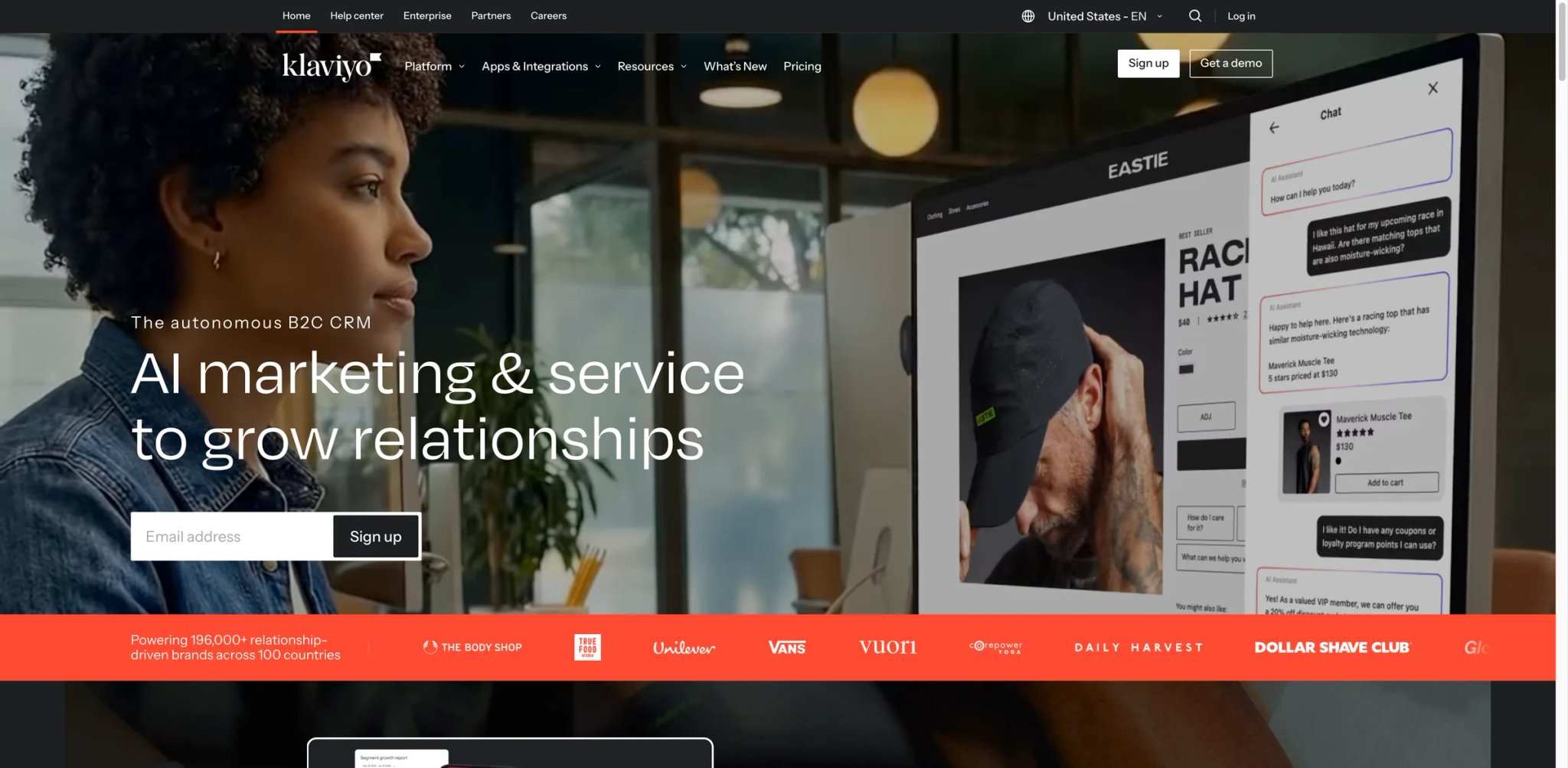
Ecommerce teams choose Klaviyo because it understands products, orders, carts, customers and revenue in a way generic email tools often do not. Its B2C CRM positioning, email/SMS/WhatsApp/push/RCS coverage and AI features make it a strong default for Shopify-style brands. The downside is that profile-based billing can turn list hygiene into a finance issue.
Key Features
- Ecommerce-native customer data: Klaviyo connects product, cart, order and customer behavior to segmentation and journeys.
- Predictive AI: AI can support CLV, churn, send-time and content decisions when data volume is healthy.
- Cross-channel orchestration: Email, SMS and newer messaging channels can coordinate timing and suppression.
- Strong integrations: Ecommerce platform connections reduce implementation friction for stores.
Pricing & Plans
The research file lists a free plan and paid pricing that scales by profiles and channels. Recent feedback focuses on profile-count billing, SMS cost and price increases. The real cost depends on total profiles, not only active buyers, so list cleanup and suppression rules matter.
Pros & Cons
Pros
- Strong ecommerce data model for products, carts, orders and customer profiles.
- Broad B2C channel coverage across email, SMS, WhatsApp, RCS and mobile push.
- Predictive AI and ecommerce segmentation are useful when store data is healthy.
Cons
- Profile-based billing can become expensive as lists grow.
- SMS, WhatsApp, RCS and other mobile channels add usage cost.
- Small stores with messy lists may overpay before automation produces enough revenue. support changes and post-2025 pricing shifts. It is strongest when ecommerce revenue justifies the profile cost; small stores with messy lists may overpay.
Best For
Choose Klaviyo if ecommerce data, abandoned cart flows, product recommendations and SMS/email coordination drive revenue. It is not the right fit if you have a huge low-value list and weak list hygiene.
Get started with Klaviyo
ActiveCampaign

ActiveCampaign is for marketers who want serious automation logic without jumping to enterprise engagement platforms. Its Active Intelligence agents can help draft campaigns, build automations and interpret performance, while the traditional automation builder remains one of the most flexible in the SMB and mid-market category.
Key Features
- Deep automation builder: Triggers, conditions and actions support sophisticated customer journeys.
- Active Intelligence agents: AI can generate campaign drafts, automation structures and performance summaries.
- CRM and sales add-ons: Marketing and sales workflows can connect when add-ons make sense.
- Broad integrations: ActiveCampaign fits many SMB stacks.
Pricing and Real Cost
The research file lists $15-$19 per month entry pricing. Recent 2026 reviews note Starter at $19 monthly or $15 annually for 1,000 contacts, with higher tiers and add-ons for CRM, SMS, reporting and transactional email. Since late 2025, billing for all contacts, including unsubscribed and bounced contacts, is a major cost concern.
Pros & Cons
Pros
- Deep automation builder for SMB and mid-market lifecycle workflows.
- Active Intelligence adds AI recommendations, insights and campaign assistance.
- Broad integrations make it flexible for many small-business stacks.
Cons
- Learning curve is higher than simpler email tools.
- Pricing scales with contacts and add-ons.
- Lower tiers may feel limited for CRM, advanced reporting or richer AI use cases. if you need landing pages, generative AI or CRM functionality. ActiveCampaign is strong, but only if you will actually use its automation depth.
Best For
Choose ActiveCampaign if your marketing advantage comes from detailed automations and segmentation. It is not the right fit if you need the simplest newsletter tool or predictable pricing for a messy database.
Get started with ActiveCampaign
Customer.io
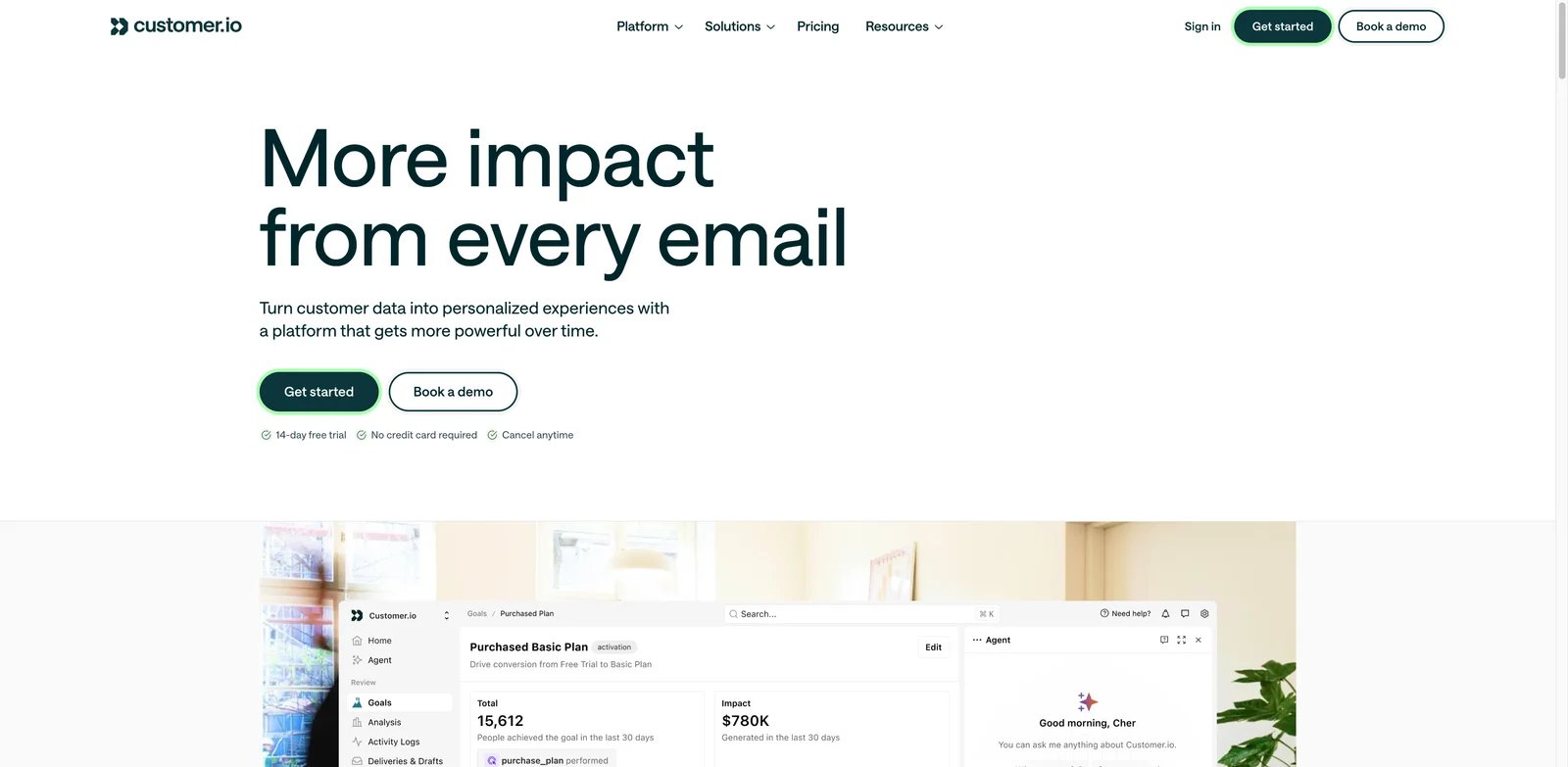
SaaS and product-led teams often need event-based messaging that reacts to user behavior, not just list membership. Customer.io is strong for lifecycle journeys triggered by product events, plan changes, inactivity, onboarding steps and account states. Its AI agent and LLM actions are most useful when your event taxonomy is clean.
Key Features
- Event-driven journeys: Customer.io is built for product events, attributes and behavioral triggers.
- Multichannel messaging: Email, SMS, push, in-app, WhatsApp and LINE support complex lifecycle programs.
- AI Agent and LLM actions: AI can help create content, personalize messages and act inside workflows.
- Developer-friendly setup: Technical teams can design precise messaging systems.
Pricing and Real Cost
Customer.io's public pricing starts with Essentials at $100/mo, Premium at $1,000/mo and Enterprise on a sales quote. Overage costs include additional people and object profiles, extra emails, and AI credits, so the real cost is both subscription and implementation: tracking plans, event naming, integration work and template systems matter more than the entry subscription.
Pros & Cons
Pros
- Strong event-based journey logic for SaaS and product-led lifecycle messaging.
- Supports email, SMS, push, in-app, WhatsApp and LINE workflows.
- AI Agent and LLM actions can help create campaigns and personalize workflow outputs.
Cons
- Requires clean event tracking and technical setup.
- Less friendly for non-technical marketers than SMB email platforms.
- Profile, email and AI-credit overages can affect total cost. It is less friendly for non-technical marketers than Mailchimp, Brevo or Omnisend. Large subscriber bases can make pricing more painful.
Best For
Choose Customer.io if your SaaS lifecycle relies on product events and technical control. It is not the right fit if you want a plug-and-play ecommerce platform or simple newsletter tool.
Get started with Customer.io
HubSpot Marketing Hub

HubSpot's advantage is context. Breeze AI can work across CRM, marketing, sales, service and content data, which makes it more useful than disconnected copy tools when the underlying CRM is clean. Marketing Hub is strong for teams that already run their customer data in HubSpot; it becomes expensive when they need Professional or Enterprise features.
Key Features
- CRM-native automation: Marketing, sales and service data can live in one operational system.
- Breeze AI: Breeze Assistant, Agents and Intelligence can support content, customer summaries, enrichment and workflows.
- Lead nurturing and reporting: HubSpot is strong for form-to-CRM-to-campaign workflows.
- Ecosystem breadth: Content Hub, Sales Hub, Service Hub and Operations Hub can expand around marketing.
Pricing and Real Cost
HubSpot offers free tools. Marketing Hub Starter list pricing starts at $20/month per seat, while limited-time Starter Customer Platform promotions may show lower $9-$10 per-seat pricing. Real production use often requires Professional or Enterprise tiers, contact tiers and sometimes credits for AI features. Reddit and pricing reviews repeatedly call HubSpot contact-tier pricing the silent budget killer.
Pros & Cons
Pros
- Strong CRM-native context across marketing, sales, service and content data.
- Breeze AI is useful for summaries, drafts, enrichment and workflow support.
- Good fit for form-to-CRM-to-nurture reporting workflows.
Cons
- Professional and Enterprise tiers are a major cost jump.
- HubSpot Credits can affect AI and workflow usage cost.
- Breeze AI still needs human review for deeper operations and campaign judgment. and struggles with deeper ops tasks. HubSpot can also become expensive once workflows, reporting, AI agents and multiple hubs are involved.
Best For
Choose HubSpot if your marketing automation depends on CRM context and your team already lives in HubSpot. It is not the right fit if you need low-cost email automation without the broader CRM ecosystem.
Get started with HubSpot Marketing Hub
Omnisend
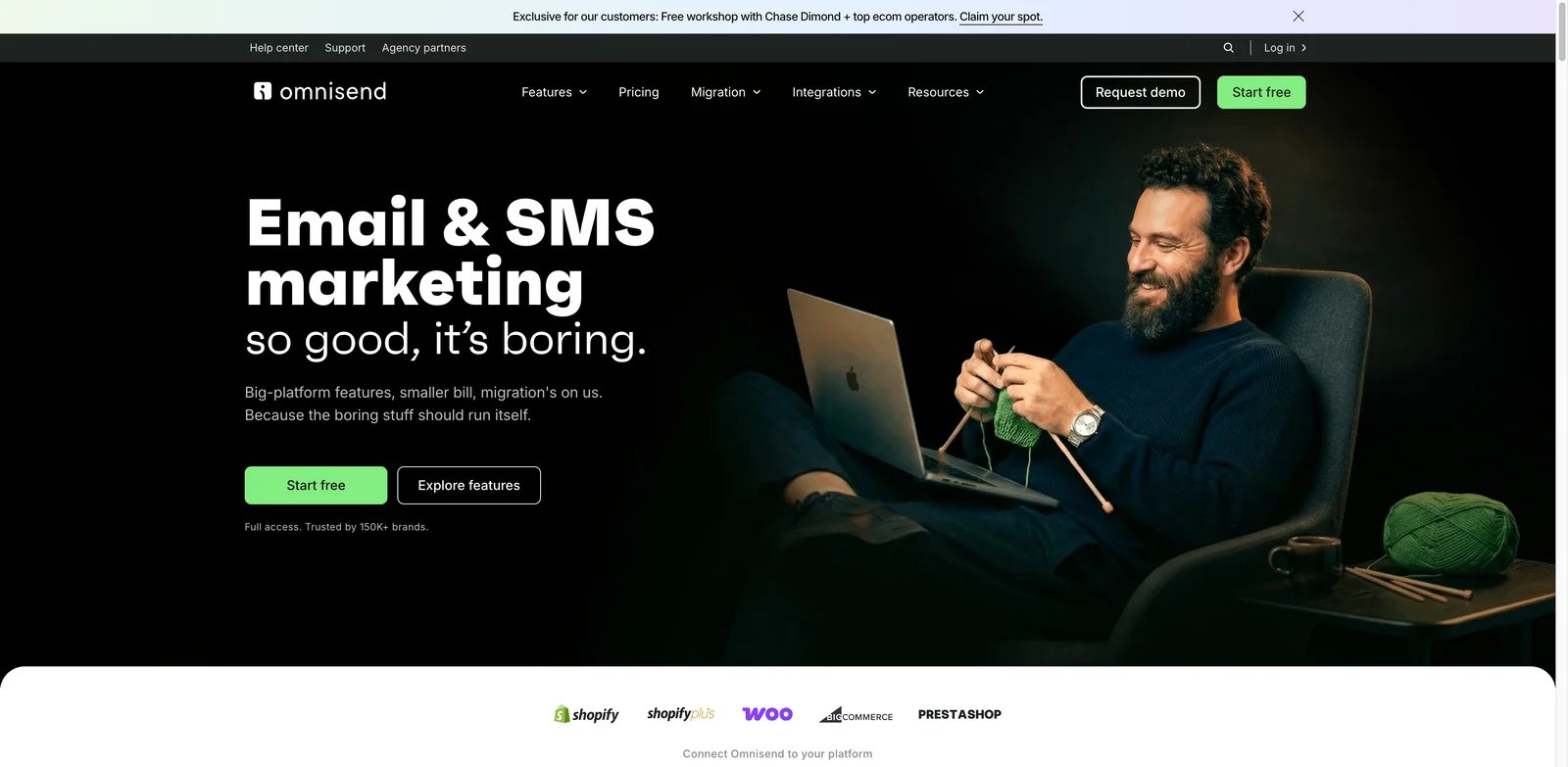
Omnisend is a strong value pick for ecommerce marketers who want email, SMS, web push, forms, landing pages and automation without Klaviyo-level cost pressure. Its 2025 AI suite adds practical time-saving around content and personalization, while the platform remains easier to adopt than enterprise engagement hubs.
Key Features
- Ecommerce automations: Abandoned cart, welcome, winback and product flows are natural Omnisend use cases.
- Email, SMS and web push: Channel mix is strong for online stores.
- AI suite: AI tools reduce manual work on campaign content and personalization.
- Value pricing: The research file lists $16 per month entry pricing, making it attractive for growing shops.
Pricing and Real Cost
Omnisend starts around $16 per month in the research file. Costs scale with contacts, sends and SMS usage. Compared with Klaviyo, it can be more budget-friendly, but stores should still model profile growth and message volume.
Pros & Cons
Pros
- Strong ecommerce value for email, SMS, web push, forms and automations.
- Free plan includes access to all features, with limits on contacts and sends.
- Easier adoption curve than enterprise engagement platforms.
Cons
- Less enterprise-grade than Braze, Iterable or Bloomreach.
- Advanced CDP, governance and complex decisioning needs may outgrow it.
- SMS cost and contact growth still need modeling. complex CDP needs and global enterprise governance may push teams elsewhere. It is best for ecommerce teams that want strong practical automation without massive implementation.
Best For
Choose Omnisend if you run an ecommerce store and want useful automation at a better value point. It is not the right fit if you need enterprise CDP orchestration or deep custom event architecture.
Get started with Omnisend
Brevo
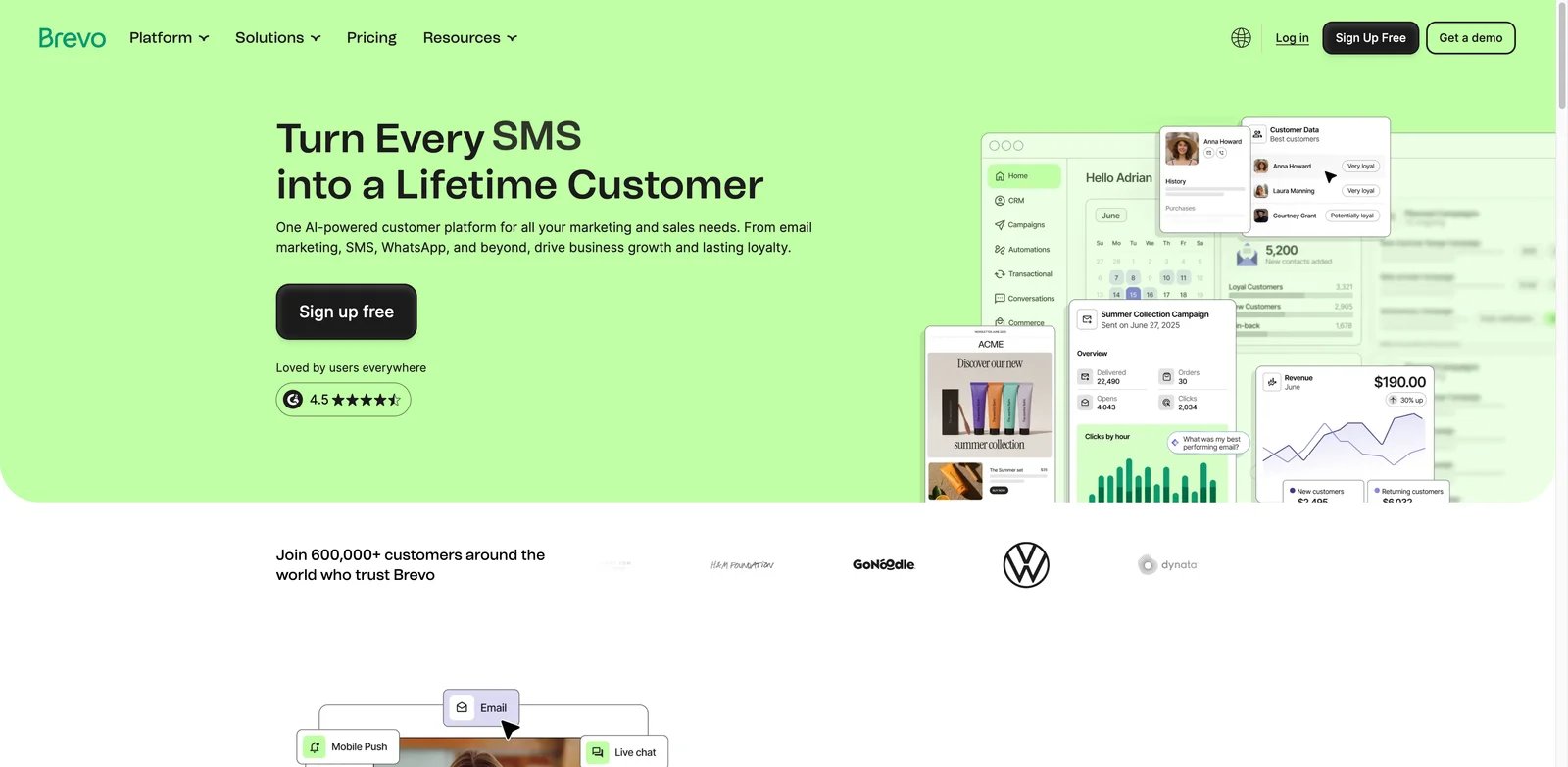
Brevo is appealing because it prices by email volume rather than aggressively by contact count, which helps businesses with large lists and moderate send volume. It covers email, SMS, WhatsApp, push, CRM and automation, and its Aura AI builder makes it more capable than a basic budget email platform.
Key Features
- Volume-based pricing: Brevo's pricing is friendlier for businesses with many contacts but controlled sending.
- Multichannel coverage: Email, SMS, WhatsApp, push and CRM give SMBs a broad toolkit.
- Aura AI: AI content and segmentation support help teams move faster.
- Generous free plan: Recent reviews cite 300 emails per day and a large contact allowance.
Pricing and Real Cost
Brevo's current marketing pricing includes Free, Starter from $9/month, Standard from $18/month, Professional from $499/month and Enterprise custom pricing. Starter still requires an add-on to remove Brevo branding. with Starter, Standard and a high-volume Professional tier. Removing branding, advanced automation and higher send limits may require paid tiers or add-ons.
Pros & Cons
Pros
- Budget-friendly volume-based email pricing.
- Broad SMB channel set across email, SMS, WhatsApp, push, CRM and automation.
- Aura AI supports content generation, automation structure, segmentation and send-time optimization.
Cons
- Account verification, domain setup and suspension complaints appear in user feedback.
- Starter branding removal costs extra.
- Less sophisticated than Klaviyo for ecommerce data or ActiveCampaign for complex workflow logic. Brevo can also feel less sophisticated than ActiveCampaign for advanced workflow logic or Klaviyo for ecommerce data.
Best For
Choose Brevo if you need affordable multichannel marketing with a large contact database. It is not the right fit if you need enterprise journey orchestration or the deepest ecommerce predictive features.
Get started with Brevo
Braze
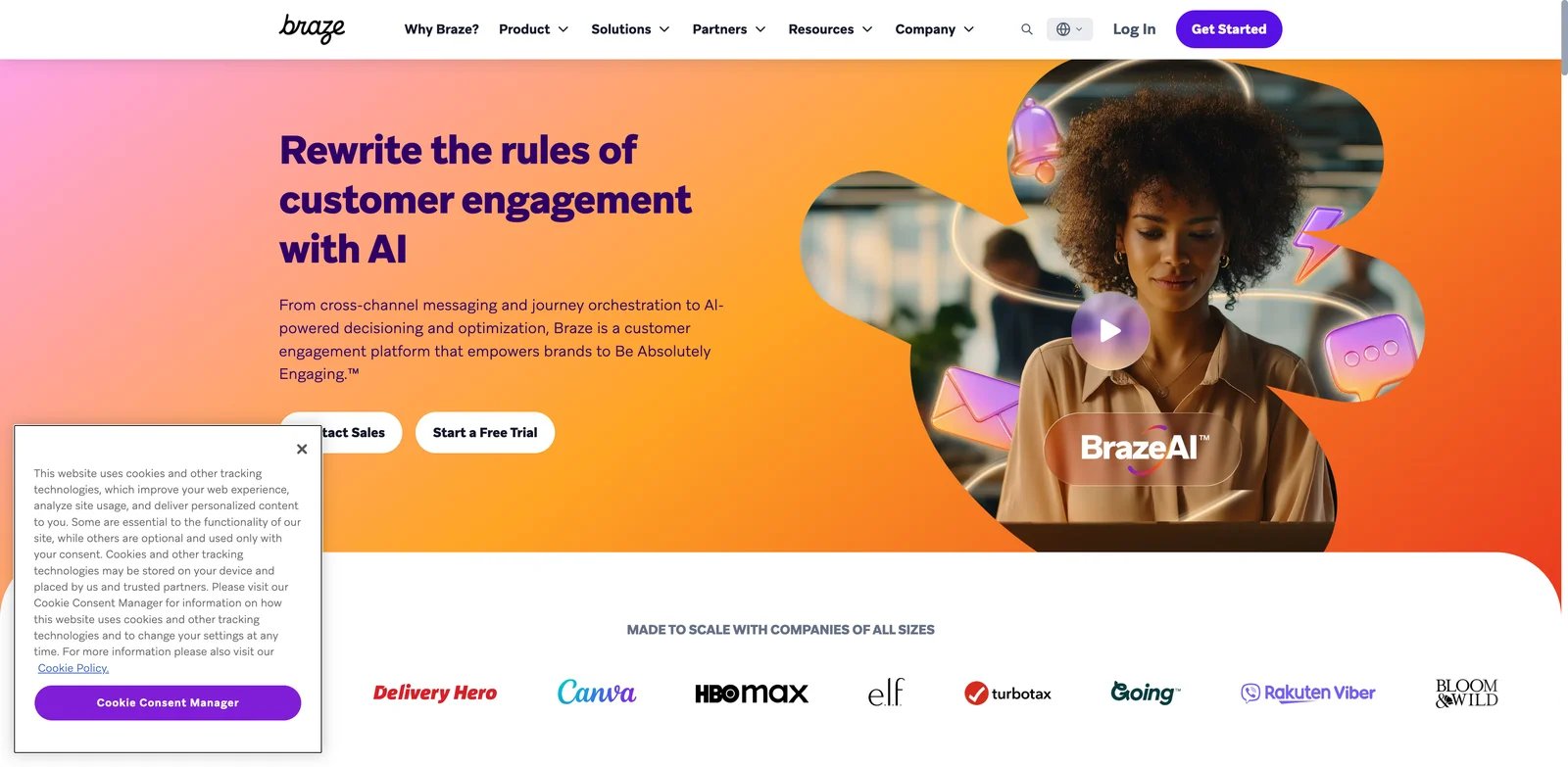
Large consumer brands choose Braze when messaging is product-critical and global. Braze supports real-time cross-channel engagement across push, email, SMS, in-app, content cards, WhatsApp, webhooks and more. Its Canvas journey builder and BrazeAI features are built for high-scale customer engagement teams, not casual newsletter senders.
Key Features
- Canvas journey builder: Braze can orchestrate sophisticated cross-channel flows with branching and experimentation.
- BrazeAI decisioning: AI supports content, optimization and decisioning across journeys.
- Enterprise integrations: Data warehouse connections and 170+ integrations support complex stacks.
- Massive scale: Braze is designed for brands sending across many channels and millions of users.
Pricing and Real Cost
The research file lists contact sales. Braze does not publish fixed self-serve pricing. Its 2026 pricing materials describe quote-based packaging driven by Platform Editions, Active Users and Flexible Credits. Implementation, data engineering, SMS/push volume, add-ons and professional services can be material.
Pros & Cons
Pros
- Enterprise-grade Canvas journey orchestration and experimentation.
- Strong real-time cross-channel engagement across app, web, email, SMS, push and messaging channels.
- BrazeAI and data-platform features fit mature consumer engagement teams.
Cons
- Quote-based pricing is not transparent.
- Implementation, data engineering and governance costs can be substantial.
- Too complex for most SMB email or early lifecycle teams. to get value. If your customer events are unreliable, Braze will not magically fix the data layer.
Best For
Choose Braze if you are a large consumer or mobile-first brand that needs real-time multichannel engagement. It is not the right fit if your team is still graduating from basic email automation.
Get started with Braze
Iterable
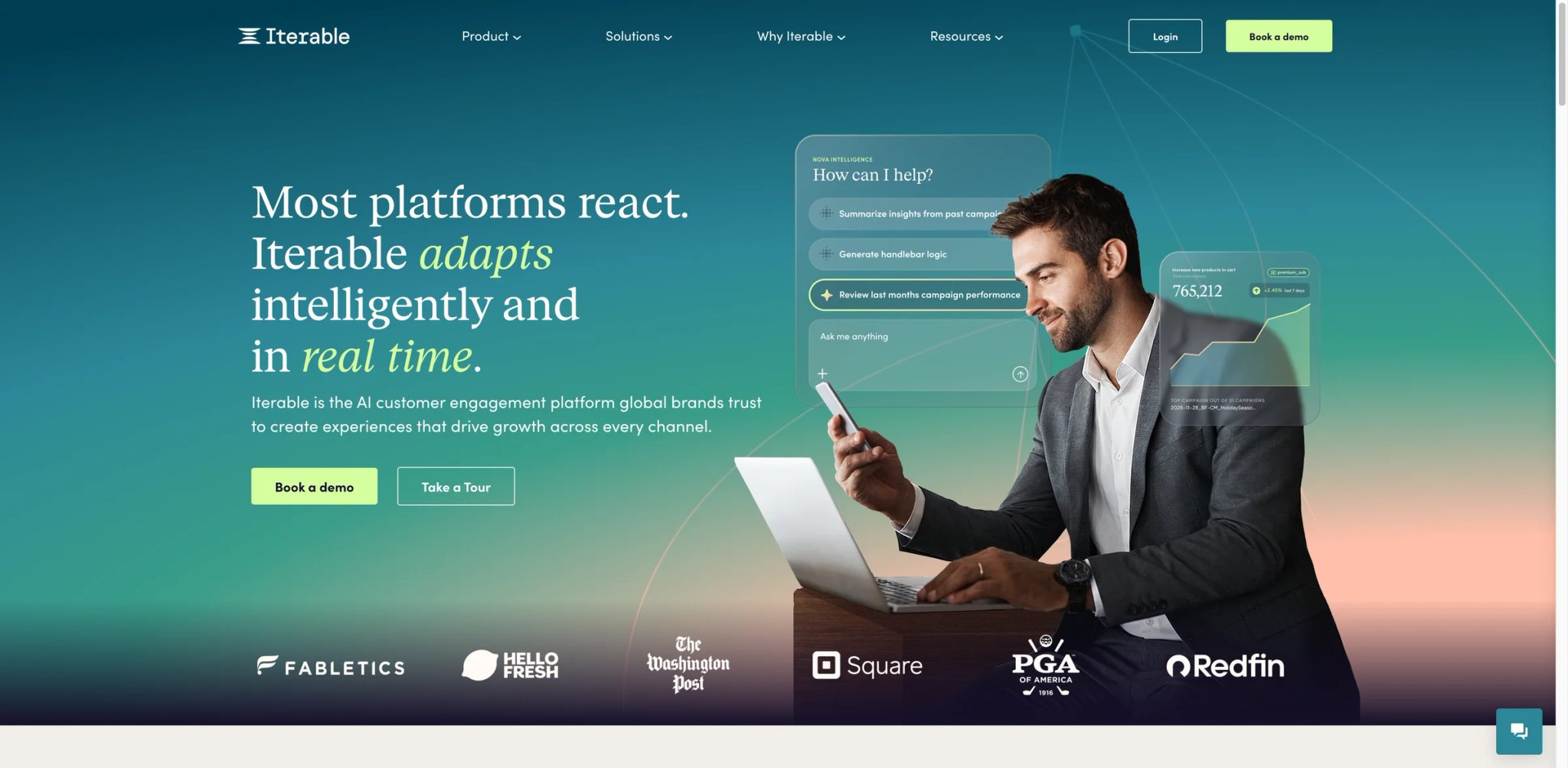
Iterable is built for teams managing large behavioral datasets and sophisticated user journeys. It competes with Braze and other enterprise engagement hubs, focusing on real-time response, personalization and AI-powered optimization across email, SMS, push, in-app and web messaging.
Key Features
- Behavioral journey orchestration: Iterable is strong when campaigns respond to real user actions at scale.
- AI optimization: AI helps with send-time, content and journey decisioning.
- Cross-channel messaging: Email, SMS, push, in-app and web channels support full lifecycle programs.
- Enterprise support model: Strategic support can matter for complex migrations and high-volume messaging.
Pricing and Real Cost
The research file lists contact sales. Recent pricing reviews describe custom pricing for large-scale teams and note SMS minimums or channel add-ons as cost considerations. Budget for implementation, migration and data modeling.
Pros & Cons
Pros
- Strong behavioral journey orchestration for high-scale customer engagement.
- AI optimization can support send-time, content and journey decisions.
- Cross-channel coverage fits lifecycle teams managing large customer datasets.
Cons
- Quote-based pricing makes early comparison difficult.
- Requires clean behavioral data and disciplined campaign governance.
- Overpowered for smaller teams that only need basic ecommerce or newsletter automation. and platform value depends heavily on clean events and disciplined campaign governance.
Best For
Choose Iterable if you manage complex behavioral journeys at large scale. It is not the right fit if you need transparent SMB pricing or simple ecommerce email flows.
Get started with Iterable
GetResponse
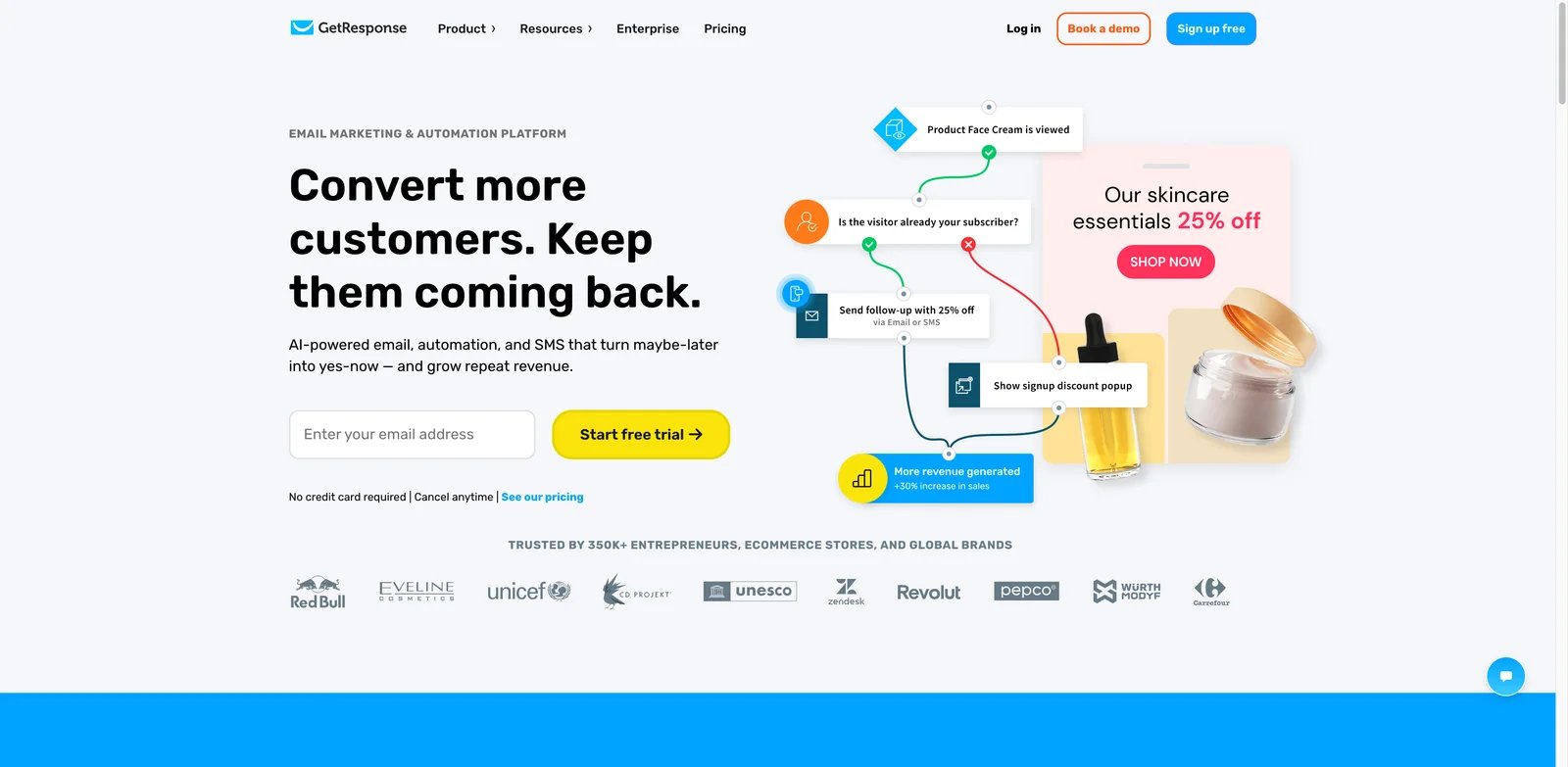
GetResponse is best for SMBs and creators who want email marketing, landing pages, funnels, webinars, automation and AI tools in one subscription. It is broader than a simple email sender and less complex than enterprise customer-engagement platforms. Its value depends on whether you use the extra modules.
Key Features
- AI campaign generation: AI tools can create campaign structures, emails, landing pages and CTAs.
- Funnels and webinars: Built-in conversion funnels and webinar hosting differentiate it from many email tools.
- Automation workflows: Event-based workflows and scoring are available in higher tiers.
- All-in-one SMB toolkit: Landing pages, forms, email and ecommerce integrations reduce tool sprawl.
Pricing and Real Cost
The research file lists $19 per month, with advanced automation typically $59 per month or higher. TechRadar's 2026 review notes Starter at $19 monthly and Marketer at $59 monthly for 1,000 contacts. The real cost appears when automation, webinars or advanced features are plan-gated.
Pros & Cons
Pros
- Useful all-in-one SMB toolkit for email, landing pages, funnels, webinars and automation.
- AI Campaign Generator can create landing pages, welcome emails and newsletters.
- Lower adoption complexity than enterprise engagement platforms.
Cons
- Not a full CRM.
- Advanced automation, webinars and enterprise features are tier-gated.
- Less deep than ActiveCampaign, Customer.io or enterprise CDP platforms for complex lifecycle logic. and advanced features may sit behind higher tiers. It is best when you use its breadth.
Best For
Choose GetResponse if you want email, funnels, webinars and AI campaign help in one SMB platform. It is not the right fit if you need enterprise CDP functionality or CRM-native sales workflows.
Get started with GetResponse
MoEngage
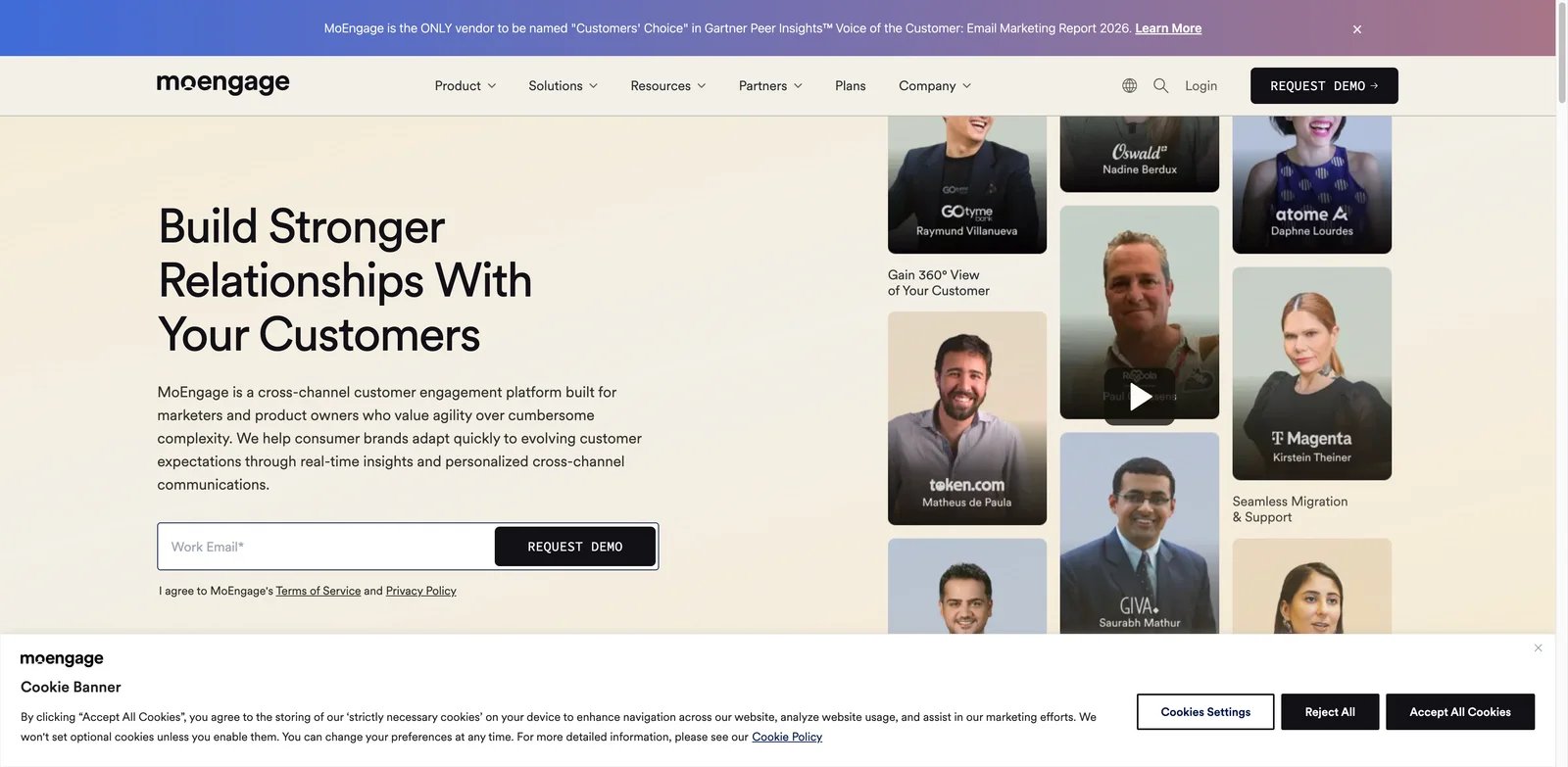
MoEngage is strongest for mobile-first and app-centric brands that need customer engagement, predictive segmentation and cross-channel journeys. Its Merlin AI, analytics and journey features help teams act on behavior across push, email, SMS, in-app and web channels. It is especially visible in APAC and emerging-market customer engagement.
Key Features
- Merlin AI: AI supports segmentation, content and journey optimization.
- Mobile engagement depth: Push, in-app and mobile behavioral journeys are strong use cases.
- Predictive analytics: MoEngage helps teams identify churn risk, engagement opportunities and next-best actions.
- Cross-channel orchestration: Multiple messaging channels support retention and lifecycle teams.
Pricing and Real Cost
MoEngage publishes Growth and Enterprise packages, with quote-based paid pricing. Its own 2026 AI/customer-engagement content also references a free plan for up to 10K monthly active users. Buyers should request detailed pricing by MAU, channels, events, support and add-ons.
Pros & Cons
Pros
- Strong mobile-first engagement across push, in-app, email, SMS and WhatsApp.
- Merlin AI, predictions and journey optimization fit retention teams.
- Growth and Enterprise packages support teams moving beyond basic campaigns.
Cons
- Less familiar to some US/EU SMB buyers than HubSpot, Klaviyo or Mailchimp.
- Paid pricing is quote-based.
- Reviews mention interface complexity, support variation and reporting gaps. Reviews mention interface complexity, regional support variation and reporting gaps. It is best when app engagement is central.
Best For
Choose MoEngage if you run mobile-first customer engagement and need predictive journeys. It is not the right fit if you only need simple email automation or transparent self-serve pricing.
Get started with MoEngage
Mailchimp
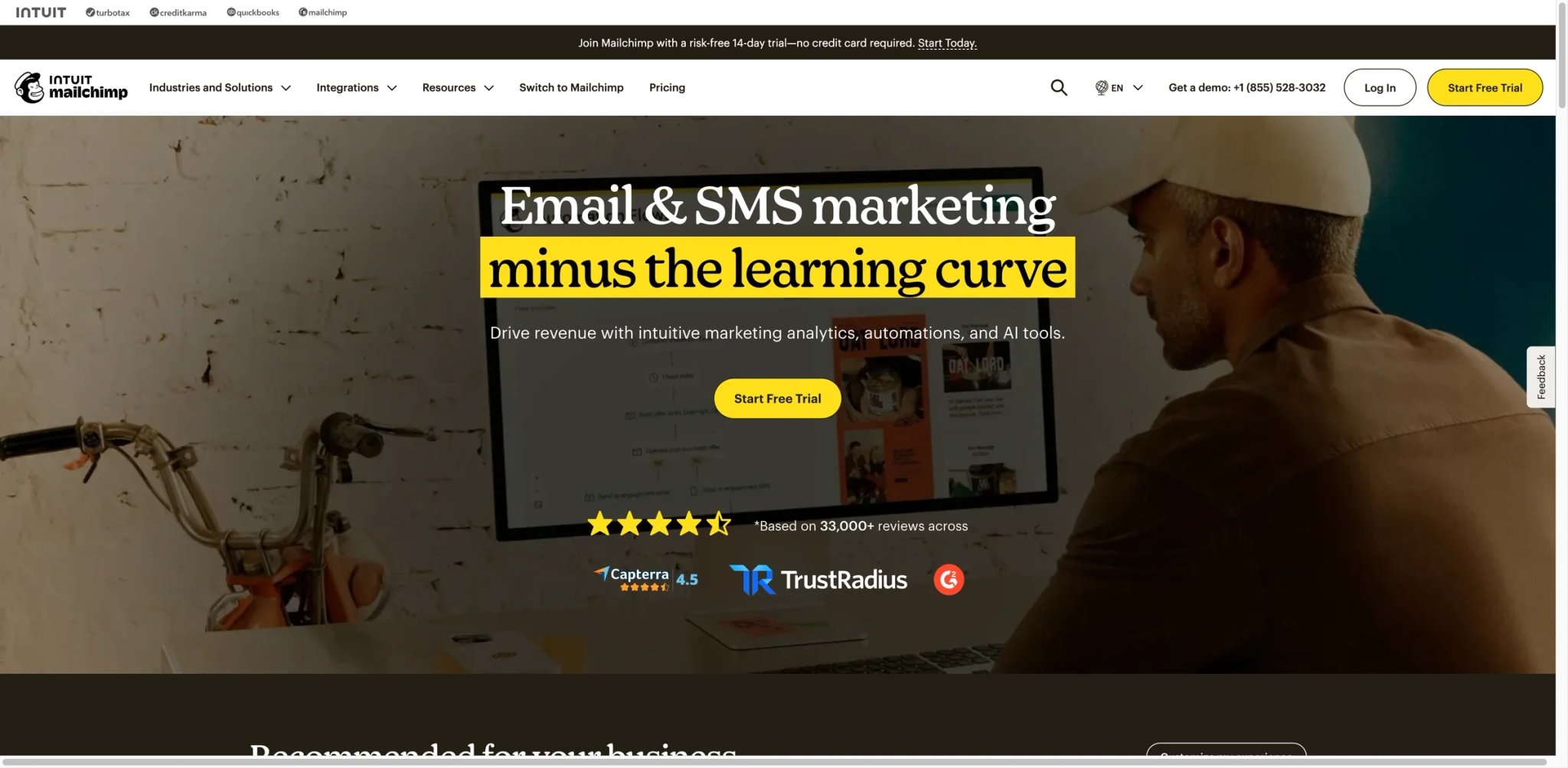
Mailchimp remains the familiar starting point for many small businesses. It has improved AI content tools, ecommerce reporting and automation through Flows, but user sentiment has become more skeptical as pricing rises and the free plan feels more limited. It is still useful for simple email marketing, less compelling for complex lifecycle automation.
Key Features
- Beginner-friendly email UX: Mailchimp is approachable for teams that do not have marketing ops experience.
- AI Creative Assistant: AI can help create content and design assets faster.
- Flows automation: The newer automation system replaces the old Classic Automation Builder.
- Ecommerce reporting: Mailchimp has become more useful for small ecommerce teams.
Pricing and Real Cost
Mailchimp's current marketing plans include Free for up to 250 contacts, Essentials from $13/mo, Standard from $20/mo and Premium from $350/mo at the 0-500 contact tier. Recent reviews and Reddit discussions repeatedly mention price increases, free-plan restrictions and legacy-account changes. Costs rise quickly with contacts and higher-tier automation needs.
Pros & Cons
Pros
- Familiar beginner-friendly email UX for small businesses.
- Marketing Automation Flows support dynamic triggers, branches and actions.
- Intuit AI, Write with AI and AI-powered flow templates improve content and automation setup.
Cons
- Free plan is now limited to 250 contacts.
- Advanced AI and automation features are plan-gated.
- Less suitable for complex B2B CRM workflows or deep lifecycle orchestration. Reddit complaints also mention support delays, account review friction and AI bot support replacing human help. Treat it as a starter platform, not a forever automation stack.
Best For
Choose Mailchimp if you need familiar SMB email marketing with basic AI and automation. It is not the right fit if you need advanced lifecycle logic, clean B2B CRM workflows or predictable costs at scale.
Get started with Mailchimp
Insider One
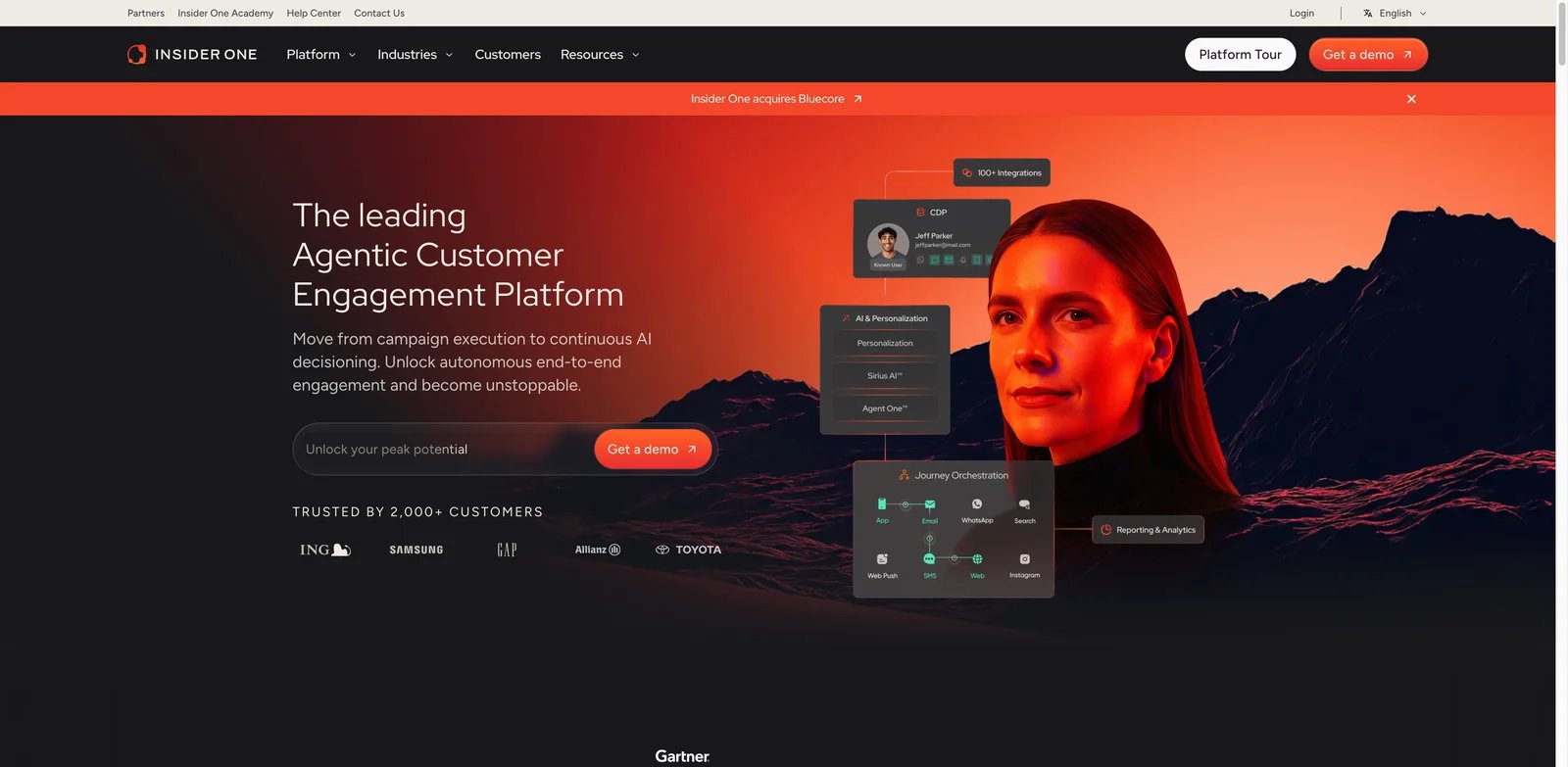
Insider One is positioned as an AI-native customer engagement platform with an integrated CDP, personalization and journey orchestration. It supports channels like WhatsApp, SMS, email, web, app and site search, making it more relevant to enterprise digital-experience teams than to small email marketers.
Key Features
- Integrated CDP: Insider One unifies data for segmentation and personalization.
- AI-native orchestration: AI sits at the core of journey and personalization workflows.
- Broad channel support: WhatsApp, SMS, email, web, app and site search help complex consumer brands.
- High review scores: Gartner Peer Insights shows strong enterprise sentiment, though reviews are naturally buyer-selected.
Pricing and Real Cost
The research file lists contact sales. Gartner notes subscription-based tiered pricing tailored to usage, features and scale. Expect implementation, data integration and commercial negotiation to matter as much as license cost.
Pros & Cons
Pros
- Combines CDP, personalization and journey orchestration in one enterprise platform.
- Strong channel breadth across web, app, email, SMS, WhatsApp and search/personalization use cases.
- AI-native positioning fits teams looking for autonomous customer engagement workflows.
Cons
- Not a plug-and-play SMB tool.
- Requires customer data readiness and governance.
- Quote-based pricing makes casual comparison difficult without a formal buying process. Pricing opacity makes it harder to compare without a formal RFP.
Best For
Choose Insider One if you need CDP, personalization and omnichannel journeys in one enterprise platform. It is not the right fit if you need self-serve email automation or low-cost experimentation.
Get started with Insider One
Bloomreach Engagement
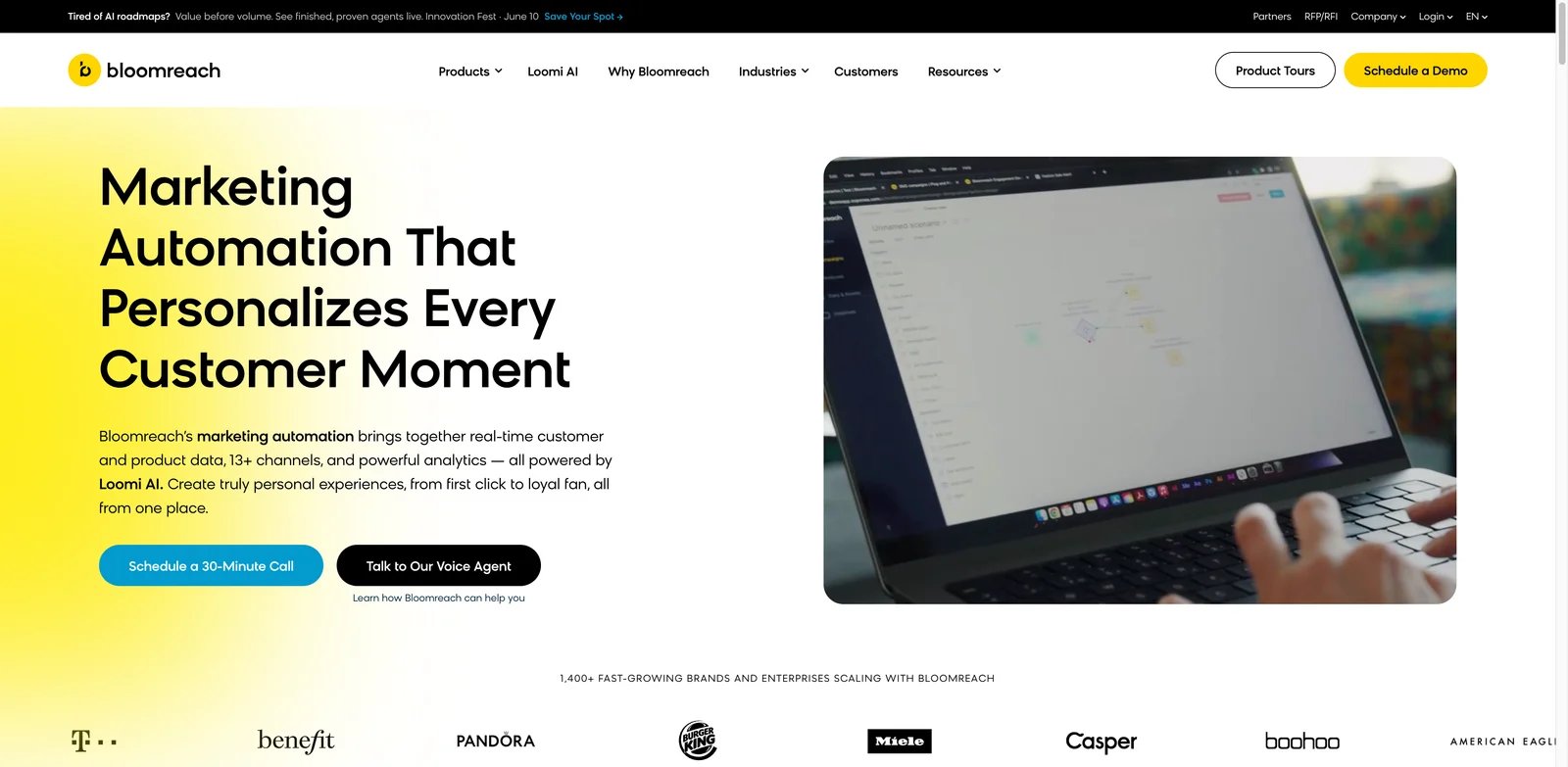
Bloomreach Engagement is strongest for ecommerce and retail teams that need customer data, personalization, product discovery and journey orchestration tied together. Loomi AI supports recommendations, predictions and automation across the platform. It is powerful when product and customer data are ready, and costly when they are not.
Key Features
- Ecommerce CDP and journeys: Bloomreach can unify profiles and trigger messaging across customer behavior.
- Loomi AI: AI supports recommendations, personalization, analytics and optimization.
- 13+ channels: Email, SMS, push and other channels support broad engagement.
- Commerce platform breadth: Bloomreach can combine search, merchandising and engagement in one ecosystem.
Pricing and Real Cost
The research file lists contact sales. Bloomreach does not publish a fixed starting price for Engagement. Its pricing page says quotes are customized by customer count, product catalog size and executed events such as email or SMS sends. Implementation, data integrations, product catalog quality and support should be included in the business case.
Pros & Cons
Pros
- Strong ecommerce CDP, personalization and marketing automation combination.
- Loomi AI supports predictive personalization across customer and product data.
- 13+ channels make it suitable for enterprise retail and ecommerce engagement.
Cons
- Too heavy for small teams needing basic abandoned-cart emails.
- Data integration and product-catalog readiness strongly affect time to value.
- Quote-based pricing and implementation cost should be modeled before purchase. can feel vague unless product data and behavioral triggers are already strong. It is a platform investment, not a quick email upgrade.
Best For
Choose Bloomreach Engagement if ecommerce personalization, CDP and journey orchestration are strategic. It is not the right fit if your store is still looking for basic abandoned-cart emails.
Get started with Bloomreach Engagement
Best AI Marketing Automation Tools by Use Case
For Ecommerce Stores
Klaviyo is the strongest default for ecommerce brands that can justify profile-based pricing. Omnisend is the best value alternative for stores that need email, SMS and push without enterprise overhead. Bloomreach is the enterprise ecommerce choice when personalization, product discovery and CDP strategy matter.
For SaaS Lifecycle Messaging
Customer.io is best when product events drive onboarding, activation, retention and expansion journeys. HubSpot is better when CRM context matters more than event flexibility. ActiveCampaign works for SaaS teams that need strong automations but not a developer-heavy setup.
For Budget-Conscious SMBs
Brevo, Mailchimp and GetResponse are the main shortlist. Brevo is strongest for volume-based pricing and multichannel value. Mailchimp is easiest for beginners. GetResponse is better when funnels, webinars and AI campaigns are part of the plan.
For Enterprise Customer Engagement
Braze, Iterable, MoEngage, Insider One and Bloomreach should be evaluated through a data and implementation lens. The deciding factor is rarely "which has AI." It is whether your events, consent model, channels and teams can use the platform properly.
For CRM-Native Marketing
HubSpot Marketing Hub is strongest when marketing, sales and service teams already run on HubSpot. ActiveCampaign can work for smaller teams that need automation plus CRM add-ons, while Lightfield-style AI CRM tools can help teams keeping CRM data fresh before automation. See our Lightfield review for that CRM-maintenance angle.
How to Choose the Right AI Marketing Automation Tools
-
Start with your customer data model. Ecommerce orders, SaaS product events and B2B CRM stages require different tools. Do not choose Braze for simple newsletters or Mailchimp for complex product-led journeys.
-
Map channels before buying. Email-only, email+SMS, mobile push, WhatsApp, in-app and paid-media audiences have different costs and compliance obligations.
-
Model the pricing trigger. Some tools charge by contacts, profiles, seats, sends, MAU, channels, AI credits or enterprise usage. Your cheapest option at 5,000 contacts may be expensive at 250,000.
-
Check which AI features are actually included. Many useful AI agents, predictions and automation builders are locked behind higher tiers or credits.
-
Audit list hygiene and consent. AI automation makes bad data move faster. Clean unsubscribed, bounced, duplicate and unconsented contacts before migration.
-
Keep humans in approval loops. Let AI draft, segment and summarize, but require review for brand voice, regulated claims, high-value lifecycle messages and customer complaints.
Frequently Asked Questions
What is the best AI marketing automation tool in 2026?
Which AI marketing automation tool is best for ecommerce?
Which tool is best for SaaS lifecycle automation?
Why do marketing automation tools get expensive so quickly?
Are AI marketing agents ready to run campaigns automatically?
Is HubSpot Breeze AI worth it?
Should I choose Brevo or Mailchimp?
What should I check before migrating marketing automation platforms?
Get ToolWorthy Weekly
New AI tools, practical guides, and selected AI signals in one weekly brief.
For AI tool founders
Built a tool that belongs in this decision set?
Request an editorial evaluation for possible inclusion in ToolWorthy.
Submit your tool for reviewPaid submission does not guarantee a ranking, recommendation, inclusion, or editorial outcome.