
Base44 Alternatives 2026: Choose by What Must Move
Compare nine Base44 alternatives by app type, code and data control, mobile needs, backend ownership, and the real work required to migrate a live app.
On this page
To keep prompt-led web building, start with Lovable or Bolt.new. Choose Replit or Vercel v0 when the repository should become the system of record. Evaluate FlutterFlow, Emergent, or Bubble when mobile delivery is the reason to leave. Glide fits narrower data-centered business apps, while Next.js plus Supabase is the deliberate route to infrastructure control.
That is a routing map, not a leaderboard. A Base44 app combines the builder, database, authentication, storage, functions, integrations, and hosting. Replacing the canvas is only one part of leaving it. The decisive question is which parts of that system must remain intact.
This guide uses current official product documentation checked on September 22, 2026. It contains no same-app performance, reliability, or total-cost benchmark, so it does not name a universal winner. Generic repository import does not prove that a Base44 project will run unchanged.
Base44 Alternatives at a Glance
| Your actual trigger | Route | What you gain | What you must accept | First trial |
|---|---|---|---|---|
| Keep conversational web building, but improve the exit path | Lovable or Bolt.new | Familiar prompt loop; clearer Git, Supabase, or Expo routes | Backend, identity, files, and functions do not move automatically | Rebuild one authenticated workflow with real data |
| Make Git and code review the durable center | Replit or Vercel v0 | Repository-first work and explicit deployment choices | More engineering and service assembly | Import the repo, remove one Base44 dependency, deploy it |
| Need native or cross-platform behavior | FlutterFlow, Emergent, or Bubble | Flutter, Expo, or Bubble-native routes | Framework change, backend reconstruction, or new lock-in | Prototype the hardest device API and store flow |
| The app is really a portal, form, dashboard, or field tool | Glide | A narrower business-data model | PWA delivery and less custom product behavior | Recreate the most important role and workflow |
| Require code, database, auth, storage, and hosting control | Next.js + Supabase | Direct control over the application and service boundaries | Conventional engineering and operational ownership | Migrate a vertical slice, including auth and one file flow |
The broader AI app builder category is useful for discovery. This page owns a narrower decision: whether a Base44 workload should stay, and which migration route fits if it should not.
First Decide Whether You Should Leave Base44
Base44 currently documents a managed database, authentication and user management, realtime features, storage, server-side functions, integrations, hosting, analytics, and multi-user editing. Its public plans separately meter message credits and integration credits. Two-way GitHub synchronization is documented for Builder and higher plans.
Stay if that integrated boundary is the reason your team ships quickly and the real problem can be solved by a plan, workflow, or usage change. Measure message and integration consumption on the live workload before assuming another route will be cheaper; this run does not contain a comparable total-cost model for the candidates.
Switch when a hard requirement falls outside the boundary. Examples include a backend that must run in your cloud, a repository and pull-request process that cannot depend on a plan gate, native device APIs that a web-view wrapper cannot provide, or an exit plan that must cover identities and files as well as source code.
base44 eject as an off-platform migration. Base44 documents that it creates another Base44 project with a new app ID, copies frontend and backend resources plus entity schemas, and starts with an empty database. Table records can be exported as CSV. Its backup documentation says uploaded file binaries and app users are excluded. Those facts make source, records, identities, and files four different migration surfaces.What Must Survive a Base44 Migration
Before choosing a destination, inventory the production system rather than the screens:
- Application form: browser, PWA, web-view store package, or genuinely native app; required offline, health, billing, camera, push, deep-link, and background behavior.
- Source and delivery: repository history, build steps, domains, environment variables, deployment topology, and rollback path.
- Data and authorization: records, schema, relationships, row or entity permissions, roles, and server-side rules. CSV rows alone do not reproduce these semantics.
- Identity: users, passwords, OAuth associations, MFA, roles, invitations, and active sessions. Base44's documented table backup does not include app users.
- Files: uploaded binaries, metadata, access rules, and stable URLs. A record containing a file address is not the file itself.
- Runtime behavior: functions, secrets, integrations, scheduled work, webhooks, realtime subscriptions, and external API contracts.
- Economics and governance: AI construction meter, live runtime meter, seats, environments, SSO, audit controls, regions, backups, and support.
Treat GitHub source and CSV records as migration inputs, not proof of a complete migration. A destination passes only after the hardest vertical slice works with real authentication, representative records, a file, one integration, and the intended deployment route.
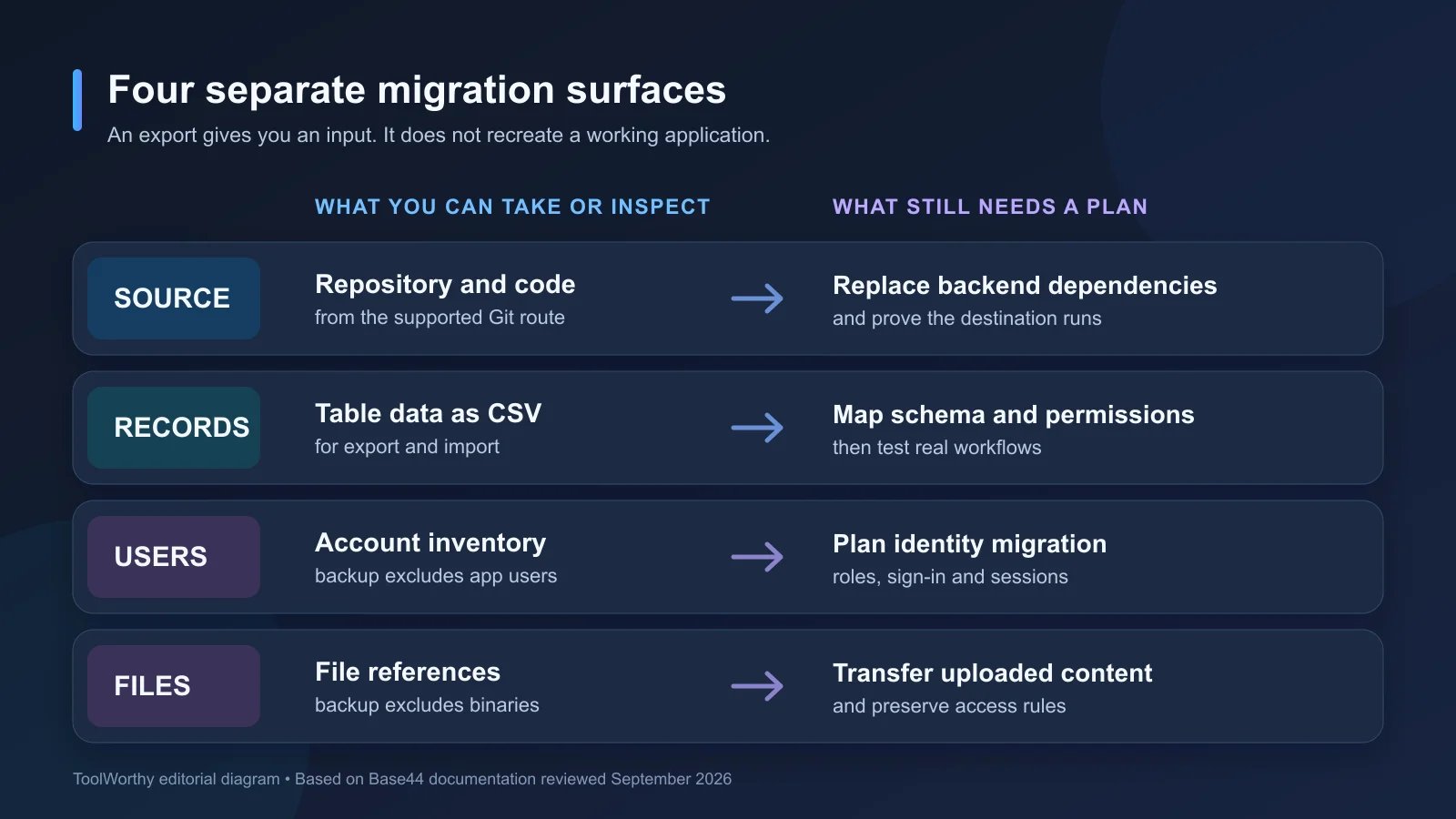
Figure 1. Source and record exports are inputs to a migration; users and uploaded files need their own plans.
If You Want to Keep Prompt-Led App Building

Direct web route: keep conversational full-stack building, with a documented path toward external hosting and Supabase. Lovable documents GitHub synchronization, deployment of its frontend outside Lovable, and routes from Lovable-managed cloud services toward a user's managed or self-hosted Supabase.
That is a portability advantage on paper, not a one-click Base44 migration. Lovable's own migration guidance requires work around data, project creation, and schema. Base44 authentication behavior, permissions, file storage, server functions, secrets, and integrations still need explicit destination mappings. This research did not establish that an arbitrary Base44 repository can be imported and continued as a Lovable-editable project without reconstruction.
Use Lovable when a web team wants a prompt-led shape and is willing to separate frontend transfer from backend migration. If native iOS or Android generation is mandatory, pause: this research run did not establish a supported native-mobile generation route for Lovable.
First trial: recreate one authenticated workflow against the backend architecture you intend to keep. Import representative records, exercise one permission boundary and one uploaded file, deploy the frontend outside the builder, and stop if any critical Base44 runtime dependency remains unexplained.

Direct JavaScript route: retain a conversational build loop while opening an Expo mobile or Supabase path. Bolt documents websites, web apps, Expo mobile apps, Node.js backends, Bolt databases, and Supabase. It also documents claiming a Bolt database in Supabase for external management under the supported workflow.
The gain is a JavaScript-centered destination with more than one delivery form. The loss is not just a vendor swap: Base44's server functions, authentication, permissions, records, and integrations still need replacement. This run does not contain a comparable Bolt-versus-Base44 total-cost model.
Choose Bolt when Expo or Supabase solves a named requirement and the team can own the JavaScript stack. Skip it when a non-JavaScript backend is mandatory or when you expect the Base44 backend to follow the repository.
First trial: import or reconstruct the smallest complete workflow, connect the intended database, validate sign-in and authorization, then build the Expo path if mobile is the trigger. Record token use and hosting/database consumption instead of comparing plan labels alone.
If You Want the Repository to Become the System of Record

Near replacement: move from a builder-centric workflow to an AI-assisted code workspace. Replit documents Git and GitHub synchronization, existing-repository import, managed Postgres, and static, autoscale, and reserved-style deployment choices.
This route fits teams that want conventional repository operations and can accept more engineering responsibility. Importing the code does not remove Base44 SDK calls or reproduce its managed authentication, storage, functions, and permission model. The switch does not by itself establish a lower bill; this run did not model equivalent Replit and Base44 workloads.
Use Replit when repository ownership and explicit runtime choices matter more than preserving Base44's all-in-one abstraction. Skip it when the team needs a mostly prompt-only path with minimal architecture decisions.
First trial: import the GitHub repository, identify every Base44 runtime dependency, replace one complete vertical slice, connect the intended database, and deploy it through the target Replit mode. A successful import that still calls the Base44 backend is not a completed migration.
Vercel v0
Near replacement: make Git, pull requests, Vercel deployment, and external services the durable system boundary. Current v0 documentation supports importing an existing GitHub repository and working through branches and pull requests. Vercel's full-stack route can connect services such as Supabase or Neon.
The gain is a web workflow centered on visible code and normal repository review. The cost is assembling the database, authentication, storage, background work, and other services that Base44 bundled. v0 AI credits and Vercel runtime usage are separate economic surfaces, and this research did not establish a native iOS or Android build route.
Choose v0 when the product is web-first and the repository must outlive the builder. If native mobile is mandatory, pause: this research run did not establish a supported native-mobile route for v0.
First trial: import the repository, build one pull-request change, replace a Base44-backed feature with the intended external service, deploy it, and test preview-to-production configuration. Stop if the team cannot explain ownership, limits, and recovery for each added service.
If Native or Cross-Platform Delivery Is the Trigger
Base44 documents app-store delivery through a native web-view wrapper and lists limitations including full offline mode, HealthKit, and native billing integrations. If one of those is the real blocker, test the exact device behavior before choosing a broad platform. “Supports mobile” is not evidence that background work, billing, health data, deep links, push, or offline sync fit your app.

Near replacement: visual Flutter development with an exportable conventional codebase. FlutterFlow states that its projects are complete Flutter applications and that exported projects can run without FlutterFlow. It documents code export, GitHub workflows, and external backend choices including Firebase and Supabase.
That makes it a route to evaluate when cross-platform code ownership is central. It is not a direct code migration from Base44: the current frontend becomes Flutter, while authentication, database rules, storage, functions, and integrations must be rebuilt or mapped to the chosen backend. Generated-code branch rules also deserve a real team-workflow test.
Use FlutterFlow when native or cross-platform delivery justifies a framework change. Skip it when preserving the existing React frontend matters more than gaining Flutter targets.
First trial: build the hardest screen and device capability, export the Flutter project, run it without FlutterFlow, and connect a representative auth, data, file, and push flow. Verify the Git branch strategy before treating the code export as an operating model.
Emergent
Direct prompt-led mobile route: build web and Expo React Native applications around an opinionated stack. Emergent documents React or React Native frontends, Python FastAPI backends, MongoDB, GitHub import and synchronization, and an Expo EAS route from downloaded mobile code to store binaries.
The benefit is keeping conversational construction while gaining a documented native-binary path. The migration cost is architectural: Base44-managed server functions and its data model do not become FastAPI and MongoDB through repository import. This run does not contain a comparable Emergent-versus-Base44 total-cost model.
Choose Emergent when web-plus-Expo delivery solves the core trigger and the team accepts the destination stack. Skip it when relational/Postgres data or TypeScript backend continuity is mandatory.
First trial: import or reproduce one workflow, map its schema into the destination database, validate authentication and permissions, then produce a test native build through Expo EAS. Stop if the stack change overwhelms the value of the mobile route.
Bubble
Near no-code route: a managed visual platform with a shared native-mobile path currently documented as public beta. Bubble says its web and native experiences can share a database, authentication, and workflows. That may solve a mobile requirement while preserving a managed no-code operating model.
The trade-off is decisive: Bubble states that Bubble applications cannot be exported as runnable application code and run only on Bubble. Data can be exported, but moving later can require another UI and logic rebuild. The public-beta status of native mobile requires a near-publish recheck.
Choose Bubble when a visual managed platform and shared web/mobile backend are worth a deliberate platform commitment. Skip it when self-hosting, runnable source export, or an off-Bubble runtime is a hard requirement.
First trial: rebuild the most important workflow and the hardest native capability, then test roles, data import, file handling, and the intended store path. Make the second-exit risk explicit before migrating a live product.
If You Want a Narrower Business App or a Fully Owned Stack

Adjacent route: simplify the product into a data-centered business application. Glide positions itself around forms, portals, dashboards, internal tools, and field workflows. This can be a better decision than preserving every custom behavior when the Base44 app is fundamentally a structured-data workflow.
Glide states that its apps are PWAs and that direct native app-store publishing requires another approach. This research also did not establish an official current route for exporting a complete runnable Glide source codebase. Those boundaries make it a poor fit for a custom consumer product or a buyer whose main trigger is source-code exitability.
Choose Glide when narrowing the application model is the gain. Skip it when direct store distribution, extensive custom logic, or a verified self-hosting path is mandatory.
First trial: import representative records and recreate the most important role, relation, computed value, permission, and automated action. Test the exact field device and connectivity conditions. Stop if custom product behavior reappears as workarounds.
Next.js + Supabase
Workflow change: replace the AI-builder boundary with a code-owned React application and an independently managed or self-hosted backend. Next.js documents conventional Node and container deployment. Supabase provides Postgres, authentication, storage, realtime, functions, and APIs, and documents self-hosting.
This route gives the team direct infrastructure control, but it deliberately gives up Base44's low-operations system boundary. Self-hosting makes your team responsible for security, backups, availability, upgrades, monitoring, and incident response. Base44-specific SDK calls, authorization, functions, file handling, and integrations must be removed or rebuilt.
Choose this route when code, database, identity, storage, and deployment control are hard requirements backed by engineering capacity. Skip it when prompt-led development and low operational responsibility are the main value.
First trial: migrate one vertical slice into Next.js and Supabase, including a real user, authorization rule, representative records, an uploaded file, one server function, and the target deployment. Rehearse backup and restore. Do not schedule a cutover until every Base44 dependency is inventoried and the identity and file plans are explicit.
Why Webflow App Gen Is Not in the Shortlist
Webflow remains relevant for websites, but its current help center says further App Gen development is paused and a deprecation process is beginning. A product entering deprecation is not a defensible current recommendation for replacing a full-stack Base44 application. Recheck the status if Webflow announces a successor route.
A Safer Migration Sequence
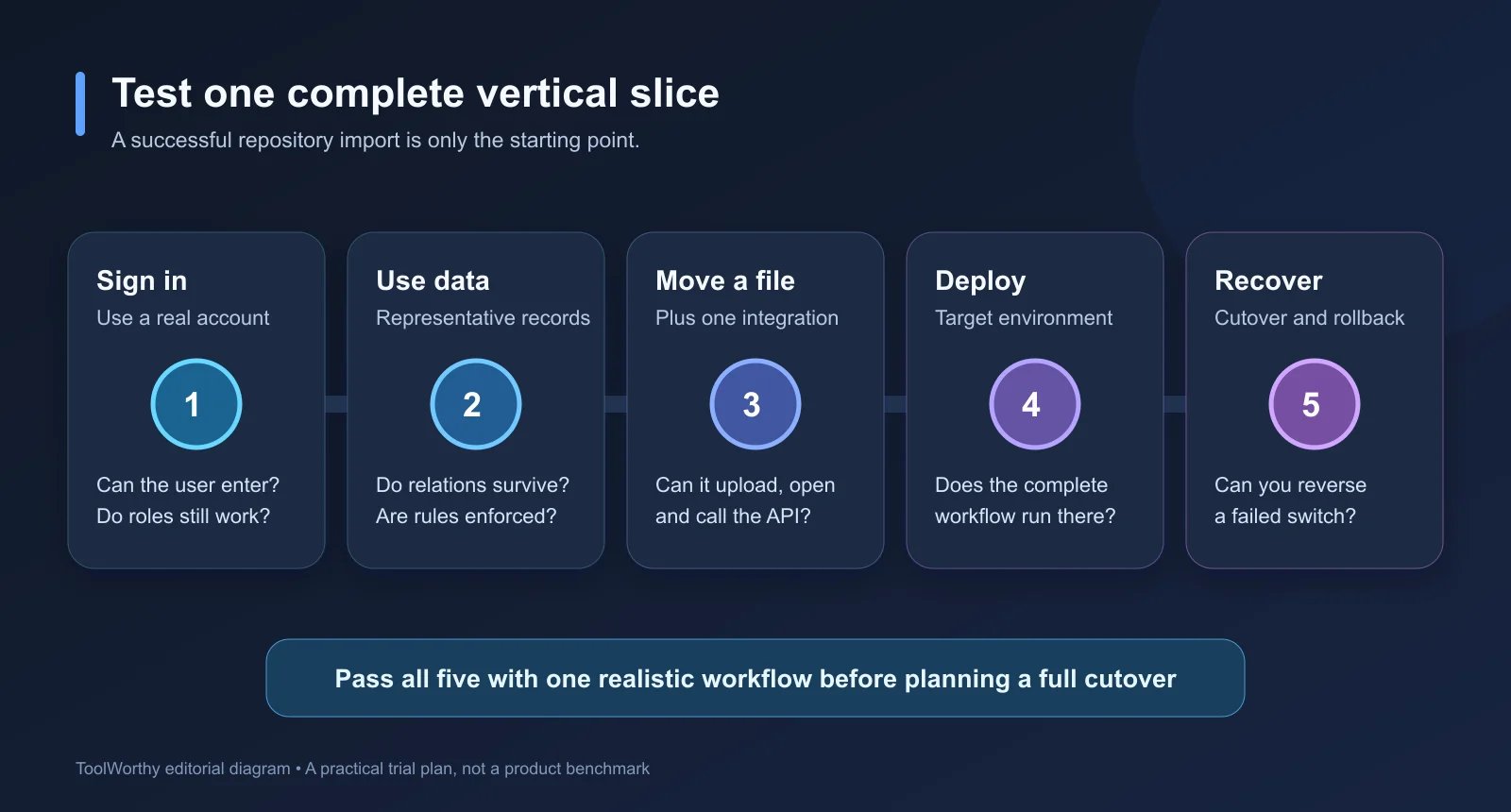
Figure 2. Trial one realistic workflow end to end before scheduling a full cutover.
- Freeze the trigger. Write one reason to leave and the requirements that cannot regress. If a Base44 setting or plan change fixes it, avoid a platform migration.
- Inventory all nine surfaces. App form, source, data, identity, files, functions and integrations, deployment, economics, and governance each get an owner and destination.
- Build a vertical slice. Use the hardest realistic workflow, not a clean demo. Include authentication, a permission boundary, representative data, a file, and one integration.
- Run in parallel. Keep the Base44 app authoritative while validating the destination. Measure construction usage and live runtime costs under the same workload.
- Design cutover and rollback. Specify data freeze, user communication, credential reset if needed, file transfer, DNS, monitoring, backup, and the rollback decision point.
- Recheck volatile facts. Pricing, credits, plan gates, native beta status, regions, governance, and migration documentation can change near publication and near purchase.
Which Base44 Alternative Should You Choose?
Choose Lovable for a prompt-led web-app shape with a documented Supabase-oriented exit path. Choose Bolt.new when JavaScript, Expo, or its Supabase route fits. Choose Replit or Vercel v0 when conventional Git and deployment control matter more than the all-in-one builder. Choose FlutterFlow when owning cross-platform Flutter code is the trigger, Emergent when conversational Expo development and its opinionated stack fit, or Bubble when managed visual web/mobile delivery is worth accepting another closed runtime. Choose Glide for a narrower data-centered business app. Choose Next.js plus Supabase when infrastructure control justifies the largest workflow and operational change.
Stay with Base44 when none of those gains resolves a hard requirement. Switch only after the destination passes your vertical-slice trial and the migration plan covers users and files—not just code and CSV rows.
Get ToolWorthy Weekly
New AI tools, practical guides, and selected AI signals in one weekly brief.
For AI tool founders
Built a tool that belongs in this decision set?
Request an editorial evaluation for possible inclusion in ToolWorthy.
Submit your tool for reviewPaid submission does not guarantee a ranking, recommendation, inclusion, or editorial outcome.