
15 Best 1min.AI Alternatives 2026 — When the Credits Run Out
1min.AI credits burn faster than the 'millions' suggest — a Grok 4 query can eat 40K. We compare 15 alternatives (Poe, Monica, ChatLLM, Claude) by pricing and workflow. May 2026.
On this page
The pitch that sold 1min.AI was simple: one subscription instead of ten. Pay once on AppSumo, get ChatGPT, Claude, Gemini, image, video, and audio behind a single credit balance, and stop bleeding $20/month to five vendors. For light use it works. The problem shows up the first time you run a serious task — a Grok 4 deep-thinking query that eats 40,000 credits, or a 5-second video you couldn't even finish — and realize the "millions of credits" you bought are a meter, not a flat rate. The complaints clustering on G2, Trustpilot, and Capterra through early 2026 aren't about whether 1min.AI works; they're about whether the credit math holds up once you actually depend on it.
This guide groups 15 alternatives into three shapes: all-in-one aggregators (Galaxy.ai, Monica, Merlin, ChatLLM, TextCortex, Anakin, Poe, You.com, HARPA, Sider) for people who still want many models under one roof but with saner pricing or better workflow; and first-party and open-source escapes (ChatGPT, Claude, Gemini, Perplexity, HuggingChat) for people who've decided the aggregator layer itself is the problem. If your use was mostly conversational, our AI chatbots category covers that adjacent landscape. Every pain point below links to the actual G2/Trustpilot/Capterra reviews that drove it. Pricing was checked in May 2026 where official pages were accessible; several aggregators use dynamic or region-dependent checkout, so figures marked "reported" should be treated as directional and verified live before you subscribe.
| Tool | Best For |
|---|---|
| Galaxy.ai | Broad all-in-one hub at one lower monthly price |
| Monica AI | Browser and desktop copilot, not a credit marketplace |
| Merlin AI | Cross-site research and summarization without tab-switching |
| ChatLLM by Abacus.AI | Business multi-model workspace with agents and apps |
| TextCortex | Writing, knowledge, and workflow customization depth |
| Anakin.ai | No-code AI apps and workflows, not just multi-model chat |
| Poe | Clean model hub for chat and side-by-side comparison |
| You.com | Research and answer-engine work over raw generation |
| HARPA AI | Web automation and browser workflows |
| Sider | Cheap browser-sidebar AI for reading and writing |
| ChatGPT | Newest first-party OpenAI experience |
| Claude | Long-form writing, reasoning, and coding |
| Google Gemini | Native Google Docs, Gmail, and Sheets integration |
| Perplexity | Research and search with citations |
| HuggingChat | Free, open-source escape from credit systems |
Why People Are Leaving 1min.AI in 2026
These seven complaints map to seven distinct review clusters, not one general "it's bad" sentiment — and the distinction matters, because the right alternative depends on which one is yours. The first is the fresh-news driver: as 1min.AI keeps adding premium models in 2026, the cost of actually using them has become the loudest complaint.
1. Premium-model credits burn far faster than the "millions" suggest
The headline number — "over 10 million credits" — sounds infinite until you run a frontier model. From a G2 pros-and-cons review (2026-05-30): "Grok 4 deep thinking can take 40k credits." A Capterra reviewer (2026-01-23) reported they "couldn't even make a 5 second video" before running dry. The recurring G2 refrain (2026-05-01): "credits run out quicker than you think." The issue isn't that credits exist — it's that the gap between the marketed balance and what a serious task consumes is wide enough to feel like a bait.
2. The credit math is unpredictable enough that you're always watching the meter
Distinct from "credits run out" is the cognitive tax of never knowing what anything costs. A Capterra review (2025-12-26): "credit model is confusing." Another (2026-01-01): "keep an eye on your credits" — as standing advice. From G2 (2026-04-20): "credit system can be confusing." Even the official site frames usage in raw units ("daily visit 15,000 credits"), so every model, input length, and output size becomes a mental calculation before you act. For users who came to escape subscription juggling, swapping it for credit accounting doesn't feel like a win.
3. The lifetime deal looked generous until daily heavy use hit the ceiling
The AppSumo LTD is what pulled most users in, and it's where a specific disappointment lives. From Capterra (2026-01-23): "lifetime deal... insufficient credits." A G2 reviewer (2026-05-01) admitted the "lifetime subscription seems enticing" — past tense framing the gap. Another Capterra user (2025-12-26) confessed they still "uses other subs/free tiers" alongside it. As AppSumo's own docs (2025-09-03) clarify, "AI Credits are usage tokens" — lifetime access to the platform isn't lifetime access to unlimited compute, and the distinction catches buyers who skimmed it.
4. The aggregator saves money by stripping the native workflow you actually used
Cheaper access to many models comes at the cost of the integrations that made each tool useful. From G2 (2026-04-16): "You lose integration." A Trustpilot reviewer (2026-05-24) specifically missed "Visual Studio Code integration." Others on G2 wanted a "dedicated chat history panel" (2026-03-27) and complained it "takes me time to upload" (2025-08-19) what a native app would have ingested automatically. The aggregator gives you the model but not the workbench around it — and for workflow-heavy users, the workbench was the point.
5. It does everything, but professional output still needs a second pass
A generalist tool that's "good enough" across ten modalities can be not-quite-enough on the one you actually ship. From G2 (2026-05-30): "advanced features feel limited." Another (2026-03-27): "outputs feel less precise." A 2025-08-19 reviewer noted "differences compared to ChatGPT" on the same prompt, and a Capterra user (2025-12-26) admitted they go back to the "best engines for final shaping." The pattern: 1min.AI is fine for drafts, but precision work routes back to the first-party model anyway — which undercuts the "replace everything" premise.
6. Slow loads, timeouts, and a bare UI grind down daily use
The second fresh-news cluster is reliability. A Trustpilot reviewer (2026-05-24) reported "every single query just times out," alongside "performance is slow loading" and a blunt "UI is terrible" in the same window. From Capterra (2025-10-15): "UI is pretty bare-bone." For a tool you're supposed to open dozens of times a day, friction at the interface layer compounds into a reason to leave even when the underlying models are fine.
7. Review-for-credits incentives make the ratings harder to trust
This one deserves care: the evidence shows incentives exist, not that ratings are fabricated. The 1min.AI site (2026-05-30) prompts users to "Leave us a review," and a Trustpilot reviewer (2026-05-20) noted "five star reviews... free points." G2 flags some entries as "Incentivized Source" (2026-05-01), and even a Macworld writeup (2026-05-30) mentions the "leave a review... credits" loop. None of this proves manipulation — but if you're researching whether to buy, knowing some glowing reviews came with a credit reward is reason to weight the critical ones more heavily.
Top 15 1min.AI Alternatives Compared
Quick Compare. Anchor first, then alternatives grouped by type and sorted by how directly they replace 1min.AI's all-in-one promise. "Pricing predictability" is the axis that matters most given why people leave — flat subscriptions beat credit meters for cost certainty.
| Tool | Type | Starting Price | Pricing Predictability | Migration Effort |
|---|---|---|---|---|
| 1min.AI (anchor) | All-in-one aggregator | LTD + credit top-ups | 🔴 Credit meter, premium models burn fast | — |
| Poe | Model hub | Free; from $4.99/mo + compute | 🟡 Subscription + per-model compute | Low |
| ChatLLM by Abacus.AI | Business multi-model | $10/user/mo; Pro $20 total | 🟡 Per-seat plan with credits/limits | Low |
| Galaxy.ai / Magica | All-in-one hub | Reported ~$15/mo entry; verify Magica checkout | 🔴 Usage/credit limits; not pure flat unlimited | Medium |
| Monica AI | Browser copilot | Free; Pro reported ~$8.30/mo annual or ~$9.90 monthly | 🟡 Plan allowances/credits; verify checkout | Low |
| Merlin AI | Research copilot | Free; Pro reported ~$19/mo | 🟡 Query allowance | Low |
| TextCortex | Writing workflow | Free; Premium $29.99/mo | 🟢 Flat | Medium |
| Anakin.ai | No-code AI apps | Free 30 credits/day; Basic $9.90/mo | 🟡 Credit-based but cheaper | Medium |
| You.com | Research engine | Free; Pro reported ~$20/mo | 🟢 Flat | Low |
| HARPA AI | Web automation | Free demo; Basic ~$12/mo annual | 🟡 Command-run limits | Medium |
| Sider | Browser sidebar | Free; reported $4.20–$16.70/mo | 🟡 Flat but recheck | Low |
| ChatGPT | First-party model | Free; Go ~$8, Plus $20, Pro from $100 | 🟢 Flat | Low |
| Claude | First-party model | Free; Pro $17 annual / $20 monthly; Max from $100/mo | 🟢 Flat by tier | Low |
| Google Gemini | First-party + Google | Free; AI Pro $19.99/mo | 🟢 Flat | Low |
| Perplexity | Research + search | Free; Pro $20/mo or $200/yr | 🟢 Flat | Low |
| HuggingChat | Open-source | Free | 🟢 Free | Low |
Detailed Reviews
All-in-one aggregators — the closest like-for-like replacements if you still want many models under one roof, differing in how they price access and what workflow they wrap around it.
Galaxy.ai
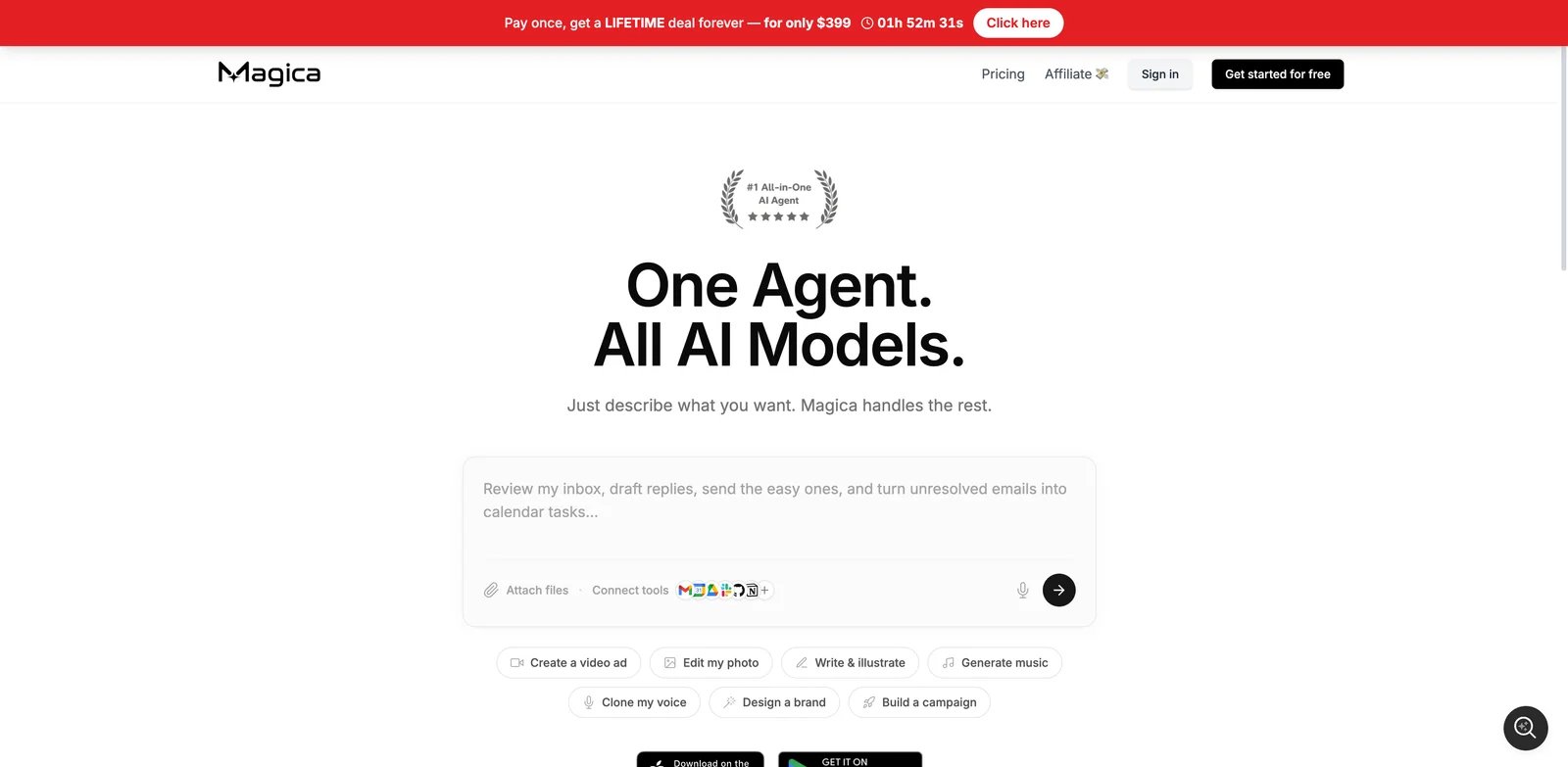
Galaxy.ai makes nearly the same promise as 1min.AI — every major model and modality under one subscription — which makes it the most direct swap and the one to scrutinize hardest. The pitch that "you get everything for one low price" is exactly what 1min.AI buyers heard before the credit meter bit, so the question isn't whether Galaxy.ai offers breadth; it's whether its pricing model avoids the same surprise.
What Galaxy.ai solves vs 1min.AI:
- Positions as a low-entry all-in-one hub — but don't read it as pure flat unlimited access: Galaxy.ai now redirects to Magica, and available pricing material points to usage/credit limits that should be verified at checkout
- Broad modality coverage (chat, writing, image, audio) keeps the "one subscription" convenience that pulled you to an aggregator in the first place
- A monthly plan rather than a lifetime-credit pool means a recurring, plannable bill — though the underlying allowances still matter
Pricing vs 1min.AI: Galaxy.ai/Magica pricing isn't fully transparent from the dynamic checkout. Treat ~$15/mo as a reported entry price, not verified flat-unlimited access, and confirm credit allowances, top-ups, and fair-use limits before subscribing. The structure is easier to reason about than a lifetime-credit pool, but it's not a credit-free escape.
Limitations: As another broad aggregator, Galaxy.ai inherits the structural weakness behind 1min.AI's pain point #5 — a generalist across many models can lag the first-party tool on precision work. Pricing transparency is itself a watch item: if the real checkout differs from the advertised number, you're back to uncertainty.
Best for: 1min.AI users whose complaint was the credit meter, not the aggregator concept, and who want a flat monthly bill for the same breadth. Not the right fit if your real issue was output precision (go first-party) or if you specifically wanted a one-time lifetime purchase.
Get started with Galaxy.ai
Monica AI
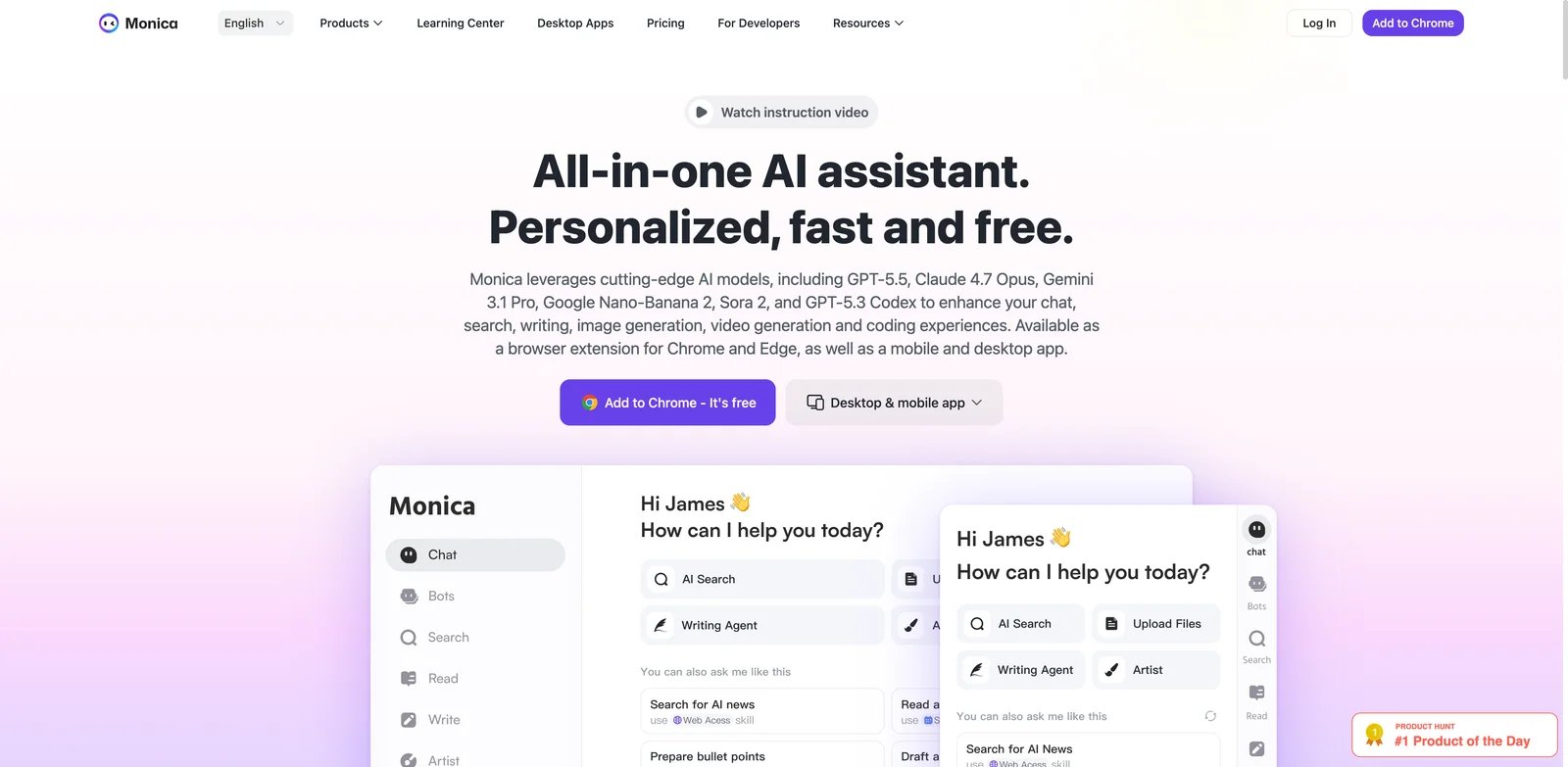
A free tier, paid plans commonly reported around ~$8.30/mo on annual billing (or ~$9.90 month-to-month), and — the part that actually distinguishes it — a copilot that lives in your browser and desktop rather than in a separate dashboard you have to remember to open. Monica is less "marketplace of models" and more "AI layered onto whatever you're already doing," which directly answers 1min.AI's lost-integration complaint. Its real edge is workflow placement, not unmetered pricing.
What Monica solves vs 1min.AI:
- Browser-native angle: Monica sits in a sidebar across every page, so summarizing, translating, or drafting happens in context — recovering the native workflow that aggregator pain point #4 mourns
- Multi-model access (GPT, Claude, Gemini) keeps the "many models" benefit while attaching it to your actual reading and writing surface
- Desktop app plus browser extension means it's present where work happens, not a destination you navigate to
Pricing vs 1min.AI: Free tier; paid tiers commonly reported around ~$8.30/mo annual or ~$9.90/mo monthly, with higher plans varying by checkout — verify, as these aren't first-party-confirmed. The appeal over 1min.AI is workflow placement, not the absence of metering: Monica still uses plan limits and credits, so heavy users should compare monthly allowances, reset rules, and model access before subscribing.
Limitations: The sidebar model is a different mental model from a generation dashboard — if you used 1min.AI mainly to batch-produce images or video, Monica's browser-copilot framing fits worse. Pricing should be confirmed live given the third-party sourcing.
Best for: Users whose 1min.AI frustration was losing native, in-context AI while browsing and writing. Not the right fit if your core use was heavy multimedia generation rather than reading/writing assistance.
Get started with Monica AI
Merlin AI
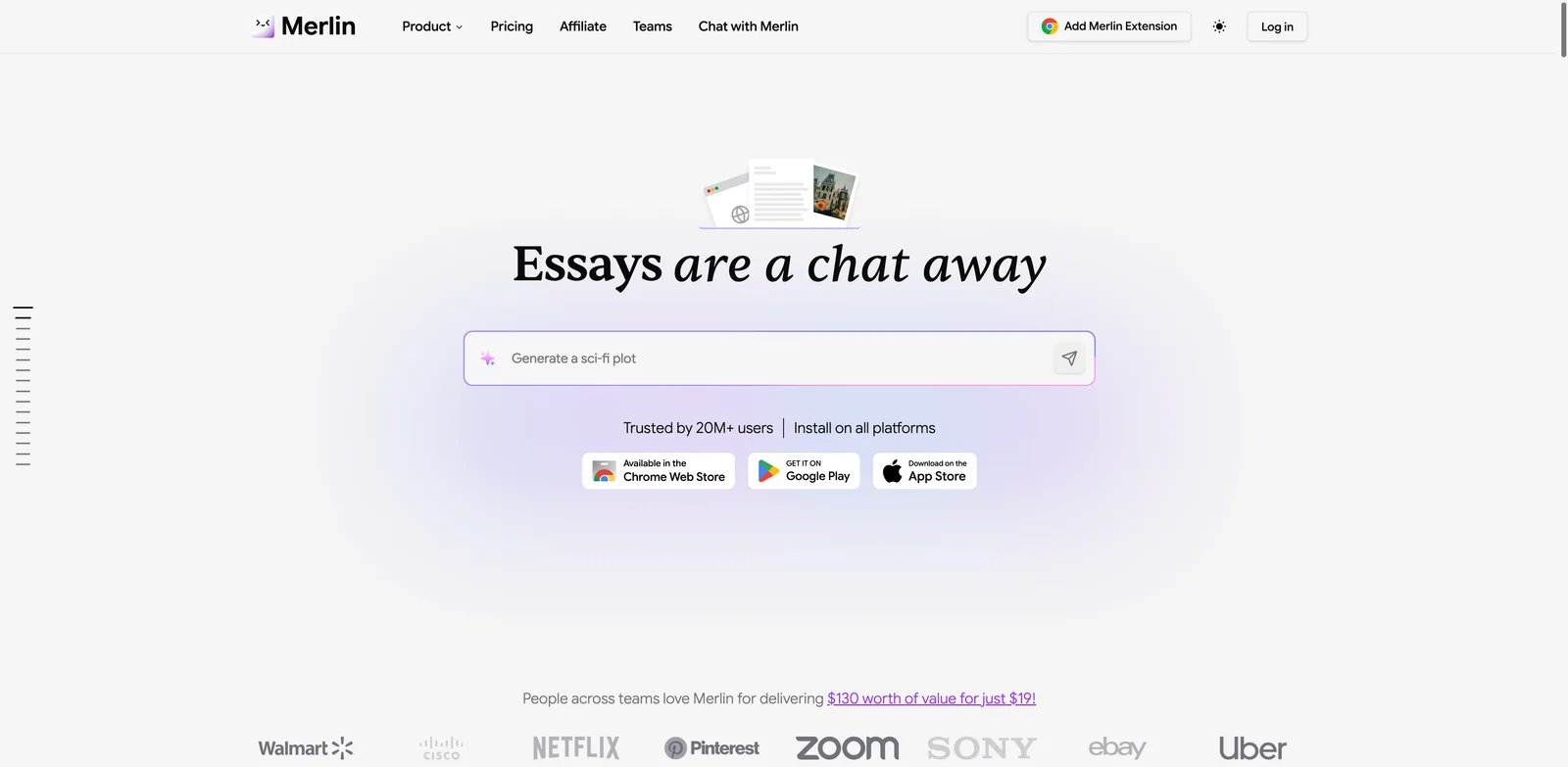
You're reading a long report, three tabs deep, and you want it summarized, fact-checked against another source, and turned into talking points — without copy-pasting into yet another dashboard. That's the workflow Merlin is built around: a cross-site research and writing copilot for people who left 1min.AI because the tab-switching and re-uploading (pain point #4) ate the time the aggregator was supposed to save.
What Merlin solves vs 1min.AI:
- Cross-site summarization and research happen on the page you're already on, eliminating the upload step 1min.AI users complained about
- A free daily query allowance lets you test the workflow before committing, and the model mix covers the frontier names you'd want
- Framed as a copilot for knowledge work rather than a generation marketplace, so chat history and research context stay attached to your browsing
Pricing vs 1min.AI: Free plan with limited access; official pricing shows Pro at $19/mo billed $228/year and Teams at $15/seat/mo billed $180/year, with shared fair-use limits across models and features. The allowance model is more predictable than 1min.AI's per-task credit burn for research-style use, though heavy users should check where the fair-use ceiling lands.
Limitations: The daily allowance is its own kind of metering — lighter than 1min.AI's credits for research, but a ceiling nonetheless. And like the other browser copilots, it's a weaker fit if you wanted bulk image or video generation.
Best for: Researchers, writers, and analysts whose 1min.AI complaint was workflow friction and tab-switching. Not the right fit for multimedia-generation-heavy use or for users who want a truly unmetered flat plan.
Get started with Merlin AI
ChatLLM by Abacus.AI
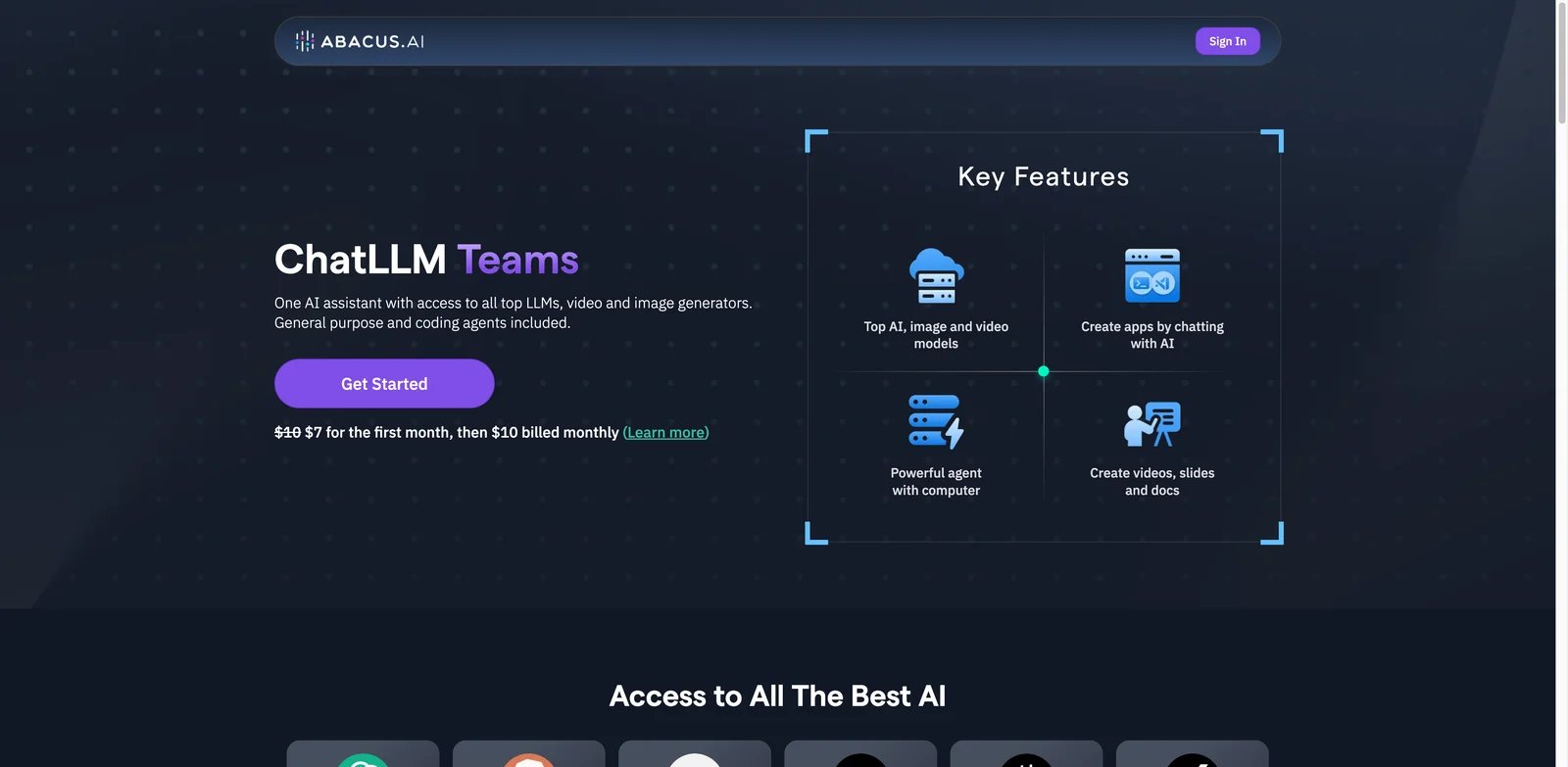
Ten dollars per user per month for a multi-model workspace that includes agents and app-building, with a Pro tier at $20 and enterprise depth above it — ChatLLM is the alternative for users who treated 1min.AI as a work tool and hit its professional ceiling. Where 1min.AI is a consumer aggregator, ChatLLM is built for teams that need the breadth plus structure.
What ChatLLM solves vs 1min.AI:
- Predictable per-seat pricing ($10/user/mo Basic, $20 total/user/mo Pro) makes billing far easier to budget than a depleting credit balance — softening pain points #1 and #2, though it isn't fully unmetered
- Multi-model access (GPT, Claude, Gemini, and more) sits alongside agents and app-hosting, so it scales from chat into actual workflow automation
- Business and enterprise tiers mean it grows with a team rather than capping out like a consumer LTD
The credit math: ChatLLM is easier to budget at the seat level, but usage is still constrained by credits — Pro adds $10/user/mo over Basic and includes a larger credit pool, so teams should check agent, studio, and model usage against credit consumption rather than assuming unlimited.
Pricing vs 1min.AI: Basic $10/user/mo; Pro $20 total/user/mo; Enterprise from $5,000/mo; a separate Abacus app-hosting free tier exists. For an individual the per-seat cost is higher than a one-time LTD, but the predictability and depth are the trade.
Limitations: It's more tool than a casual 1min.AI user needs — the agents-and-apps surface has a learning curve, and the enterprise framing can feel heavy for solo use. Image and video generation are not its center of gravity.
Best for: Professionals and small teams who used 1min.AI for real work and want flat pricing plus agents and apps. Not the right fit for casual multimedia generation or users who specifically wanted a low one-time cost.
Get started with ChatLLM by Abacus.AI
TextCortex
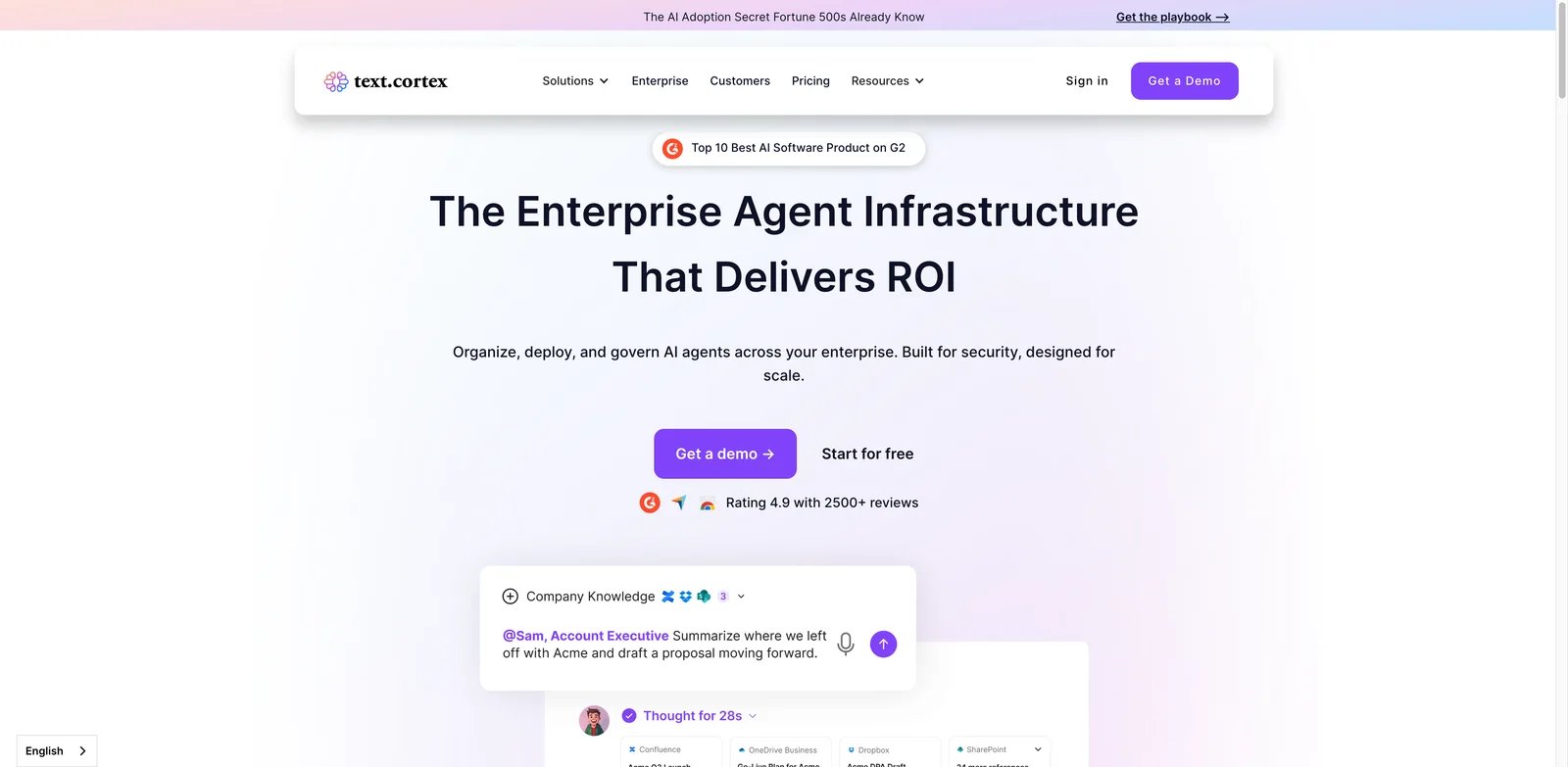
Built first for writing and knowledge work, TextCortex is the alternative for users who realized their "all-in-one" use was really 80% text — drafting, rewriting, summarizing, knowledge management — and that a generalist aggregator gave them shallow versions of tools a focused writing platform does properly.
What TextCortex solves vs 1min.AI:
- Depth in writing, knowledge bases, and workflow customization, where 1min.AI offers breadth-but-shallow (pain point #5 on output precision)
- A genuine free tier ($0/mo) lets you validate the writing quality before paying, unlike committing to a credit pool upfront
- Customizable personas and knowledge integration mean it learns your style and source material rather than treating every prompt as cold
Pricing vs 1min.AI: Free $0/mo; Premium $29.99/user/mo; Enterprise custom. The Premium tier is pricier than a casual aggregator subscription, but it's flat — no credit accounting — and aimed at people who write enough to justify it.
Limitations: It's not a true all-in-one — image, audio, and video generation aren't the point, so if your 1min.AI use spanned every modality, TextCortex only covers the text slice. Premium's $29.99 is a step up from cheap aggregator tiers.
Best for: Writers, marketers, and knowledge workers whose 1min.AI use was mostly text and who want depth over breadth. Not the right fit if you genuinely need multi-modal generation across image, audio, and video.
Get started with TextCortex
Anakin.ai
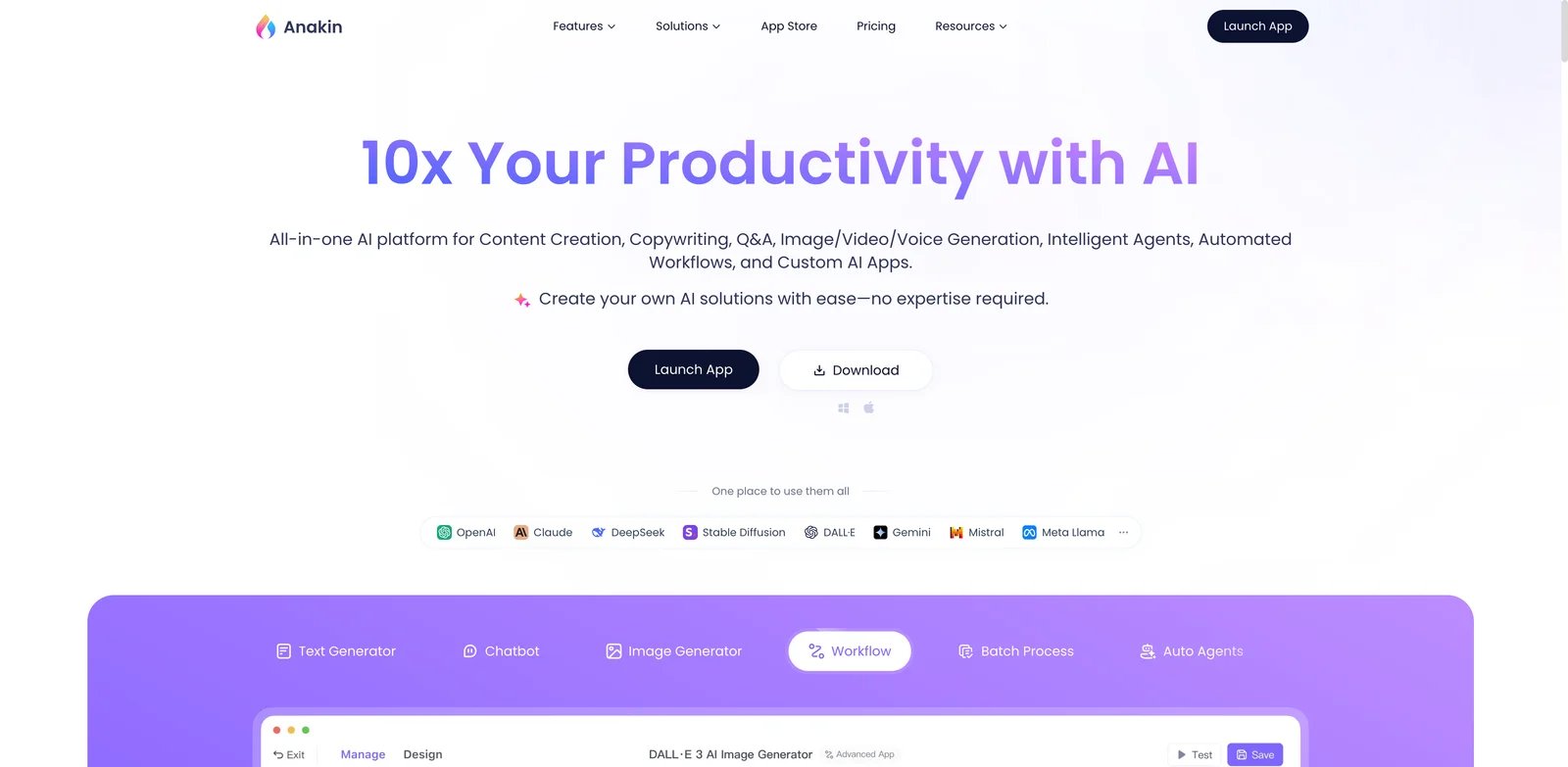
Anakin started from a different question than 1min.AI: not "how do I access every model," but "how do I build AI apps and workflows without code." For users whose aggregator use was really about automating repeated tasks — not just chatting with different models — that reframing is the whole value.
What Anakin solves vs 1min.AI:
- No-code hook: build reusable AI apps and workflows (content pipelines, batch tasks, custom assistants) instead of re-prompting from scratch each time — a capability 1min.AI's chat-and-generate surface doesn't offer
- Multi-model access underneath the app builder, so you still get model breadth, but harnessed to automation rather than one-off generation
- A free tier (30 credits/day) and a cheap Basic plan ($9.90/mo with 9,000 credits) make it accessible to test the workflow angle
Pricing vs 1min.AI: Free $0 with 30 credits/day; Basic $9.90/mo with 9,000 credits; higher tiers available. It's still credit-based — so not a full escape from metering — but the credits are cheaper and tied to building reusable apps, which changes the value math versus burning credits on disposable outputs.
Limitations: It still uses a credit system, so pain point #2 (credit math) isn't fully solved — though the per-app reuse softens it. And the no-code builder is a learning investment that casual users won't want.
Best for: Users whose 1min.AI use was really about automating repeated AI tasks and who'll invest in building reusable workflows. Not the right fit if you wanted simple flat-rate chat access with zero metering.
Get started with Anakin.ai

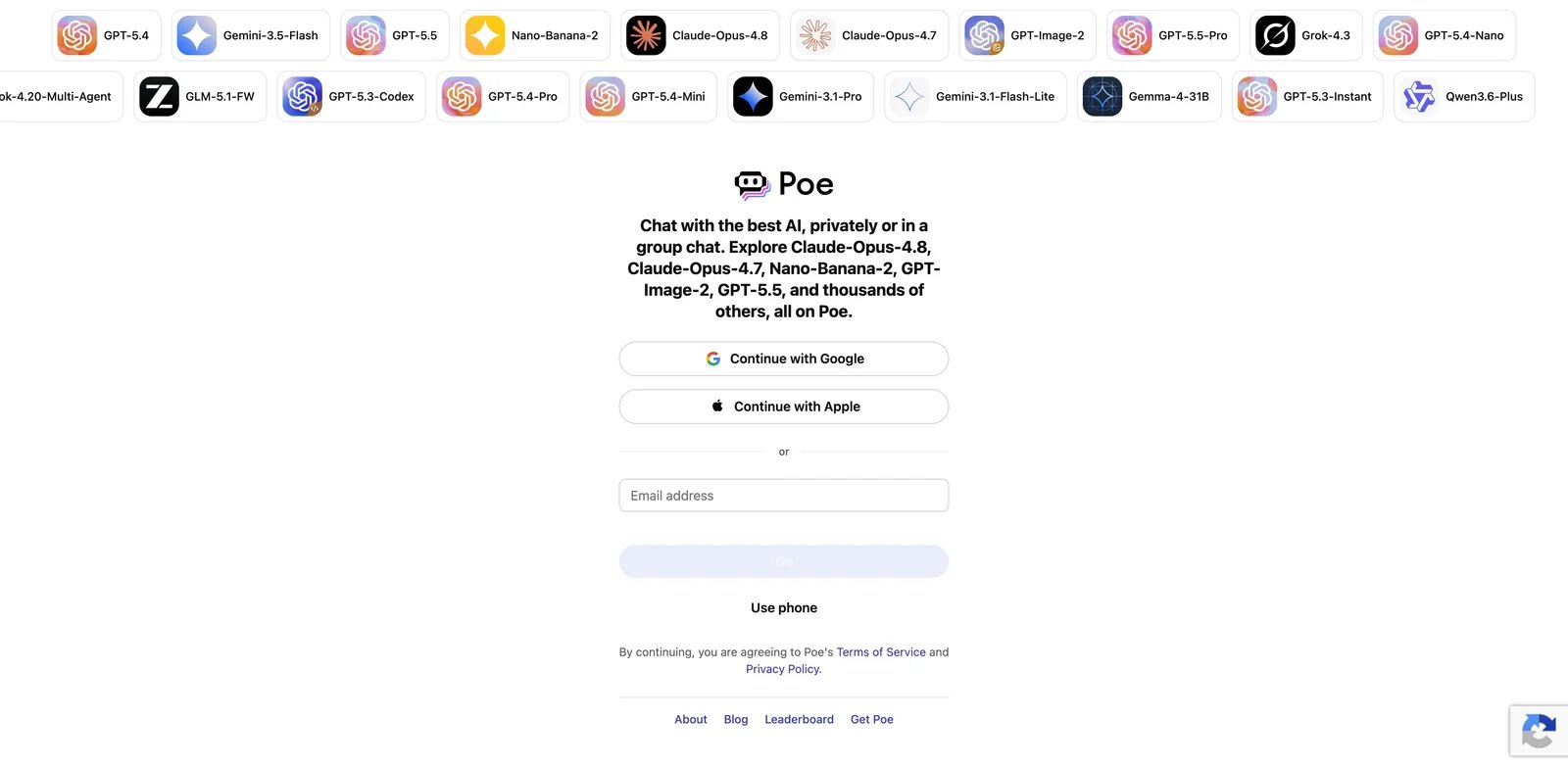
If your honest 1min.AI use was "chat with different models and compare their answers," Poe is the cleaner version of exactly that — a polished hub where Claude, GPT, Gemini, and dozens of specialty bots live side by side, without the image-video-audio generation suite you maybe never used. It's the closest spiritual match for the "many models, one place" appeal, minus the bloat — though it's not an unmetered escape: Poe subscriptions include compute points, bots show per-message costs, and unused points may not roll over depending on the plan.
What Poe solves vs 1min.AI:
- A clean, fast multi-model chat hub focused on the use most aggregator users actually have: comparing model outputs on the same prompt
- Subscription starts low ($4.99/mo) with additional compute/credits scaling by model use — transparent enough that you see what heavier models cost
- Bot-creation lets you save custom personas, recovering some of the workflow continuity 1min.AI lacked
Pricing vs 1min.AI: Free sign-up; subscriptions from $4.99/mo plus additional compute depending on model use. It's partly usage-based like 1min.AI, but the entry price is lower and the model-cost transparency is better, so the credit-math anxiety (pain point #2) is reduced rather than eliminated.
Limitations: Poe is chat-and-comparison first — it's not the place for bulk image, audio, or video generation, so a multi-modal 1min.AI user loses those. Heavy use of premium models still draws on compute, so it's not unmetered.
Best for: Users whose 1min.AI use was mostly chatting with and comparing models, who want a cleaner hub at a lower entry price. Not the right fit for heavy multimedia generation or users wanting a fully flat, unmetered plan.
Get started with Poe
You.com
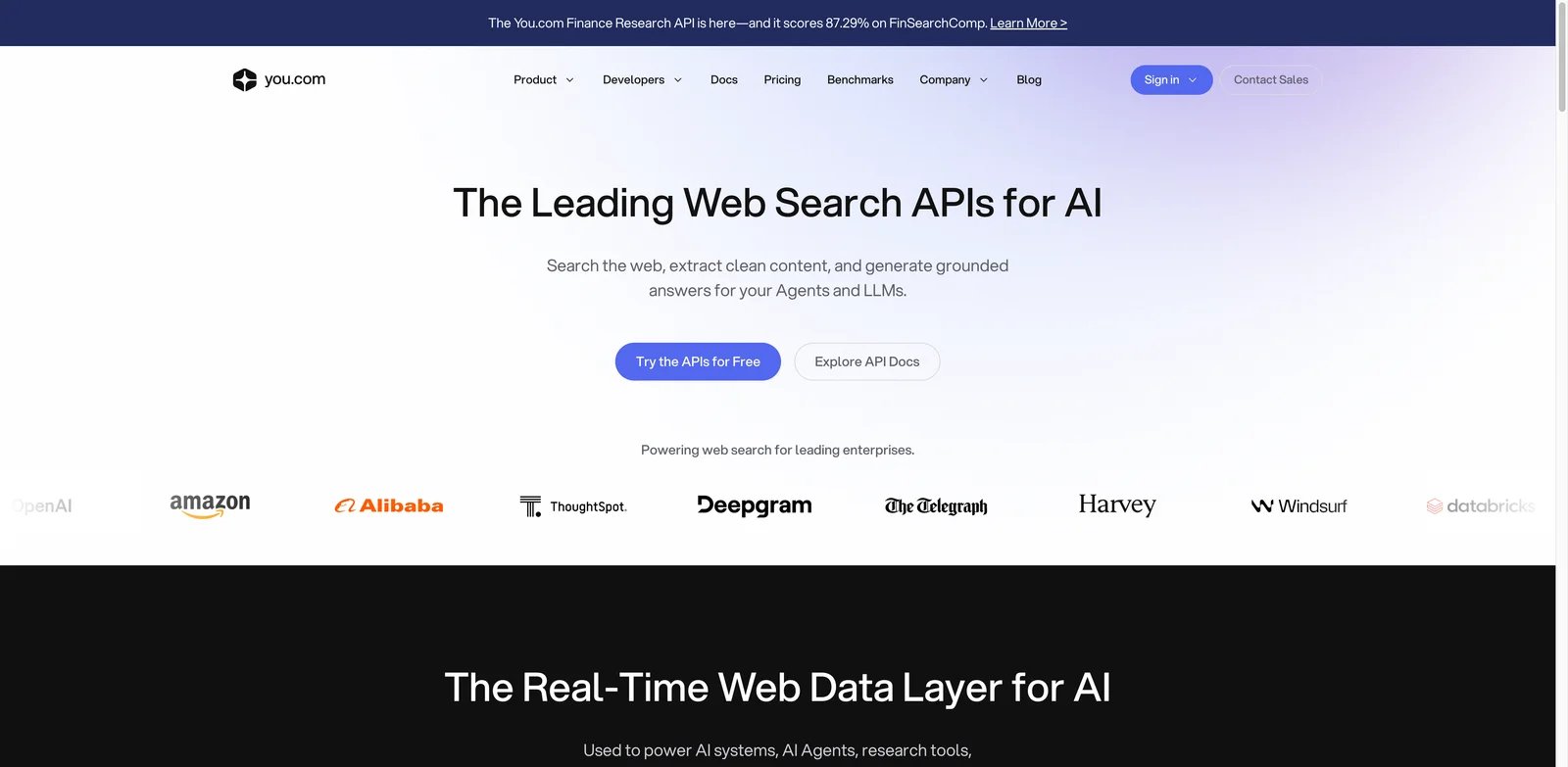
You.com competes on a different axis than 1min.AI: it's a research and answer engine first, a generation tool second. For users whose aggregator use was really "ask questions and get sourced answers" rather than "produce media," You.com's research orientation and citation focus deliver that job better than a generalist suite.
What You.com solves vs 1min.AI:
- Research- and answer-engine-oriented, with sourced responses — stronger for knowledge work than 1min.AI's broad-but-shallow generation (pain point #5)
- Multi-model access plus web grounding means current, cited answers rather than ungrounded generation
- A flat Pro subscription replaces the credit meter for the research use case
Pricing vs 1min.AI: Free tier available; Pro is commonly $20/mo month-to-month, with annual billing often shown as $15/mo billed $180/year, and Max/high-usage pricing varies by checkout — verify current consumer pricing. Flat pricing removes the per-query credit calculation for research-heavy users.
Limitations: As a research/answer engine, You.com is a weaker fit for users who came to 1min.AI for image, audio, and video creation — that's not its strength. The Max tier at $200 is steep and aimed at power users.
Best for: Knowledge workers and researchers whose 1min.AI use was question-answering and search rather than media generation. Not the right fit if your core need was multi-modal content creation.
Get started with You.com

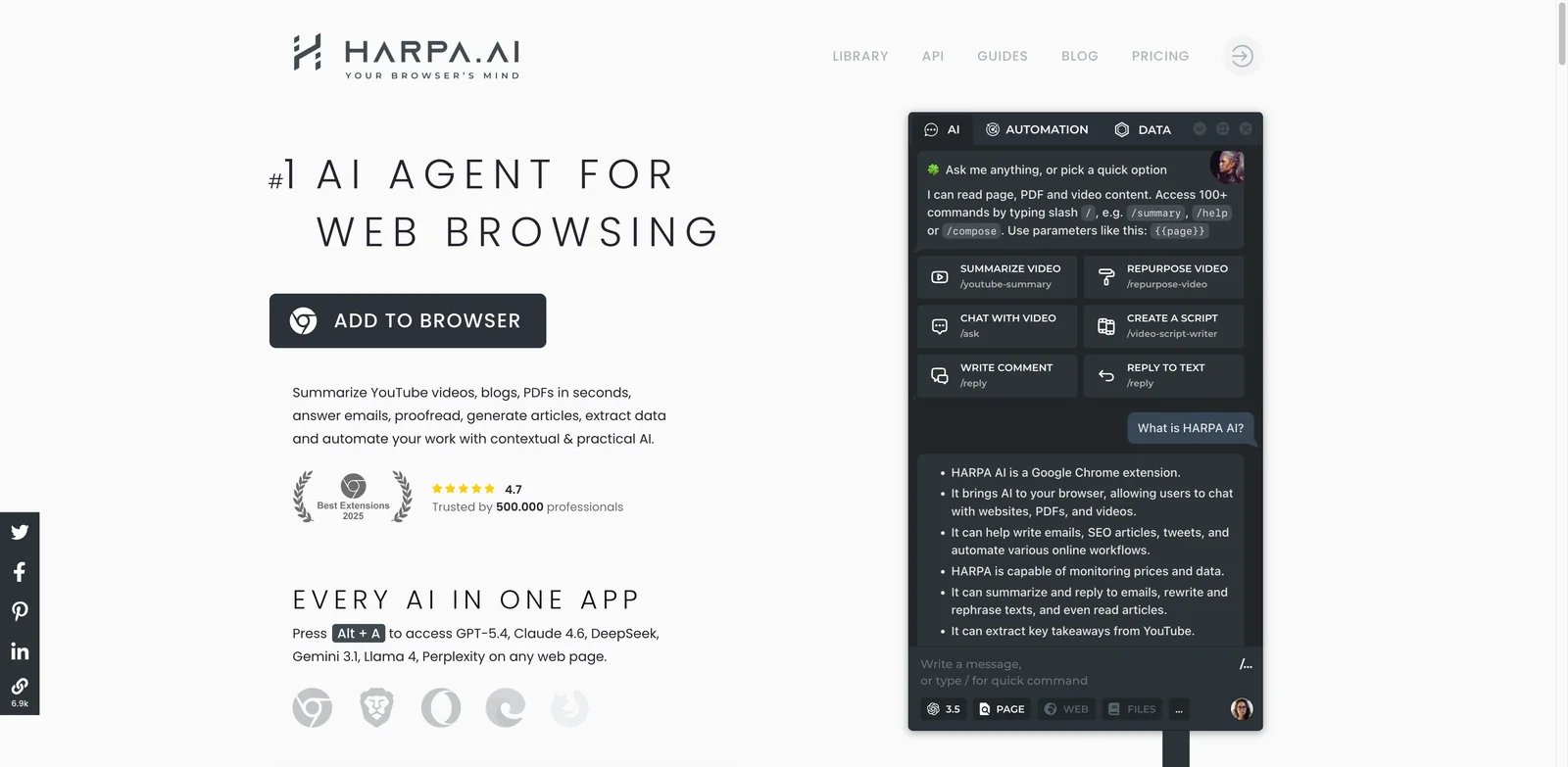
HARPA's angle is automation: monitor a page for price changes, auto-extract data, run a chain of AI actions across sites, draft replies from your inbox. For 1min.AI users whose real frustration was that the aggregator could generate but not act on the web, HARPA fills the gap between a chatbot and a browser automation tool.
What HARPA solves vs 1min.AI:
- Web automation and browser workflows — monitoring, extraction, multi-step AI actions on live pages — a capability entirely outside 1min.AI's generation surface
- AI commands that run in-browser context, recovering the native-integration value (pain point #4) that the aggregator stripped
- A free demo lets you test the automation hooks before paying
Pricing vs 1min.AI: Free demo with limited messages/command runs; Basic S starts around $12/mo on annual billing. HARPA now frames usage around megatokens — one megatoken is roughly 100 command runs, 300 premium-model chat messages, or 3,000 efficient-model messages — so the relevant limit is token allocation tied to automation actions rather than raw generation credits, which suits the use case.
Limitations: HARPA is a power-user tool — the automation and command system has a learning curve, and casual users wanting simple chat will find it heavier than needed. Command-run limits cap heavy automation.
Best for: Users whose 1min.AI complaint was "it can't actually do things on the web for me" and who want browser automation plus AI. Not the right fit for users who wanted simple multi-model chat or bulk media generation.
Get started with HARPA AI
Sider
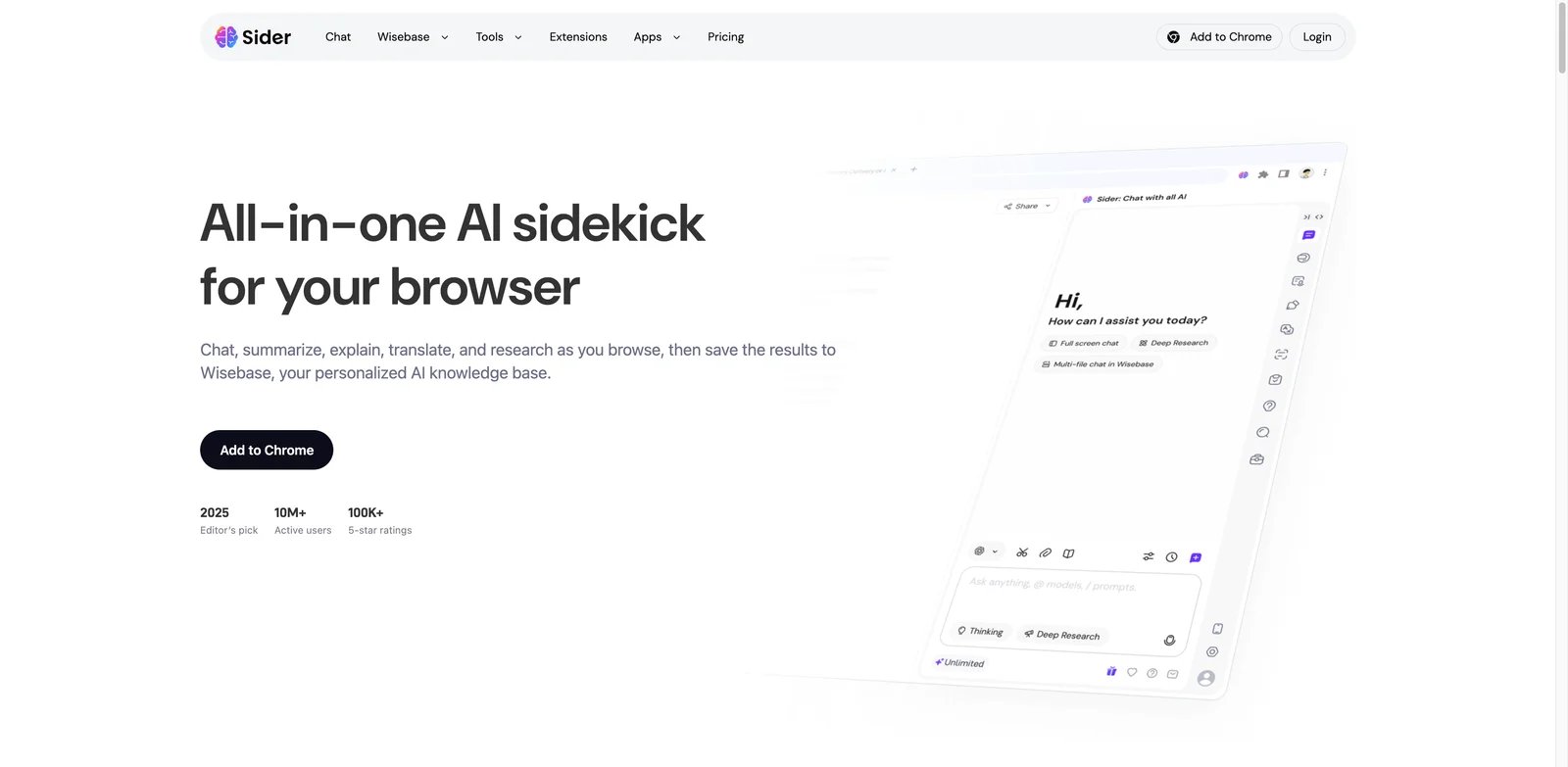
Sider is the budget browser-sidebar pick: cheap tiers, present on every page, built for people who mostly need AI while reading, writing, and browsing rather than running a generation studio. Reported pricing from around $4.20/mo makes it one of the lowest-cost ways to get multi-model AI in-context after leaving 1min.AI.
What Sider solves vs 1min.AI:
- A browser sidebar across all pages recovers in-context AI (pain point #4) at a low price point
- Multi-model access (GPT, Claude, Gemini) keeps model breadth attached to your actual reading and writing
- Low entry tiers make it the cheap escape for users who felt 1min.AI's value didn't justify its friction
Pricing vs 1min.AI: Free tier; third-party snapshots show Starter around $4.20/mo, Basic $6.70/mo, Pro $12.40/mo, Unlimited $16.70/mo — verify on checkout, as these are not first-party-confirmed. Even the Unlimited tier undercuts most aggregator plans, and flat pricing beats the credit meter.
Limitations: Like the other sidebars, it's a reading/writing copilot, not a media-generation suite — multi-modal 1min.AI users lose that breadth. The third-party pricing should be confirmed live.
Best for: Budget-conscious users whose 1min.AI use was in-context reading and writing assistance. Not the right fit for heavy image/video/audio generation or users wanting first-party model precision.
Get started with Sider
Honorable Mentions
Five tools for users who've concluded the aggregator layer itself is the problem — that the right move is to go straight to a first-party model or an open-source escape rather than swap one bundle for another.

ChatGPT is the obvious first-party answer when your 1min.AI complaint was output precision (pain point #5) — you get OpenAI's newest experience without an aggregator's credit layer between you and the model. Free plan; Go around $8/mo in supported markets; Plus $20/mo; Pro shown from $100/mo in OpenAI's current help docs. Best when you mostly used the GPT models inside 1min.AI anyway and want them at full fidelity. Try ChatGPT
Claude
Claude is the pick for long-form writing, reasoning, projects, and coding — the work where 1min.AI's "second pass for final shaping" most often routed back to Anthropic's model. Free plan; Pro $20/mo or $17/mo annual; Max starts at $100/mo for 5× Pro usage, with a $200/mo tier for 20× usage. Best for writers and developers who want Claude-native access including Projects and Claude Code. Try Claude
Google Gemini
Google Gemini wins specifically when your lost-integration complaint (pain point #4) was Google's stack — Docs, Gmail, Sheets, NotebookLM. Free Gemini access; Google AI Pro $19.99/mo via Google One in the US, with regional variation. Best if you live in Google Workspace and want AI native to it rather than bolted on. Try Google Gemini
Perplexity
Perplexity is the research-and-search escape — cited answers over ungrounded generation — for users whose aggregator use was really question-answering. Free answer engine; Pro $20/mo or $200/year; Enterprise available. Best when your need is sourced research, not image, audio, or video creation. Try Perplexity
HuggingChat
HuggingChat is the free, open-source exit from the entire paid-credit paradigm — access to open models with no subscription and no metering. Free; Hugging Face's Pro and Enterprise products are separate. Best for users who want to stop subscription-stacking entirely and are comfortable with open-source model quality. Try HuggingChat
Migrating from 1min.AI — A Practical Guide
Data and Account Migration
1min.AI doesn't offer a one-click export of your work to another platform — migration is manual, but lighter than most because aggregator usage rarely builds deep platform-specific data.
- Saved outputs and chats: download or copy any generated content (text, images, audio) you want to keep before downgrading or canceling. There's no bulk-export-to-competitor path; treat valuable outputs as files to save locally.
- Custom prompts and personas: if you built reusable prompts inside 1min.AI, copy them to a text file. They port directly to Poe bots, Anakin apps, or any new tool's custom-instruction field.
- Lifetime deal: an AppSumo LTD is a sunk cost, not a subscription to cancel — you can keep the account for occasional light use even after adopting a primary alternative (see Pricing Brackets below). There's nothing to "cancel" on a lifetime plan; you simply stop relying on it.
- Active subscription: if you're on a recurring 1min.AI plan rather than the LTD, cancel it before your next renewal once a replacement is validated, so you're not double-paying during the trial period.
Learning Curve by Alternative
- Near-zero curve (open and use): Poe, Monica, Sider, ChatGPT, Claude, Google Gemini, Perplexity, HuggingChat. Chat-first or sidebar tools that work immediately.
- Medium curve (some setup): Galaxy.ai (plan selection), Merlin (workflow habits), TextCortex (knowledge base setup), You.com (research modes).
- Higher curve (real investment): ChatLLM (agents and apps), Anakin (no-code builder), HARPA (automation commands). The payoff is automation and depth, but budget setup time.
Pricing Brackets vs 1min.AI
The key reframe: 1min.AI's appeal was a low one-time LTD cost. Most alternatives are recurring, so compare against your actual monthly value, not the sunk LTD.
- Free / open-source: HuggingChat (free), plus the free tiers of Poe, Monica, Sider, ChatGPT, Claude, Gemini, and Perplexity — genuinely usable for light needs.
- Cheapest paid (under $10/mo): Sider (reported from ~$4.20), Poe (from $4.99), Google's free Gemini, Monica (reported
$8.30), ChatGPT Go ($8 where available), Anakin Basic ($9.90). - Mid ($10–20/mo): ChatLLM ($10–20/user), HARPA (~$12 annual), Galaxy.ai (reported ~$15), Merlin (reported ~$19), Gemini AI Pro ($19.99), Claude Pro ($17–20), ChatGPT Plus ($20), Perplexity Pro ($20), You.com Pro (reported ~$20).
- Premium ($25+/mo): TextCortex Premium ($29.99), ChatGPT Pro (from $100), Claude Max ($200), You.com Max (~$200) — for heavy, professional use.
Best 1min.AI Alternatives by Use Case
If Your Reason Is "I want powerful models without surprise credit burn"
This is the #1 reason people leave. Poe makes per-model point costs more visible at a low entry price; ChatLLM makes seat cost predictable but still uses credits. For a true flat-feeling escape, go straight first-party — ChatGPT or Claude at a flat $20/mo removes the aggregator credit layer completely.
If Your Reason Is "I want simpler pricing and less credit math"
When the cognitive tax of the meter is the problem, flat beats cheap. ChatGPT and Claude are the clearest flat-rate escapes; Perplexity for research at a flat $20; TextCortex for writing depth without credit accounting. None of these make you watch a balance.
If Your Reason Is "I bought the LTD but need something reliable for daily work"
Keep the LTD for occasional light use, but pair it with a dependable daily driver. Poe is the low-cost reliable hub; Monica or Merlin if you want browser-native reliability; ChatGPT if daily work needs first-party precision. The LTD becomes your "free tier," not your workhorse.
If Your Reason Is "I miss native browser, Google, or coding workflow integration"
The lost-integration complaint splits by ecosystem. Monica, Merlin, HARPA, and Sider recover in-browser, in-context AI; Google Gemini is the answer specifically if you lost Docs/Gmail/Sheets integration. Each puts AI back where you actually work instead of in a separate dashboard.
If Your Reason Is "I need better writing, research, or professional output"
When precision matters more than breadth, go focused. Claude for long-form writing and reasoning; TextCortex for writing workflows; You.com and Perplexity for cited research. These do one thing properly rather than ten things adequately. For the full research-engine landscape, see our best AI search engines comparison.
If Your Reason Is "I want AI while browsing, reading, and summarizing pages"
For in-the-flow assistance, HARPA and Sider are the browser-native picks, with Monica and Merlin close behind. All four live in your browser so summarizing and drafting happen on the page, not in a destination app.
If Your Reason Is "I want a free or open-source escape from paid credits entirely"
To leave the subscription paradigm, HuggingChat is the open-source free option; Poe and Anakin have usable free tiers; TextCortex offers genuine free writing access. You trade some frontier-model polish for zero metering.
If Your Reason Is "I want no-code AI apps, not a generic dashboard"
If your aggregator use was really about automating tasks, Anakin and ChatLLM let you build reusable AI apps and agents, with TextCortex for templated writing workflows. The shift is from one-off generation to repeatable automation.
How to Choose the Right 1min.AI Alternative
Four steps. The diagnostic step matters most — pick the wrong category and even a great tool disappoints.
-
Diagnose which of the seven complaints is actually yours, then test a matching free tier. Credit burn, credit-math anxiety, lost integration, output precision, UI friction — each points to a different alternative. Don't open all 15; pick the 1–2 that target your top pain and spend a few days, not a few minutes.
-
Decide whether you still want an aggregator at all. If breadth across models and modalities genuinely served you, stay in the aggregator lane (Poe, ChatLLM, Galaxy.ai) but pick one with flat pricing. If you mostly used one or two models, the aggregator was overhead — go first-party (ChatGPT, Claude, Gemini) and stop paying the bundle tax.
-
Calculate flat-monthly cost against your real usage, not the LTD's sunk cost. The LTD's "pay once" appeal biases you toward another lifetime deal, but most quality alternatives are subscriptions. Model one month at your actual volume — for many users, a single $20 first-party plan beats juggling an aggregator's credits.
-
Migrate gradually: keep the LTD, validate the replacement over two weeks. Save your valuable outputs and prompts, run your real workload on the alternative for two weeks while the LTD sits as a backup, then commit. If the daily friction dropped, make the switch primary; if not, try the second tool on your shortlist before concluding the grass isn't greener.
Frequently Asked Questions
What is the best free alternative to 1min.AI?
Is there a true lifetime alternative to 1min.AI?
Why do 1min.AI credits run out so fast?
Should I wait for 1min.AI to update its models, or migrate now?
Is 1min.AI cheaper than ChatGPT Plus or Claude Pro?
Which 1min.AI alternative is best for browser workflows?
Which 1min.AI alternative is best for SEO and research?
Should I keep my 1min.AI lifetime deal if I already bought it?
Get ToolWorthy Weekly
New AI tools, practical guides, and selected AI signals in one weekly brief.
For AI tool founders
Built a tool that belongs in this decision set?
Request an editorial evaluation for possible inclusion in ToolWorthy.
Submit your tool for reviewPaid submission does not guarantee a ranking, recommendation, inclusion, or editorial outcome.