




Overview
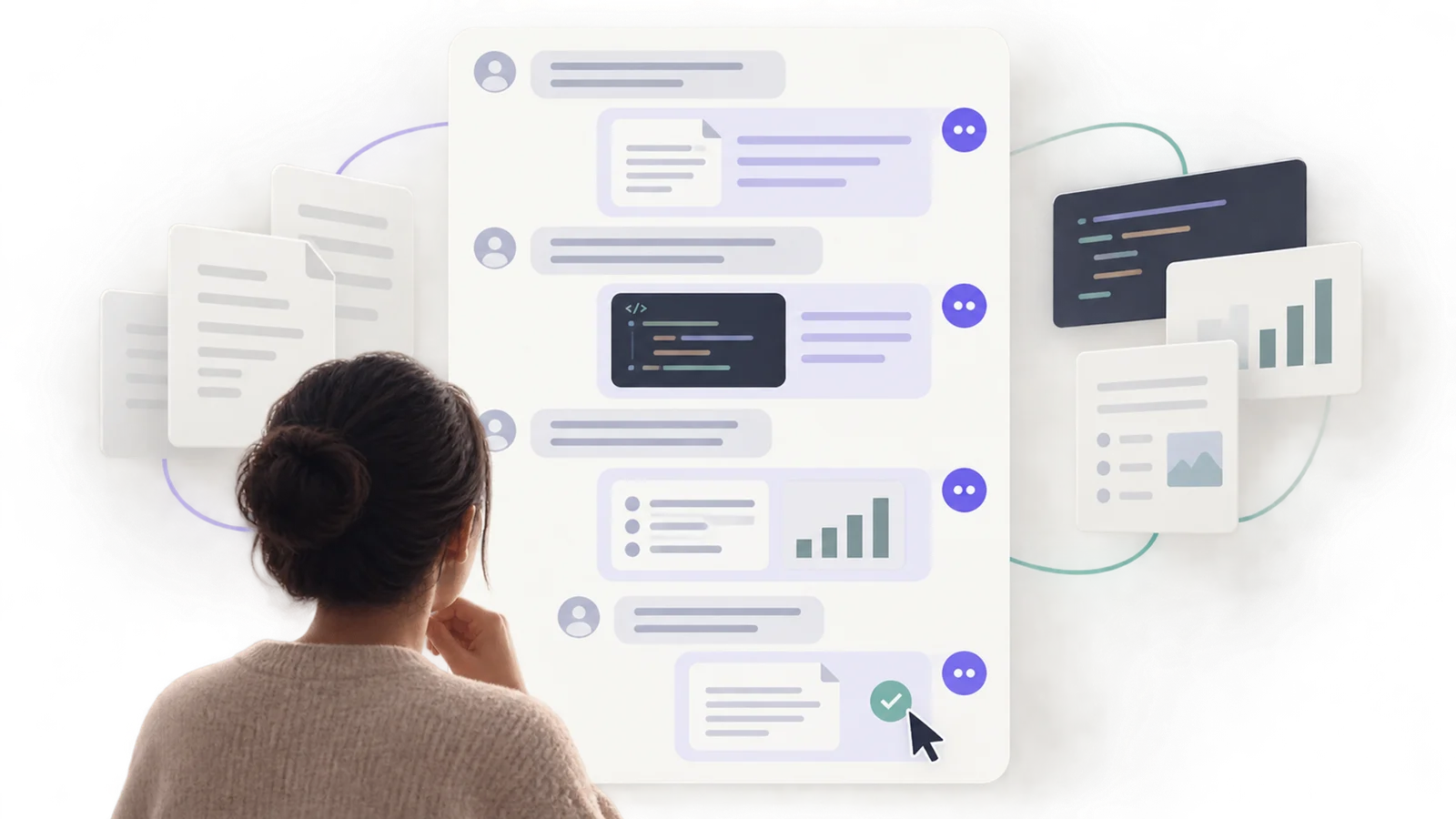
Poe is a multi-model AI chat platform from Quora. Instead of asking users to choose one provider up front, Poe puts many AI models, community bots, creator-built bots, group chats, and Poe Apps behind one account. The product is best understood as an AI access layer: users can try different models for writing, coding, search, image generation, video generation, audio tasks, and specialist bot workflows without managing every model provider separately.
That positioning makes Poe different from a single chatbot subscription. A buyer is not only paying for one assistant; they are paying for a points system that can be spent across many bots and models. Poe's public subscription page currently highlights access to models such as GPT-5.4, Claude-Opus-4.6, Gemini-3.1-Pro, Nano-Banana-Pro, Veo-3.1, and many others. Its blog also frames Poe Apps as visual interfaces that can use Poe points for model calls, which expands the product beyond plain chat.
As of April 28, 2026, Poe is strongest for users who compare outputs across several frontier models, want to explore community bots, or need one place to test text, image, video, and audio AI tools. It is less ideal for teams that need a predictable unlimited plan for one provider, because Poe's value depends on how its point costs line up with the exact models and usage patterns you rely on.
For adjacent research, compare AI video generator tools, AI video editor tools.
Key Features
Multi-model AI chat - Poe gives users one interface for many AI models rather than locking the workflow to a single provider. This is useful when you want to compare reasoning, writing tone, coding answers, or creative outputs across different model families.
Custom bot creation - Poe supports prompt bots and API bots. Non-technical users can create prompt-based bots with instructions, while developers can connect compatible endpoints for more customized behavior.
Poe Apps - Poe Apps, now documented as Canvas apps, add client-side visual interfaces on top of Poe models and JavaScript logic. They are useful for forms, previews, comparison UIs, and interactive tools, but they are single-file client-only apps without server-side code or a built-in database.
Group chat with AI models - Poe supports group chats where people can invite others and mention bots when an AI response is needed. This is useful for lightweight collaborative brainstorming, but the person who triggers a bot response uses their own points.
Point-based subscription model - Paid plans increase the number of points available for messages, model access, input size, and chat history. This creates flexibility across many models, though it also means heavy users should watch actual point consumption.
Cross-platform access - Poe is available on the web and mobile apps, with model discovery, bot sharing, and account-level subscriptions designed around a consumer-friendly AI hub.
How It Compares
Poe sits in the same decision set as AI chatbots, direct model subscriptions, and AI aggregators. Compared with a direct ChatGPT, Claude, or Gemini subscription, Poe's main advantage is breadth. You can move between many models and community bots without changing apps. Compared with a developer-first routing layer, Poe is more consumer and creator oriented, with bot discovery, group chat, and visual apps built into the experience.
The tradeoff is predictability. Direct subscriptions can be easier to budget when you mostly use one model family. Poe's points model is more flexible, but the effective value depends on which bots you use, how long your conversations are, and whether high-cost models consume points faster than expected. For users comparing multiple assistants in the same week, Poe can be convenient. For users who only need one flagship assistant all day, a direct subscription may feel simpler.
Pricing & Plans
Poe uses a freemium model with limited free usage and paid plans that add more points. Public pricing can vary by region, taxes, currency, billing context, and platform. Poe supports monthly and annual subscriptions; the table below reflects the annual prices publicly shown on Poe's subscription page, while monthly prices should be verified in the signed-in purchase flow before checkout.
| Plan | Public pricing | Best fit |
|---|---|---|
| Free | Free access with limited points and model availability | Casual users testing Poe, exploring bots, or using lighter models |
| 10 thousand points/day | $49.99/year, shown as $4.17/month when billed yearly | Light users who want paid access without committing to a large monthly point pool |
| 660 thousand points/month | $199.99/year, shown as $16.67/month when billed yearly | Regular users who compare multiple models and need far more capacity than free access |
| 1.65 million points/month | $499.99/year, shown as $41.67/month when billed yearly | Power users with heavier chat, creative, or model-comparison workloads |
| 3.3 million points/month | $999.99/year, shown as $83.33/month when billed yearly | Very heavy users who frequently use premium models or longer contexts |
| 8.25 million points/month | $2,499.99/year, shown as $208.33/month when billed yearly | Users with sustained high-volume AI usage across expensive models |
Poe's subscription page says all paid plans allow users to send and receive more messages, access more top models, and unlock each bot's maximum input size and chat history; Poe's help center further describes full context length as up to 2M tokens, depending on the bot. The important buying question is not only the headline price. It is whether your preferred bots fit comfortably inside the point tier you choose.
Best For
- Users who want to compare multiple AI models from one interface
- Writers, students, researchers, and creators who switch between chat, image, video, and specialist bots
- People who want to discover community bots instead of building every prompt from scratch
- Small groups that want shared conversations with AI models in the same thread
- Builders experimenting with prompt bots, API bots, or visual Poe Apps
Poe is a weaker fit for buyers who need enterprise admin controls, strict procurement terms, or predictable high-volume access to one specific model. Those users should compare Poe against direct vendor plans and developer routing platforms before standardizing on it.
FAQ
What is Poe?
Poe is an AI chat platform from Quora that gives users access to many AI models, community bots, custom bots, group chats, and Poe Apps from one account.
Is Poe free?
Yes. Poe offers free access with limited points and model availability. Paid plans add more points and broader access to premium models and larger bot limits.
How much does Poe cost?
Poe's public annual subscription tiers currently start at $49.99/year for 10 thousand points/day. Higher annual tiers include $199.99/year, $499.99/year, $999.99/year, and $2,499.99/year point bundles.
What are Poe points?
Points are Poe's usage unit. Different bots and models can consume different amounts of points depending on the model, context size, and type of request.
Can I create my own bot on Poe?
Yes. Poe supports prompt bots for instruction-based assistants and API bots for developers who want to connect their own compatible endpoints.
Who should use Poe?
Poe is best for users who want one place to try and compare many AI models, discover bots, and use chat or app-style AI workflows without subscribing to every provider separately.