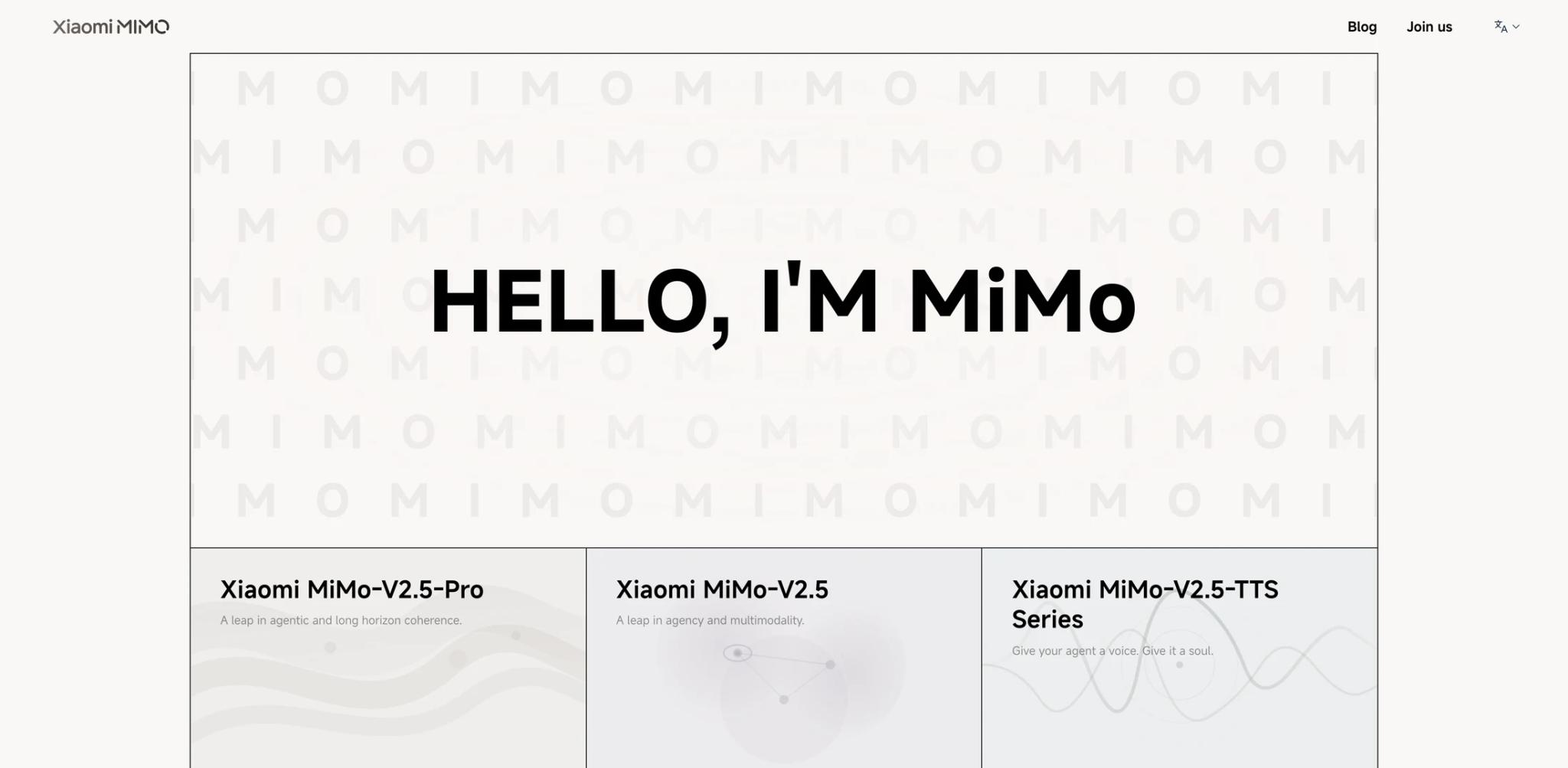


Overview
Xiaomi MiMo is Xiaomi's in-house foundation model series, evolving from the compact MiMo-7B reasoning model (May 2025) through the V2 generation to its current flagship, MiMo-V2-Pro. Released on March 18, 2026, MiMo-V2-Pro is a 1-trillion-parameter mixture-of-experts model with 42 billion active parameters, a 1-million-token context window, and API pricing that starts at $1 per million input tokens for prompts up to 256K tokens, with 256K–1M input priced at $2 per million.
The model ranks 8th globally and 2nd among Chinese LLMs on the Artificial Analysis Intelligence Index. It scores 78.0 on SWE-Bench Verified (software engineering) and 61.5 on ClawEval (agent capability), placing it in reach of Claude Opus 4.6 on agentic benchmarks while undercutting Claude's API pricing by roughly 15× on input tokens.
Access is available through Xiaomi's AI Studio at aistudio.xiaomimimo.com for interactive testing and the API platform at platform.xiaomimimo.com for programmatic integration.
Key Features
1-Trillion-Parameter Scale — MiMo-V2-Pro's MoE architecture deploys over 1 trillion total parameters with 42 billion active per token, roughly 3× the scale of the smaller MiMo-V2-Flash. The 7:1 hybrid attention ratio (increased from V2-Flash's 5:1) delivers efficient long-context processing without proportional compute overhead.
1M-Token Context Window — Supports context lengths up to 1 million tokens in the $2/M input tier, enabling full-codebase analysis, long document reasoning, and extended AI agent sessions in a single context without chunking.
Agentic Workflow Orchestration — Designed as "the brain behind systems and workflows." Strong performance on ClawEval (61.5, approaching Opus 4.6's 66.3) and PinchBench (81.0 average) reflects a focus on multi-step task planning, system design, and tool-use coordination rather than single-turn chat.
Software Engineering Capability — 78.0 on SWE-Bench Verified and 57.1 on Terminal-Bench 2.0 position MiMo-V2-Pro ahead of Claude Sonnet 4.6 on coding-specific evaluations according to Xiaomi's published benchmarks.
Multi-Token Prediction — Inherits MiMo-V2-Flash's Multi-Token Prediction (MTP) layer for fast token generation, improving throughput without sacrificing model quality.
Open-Source Heritage — The V1 MiMo-7B series was fully open-sourced on GitHub and Hugging Face. V2-Flash weights are also publicly available. Check the XiaomiMiMo GitHub organization for the current open-weight status of V2-Pro.
How It Compares
| MiMo-V2-Pro | Claude Opus 4.6 | Claude Sonnet 4.6 | |
|---|---|---|---|
| ClawEval | 61.5 | 66.3 | — |
| SWE-Bench Verified | 78.0 | — | 79.6% |
| Context window | 1M tokens | 1M tokens | 1M tokens |
| Input cost (standard) | $1/M | $5/M | $3/M |
| Open weights | V1 + V2-Flash ✅ | ❌ | ❌ |
MiMo-V2-Pro's $1/M input pricing is 3× cheaper than Claude Sonnet 4.6 and 5× cheaper than Claude Opus 4.6 at similar benchmark performance levels. The 1M-token context tier ($2/M input) remains substantially cheaper than both Claude models at comparable context lengths.
Pricing & Plans
MiMo-V2-Pro uses tiered pricing based on context length.
API Pricing
| Context Range | Input | Output | Cache Read | Cache Write |
|---|---|---|---|---|
| Up to 256K tokens | $1.00/M | $3.00/M | $0.20/M | Free (limited time) |
| 256K–1M tokens | $2.00/M | $6.00/M | $0.40/M | Free (limited time) |
Developer Access
- The API platform launched with first-week free access; check platform.xiaomimimo.com for current availability and terms
- AI Studio at aistudio.xiaomimimo.com provides interactive testing without API setup
All pricing should be confirmed at platform.xiaomimimo.com as rates may update with model availability.
Best For
- API-cost-conscious developers building AI agent pipelines who need frontier-adjacent performance at $1/M input
- Engineering teams requiring 1M-token context for full-codebase analysis or large document workflows
- Researchers comparing Chinese frontier models such as GLM-5 alongside Western alternatives
- Developers wanting to benchmark against Claude Sonnet 4.6 on SWE-Bench coding tasks with a cost-competitive alternative
- Teams exploring AI chatbots and frontier model options beyond the standard Anthropic/OpenAI stack
FAQ
What is Xiaomi MiMo?
Xiaomi MiMo is Xiaomi's in-house foundation model family. It started with the open-source MiMo-7B reasoning model in May 2025, progressed through MiMo-V2-Flash (December 2025), and reached its current flagship with MiMo-V2-Pro in March 2026. All MiMo text models focus on reasoning, coding, and agentic task execution.
How does MiMo-V2-Pro compare to Claude Opus 4.6?
MiMo-V2-Pro scores 61.5 on ClawEval versus Claude Opus 4.6's 66.3 — close but not at parity. On coding (SWE-Bench Verified), MiMo-V2-Pro reaches 78.0 against Opus 4.6's position on that leaderboard. The key difference is cost: MiMo-V2-Pro's standard tier is $1/M input versus $5/M for Claude Opus 4.6, making it substantially more accessible for high-volume agentic workloads, especially when cost efficiency matters more than absolute benchmark leadership.
Is MiMo-V2-Pro open source?
V1 (MiMo-7B) and V2-Flash weights are publicly available on GitHub (XiaomiMiMo) and Hugging Face. V2-Pro is currently available via API only; check the XiaomiMiMo GitHub organization for any open-weight release update.
What context length does MiMo-V2-Pro support?
Up to 1 million tokens. Inputs up to 256K tokens are priced at $1/M input; inputs from 256K to 1M tokens are priced at $2/M input. This makes long-context use cases (full codebases, extended research documents) more affordable than on comparable Western frontier models.
Is there a free way to test MiMo-V2-Pro?
Yes. AI Studio at aistudio.xiaomimimo.com provides free interactive access. AI Studio offers free trial access, and the API platform launched with first-week free access; check platform.xiaomimimo.com for current terms.