
10 Best AIApply Alternatives 2026 - Safer Auto-Apply Tools
Compare AIApply alternatives for predictable pricing, fewer wrong-fit applications, safer recruiter visibility, resume quality, and auto-apply control.
On this page
Recent public AIApply review pages show the switching problem clearly: users are worried about credit and subscription predictability, wrong-fit submissions, cancellation or refund friction, and how much control they actually have before applications go out. That is the reason AIApply alternatives are not just a price-shopping search in 2026. They are a control search. Job seekers still want AI help writing resumes, finding openings, and applying faster. They just do not want a black-box application machine that burns credits, submits mismatched applications, or makes them look automated to recruiters.
The 10 AIApply alternatives below split into three practical paths: controlled auto-apply tools, campaign-based job search systems, and safer manual workflows built around resume quality and tracking. If you are comparing this entire category from scratch, start with our broader AI job application tools guide. If you are leaving AIApply because auto-apply itself feels risky, compare these options with the broader alternatives category mindset: the best replacement is not always the closest clone.
| Tool | Best For |
|---|---|
| Fapply | LinkedIn-focused applicants who want more visible application flow |
| LazyApply | High-volume applicants who want annual pricing instead of credits |
| LoopCV | Job seekers who want campaigns, outreach, and a free starting point |
| Sonara | Applicants who want a more assisted job-search workflow |
| Massive | Users who still want managed high-volume auto-apply |
| JobCopilot | Applicants focused on verified company career pages |
| JobHire.ai | U.S.-role seekers comparing AIApply against guarantee-style services |
| Sorce | Job seekers who want swipe-and-approve control |
| Wobo | Users who still want resume tailoring plus applications |
| BulkApply.ai | Volume-focused users who want simpler application pricing |
Why People Are Leaving AIApply in 2026
1. Credits and subscriptions stopped feeling predictable. The strongest complaint is not simply that AIApply costs money. It is that users struggle to understand what another batch of applications will cost after the base subscription. A June 22, 2026 Trustpilot review said, "Can't buy credits, can only upgrade to a higher subscription" (source). Reddit users comparing auto-apply tools raised the same category-level concern, with one April 29, 2026 post saying, "The main concern here is cost" (source).
That is why pricing predictability matters more in this article than raw cheapness. A $40/month tool can be easier to trust than a cheaper-looking subscription if the real work happens through credits, add-ons, or hidden checkout steps. In this guide, tools such as Sorce, LoopCV, BulkApply.ai, and LazyApply score well when their pricing shape is easier to model before you upload your career history.
2. Wrong-fit auto-apply is a bigger risk than slow manual applying. Auto-apply is useful only when the matching layer protects you from irrelevant submissions. Public AIApply reviews in June 2026 included complaints about applications going to the wrong role type and even language or eligibility mismatches. One reviewer said the tool was still applying for "Software Engineer roles" despite a different target (source). Another called out a role with "zero regard for fit" (source).
This is the core migration question: do you want more applications, or better-controlled applications? If you are leaving because of wrong-fit submissions, the best replacement may be Sorce's swipe gate, LoopCV's campaign controls, or JobCopilot's emphasis on verified company career pages rather than another fully hands-off agent.
3. Recruiters are getting better at spotting bot-filled applications. A job seeker can lose trust with recruiters faster than they can send another hundred applications. In April 2026, one Reddit auto-apply comparison warned that "recruiters are getting really good at spotting bot-filled forms now" (source). Another user in r/jobs wrote that they had "never received rejection emails faster" after using AIApply (source).
This is a separate pain point from pricing. Even a free tool is not worth using if it sends generic, obvious, or mismatched applications that make you look careless. For this reason, several "alternatives" in this guide are not pure auto-apply replacements. Teal, Jobscan, Resume Worded, and Kickresume appear as honorable mentions because many AIApply users should replace volume with quality before they replace one bot with another.
4. Paywalls, refunds, and trust warnings make users hesitate. Trust shock is different from "too expensive." Users can tolerate a high price if they know what they are buying. The harder problem is giving personal career data, hitting a paywall, then feeling trapped. A June 25, 2026 Trustpilot review said the user "provided all my details" before reaching a paywall (source). The Better Business Bureau page for AIApply also contains complaints about applications outside users' skills or locations (source).
Treat public review pages carefully: they are signals, not court findings. Still, when job seekers are sharing sensitive resumes, work history, location preferences, and target companies, trust signals matter. Alternatives with clearer trial paths, visible application approval steps, and simpler cancellation expectations deserve extra attention.
5. Generated resume and CV errors still need human cleanup. Some users leave AIApply not because they dislike automation, but because the generated documents still need too much editing. A Reddit job-search thread described generated CVs with "1-2 errors" (source). A Trustpilot review complained about generated material implying "skills you don't have" (source).
That is why this guide separates auto-apply tools from resume-quality tools. If your real frustration is document accuracy, you may be better served by a tracker and resume workflow. Our AI resume builder and AI cover letter generator categories cover that adjacent path.
Top 10 AIApply Alternatives Compared
The closest AIApply alternatives still automate applications. The safer alternatives add friction at the right moment: approval before submission, campaign targeting, source verification, or manual resume quality checks. The table below includes AIApply as a baseline, then ranks the 10 direct replacements by cost clarity, application control, and migration effort.
| Tool | Best For | Pricing | Application Control | Main Caveat |
|---|---|---|---|---|
| Sorce | Users who want swipe-and-approve control before applications go out | Free 40 swipes/day listed publicly; paid tiers raise limits/features but public price is not disclosed | Swipe-and-approve | Paid plan pricing should be verified in app before upgrading |
| LoopCV | Campaign-based job search with a free starting point | Free forever plan with limited automated applications; paid plans from EUR 9.99/month unlock higher application volumes, priority processing, advanced filters, and AI-powered CV checks; verify live quotas in-app | Campaign controls | Requires careful filter setup |
| Fapply | Users who want hands-off auto-apply with optional manual review | $24.99/month for unlimited applications, per official public page | Auto-apply plus manual review mode | Still carries auto-apply reputation risk |
| LazyApply | High-volume applicants comfortable with annual billing | Basic is currently shown as $99/year discounted from $119/year; Premium is $149/year discounted from $179/year; Ultimate is $999/year discounted from $1,099/year | High-volume automation | No monthly plan; automation risk remains |
| JobCopilot | Applicants focused on verified company career pages | Premium from $0.93/day; Elite from $1.05/day | Auto-apply plus review option | Daily pricing should be converted to monthly cost before buying |
| BulkApply.ai | Volume-focused users who want fixed monthly pricing | Basic $15.99/month for 30 daily jobs on 3 portals; Unlimited $23.99/month for all supported portals with no daily cap; Enterprise custom | Volume-focused automation | Narrower than a full job-search suite |
| Wobo | Users who still want resume tailoring plus applications | Free forever with 5 jobs/day; Unlimited $34.99/month; Autopilot $44.99/month with 5-day trial | Swipe-to-apply or full autopilot | Pricing has changed from older third-party references |
| Sonara | Applicants who want a hands-off assisted job-search workflow | Public homepage does not show pricing; recent 2026 checkout snapshots report a $2.95 trial that renews at $23.95 every 4 weeks, with annual access advertised at $71.40 upfront; verify live checkout terms | Assisted auto-apply | Trial renewal and limited visibility may frustrate cautious users |
| Massive | Users who want autopilot-style applications | Public homepage does not disclose plan prices in fetched HTML; verify checkout pricing | Autopilot apply-assist; current public homepage confirms manual choose/Autopilot and application previews, but not a verified monthly cap | Pricing opacity and fit quality still need testing |
| JobHire.ai | U.S.-role seekers comparing AIApply against guarantee-style services | No free trial; public FAQ says pricing is shown after signup, so verify exact plan names, billing cadence, renewal terms, and U.S.-roles-only scope before paying | Service-style auto-apply | Refund, renewal, and geography limits need careful review |
Detailed Reviews
Fapply
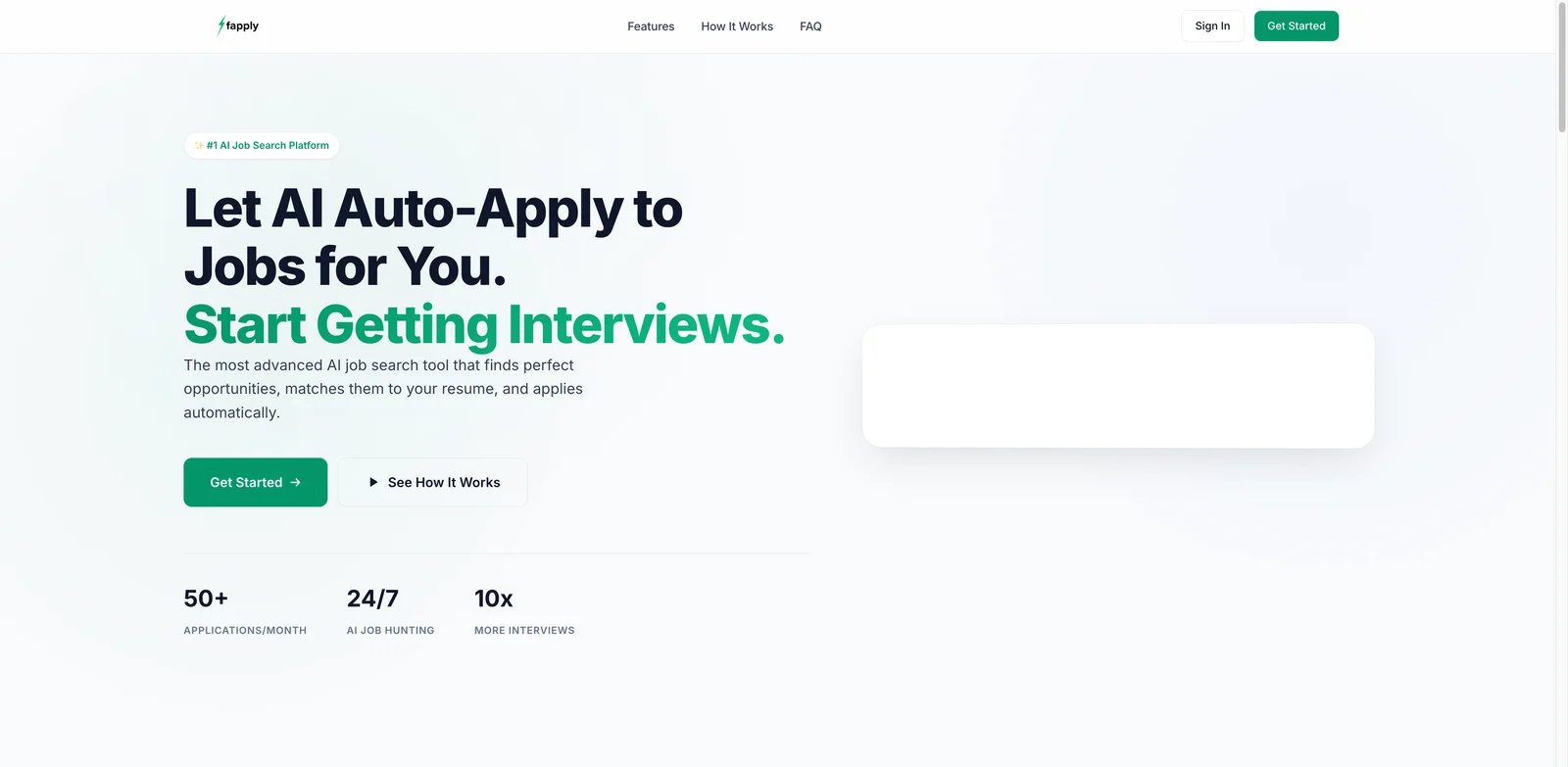
Fapply is the most interesting option for job seekers who still want automation but no longer want the application flow to feel invisible. Its pitch is close to AIApply's value proposition, but narrower: help users apply faster, especially around LinkedIn-oriented workflows, while keeping the process easier to inspect.
What Fapply solves vs AIApply:
- More visible automation: If your AIApply frustration is black-box application behavior, Fapply is worth testing because the workflow is easier to frame as assisted applying rather than a separate credit-triggered agent.
- Less suite sprawl: AIApply bundles resume, cover letter, interview prep, and auto-apply. Fapply is easier to evaluate if you mainly care about the application flow.
- Better fit for cautious volume: It is still an automation tool, but it belongs on the shortlist for people who want speed without fully surrendering visibility.
Pricing vs AIApply: Fapply's public homepage describes unlimited applications for $24.99/month. Before purchase, still confirm the live checkout terms, renewal cadence, cancellation path, and whether the $24.99 plan includes the exact boards you plan to use.
Limitations: Fapply is not a universal job-search operating system. If you need a tracker, ATS resume scoring, interview prep, or broad job-board management, it may need to sit beside another tool. Also verify current support for your target boards before switching.
Best for: Fapply is best for job seekers who still believe automation can help but want more visible control than AIApply. Not the right fit if you want to stop auto-applying entirely and rebuild your workflow around manual targeting.
Get started with Fapply
LazyApply
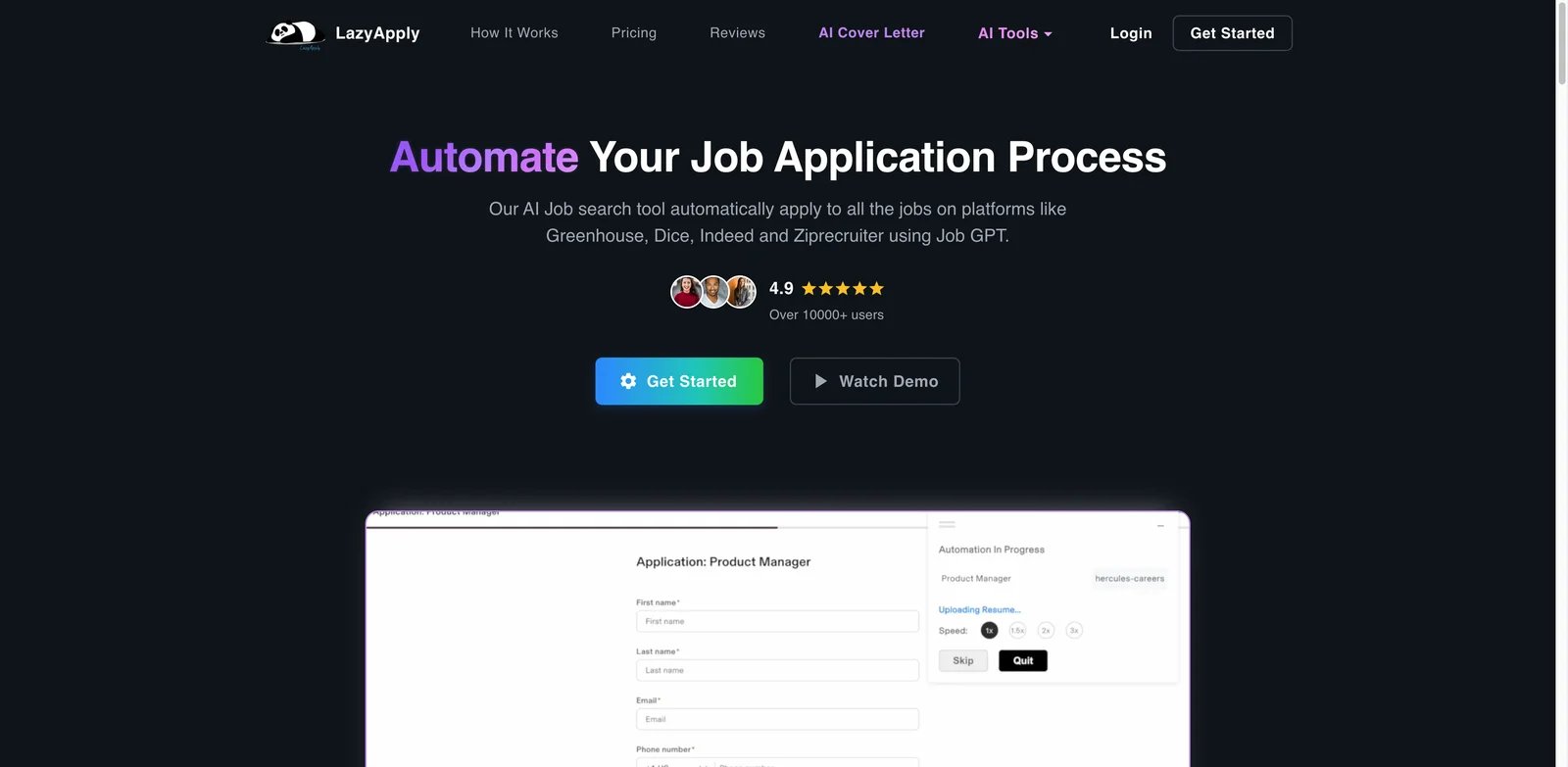
LazyApply is the blunt instrument in this list. It is built for users who want high-volume applications across job boards and are comfortable with the automation tradeoff. That makes it a strong AIApply alternative only for a specific reader: someone who is not leaving because auto-apply feels wrong, but because AIApply's credits and product bundle feel wrong.
What LazyApply solves vs AIApply:
- Automation-first positioning: LazyApply is clearer about being a high-volume auto-apply product rather than a full resume/interview suite.
- Annual pricing shape: Basic and Premium annual tiers can be easier to forecast than credit-based application packs.
- Multiple job-board focus: Its current public homepage names Greenhouse, Dice, Indeed, and ZipRecruiter as supported automation surfaces, so verify LinkedIn support separately before buying.
Pricing vs AIApply: LazyApply's current public page shows discounted annual pricing: Basic at $99/year, marked down from $119/year; Premium at $149/year, marked down from $179/year; and Ultimate at $999/year, marked down from $1,099/year. Verify current pricing on LazyApply's official pricing page before buying. The comparison is simple: LazyApply asks whether you want a dedicated automation product with annual commitment; AIApply asks whether you want a broader suite plus apply credits.
Limitations: LazyApply does not remove the bot-risk concern. If your AIApply complaint is that recruiters can detect generic applications or that automated forms hurt candidate reputation, LazyApply may repeat the same category problem at higher speed.
Best for: LazyApply is best for high-volume applicants who want automation above all else. Not the right fit if you are leaving AIApply because blind applications, generic answers, or recruiter perception worry you.
Get started with LazyApply
LoopCV
LoopCV is the strongest campaign-style alternative to AIApply. Instead of selling the idea that a single AI agent will handle the whole job search, it frames the workflow around job discovery, campaigns, outreach, and tracking. That gives users more levers to tune before applications go out.
What LoopCV solves vs AIApply:
- Campaign model: LoopCV is useful when you want repeatable job-search campaigns rather than one-off apply credits.
- Free starting point: A free plan gives cautious users a way to test the workflow before committing.
- Outreach plus applications: The product is more than resume generation; it can support job discovery and email-style outreach.
- Lower credit anxiety: Paid plans starting from EUR 9.99/month are easier to reason about than an application-credit system.
Pricing vs AIApply: LoopCV has a free forever plan and paid plans starting from EUR 9.99/month, but the free tier includes limited automated applications. Current public pricing material describes paid plans as unlocking higher application volumes, priority processing, advanced filters, and AI-powered CV checks, so verify live quotas in-app before scaling a campaign. That makes it one of the clearer AIApply alternatives for people leaving because they cannot model application costs, as long as the quota matches your country, target boards, and volume.
Limitations: Campaign tools still require good targeting. Bad filters create bad outreach. LoopCV gives you more control than a black-box agent, but it will not fix a vague target role, weak resume, or unrealistic search radius.
Best for: LoopCV is best for job seekers who want automation with campaign controls and a free entry point. Not the right fit if you want a no-touch concierge service or if you refuse to spend time tuning filters.
Get started with LoopCV
Sonara
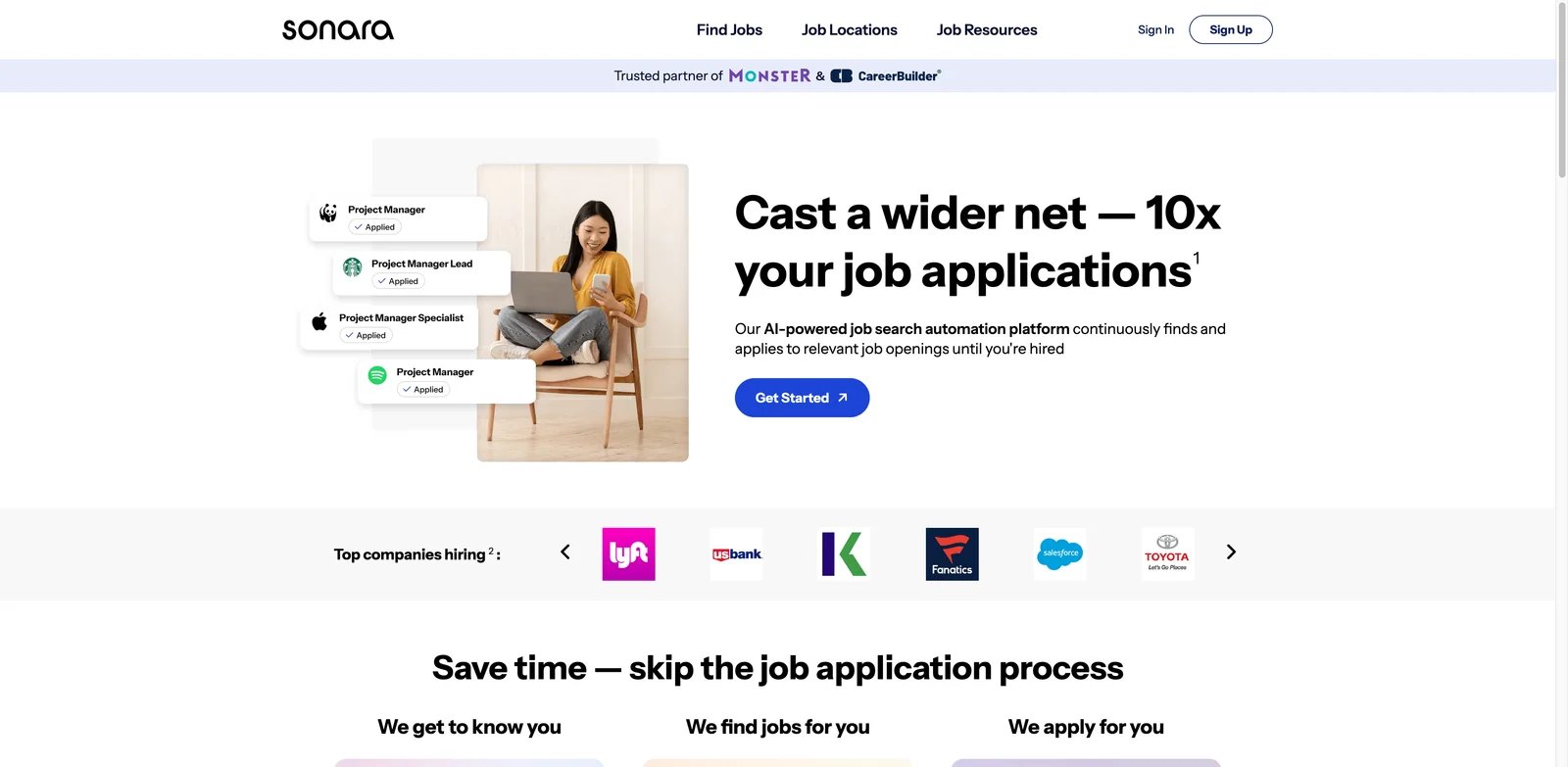
Sonara belongs in the AIApply alternatives conversation because it changes the question from "which tool applies fastest?" to "how much help do I want in the job search process?" For some users, that service-like framing is exactly the point. They do not want another dashboard full of credits, filters, and job-board settings.
What Sonara solves vs AIApply: Sonara is better framed as an assisted job-search workflow than a resume toolkit with auto-apply bolted on. That matters if your AIApply frustration is not only pricing, but the feeling that you are managing a tool that should have been managing the search.
Pricing vs AIApply: Sonara's public homepage does not clearly display pricing. Recent 2026 checkout snapshots report a $2.95 trial that renews at $23.95 every 4 weeks, plus annual access advertised at $71.40 upfront. Do not switch to Sonara for pricing certainty unless you can confirm the current plan terms directly on Sonara's own checkout page.
Limitations: Service-style tools create expectation risk. If you expect full transparency and granular approval of every application, Sonara may feel too opaque. If you expect it to perform like a human recruiter, you may also be disappointed.
Best for: Sonara is best for applicants who want a more assisted job-search experience and are willing to verify pricing before committing. Not the right fit if the reason you are leaving AIApply is that you want total control over every submission.
Get started with Sonara
Massive
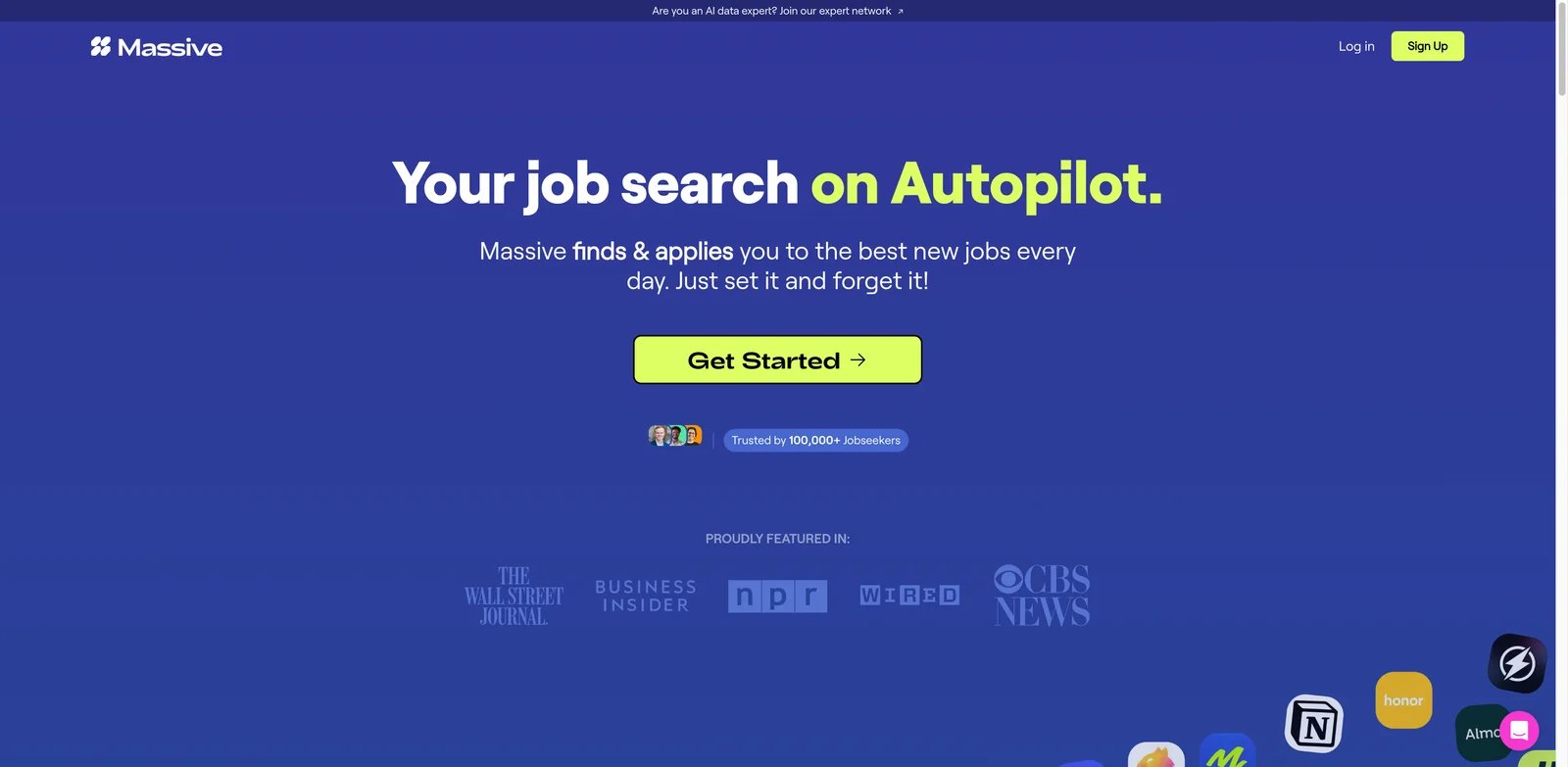
Massive is an autopilot-style alternative to AIApply, but its current public homepage does not disclose a verified application cap. That distinction matters. If you are leaving AIApply because the category itself feels risky, Massive may not solve your problem. If you are leaving because you still want an autopilot application service but dislike AIApply's execution, it belongs on the shortlist.
What Massive solves vs AIApply:
- Managed-volume framing: Massive is closer to a done-for-you auto-apply service than a resume builder with apply credits.
- Less document-suite focus: It is easier to evaluate on one question: can it generate better application volume?
- Useful category benchmark: Massive helps you decide whether your problem is AIApply specifically or automated applying generally.
Pricing vs AIApply: Massive plan pricing was not clearly disclosed in the public homepage HTML during review, and the current homepage confirms that users can manually choose jobs, turn on Autopilot, and preview submitted applications, resumes, and cover letters, but it does not disclose a verified monthly application cap. Verify the current checkout price, billing cadence, renewal terms, and whether any monthly application cap applies to your selected plan before paying.
Limitations: Massive still carries auto-apply risk, but the public homepage says users can preview submitted applications, resumes, and cover letters. The safer framing is: verify pricing, inspect early submissions, and test whether its matching quality is strong enough for your target roles.
Best for: Massive is best for applicants who still want managed high-volume auto-apply. Not the right fit if your AIApply exit reason is candidate reputation risk.
Get started with Massive
JobCopilot
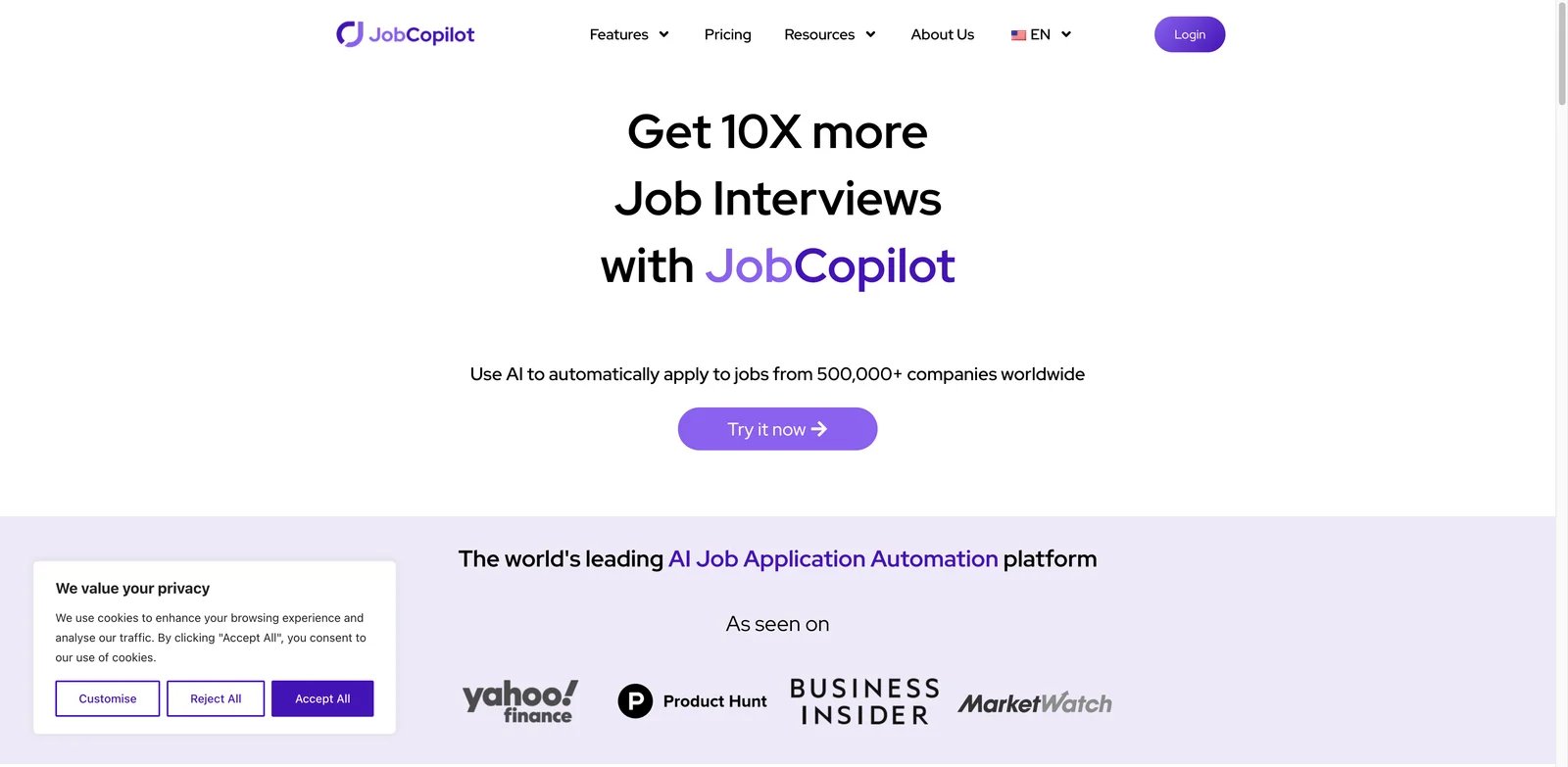
JobCopilot is a practical AIApply alternative for people who want autopilot behavior but care more about where applications originate. Its strongest angle is verified company career pages and continuous job monitoring, which makes it feel less like "spray applications everywhere" and more like an always-on search assistant.
What JobCopilot solves vs AIApply:
- Verified source focus: JobCopilot is more appealing if you worry about stale postings or low-quality boards.
- Continuous autopilot: It keeps the automation promise but narrows the story around job sources and fit.
- Resume support: It can still sit in the AI job-application category, not just job alerts.
Pricing vs AIApply: Research found Premium starting at about $0.93/day and Elite at about $1.05/day, with weekly, monthly, and quarterly options. Verify current pricing on JobCopilot's pricing page. Daily-equivalent pricing is easier to compare when multiplied by 30; do that before deciding it is cheaper than AIApply.
Limitations: Daily pricing can be psychologically confusing, and automation risk remains. JobCopilot includes a save-for-review option on its public pricing page, so users who need approval before submission should enable and test that workflow before letting automation submit at scale.
Best for: JobCopilot is best for users who want auto-apply but care about verified company career pages. Not the right fit if you want a manual tracker or resume-quality workflow with no automated submissions.
Get started with JobCopilot
JobHire.ai
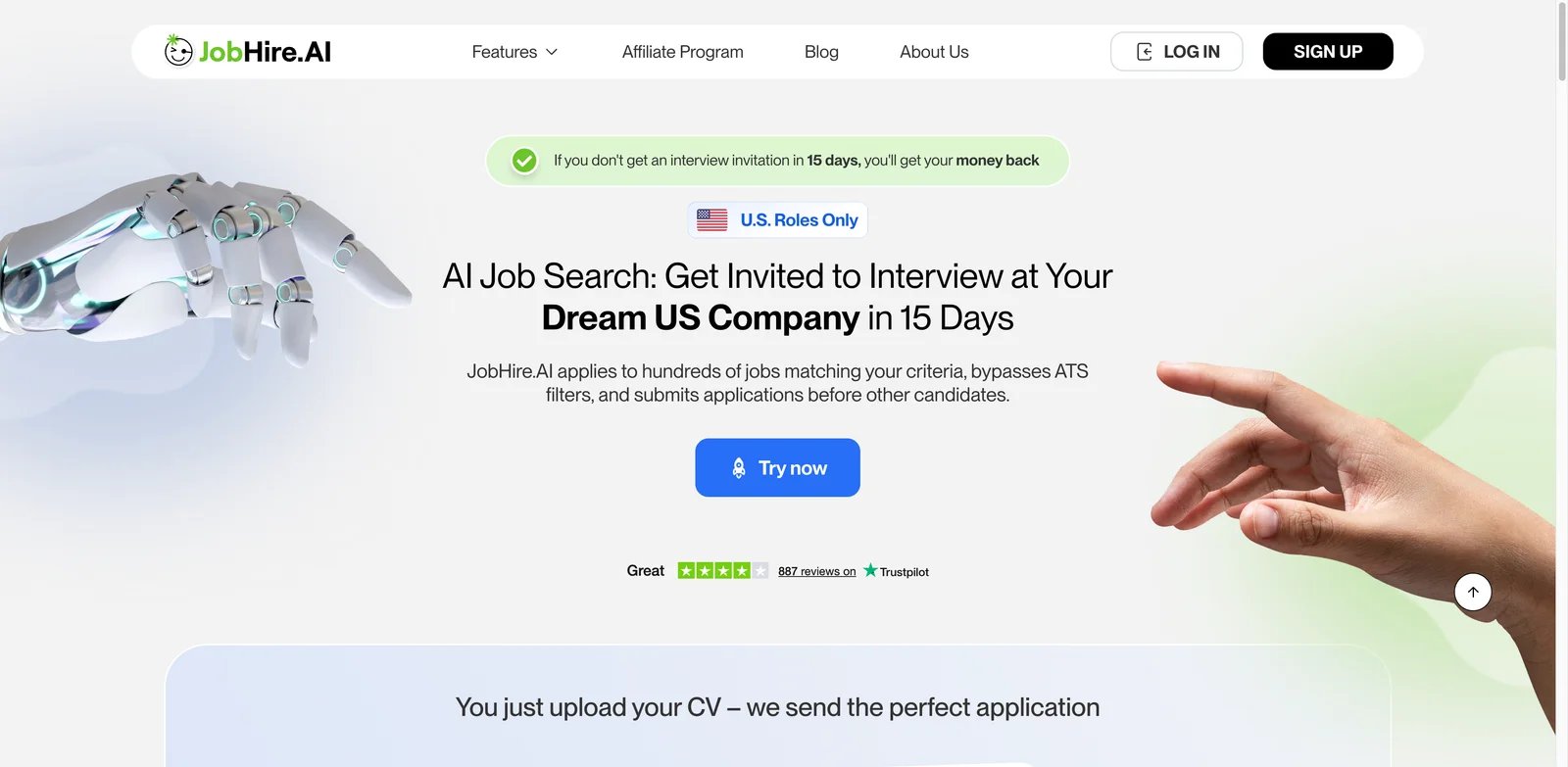
JobHire.ai should be evaluated with skepticism and precision, especially because its public homepage frames the service around U.S. roles only. Its review-window and guarantee-style messaging can appeal to people who are angry at AIApply's paywalls or refunds, but those same claims need careful reading. Do not treat it as safer just because it sounds more service-oriented.
What JobHire.ai solves vs AIApply: JobHire.ai is relevant when you want matching, application support, and a more service-like experience. It can be a useful comparison point for users who want a review window or guarantee-style promise rather than credit packs.
Pricing vs AIApply: JobHire.ai's public FAQ says there is no free trial and directs users to view pricing after signing up; because the public FAQ names Standard, Pro, and Extended plans but does not disclose prices until after signup, verify the exact plan name, billing cadence, renewal terms, cancellation path, and refund policy before entering payment details. JobHire.ai's official refund policy says initial-subscription refunds require at least 15 days of use, no interview invitations, and a request within 30 days; renewal refund requests must be submitted within 24 hours. Requests can be submitted through the user's account or by emailing support@jobhire.ai. In an AIApply alternatives article, JobHire.ai is not the pricing-safe pick; it is the "read the terms twice" pick.
Limitations: The main limitation is trust verification. If your reason for leaving AIApply is paywall frustration or refund anxiety, JobHire.ai should only be considered after you document the exact charge, cancellation path, and refund terms.
Best for: JobHire.ai is best for users comparing service-style auto-apply options and willing to scrutinize terms. Not the right fit if you want transparent self-serve pricing before signup.
Get started with JobHire.ai
Sorce

Sorce is the cleanest conceptual alternative to AIApply: do not remove the human from the job search; move the human approval moment earlier. Instead of a black-box apply agent, Sorce gives the user a swipe-and-approve workflow. That makes it especially relevant for people scared by wrong-fit applications.
What Sorce solves vs AIApply:
- Swipe gate: Sorce's core advantage is that a job can pass through a human approval moment before action.
- Free daily usage: Sorce publicly lists 40 free swipes per day with its AI auto-apply agent, but paid upgrade pricing was not clearly verifiable from the public homepage during review. Treat any weekly or monthly paid price as checkout-only until confirmed in-app.
- Lower reputation risk: It is not risk-free, but it is structurally safer than blind high-volume submission.
Pricing vs AIApply: Sorce is one of the clearest alternatives for free testing because its public page promotes daily free swipes. It should not be presented as one of the clearest paid-pricing picks unless the current weekly or monthly upgrade price is confirmed in the product.
Limitations: Sorce asks you to participate. If you want to outsource the job search entirely, swiping and approving may feel like work. That friction is also the safety feature.
Best for: Sorce is best for job seekers who want AI sourcing with final control. Not the right fit if you want no-touch application volume.
Get started with Sorce


Wobo is the closest philosophical replacement for users who liked AIApply's all-in-one promise but disliked the execution. It combines resume and cover-letter help with job application support, so the migration does not force you to assemble a tracker, resume optimizer, and application tool from scratch.
What Wobo solves vs AIApply:
- Suite-style replacement: Wobo can cover document generation and application support in one place.
- Candidate-control narrative: Its positioning is more attractive for users who want help without fully disappearing behind an agent.
- Useful AIApply comparison content: Wobo has published AIApply review material, so it understands the exact objection set.
Pricing vs AIApply: Wobo's current public pricing lists Free forever with 5 jobs/day, Unlimited at $34.99/month for swipe-to-apply, and Autopilot at $44.99/month with a 5-day trial. Replace older $24.99/month references, because they no longer match the current official pricing page.
Limitations: Wobo may not fully eliminate AIApply-like complexity. If you want to abandon auto-apply, choose Teal, Jobscan, Resume Worded, or Kickresume instead.
Best for: Wobo is best for users who still want a suite, not a single-purpose auto-apply bot. Not the right fit if you want a minimalist manual job-search workflow.
Get started with Wobo
BulkApply.ai
BulkApply.ai is refreshingly narrow. It does not need to win the resume-builder debate or the career-coach debate. It is for users who want fixed-price application volume and want to understand that price before they commit.
What BulkApply.ai solves vs AIApply: BulkApply.ai's advantage is pricing shape. A 1-day free trial, Basic at $15.99/month, Unlimited at $23.99/month, and custom Enterprise terms are much easier to explain than a subscription plus application credits. If you are leaving AIApply because the math feels hidden, that matters.
Pricing vs AIApply: BulkApply.ai is one of the easiest tools in this list to compare against AIApply. It is narrower, but the monthly pricing shape can be easier to budget. Confirm current plan limits before buying, especially what "Unlimited" means in practice.
Limitations: Narrow tools are not full job-search systems. You may still need a resume builder, tracker, and quality-control process. Also, fixed pricing does not solve bot detection or wrong-fit applications by itself.
Best for: BulkApply.ai is best for volume-focused users who want simpler application pricing. Not the right fit if your main AIApply complaint is generic resumes or recruiter trust.
Get started with BulkApply.ai
Honorable Mentions
Teal is the best honorable mention if you are leaving auto-apply behind. It gives you a job tracker and resume workflow instead of another submission bot. Use it when your real goal is better targeting, stronger applications, and organized follow-up. Get started with Teal.
Jobscan is not an AIApply clone. It is an ATS optimization tool for people who want fewer but better applications. If you suspect generic AI resumes are hurting your response rate, Jobscan belongs in the replacement stack. Get started with Jobscan.
Resume Worded is useful when the resume itself is the bottleneck. It focuses on resume and LinkedIn feedback rather than application automation, which makes it a safer choice for users worried about bot-like submissions. Get started with Resume Worded.
Kickresume fits users who need polished resumes and cover letters before applying manually. It is not a high-volume auto-apply alternative, but it can replace the document-generation side of AIApply with a more focused builder. Get started with Kickresume.
Migrating from AIApply - A Practical Guide
Data and Account Migration
Before switching, save every asset AIApply helped create: resumes, cover letters, LinkedIn summaries, interview-prep notes, saved jobs, application history, and any target-role settings. Then record your subscription status, renewal date, remaining credits, cancellation confirmation, and any refund request ID. Do this before deleting data or canceling, because job-search tools can become hard to audit once access changes.
If your new workflow uses auto-apply, start with a small target list. Do not migrate by turning on a new agent for every open role. Take 10 to 20 roles, compare fit, inspect generated answers, and check whether the tool submits only to roles you would have approved manually.
Learning Curve by Alternative
Near-zero migration: Sorce, BulkApply.ai, and Fapply are the easiest to test because the workflow is narrow. Medium migration: LoopCV, JobCopilot, Wobo, and LazyApply need more setup because targeting rules and application behavior matter. High or service-style migration: Sonara, Massive, and JobHire.ai require expectation-setting because you are trusting more of the workflow to the vendor.
If you leave auto-apply altogether, the learning curve shifts rather than disappears. Teal, Jobscan, Resume Worded, and Kickresume require more manual work, but the work is visible: resume quality, tracking, and targeted applications.
Pricing Brackets vs AIApply Subscription + Credits
Free or starter options include LoopCV's free plan, Sorce's free daily swipes, Teal's free tools, and Kickresume's free builder. Predictable lower monthly options include BulkApply.ai at $15.99 to $23.99/month, LoopCV paid plans starting from EUR 9.99/month, Wobo at $34.99 to $44.99/month, and JobCopilot from $0.93/day. Annual automation options include LazyApply's lower annual tiers. Verify-before-switching tools include Sonara, Massive, and JobHire.ai because public pricing signals may not match checkout.
Best AIApply Alternatives by Use Case
If Your Reason Is "I want a predictable monthly bill"
Start with BulkApply.ai, LoopCV, Wobo, JobCopilot, and LazyApply. BulkApply.ai and Wobo have the clearest monthly shapes. LoopCV has a free plan plus paid tiers from EUR 9.99/month. JobCopilot uses daily-equivalent pricing, so multiply it by 30 before comparing. LazyApply is predictable only if annual billing works for you.
If Your Reason Is "I want fewer wrong-fit applications"
Look first at Sorce, JobCopilot, LoopCV, and Wobo. Sorce gives you the approval gate. JobCopilot emphasizes verified company career pages. LoopCV gives campaign controls. Wobo keeps the suite-style workflow but should be tested against your actual target roles.
If Your Reason Is "I am worried recruiters can spot bot-filled forms"
The safest answer may be less automation, not different automation. Pair Sorce or Fapply with Teal or Jobscan. Use automation to find and prepare opportunities, then review submissions before they leave your hands.
If Your Reason Is "I want to avoid paywall and refund surprises"
Start with tools that let you test without committing: LoopCV, Sorce, and BulkApply.ai. Avoid any tool where the real price appears only after uploading your resume and job preferences. If a vendor uses trial language, document renewal date and cancellation path on day one.
If Your Reason Is "I care more about resume quality than application volume"
Skip direct auto-apply replacements and build a quality stack. Teal can organize the search, Jobscan can check ATS alignment, Resume Worded can review resume and LinkedIn strength, and Kickresume can help build polished documents. This slower workflow is often better for senior, specialized, or reputation-sensitive searches.
If Your Reason Is "I still want high-volume auto-apply"
Compare LazyApply, BulkApply.ai, Massive, and LoopCV. Be honest about the tradeoff: volume can help when roles are broad and entry-level, but it can backfire when every application needs domain fit or personal context.
If Your Reason Is "I want a lightweight AI job search workflow"
Start with Sorce, Fapply, and LoopCV. These are easier to test than service-style alternatives and easier to abandon if they do not improve response quality after two weeks.
How to Choose the Right AIApply Alternative
1. Name the reason you are leaving, then test only that reason. If the problem is credits, test pricing. If the problem is wrong-fit submissions, test targeting. If the problem is resume quality, test generated documents. Do not let a vendor demo distract you with features unrelated to the pain that made you search for AIApply alternatives.
2. Verify the pricing model before uploading your full career history. Check whether auto-apply is included, sold through credits, billed weekly, billed annually, or hidden until checkout. Multiply weekly and daily pricing by a real month. Save the cancellation path before you pay.
3. Check recruiter-risk controls. Look for manual approval, job-fit filters, source verification, application previews, and resume customization. If the tool cannot show you what it is about to submit, assume you are accepting reputation risk.
4. Run a two-week mixed workflow. Keep your old workflow paused, not forgotten. Test the new tool on a narrow set of target roles, inspect every generated document, and compare response quality rather than application count. At the end of week two, keep the tool only if it improves fit, not just volume.
Frequently Asked Questions
What is the best free alternative to AIApply?
Is LoopCV actually a drop-in replacement for AIApply?
Which AIApply alternative has the most predictable pricing?
Are AI auto-apply tools safe for LinkedIn and recruiter screening?
How do I migrate my AIApply resumes and application history?
Is AIApply still worth paying for if I do not use Auto Apply credits?
Which AIApply alternative is best for high-volume applications?
Should I wait for the 2026 AIApply Trustpilot and credits issues to settle, or switch now?
Get ToolWorthy Weekly
New AI tools, practical guides, and selected AI signals in one weekly brief.
Related Posts
- 16 Best AI Job Application Tools 2026 — Auto-Apply, ATS & Hidden Costs
We tested 16 AI job application tools on auto-apply reliability, resume accuracy, and billing practices — from free Simplify to $40/mo Huntr, with real scam and billing complaints verified.
For AI tool founders
Built a tool that belongs in this decision set?
Request an editorial evaluation for possible inclusion in ToolWorthy.
Submit your tool for reviewPaid submission does not guarantee a ranking, recommendation, inclusion, or editorial outcome.