



Overview
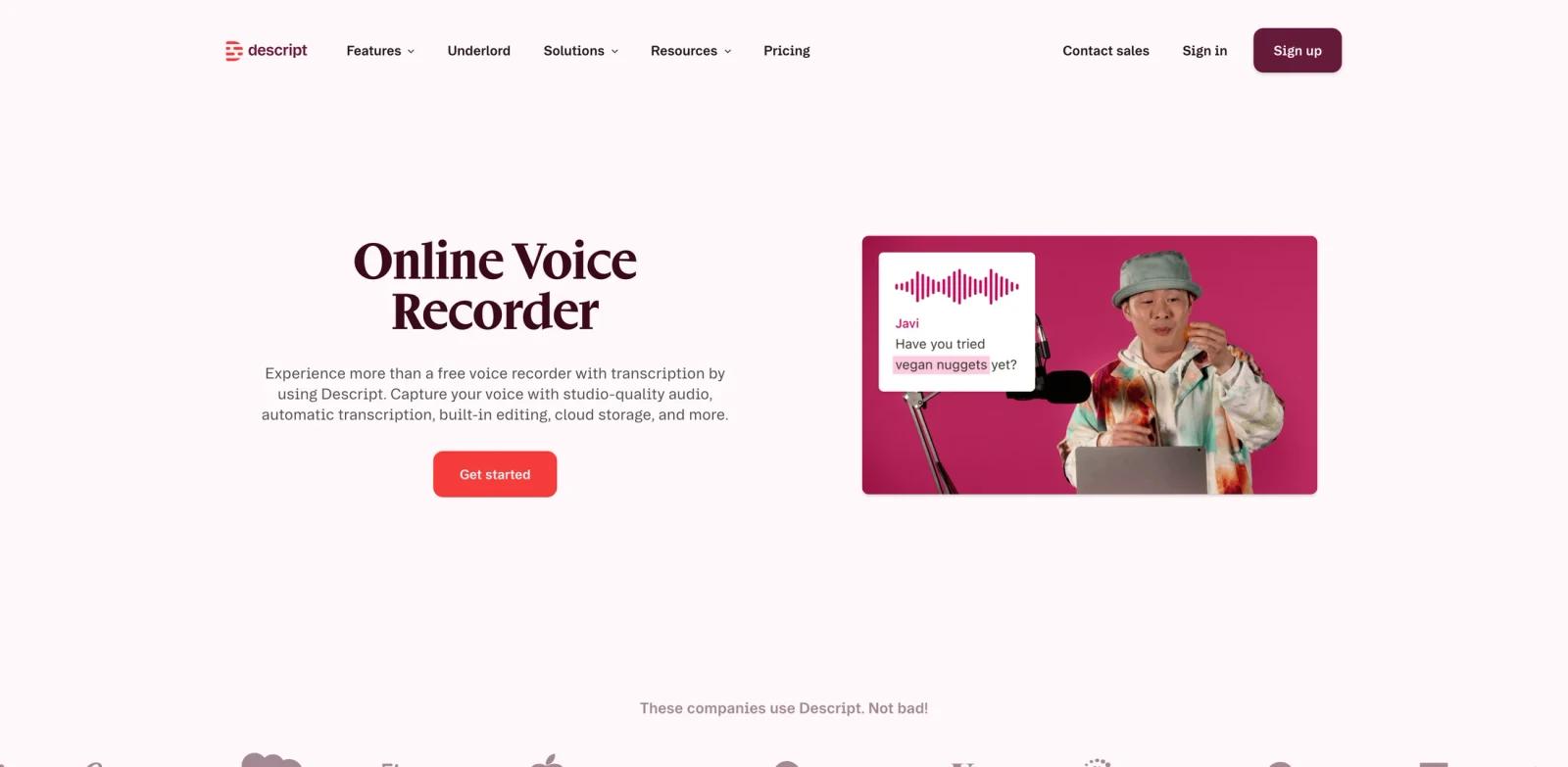
Descript Voice Recorder is an AI transcription option for teams that need to capture spoken conversations, convert them into usable notes or transcripts, and reduce manual follow-up work. Use Descript's free online voice recorder & transcriber to record, transcribe, and refine your audio transcript. Remove filler words, then share instantly. In practical terms, it gives sales teams, researchers, podcasters, managers, and distributed teams a more structured way to handle recording calls, transcribing speech, summarizing decisions, finding quotes, and sharing follow-up notes without relying entirely on spreadsheets, blank documents, or disconnected manual steps.
The product is especially relevant when the decision is not simply "does AI generate something?" but whether the workflow is repeatable, editable, and reliable enough for real work. Descript Voice Recorder should be evaluated on recording reliability, transcript accuracy, speaker handling, integrations, privacy controls, and how easily outputs can be reused. The public site emphasizes themes such as Online Voice Recorder, How to record your voice with Descript, Start an audio recording session, Record your voice, which gives buyers useful clues about where the product is strongest.
For buyers comparing AI note taking software, Descript Voice Recorder sits in the practical middle ground between a general-purpose assistant and a heavier production system. It is useful when you want a dedicated product surface, clearer exports, and a workflow that non-technical teammates can understand.
Key Features
- Reliable audio capture - Records meetings, interviews, calls, or voice notes so teams do not depend on manual note taking.
- Transcript generation - Turns speech into searchable text that can be reviewed, quoted, and shared after the conversation.
- Speaker and topic context - Helps users follow who said what and where important decisions or action items appeared.
- Summary and follow-up support - Condenses long recordings into decisions, next steps, or highlights for faster team alignment.
- Sharing and export options - Lets users send recordings, transcripts, clips, or notes to stakeholders without rebuilding context.
- Workflow integrations - Connects with meeting, collaboration, editing, or storage tools when the product supports team workflows.
These features matter most when Descript Voice Recorder is used repeatedly. A single demo can show whether the interface feels polished, but a real evaluation should include messy inputs, edge cases, team review, and final export so you can see how much manual cleanup remains.
How to Get Started
- Open the official product site - Start from https://descript.com/tools/voice-recorder so you are using the current product flow rather than an outdated marketplace or review link.
- Create a small test project - Use a real example from your own workflow, such as an existing brief, recording, image, task list, or content asset.
- Check the default output - Review whether Descript Voice Recorder produces something useful before heavy editing; this is the fastest way to judge baseline quality.
- Adjust settings and constraints - Test templates, model options, export formats, permissions, brand controls, or integrations that matter to your team.
- Compare against your current process - Measure cleanup time, approval time, and handoff quality against your existing tools, including AI productivity tools.
- Confirm pricing and rights - Before rollout, verify plan limits, commercial-use terms, privacy commitments, and whether AI audio enhancer or API access requires a higher tier.
Pricing & Plans
| Plan | Public pricing signal | What to expect |
|---|---|---|
| Entry access | Free tier or trial may be available | Useful for evaluating core workflows, limits, and output quality before broader rollout. |
| Paid plans | Free + paid plans from about $16/month | Higher limits, team features, export controls, integrations, or commercial usage rights usually sit here. |
| Business / enterprise | Custom or higher-tier pricing may apply | Admin controls, security reviews, advanced collaboration, API usage, and support typically require a sales or business plan. |
The pricing signal above comes from public page text captured during this batch. Pricing changes often, so buyers should confirm the current plan names, annual discounts, taxes, and usage limits on the official pricing page before committing.
Best For
- Customer-facing teams recording sales calls, demos, and onboarding sessions.
- Researchers and journalists who need searchable interview transcripts.
- Managers who want decisions and action items captured without assigning a note taker.
- Creators who record voice notes, podcasts, or narration and need editable text afterward.
- Remote teams that need meeting memory across time zones and recurring projects.
FAQ
What is Descript Voice Recorder used for?
Descript Voice Recorder is used to capture spoken conversations, convert them into usable notes or transcripts, and reduce manual follow-up work. It is most relevant for sales teams, researchers, podcasters, managers, and distributed teams who need a more repeatable workflow than manual production.
Who should choose Descript Voice Recorder?
Choose Descript Voice Recorder if your daily workflow involves recording calls, transcribing speech, summarizing decisions, finding quotes, and sharing follow-up notes. It is less suitable if you only need a one-off task and do not want to learn a specialized product.
Does Descript Voice Recorder have a free plan?
Descript Voice Recorder has public pricing signals starting around $16/month, but plan names, annual discounts, and limits can change. Confirm the current pricing page before buying.
What should I test first in Descript Voice Recorder?
Start with a realistic sample project, not a toy example. Check output quality, editing control, export options, collaboration, and whether the result fits your existing tools.
How does Descript Voice Recorder compare with generic AI tools?
Generic AI tools can help with drafts and ideas, but Descript Voice Recorder is built around a more specific meeting and voice recording tool workflow with purpose-built controls, templates, integrations, or exports.
Is Descript Voice Recorder good for teams?
Descript Voice Recorder can work for teams when its collaboration, permissions, sharing, and admin controls match your process. Smaller teams should verify whether those controls are included in entry-level plans.
What are the main limitations of Descript Voice Recorder?
The main risks are plan limits, output quality variance, learning curve, and dependency on the product's supported formats or integrations. Always test with your own materials.
Can Descript Voice Recorder replace a specialist?
Descript Voice Recorder can reduce routine production work, but specialist review still matters for strategy, quality control, compliance, brand voice, and final approval.
What alternatives should I compare with Descript Voice Recorder?
Compare it with tools in the broader AI transcription category, plus any workflow tools your team already uses. The best choice depends on output quality, cost, and adoption friction.


