

Overview
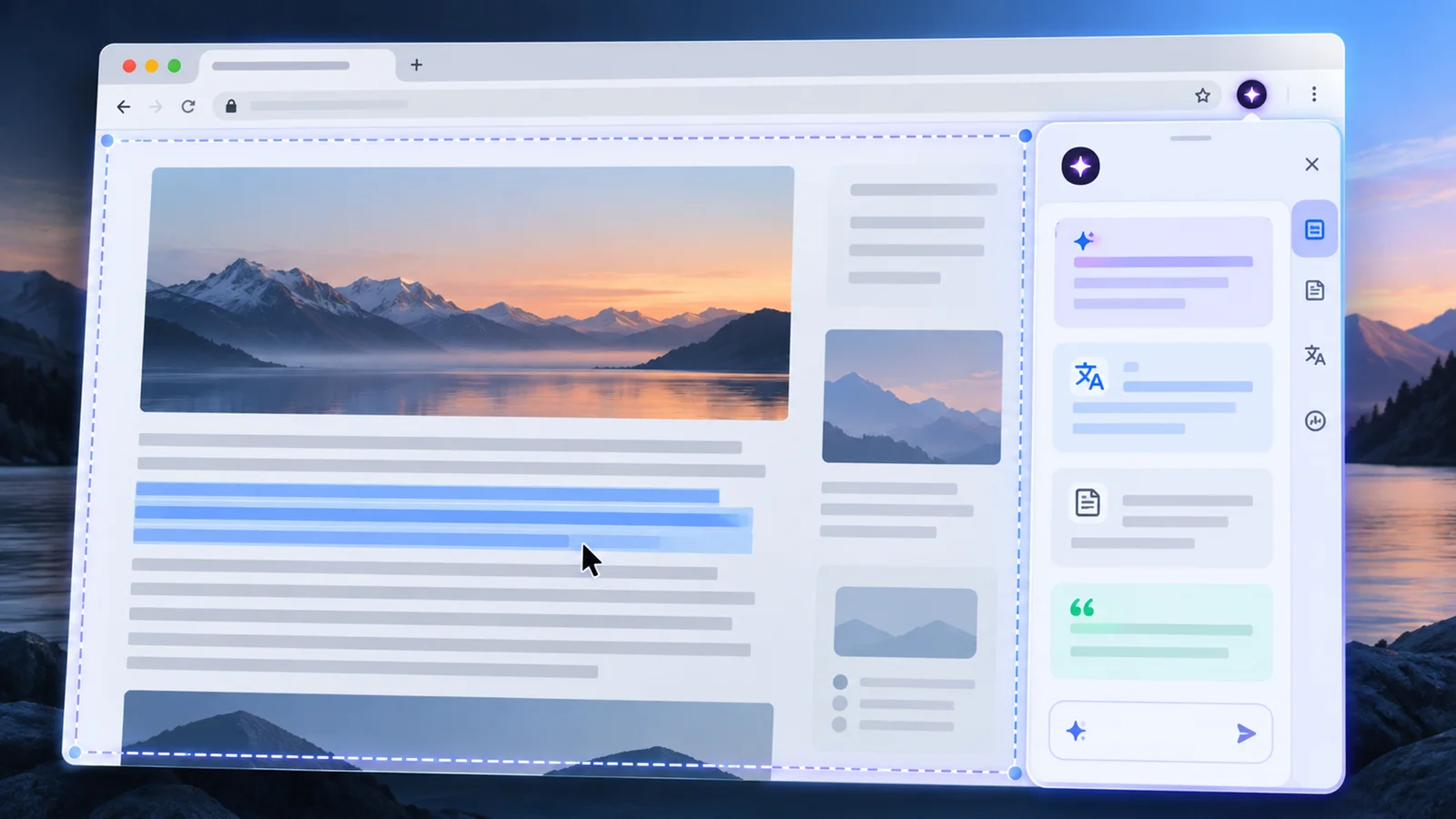
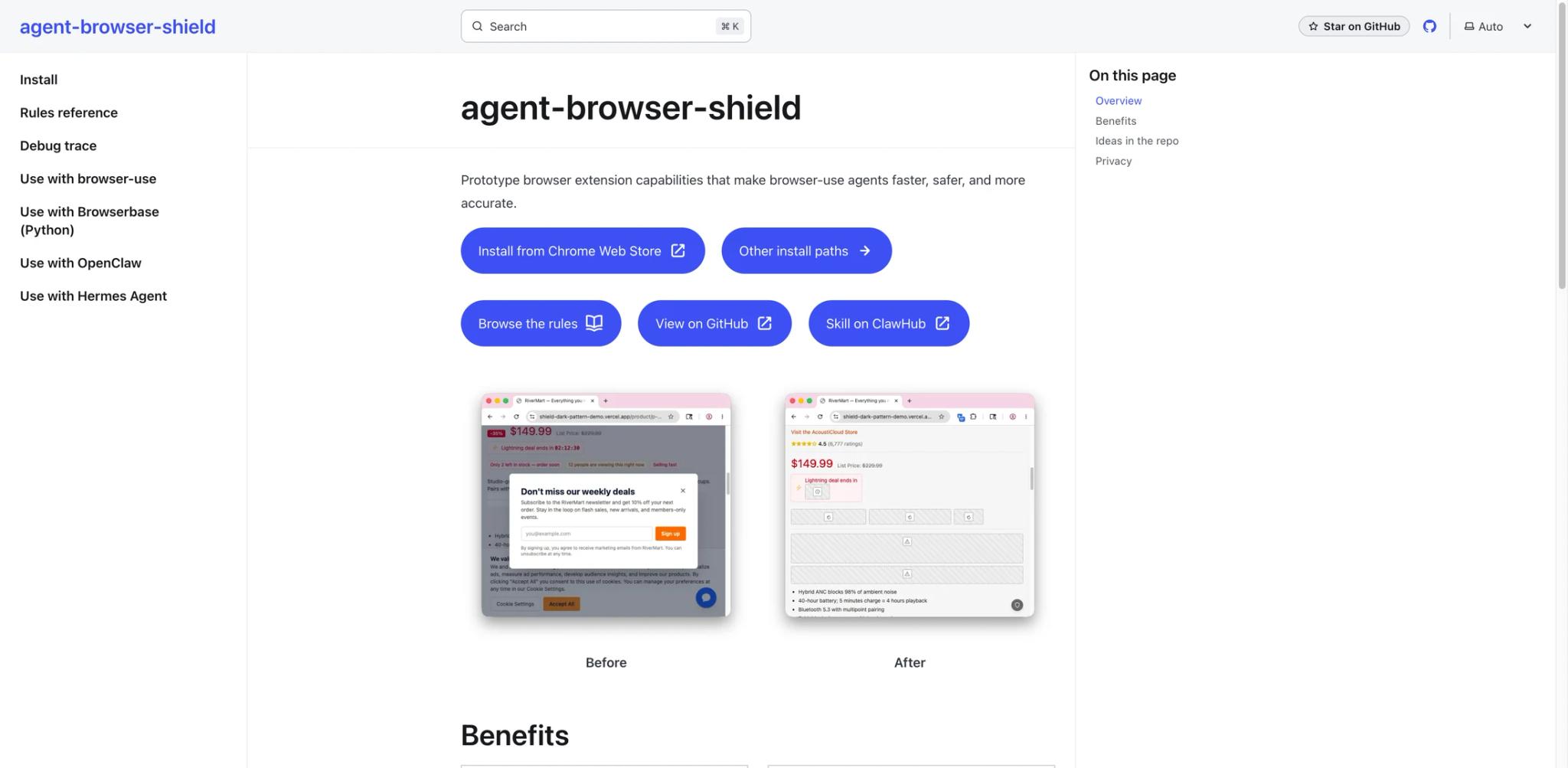
Agent Browser Shield is a Chromium extension from PixieBrix designed for browser-operating AI agents, not ordinary end-user ad blocking. Its job is to rewrite the environment before the model sees the page: hide secrets, suppress prompt-injection carriers, neutralize some dark patterns, and trim low-value page chrome so the agent spends tokens on the actual task.
That positioning matters because more teams are using browser agents for research, QA, shopping, operations, and workflow automation, but the raw web is a messy input channel. Hidden text, poisoned metadata, social widgets, sponsored blocks, pre-checked checkout boxes, and exposed credentials are all things a browser agent can misread or over-trust. Agent Browser Shield is built as a defensive preprocessing layer for those sessions, which makes it relevant to readers tracking AI agents, browser automation, and security-minded agent workflows.
On Product Hunt's June 5, 2026 daily leaderboard, Agent Browser Shield ranked #11; avoid citing a fixed points total because Product Hunt counts can change after launch. The official PixieBrix materials describe it as an alpha prototype, and the public repo plus launch notes make clear that this is still an early but opinionated tool for teams already serious about browser-agent safety.
Key Features
Secret and PII masking - The extension masks personal data and credentials before they reach the model, reducing the chance that browser agents leak sensitive context into prompts or traces.
Prompt-injection surface suppression - Official notes call out defenses for hidden text carriers such as HTML comments, JSON-LD, poisoned metadata, accessibility labels, SVG text, and encoded payloads that agents may parse even when humans never see them.
Token-efficiency cleanup - The GitHub README says the tool strips cookie banners, chat widgets, sponsored content, and other page chrome so agent context is spent on the user task instead of visual clutter.
Dark-pattern and trust-laundering defenses - Public launch materials mention checks for disguised ads, spoofed links, and manipulative interface patterns that could bias an agent into the wrong click path.
Multiple install paths - Teams can install it through the Chrome Web Store for ordinary Chromium browsers, or use packaged ZIP / unpacked-extension flows for agent runtimes that need custom browser profiles.
Agent-oriented docs and behavior contract - The repo includes documentation, install guides, and a ClawHub skill describing how agents should behave around placeholders, hidden content, and extension-added warnings.
Pricing & Plans
Public product materials present Agent Browser Shield as a free alpha extension. Its PolyForm Shield license allows most internal and commercial use at no cost, but competing products require a separate commercial license from PixieBrix.
| Option | Price | Notes |
|---|---|---|
| Chrome Web Store install | Free | One-click install for Chromium-based browsers; the Chrome Web Store listing describes it as a free alpha release |
| GitHub source / packaged builds | Free for permitted use under PolyForm Shield | Public repo, docs, and packaged-extension workflows are published; competing-product use may require a separate commercial license |
| Commercial license for competing use | Contact PixieBrix | Separate commercial licensing may be required if you want to sell, host, repackage, or build a competing browser-agent shielding product |
Because the project is described as an alpha prototype and source-available, teams considering production rollout should verify support expectations, licensing constraints, and long-term maintenance plans directly from the repository and vendor materials.
Best For
- Teams operating browser agents in production or near-production environments
- Builders who care about prompt injection, secret leakage, and noisy DOM inputs
- Security-conscious developers using Chromium-based agent harnesses, MCP, or custom browser automation
- Evaluators comparing browser-agent infrastructure, not casual end-user browsing extensions
FAQ
What problem does Agent Browser Shield solve?
It reduces the risk that browser agents will read or act on the wrong things by masking secrets, suppressing hidden injection surfaces, and removing distracting or manipulative page elements before the model interprets them.
Is Agent Browser Shield open source?
The official materials reviewed here describe it as source-available, and the public GitHub repository shows a PolyForm Shield license badge rather than a standard permissive OSS license.
Where can I install it?
PixieBrix's public notes say it is available through the Chrome Web Store, and the GitHub README also documents packaged and unpacked install paths for agent runtimes that need more control.
Does it only work in Chrome?
The official README says it works on Chromium-based browsers such as Chrome, Edge, Brave, Arc, and Opera.
Who should not use Agent Browser Shield?
If you are not running browser agents, this is probably too specialized. The value comes from protecting agentic browsing sessions, not from being a general-purpose privacy or ad-blocking extension for ordinary users.