

Overview
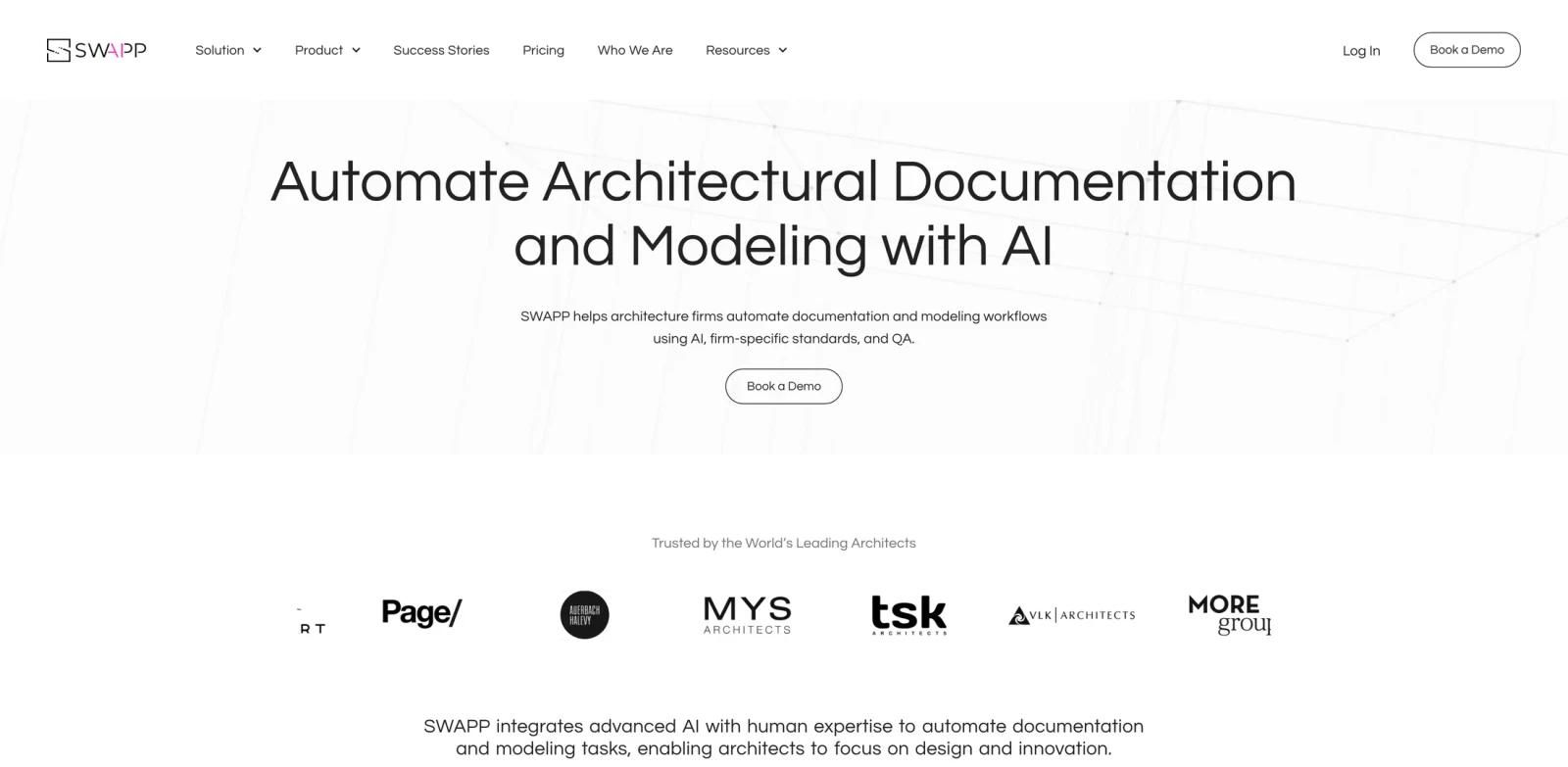
Swapp is an AI architectural documentation and BIM automation platform in the broader AI architecture design category. It automates documentation and modeling workflows using AI, firm standards, and QA. The clearest fit is for architecture firms and BIM teams, especially when the team needs a repeatable workflow rather than a one-off experiment.
The official page positions Swapp around automate architectural documentation and modeling with ai. In practical terms, that means the product should be evaluated on whether it can shorten the distance between raw input and a reviewable output, while still giving users enough control to refine the result. That balance matters for teams comparing AI interior design, because speed alone is not useful if the output cannot survive client review, internal QA, or handoff to another tool.
Swapp's main advantage is that it targets repetitive production documentation so architects can spend more time on design. It is not the right choice for every organization, but it becomes compelling when the surrounding workflow already matches the product's strengths and the team can measure clear savings in setup time, iteration cycles, or production overhead.
Key Features
Project input and site setup - Accepts plans, criteria, briefs, or site context so teams can start from real project constraints rather than a blank canvas.
Generative planning support - Creates layout, massing, program, or feasibility options that help teams compare directions earlier in the process.
Quantitative analysis - Surfaces areas, constraints, KPIs, takeoffs, or performance indicators so design choices can be judged with data.
BIM, CAD, or documentation handoff - Produces outputs that can move toward downstream modeling, documentation, estimating, or presentation workflows.
Faster feasibility cycles - Compresses early studies from days or weeks into shorter review loops, which matters when deals or client decisions are time-sensitive.
Human-in-the-loop refinement - Keeps architects, planners, or deal teams in control of assumptions instead of treating AI output as final design authority.
These features make Swapp strongest when the user has a concrete workflow in mind. A casual user can still test the product, but the real value appears when the same output needs to be created, reviewed, and improved repeatedly.
How to Get Started
- Start with the official product page - Review the current positioning, supported platforms, examples, and any live demo or free trial language before inviting a wider team.
- Choose one representative workflow - Pick a real AI architectural documentation and BIM automation platform task with known inputs, expected outputs, and review criteria so the test does not become a vague feature tour.
- Prepare source material - Gather the files, prompts, models, briefs, websites, or documents that match how your team actually works.
- Generate the first output - Use Swapp to create a first layout, feasibility study, BIM handoff, or presentation package from those real inputs.
- Review control and editability - Check how easily users can adjust structure, styling, data, settings, or exports after the first AI-assisted result appears.
- Compare handoff quality - Export or share the result with the next person in the workflow and compare it against your current process, including time saved and rework created.
Pricing & Plans
| Plan type | Pricing | Best fit |
|---|---|---|
| Commercial access | Public entry pricing was not clearly exposed in the captured official text | Teams that need the core AI architectural documentation and BIM automation platform workflow and are ready to evaluate paid access |
| Sales or enterprise plan | Contact the vendor for current pricing, seat counts, usage limits, and support terms | Organizations needing procurement, onboarding, security review, or custom deployment requirements |
Swapp presents sales-led or paid commercial access on the captured page. Public entry pricing was not clearly exposed in the captured text, so buyers should confirm seat, usage, and enterprise terms directly.
For buying decisions, treat the pricing page as only one part of the evaluation. Teams should also check export limits, commercial rights, collaboration seats, support response times, privacy terms, and whether advanced features are included in the lowest paid plan or reserved for higher tiers.
Best For
- Architecture firms and BIM teams that already handle AI architectural documentation and BIM automation platform tasks every week and need faster production.
- Teams comparing AI data visualization but wanting a tool shaped around AI architectural documentation and BIM automation platform rather than a broad general assistant.
- Operators who can test Swapp against a real project, output, or client deliverable during evaluation.
- Managers who need clearer handoffs, reusable outputs, or shorter feedback loops between specialists and reviewers.
- Buyers who are willing to verify current pricing, security, and export rules before adopting the tool across a larger team.
FAQ
What is Swapp?
Swapp is an AI architectural documentation and BIM automation platform for architecture firms and BIM teams. Its core job is to help users complete this workflow more efficiently: automates documentation and modeling workflows using AI, firm standards, and QA.
Who should use Swapp?
It is best for architecture firms and BIM teams that have a recurring workflow, clear source inputs, and a need to produce reviewable outputs faster than their current process allows.
Is Swapp free?
Swapp should be treated as a paid commercial product unless the vendor's current pricing page states otherwise.
How much does Swapp cost?
A simple public starting price was not clearly available in the captured page text. Check the vendor's pricing page or contact sales for current plan, seat, usage, and enterprise terms.
What makes Swapp different?
It targets repetitive production documentation so architects can spend more time on design. That makes it most useful when your workflow matches the product's intended category and output format.
Can Swapp replace a specialist?
Usually no. Swapp can speed up drafting, generation, planning, rendering, scheduling, or organization, but a knowledgeable user should still review quality, accuracy, brand fit, and final deliverables.
What should I test during a trial?
Use a real project, not a sample prompt. Measure time to first usable output, editability, export quality, collaboration fit, and how much rework the tool creates downstream.
Is Swapp good for teams?
It can be, especially if the team has shared standards and repeatable work. Before rollout, confirm permissions, collaboration features, admin controls, billing, and whether the plan supports the number of users you need.
What are alternatives to Swapp?
Alternatives depend on the workflow. Start with related AI productivity tools options, then compare direct competitors by output quality, pricing clarity, supported integrations, and control over the final result.