



Overview
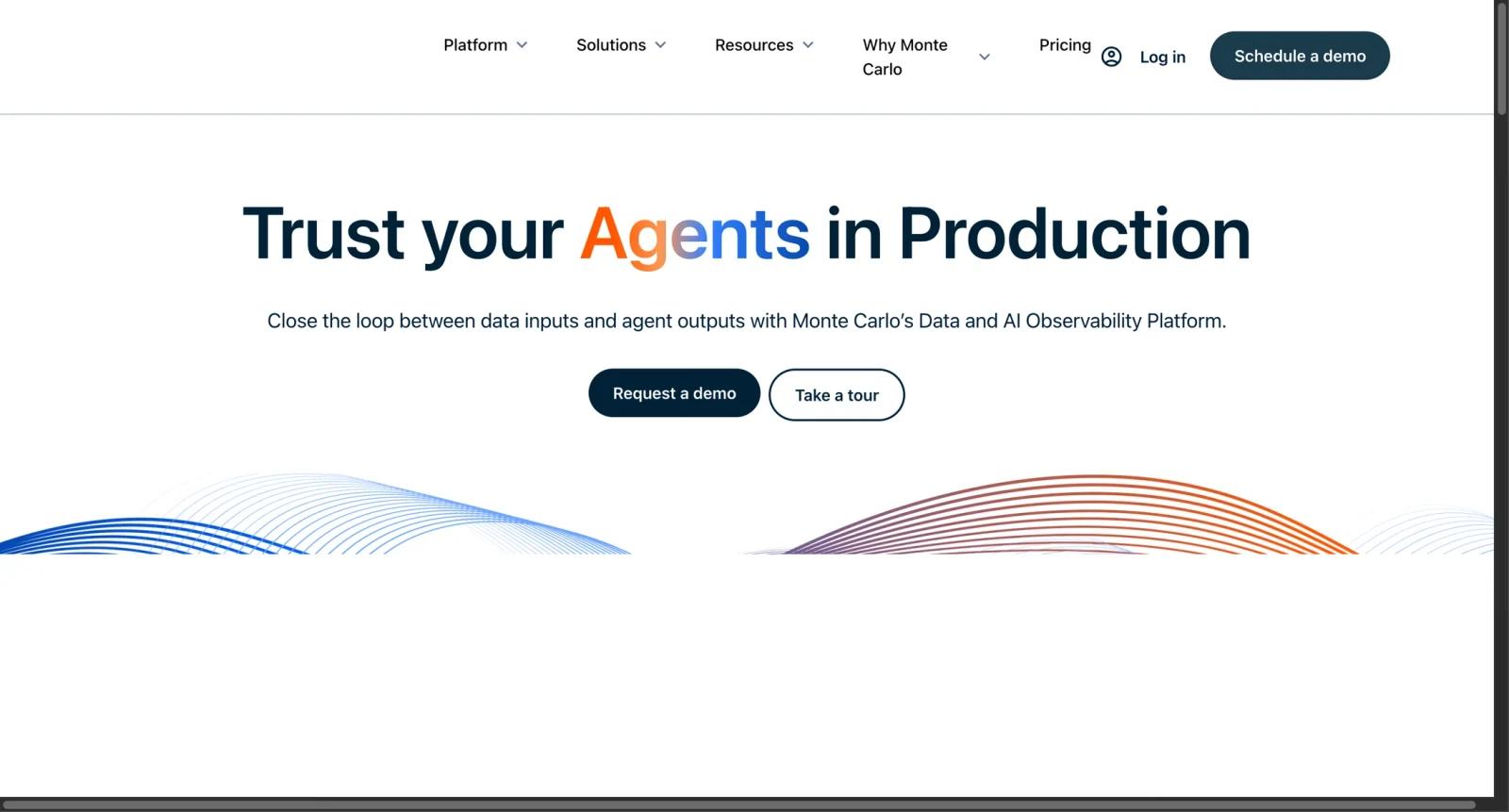
Monte Carlo is a data observability platform for monitoring data reliability across warehouses, lakes, BI tools, pipelines, and AI systems. It helps data teams detect freshness issues, volume anomalies, schema changes, lineage impact, and quality incidents before broken data reaches business users.
Monte Carlo is a major option in the AI data cleaning tools and data observability space, but it is not a one-time cleansing product. It is a continuous reliability layer for organizations where data downtime has business impact. Common comparison points include Bigeye, Anomalo, and enterprise platforms such as Informatica.
The best fit is a team with production data pipelines, important dashboards, customer-facing data products, or AI workflows that need reliability monitoring.
Key Features
- Freshness and volume monitoring - Detects late, missing, or abnormal data before it affects downstream users.
- Schema and quality detection - Identifies schema changes and data quality issues that can break dashboards or models.
- Lineage and impact analysis - Shows which tables, dashboards, reports, or workflows may be affected by a data issue.
- Incident management - Helps teams triage alerts, investigate root cause, and coordinate resolution.
- Coverage across modern data stacks - Connects to warehouses, lakes, BI tools, orchestration systems, and data transformation workflows.
- Data reliability workflows for AI - Supports teams that need trusted data feeding machine learning, AI products, or governed analytics.
Pricing & Plans
Monte Carlo uses sales-led pricing with packaging such as Start, Scale, and Enterprise.
| Package area | Pricing signal | Best fit |
|---|---|---|
| Start | Contact sales | Teams beginning data observability for core tables and pipelines |
| Scale | Custom quote | Organizations expanding monitoring across more teams and data products |
| Enterprise | Custom quote | Large enterprises needing governance, integrations, support, and broad reliability coverage |
Ask about table counts, monitored assets, users, integrations, lineage, alert routing, support, and whether pricing scales with warehouse or data product footprint.
Best For
- Data engineering teams operating production pipelines
- Analytics teams protecting executive dashboards and business metrics
- AI teams depending on reliable training, feature, or product data
- Enterprises standardizing data incident management and reliability ownership
- Buyers comparing Monte Carlo with Bigeye, Anomalo, and Informatica
FAQ
What is Monte Carlo?
Monte Carlo is a data observability platform for monitoring freshness, volume, schema, lineage, incidents, and data quality across modern data stacks.
How much does Monte Carlo cost?
Monte Carlo uses quote-based pricing with Start, Scale, and Enterprise packaging. Pricing depends on tables, users, integrations, and observability scope.
Is Monte Carlo a data cleaning tool?
Not primarily. It detects and helps investigate data reliability issues; cleanup and remediation happen in the team's data workflows.
What problems does Monte Carlo solve?
It helps reduce data downtime, broken dashboards, pipeline surprises, and untrusted data reaching analytics or AI systems.
How does Monte Carlo compare with Bigeye?
Both are data observability platforms. The right choice depends on data stack support, monitoring approach, pricing metric, lineage needs, and incident workflow fit.
Does Monte Carlo support AI data reliability?
Yes. Monte Carlo is relevant when AI systems depend on trusted data, though buyers should verify specific feature, model, and pipeline monitoring needs.
What should buyers verify?
Verify supported connectors, monitored asset limits, lineage depth, alert routing, integrations, security, support, and pricing metric.
Who should avoid Monte Carlo?
Small teams with limited data pipelines may prefer simpler validation or transformation checks before adopting full observability.


