
10 Best Udio Alternatives 2026 — After the Download Lockdown
After Udio's UMG deal disabled downloads and walled the garden, creators are leaving. 10 alternatives — Suno, Mureka, ElevenLabs — by rights, export, and migration cost.
On this page
On October 29, 2025, Udio announced a partnership with Universal Music Group and, the same day, stopped letting people download the songs they had made — including tracks created before the change. Months later it had not reversed: Udio's own help center still confirmed, as of February 17, 2026, that "downloading of audio, video, and stems has been disabled." The reaction wasn't a feature complaint. It was an exit. As one AP-quoted user put it, "Udio can never be trusted again," and the r/udiomusic threads in May 2026 were still full of "since the download removal, I've slowly stopped using it."
This guide is for people who came to make music and discovered they'd been renting access to their own songs. The ten alternatives below fall into three groups: fast full-song generators that still let you export and own output (Suno, Mureka, Musicful), licensing-first tools built so the rights question never bites (Soundraw, Stable Audio, ElevenLabs Music), and workflow-honest options for creators going back to a real DAW pipeline (Producer.ai, Sonauto, plus the production-music picks in Honorable Mentions). These come from the migration threads where Udio users actually went — not a feature spreadsheet.
| Tool | Best For |
|---|---|
| Suno | The fastest mainstream full-song replacement |
| Mureka | Full songs with stems, WAV, and vocal control |
| ElevenLabs Music | Rights-safety-conscious creators |
| Sonauto | Free, human-sounding vocals to experiment with |
| Soundraw | Creators who need airtight commercial safety |
| Producer.ai | Cheap, low-friction experimentation |
| Musicful | Songs plus music video and stem workflow |
| Stable Audio | Licensed-data instrumental and audio assets |
| MiniMax Music | Expressive-vocal, newer-model output |
| Loudly | Royalty-free tracks for video and social |
Why People Are Leaving Udio in 2026
These six reasons map to the r/udiomusic, r/SunoAI, and Hacker News threads where the exodus is actually happening. They are different problems — "I can't download" is not the same as "I don't know if I can sell this" is not the same as "I no longer trust this company" — and lumping them together is why most "Udio vs X" posts miss what creators are actually deciding.
1. Downloads are gone — your songs are trapped. This is the fresh-news angle and the reason the search volume on this query moved. After the UMG partnership, Udio disabled downloads of audio, video, and stems — confirmed still in effect on the help center as of February 2026 — for new creations and, critically, for songs users had already made. The official subreddit announcement thread put it plainly: "download functionality has been disabled, both for songs already made and all new creations" (r/udiomusic, October 2025). A tool that won't let the output leave the tool is not a production tool; it's a demo you pay for. By May 2026 the most common sentiment in the "are you still subscribed" thread was a quiet "since the download removal, I've slowly stopped using it" (r/udiomusic, May 2026).
2. Nobody can tell you if the output is safe to sell. Separate from "can I download it" is "if I could, could I build a career on it." Creators describe the unresolved IP chain as the actual blocker: "fun to demo but impossible to build a career on" — r/udiomusic, April 2026. Another, on the same thread, on whether the rights would hold up: "whether the IP chain is defensible. Right now it isn't." Combined with reports that Udio began fingerprinting generated music, the message creators took away was that the platform's relationship to the music you make is now adversarial, not enabling. This is a rights-confidence problem, and it does not get solved by a better model — it gets solved by a different vendor whose license and training data you can actually point a client or a distributor to. The practical damage is downstream: a freelancer can't put "AI-assisted, rights unclear" on an invoice, a YouTuber can't risk a claim on a monetized channel, and a game studio's legal team will not sign off on assets whose provenance is "we'll tell you later." Once the rights answer is "ask a lawyer," the tool has failed the only test that matters for paid work, regardless of how good the song sounds.
3. The UMG deal broke creator trust. This is a trust shock, distinct from both downloads and rights — it's about whether the company is on the creator's side at all. The AP coverage of the deal captured "Udio can never be trusted again"; the announcement thread's top sentiment was "Udio has crapped all over their user base" (r/udiomusic, October 2025); and by May 2026 the unsubscribe thread was blunt: "nope, all done with these sellouts" (r/udiomusic, May 2026). When users start describing a tool's maker as "traitors and sell-outs," no roadmap fixes it — they've already mentally moved, and the only question is where. Trust matters more here than in most software categories because the output is creative work people feel ownership over: this isn't a project-management tool changing a price, it's a platform that, mid-relationship, redefined who controls the songs you wrote on it. That's why the reaction was disproportionate to the literal feature change — and why "they might walk it back" doesn't bring people back. The trust, once a label sat between the user and their own files, doesn't reset to zero; it resets to negative, and the rational move is to rebuild somewhere a single corporate deal can't reach the work again.
4. The model has been frozen while rivals ship. Distinct from the policy anger is a plain product complaint: Udio stopped moving. Users comparing it to Suno and newer entrants said there were "more cocktail party announcements from udio than actual model or service feature updates" (r/SunoAI, October 2025), and on r/udiomusic the recurring line was that it "hasn't been updated in over a year" and is "stuck on version 1.5" (April 2026). For creators who stayed for the vocal quality, watching competitors ship while Udio shipped press releases was the second push out the door. Stagnation compounds the trust problem in a specific way: a frozen model with a hostile policy gives users no reason to wait it out. If Udio were shipping a clearly superior model every quarter, some creators would tolerate the walled garden for the quality. With the model static and the rivals — Suno's iterations, newer expressive-vocal entrants — visibly moving, the cost-benefit collapses. There is no "but the output is so much better here" left to anchor loyalty, which is why threads that started about downloads ended with users comparing competitor model versions instead.
5. It no longer fits into a real production workflow. Broader than "no download button" is the workflow lock-in: even users who liked Udio for sparking ideas said it became "harder to fit into a real workflow" once nothing could leave it (r/udiomusic, May 2026). The pointed version, from the "no downloads, no rights" thread: "why choose Udio over other options that don't lock you in?" (April 2026). A spark-ideas tool is fine until the spark has to travel to a DAW, a client, or a release — and now it can't. This reframes the whole evaluation: the question stopped being "which tool sounds best" and became "which tool participates in my pipeline instead of trapping a stage of it." A slightly worse-sounding tool whose stems open in your DAW now beats a better-sounding one that holds them hostage — a ranking inversion most "best AI music" lists, written pre-lockdown, still get backwards. For working creators the export path is now a primary spec, not a footnote, and tools get sorted by it first.
6. The mix and vocals are still inconsistent. This one is lower-weight and worth writing conservatively, because opinion is genuinely split — some users still rate Udio's vocal realism above rivals. But the complaints are specific and recurring: "the pitch and pronunciation is all wrong" and "bad mixing, audio push down, and horribly overpowered vocals" (r/udiomusic, April–May 2026). For a creator already half-out over policy, an unreliable mix removes the last reason to tolerate the rest.
Top 10 Udio Alternatives Compared
Udio is the anchor row. Everything below is a direct full-song or AI music generator that addresses at least one of the export, rights, or workflow reasons people leave — adjacent production-music and DAW tools are in Honorable Mentions. The columns lead with the two dimensions Udio refugees actually decide on: can you get the file out, and can you legally sell it.
| Tool | Best For | Starting Price | Commercial Rights | Export / Download |
|---|---|---|---|---|
| Udio (anchor) | — | Paid plans (subscription) | Unclear; IP chain disputed | Disabled (audio/video/stems) |
| Suno | Fastest full-song swap | Free; Pro $10/mo monthly or $8/mo yearly | Paid plans allow commercial use; free tier is non-commercial | Download subject to paid-plan limits; free tier play/share only |
| Mureka | Stems + vocal control | Basic ~$8/mo; Pro ~$24/mo | Commercial license on plans | Yes incl. WAV/stems (Pro) |
| ElevenLabs Music | Rights-conscious | Free; Starter $5/mo; Creator+ for streaming rights | Self-serve commercial use excludes film/TV/radio/large studio games; attribution required | Paid downloads; Free not permitted |
| Sonauto | Free vocal experimentation | Free (unlimited marketed) | You own outputs; broad ToS license | Yes |
| Soundraw | Rights-cleared production music | Creator $19.99/mo monthly or $16.99/mo yearly | Commercial license by plan; Creator for background use, Artist plans for DSP distribution | Yes |
| Producer.ai | Cheap experimentation | Free; Starter $6/mo; Plus $18/mo; Member $48/mo | Verify commercial use and release terms before relying on outputs | Yes incl. MP3/WAV/M4A and stems |
| Musicful | Song + video + stems | Tiered; Standard+ commercial* | Standard/Pro commercial | Yes |
| Stable Audio | Licensed/partnered-data audio assets | Free 10 tracks/mo; paid Creator/Studio tiers | Paid subscription required for commercial; Enterprise for larger orgs/use cases | Yes (paid) |
| MiniMax Music | Expressive newer model | Free; discounted Starter $5, Creator $17, Standard $38, Pro $150 | Verify export, commercial, and release terms before publishing | Yes |
| Loudly | Royalty-free for video | Free/paid subscriptions | Non-exclusive license while paid subscription is active; paid-media campaigns capped at $100K/year | Yes (paid) |
*Pricing or commercial terms partly dynamic/unverified at research time — confirm on the official page before relying on it.
Detailed Reviews

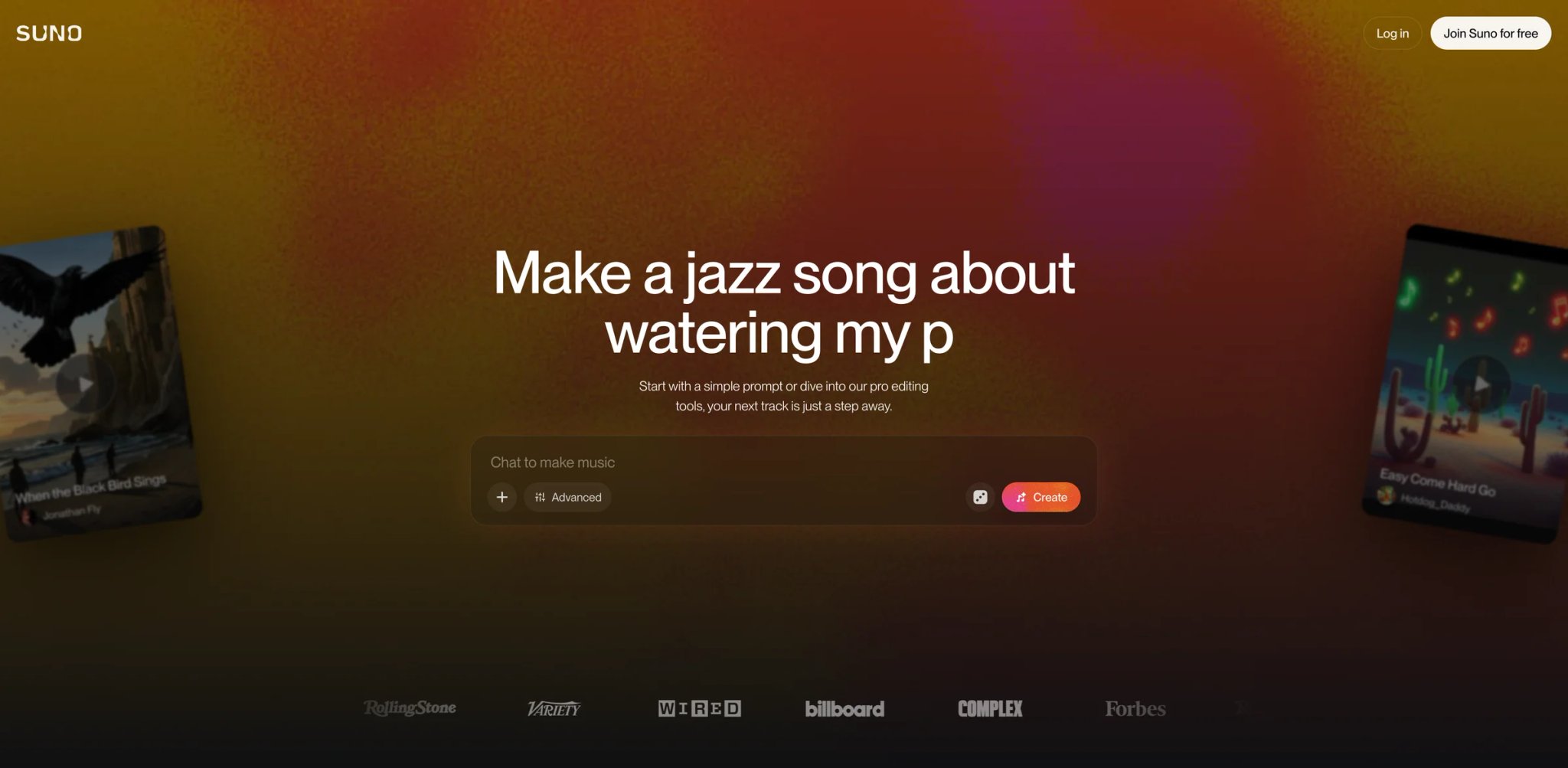
The honest framing for Suno is comparative: it is the tool the largest share of Udio refugees actually land on, because it answers the export reason without making you relearn how to make a song. You prompt, you get a full vocal track, and — on a paid plan — you can download it and use it commercially. After a year of Udio users being told "no," that yes is most of the decision.
What Suno solves vs Udio:
- The file actually leaves. Paid plans allow commercial use, higher-quality downloads, and stem workflows, but after the Warner settlement Suno says free-tier songs are play/share only and paid users have monthly download limits with optional top-ups — still a return of the export Udio removed, with limits to read.
- It's still shipping. Where Udio "hasn't been updated in over a year," Suno has iterated through model versions, a Studio editing surface, and stems — the "rivals are moving" complaint resolves here.
- Same mental model. Prompt-to-song with styles and lyrics; a Udio user is productive in minutes, so migration cost is re-creating tracks, not relearning a craft.
Pricing vs Udio: Free with daily credits and non-commercial use; Pro shown around $8/month billed yearly (2,500 credits, commercial use); Premier around $24/month billed yearly (10,000 credits). Versus Udio's subscription-for-locked-output, paying Suno gets you output you keep — the value comparison isn't close for anyone whose reason for leaving was export.
Limitations: The Warner caveat: Suno reached its own major-label settlement (Warner), and the structural lesson of Udio is precisely that a label deal can change download and rights terms overnight. Suno today allows commercial use and downloads; treat "today" as load-bearing and watch the policy page rather than assuming permanence. Separately, the free tier is non-commercial, and high-volume creation burns credits faster than it looks.
The migration math is why Suno tops most ex-Udio lists despite the Warner caveat: it minimizes total switching cost. The mental model transfers (prompt → song), the community is the largest so prompt knowledge and troubleshooting are abundant, and the export-plus-commercial-license combination directly refills the exact hole Udio dug. For someone who just wants to keep making and shipping music with the least friction this week, "the obvious one that works" beats a marginally better-aligned tool that costs a week of relearning. The caveat is real and worth repeating — a label settlement sits behind Suno too — but the right way to hold it is "diversify and watch the policy page," not "avoid the most capable replacement out of fear of a risk every major player now carries."
Best for: Creators whose Udio breaking point was "I can't get my song out" and who want the least-disruption swap. Not the right fit if your core anxiety is label-deal risk itself — Suno carries a version of the same exposure. Get started with Suno
Mureka
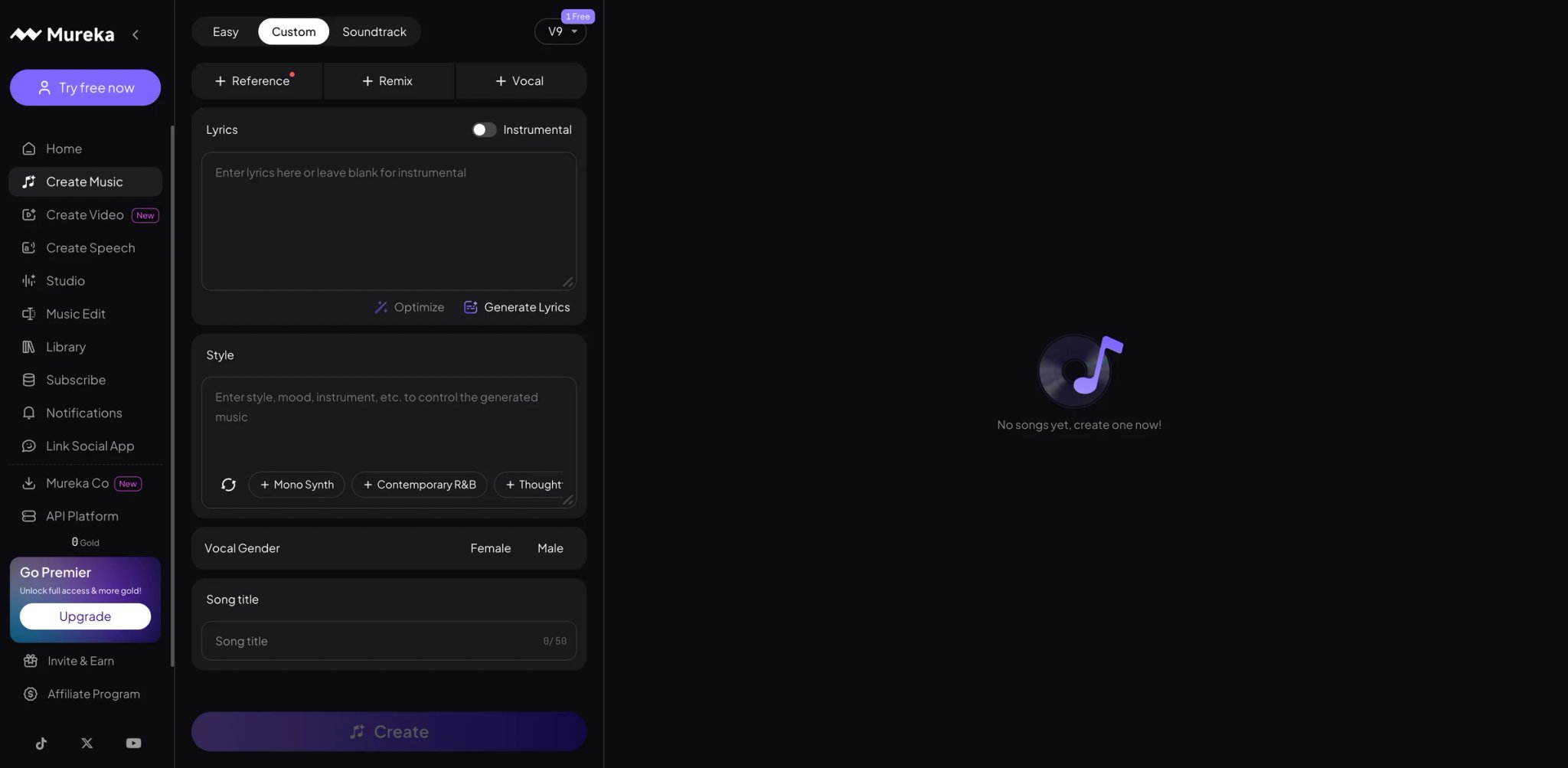
AI Pro–style control at a Suno-class price: Mureka's pitch is for the Udio user who didn't just want a song, they wanted the parts — stems, WAV, a reference vocal, the ability to actually finish the track somewhere else. It's the closest thing here to "Udio's output quality, but the file comes with you and breaks apart."
What Mureka solves vs Udio:
- Stems and WAV, not just a stream. The Pro plan exports WAV, instrumentals, and stems — the production-grade export Udio removed entirely, which directly answers the workflow-lock-in reason, not just the download one.
- Vocal and reference control. Reference audio, "humming as singer," and voice-cloning-style controls give the directed-vocal workflow Udio users miss, with more steering than a pure prompt box.
- Commercial license on plan. Plans advertise a commercial license, so the "can I sell this" question has a plan-level answer instead of a disputed IP chain.
Pricing vs Udio: Basic around $8/month billed annually; Pro around $24/month billed annually, where stems/WAV/advanced editing live. The Pro tier is the relevant comparison — it's roughly Udio-subscription money for output you can take into a DAW, which is the exact gap Udio created.
Limitations: It's less of a household name than Suno, so community troubleshooting and shared prompt knowledge are thinner — you're more on your own when a generation goes wrong. Advanced control also means a steeper first hour than one-shot prompt tools. As with all of these, "AI output copyrightability" varies by jurisdiction regardless of the plan license.
Mureka is the pick for the Udio user whose actual complaint, underneath "I can't download," was "I could never finish a track here anyway." A stream you can't open in a DAW isn't a production tool even when downloads work — and Udio users who'd hit that ceiling before the lockdown often want more than Suno's one-shot song: they want the stems to mix, the WAV to master, the reference vocal to direct performance. Mureka is built around that finish-it-elsewhere assumption, which makes it the natural home for the half of the exodus that was producers, not prompt-and-post creators. The tradeoff is the same one every control-rich tool carries: the first session is slower because there are knobs, and you only get the payoff if you actually use them — a creator who just wants a finished song fast is overpaying in complexity for control they won't touch.
Best for: Udio users who needed stems and WAV for a real production pipeline and want vocal control, not just a finished stream. Not the right fit if you want the largest community and template ecosystem on day one. Get started with Mureka
ElevenLabs Music
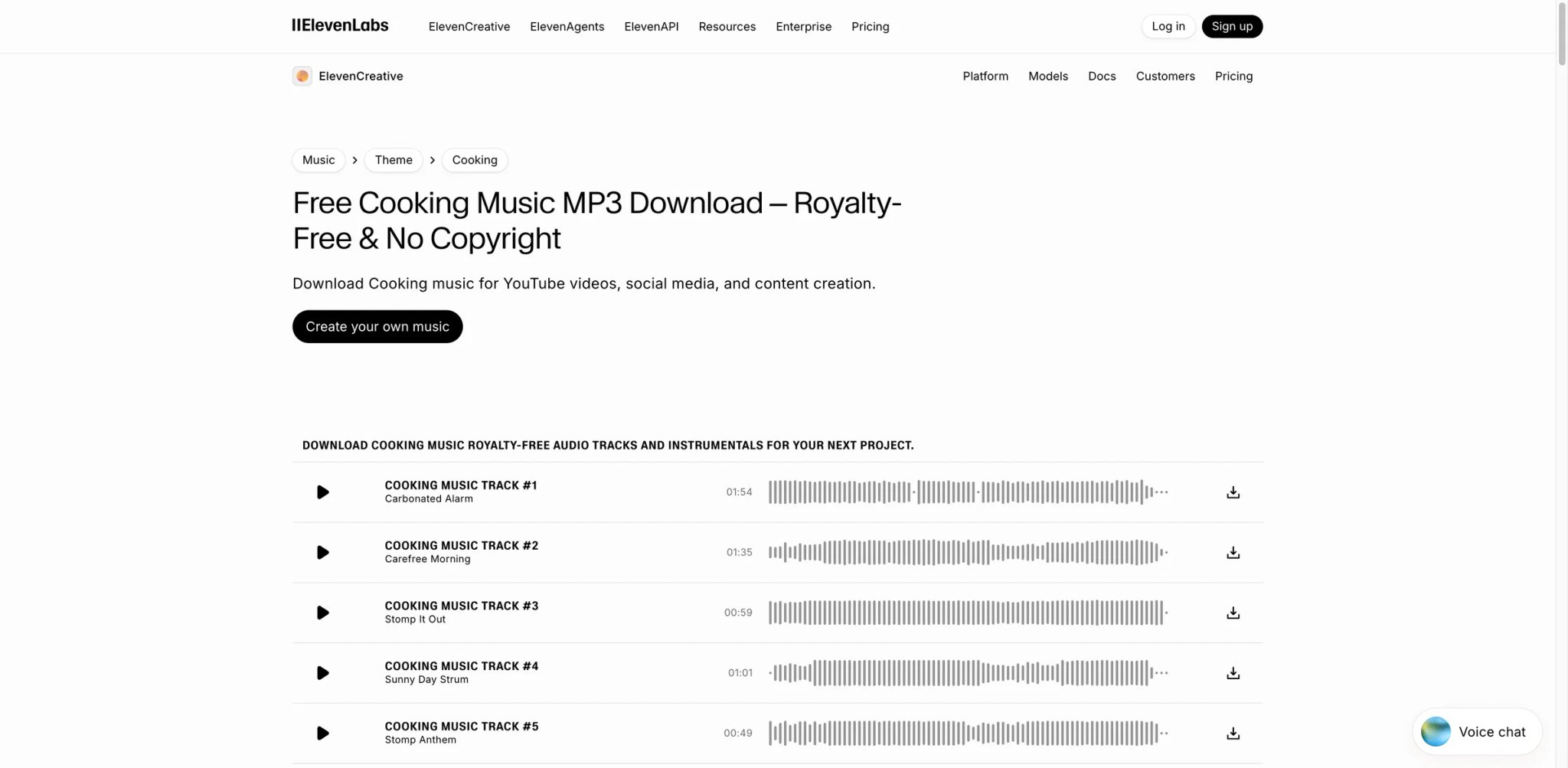
Before the features, the reason to look here: ElevenLabs Music comes from an audio-AI company that has spent its reputation on a rights-and-safety posture, and it leans into that explicitly. For a creator whose Udio exit was driven by the trust-and-rights cluster rather than the download button, that positioning is the product.
What ElevenLabs Music solves vs Udio:
- Rights-safety as the headline, not a footnote. The whole pitch is licensed, controllable output from a vendor whose business depends on enterprises trusting its audio rights — the opposite of Udio's "we'll fingerprint your output" turn.
- Part of a real audio stack. It sits inside the broader ElevenLabs platform (voice, sound), so music slots into an existing rights-cleared production workflow rather than a walled app.
- Commercial license on paid plans. Paid tiers grant a commercial license, with the carve-outs stated up front rather than discovered later.
Pricing vs Udio: Free tier has limited generation, no downloads, no commercial use, and attribution is required when shared non-commercially. Starter is listed at $5/month and allows limited commercial media use with a 30-minute monthly download cap, but streaming rights start at Creator; Pro and above add high-quality downloads. Cheaper entry than Udio for commercially-usable output, with the rights story as the value — read the tier limits, because the cheapest plan does not cover everything.
Limitations: The carve-out: the self-serve commercial license has explicit exceptions — film, TV, and large studio games typically require Enterprise. Read those before assuming a Starter plan covers every monetized project: Starter allows limited commercial media use, but streaming rights start at Creator, self-serve plans exclude film, TV, radio, and large studio games, and attribution to Eleven Music is required when distributing. Pure song-craft depth and community are also narrower than Suno's.
The strategic reason this matters: ElevenLabs sells primarily to businesses and developers who embed audio in products, which means its commercial survival depends on those customers not getting sued over generated audio. That incentive alignment is structurally different from a consumer app that can pivot its terms toward a label partner without losing its core revenue — the exact move that burned Udio users. It's not a guarantee (no AI-audio license is), but "the vendor's enterprise revenue depends on rights holding up" is a more durable assurance than "the vendor promises rights hold up." For a creator whose trauma is specifically a mid-relationship terms change, picking a tool whose business model resists that change is a rational hedge, not just a feature preference.
Best for: Creators who left over rights confidence and trust, who want a vendor whose incentives are aligned with output you can defend. Not the right fit for film/TV/large-game producers expecting self-serve coverage, or anyone wanting the deepest songwriting toolbox. Get started with ElevenLabs Music
Sonauto
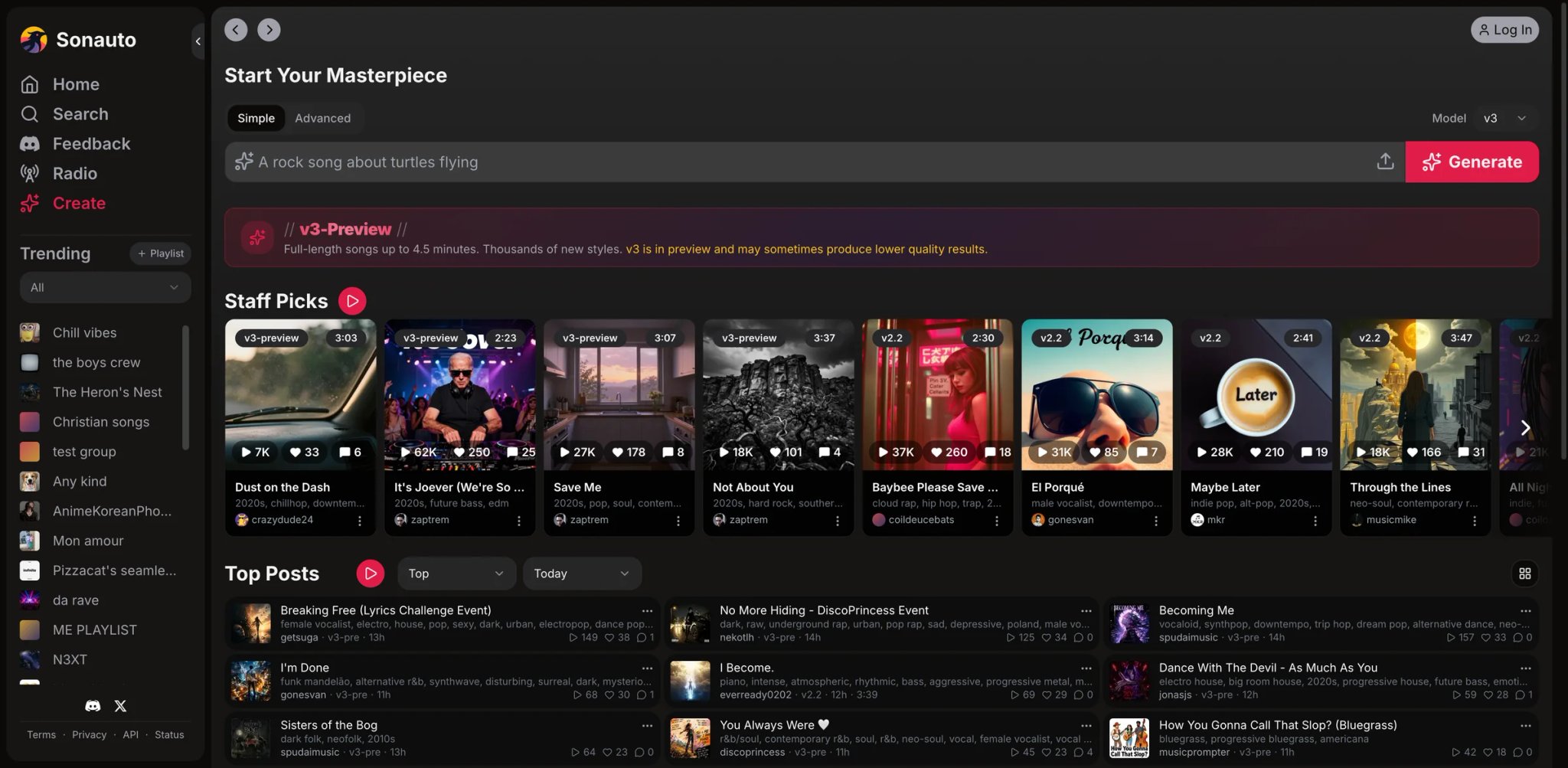
If your migration is really a question — "is there somewhere I can just make things again without a meter or a lock" — Sonauto is where a lot of Udio users went to breathe. It markets an unlimited free full-song generator, and it keeps coming up in threads from people chasing more human-sounding vocals without re-subscribing to anything.
What Sonauto solves vs Udio:
- Free and unlimited, marketed plainly. The homepage pitch is unlimited free generation — for a creator who just stopped paying "traitors and sell-outs," zero-cost experimentation is the whole appeal.
- Vocal realism is the draw. It's repeatedly cited by users specifically hunting more natural voices, which maps onto the exact thing Udio loyalists were reluctant to give up.
- No walled garden. You can get tracks out — the single hard requirement after Udio.
Pricing vs Udio: Unlimited free generation is marketed; paid pricing is not clearly published. The comparison to Udio is stark on cost, but "no clear paid tier" is itself a planning risk if you need guaranteed capacity or support.
Limitations: The ToS reality: Sonauto's terms say you own outputs to the extent permitted by law, but the platform retains a broad license and disclaims warranties about legality and copyrightability. That's more honest than Udio's silence, but it is not the same as Soundraw-style "you're cleared" — for monetized work, read it and decide with eyes open. Output consistency is also variable, as with most free generators.
The realistic way to use Sonauto post-Udio is as the sketch tool, not the release tool. It excels at the "let me hear if this idea works" loop that Udio used to own before it became a place ideas went to get trapped — generate freely, judge the vocal, and if a track is worth releasing, finalize it somewhere with a plan-backed license. Treating Sonauto as the front of a pipeline (idea → validate here → rebuild/clear elsewhere) sidesteps the ToS ambiguity entirely while keeping the thing Udio users actually missed: the freedom to try a lot of vocal ideas without a meter or a lock. Used as a release endpoint, the broad license and disclaimed warranties are a real exposure; used as a sketchpad, they're irrelevant.
Best for: Creators who want to experiment freely with realistic vocals at no cost and accept ToS ambiguity for it. Not the right fit if you need a defensible, plan-backed commercial license for client or release work. Get started with Sonauto

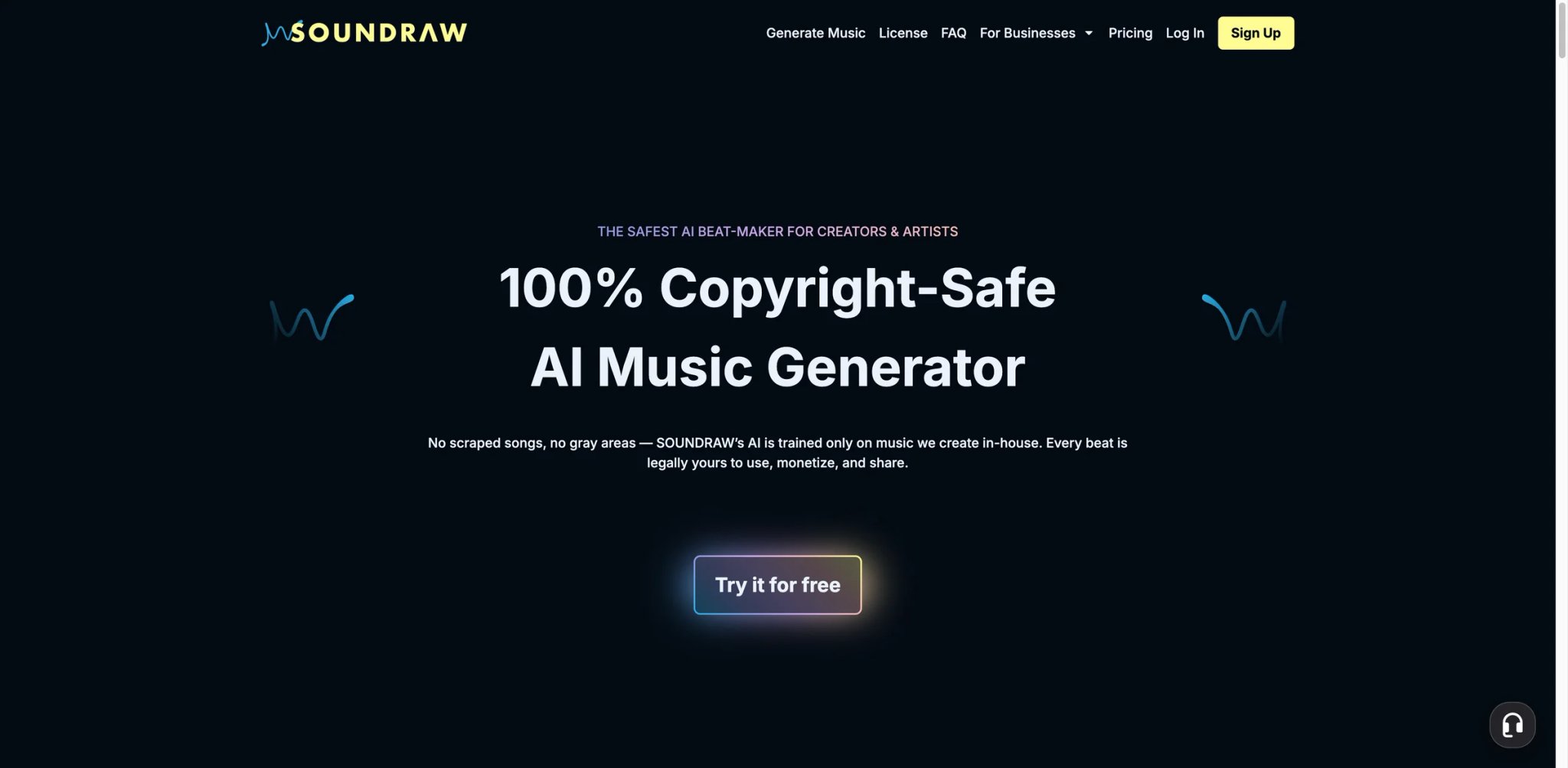
For the Udio refugee whose nightmare is a takedown or a disputed IP chain, Soundraw is the structural answer: it is built so the rights question cannot bite, by not training on the thing that creates the question.
What Soundraw solves vs Udio: Rights posture: Soundraw states its AI is trained on music produced in-house and grants a worldwide, perpetual, royalty-free license by plan; note its terms grant a license rather than full ownership, retain neighboring rights in the sound sources used in generated music, and prohibit Content ID registration and standalone resale without prior consent. That is still close to the inverse of Udio's post-UMG turn — instead of disabling export, the model is best framed as "licensed for defined uses," a plan-based license rather than "it's yours, take it." Beyond the license: it's mood/genre-driven generation with stems and clean export, optimized for predictable, usable tracks rather than surprise vocal performances.
Pricing vs Udio: Creator around $16.99/month (annual promos lower); Artist tiers roughly $29.99–$50/month. More than Suno's entry, but you're paying for commercial certainty, not just generation — for a business that can't absorb a takedown, that premium is the point.
Limitations: This is not a Udio-style "surprise me with a vocal performance" tool. It's controllable, catalog-grade background and beat music — creators who left Udio specifically for its expressive sung vocals will find Soundraw less thrilling, by design. Vocal songs are not its strength.
The clarifying question for Soundraw is what you were really doing on Udio. If you were a hobbyist chasing a great AI vocal performance, Soundraw will feel like a downgrade and you should look at Suno or Sonauto. But if you were a business — an agency, a content shop, a video team — using Udio to produce music you ship to clients, then the UMG episode wasn't a feature loss, it was a near-miss on a liability you didn't know you carried. Soundraw is the tool that retroactively shrinks that exposure: in-house-trained catalog and a perpetual worldwide plan-based license (a defined-use license, not full ownership — Content ID registration and standalone resale are restricted). You give up the thrill of a surprising vocal and buy the ability to stop worrying about training-data provenance or a surprise takedown. For a business, that trade is usually correct, and the people who resist it are usually optimizing for the wrong thing — output excitement over output you're allowed to sell.
Best for: Creators and businesses prioritizing airtight commercial safety and predictable output over expressive AI vocals. Not the right fit if you came to AI music for original sung songs rather than cleared production music. Get started with Soundraw
Producer.ai
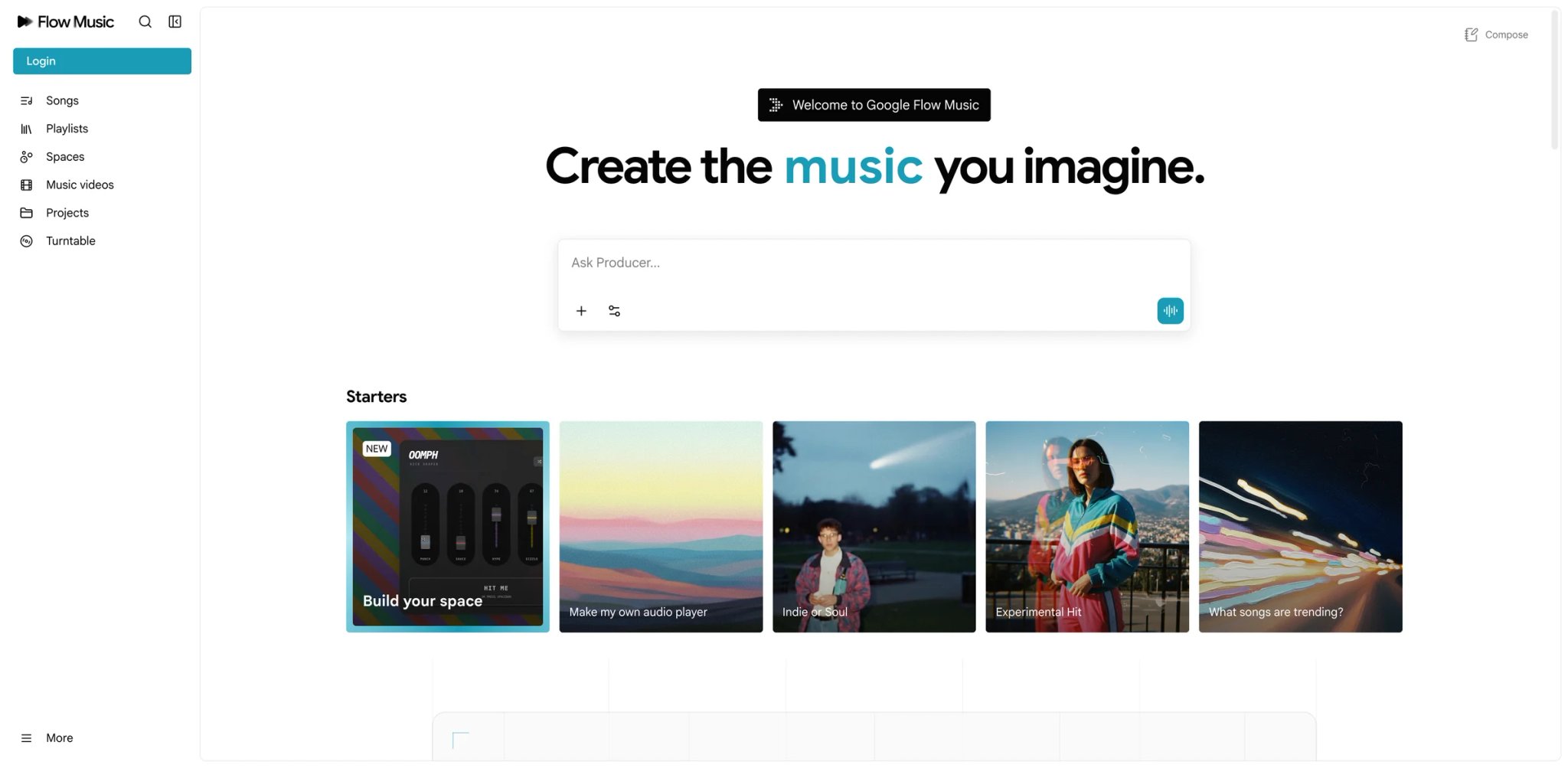
Producer.ai — the project a lot of users still call Riffusion — keeps surfacing in Udio threads for an unglamorous reason: it's cheap, low-friction, and doesn't lock you in, which is exactly the bar after a walled-garden experience. Its origin as one of the early diffusion-based music projects gives it a tinkerer's credibility that resonates with the post-Udio mood.
What Producer.ai solves vs Udio:
- Low-stakes experimentation. Free credits and modest paid tiers make it the "just let me play again without a contract" option.
- No lock-in. Tracks come out — the single non-negotiable for this audience.
- Momentum. It's an actively-discussed, evolving project rather than a frozen one, which answers the stagnation complaint.
Pricing vs Udio: Current Flow Music pricing lists Free, Starter at $6/month, Plus at $18/month, and Member at $48/month, with downloadable MP3/WAV/M4A outputs and stem downloads shown in the plan comparison; commercial and release rights still need checking before client or release use. Cheap relative to Udio, with the usual AI-music caveat that "cheap to generate" is not the same as "cleared to sell."
Limitations: Commercial and ownership terms specifically need checking before any client or release use — this is the tool where I'd least assume the license without reading it. Output polish is more experimental than Suno or Mureka; it's a sketchpad more than a finishing tool.
There's a temperamental fit worth naming: the people most loudly recommending Producer.ai in Udio threads are tinkerers, not career musicians shipping client work — and that's the right read on who it serves. If you enjoy the experimental edge of early diffusion-music tools and treat unpredictability as part of the fun, it scratches an itch the polished tools sand off. If you need a track done to spec by Friday, the same unpredictability is a liability. Match the tool to your actual relationship with the output: Producer.ai rewards play and punishes deadlines, which is the opposite of what a stressed-out Udio refugee with client obligations should reach for first.
Best for: Creators who want cheap, no-lock-in experimentation and treat output as drafts. Not the right fit for commercial releases until you've verified the current license terms in writing. Get started with Producer.ai
Musicful
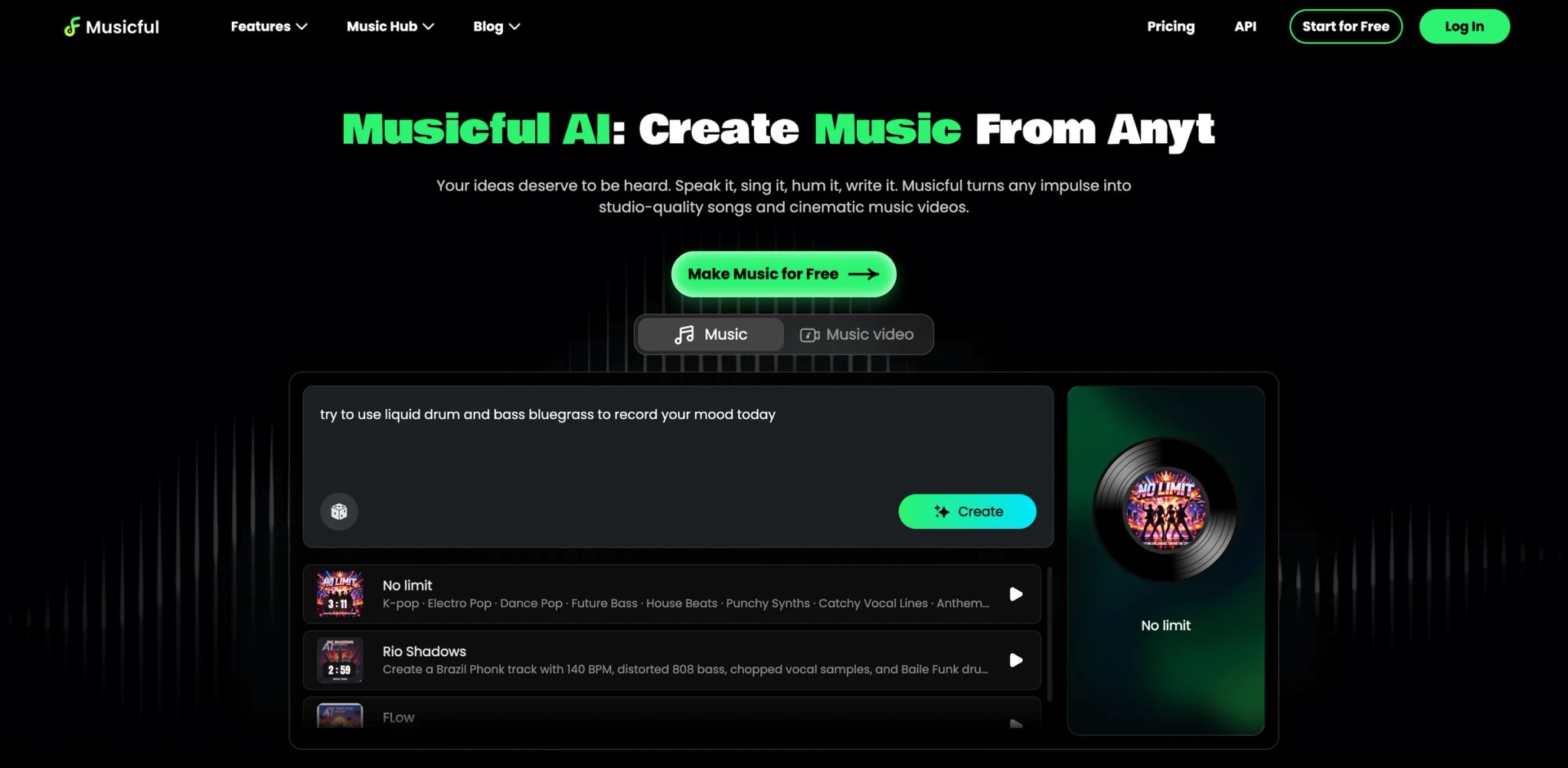
AI song, soundtrack, a music video to go with it, stems, and a voice workflow — Musicful's pitch is breadth for the creator who didn't only lose a download button at Udio, they lost a place to assemble a whole piece of content. It's positioned as more than a one-shot audio box.
What Musicful solves vs Udio:
- Song-plus-everything. Beyond audio, it covers music video and stem workflows — useful for the social/video creators who used Udio as one step in a content pipeline that Udio then severed.
- Plan-level commercial answer. The FAQ states Free/Basic are for non-commercial use while Standard/Pro allow commercial projects; note Musicful's own pages conflict on whether you get ownership or only a non-exclusive perpetual license, so confirm the current license certificate before promising full ownership — still a clearer line than Udio's disputed one.
- Export exists. Tracks and stems leave the tool, which is the entire post-Udio requirement.
Pricing vs Udio: Tiered (Basic/Standard/Pro/Lifetime); the public pricing page hides exact amounts and should be verified, but the commercial line is FAQ-stated: Standard and up for commercial use. Treat the numbers as "confirm before subscribing," the rights tier as the usable signal.
Limitations: Dynamic/hidden pricing is itself a friction and a mild trust signal — you can't fully plan cost without going through the funnel. As with every tool here, jurisdiction-level AI-copyright caveats sit on top of the plan license. Breadth can also mean less depth in pure song quality than focused tools.
Where Musicful earns its place for ex-Udio users specifically is the content-pipeline angle. A lot of people used Udio not to release singles but to score short-form video — and the UMG lockdown didn't just take their audio, it broke the whole "song + visual + post" flow they'd built. Musicful's bet is to put those steps under one roof so the workflow can't be severed by one of them disappearing. That's a real answer to the lock-in reason, with the honest tradeoff that a do-everything tool rarely matches a focused one on any single axis — its song fidelity won't beat Suno's, its video won't beat a dedicated editor's. It's the integration, not any one output, that's the pitch, and that only pays off if you genuinely need the combined flow rather than the best individual piece.
Best for: Video and social creators who need song + music video + stems in one place and want a stated commercial tier. Not the right fit if transparent upfront pricing is a hard requirement, or you want best-in-class song fidelity. Get started with Musicful

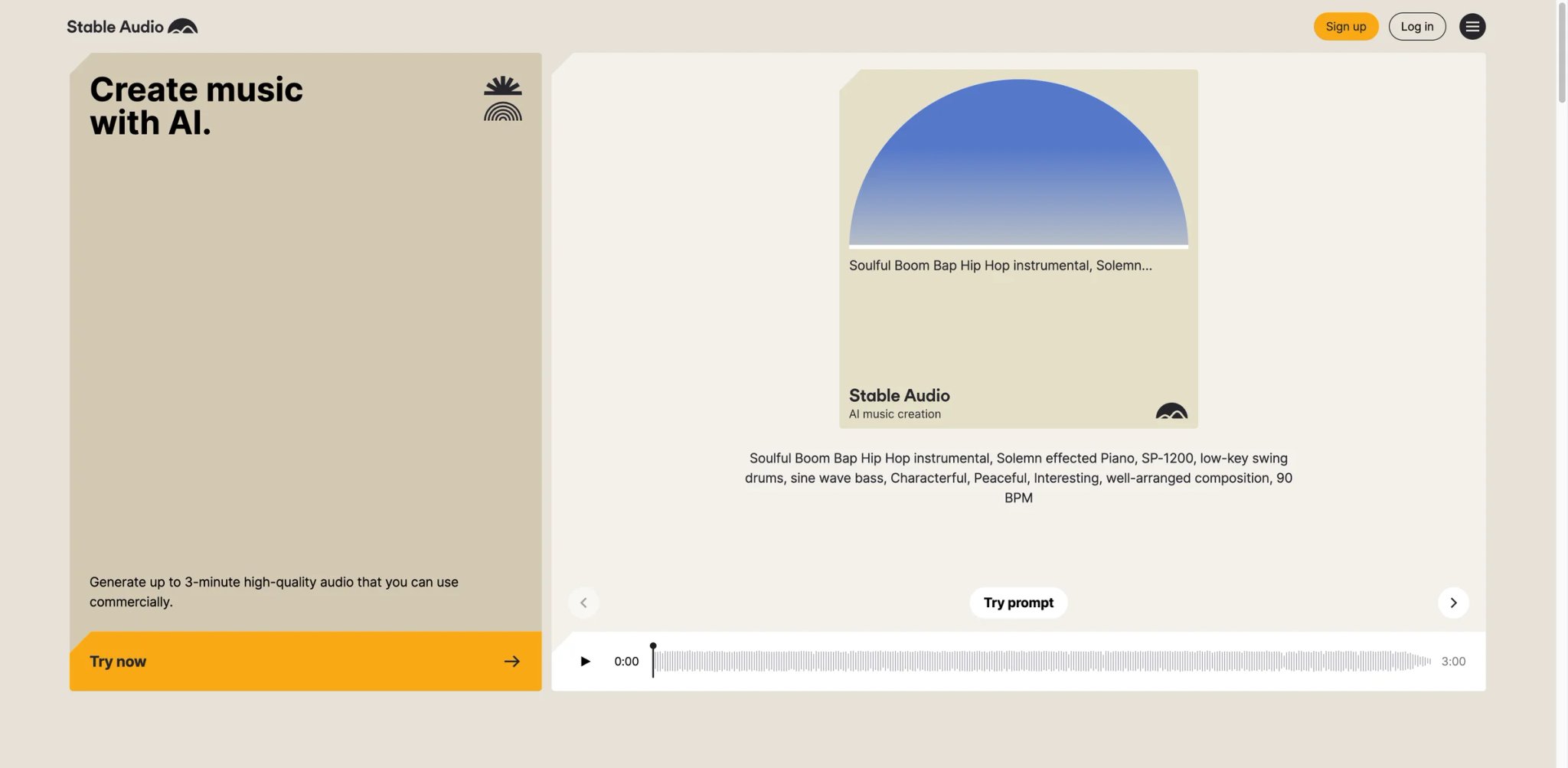
Before anything else, the thing that makes Stable Audio relevant to a Udio exit: Training-data provenance: Stable Audio's documentation says its first AudioSparx 1.0 and 2.0 models were trained on AudioSparx material and later development uses additional data-partnership deals — so the provenance is licensed/partnered-data based rather than scraped catalogs, which means the copyright-risk anxiety that drove a chunk of the Udio exodus is addressed at the data layer, not papered over with a ToS clause. That provenance is the reason to consider it over a louder song generator.
What Stable Audio solves vs Udio: The licensed-data foundation gives commercially-minded users a defensible answer to "what was this trained on" — the question Udio's UMG turn made everyone start asking. Beyond provenance, it's strong for instrumental beds, sound design, and audio assets with controllable, prompt-driven generation, and it integrates into a broader Stability ecosystem rather than a closed app.
Pricing vs Udio: Free tier with a limited number of tracks per month (around 10); paid Creator/Studio tiers are required for commercial use, with Enterprise for larger organizations — verify the current tier prices, which shift. You pay for commercial clearance on a licensed/partnered-data base — for asset work that has to survive scrutiny, that's the value, not generation volume.
Limitations: This is not a Udio replacement for sung, lyric-driven songs — it's strongest on instrumental and audio assets. Creators who left Udio specifically for vocal tracks will find it the wrong shape, however good the provenance story is. Free-tier output is capped and non-commercial.
Position Stable Audio correctly and it's not competing with Suno at all — it's the answer to a different question the Udio episode forced people to ask: "what was my music tool trained on, and can I defend that to whoever pays me." For sung songs that question stays open across most of this list; for instrumental beds, sound design, and audio assets, Stable Audio's licensed-data foundation is the cleanest answer available. The mistake would be expecting it to replace Udio's vocal songs — it won't, and reviews that grade it on that axis are testing the wrong thing. Graded on "provenance-defensible audio assets," it's near the top, and that's the slice of the Udio exodus it actually serves: the asset and scoring work, not the singing.
Best for: Commercially-cautious creators who need instrumental/audio assets with a defensible training-data story. Not the right fit if you need full sung songs with lyrics. Get started with Stable Audio
MiniMax Music
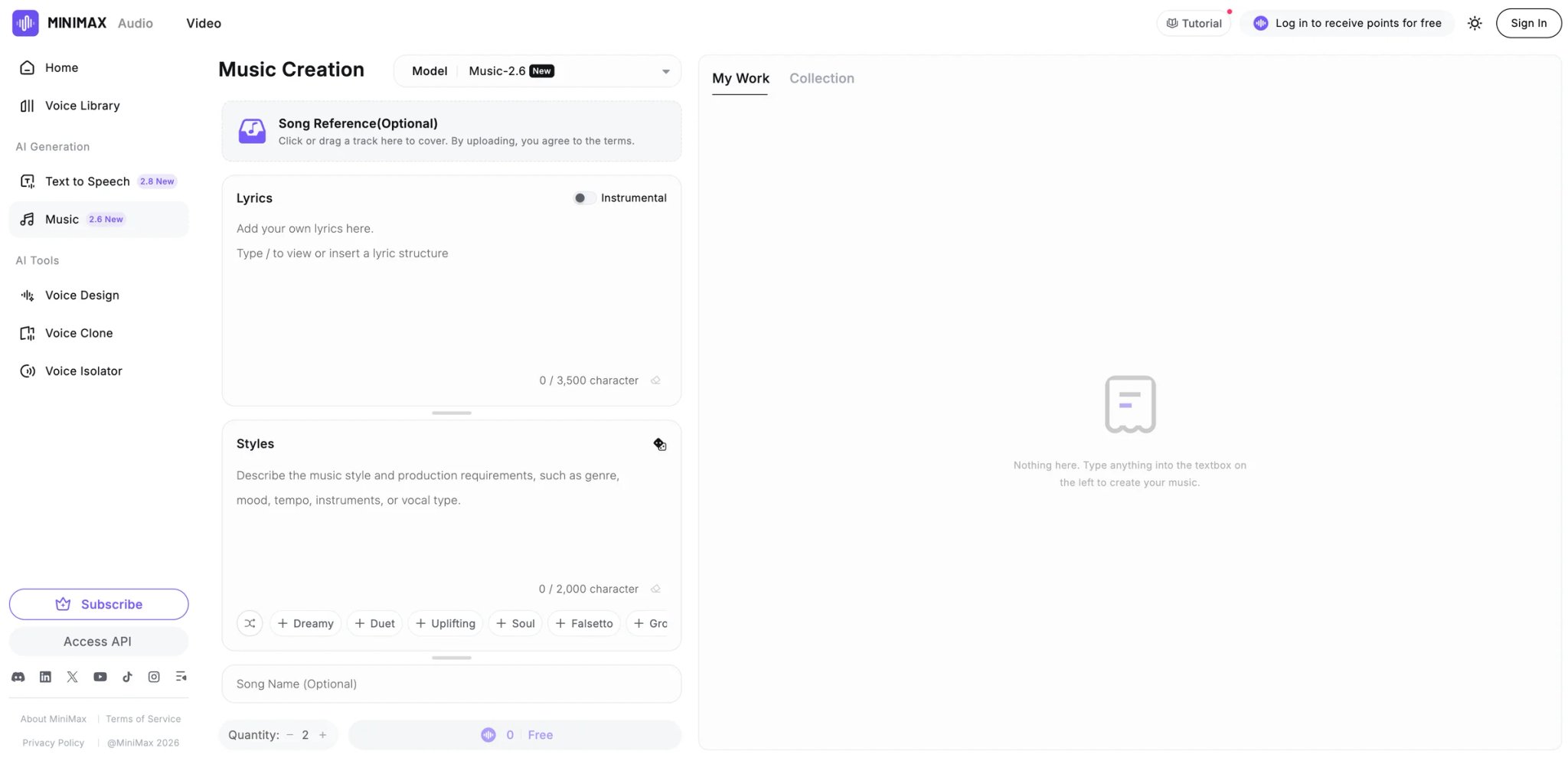
Music 2.0, expressive vocals, a "singing producer" framing: MiniMax Music is the newer-model entry that answers the stagnation complaint by being, simply, new. For Udio users whose loyalty was the vocal quality and whose frustration was "stuck on version 1.5," a model that is actively pushing on expressive voice is the relevant pitch.
What MiniMax Music solves vs Udio:
- Forward motion. It's a recent model line with active development — the direct antidote to "more press releases than updates."
- Expressive vocals. The positioning centers natural, expressive singing, targeting the exact strength Udio users were reluctant to give up.
- Export-friendly. Output leaves the platform, clearing the post-Udio bar.
Pricing vs Udio: MiniMax Audio currently lists consumer subscription tiers alongside early-access Music 2.6: Free, Starter $5, Creator $17, Standard $38, and Pro $150 as limited-time discounted prices. Verify the live subscribe page and music-specific terms before committing, especially for commercial releases. The model momentum is the reason to look; the terms are the reason to check carefully first.
Limitations: Commercial rights and output ownership specifically need verification before you publish anything monetized — a strong model with unclear commercial terms is exactly the trap Udio taught creators to avoid. Consumer UX and community are also less established than Suno's.
The reason to track MiniMax even if you don't adopt it today: the Udio stagnation complaint is really a bet about momentum, and momentum is where MiniMax is strong and Udio is not. A model line that's actively iterating on expressive vocals is, over a year, more likely to close the gap with Udio's vocal quality than a frozen "version 1.5" is to defend it. The risk is the inverse of the upside — fast-moving new entrants often have the least-settled commercial terms and pricing, exactly the ambiguity Udio taught creators to distrust. The sane posture is to keep MiniMax in the rotation for sketching and quality benchmarking now, and revisit it for paid releases once its commercial terms and consumer pricing are confirmed in writing rather than inferred.
Best for: Creators chasing the newest expressive-vocal output who will verify commercial terms before release. Not the right fit if you need confirmed pricing and a settled commercial license today. Get started with MiniMax Music

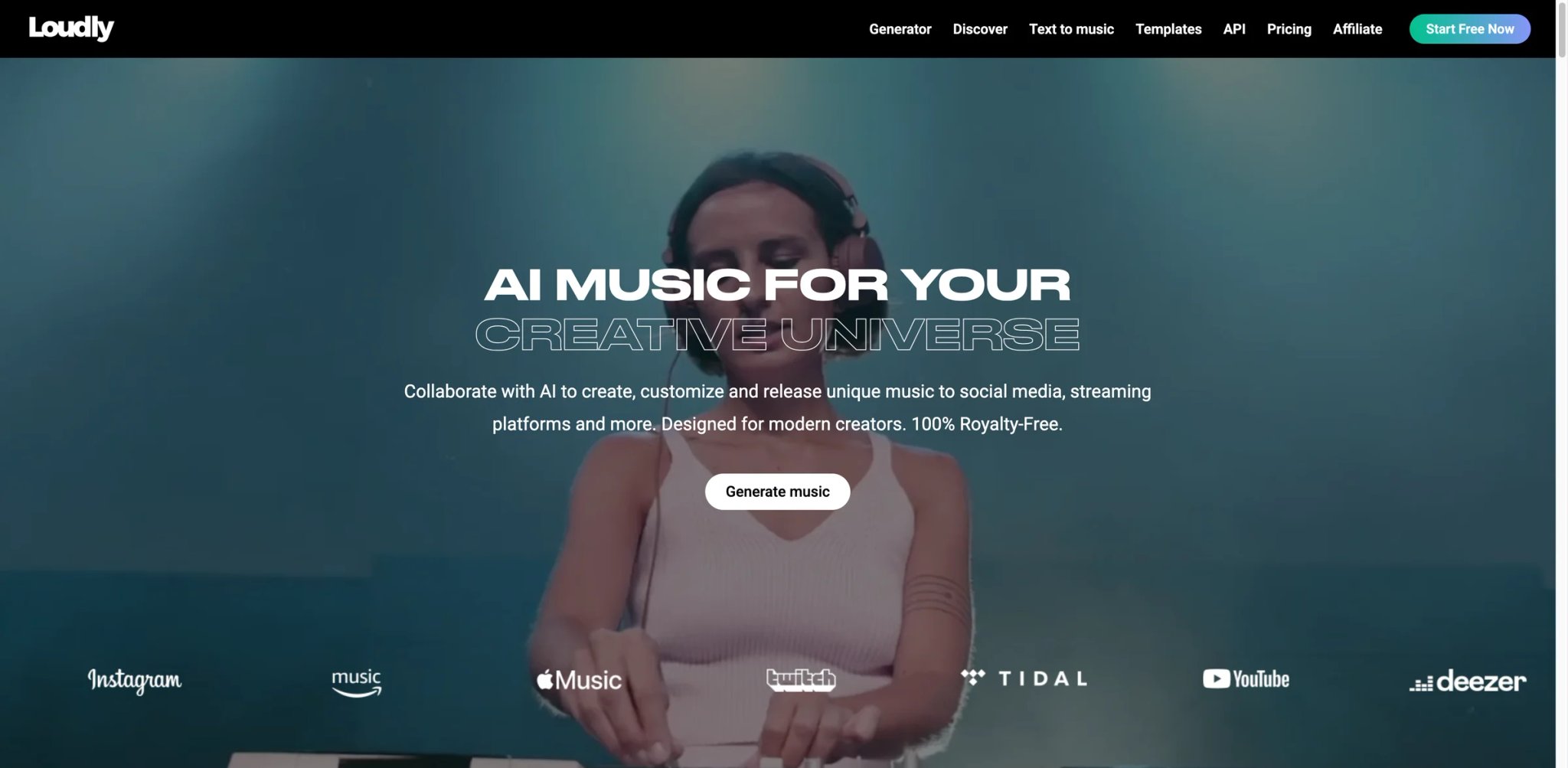
The comparative read on Loudly: it isn't trying to out-sing Udio, it's trying to be the cleared-track button for creators who used Udio to score videos and got walled out of their own library. For social, ads, and short-form, "royalty-free and it exports" beats "expressive but trapped."
What Loudly solves vs Udio:
- Royalty-free, creator-shaped. A proprietary-dataset, royalty-free posture aimed at content creators who need a track cleared for a video now, not a songwriting session.
- Export and easy use. Tracks come out and drop into a video workflow — the lock-in reason resolved for the specific use case Udio users had.
- Lower stakes. It's a utility, not a studio — appropriate when music is one layer of a video, not the deliverable.
Pricing vs Udio: Free, Personal, and Pro tiers exist; exact pricing should be verified. The relevant caveat is in the license, not the price (below).
Limitations: The license grants personal and commercial use while a paid subscription is active, and paid-media campaigns are capped at $100K per year unless Loudly agrees otherwise. Organic social is the low-friction use case; larger ad buys need a terms review, and rights are tied to keeping the subscription active. It's also not a tool for original sung songs; depth of composition is shallow by design.
The honest framing against Suno or Mureka: Loudly will lose every songwriting comparison and win the one that matters for its actual user — the creator who needs a cleared 30-second bed under a Reel today and does not care whether it has a verse-chorus structure. Udio was overkill for that job even before the lockdown; after it, using a walled, expressive song generator to make background music is the wrong tool twice over. Loudly's value is being correctly scoped to the task, with the single watch-item being the paid-media threshold in its license — organic social is fine, but a track riding a six-figure ad spend needs the terms read first. Right-sizing the tool to the job is the whole point here, and for a lot of ex-Udio video creators that job was never "write me a song."
Best for: Video and social creators who need cleared background tracks that export, not expressive original songs. Not the right fit for songwriting or for large paid-media campaigns without checking the license caps. Get started with Loudly
Honorable Mentions
These show up in Udio migration threads but sit in adjacent categories — the right answer for one specific need rather than a full Udio replacement.
Beatoven.ai is built for video, podcast, game, and background scoring rather than sung songs, with an exclusive license and a publicly stated move toward a fully licensed model with artist payouts. Creator runs about $10/month (or ~$100/year), Visionary ~$20/month. Reach for it when the deliverable is mood music under content, not a track. Beatoven.ai
AIVA is a cinematic and instrumental composer for creators moving from prompt-songs to structured composition. Free (outputs owned by AIVA, non-monetizable), Standard ~€11/month billed annually, Pro ~€33/month where copyright is owned by you. The Pro ownership line matters if you score for media. AIVA
Lemonaide is a producer-oriented melody/MIDI/loop assistant, not a complete Udio replacement — useful if leaving Udio means going back to producing in a DAW. Around $9.99/month for 150 credits; royalty-free under 1M streams, with clearance/splits above that threshold. Lemonaide
Splice is the destination for creators whose real migration is "back to samples and a DAW." Sounds+ ~$12.99/month, Creator ~$19.99/month after a promo first month. It's royalty-free sample licensing — a different model from AI-output ownership, and a clean one. Splice
LANDR isn't a generator at all — it's mastering and distribution for getting finished tracks released. Distribution from ~$24/year, Studio from ~$8.25/month. It belongs here because "leaving Udio" for many creators ends at "now how do I actually release this," and LANDR is that step. LANDR
Migrating from Udio — A Practical Guide
Data and Account Migration
Most migration guides describe moving your work to a new tool. This one mostly can't, and pretending otherwise would set you up to lose things. This is the part Udio made uniquely painful, so be clear-eyed about it. There is no export. New creations cannot be downloaded, and the change retroactively trapped songs made before October 2025 — so "migrating your library" mostly is not possible in the normal sense. Plan around three realities. First, anything you downloaded before the change is what you have; treat that local archive as your only Udio output and back it up now, because access to re-download is gone. Second, for tracks still trapped in Udio, migration means re-creation, not transfer: take the prompt, lyrics, and style notes you remember (or can reconstruct by listening in-app) and rebuild the track in the new tool — Suno and Mureka are closest in mental model, so re-prompting there is fastest. Third, account-closure timing: keep the Udio subscription only as long as you still need in-app listening reference for tracks you're rebuilding; once they're re-created and exported elsewhere, there is no retention reason, because there is nothing to export later. If you have older Udio downloads you intend to release, services like LANDR (distribution/mastering) and Splice (if you're rebuilding around samples) are the realistic onward path — Udio itself is a dead end for new export.
One more thing worth doing before you fully walk away: inventory, in writing, which trapped tracks actually matter. Most people have a long tail of experiments they'll never miss and a short list of three-to-ten tracks that represent real work. Migration effort should be spent entirely on that short list — reconstruct those prompts and lyrics carefully and rebuild them well in Suno or Mureka, rather than thinly re-creating everything. Trying to "save the whole library" from a tool that won't release it is wasted motion; deliberately rescuing the handful that count, and accepting the rest as gone, is the move that actually gets you out with your meaningful work intact. Document the prompt, lyrics, style tags, and any structural notes for each keeper now, while you still have in-app listening access to refresh your memory — that document, not the audio, is what you migrate.
Learning Curve by Alternative
- Near-zero: Suno, Sonauto, Loudly — prompt-to-song or prompt-to-track; a Udio user is productive the same hour.
- Medium: Mureka, Musicful, Soundraw, ElevenLabs Music, Beatoven.ai, AIVA — familiar concepts plus stems/controls/license tiers to learn; a weekend to fluency.
- High: Stable Audio, Producer.ai, MiniMax Music, Splice, LANDR, Lemonaide — these reward technical or DAW-oriented users, or shift you into a sample/distribution pipeline rather than one-shot songs.
Commercial-Rights Brackets vs Udio
- Cleared by license, by design: Soundraw (in-house-trained catalog, perpetual plan-based license — defined uses, not full ownership), AIVA Pro (copyright owned by you). The strongest answer to the rights reason.
- Commercial on paid plans, with carve-outs or plan-specific limits: Suno, Mureka, ElevenLabs Music (read streaming and film/TV/radio/large-game exceptions), Musicful Standard+ (verify whether current terms grant ownership or a non-exclusive perpetual license).
- Provenance-based: Stable Audio (licensed training data; paid required for commercial).
- Verify before relying: Producer.ai, MiniMax Music, Sonauto (you own outputs but the ToS license is broad), Loudly (paid-media caps). Strong-looking but unconfirmed — confirm in writing for any release.
Best Udio Alternatives by Use Case
If Your Reason Is "I need downloadable songs for YouTube, clients, or release"
The core post-UMG wound, and the one that sends the most traffic to this page. Suno is the fastest swap that downloads and licenses on paid plans; Mureka adds WAV/stems for real production hand-off; Musicful covers song-plus-video for content workflows; Soundraw if you also want the rights airtight. All four do the one thing Udio stopped doing — let the file leave. If you only test one, make it Suno on a track you actually care about: it's the lowest-friction proof that exportable AI music is still available to you, and confirming that quickly is often what an anxious ex-Udio user needs before they can think clearly about the finer tradeoffs between the rest.
If Your Reason Is "I want clearer commercial rights"
Soundraw (perpetual plan-based license on an in-house-trained catalog) and Stable Audio (licensed/partnered training data) are the structural answers; Beatoven.ai and AIVA Pro give stated ownership for media work; ElevenLabs Music if you want a rights-first vendor and can live with its film/TV carve-outs.
If Your Reason Is "I want faster full-song generation"
Suno for the broadest, fastest one-shot songs; Musicful for song-plus-assets speed; MiniMax Music for the newest expressive-vocal model; Sonauto if free and fast outranks polish.
If Your Reason Is "I miss Udio's vocal realism but hate the walled garden"
This is the loyalist's dilemma — the people who didn't want to leave Udio at all, who stayed for the voice and were forced out by policy. Sonauto is the most-cited "more human voices, no lock-in" pick and the right place to start the search, free; ElevenLabs Music and Mureka offer controlled vocals with a real license for when a candidate is good enough to release; Suno is the safe default if realism plus export together matter most and you want one tool, not a pipeline. The honest expectation-setting: no single tool is unanimously "Udio-level vocals" — opinion is split even among people who left — so the loyalist's realistic path is to A/B the same lyric across two or three of these on real prompts and accept the best available rather than wait for a perfect replacement that the market hasn't agreed exists.
If Your Reason Is "I need stems, WAV, or DAW-friendly output"
Mureka (Pro: WAV, stems, instrumentals) leads; Soundraw and Beatoven.ai export clean stems for scoring; AIVA for structured composition; Lemonaide if you're back to MIDI/loops in a DAW. Verify the stem/WAV export sits on the tier you'll actually pay for, not just an enterprise plan — this is the most common place the export promise quietly narrows, and it's the exact bait-and-switch dynamic (capability present, then gated or removed) that the Udio episode trained everyone to check for before committing budget.
If Your Reason Is "I just want free or cheap experimentation"
Suno free tier (non-commercial), Sonauto (marketed unlimited free), Producer.ai (free credits, cheap paid), MiniMax Music if you'll verify terms later. Play first, license before you publish — the one discipline that keeps cheap experimentation from turning into an expensive rights problem is treating every free-tier output as non-commercial until a paid plan explicitly says otherwise, no matter how good it sounds. The Udio refugees who get burned twice are usually the ones who skipped that step the first time too.
If Your Reason Is "I make music for video, ads, podcasts, or games"
Beatoven.ai and Soundraw are built for scored content; Stable Audio for instrumental beds and sound design; Loudly for fast royalty-free social tracks (mind the paid-media caps). The selection logic here is duration and role, not song quality: most of this work is sub-60-second music sitting under dialogue or visuals, where "cleared, on-brief, exports now" beats "a great song." Using an expressive song generator for it — what many people did with Udio — was always a mismatch; the lockdown just made the better-scoped tools the obvious move. Pick by how the music is used in the final cut, and the right tool here is rarely the one that sings best.
If Your Reason Is "I'm worried about training-data and copyright risk"
Soundraw (in-house catalog), Stable Audio (licensed AudioSparx data), Beatoven.ai (fully-licensed model direction), AIVA, and ElevenLabs Music form the defensible-provenance tier — the direct answer to the anxiety the UMG turn created. If your work is reviewed by a client's legal team, a platform's rights process, or an ad network, this is the tier to start in regardless of which one sings best, because the failure mode here isn't a worse track — it's a pulled track, a chargeback, or a relationship lost over an asset you couldn't stand behind. Pick the most provenance-defensible tool that can do your job adequately, not the most expressive tool that leaves the provenance question open; the Udio episode was a cheap lesson in why that ordering matters.
How to Choose the Right Udio Alternative
- Name which Udio wound you're actually treating. "I left Udio" isn't a spec. Export? Rights confidence? Trust? Stagnation? Workflow? Pick the one that made you leave and choose the tool that targets it — Suno for export, Soundraw for rights, Mureka for workflow; our best AI music generators roundup compares the song quality head-to-head once you've narrowed by reason. Solving the wrong wound is how you migrate twice.
- Test the free tier on a real track before paying. Suno, Sonauto, and Stable Audio all let you generate at $0. Re-create one song that actually matters to you and judge the output on your material, not a demo — vocal realism and mix consistency vary far more on real prompts than on showcases.
- Read the commercial license before you rely on it — every time. Udio's lesson is that platform terms change and "today" is not "forever." For Producer.ai, MiniMax, Sonauto, and Loudly especially, confirm commercial use and any media/stream caps in writing before a release or client deliverable.
- Export a finished track and run it through your real pipeline. The whole point of leaving is that output must travel. Before committing, take a WAV/stems out of the new tool into your DAW, distributor, or video editor — if the file moves cleanly, the migration is real; if it doesn't, you've found another walled garden early. Do this on the paid tier during a trial or first billing cycle, not just the free tier, because export and stem rights frequently differ between tiers and the gap is exactly where the next unpleasant surprise hides. The Udio lesson generalizes: never assume the file is yours until you've actually moved it somewhere Udio-class policy changes can't reach.
Frequently Asked Questions
What is the best free alternative to Udio?
Is Suno better than Udio in 2026?
Can I still download songs from Udio after the UMG partnership?
Which Udio alternative has the clearest commercial rights?
Which tool is closest to Udio's realistic vocals?
Are AI-generated songs safe to upload to Spotify or YouTube?
What should I do with old Udio tracks I downloaded before the change?
Will Udio reverse the download change?
Should I use a full-song generator or a DAW/sample workflow instead?
Get ToolWorthy Weekly
New AI tools, practical guides, and selected AI signals in one weekly brief.
Related Posts
- 10 Best Suno Alternatives 2026 — After v5.5 & Label Deals
10 Suno alternatives tested May 2026 — Udio, Stable Audio, ElevenLabs Music, AIVA and royalty-safe picks. Real pricing, v5.5 fallout, commercial-use clarity.
- Best AI Music Generators 2026 - 10 Tools Tested
Tested 10 AI music generators for quality and licensing. Compare Suno, Udio, and more—with pricing, features, and commercial rights.
For AI tool founders
Built a tool that belongs in this decision set?
Request an editorial evaluation for possible inclusion in ToolWorthy.
Submit your tool for reviewPaid submission does not guarantee a ranking, recommendation, inclusion, or editorial outcome.