
11 Best n8n Alternatives 2026 — Tested After the SAP Deal
SAP's May 2026 investment doubled n8n's valuation — and self-hosters are rechecking the math. 11 alternatives, from Activepieces to Node-RED, by cost and license.
On this page
On May 12, 2026, Bloomberg reported that SAP had invested in n8n at a $5.2 billion valuation — roughly double the $2.5B figure attached to the company's $180M Series C just seven months earlier. n8n hasn't changed the license or the pricing page in response. But the people running it in production did the same thing you do when a tool you depend on raises at a number that big: they opened a calculator. As one cloud engineer put it on r/n8n that week, "wouldn't be surprised if the free community edition disappears." Nothing has disappeared. The unease is about trajectory, not a specific change.
This guide is for the people doing that math. The eleven alternatives below fall into three groups. Direct managed swaps — Zapier, Make — for people who want the n8n model without the server. Same-paradigm self-hosted options — Activepieces, Node-RED, Automatisch, Huginn — for people who like n8n's flexibility but want different ownership terms. And paradigm shifts — Pipedream, Windmill, Workato — for teams whose real question is whether a visual canvas was ever the right tool for what they built. No scoring rubric was harmed making this article; these are pulled from the threads where people actually leave, not a feature spreadsheet.
| Tool | Best For |
|---|---|
| Activepieces | Closest open-source-friendly n8n swap |
| Make | Visual builder with predictable small-team pricing |
| Zapier | Largest managed connector catalog, zero ops |
| Node-RED | Mature flow-based automation for technical owners |
| Pipedream | Developer workflows with serverless code steps |
| Windmill | Script-and-workflow platform for engineering teams |
| Automatisch | Simple self-hosted Zapier-style tool |
| Workato | Enterprise iPaaS with governance and support |
| Huginn | Hacker-friendly self-hosted programmable agents |
| Microsoft Power Automate | Automation inside the Microsoft 365 ecosystem |
Why People Are Leaving n8n in 2026
These seven reasons map to where the migration conversation actually happens — community forum threads, r/n8n, r/nocode, Hacker News. They are genuinely different problems, and the reason most "n8n vs X" posts are useless is that they bundle a pricing complaint, a license complaint, and a complexity complaint into one vague "n8n got worse." It didn't get worse. Different people are hitting different walls.
1. Execution limits and AI-node costs are hard to predict. The most consistent complaint isn't that n8n is expensive in absolute terms — plenty of teams would happily pay more for the capability. It's that you cannot forecast the bill, and an automation platform whose entire promise is removing operational surprise should not generate invoice surprise. n8n Cloud meters workflow executions rather than individual steps, but AI agent workflows can still make total cost harder to forecast because model-provider and token spend and AI Workflow Builder credits sit outside the simple execution-count mental model. "Right now it feels like the limit is reached too quickly" — community.n8n.io, April 2026. A separate long-running thread specifically flags "hidden costs regarding AI agents or AI nodes" (community.n8n.io, December 2025), and the pricing-change discussion from mid-2025 is still cited by people who felt the meter moved under them. The pattern across all of it is the same: not "too much money," but "I can't put a number in next quarter's budget."
2. The SAP deal makes "where is this going" a fair question. This is the fresh-news angle, and it is the specific reason search interest in this query moved in May 2026. The Bloomberg report on May 12, 2026 put the valuation at $5.2B, "doubling the startup's valuation," on top of the $180M Series C and $2.5B mark from October 2025. Enterprise investors do not underwrite a 2x markup in seven months to keep a generous, unmonetized, self-hostable free tier untouched indefinitely — that is simply not how the incentive math works after a raise of that size and that investor profile. To be precise about it: no one has announced the community edition is changing, and treating the SAP news as a fire alarm would be wrong. But for an agency that built a service business on self-hosted n8n, "the company just doubled in value on strategic enterprise money" is a legitimate planning input. The rational response isn't panic; it's making sure your runtime isn't something a future board decision can reprice for you.
3. The Sustainable Use License is a landmine in client work. This is separate from price and separate from the SAP news, and it's the one most likely to bite quietly. n8n's Sustainable Use License restricts use to internal business purposes; when you host n8n for customers, white-label it, or sell a product, service, or module whose value derives substantially from n8n functionality, you have crossed into territory that needs commercial terms. The cost here is not the dollar figure — it's the ambiguity about where the line sits and what it costs to cross it. One Hacker News commenter described being quoted "$50k for a commercial license" (news.ycombinator.com, mid-2025). An agency thread on the n8n forum concluded flatly that the "Community Edition is not an option (license + feature limitations)" for their business model (community.n8n.io, January 2026), and similar "can I sell this workflow" questions recur on the forum without a clean public answer. For a freelancer or agency, an automation tool you can't confidently build client work on isn't cheaper than the alternatives — it's a liability priced at "we'll tell you in a sales call."
4. Self-hosting turns automation into a DevOps job. n8n's self-hosted flexibility is real and genuinely valuable — and it is paid for in your time, indefinitely, whether or not you wanted that job. "Traded SaaS simplicity for DevOps responsibilities" — r/nocode, March 2026, which is the cleanest one-line summary of the entire cluster. Even the people defending self-hosted n8n concede the overhead rather than denying it: a careful year-long cost breakdown on the forum landed at "maybe 1-2hrs/month on server stuff" in steady state — which is manageable, and also the optimistic case, before a version upgrade breaks a node, a database migration needs attention, or a dependency forces an unplanned maintenance window. The complaint isn't that the work is huge. It's that "automation tool" and "thing I have to operate forever" turned out to be the same purchase.
5. The learning curve assumes you already speak API. For non-technical users, n8n's depth is the wall, and it's the wall in exactly the place a marketing or ops hire can't climb. "The learning curve is quite steep" — r/n8n, September 2025. A detailed user review put the mechanism more precisely: the tool "assumes you understand APIs, logic flows" (r/n8n, March 2026), and complete beginners consistently report being "overwhelmed by how many nodes there are" (r/nocode, March 2026) before they've built anything. The trap is that n8n is often sold to non-developers as "Zapier with more power," and the more-power part is precisely the part that requires understanding HTTP, authentication, JSON shape, and expression syntax. For the person who wanted a slightly more capable Zapier, that's not a learning curve — it's a different job description.
6. Self-hosted security is your problem, not theirs. If you run it yourself, the patch treadmill is yours, including the parts that make the news. Security coverage through early 2026 noted a large population of internet-exposed instances, and n8n itself issued advisories and upgrade instructions specifically to make sure "self-hosted users have the information needed" (community.n8n.io, January 2026). Stated plainly and without drama: this is inherent to self-hosting any application — it is not a unique n8n failing, and the team's response was appropriate. But "we ship the fix; you are responsible for noticing, scheduling, and applying it before someone scans your instance" is still a real operating burden, and for a team without a security function it's a reason to move to a managed alternative where CVE response is the vendor's job and SLA.
7. Sometimes the answer is code, not another canvas. A quieter but persistent cluster: experienced users conclude the visual paradigm itself is the bottleneck, not n8n's implementation of it. "Moved almost all my workflows into Claude Code" — r/n8n, February 2026. Another developer reported having "converted all my n8n workflows to typescript code by AI" (r/nocode, March 2026), trading the canvas for version-controlled, testable, diffable functions. And a widely-read thread asked openly whether "the peak hype has passed" for no-code automation as a category (r/n8n, March 2026). For these people the correct alternative is explicitly not a more polished n8n — it's a code-first platform where the workflow lives in a repo, and the right picks below reflect that the honest answer to their migration is "stop using a canvas" — sometimes in favor of an AI coding agent like Claude Code rather than another automation platform at all.
Top 11 n8n Alternatives Compared
n8n is the anchor row. Everything below it is a direct, same-category workflow automation or iPaaS tool — adjacent picks like Airflow and Temporal live in Honorable Mentions so this table stays apples-to-apples. Scores reflect fit as an n8n replacement specifically, not abstract product quality; an 8.0 here is a strong tool that solves a narrower slice of the n8n-leaver's reasons, not a weak one.
| Tool | Pricing Shape | Predictable Cost? | Hosting Model | Migration Effort | Score |
|---|---|---|---|---|---|
| n8n (anchor) | Execution-metered cloud + restricted self-host | 🟡 Hard to forecast with AI nodes | Cloud or self-hosted (SUL) | — | — |
| Activepieces | Per-active-flow, simple | 🟢 Flat per flow | Cloud or self-hosted | Low | 8.7 |
| Make | Credit-based, tiered | 🟢 Clear at small scale | Managed only | Low | 8.6 |
| Node-RED | Free OSS, you host | 🟢 Infra cost only | Self-hosted / edge | Medium | 8.5 |
| Zapier | Task-based, tiered | 🟡 Scales with volume | Managed only | Low | 8.4 |
| Pipedream | Credit/compute-based | 🟡 Usage-dependent | Managed cloud only | Medium | 8.4 |
| Windmill | Compute/seat, OSS core | 🟡 Depends on workers | Cloud or self-hosted | High | 8.3 |
| Automatisch | Free AGPL self-host | 🟢 Infra cost only | Self-hosted | Medium | 8.2 |
| Workato | Sales-led enterprise | 🔴 Quote-only | Managed | High | 8.1 |
| Microsoft Power Automate | Per-user + per-process tiers | 🟢 Clear inside M365 | Managed | Low | 8.0 |
| Huginn | Free OSS, you host | 🟢 Infra cost only | Self-hosted | High | 8.0 |
Detailed Reviews
Activepieces
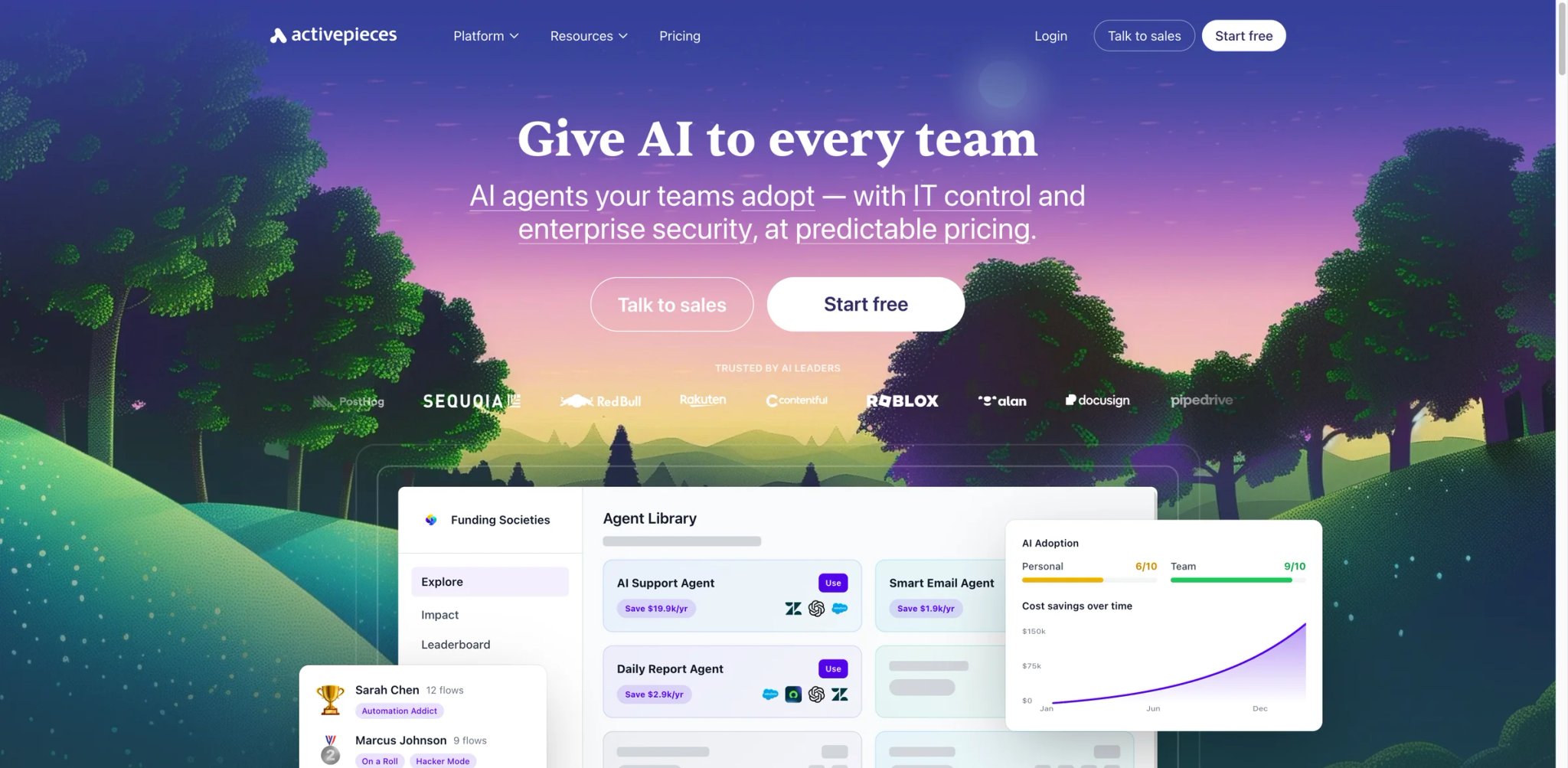
Activepieces gets called "the open-source n8n" so reflexively that the interesting question isn't whether it's a good alternative — it clearly is — but whether the open-source label survives contact with the edition details. It mostly does, with one asterisk worth understanding before you commit a client project to it. The reason it leads this list is structural: of every tool here, it's the one whose mental model maps onto n8n's most directly, which means it's the alternative where "migration" is closest to "rebuild the same flows in a familiar canvas" rather than "rethink how you automate."
What Activepieces solves vs n8n:
- Pricing you can say out loud. The model is per active flow — a Standard tier with a block of free active flows, then a flat per-flow rate above that, with Unlimited and governance tiers custom-quoted. "Cost per always-on automation" is a sentence a finance team accepts. "Cost per execution plus whatever the AI node spends" is not, and that difference is the single biggest reason this tool absorbs n8n's pricing refugees.
- Same conceptual model. Visual flows, branching, code steps, triggers, self-host or cloud — a person fluent in n8n is productive in Activepieces in an afternoon, not a week. The migration cost is dominated by re-authorizing credentials, not relearning a paradigm.
- A friendlier commercial posture for the common case. For the agency that hit n8n's SUL ambiguity, Activepieces's licensing is materially less hostile to the build-automation-for-others use case — though, as below, you should still read the specifics rather than assume.
- AI steps without the AI-cost fog. AI building blocks exist, but "what will the agent node cost me" is not the headline anxiety it became on n8n cloud.
Pricing vs n8n: Where n8n meters executions and layers AI-node cost on top, Activepieces charges per active flow with custom Unlimited and governance tiers above. For a shop running, say, thirty always-on automations of moderate complexity, "thirty flows times a flat rate" is a number you can forecast a year out. The equivalent n8n cloud figure depends on execution volume and AI usage you can't fully predict at design time. That predictability, not raw cheapness, is the win — at very high flow counts the custom tiers can rival enterprise pricing, so model your real flow inventory rather than assuming it's free-forever cheap.
Limitations: The "open source" caveat: Activepieces splits along a freely-licensed core versus enterprise and governance features under commercial terms. "Open source" is true for the engine and the everyday experience; it is not automatically true for every capability an enterprise rollout wants — SSO, advanced governance, and some scale features sit on the commercial side. Read the edition matrix before you assume parity with a self-hosted n8n you currently run, because "we moved to the open-source one" can quietly mean "we moved and now need the paid tier for the SSO we already had." Beyond licensing, the connector catalog — while growing quickly — is still narrower than Zapier's long tail, so a workflow that depends on an obscure SaaS API may need a custom HTTP step.
Best for: Teams who want n8n's flexibility and the self-host option but a pricing and license story they can explain to a client without a lawyer. Not the right fit if you need the broadest connector catalog on day one, or if your workflows depend on enterprise governance features you'd rather not pay separately for. Get started with Activepieces
Make
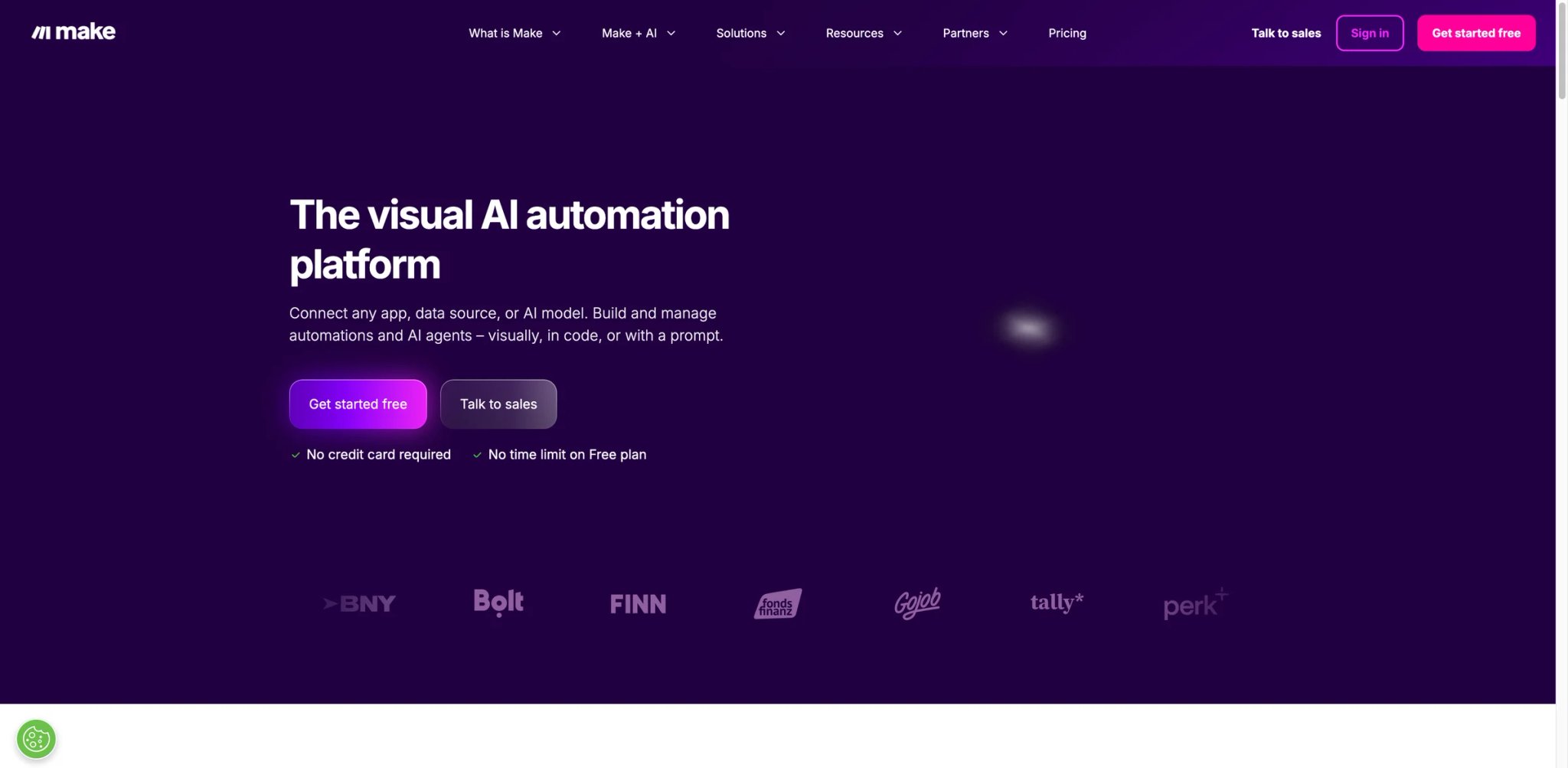
10,000 credits for $12 a month. That single number ends most "I just need predictable automation cost" threads, and it's why Make is the default destination for the n8n leaver whose problem was the invoice rather than the capability. Make doesn't try to out-flex n8n; it trades some depth for a meter a small team can actually reason about and a fully managed runtime that erases the DevOps reason in one move.
What Make solves vs n8n:
- A scenario-first visual model. Make's canvas is more visual and more opinionated than n8n's node graph — modules connected in a clear left-to-right scenario. Most non-technical users orient faster here than in n8n's more programmer-shaped editor, which directly addresses the learning-curve cluster.
- Fully managed, no exceptions. No server, no patch treadmill, no exposed-instance risk, no upgrade window. For anyone who left over self-hosting fatigue or security ownership, this is the entire fix in one decision.
- Tier pricing a small team can read in advance. Free includes up to 1,000 credits/month; Core is $12/mo for 10,000 credits, Pro is $21/mo for 10,000 credits, Teams is $38/mo for 10,000 credits, and Enterprise is custom. The numbers are public, flat, and forecastable — the exact inverse of the n8n complaint.
Pricing vs n8n: Make meters credits on flat published tiers; n8n meters workflow executions, while AI-heavy workflows may add separate model-provider or builder-credit considerations. At small-to-mid volume Make is both cheaper and dramatically more predictable, which is precisely the migration most people in the pricing cluster are making. The trade reverses at very high volume: credit usage climbs fast in iteration-heavy scenarios, and a workflow that loops over hundreds of records can burn through a tier quickly because module actions consume credits. Model your busiest real scenario — not an average one — before assuming Make stays cheaper at your scale.
Limitations: No self-hosting, full stop. If your reason for leaving n8n was data residency, on-prem requirements, or wanting to own the runtime, Make does not solve it and you should be looking at Activepieces or Node-RED instead. Operation-heavy scenarios with large iterations consume the meter quickly, and Make's error handling and conditional logic, while solid, are less granular than n8n's for genuinely complex branching.
Best for: Small teams and solo operators whose n8n pain was an unforecastable bill and the server, and whose volume is low-to-moderate enough that flat tiers stay comfortable. Not the right fit if self-hosting or deep custom logic was the reason you chose n8n in the first place. Get started with Make

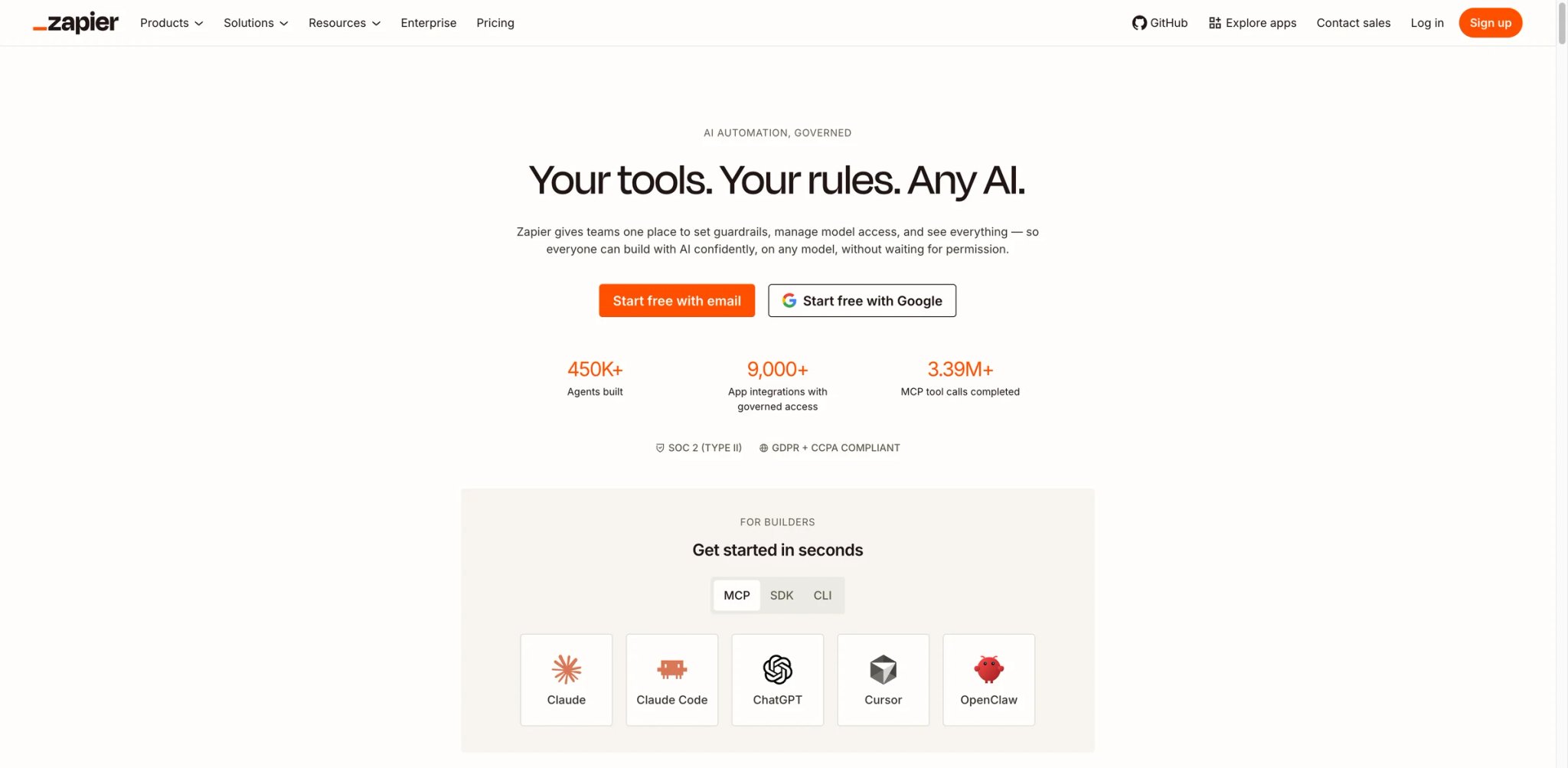
The honest framing for Zapier is comparative, because it is deliberately the least n8n-like tool on this list. You give up the flexible node graph, the self-host option, and the deep custom logic. In exchange you get the largest pre-built connector catalog in the entire automation market and an onboarding curve a non-technical hire can clear before lunch. Whether that's a good trade depends entirely on which n8n reason you're solving — for the learning-curve and DevOps clusters it's close to ideal; for the power-user clusters it's a step down they'd resent.
What Zapier solves vs n8n:
- Catalog breadth as the headline feature. If an app has an API, Zapier almost certainly already has a maintained, pre-built integration with triggers and actions defined. The long tail of SaaS apps that n8n makes you wire by hand through a generic HTTP node is, in Zapier, usually a few clicks.
- Zero operations, by design. Fully managed, nothing to patch, no instance to expose, no upgrade to schedule. The self-hosting and security clusters are solved by the architecture, not by a feature.
- An onboarding curve that barely exists. The "overwhelmed by how many nodes" problem doesn't occur; Zapier's editor is intentionally constrained, and that constraint is the point for non-technical users.
Pricing vs n8n: Free at 100 tasks/mo; Professional from $19.99/mo billed annually; Team and Enterprise scale by task volume and seats. Task-based pricing is predictable within a tier — each action step is a task — but it climbs steeply with volume, and at high throughput Zapier becomes the expensive option on this entire list. That is, ironically, the exact reason many power users went to n8n originally. If you left n8n to escape per-unit pricing pressure, Zapier solves your other reasons while reintroducing that one at a different scale.
Limitations: No self-hosting. Logic and branching are shallower than n8n's — multi-step conditional workflows are possible but feel constrained next to a real node graph. Cost scales unfavorably for high-volume automation. You are trading control and depth for convenience and breadth, and that should be a deliberate decision rather than a default.
Best for: Non-technical teams and anyone whose n8n problem was specifically the learning curve and the server, operating at a volume where task pricing stays comfortable. Not the right fit if you left n8n to get away from per-task pricing, or if your workflows need genuine branching depth. Get started with Zapier
Node-RED
Node-RED predates the current automation gold rush entirely — it came out of IBM's emerging-technology group in 2013 as a flow-based tool for wiring hardware, APIs, and online services together. That lineage isn't trivia; it's the whole reason it remains the right answer for a specific n8n refugee: the technically comfortable owner who wants to control the entire stack and never read a license clause again.
What Node-RED solves vs n8n:
- No license question, ever. It's permissively licensed open source you self-host. The Sustainable Use License ambiguity that makes agencies nervous about client work simply does not exist here — you can build, sell, and embed without a commercial-license conversation, which for some readers is the entire reason to switch and nothing else matters.
- A decade of production maturity. A very large community node library, years of battle-tested reliability, and well-understood operational behavior. This is not a young project you're betting on; it's infrastructure with a long track record.
- Deployment options: Deployment options: the identical flow runs on a Raspberry Pi at the network edge, a $5 VPS, a Docker container in your cluster, or embedded inside a larger Node.js application. No managed n8n alternative on this list matches that deployment range, and for IoT, on-prem, or edge automation it's frequently the only realistic option.
- Infra-only cost. No per-execution, per-task, per-operation, or per-seat meter exists. You pay for the machine it runs on and nothing else, which makes it the most forecastable cost model in this entire comparison.
Pricing vs n8n: Free, open source, self-hosted; your only cost is the infrastructure it runs on. Versus n8n cloud's execution metering, that is the most predictable model here by a wide margin. Versus self-hosted n8n specifically, the win is narrower but real: you keep the self-hosting you already wanted while dropping the license overhead and the commercial-use ambiguity entirely.
Limitations: It's a technical tool with a technical audience, and it does not pretend otherwise — a non-technical user will find Node-RED harder than n8n, not easier, so it's the wrong move for anyone whose reason for leaving was complexity. SaaS connectivity leans toward "build it from the HTTP request node and parse the response" rather than "click the pre-made Salesforce integration," so the convenience tax of broad SaaS work is higher. And every operational and security responsibility is yours, identical to self-hosted n8n.
Best for: Technically comfortable owners who left over license trust or unpredictable pricing and will happily trade managed polish for total control and a zero-ambiguity license. Not the right fit if your reason for leaving n8n was that it was already too technical for your team. Get started with Node-RED
Pipedream
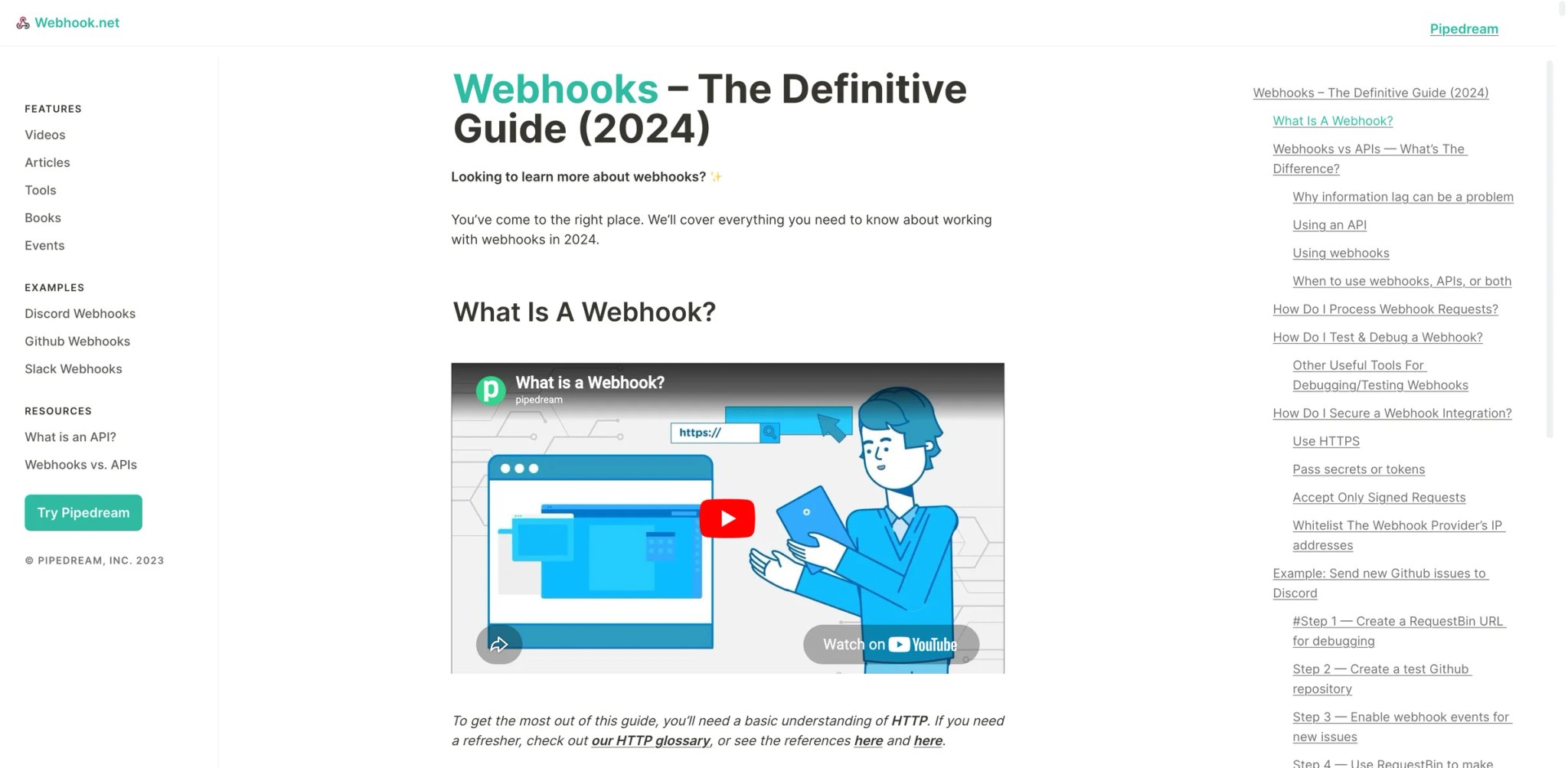
A free tier with workflows and Connect, daily credit limits, source-available openness, and code steps that run serverless without you provisioning anything — Pipedream's pitch is unusually precise, and it's aimed directly at the "the answer is code, not another canvas" cluster. It's not trying to be a friendlier n8n; it's trying to be the thing a developer reaches for when they've decided the canvas was the problem but still want managed infrastructure.
What Pipedream solves vs n8n:
- Code steps as a first-class citizen, not an escape hatch. Drop into Node, Python, Go, or Bash anywhere in a workflow with full npm/PyPI access, without the friction n8n's code node imposes. For a developer, the workflow becomes "mostly code with some glue" rather than "mostly canvas with a code node bolted on."
- Serverless execution by default. No server to host, patch, or secure — which means it answers the DevOps-fatigue and security-ownership reasons without forcing the developer to give up code control to get there. That combination (code-first AND no ops) is rare and is Pipedream's actual differentiator.
- Fast API workflow assembly. Pre-built triggers and actions for thousands of APIs, plus the ability to drop to raw HTTP, means standing up an integration is a minutes-long task for someone comfortable with code.
Pricing vs n8n: The math: n8n meters executions; Pipedream meters credits tied to compute time and usage. These reward opposite shapes of work. A workflow that fires infrequently and finishes fast can be dramatically cheaper on Pipedream's model than on n8n's execution meter. A workflow that runs constantly or holds long-running compute can be more expensive. There is no general answer — price your single busiest real workflow on both meters before switching, and treat any specific paid-tier figure as "verify on the live pricing page today," because Pipedream's paid pricing is usage-calculator territory rather than a flat published sticker.
Limitations: Considerably less appealing for non-technical users than a pure visual builder — if a marketer has to maintain the automation, this is the wrong tool. The usage-based meter trades n8n's unpredictability for a different unpredictability if your load is spiky rather than steady. Pipedream is a managed cloud platform rather than a full self-hosted workflow platform, so "Pipedream because I want to self-host" is a weaker reason than "Pipedream because I want code without ops."
Best for: Developers whose core n8n frustration was the canvas itself and who want code-first workflows without owning servers. Not the right fit if a non-technical teammate has to own the automations, or if predictable flat billing was your hard requirement. Get started with Pipedream
Windmill
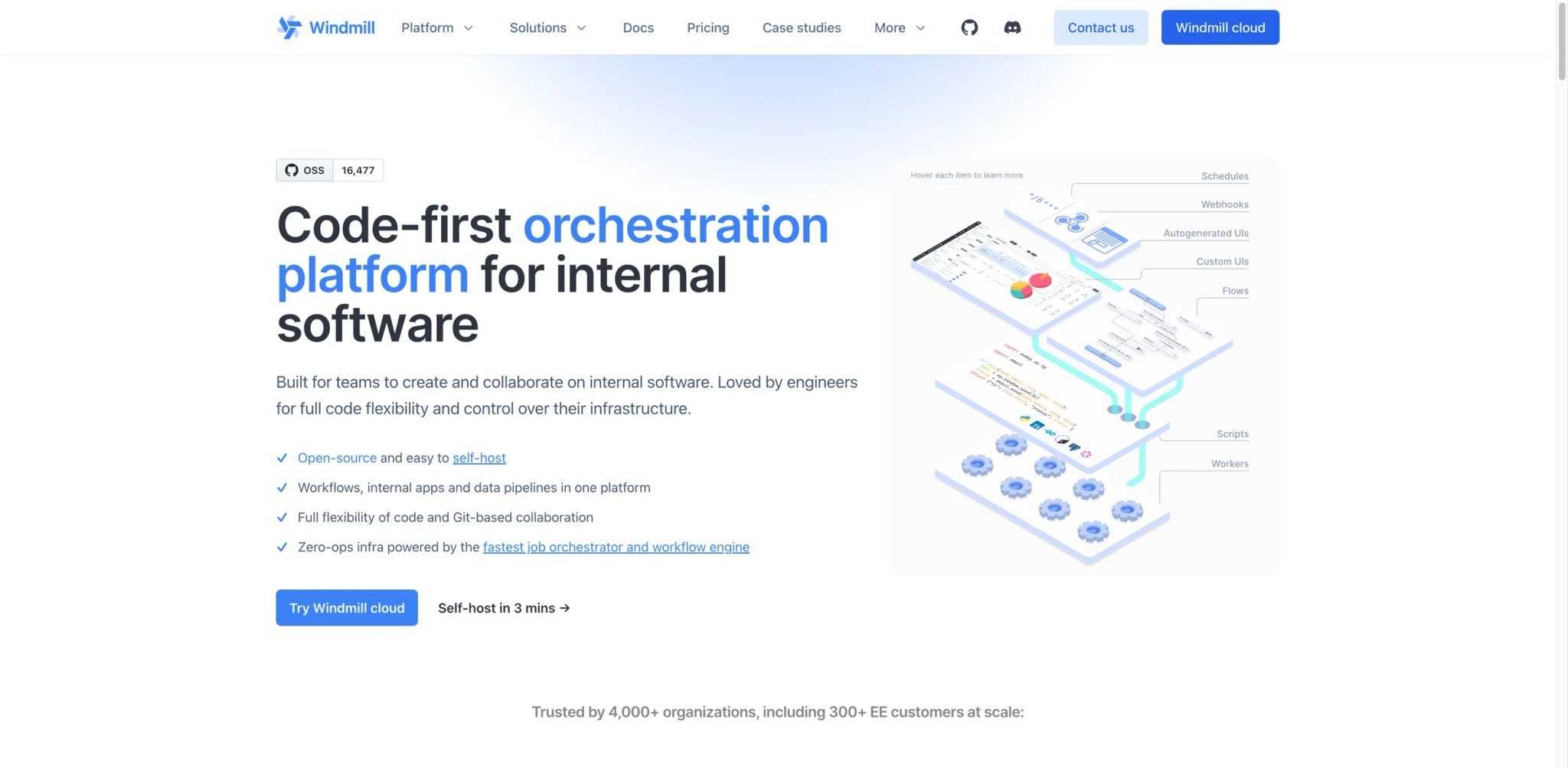
If your migration is really a deeper question — "should the workflow engine, the internal tooling, and the one-off scripts all live in one place instead of three?" — Windmill is where that question leads. It treats scripts, workflows, and small UIs as one self-hostable developer platform rather than bolting a code node onto a no-code canvas, and that reframing is the entire reason to consider it over a more direct swap.
What Windmill solves vs n8n:
- The numbers, not the marketing: The numbers, not the marketing: Windmill's reason for existing is execution performance and turning scripts into typed, parameterized, reusable building blocks. Its published benchmarks against general workflow tools — not a glossy feature list — are the actual pitch, and for a team that left n8n because the engine felt slow or the code experience felt second-class, that's the relevant evidence to evaluate.
- One platform doing three jobs. Workflows, internal tools and admin UIs, and standalone scheduled scripts all live in a single self-hostable system. n8n doesn't attempt this consolidation; for a team currently running n8n plus a separate internal-tools product plus a cron box, collapsing three systems into one is the value, not any single automation feature.
- A self-host story with an important commercial-use caveat. Windmill's free self-hosted tier is useful for evaluation and non-commercial open-source use, but commercial self-hosting requires paid/commercial terms, so it solves data ownership more clearly than it solves license-risk for agencies.
Pricing vs n8n: Free self-hosted tier with unlimited executions but no commercial licence; paid cloud/self-hosted tiers use seats, compute units, or custom enterprise terms depending on deployment. Versus n8n's execution meter, Windmill's worker model is predictable when concurrency is steady and less so when it spikes — and exact paid figures should be confirmed on the current pricing page rather than quoted from memory, since the compute-based model isn't a flat sticker.
Limitations: This is unambiguously a developer platform; the ramp is steeper than n8n's, not gentler, so it's the wrong answer for the learning-curve cluster. For someone who genuinely only needs "when X happens, do Y," it is substantial overkill and the consolidation pitch is irrelevant. The pre-built SaaS connector ecosystem is smaller than the managed players', so heavy SaaS-glue work involves more building.
Best for: Engineering teams who want to consolidate automation, internal tools, and scripts into one owned platform, and who were already treating n8n as a code platform in disguise. Not the right fit for non-technical operators or for simple trigger-action automation. Get started with Windmill
Automatisch
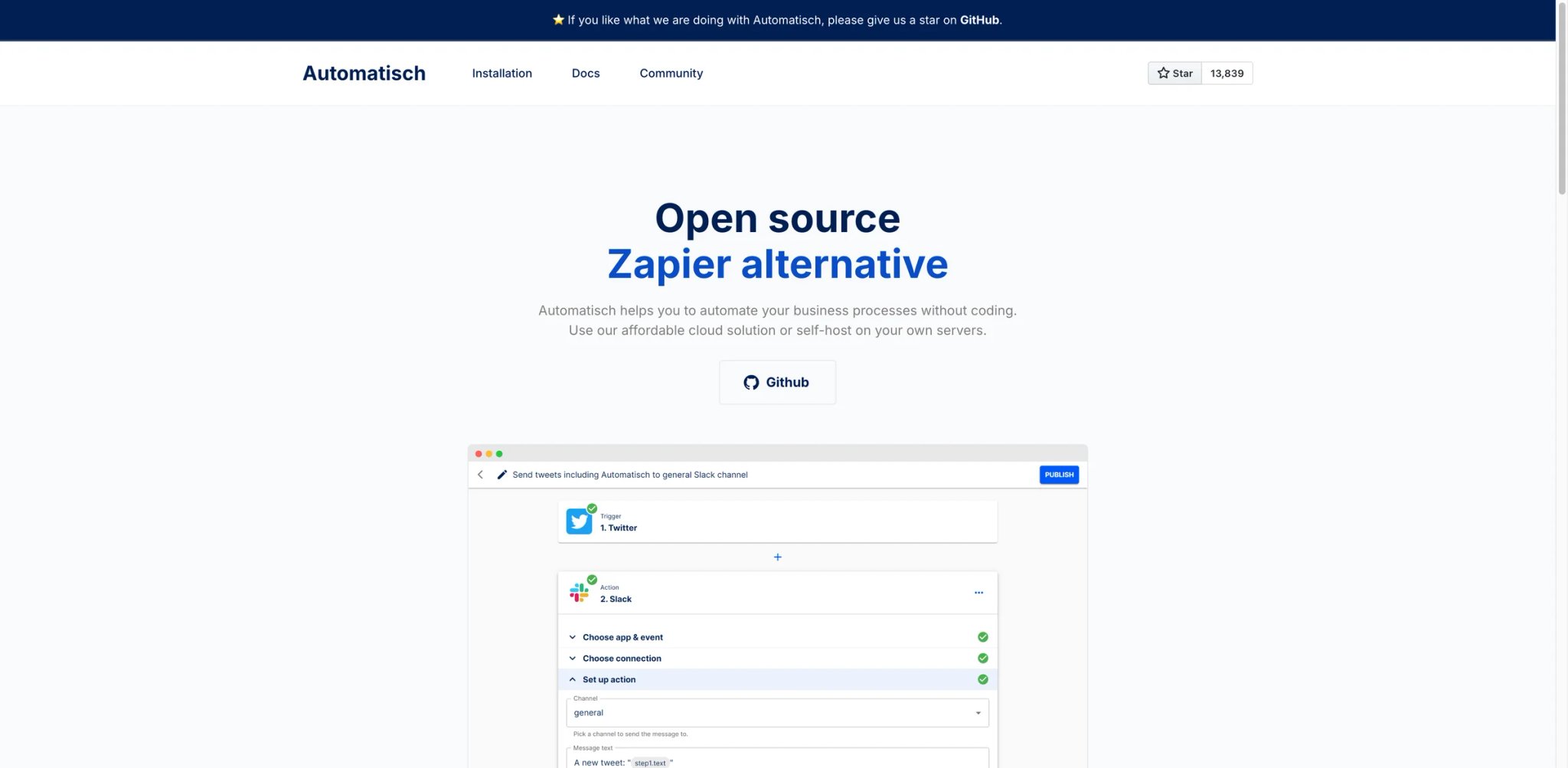
Automatisch makes the smallest promise on this list, and the restraint is the point: a simple, AGPL-licensed, self-hosted, Zapier-style automation tool for people who found n8n too much. It deliberately doesn't try to be a developer platform or an enterprise iPaaS, which is exactly why it fits a reader two other tools can't serve at once.
It threads three n8n reasons in a single product. The AGPL self-hosted edition removes the SUL commercial-use ambiguity — you own the code and the license question largely goes away for the common case, which for a small agency is often the entire decision. The intentionally simpler interface lowers the learning wall that defeats non-technical users in n8n: there is no "overwhelmed by how many nodes" moment because the surface area is deliberately small. And self-hosting keeps data ownership intact for teams that need it for residency or compliance reasons. The honest cost of that focus is scope, and you should size it before committing. The connector catalog is a fraction of n8n's, complex multi-branch conditional logic is limited compared to a real node graph, and managed-cloud or third-party hosting pricing varies enough that you should confirm current numbers on the site rather than assume a figure. The right way to evaluate it is to list the five integrations your most important automations actually depend on and check each one exists before you migrate anything — if they're all present, Automatisch is the rare tool that's simultaneously self-hosted, license-clean, and approachable; if two are missing, it's the wrong tool no matter how good the licensing is. Best for small teams and agencies who want a self-hosted, license-clean automation tool without n8n's complexity and whose integration needs fit a focused set. Not the right fit if you need broad connectors or advanced conditional logic. Get started with Automatisch
Workato
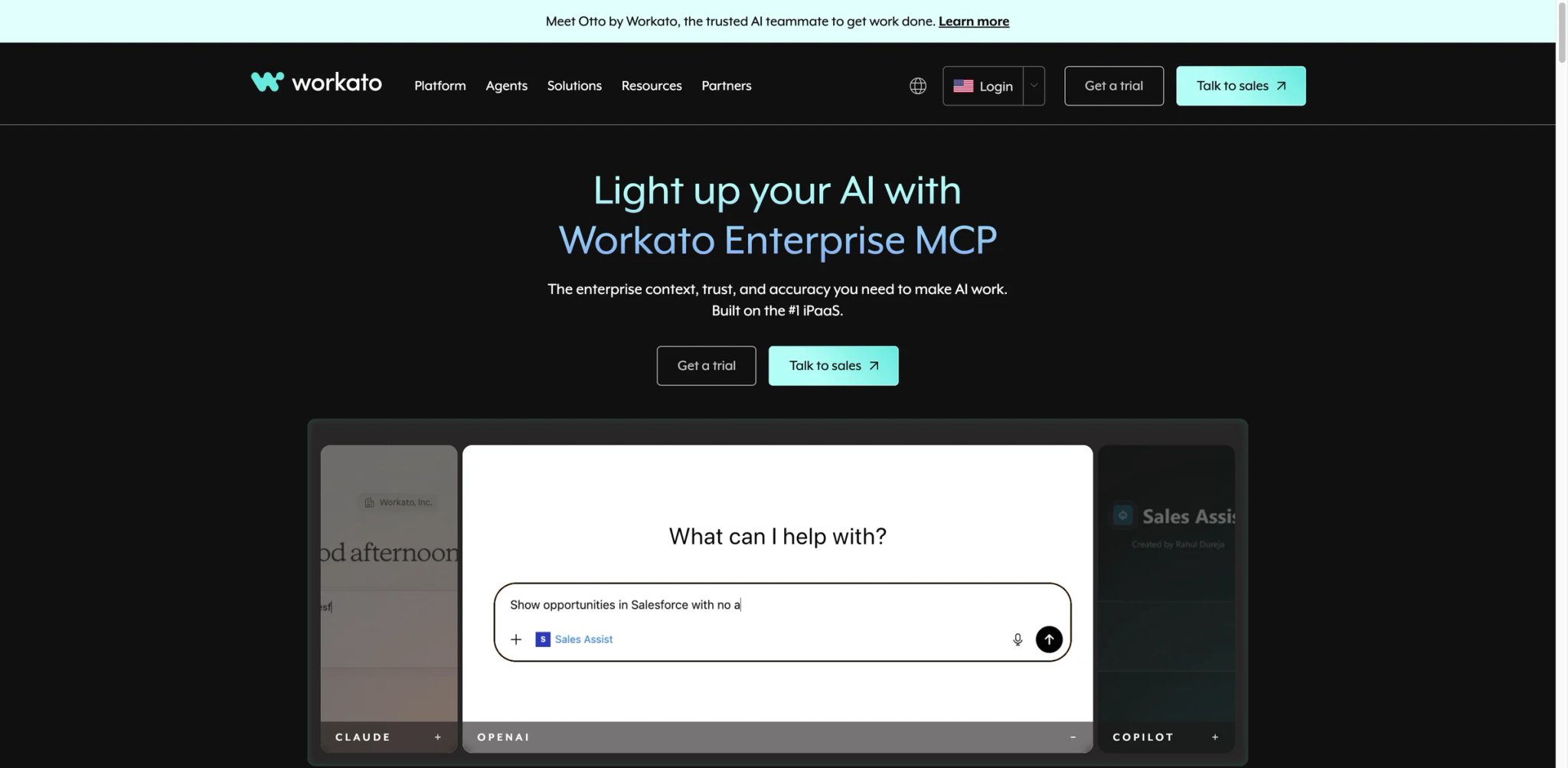
Workato sits at the exact opposite end of this list from Automatisch. There is no public free tier and no self-service sticker price; it's a sales-led enterprise iPaaS, and any specific number quoted here would be a guess that misleads you. What it sells is the thing the self-hosted-security and DevOps reasons were really about underneath the surface complaint.
Cost stack reality: the real Workato cost is never the platform line alone. It's the platform plus the recipe-and-connection consumption model plus the implementation, enablement, and governance program an enterprise rollout assumes — so budget the program, not the license, or the number will surprise you the same way n8n's meter did, just with more zeros and a procurement cycle attached. The mistake teams make is comparing Workato's eventual quote to their current n8n bill and recoiling; that's the wrong comparison. The right one is the fully-loaded cost of the status quo — the engineer-hours spent operating self-hosted n8n, the unpriced risk of an unpatched instance, the absence of any contractual recourse when a revenue-critical integration fails — versus a vendor contractually owning all of it. In exchange for the higher sticker, the responsibilities that the security and self-hosting clusters were quietly carrying — owning the patch treadmill, being the team in the "exposed instances" headline, having no support SLA when a business-critical integration breaks at 2 a.m. — become contractually someone else's, with audited governance, change management, and enterprise support attached. That transfer of operational risk is the entire value proposition; cheapness is explicitly not part of it, and evaluating Workato as "expensive n8n" rather than "outsourced automation reliability" is how teams talk themselves out of the right decision for the wrong reason. Best for larger organizations whose actual n8n problem was that production-grade security, governance, and reliability were entirely their unpaid burden, and who have budget authority to make it a vendor's paid responsibility instead. Not the right fit for individuals, small teams, or anyone who needs a transparent price before a sales conversation. Get started with Workato
Microsoft Power Automate
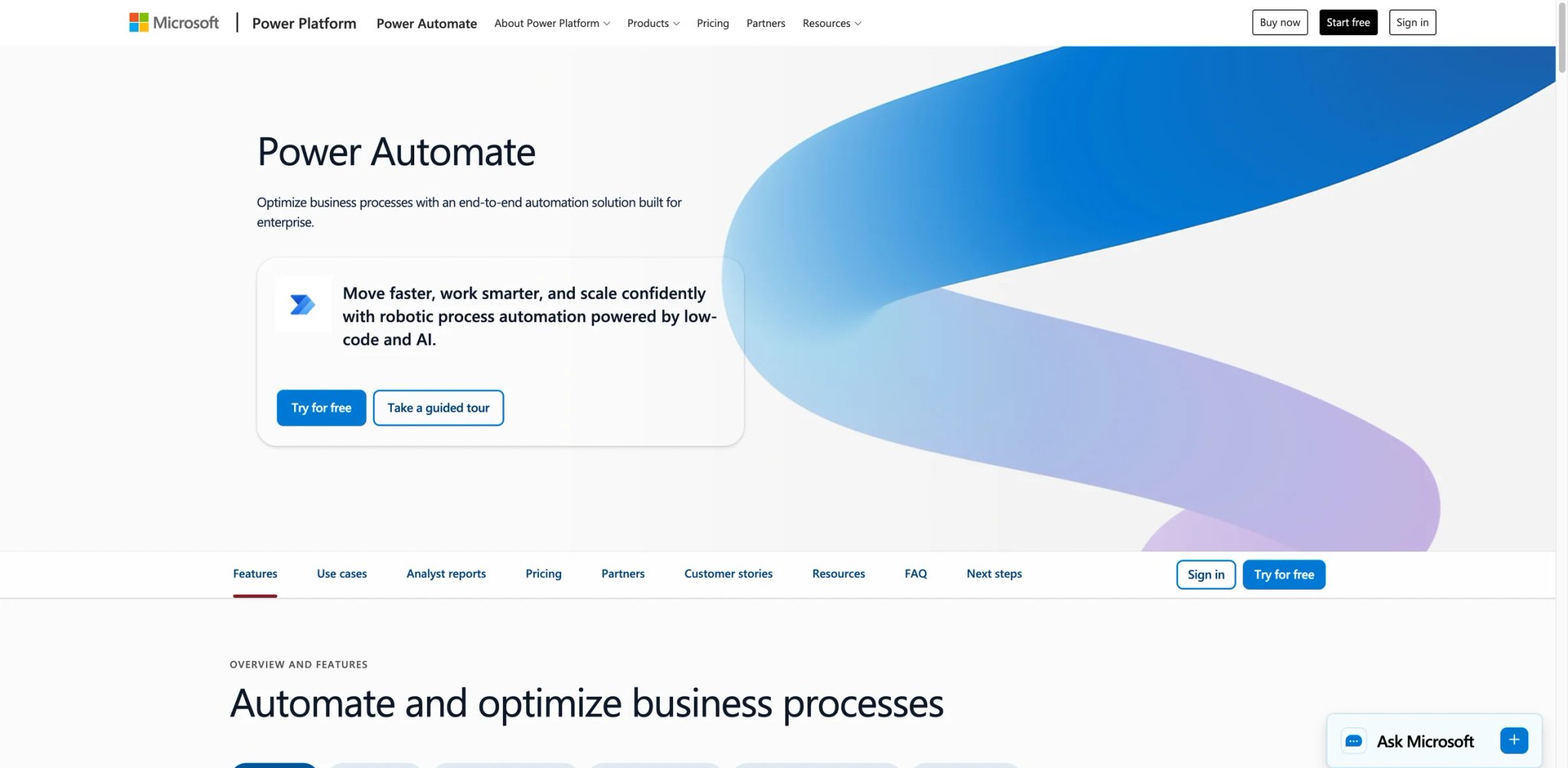
The honest framing for Power Automate is comparative, and the comparison is decided almost entirely by one fact: where your organization already lives. If you're on Microsoft 365, Power Automate isn't competing with n8n on automation features — it's competing on the fact that it inherits a tenant, an identity system, and a compliance boundary your security team has already approved. That inheritance is the entire pitch, and outside the Microsoft ecosystem it weakens fast.
What Power Automate solves vs n8n: the self-hosting, security-ownership, and governance reasons collapse at once if you're already in M365 — flows run inside the same managed tenant as everything else, so there is no instance to patch, no exposed-host risk, and no separate compliance review. Native depth into SharePoint, Teams, Outlook, and Dataverse turns automations that are awkward HTTP-node work in n8n into first-class connectors. And approvals, a common business-automation need, are a built-in primitive rather than something you assemble. Pricing vs n8n: a basic Free license covers standard connectors for light use; Premium runs roughly $15/user/mo billed annually for premium connectors and custom APIs, with per-process tiers (hosted and unattended bots) above that. Versus n8n's execution meter, the per-user model is predictable for a fixed team but climbs with headcount, and the premium-connector line is where costs hide — verify which connectors your flows need against the licensing tiers before assuming the Free or Premium number. Limitations: outside Microsoft 365 the entire rationale evaporates — for a non-Microsoft shop this is the wrong tool, full stop. Premium-connector and per-process licensing gets complex quickly, the builder is less flexible than n8n's node graph for genuinely intricate logic, and you are accepting deeper Microsoft lock-in as the price of the ecosystem benefit. Best for: organizations already standardized on Microsoft 365 whose n8n problem was self-hosting burden, security ownership, or getting governance sign-off — Power Automate inherits a posture your auditors already accept. Not the right fit if you're not in the Microsoft ecosystem, or if your workflows need deep custom logic the node graph gave you. Get started with Power Automate
Huginn
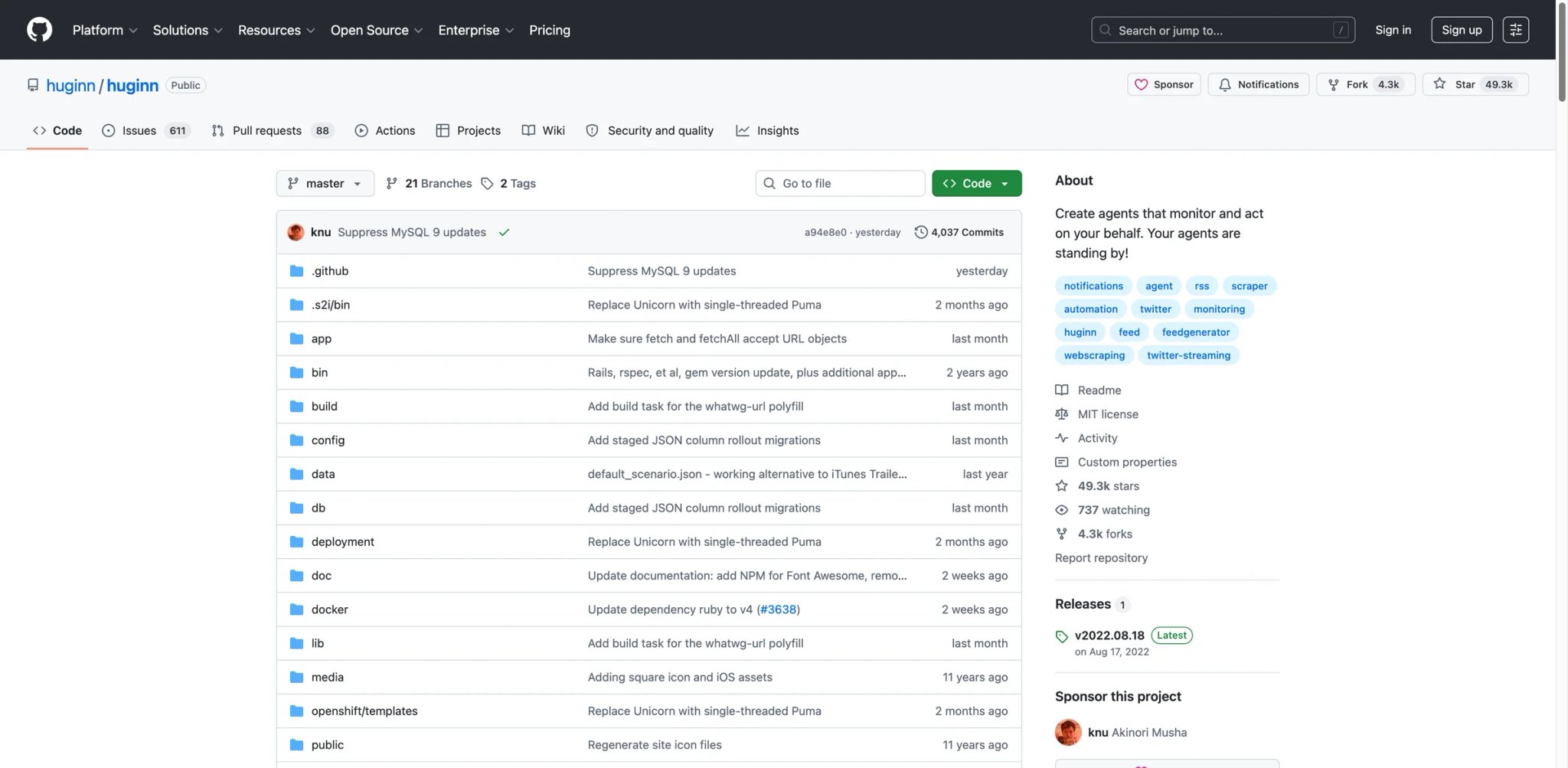
Huginn has been on GitHub since 2013 doing one thing with unwavering conviction: letting you build programmable agents that watch the web and act, entirely on infrastructure you own and control. It is the most hacker-leaning option here, it does not apologize for that, and that identity is precisely what makes it the right answer for a narrow but real audience.
It maps to the license-trust, predictable-cost, and code-first reasons simultaneously. It's free open-source software you self-host, so there's no commercial-use clause to interpret and no meter to forecast — the cost model is "the box it runs on," full stop, which makes it one of only three tools here with genuinely zero per-unit pricing risk. And the "configure agents that monitor and react" model appeals to exactly the kind of technical user who would rather express automation as something closer to a programmable system they reason about than a polished SaaS canvas with a marketplace and a billing page. The honest counterweight is that Huginn is the least actively-polished option on this list — it is mature and stable, but it does not move at the pace of the venture-funded tools, and that is a feature for some readers and a dealbreaker for others. The price of all that ownership is ergonomics, stated plainly: setup and ongoing operation assume real technical comfort, the interface is utilitarian rather than designed, the documentation assumes you can read code, and the SaaS-connector experience is nothing like Zapier's clickable catalog — you build and maintain integrations yourself, and that labor is the actual cost even though the software is free. The way to sanity-check the fit is brutally simple: if "I'll just run it on a VPS and write a bit of Ruby when I need a new agent" sounds like a relief rather than a chore, Huginn is for you; if it sounds like work you were trying to escape, it is emphatically not. Best for technical users who want fully owned, programmable agents and treat the rough edges as an acceptable, even preferable, trade. Not the right fit for non-technical users or anyone who needs a polished UI and a broad pre-built connector catalog. Get started with Huginn
Honorable Mentions
These surface in n8n migration threads but sit in adjacent categories — not direct swaps, but the correct answer for one specific reason rather than the general case.
Apache Airflow is the open-source standard for scheduled, code-defined data pipelines. Free under Apache 2.0, with managed offerings from the major cloud providers. It's the right answer when your "n8n workflow" was honestly a DAG of dependent Python data jobs that never belonged on a no-code canvas in the first place — orchestration for data engineering, not app-to-app glue. Apache Airflow
Temporal handles durable backend workflows where retries, long-running state, and correctness-under-failure matter far more than app connectors. The self-hosted core is free; Temporal Cloud is usage-based. Reach for it when the requirement is "this must complete reliably even if a step crashes for a day," which is a different problem than automation. Temporal
Retool Workflows fits teams already building internal tools in Retool who want scheduled backend jobs in the same environment they already pay for and know. A free tier covers small teams; paid plans are seat-based and worth rechecking for current workflow limits. The pull is consolidation with an existing investment, not standalone automation strength. Retool Workflows
IFTTT is far simpler than n8n and best for consumer, creator, and smart-home automation. Free tier plus Pro and Pro+ for more applets, faster execution, and multi-action applets. If your entire n8n setup was three personal automations, IFTTT is the proportionate tool and everything else here is overkill. IFTTT
Migrating from n8n — A Practical Guide
Data and Account Migration
n8n workflows export as JSON, and that's both the good news and the catch. The workflow structure — nodes, connections, logic, expressions — exports cleanly and is useful as an inventory and a logic reference. Credentials do not travel: API keys and OAuth connections are stored encrypted and must be re-authorized by hand in the target tool, every one of them. Plan the migration as a sequence rather than an event.
Start with an inventory pass. Export every workflow's JSON and, more importantly, write one plain sentence per workflow describing what it actually accomplishes for the business — "when a Stripe charge succeeds, create the customer in HubSpot and post to #sales." That sentence, not the JSON, is what you'll rebuild against, because the node graph is an implementation of the intent and the new tool will implement the same intent differently. This pass also surfaces the workflows nobody remembers building, which are usually either safe to drop or quietly load-bearing — better to learn which now than during cutover.
Then triage by migration distance, not by importance. A move to a same-paradigm tool (n8n to Activepieces or Node-RED) is mostly a transcription job: the concepts map and the work is rebuilding flows and re-authorizing credentials. A move to a managed no-code tool (n8n to Zapier or Make) is a translation job: multi-branch logic that was one n8n workflow may become several scenarios, and some expression-level cleverness won't have a direct equivalent and needs rethinking rather than porting. A move to a code-first platform (n8n to Pipedream or Windmill) is a reimplementation: you're rewriting the logic as code, which is more upfront work but ends with something testable and version-controlled. Sequence the easy, low-risk workflows first to build confidence in the new tool before you touch the revenue-critical ones.
Handle credentials deliberately. Make a list of every external service each workflow authenticates to, and re-authorize them in the new platform under fresh keys rather than copying old ones — migration is a good moment to rotate secrets anyway, and old keys left valid on a decommissioned n8n instance are a liability. If you're leaving specifically over the Sustainable Use License, do one extra thing: document which workflows were client-facing or commercially embedded before you decommission the instance, because that list doubles as your compliance paper trail for the period you operated them under the SUL. Finally, close or downgrade the n8n account only after the replacement has run a full billing cycle clean, so you keep a working fallback through the riskiest window and can compare a real invoice against the prediction that justified the move.
Learning Curve by Alternative
- Near-zero: Zapier, Make, IFTTT — a non-technical user is productive the same day with no documentation deep-dive.
- Medium: Activepieces, Automatisch, Power Automate, Retool Workflows — immediately familiar if you've used n8n; budget a weekend to fluency, less if you migrate flow-by-flow.
- High: Node-RED, Pipedream, Windmill, Workato, Apache Airflow, Temporal, Huginn — these reward technical users or assume a deliberate implementation effort; treat onboarding as a project, not an afternoon.
Pricing Brackets vs n8n Cloud
- Cheaper and more predictable: Make (from $12/mo flat tiers), Activepieces (flat per active flow), Zapier at genuinely low task volume.
- Free, you host the infrastructure: Node-RED, Automatisch, Huginn — pay only for the box, no meter at all.
- Comparable cost, different meter: Pipedream and Windmill — predictable or not depending entirely on your load shape, so model your real busiest workflow rather than trusting the headline tier. Power Automate is predictable per user but climbs with headcount and hides cost in premium connectors.
- More expensive, deliberately: Workato — quote-only enterprise pricing justified by governance, support, and risk transfer, not by being a cheaper n8n. If price is your reason for leaving, this is not your answer.
Best n8n Alternatives by Use Case
If Your Reason Is "I want a predictable monthly bill"
The execution-plus-AI-node meter is the single most cited reason, and the cleanest fixes are flat models. Activepieces charges per active flow — multiply your always-on automations by a flat rate and you have next year's number, which is the most direct structural answer to the complaint. Make sells flat operation tiers from $12/mo that a finance team accepts without a meeting, with the one caveat that iteration-heavy scenarios burn operations fast, so check your loop-heavy workflows against the tier before assuming it's cheap. Zapier is predictable per tier at low-to-moderate task volume, though it stops being the cheap answer as volume climbs and is the wrong pick if high throughput was why you chose n8n originally. If you can self-host, the genuinely flat answer is Node-RED or Automatisch: infrastructure cost only, no meter to model at all. All of these replace "what will this cost" with a figure you can actually put in a budget — the difference is whether you're buying predictability with a flat SaaS tier or with owned infrastructure.
If Your Reason Is "I don't want to maintain servers"
Move to fully managed and the entire problem disappears as an architectural consequence, not a feature you have to configure. Zapier and Make for no-code teams, Pipedream if you want code without operations, Microsoft Power Automate if you're already in Microsoft 365. The patch treadmill, the upgrade windows, and the exposed-instance risk all become someone else's job description.
If Your Reason Is "I need self-hosted or open-source I can trust"
Stay self-hosted but drop the license ambiguity. Node-RED and Huginn are permissive open source you fully own with no commercial-use clause to interpret. Automatisch is AGPL self-hosted and deliberately simple. Activepieces offers a self-host path with a materially friendlier commercial story than the Sustainable Use License — read its edition matrix, but it's the closest same-paradigm option.
If Your Reason Is "The SAP deal makes me nervous about lock-in"
The only real hedge against trajectory risk is owning the runtime, so an investor or board decision can't reprice it for you. Activepieces, Node-RED, and Automatisch run on infrastructure you control, which means a future pricing or license change to n8n's hosted product simply doesn't reach you. The reasoning here should be explicit rather than vibes-based: the SAP investment announced nothing about the community edition, so reacting as if a change has happened would be wrong. But a tool whose runtime you don't own is a tool whose terms you don't control, and that's true independent of any specific news — the May 2026 deal just made the abstract risk concrete enough that people noticed it. If your business can absorb a hypothetical future repricing of n8n cloud, you don't need to move on this reason alone. If it can't, the correct response is owning the runtime now, while the migration is calm and optional, rather than later under pressure. This is insurance bought deliberately before the event, which is the only time insurance is cheap.
If Your Reason Is "I'm non-technical and n8n feels too hard"
Lower the wall rather than learning to climb it. Zapier and Make are built for people who don't want to think about APIs, JSON shape, or authentication flows, and the constraint that frustrates power users is exactly what makes them learnable in an afternoon. Automatisch is the self-hosted option that intentionally keeps scope small enough that a non-developer can actually run it without becoming an operator. The honest framing for this reader is that n8n was sold to them as "Zapier with more power," and the more-power part was the wall — so the right move is to accept slightly less ceiling in exchange for a tool they can actually own day to day, rather than keep paying the complexity tax for capability they were never going to use.
If Your Reason Is "I'd rather write code or let AI generate the workflow"
Go genuinely code-first instead of fighting a canvas. Pipedream for serverless code steps with managed infrastructure when you want code without owning servers, Windmill to consolidate scripts and workflows into one owned platform when the real goal is collapsing three systems into one, Node-RED for owned flow-based logic you control end to end when license freedom matters as much as the code experience. The choice between them is mostly about what you want to stop doing: Pipedream if you want to stop operating infrastructure, Windmill if you want to stop running a separate internal-tools and cron stack alongside automation, Node-RED if you want to stop thinking about licenses and meters entirely. In all three the canvas stops being the bottleneck because the workflow lives where code lives — in a repo, diffable, testable, and reviewable — which is the actual thing the "moved my workflows into code" threads were describing, not a complaint about n8n's editor specifically.
If Your Reason Is "I need enterprise security, support, and governance"
Buy the risk transfer as a service. Workato is a sales-led iPaaS with governance, audited controls, and support SLAs; Microsoft Power Automate if you're standardizing on Microsoft 365 and want automation governed inside the same tenant and compliance boundary you already operate. The decision criterion that matters here is not feature lists — both will do what you need — but where your compliance evidence already lives. If your auditors already accept your Microsoft 365 tenant's controls, Power Automate inherits that posture and the approval conversation is short. If your automation is genuinely cross-system and you need a vendor contractually owning reliability across it, Workato earns its quote by being the thing security signs off on once rather than re-litigating per workflow. The wrong move is choosing the cheapest option to save money on a problem whose entire definition was "the cheap self-hosted option made security our unpaid problem" — you'd be re-creating the original mistake at a slightly higher price point.
How to Choose the Right n8n Alternative
- Name the real reason and test one free tier against it. "I left n8n" is not a specification. Is it the bill, the license, the server, the learning curve, or the canvas itself? Pick the single tool above that targets that exact reason and run your most important real workflow on its free tier — Activepieces, Make, and self-hosted Node-RED all let you prove or kill the thesis for $0 before anything is committed.
- Verify the pricing model and hosting against your actual load. Executions, tasks, credits, per-active-flow, and per-seat reward completely different shapes of work, and the headline numbers don't compare directly. Model your busiest real workflow, not an average one, and confirm any paid figure on the live pricing page — several tools here use usage calculators rather than flat published stickers, so a number from memory will be wrong.
- Confirm the license and compliance posture before you migrate, not after. If you build or resell automations for clients, read the target tool's commercial-use terms explicitly. This is the n8n reason most likely to recur silently in a replacement you chose for unrelated reasons — solving the pricing problem and walking into a different license problem is the classic mistake here.
- Export your workflow JSON and run two weeks in parallel. Keep n8n live while the replacement handles real traffic. Re-authorize credentials by hand, watch specifically for the edge cases the JSON export didn't capture, and only cut over after a clean billing cycle on the new tool with the old one still standing as a fallback. The parallel period is also where you validate the prediction from step 2 against a real invoice — if the new tool's first bill doesn't match the model you used to justify the move, you want to discover that while n8n is still running, not after you've decommissioned it. Treat the two weeks as a test with a pass/fail criterion you wrote down in advance, not a vibe check; "it feels fine" is how teams migrate twice.
Frequently Asked Questions
What is the best free alternative to n8n?
What is the best open-source n8n alternative?
Is n8n still open source in 2026?
Should I migrate after SAP invested in n8n in 2026?
Which n8n alternative is easiest for non-technical users?
Which n8n alternative is best for developers?
Which n8n alternative is best for enterprise automation?
How do n8n execution limits compare with Zapier tasks and Make credits?
Get ToolWorthy Weekly
New AI tools, practical guides, and selected AI signals in one weekly brief.
Related Posts
- 10 Best Zapier Alternatives 2026 - AI Workflows, Cost & Control
Compare 10 Zapier alternatives for 2026, including Make, n8n, Activepieces, Pipedream, Power Automate, Workato, Tray.ai, and IFTTT.
- 14 Best AI Business Automation Tools 2026 - Workflow Fit
Compare 14 AI business automation tools for visual workflows, APIs, data operations, RPA, AI agents, enterprise governance, pricing, and rollout risk.
- 10 Best Make.com Alternatives 2026 — After the Credits Switch
10 Make.com alternatives tested May 2026 — n8n, Activepieces, Latenode and post-credits picks. Real pricing, community evidence, two-week parallel migration guide.
For AI tool founders
Built a tool that belongs in this decision set?
Request an editorial evaluation for possible inclusion in ToolWorthy.
Submit your tool for reviewPaid submission does not guarantee a ranking, recommendation, inclusion, or editorial outcome.