
Best AI Test Automation Tools 2026: Pick by Testing Goal
A lane-based guide to AI test automation tools for QA and engineering teams: broad QA platforms, plain-English E2E, visual testing, managed QA, and cloud/device agent testing.
On this page
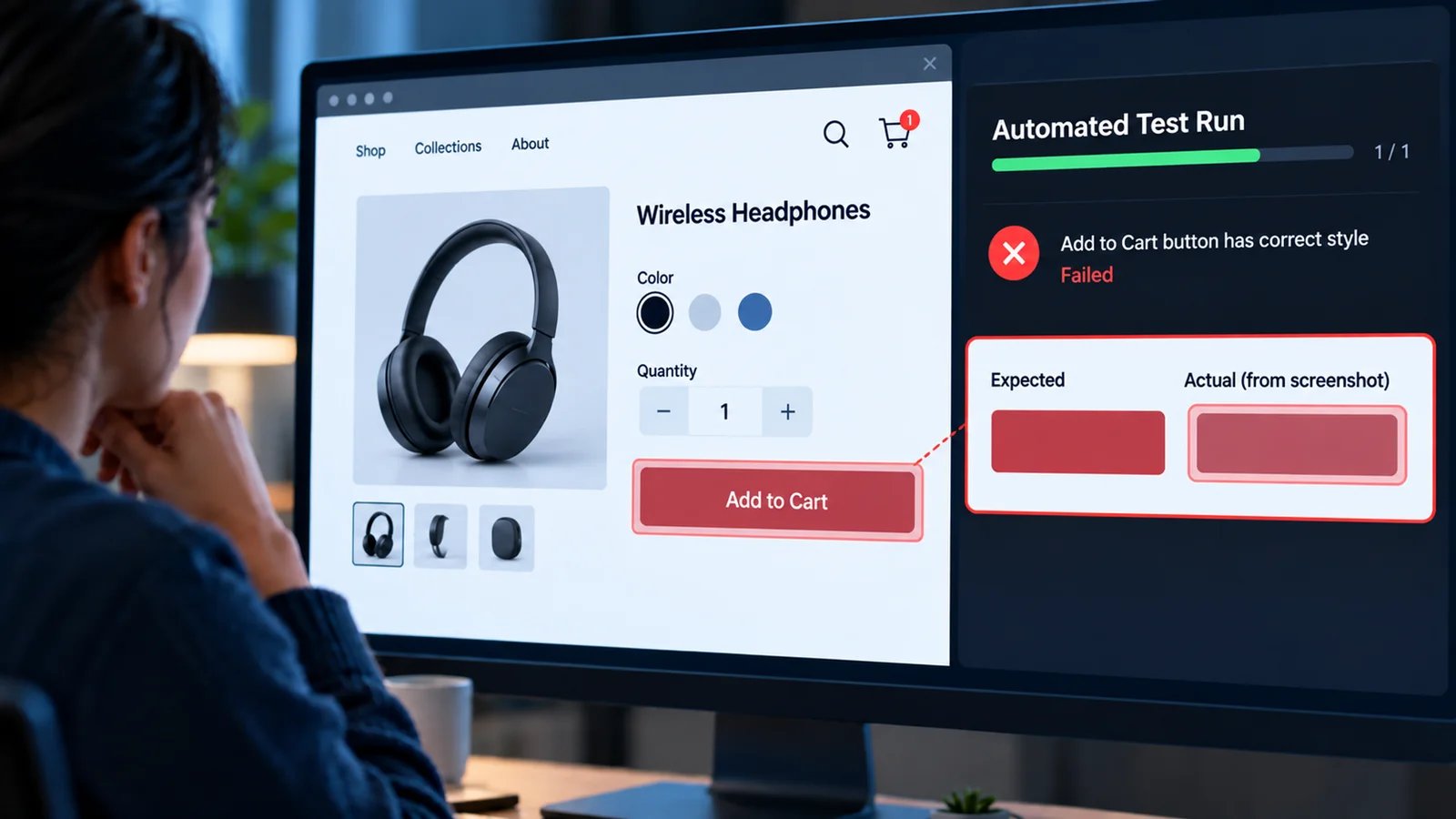
Searching for AI test automation tools usually means your current QA process is carrying too much manual work, brittle scripts, or release risk. The hard part is that this market does not behave like one clean category. Some products are broad QA platforms. Some are plain-English E2E tools. Some specialize in visual correctness. Some sell managed QA coverage. Some combine AI authoring with cloud browser and device infrastructure.
So this guide does not rank every product into one universal ladder. It helps you route by the job you need done: what surface you must cover, who will own the tests, how much governance you need, how pricing is metered, and which claims require a real pilot before you trust them.
Pricing and capability details below were checked against official vendor pages and documentation on August 29, 2026. This is desk research, not a controlled benchmark. Treat AI-healing accuracy, generated-test correctness, flake reduction, root-cause accuracy, and maintenance-hours saved as pilot questions, not settled facts.
Short Answer
If you want a broad QA lifecycle platform, start with Katalon, mabl, Testsigma, Functionize, or Tricentis Testim depending on your app surfaces, governance needs, and pricing tolerance.
If your main goal is plain-English E2E authoring, start with testRigor, Autify, TestMu AI / KaneAI, or Momentic.
If visual correctness is the first-order risk, start with Applitools.
If you want automation coverage delivered as an outcome instead of software your team fully operates, look at QA Wolf.
If real-device and browser cloud breadth is central to the buying decision, TestMu AI / KaneAI is a natural fit to evaluate in this shortlist.
Do not choose any of these from a generic "best overall" claim. Choose from your mandatory surface, ownership model, governance gate, and representative pilot workload.
| Buyer goal | Start here | Why | Skip if |
|---|---|---|---|
| Broad QA platform | Katalon, mabl, Testsigma, Functionize, Tricentis Testim | One platform for authoring, execution, maintenance, debugging, integrations, and governance | You need a lightweight single-purpose tool or simple fixed public pricing |
| Plain-English E2E | testRigor, Autify, TestMu AI / KaneAI, Momentic | Reduce selector-heavy authoring and move closer to intent/spec-driven tests | You require framework-native code ownership as the primary artifact |
| Visual UI validation | Applitools | Visual AI, cross-browser/device validation, and framework integrations are the buying motion | Your risk is mostly API/backend logic or managed QA staffing |
| Managed coverage | QA Wolf | You want coverage as a service, not only software seats | Your team must own every automation creation and maintenance step internally |
| Device/cloud agent testing | TestMu AI / KaneAI | AI authoring plus broad browser/device execution infrastructure | Credit and agent metering must be extremely simple |
Before You Trial Anything
Eliminate any tool that fails a non-negotiable before comparing its AI claims:
- Mandatory surface: web, mobile, API, desktop, or visual validation.
- Test ownership: framework/repo-native ownership, vendor-managed abstraction, or managed coverage/service.
- Procurement and economics: public versus custom pricing, credits/checkpoints/execution metering, and governance/deployment requirements.
Which AI Test Automation Lane Fits Your Team?
Broad QA lifecycle platforms
Choose this lane when the buyer wants one system for planning, authoring, running, maintaining, debugging, and governing automated tests across several app surfaces. This lane is the most conventional enterprise QA software motion. It is also where quote-based pricing and add-on complexity are common.
Strong fits: Katalon, mabl, Testsigma, Functionize, Tricentis Testim.
Best for: mixed QA teams, enterprise QA groups, and teams replacing scattered tools with one platform.
Skip if: you only need a narrow Playwright helper, a visual testing layer, or a managed QA service.
Natural-language E2E automation
Choose this lane when the bottleneck is writing and maintaining tests in selectors, scripts, or framework code. The value proposition is not just "AI exists"; it is whether your team can express test intent in a readable form, review what was generated, and keep the suite maintainable.
Strong fits: testRigor, Autify, TestMu AI / KaneAI, Momentic.
Best for: teams with mixed technical skill, engineering-led teams that want specs close to CI, and QA teams trying to reduce brittle authoring.
Skip if: your organization requires all tests to live as framework-native code and the specific product cannot support that ownership model. Autify/Nexus is a product-specific carve-out to check because its current positioning includes a Playwright-oriented path.
Visual-first validation
Choose this lane when the risk is layout, rendering, cross-browser/device screenshots, or visual drift that ordinary assertions miss. Applitools is the specialist here. It can overlap with broader functional testing, but its main reason to evaluate is visual AI and cross-environment validation.
Best for: design systems, ecommerce flows, dashboards, marketing pages, and product areas where visual correctness matters.
Skip if: your main problem is API behavior, backend data validation, or outsourcing QA coverage.
Managed QA and coverage-as-a-service
Choose this lane when you want a vendor to help create, maintain, run, and triage coverage as an outcome. QA Wolf belongs here because its buying motion is not the same as a self-serve SaaS seat plan.
Best for: teams that need coverage quickly but do not want to staff the full automation function internally.
Skip if: procurement requires a pure software license, or engineering must own every generated test from day one.
Cloud/device agent testing
Choose this lane when broad browser/device execution infrastructure is as important as AI authoring. TestMu AI / KaneAI is routed here because the decision combines natural-language AI testing with real-device and browser cloud breadth.
Best for: mobile-heavy teams, cross-browser QA teams, and organizations already modeling cloud execution minutes, credits, or device access.
Skip if: your buyer needs simple seat-only pricing and minimal metering complexity.
AI Test Automation Tools Compared by Buyer Fit
| Tool | Primary lane | Best for | Pricing model to verify | Evidence caveat |
|---|---|---|---|---|
| Katalon | Broad QA lifecycle platform | Mixed QA teams wanting web, mobile, API, desktop, integrations, and governance | Some public seat pricing plus broader platform/add-on variables | AI-healing and generated-test quality still need a pilot |
| mabl | Broad QA lifecycle platform | SaaS teams wanting low-code AI-assisted QA tied to developer workflows | Customized pricing and cloud execution credits | Mobile scope, deployment fit, and credit consumption need modeling |
| Testsigma | Broad QA lifecycle platform | QA teams wanting no-code/AI-assisted coverage across many app types | Sales-led Pro/Enterprise pricing for automation | Autonomy maturity, enterprise controls, and exact plan fit need vendor confirmation |
| testRigor | Natural-language E2E | Plain-English E2E across many surfaces | Free public option plus private paid plans | Public/free workspace is not suitable for confidential test data |
| Functionize | Broad QA lifecycle platform | Enterprise teams wanting agentic web/API testing and deployment controls | Self-serve starting prices plus custom Enterprise | Native-mobile fit needs confirmation |
| Tricentis Testim | Broad QA lifecycle platform | Web/mobile/Salesforce teams needing smart locators, self-healing, RCA, and CI/version-control integrations | Custom pricing | Confirm AI creation maturity against your target surface |
| Applitools | Visual-first validation | Visual correctness and cross-browser/device validation | Public Starter plus custom higher tiers | Visual accuracy and checkpoint economics need a representative pilot |
| Autify | Natural-language E2E | Aximo autonomous testing or Nexus Playwright-oriented authoring | Product/package-specific pricing | Product split complicates direct comparison |
| QA Wolf | Managed QA and coverage-as-a-service | Managed automation coverage and reviewable Playwright/Appium-oriented artifacts | Managed/service or usage-based discovery | Not directly comparable to self-serve SaaS seats |
| TestMu AI / KaneAI | Cloud/device agent testing | AI authoring plus broad browser/device cloud execution | Credit and agent-based pricing | Rebrand/current pricing should be rechecked before publish |
| Momentic | Natural-language E2E | Engineering-led plain-English tests close to CLI/CI | Public pricing and governance evidence was less complete | Confirm pricing/governance before treating it as a primary shortlist option |
Product-by-Product Routing
Katalon
Katalon is a fit when the buyer wants a broad QA platform across web, mobile, API, and desktop with AI-assisted generation, healing, debugging, integrations, and governance.
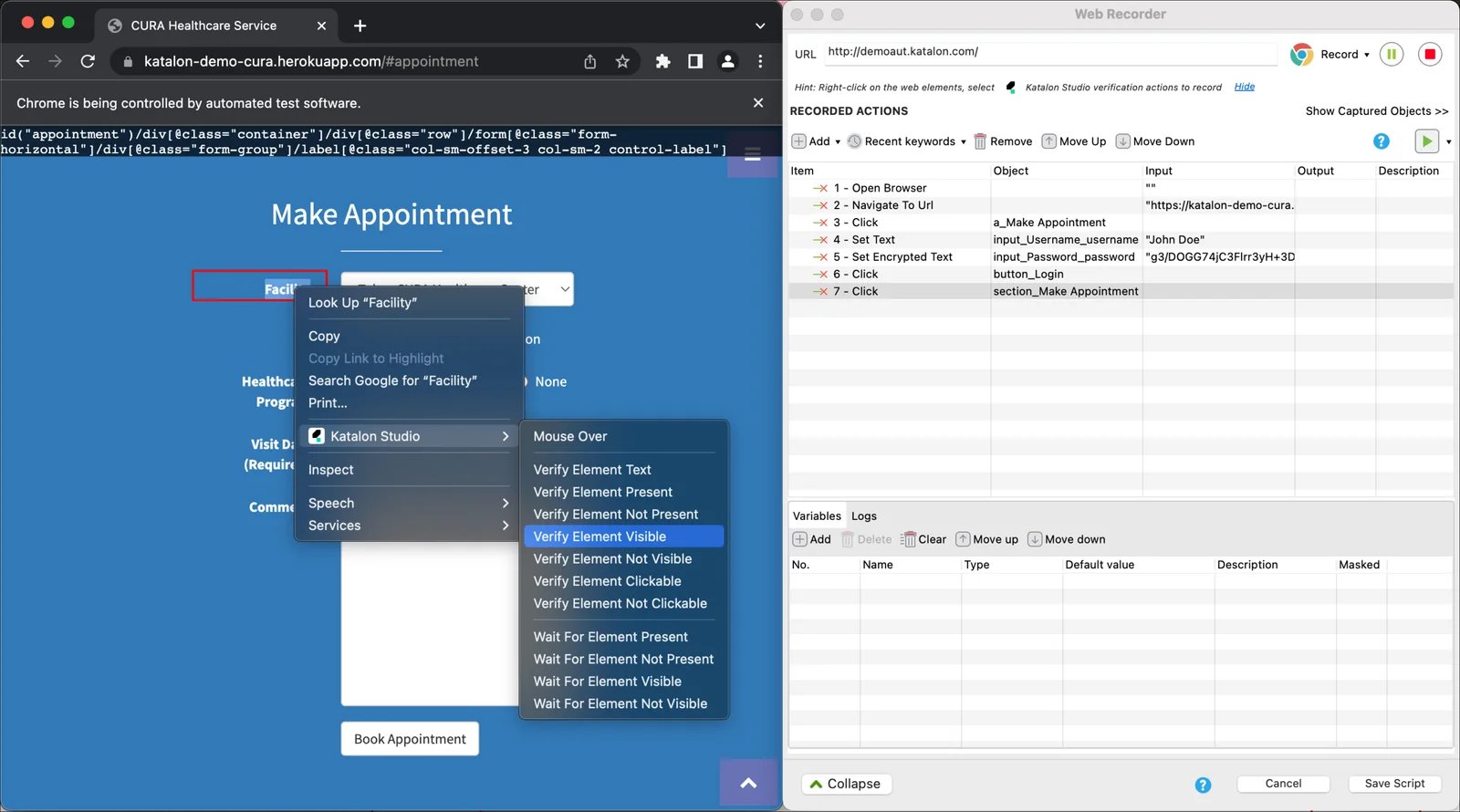
Use Katalon if your team is trying to consolidate a QA platform rather than add a narrow test authoring helper. Its official materials support a broad surface story, including web, mobile, API, and desktop testing, plus AI generation, self-healing, failure support, CI/test-management integrations, and enterprise controls.
Trade-off: Katalon's pricing can be modular. Public seat prices help with initial modeling, but cloud execution, edition choice, and add-ons can materially change the real cost. Do not treat a starting seat price as total cost.
Skip if: your buyer wants the simplest lightweight E2E tool with a single public fixed price.
mabl
mabl fits SaaS and product teams that want low-code AI-assisted QA tied to developer workflows, cloud execution, auto-healing, and failure analysis.
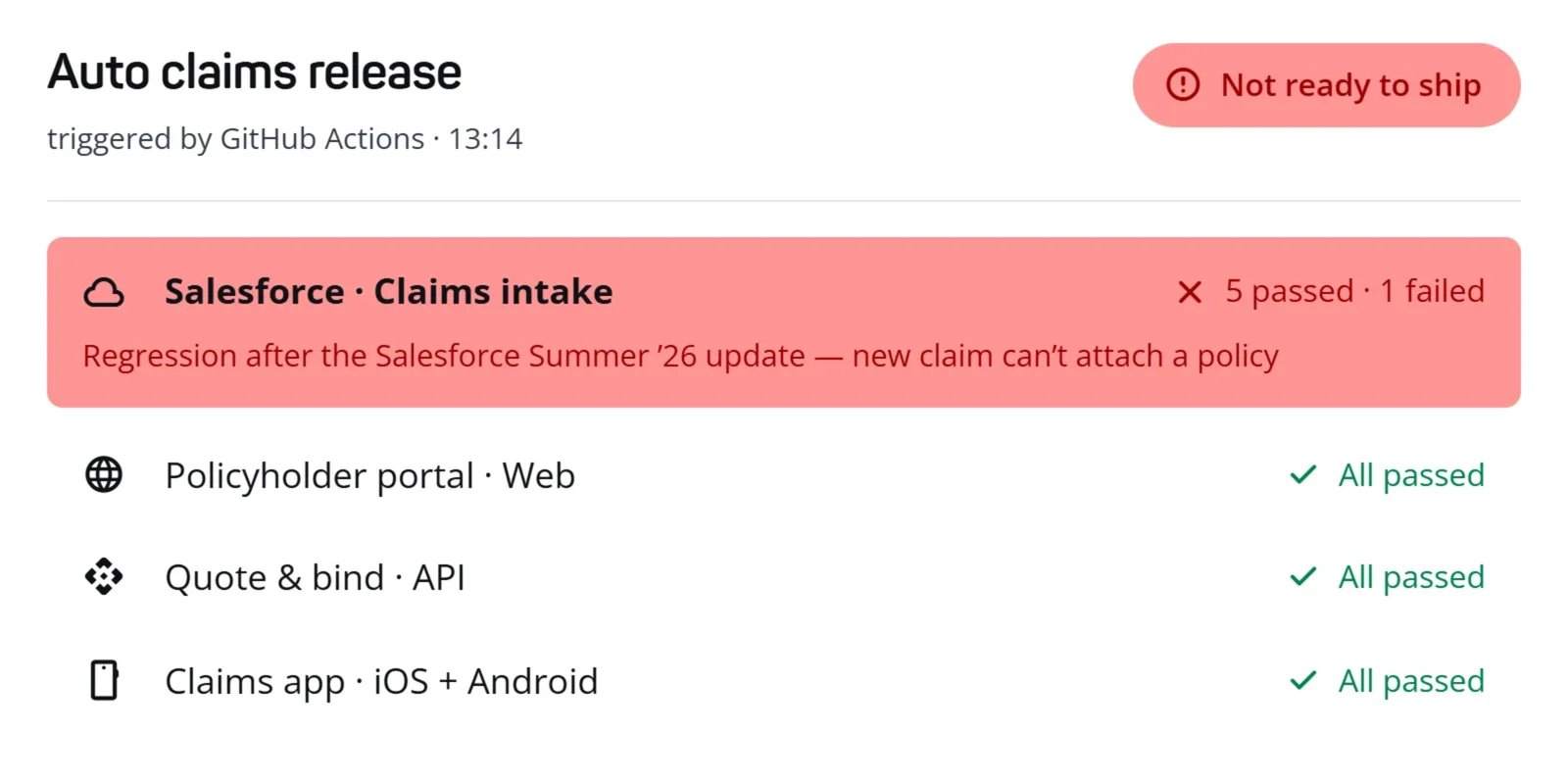
Its official pricing and product material points to browser UI, API, accessibility, performance, and mobile-add-on coverage, with root-cause insights, auto-healing, failure summaries, cloud concurrency, and developer workflow integrations.
Trade-off: pricing is customized, and cloud execution credits need workload modeling. A buyer should estimate how many cloud runs, parallel runs, and mobile runs the real suite will require.
Skip if: procurement needs transparent sticker pricing before even taking a demo call.
Testsigma
Testsigma has official evidence for agentic AI test automation across multiple app types, self-healing, integrations, and enterprise deployment controls.
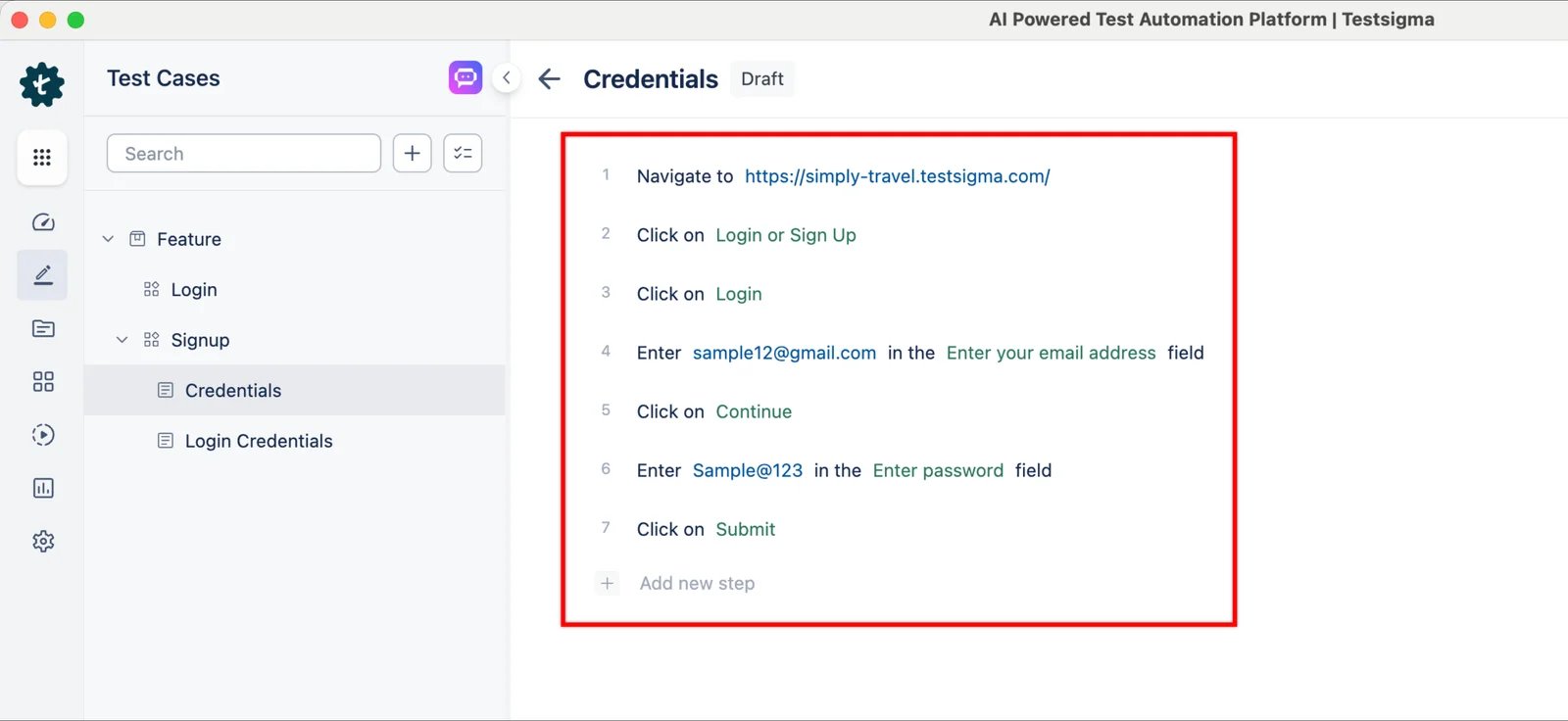
It belongs in the broad platform lane because its current official pages describe test generation from prompts, Jira stories, Figma designs, screenshots, and API specs, plus web, mobile, API, desktop, Salesforce, and SAP coverage. Pricing materials also emphasize parallel execution, seats, and enterprise deployment controls.
Trade-off: test automation pricing is sales-led for Pro and Enterprise. Some autonomous-testing wording also deserves a fresh plan-level check before publish, because maturity language can change quickly.
Skip if: your shortlist requires fixed public production pricing before vendor contact.
testRigor
testRigor documents plain-English E2E automation across web, mobile, API, email, SMS, CI, and test-management integrations, with SaaS and private/on-prem options.
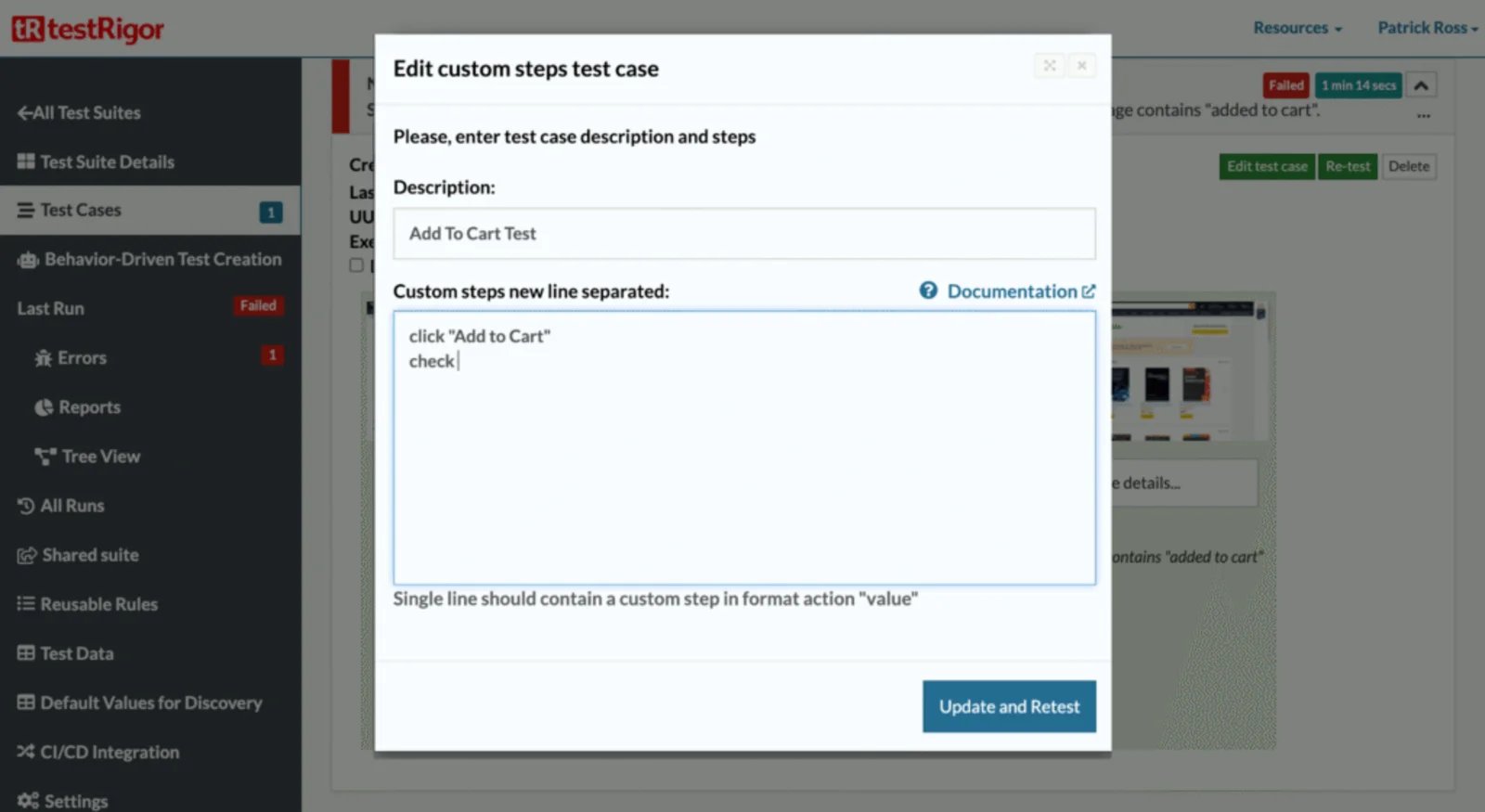
This is one route for buyers who want tests written in human-readable language rather than selector-heavy automation code. It is especially relevant when the QA team includes non-developers or when maintenance effort is the core pain.
Trade-off: the public/free path is not a safe default for confidential work. testRigor's public/free option can expose test information publicly, so commercial teams should evaluate private plans when apps, credentials, or test data are sensitive.
Skip if: long-term framework-native code ownership is mandatory and the specific testRigor workflow does not satisfy that requirement.
Functionize
Functionize describes agentic testing across creation, execution, diagnosis, and maintenance, with plain-language authoring, UI/API/data workflows, CI/CD interfaces, and enterprise deployment controls.
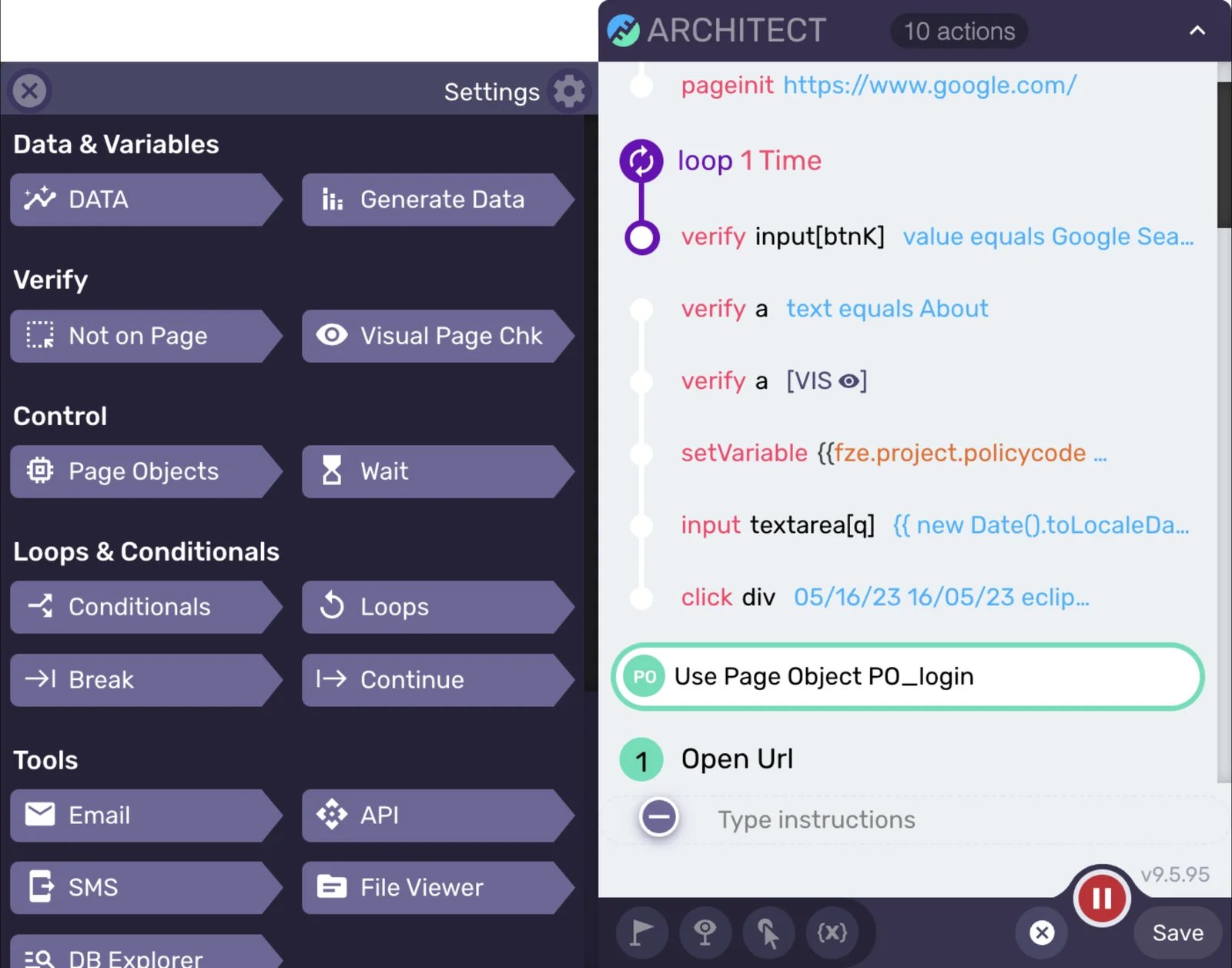
Route Functionize to teams that want an agentic QA platform discussion but still need enterprise controls such as security review, deployment options, and governance. It is a better fit for web/API-centric enterprise QA than for a buyer whose first non-negotiable is native mobile.
Trade-off: native-mobile scope is less clear from public material than it is for mobile-heavy alternatives. Cost also needs modeling because self-serve starting prices do not automatically describe enterprise usage.
Skip if: native mobile is the primary app surface and must be proven before shortlist.
Tricentis Testim
Tricentis Testim is a fit for buyers aligned with low-code web, mobile, and Salesforce automation who need smart locators, self-healing, root-cause support, and CI/version-control integrations.
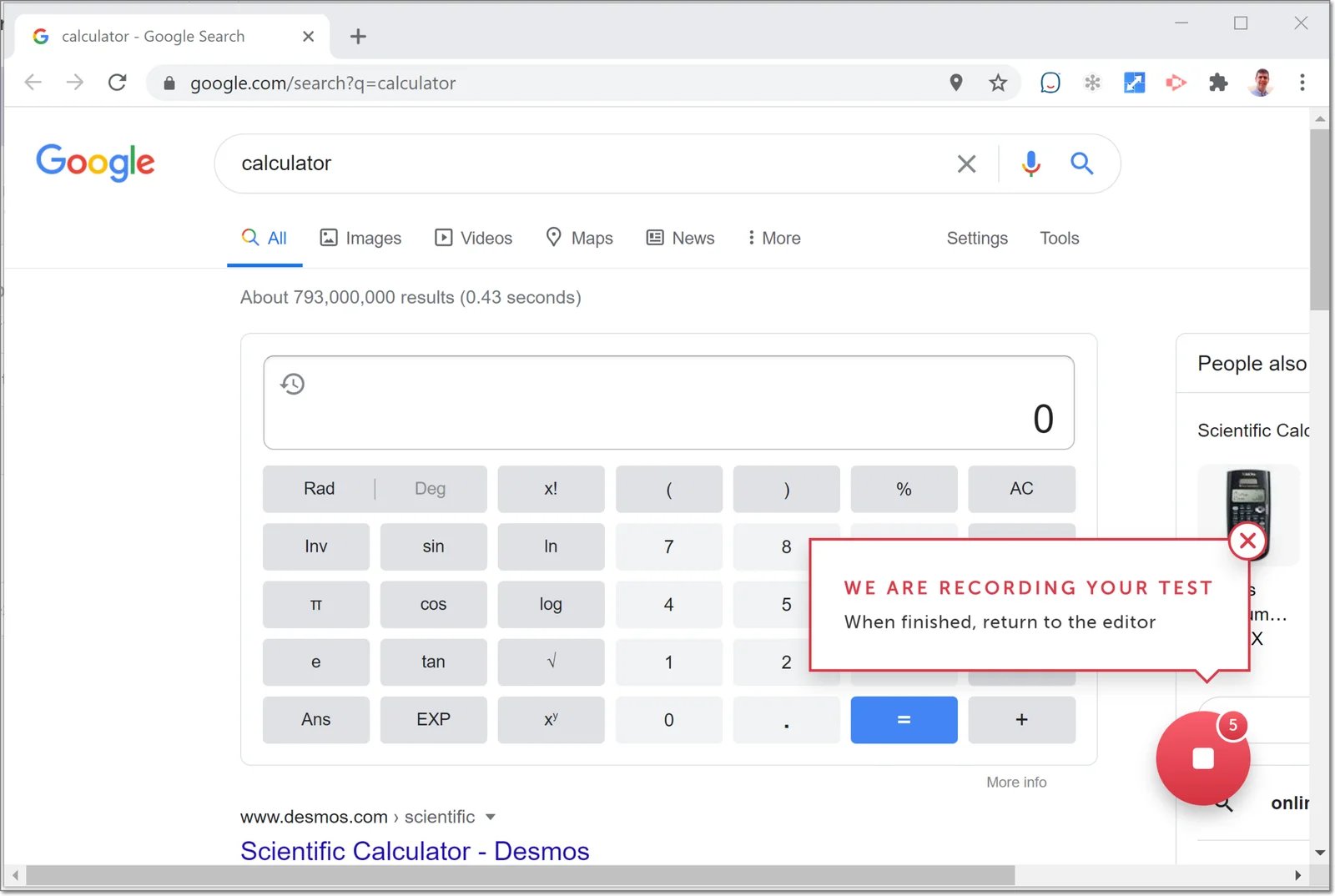
Its current official pages support web, mobile, and Salesforce automation, smart locators, self-healing, root-cause support, CI/version-control integrations, and Copilot assistance.
Trade-off: pricing is sales-led, and the exact maturity of each AI creation workflow should be confirmed against the buyer's target surface.
Skip if: you need a public price and a fully documented autonomous story before vendor contact.
Applitools
Applitools is routed as a specialist when visual correctness, cross-browser/device coverage, and augmentation of existing automation frameworks are central.
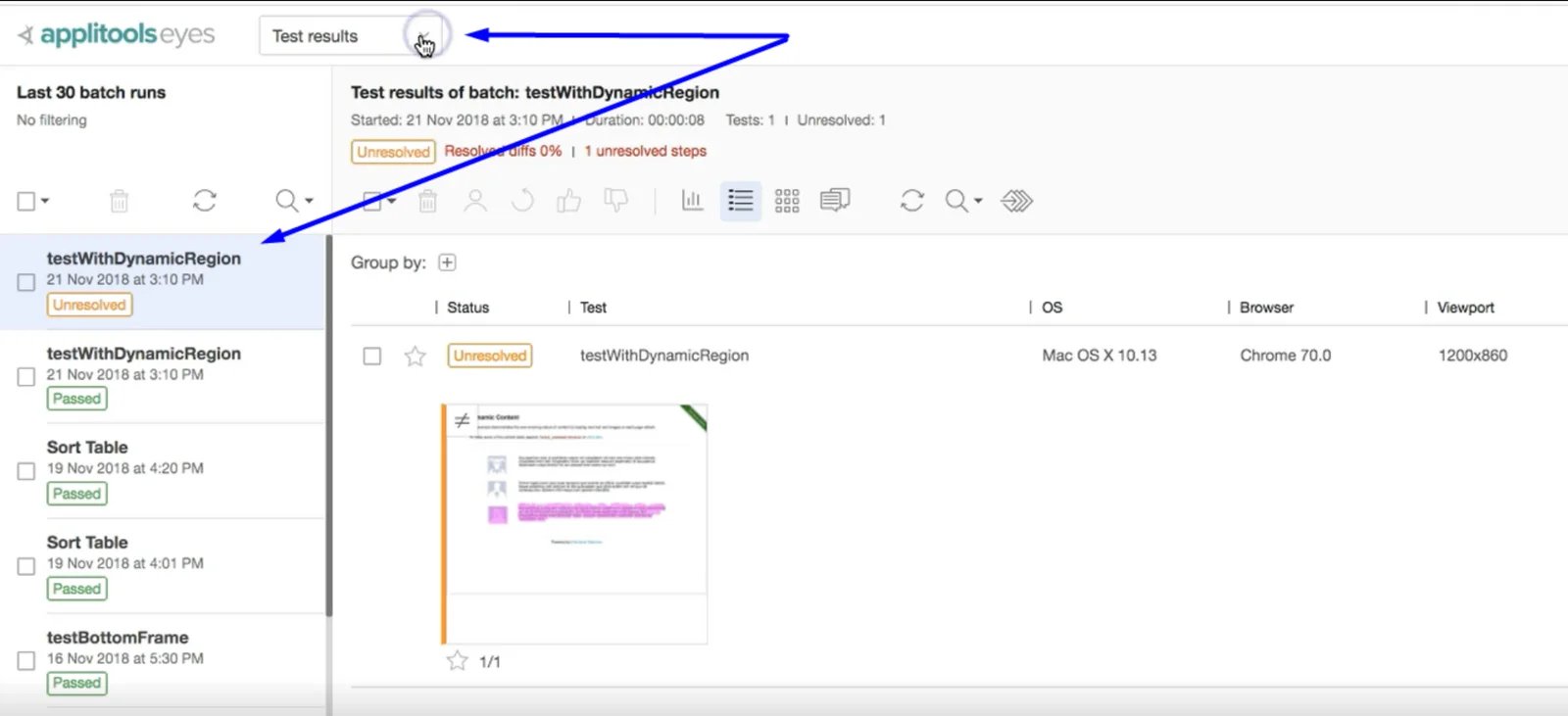
Its official platform pages support Visual AI, cross-browser/device execution, framework integrations, maintenance and root-cause workflows, and higher-tier AI functional/autonomous features. It is a strong first stop when the defect class is visual drift rather than missing test authoring capacity.
Trade-off: usage is not directly comparable with seat-based QA tools or managed QA services. Public pricing includes a Starter plan with checkpoint limits, and higher tiers require custom discovery. Visual accuracy still needs a representative pilot.
Skip if: your main concern is API-heavy validation, backend logic, or outsourcing QA coverage.
Autify
Autify should be routed around two related motions: autonomous natural-language testing through Aximo and Playwright-oriented authoring/code export through Nexus.
That split can be useful. A team looking for autonomous E2E authoring may evaluate Aximo, while a Playwright-centered team may care more about Nexus. But the split also makes Autify harder to compare as one monolithic product.
Trade-off: product/package boundaries, exact platform scope, and security evidence need fresh confirmation before final publish. Do not collapse Aximo and Nexus into one simple cell if the buyer's workflow depends on the distinction.
Skip if: your buyer wants one mature, easy-to-compare product package with unambiguous public pricing.
QA Wolf
QA Wolf combines a managed coverage-as-a-service motion with platform documentation for natural-language generation into standard Playwright/Appium tests, parallel runs, CI scheduling, and customer-reviewable test code.
That makes it valuable for a buyer whose actual job is not "buy a QA tool" but "get reliable automated coverage without building the whole function internally." It is also different enough that it should not be punished for not matching ordinary SaaS-seat comparisons.
Trade-off: a managed service must be evaluated on ownership, service model, handoff, SLAs, and tests-under-management, not just feature checkboxes. It may be the wrong answer if engineering must own creation and maintenance internally.
Skip if: your organization requires a pure self-serve software tool operated only by your own team.
TestMu AI / KaneAI
TestMu AI / KaneAI fits buyers who combine natural-language AI test authoring with broad browser/device execution infrastructure and credit or agent-based metering.
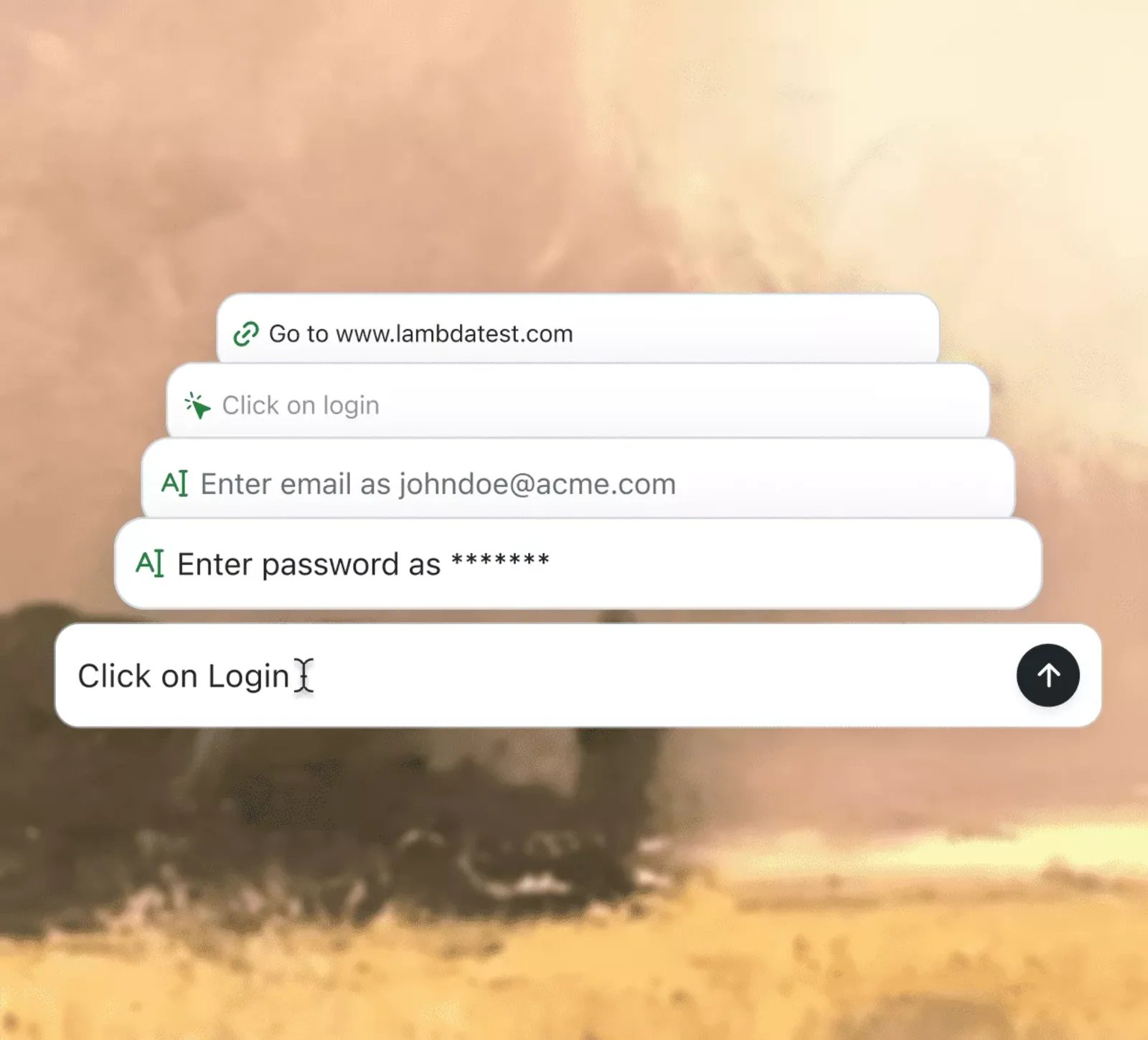
It is especially relevant when the real purchase includes device/browser breadth, cloud execution, mobile coverage, and natural-language authoring. The LambdaTest-to-TestMu AI rebrand makes freshness important: use current TestMu AI pages, not older name assumptions.
Trade-off: credit and agent-based economics need workload modeling. A low nominal plan price does not tell you the cost of running a realistic suite across browsers, devices, and authoring sessions.
Skip if: the buyer needs simple flat pricing and minimal metering complexity.
Momentic
Momentic is relevant for engineering-led teams that want plain-English web and mobile E2E workflows close to code and CI.
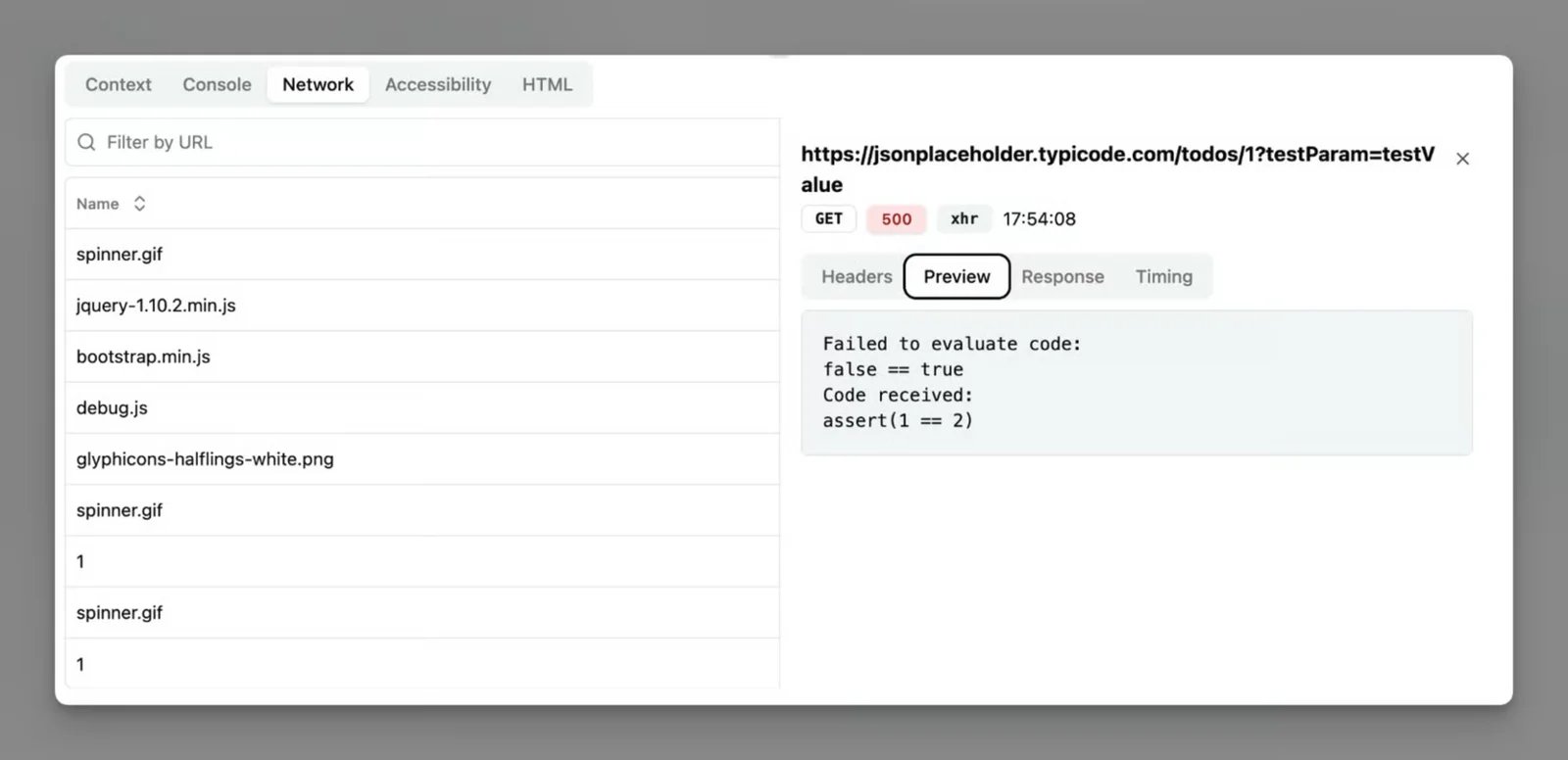
Its official site positions it around plain-English tests, web and mobile coverage, CLI/CI, hosted execution, and maintenance support. That makes it relevant for engineering teams that want tests to stay closer to development workflows.
Trade-off: public pricing and governance details were less complete than for several other products in this review. Missing evidence is not a quality judgment, but procurement-heavy buyers should confirm those details before treating Momentic as a primary shortlist option.
Skip if: pricing and governance details must be fully public before evaluation.
Other Routes to Consider
BrowserStack is highly relevant to the broader QA infrastructure market, but BrowserStack documents agentic testing in Low Code Automation as Alpha / limited trial. Keep it on the watchlist if device/cloud infrastructure is central, but do not present that agentic low-code experience as a GA-equivalent core candidate yet.
Virtuoso is relevant to AI-native testing and may deserve a future deeper look. For this review, treat it as a reserve option because it overlaps with natural-language AI-native testing and the shortlist already covers the main buyer lanes without padding.
Playwright, Cypress, and Selenium are important framework or browser-automation routes to evaluate when your real decision is framework ownership rather than vendor platform selection. Use a framework-selection guide instead if that is the real decision.
Qodo, Cursor-like coding assistants, and static code review tools belong to adjacent code quality workflows. If that is your job, use our AI code review tools guide or the AI code checker category instead.
TestSprite, Manta AI, and Drizz are narrower or product-specific options that may deserve future review, but they are not treated here as evidence-backed exclusions from the broader market.
What to Verify in a Pilot
Use the article as a shortlist, then run a representative pilot before choosing.
- Pick two or three real workflows: login, checkout, billing, permissions, onboarding, file upload, or another flow that actually breaks releases.
- Include one intentionally changed UI state so you can see whether AI healing preserves intent or hides a real defect.
- Run the same workflow in CI and inspect the artifacts: logs, screenshots, traces, videos, root-cause explanations, and machine-readable results.
- Model cost against your expected suite size, run frequency, browser/device matrix, parallelism, seats, credits, checkpoints, and managed-service scope.
- Confirm security and governance before using real credentials or confidential test data.
The useful question is not "which tool has the most AI?" The useful question is "which one can create, run, maintain, and explain the tests your team actually trusts?"
Final Selection Logic
Start with mandatory surface. If the product cannot cover your app surface in the mode you need, stop.
Then choose your ownership model. If your team wants to own the suite, favor broad QA platforms or natural-language E2E tools. If you want coverage delivered as an outcome, evaluate QA Wolf separately.
Then check evidence maturity. Avoid converting "AI," "agentic," "autonomous," or "self-healing" into quality claims until you have pilot evidence.
Finally, normalize cost. Seats, credits, checkpoints, device minutes, parallel runs, and managed coverage are different denominators. A cheap plan can become expensive if it does not match your real run frequency.
FAQ
What is the best AI test automation tool overall?
Which AI test automation tool is closest to plain-English testing?
Which tool should enterprise QA teams start with?
Is Applitools a full replacement for AI test automation platforms?
Should I use a free AI testing plan for a confidential app?
Which AI test automation tool should I pilot first?
Get ToolWorthy Weekly
New AI tools, practical guides, and selected AI signals in one weekly brief.
Related Posts
- Best Text-to-Speech APIs in 2026: Choose by Workload, Not Demo Voice
Compare 10 text-to-speech APIs by realtime protocol, voice control, pricing meter, language coverage, cloud fit, and private-deployment needs.
- 10 Best Web Scraping APIs in 2026: Choose the Right Contract
Choose among 10 web scraping APIs by the contract you actually need: raw page requests, structured extraction, crawling, managed datasets, or a platform runtime.
- 13 Best AI Code Review Tools 2026 - PR, Security & QA
Compare 13 AI code review tools for pull requests, security scanning, code quality gates, autofix, and engineering governance.
For AI tool founders
Built a tool that belongs in this decision set?
Request an editorial evaluation for possible inclusion in ToolWorthy.
Submit your tool for reviewPaid submission does not guarantee a ranking, recommendation, inclusion, or editorial outcome.