

Overview
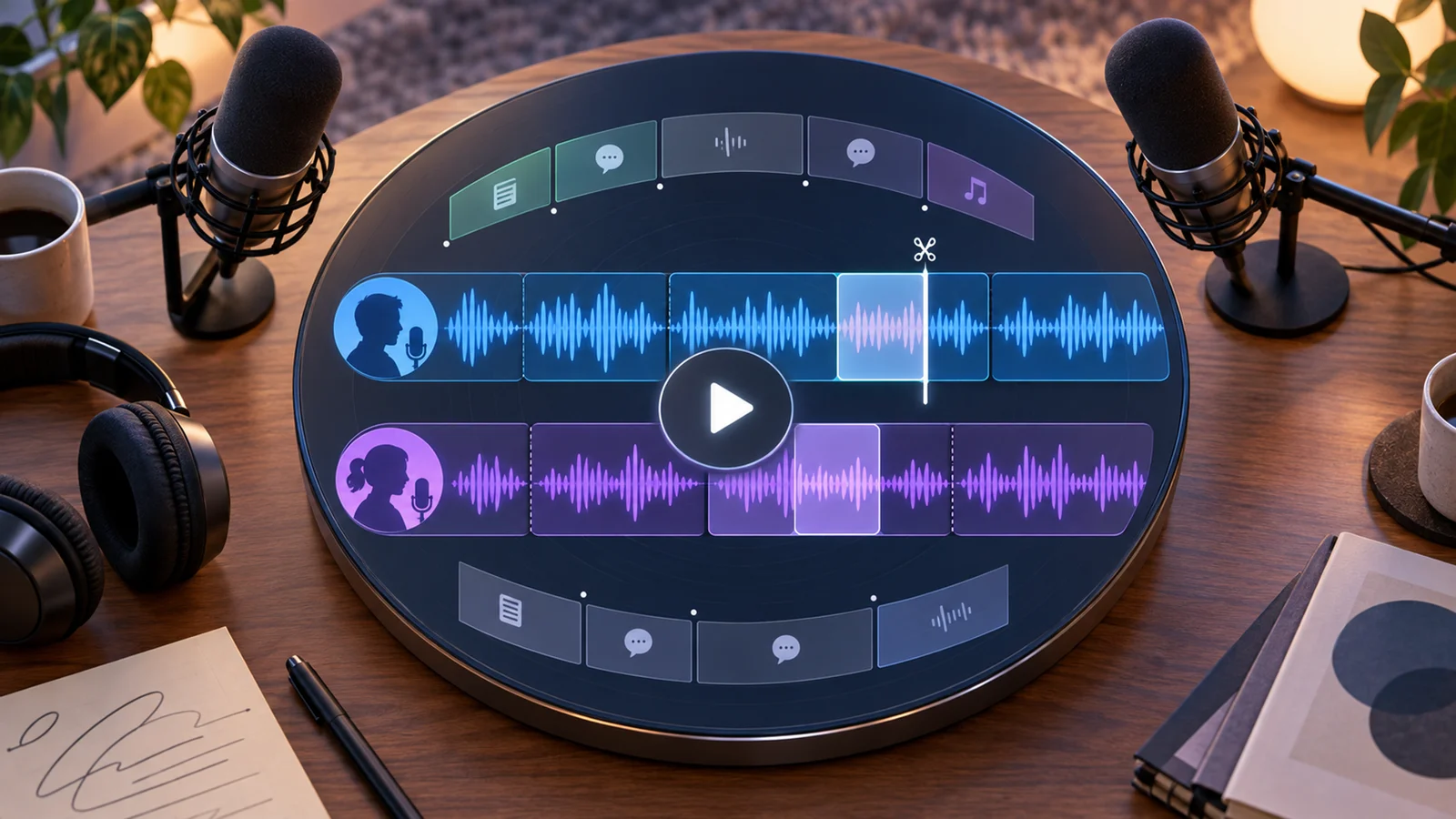
Riverside is an AI-assisted tool for podcast production, audio editing, recording, and cleanup workflows. The product page positions it around practical work rather than novelty: users bring in a podcast recording, voice track, remote interview, or audio cleanup task and use the tool to move faster from raw input to a usable output.
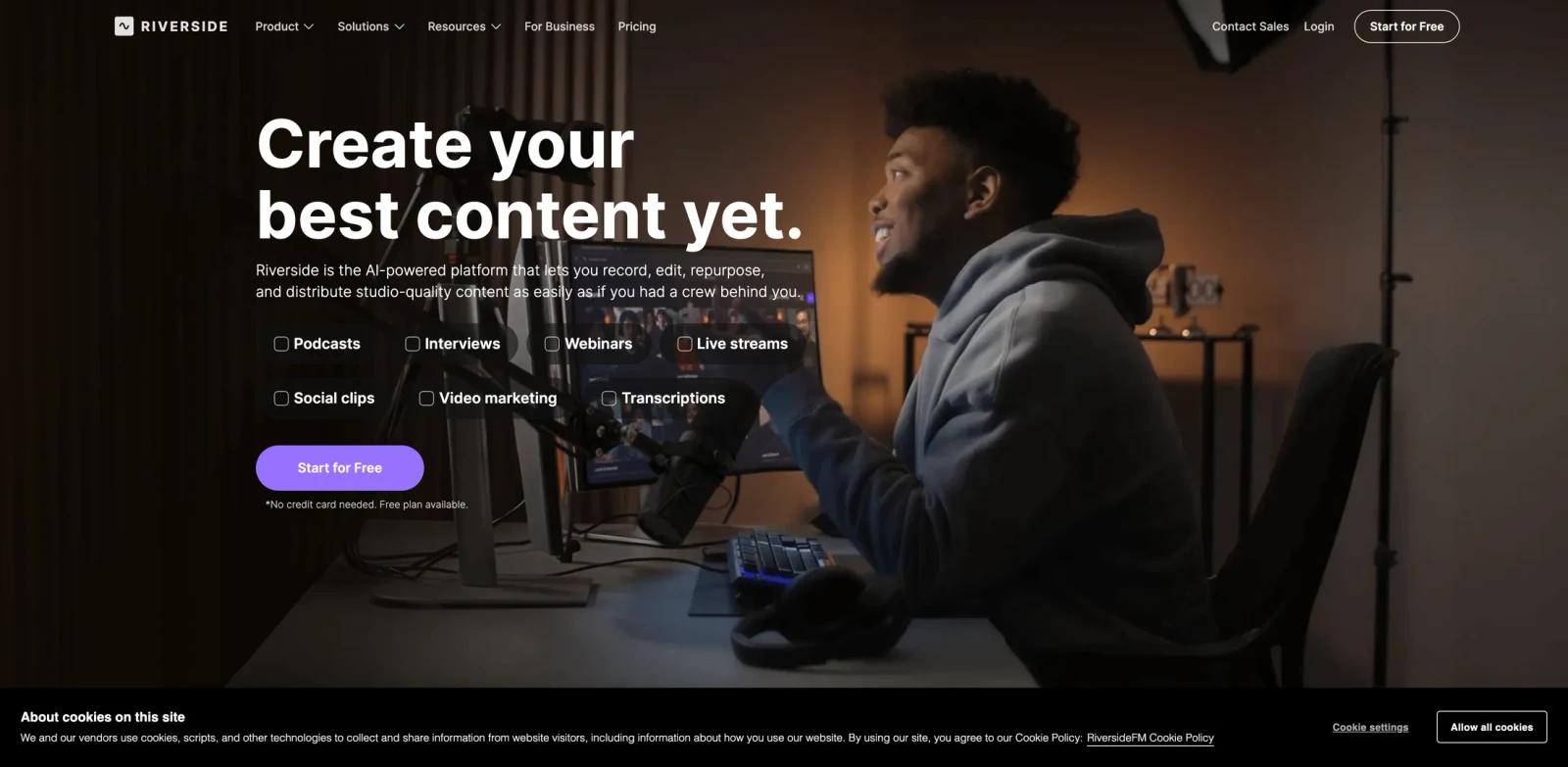
Riverside is your online studio for high-quality podcast and video recording and editing. Powered by AI, built for human conversations. Get started for free. Visible page signals include "Create your best content yet.", "End to end content creation. All in one flow.", "From concept to content, without ever leaving Riverside.", which helps buyers evaluate fit against real workflows.
Riverside belongs in a production workflow with AI podcast generator tools, AI audio editors, and AI audio cleanup tools, depending on whether the main task is recording, editing, or cleanup. The strongest fit is a team or individual with a repeatable workflow, clear review standards, and a need to reduce manual setup without handing final judgment to automation.
Key Features
- Recording and editing workflow - Helps creators capture, clean, edit, or publish voice-heavy content with less manual production work.
- Noise reduction and cleanup - Improves speech clarity by reducing common recording issues such as hiss, room noise, or uneven levels.
- Transcript and content reuse - Turns recorded audio into text assets that can support clips, show notes, summaries, and search.
- Remote production support - Supports interviews and collaborative recordings where participants are not in the same studio.
- Publishing handoff - Makes it easier to move from raw recording to a cleaner episode, clip, or shareable asset.
How to Get Started
- Open Riverside from the official product page and confirm that the workflow matches the task you want to improve.
- Prepare one realistic input from your current work: a podcast recording, voice track, remote interview, or audio cleanup task.
- Run a first output with default settings, then review quality, formatting, factual accuracy, tone, and handoff requirements.
- Test exports, integrations, collaboration settings, and privacy terms before using it for production work.
- Compare the time saved with the review time added. The tool is worth adopting when it reduces repeated work without lowering quality control.
Pricing & Plans
Riverside should be evaluated as a paid or sales-led product unless the vendor currently lists a durable free tier. The main buying question is not only the starting price; teams should verify implementation effort, integrations, support, admin controls, data terms, and how AI features are packaged.
| Plan type | What to expect | Best fit |
|---|---|---|
| Trial or demo | Limited evaluation, sales demo, or guided proof of concept when available. | Teams validating fit before procurement. |
| Paid subscription | Core workflow access, integrations, reporting, collaboration, and standard support. | Teams using podcast production, audio editing, recording, and cleanup workflows in regular operations. |
| Enterprise | Security review, custom terms, admin controls, procurement support, and premium success services. | Organizations with compliance, scale, or multi-team rollout needs. |
Ask the vendor to confirm current base pricing, seat rules, usage limits, data retention, AI add-ons, support response times, and renewal terms before purchase.
Best For
- podcasters editing episodes every week
- remote interview teams improving recording quality
- creators turning conversations into clean audio assets
- production teams reducing manual cleanup and post-production time
- Teams comparing multiple tools in this category and needing a practical benchmark before committing budget
FAQ
What is Riverside used for?
Riverside is used for podcast production, audio editing, recording, and cleanup workflows. It helps users turn a prompt, file, draft, dataset, recording, or workflow requirement into a more usable output with less manual setup.
Is Riverside free?
Riverside should be evaluated as a paid or sales-led product unless the vendor currently lists a durable free tier. Check whether a trial, demo, or proof of concept is available before procurement.
Who should consider Riverside?
Consider Riverside if your team handles podcast production, audio editing, recording, and cleanup workflows regularly and the current process is slow, inconsistent, or too dependent on one specialist. Occasional users may still benefit, but the return is clearer when the workflow repeats every week.
What should I test before adopting it?
Test it with a real input from your workflow. Review output quality, editing effort, privacy terms, export formats, collaboration controls, integrations, and whether the result can move cleanly into the next tool your team uses.
How does Riverside compare with general AI chatbots?
General chatbots are flexible, but Riverside provides a more focused workflow for podcast production, audio editing, recording, and cleanup workflows. That focus can reduce setup time, preserve formatting, and make handoff easier when the result needs to be published, shared, or reused.
Can teams use Riverside for client or commercial work?
Many tools in this category support professional use, but licensing and commercial rights vary by plan. Verify usage rights, watermarking, attribution, data handling, and output ownership before using results in client-facing or paid work.
Does Riverside replace human review?
No. It can reduce drafting, planning, analysis, or production time, but users should still review accuracy, tone, formatting, compliance, accessibility, and brand fit before publishing or sending final work.
What are the main risks?
The main risks are over-trusting generated output, misunderstanding plan limits, uploading sensitive data without checking terms, and using first drafts as finished work. A lightweight review checklist solves most of these issues.
What alternatives should I compare?
Compare Riverside with category-specific tools listed in AI podcast generator tools, plus adjacent workflows such as AI audio editors and AI audio cleanup tools. The right choice depends on whether you need speed, control, collaboration, governance, or the strongest final output quality.