What Alsona Does
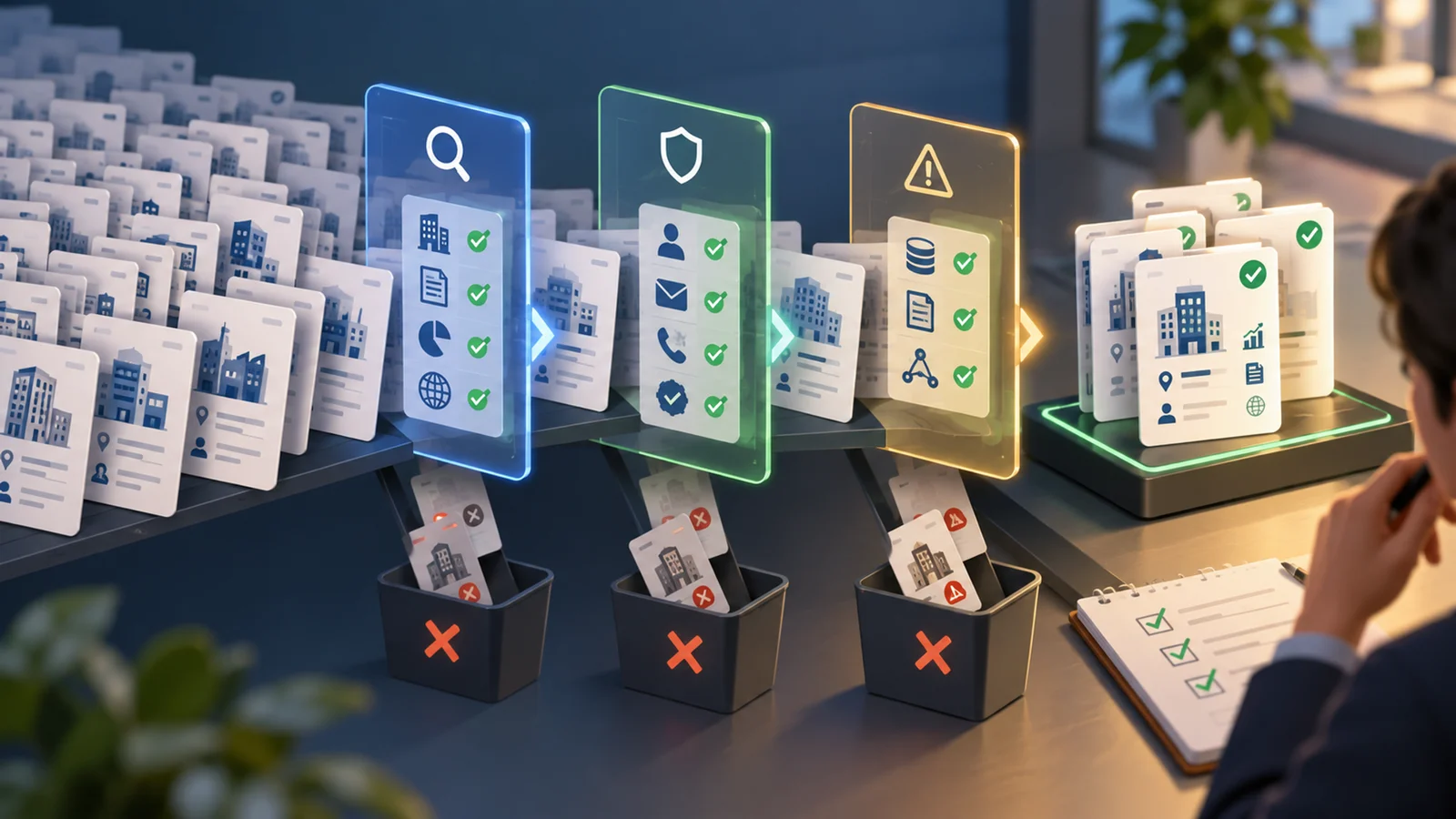
Alsona is an intent-led B2B outbound platform: it finds companies showing relevant buying signals, identifies prospects, and connects that context to LinkedIn and email outreach. Its useful distinction is the starting point of the workflow. An agent can begin with observed company activity rather than a finished contact list that needs another sequencer.
The product fits founders, outbound operators and agencies that want discovery and conversations in the same system. It belongs in AI lead generation, with sales assistance as a secondary use case. It is not a general-purpose CRM or a LinkedIn content-writing product.
Starter suits an approval-based workflow; Pro is the relevant starting comparison for teams that require autonomous sending. The published prospect allowances are plan limits, not guaranteed qualified meetings or pipeline.
From Buying Signal to Conversation
Discovery and qualification. Public sources include hiring activity, funding, technology changes, competitor engagement, reviews, news and podcasts. Alsona combines those signals with ideal customer profile criteria to prioritize prospects. The lead-scoring page also describes LinkedIn search, event and group sources, CSV imports and CRM-sourced prospects; users are not limited to automated discovery.
Contextual outreach. LinkedIn and email steps can use manually written copy or AI-generated messages. LinkedIn actions include connection requests, messages and InMail. A unified inbox collects conversations across connected senders, and the user can take over an agent-managed thread. These are documented capabilities, not evidence of a measured reply-rate improvement.
Controls that affect setup. The help center says opportunity scoring must be enabled before its thresholds take effect. Visibility and outreach thresholds are separate: a prospect appearing in results does not necessarily mean it will receive a message. Email-address enrichment also requires a Find business email step in the workflow; the presence of a prospect does not establish that an email address was found.
The official 3:47 demo above walks through website scanning, ICP targeting, signal selection, opportunity scores and outreach setup. It illustrates the vendor's workflow; it does not establish current plan entitlements or measured results. The analytics documentation distinguishes detected signals, high-intent companies, identified prospects and prospects pushed to outreach. Those counters should not be treated as interchangeable measures or used to infer a conversion rate.
Starting Cost and Automation Boundaries
The current public plans are monthly subscriptions. Every plan advertises a seven-day trial requiring a credit card. A trial is temporary access, not a permanent free tier.
| Plan | Monthly price | Published prospect allowance | Active agents | Main control difference |
|---|---|---|---|---|
| Starter | $99 | 500 high-intent prospects/month | 2 | Messages require approval; 11 standard signals |
| Pro | $149 | 2,500 high-intent prospects/month | 8 | Adds full autopilot, the full standard-signal catalog and two-way CRM sync |
| Ultra | $499 | 10,000 high-intent prospects/month | Unlimited | Adds two custom signals, five senders and advanced roles |
Starter and Pro each include one sender. The pricing and billing pages define a sender as one LinkedIn account plus one email account; the sender setup guide defines it as a LinkedIn account, an email account, or both. Additional senders cost $59/month each. Confirm how single-channel accounts and LinkedIn/email pairing consume the included sender allowance.
Ultra's trial covers the standard product; custom signals are scoped during onboarding and built after the customer is on the paid plan.
A cost detail remains unresolved in the public documentation. The pricing page describes prospect allowances and says unlocked signals run at no extra cost. The October 1 billing reference lists credit charges for enrichment, verified emails and signal scans. An August credit-usage guide instead says only detected signals consume credits, and a September setup guide uses signal allowances rather than the prospect allowances shown above. These units and charging rules cannot safely be equated. It does not clearly reconcile those charges with the headline prospect allowances. Before budgeting a signal-heavy campaign, confirm what is included and when purchased credits are consumed; do not assume unlimited research because outreach and replies are not metered separately.
Account and Integration Requirements
The FAQ says agents require a paid LinkedIn subscription and that basic free accounts cannot run agents. However, the sender setup guide also documents email-only senders. It does not establish whether email-only agents can run without a paid LinkedIn subscription; that prerequisite remains unverified for an email-only deployment. It documents Google and Microsoft email connections and no SMTP option. These prerequisites matter if an existing mailbox or LinkedIn account must be preserved.
Native connectors. HubSpot and Salesforce are identified as available native integrations in the FAQ. The integrations page labels Pipedrive and Close as Native, while the FAQ says those connectors and native Zapier are not yet enabled. The FAQ describes Zapier through generic webhooks and API actions instead. Treat disputed native connectors as unverified.
API and webhooks. Descriptions also conflict: the marketing page advertises 60+ webhook events, REST, GraphQL and SDKs, while the FAQ documents four events and a REST API without confirming GraphQL. Required events, API interfaces and plan access need product-level confirmation; logos alone do not establish operational availability.
No independent account-safety, deliverability, security-certification or performance conclusion is established by this source-based review.
Avoid If
- The requirement is fully autonomous sending on the lowest-priced plan: Starter uses approval mode.
- LinkedIn outreach must run on a basic free account, or SMTP connectivity is essential: the documented setup does not support those requirements. Email-only operation without a paid LinkedIn subscription needs separate confirmation.
- A purchase depends on exact all-in credit costs or an integration whose availability conflicts across official pages: resolve that specific dependency before subscribing.
- The main job is CRM record management or post creation rather than signal-led prospecting and outreach.
Sources & Verification
- Last verified: October 14, 2026.
- Method: Source-based research from the official product materials below. No hands-on testing was performed for this update.
- Official sources: Product, lead scoring, AI outreach, unified inbox, integrations, pricing, billing reference, sender setup, credit usage, account setup, setup and workflow FAQ, analytics documentation, and official product demo.
- Evidence limits: Older help articles describe 31 signal sources while current pricing describes 32 standard signals. This page avoids treating a catalog count as a universal plan entitlement. Credit accounting and some integration availability remain unresolved as described above. The demo is supplied by Alsona and does not represent testing performed for this listing.