
10 Best Intercom Alternatives 2026 — After the Fin Rebrand
Intercom did not just change pricing in 2026. It changed identity. On May 12, the company said "Intercom becomes Fin"; a month later, Salesforce announced a definitive agreement to acquire Fin, formerly Intercom, for about $3.6B. At the same time, the practical buying question got more complicated: the support suite still has seat pricing, but Fin AI Agent is priced from $0.99 per outcome, with outcome rules that support leaders need to model before they can forecast the bill.
So this is not a generic live-chat list. If you are comparing Intercom alternatives in 2026, you are probably choosing between five different exits: mature help desk operations, simpler SMB support, human shared inbox, ecommerce support, or open-source control. For broader discovery, see our alternatives category; this guide stays focused on replacing Intercom/Fin specifically.
| Tool | Best For |
|---|---|
| Zendesk | Enterprise help desk depth |
| Freshdesk | SMB ticketing with lower entry cost |
| Help Scout | Human email support without platform bloat |
| Crisp | Workspace-priced live chat and inbox |
| Front | Shared inbox operations |
| Gorgias | Ecommerce support and Shopify context |
| Tidio | SMB live chat plus Lyro AI |
| Chatwoot | Open-source or self-hosted control |
| HubSpot Service Hub | CRM-native service workflows |
| Kayako | AI-resolution support positioning |
Why People Are Leaving Intercom in 2026
Intercom is still one of the most capable customer support platforms on the market. The reason people search for alternatives is rarely "Intercom is bad." It is usually more specific: the team has outgrown chat-first support, cannot forecast AI usage, does not want another full customer platform, or wants control over data and deployment. The 2026 Fin rebrand makes those trade-offs harder to ignore.
1. The Fin bill mixes seats, outcomes, and add-ons
Intercom's current pricing page is clear about the pieces, but the combined bill still takes modeling. Essential lists at $29 per seat/month annual, with Intercom's official calculator currently showing a $19 new-customer annual offer; Advanced is $85, Expert is $132, and Fin AI Agent starts at $0.99 per outcome. Intercom's outcome rules explain that billable Fin outcomes include resolutions, procedure handoffs, disqualifications, and higher-priced qualifications, with only one outcome charged per conversation.
That means a support leader cannot compare Intercom to Freshdesk or Zendesk by seat price alone. They need to estimate monthly conversations, expected AI resolution rate, excluded conversations, escalation behavior, add-ons such as Copilot, and seasonal spikes. Third-party pricing guides noticed the same issue: Voiceflow describes Intercom's AI layer as outcome-based, and Quackback models 1,000 resolutions as roughly $990 before seats. The user signal is older but consistent: in the Chatwoot Launch HN discussion, one Intercom user called it "just so damn expensive". The problem is not only "expensive." It is that a listed $29 seat plan, a promotional $19 entry point, and a high-volume Fin deployment are different buying decisions.
2. The Fin rebrand and Salesforce deal create roadmap uncertainty
The timeline is recent. On May 12, 2026, Intercom announced that the company was becoming Fin. On June 15, 2026, Salesforce announced it had signed a definitive agreement to acquire Fin, formerly Intercom. Salesforce described Fin as powered by a proprietary Apex AI model and positioned the deal inside its customer-service AI strategy.
That may turn out well for customers. Salesforce has distribution, enterprise relationships, and deep service-cloud context. But alternatives searchers are not only asking whether Fin is good. They are asking whether packaging, data controls, integrations, roadmap priorities, or admin assumptions will change after the deal closes. Older Intercom discussions already showed a trust scar around pricing. In a Hacker News thread, one user called Intercom "way too expensive"; another thread complained about "price gouging". The 2026 ownership change gives those concerns a new reason to resurface.
3. Some teams only need support, not a full customer platform
Intercom is powerful because it bundles messenger, help center, customer data, automation, outbound messaging, support inbox, product tours, and AI. That is also why smaller teams start looking elsewhere. If your actual need is "answer email tickets and maintain help docs," a broad customer platform can feel like an expensive operating system for a narrow job.
This is an old Intercom complaint with a new AI layer. One Hacker News commenter described Intercom as a "shadow CRM" trying to do too much. A more recent Opencom thread framed the same startup pain as "complex and expensive pricing". Alternatives like Help Scout, Crisp, Tidio, and Freshdesk win when they let teams buy the support workflow they actually use, instead of inheriting every customer-platform module because the messenger was good.
4. Chat-first support does not fit every operations team
Intercom's messenger-first model is excellent for product-led SaaS, in-app support, and fast handoff from bot to human. But many support teams are not organized around chat. They need queue management, email threading, SLAs, macros, audit trails, QA, multilingual routing, escalation rules, phone support, and reporting that matches a help desk rather than a growth platform.
That is where Zendesk and Freshdesk enter the conversation. Zendesk's public pricing still starts Support Team at $19 per agent/month annual, while Suite plans layer in broader service operations. Front is different again: it starts from shared inbox and customer operations rather than ticketing. The HN live-chat guide discussion included a simple migration signal: one user said they would "recommend HelpScout instead of Intercom". The right alternative depends on your operating model. If the customer experience is chat-first, Intercom/Fin may remain the benchmark. If support is ticket-first, the benchmark changes.
5. Technical teams want self-hosted or open-source control
Some teams are not leaving Intercom for a cheaper SaaS. They are leaving because they want to own the support stack. Chatwoot, Opencom, and other open-source Intercom-style projects show a persistent demand for self-hosted inboxes, custom workflows, and control over customer conversation data.
The Chatwoot Launch HN discussion made that demand obvious years ago: Chatwoot described itself as an "open-source alternative to Intercom", and Opencom later used the same framing for a product you can run yourself. Chatwoot now publishes both cloud plans and self-hosted plans, including a free Community Edition. The trade-off is real: you take on implementation, hosting, maintenance, and admin overhead. But for engineering-led startups, B2B products with strict data policies, or teams that need custom support UX, control can be worth more than polish.
6. AI support needs controls, not only an agent
Fin's core promise is autonomous support resolution. That is valuable. But AI support does not succeed only because an agent answers questions. It succeeds when the knowledge base is clean, handoff rules are explicit, QA catches bad answers, coverage is measured by topic, and humans can override confidently.
This is why AI support alternatives split in different directions. Tidio sells Lyro AI as an SMB website support layer. Kayako emphasizes a per-resolution AI model. Zendesk and Freshdesk put AI inside larger support operations. Gorgias connects AI to ecommerce order context. Chatwoot gives technical teams more deployment control. The Opencom HN post listed a "Knowledge base + an AI agent with human handoff", which is the right framing: AI plus controls. The better question is not "which Intercom alternative has AI?" It is "where do we want AI control to live: help desk, shared inbox, ecommerce suite, CRM, or our own infrastructure?"
Top 10 Intercom Alternatives Compared
The first row is Intercom/Fin as the baseline. The alternatives are not ranked as universal winners; they are sorted by how directly they solve common Intercom switching reasons in 2026.
| Tool | Pricing Shape | Cost Predictability | Core Model | Migration Effort | Best Switching Fit |
|---|---|---|---|---|---|
| Intercom / Fin | Essential lists at $29/seat/mo annual, with a $19 new-customer offer visible; Fin from $0.99/outcome; add-ons extra | Medium: clear pieces, variable AI volume | Messenger, inbox, help center, AI agent, customer platform | Baseline | Product-led SaaS support with strong in-app chat |
| Zendesk | Support Team from $19/agent/mo annual; Suite Team from $55 | High for seats; AI/add-ons depend on plan | Enterprise help desk and omnichannel service | Medium | Support teams needing mature operations |
| Freshdesk | Growth $19/agent/mo annual; Pro $55; Enterprise $89; extra AI Agent sessions add cost | Medium: Omni, Copilot, and AI sessions add cost | SMB help desk and omnichannel ticketing | Medium | Teams leaving Intercom for simpler ticketing |
| Help Scout | Free for 5 users; Standard $25, Plus $45, Pro $75/user/mo; AI Answers $0.75/resolution | High for seats; AI Answers is usage-based | Shared inbox, docs, Beacon widget | Low | Human support teams avoiding platform bloat |
| Crisp | Free; Mini $45/workspace/mo; Essentials $95; Plus $295 | High for subscriptions; AI use is limited by included credits | Live chat, inbox, CRM-lite, campaigns | Low | Startups wanting chat suite with simpler pricing |
| Front | Starter $25/seat/mo annual; Professional $65; Enterprise $105 | High for seats | Shared inbox and customer operations | Medium | Email-first teams replacing Intercom inbox |
| Gorgias | Helpdesk ticket tiers plus AI Agent at $1 on Starter or $0.90 on most plans per resolved interaction | Medium: ticket and AI volume both matter | Ecommerce support suite | Medium | Shopify and ecommerce support teams |
| Tidio | Free; Starter $24.17/mo annual; Growth from $49.17; Plus from $300 plus usage; Lyro add-on available | Medium: conversation and AI quotas apply | Website live chat plus AI agent | Low | SMB websites needing quick chat and AI |
| Chatwoot | Cloud from $0; Startup $19/agent/mo annual; self-hosted Community free | High if self-managed; cloud extras apply | Open-source inbox and live chat | High | Teams needing source access or self-hosting |
| HubSpot Service Hub | Free tools; paid Service Hub seats; onboarding on higher tiers | Medium: suite bundling matters | CRM-native service platform | High | Teams standardizing on HubSpot CRM |
| Kayako | Public AI messaging emphasizes $1 per resolution; contract terms vary | Medium: resolution math still matters | AI-first support suite | Medium | Buyers who like outcome pricing but want alternatives |
Detailed Reviews
Zendesk
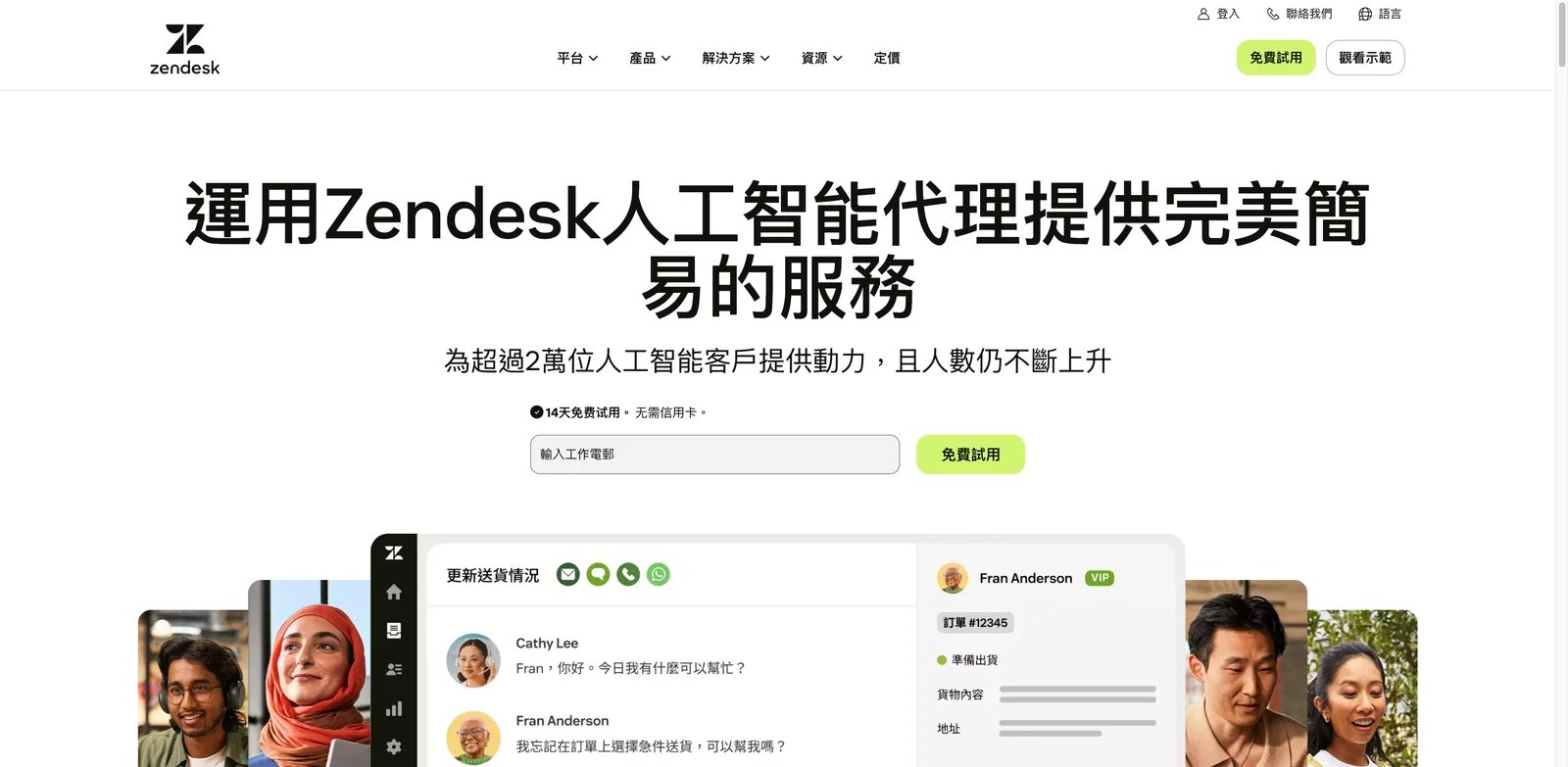
Zendesk is the default Intercom alternative when the switching reason is operational depth. It is not trying to be a friendlier Intercom messenger. It is a mature support system for teams with ticket queues, SLAs, macros, routing, reporting, QA, help center management, and enterprise administration. If Intercom feels too chat-first for the way your support team actually works, Zendesk is usually the first product to evaluate.
What Zendesk solves vs Intercom:
- Ticket-first support operations with more mature queue management, assignment, macros, automations, and escalation workflows.
- Stronger fit for email, web, phone, messaging, and enterprise support channels that need a unified help desk rather than only an in-app messenger.
- Better reporting and admin model for support leaders who manage teams, SLAs, and service quality.
- Large ecosystem of integrations, consultants, implementation partners, and enterprise procurement familiarity.
- AI can sit inside a full support operation instead of being the primary product story.
Pricing vs Intercom: Zendesk Support Team is published from $19 per agent/month annual. Suite Team starts at $55 per agent/month annual, with higher Suite tiers for more advanced service operations. Compared with Intercom Essential, which lists at $29 per seat/month annual but currently shows a $19 new-customer offer, Zendesk can be comparable at the entry support layer and more expensive once you climb into full Suite, enterprise, AI, and add-ons. The important distinction: Zendesk pricing starts from support operations, not messenger-plus-AI outcomes.
Limitations: Zendesk can feel heavy for a five-person SaaS team that mainly wants in-app chat and onboarding. Implementation takes real admin work: views, triggers, macros, business rules, help center structure, and agent training. The user experience is less product-led and more help-desk-oriented than Intercom. If your support motion depends on in-app messenger engagement and product events, Intercom remains more natural.
Best for: Support organizations that need mature ticketing, SLAs, reporting, routing, and enterprise service operations. Not the right fit if your team only needs lightweight website chat or wants the fastest possible startup setup.
Get started with Zendesk
Freshdesk
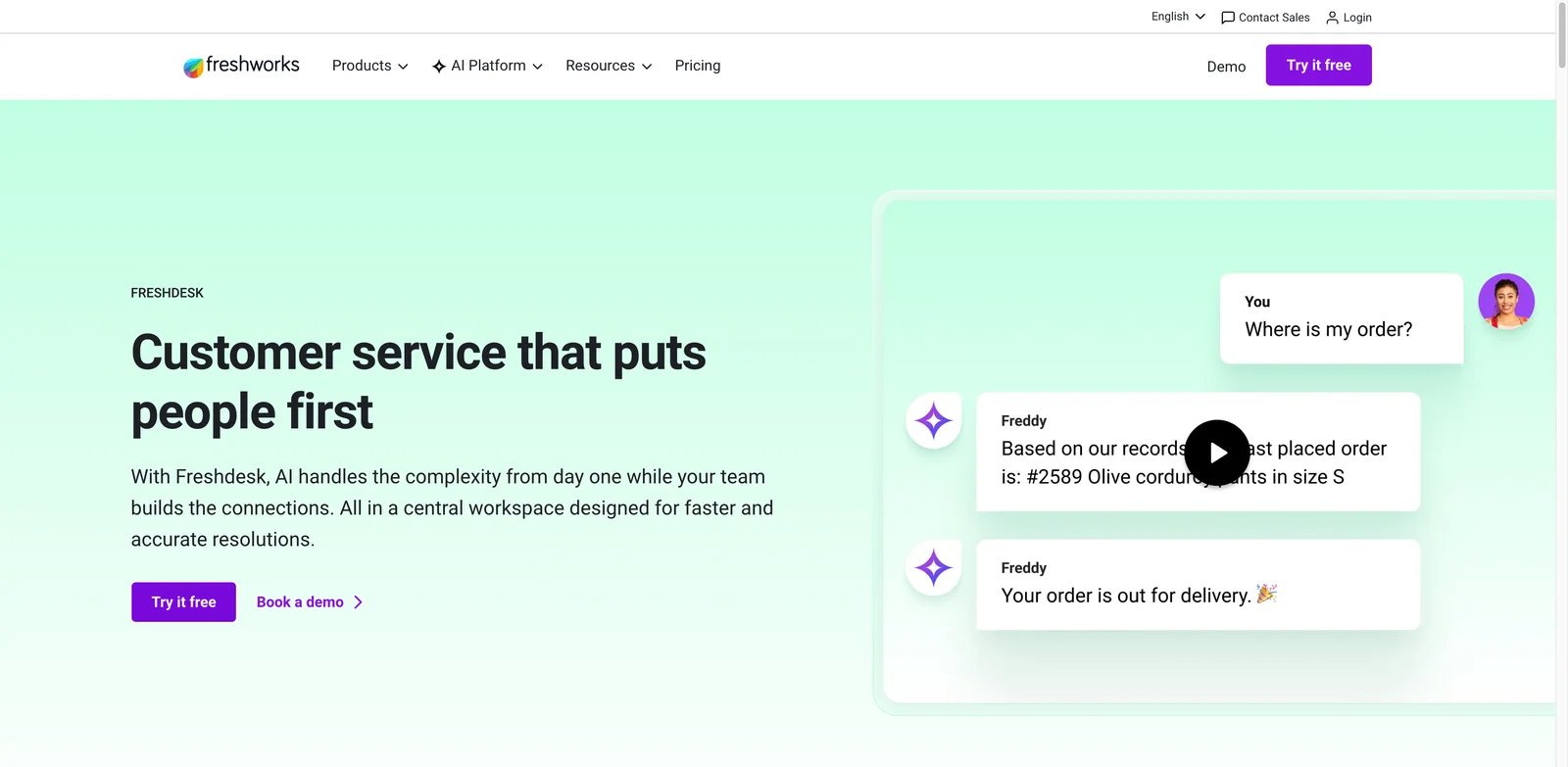
Freshdesk is the pragmatic SMB help-desk alternative to Intercom. It is usually easier to buy and easier to operationalize than Zendesk, while still giving teams ticket queues, automations, knowledge base, email support, and omnichannel options. If Intercom feels like a customer-engagement platform when all you need is reliable support coverage, Freshdesk is a sensible landing pad.
What Freshdesk solves vs Intercom:
- Ticketing-first workflow for teams that handle email support, forms, and queue-based requests more often than in-app chat.
- Lower-friction implementation than enterprise help desks, especially for small and mid-sized support teams.
- A clear path from basic support to omnichannel service without forcing every team into a broad customer platform immediately.
- Freshworks ecosystem integration if you also use CRM, marketing, or IT products from the same vendor.
- Good fit for teams that want AI and automation as support features, not as the entire buying thesis.
Pricing vs Intercom: Freshdesk publishes Growth at $19 per agent/month annual, Pro at $55, and Enterprise at $89. Growth includes the first 500 Freddy AI Agent sessions, while additional AI Agent sessions and Freddy AI Copilot are add-ons. Compared with Intercom, Freshdesk can be easier to forecast for traditional support because the base model is agent seats and help-desk capability. If you add Freshdesk Omni, Copilot, or high AI-session volume, re-check the live quote before assuming it remains cheaper.
Limitations: Freshdesk does not match Intercom's in-app messenger polish or product-led engagement features. Complex enterprise teams may still outgrow it into Zendesk or Service Cloud. Some AI and omnichannel capabilities live in higher packages, so the cheapest Freshdesk plan is not a full Intercom replacement. Migration from Intercom bots and outbound campaigns will require redesign, not export/import.
Best for: SMB support teams that want ticketing, knowledge base, and automation without Intercom's broader customer-platform feel. Not the right fit if in-app messaging and product-event-based engagement are your main workflows.
Get started with Freshdesk
Help Scout
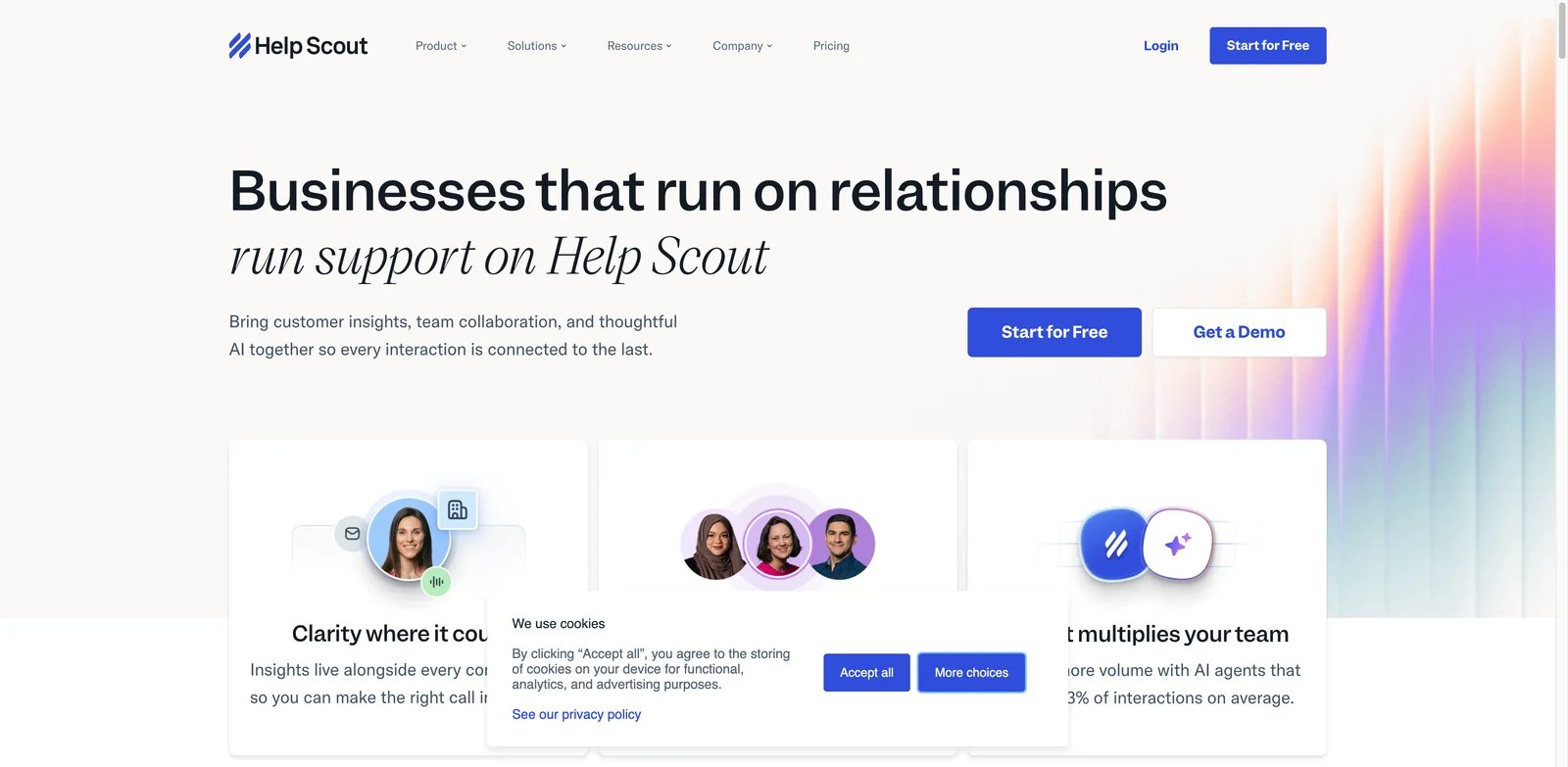
Help Scout is the Intercom alternative for teams that still believe support should feel like email from a real person. The product centers on shared inboxes, Docs, Beacon, customer profiles, and light automation. It does not try to become a giant engagement suite, which is exactly the appeal for founders and support teams tired of buying a platform when they need a clean mailbox and help center.
What Help Scout solves vs Intercom:
- Human-first shared inbox that keeps conversations clean, readable, and close to email.
- Docs and Beacon give customers self-service and in-app/web support without adopting Intercom's full messenger platform.
- Easier agent onboarding for teams that do not need complex routing or heavy support operations.
- Less product/marketing bloat for companies that separate support from lifecycle campaigns.
- Strong cultural fit for SaaS teams that compete on high-touch support rather than maximum deflection.
Pricing vs Intercom: Help Scout publishes a Free plan for up to five users, then Standard at $25, Plus at $45, and Pro at $75 per user/month on annual billing. AI Answers is a separate $0.75-per-resolution add-on, with a three-month free trial for new accounts. Compared with Intercom, Help Scout is often easier to forecast for human inbox support, but high AI Answers usage should still be modeled separately.
Limitations: Help Scout is not a full replacement for Intercom's product-led messenger, outbound messaging, tours, and deep event-triggered engagement. It also lacks the enterprise support-ops depth of Zendesk. If your team needs omnichannel routing, complex SLAs, and advanced reporting, Help Scout can feel too simple. If you need high-volume AI deflection, evaluate its AI capabilities against Fin carefully.
Best for: SaaS and service teams that want a calm shared inbox, docs, and support widget without buying into a heavy customer platform. Not the right fit for enterprise support operations or product-led growth teams that depend on Intercom-style campaigns.
Get started with Help Scout
Crisp
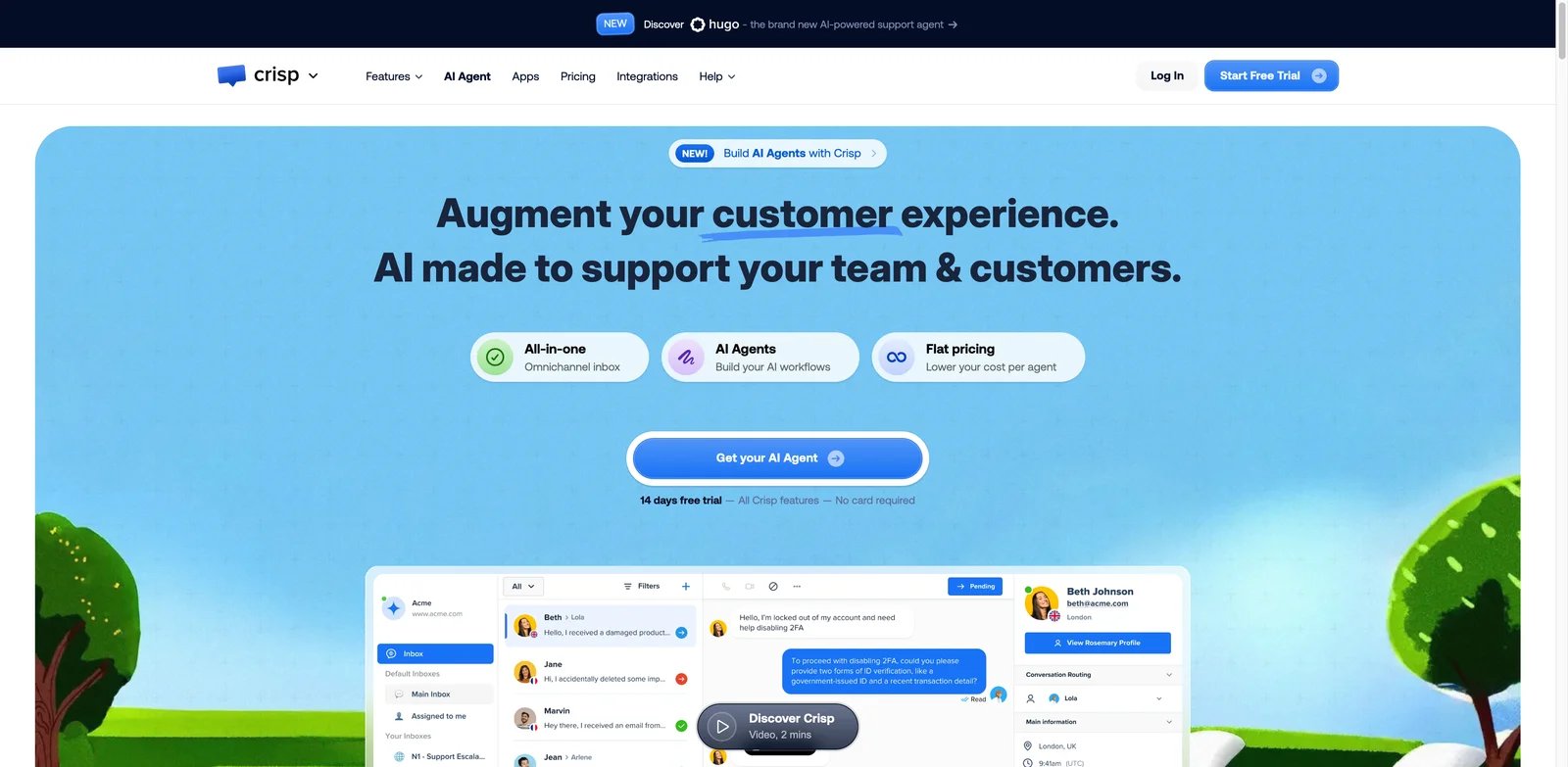
Crisp is the strongest Intercom alternative when the buyer wants live chat, inbox, basic CRM, chatbot, campaigns, and help center in a package that feels startup-sized. Its biggest difference is pricing shape: Crisp sells by workspace tiers rather than pure per-agent seat math, which can be attractive when several teammates need occasional access.
What Crisp solves vs Intercom:
- Workspace-based pricing can be simpler for small teams with multiple occasional support users.
- Live chat, shared inbox, campaigns, help center, chatbot, and customer profile features cover many Intercom use cases without enterprise weight.
- Included AI credits on paid tiers make AI usage visible as part of the package rather than only an open-ended outcome model.
- Good fit for early-stage SaaS, agencies, and bootstrapped teams that need "Intercom-like" capability at a clearer entry cost.
- Migration effort is lower than moving to a full help desk because the product mental model is still chat/inbox-first.
Pricing vs Intercom: Crisp publishes a Free plan with two seats, Mini at $45/workspace/month with 4 seats, Essentials at $95 with 10 seats, and Plus at $295 with 20+ seats. Plans include a set number of seats and AI credits, depending on tier. Compared with Intercom Essential plus Fin outcomes, Crisp can be cheaper for teams where several people need occasional access but support volume is modest. It can become less attractive if you need enterprise routing, large support teams, or advanced AI beyond included credits.
Limitations: Crisp is not Zendesk. Advanced SLA management, complex support QA, workforce reporting, and enterprise governance are not its strongest areas. Its CRM and campaign features are useful but lighter than Intercom's broader customer platform. If Fin AI Agent is your main reason to use Intercom, compare AI quality and knowledge-base control directly before switching.
Best for: Startups and SMB websites that want a familiar chat/inbox/help-center stack with workspace pricing. Not the right fit for large support teams that need deep help-desk operations.
Get started with Crisp
Front
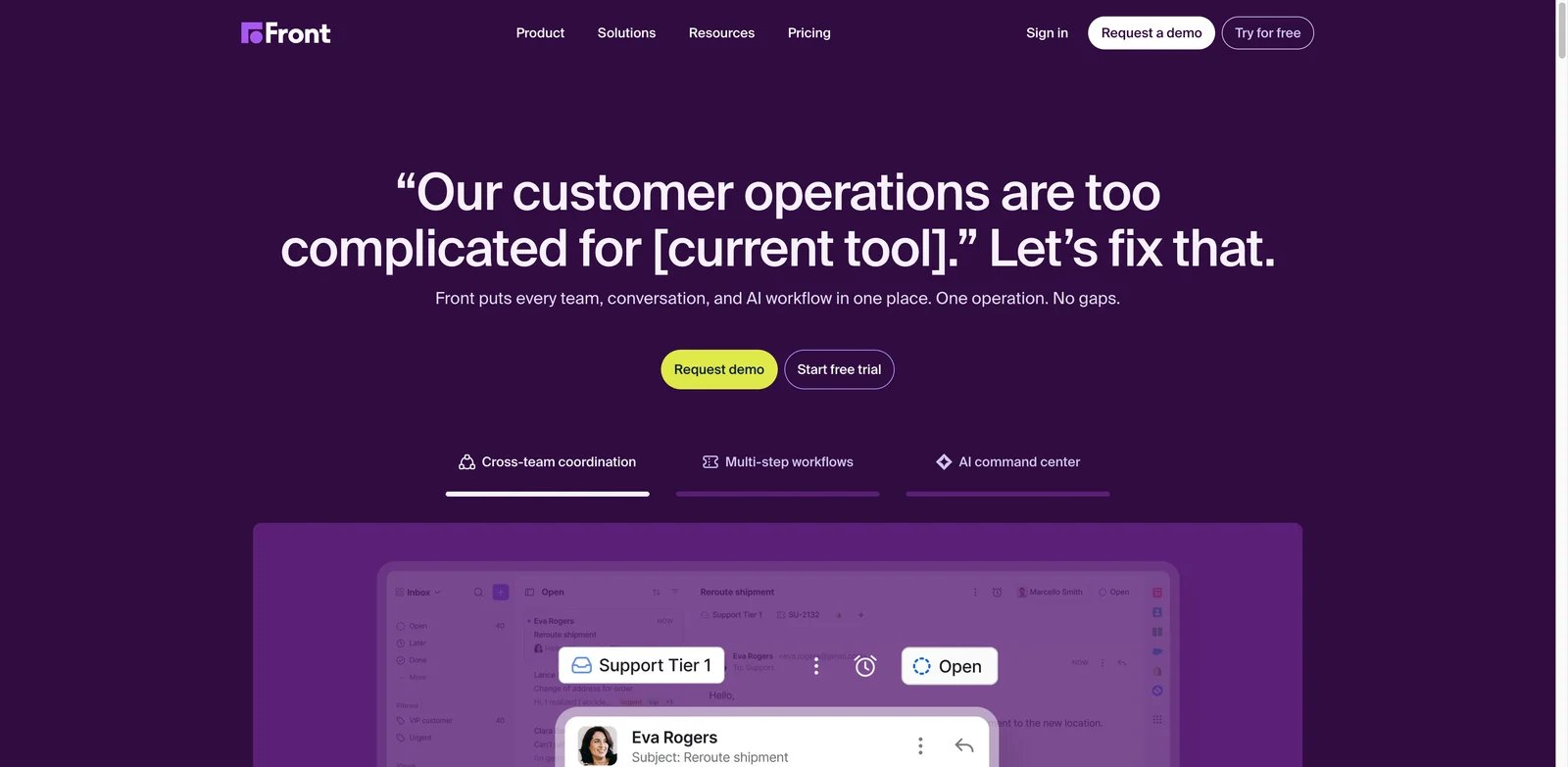
Front is not a live-chat clone. It is a shared inbox and customer operations platform for teams whose real support workflow still runs through email: support@, success@, sales@, partner@, VIP accounts, escalations, internal comments, and customer ownership. If your team used Intercom Inbox but never loved the messenger-first model, Front is a cleaner conceptual replacement.
What Front solves vs Intercom:
- Shared inbox ownership, assignment, collision detection, internal comments, and team visibility around email-based customer work.
- Strong fit for support, customer success, account management, operations, and sales teams that collaborate on external conversations.
- More natural for B2B teams where every customer conversation has account context, not just a visitor session.
- Automations and analytics built around inbox work rather than chatbot deflection.
- Lets teams replace Intercom's inbox layer without necessarily replacing every product messaging or help-center function at once.
Pricing vs Intercom: Front publishes Starter at $25 per seat/month annual, Professional at $65, and Enterprise at $105. Compared with Intercom Essential at $29 per seat/month annual, Front's entry seat price is close. The difference is what you are buying: Front is shared-inbox operations, not Fin AI Agent plus messenger. If you need AI deflection and self-service automation, price the required Front add-ons and integrations before assuming parity.
Limitations: Front is not the best choice if your primary workflow is anonymous website chat or in-app product support. It also does not replace Intercom's product tours, outbound messaging, or customer engagement automation by itself. Teams migrating from Intercom will need to decide whether help center, chat widget, campaigns, and AI bot stay elsewhere.
Best for: B2B teams where support and customer success happen through email-heavy shared inboxes. Not the right fit if you need an Intercom-like messenger as the center of the customer experience.
Get started with Front
Gorgias
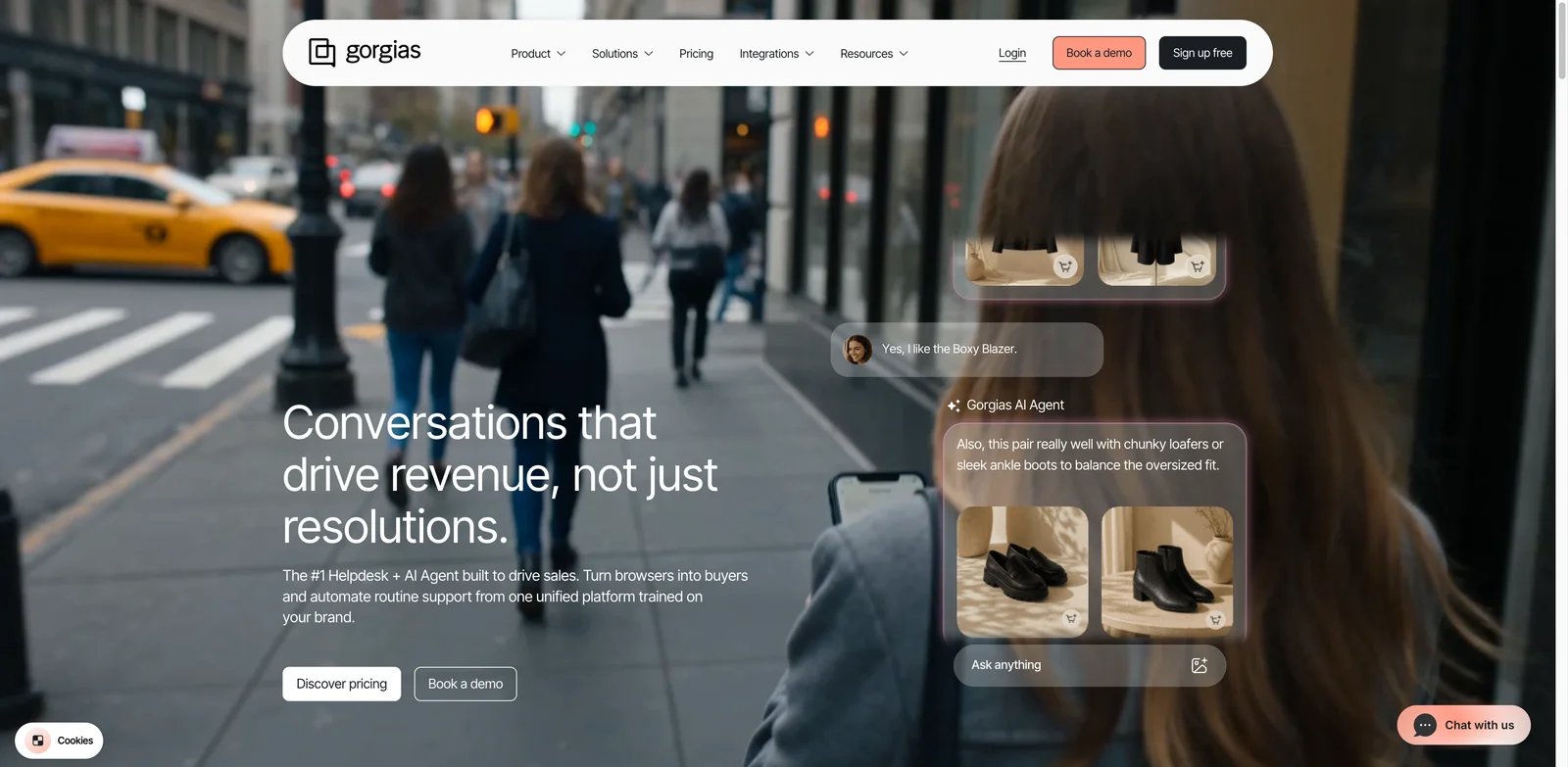
Gorgias is the Intercom alternative for ecommerce teams, especially Shopify-heavy brands. It is not trying to be a universal customer platform. It starts with the reality of ecommerce support: order status, refunds, returns, shipping issues, loyalty questions, discounts, subscriptions, SMS, social channels, and revenue attribution.
What Gorgias solves vs Intercom:
- Native ecommerce context inside support conversations, especially order and customer data from Shopify and related commerce tools.
- Automations for repetitive commerce requests such as order tracking, returns, exchanges, and discount questions.
- Support analytics tied to revenue and ecommerce operations rather than generic conversation metrics.
- Ticket-volume pricing can fit stores where support load tracks order volume more clearly than agent seats.
- AI Agent is designed around ecommerce support outcomes and order-aware workflows.
Pricing vs Intercom: Gorgias pricing is volume-based. Its helpdesk tiers scale by ticket volume, while AI Agent costs $1 per resolved interaction on Starter and $0.90 on most plans, with overage rates varying by plan. Compared with Intercom, Gorgias is not automatically cheaper or more predictable; it is more aligned with ecommerce volume. A store with clear monthly ticket and automated-resolution volume can model Gorgias cleanly, while a SaaS support team may find agent-seat help desks easier.
Limitations: Gorgias is over-specialized if you are not ecommerce. SaaS teams, B2B support teams, and product-led apps will not get the same value from order context. Ticket-volume pricing also needs careful forecasting around sales seasons, launches, and holiday support spikes. If you use Intercom for in-app SaaS support, Gorgias is probably the wrong replacement.
Best for: Shopify and ecommerce brands that want support, automation, and AI tied to orders and revenue. Not the right fit for SaaS products or general B2B support teams.
Get started with Gorgias
Tidio
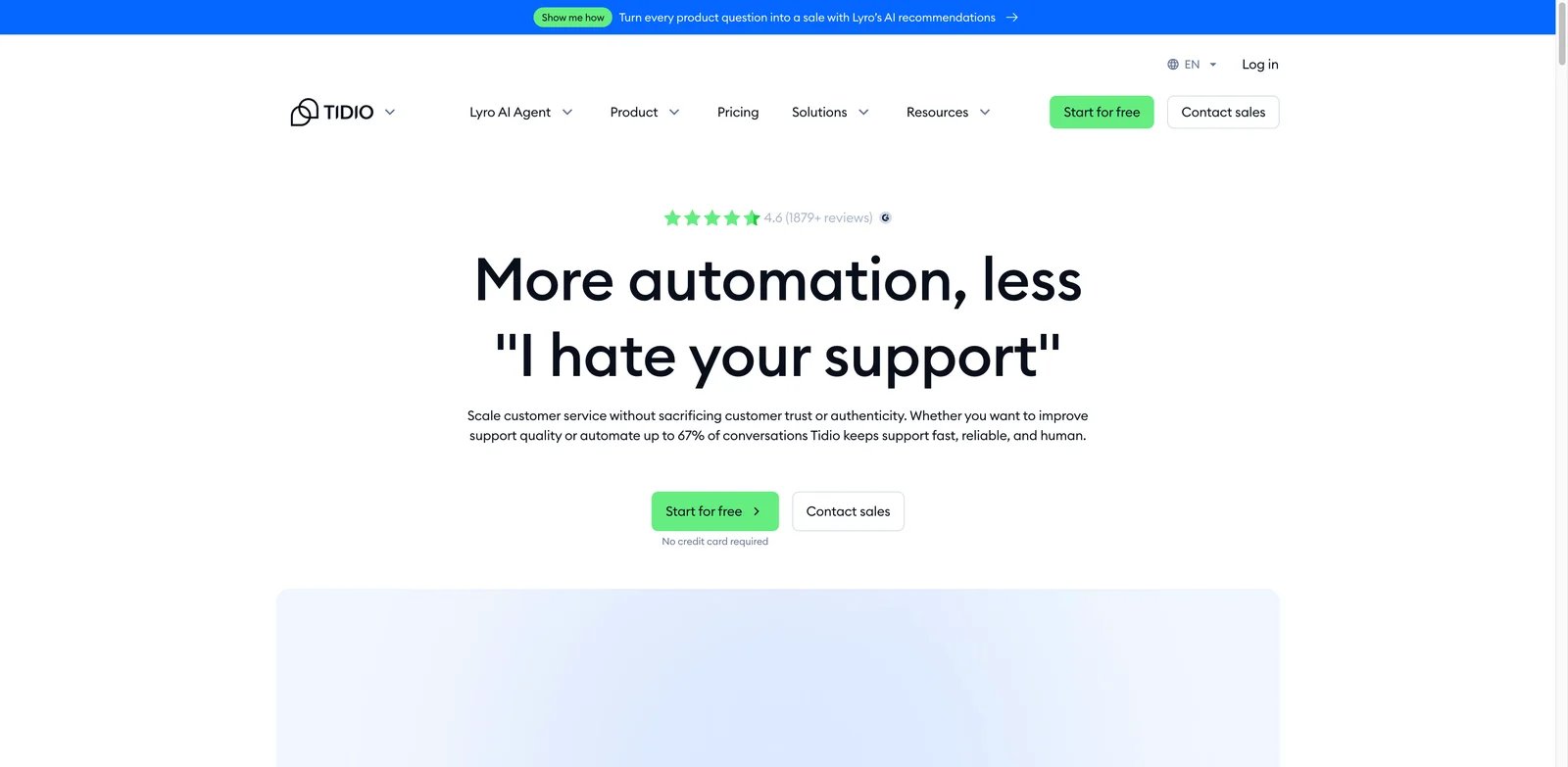
Tidio is a lightweight alternative for small businesses that want website live chat, chatbot automation, and an AI assistant without buying a full customer-service platform. It is most compelling for marketing sites, ecommerce-adjacent SMBs, agencies, and service businesses that need fast visitor response more than enterprise support operations.
What Tidio solves vs Intercom:
- Fast live-chat deployment for websites that need visitor capture and simple support.
- Lyro AI Agent gives SMBs an AI support layer without adopting Intercom/Fin's broader platform.
- Clear plan ladder for Starter, Growth, Plus, and Premium, with AI conversation bundles separated from the base plan.
- Lower admin burden than Zendesk, Freshdesk Omni, or HubSpot Service Hub.
- Good fit when your Intercom use case was "answer website visitors quickly," not lifecycle engagement.
Pricing vs Intercom: Tidio publishes a Free plan, Starter from $24.17/month annually, Growth from $49.17, Plus from $300 plus monthly usage, and custom Premium pricing. Lyro AI Agent is packaged separately, with a one-time free allocation shown on the pricing page. Compared with Intercom Essential plus Fin outcome pricing, Tidio can be easier for SMBs because support volume and AI usage are visible in plan quotas. For high-volume support, compare total Lyro usage against Fin and help-desk alternatives.
Limitations: Tidio is not a deep help desk. Reporting, SLAs, advanced routing, and enterprise governance are lighter. It also does not replace Intercom's customer data platform, product events, or outbound lifecycle messaging. If your support team is already agent-heavy, Tidio may be too small for the job.
Best for: SMB websites that need live chat and a practical AI assistant quickly. Not the right fit for enterprise support operations or product-led SaaS teams with complex in-app workflows.
Get started with Tidio
Chatwoot
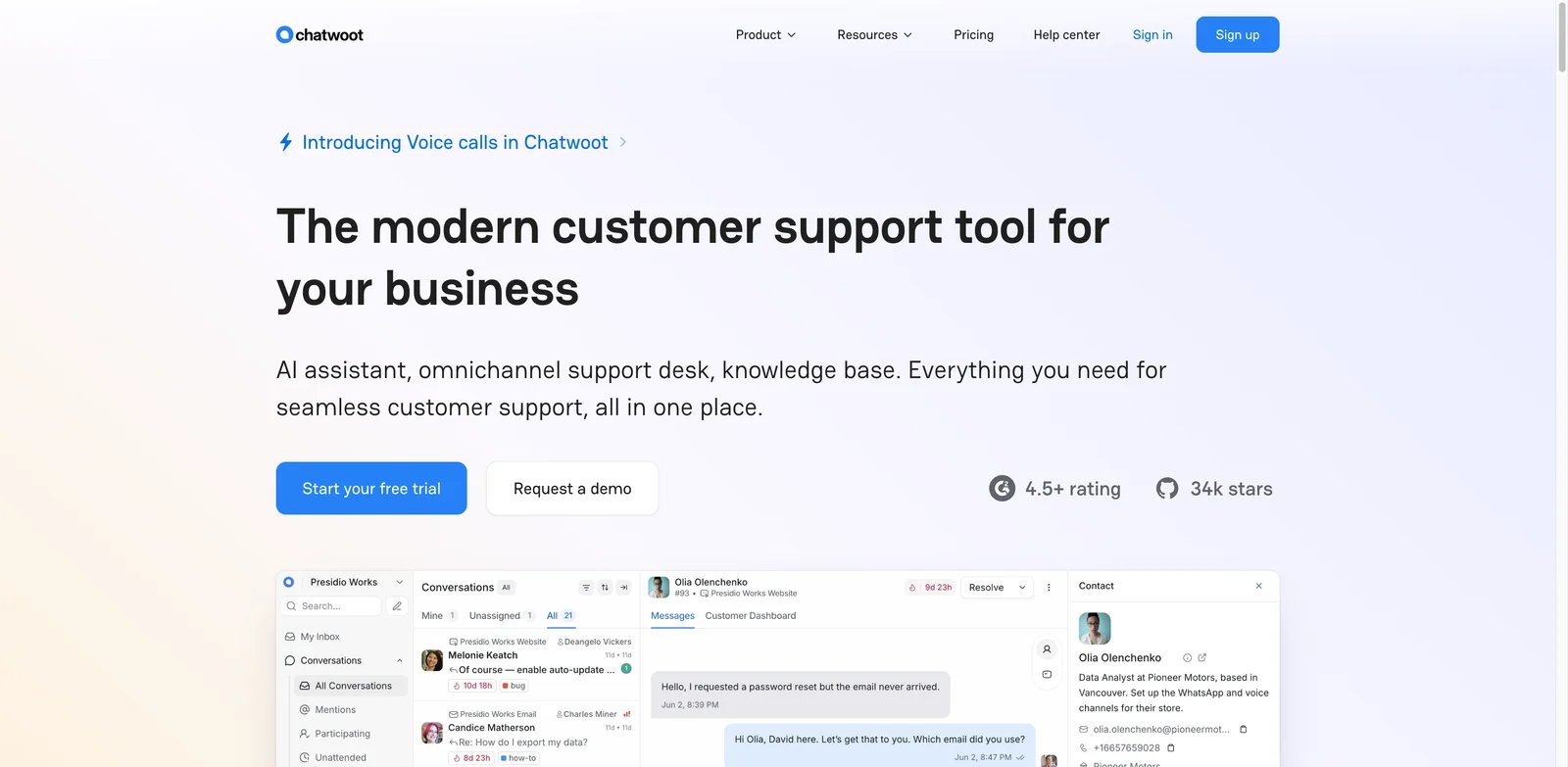
Chatwoot is the obvious Intercom alternative when the word "alternative" means control. It is open source, can be used as a hosted cloud product, and offers a self-hosted path for teams that want to own infrastructure and data. The product shape is familiar: live chat, shared inbox, contacts, teams, automations, campaigns, help center, and AI assistant features.
What Chatwoot solves vs Intercom:
- Open-source codebase and self-hosted deployment option for teams that cannot accept a black-box support stack.
- Cloud plans for teams that want Chatwoot's model without operating the infrastructure themselves.
- Familiar Intercom-style inbox and website chat flow, making the conceptual migration easier than moving to a ticket-only help desk.
- Lower software cost at small scale, especially for teams that can run self-hosted Community Edition.
- Customization potential for engineering-led teams that want to modify support UX or integrate deeply with internal systems.
Pricing vs Intercom: Chatwoot publishes cloud pricing with a Hacker plan at $0, Startup at $19 per agent/month annual, Business at $39, and Enterprise at $99. It also publishes self-hosted plans, including Community Edition free and paid support/enterprise options. Compared with Intercom, Chatwoot can be dramatically cheaper in software spend, but self-hosting shifts cost into engineering time, hosting, maintenance, upgrades, backups, and security.
Limitations: Chatwoot requires more ownership. The hosted product is simpler, but if you choose self-hosting, you are accountable for uptime and operations. It is less polished than Intercom in some product-led workflows, and its AI/story may not match Fin's autonomous-agent maturity. Non-technical teams should be honest about whether they want open source or just a cheaper SaaS.
Best for: Technical startups, privacy-sensitive teams, and companies that want source access or self-hosted support infrastructure. Not the right fit if you want Intercom-level polish with zero operational responsibility.
Get started with Chatwoot
HubSpot Service Hub
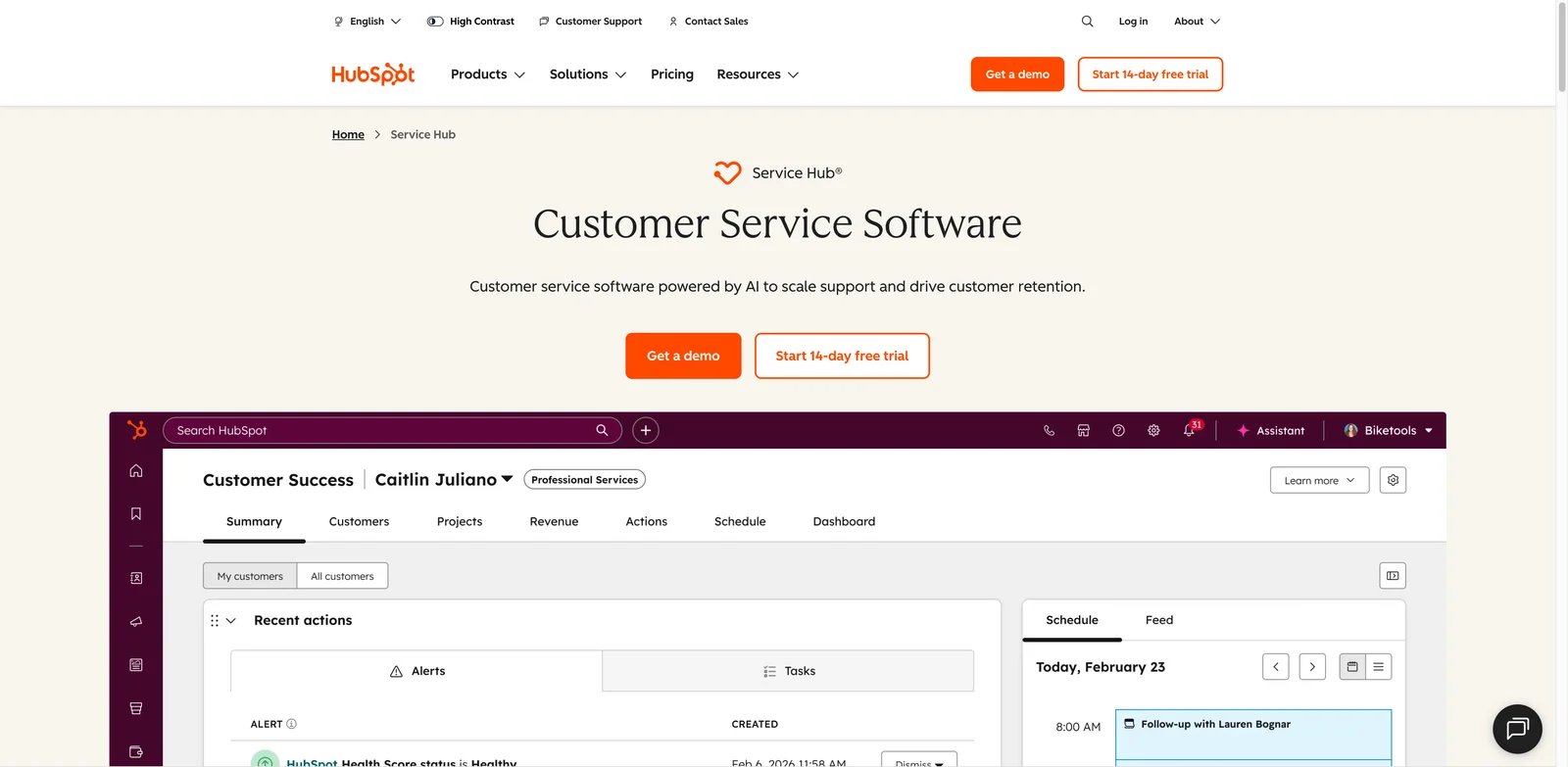
HubSpot Service Hub is the Intercom alternative for teams that do not want support software to stand alone. If marketing, sales, onboarding, success, and support all already live in HubSpot, replacing Intercom with Service Hub can reduce data fragmentation. The product is strongest when the customer record matters more than the chat widget.
What HubSpot Service Hub solves vs Intercom:
- Native CRM timeline across sales, marketing, service, tickets, customer health, and account context.
- Useful for companies where support agents need the full relationship history, not just recent chat events.
- Knowledge base, tickets, customer portal, surveys, and automation inside the same HubSpot environment.
- Breeze/Customer Agent and credits connect AI support to the broader HubSpot platform.
- Procurement and admin are simpler if your company already standardizes on HubSpot.
Pricing vs Intercom: HubSpot publishes free tools plus paid Service Hub tiers. Public pricing shows Professional and Enterprise seat tiers, and higher tiers can include required onboarding fees. Compared with Intercom, HubSpot is rarely the cheapest standalone support tool. It makes sense when you are consolidating around CRM data and would otherwise pay for separate support, CRM, marketing, and customer-success tools.
Limitations: HubSpot can be platform-heavy in exactly the way some teams are trying to escape from Intercom. If you do not already use HubSpot CRM, the migration and cost stack can be substantial. It is also less specialized than Zendesk for enterprise support operations and less nimble than Crisp/Tidio for lightweight live chat.
Best for: Companies already committed to HubSpot that want support workflows inside the same customer record. Not the right fit for teams looking only for a cheaper live-chat widget.
Get started with HubSpot Service Hub
Kayako
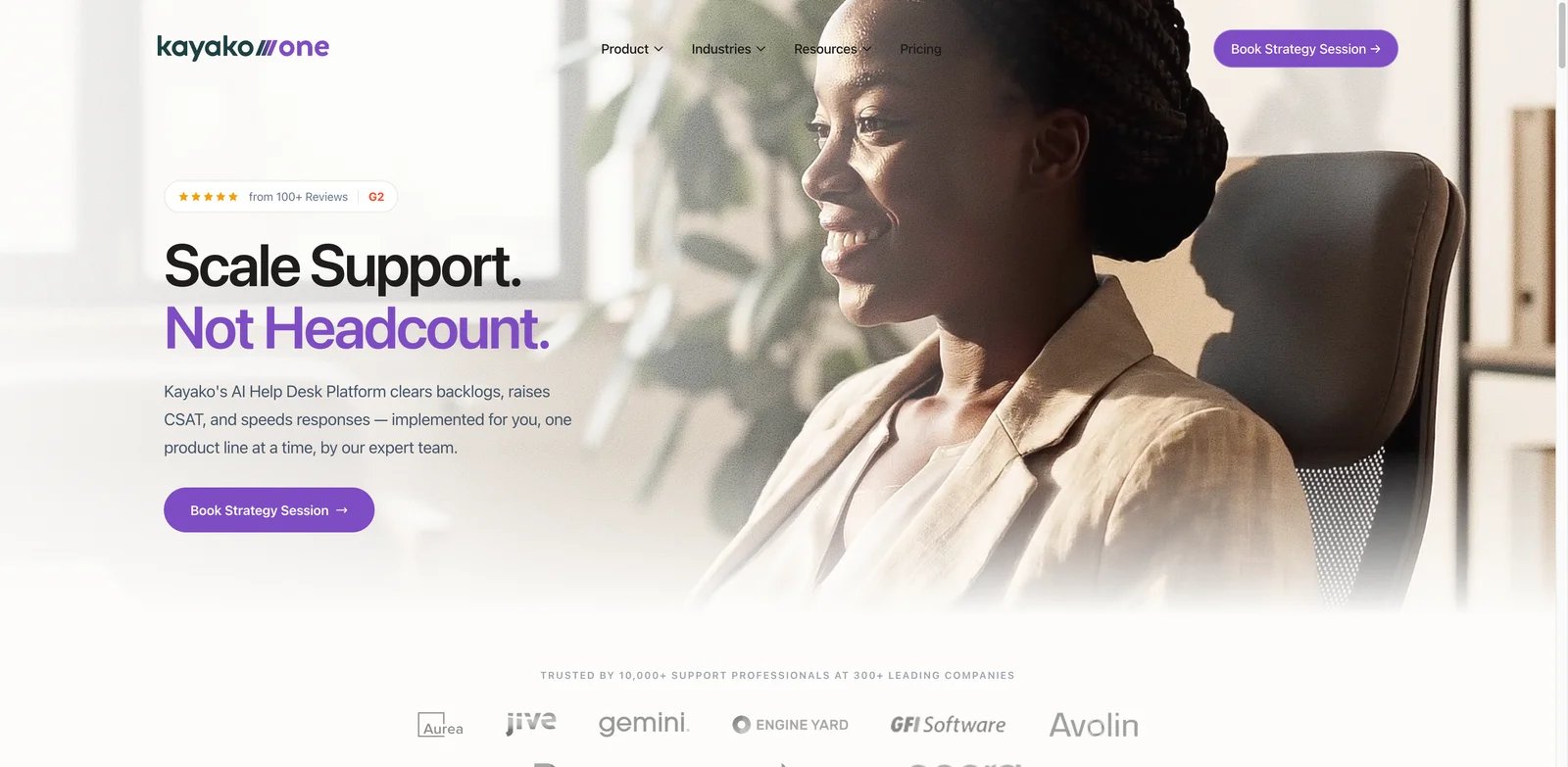
Kayako belongs on this list because it speaks directly to the Fin-era buying question: what should an AI support resolution cost, and how should that model be explained? Kayako's public AI pages emphasize a simple $1 per AI resolution framing, which makes it useful for buyers who like the outcome-pricing concept but want to compare it outside Intercom's broader platform.
What Kayako solves vs Intercom:
- AI-resolution positioning that is easy to compare against Fin's $0.99/outcome framing.
- Customer support suite orientation rather than broad product-led customer platform.
- Useful for teams that want AI support and human handoff in one product without buying a heavy enterprise help desk first.
- Transparent public examples for AI-resolution math, though contracts and package details still need verification.
- Good short-list candidate when the switching question is specifically Fin AI Agent alternatives.
Pricing vs Intercom: Kayako's public AI chatbot page frames pricing as $1 per AI resolution and shows example volume math. That is deliberately close to Fin's $0.99 per outcome. The practical difference depends on plan packaging, included human-support features, contract terms, and how each vendor defines a resolved interaction. Treat Kayako pricing as promising but procurement-dependent until you confirm the current quote.
Limitations: Kayako has less mindshare than Zendesk, Freshdesk, Help Scout, or Intercom in many support teams. You should validate product maturity, integrations, admin controls, reporting, and migration support before making it the primary replacement. Outcome pricing is not automatically predictable; it only becomes predictable when your conversation volume and resolution rules are stable.
Best for: Teams specifically comparing Fin AI Agent alternatives and wanting transparent AI-resolution math. Not the right fit if you primarily need enterprise ticketing depth or open-source control.
Get started with Kayako
Honorable Mentions
Featurebase is worth evaluating if your Intercom usage is really product feedback, changelog, public roadmap, and user voting. It is not a support inbox replacement, but it can replace the product-feedback layer some teams try to force into Intercom.
Customerly is a lighter customer communication suite with live chat, help center, email marketing, and automation. It can fit small SaaS teams that want something closer to Intercom's all-in-one shape without the same enterprise gravity.
HelpCrunch is another SMB-friendly live chat, knowledge base, and customer communication platform. It belongs on the shortlist when Crisp and Tidio feel close but you want a different package and UI.
Opencom is an earlier-stage open-source Intercom-style project with strong founder-market-fit energy in the HN discussion. Evaluate it if open-source control matters, but treat maturity, hosting, and support expectations carefully.
Chameleon is not a support tool replacement. It is relevant when the Intercom workload was product adoption: tours, in-app guides, onboarding checklists, and announcements. Pair it with Help Scout, Front, or Zendesk if you split support from product engagement.
Migrating from Intercom - A Practical Guide
Intercom migrations fail when teams treat the product as one tool. In practice, Intercom often contains six systems: messenger, inbox, help center, customer records, outbound campaigns, and automation/AI. Before choosing a replacement, list which of those are actually in use and which can be retired.
Data migration: export conversations, contacts, companies, tags, segments, help center articles, custom attributes, saved replies, bot flows, and reports. Decide which data must migrate into the new system and which can remain archived in Intercom for compliance or historical lookup. Help center content usually migrates cleanly. Bot flows and outbound campaigns usually need redesign.
Learning curve: support agents need training on inbox/ticket workflow, internal notes, assignment, macros, and escalation rules. Admins need training on routing, automations, roles, billing, AI configuration, and reporting. Product and marketing teams need to know what they are losing if Intercom campaigns or tours move elsewhere.
Pricing brackets: small teams should model total monthly cost at 3, 10, and 25 seats. AI-heavy teams should model support volume at low, expected, and seasonal peaks. Ecommerce teams should model tickets by order volume. Self-hosted teams should add hosting, engineering time, monitoring, backups, and upgrades to the software cost.
AI handoff: keep Intercom/Fin live until the new AI layer proves coverage on real support topics. Run a two-week parallel pilot, route only a subset of traffic, review escalations daily, and measure answer accuracy by topic. Do not turn off Fin just because the new vendor has an AI badge.
Best Intercom Alternatives by Use Case
Best for enterprise help desk: Zendesk
Choose Zendesk when the problem is support operations: ticket queues, SLAs, reporting, routing, QA, and admin depth. It is the safest Intercom alternative for teams that have outgrown chat-first support.
Best for SMB support: Freshdesk
Freshdesk is the best middle path for small and mid-sized teams that want help-desk structure without Zendesk-level complexity. It is especially strong when email tickets and knowledge base matter more than in-app product messaging.
Best for human email support: Help Scout
Help Scout is the cleanest choice when your support culture is personal, email-like, and low-drama. It replaces Intercom's inbox/help widget layer without forcing a broad customer platform onto the team.
Best cheaper chat suite: Crisp
Crisp is the best choice when you still want an Intercom-like chat/inbox experience but prefer workspace pricing and a tighter startup package. It is not the deepest help desk, but it is one of the most natural Intercom-style swaps.
Best for ecommerce: Gorgias
Gorgias wins when the support ticket is really an order problem. Shopify context, return workflows, revenue visibility, and ecommerce automation make it a better fit than generic support suites for online stores.
Best open-source alternative: Chatwoot
Chatwoot is the clear pick for teams that want open-source code, self-hosting, or deep customization. It costs less in software, but only makes sense if you can handle the operational responsibility.
Best CRM-native alternative: HubSpot Service Hub
Choose HubSpot Service Hub if your company already runs on HubSpot and wants support attached to the same customer record as sales and marketing. It is a consolidation play, not a cheap chat-widget swap.
Best AI-resolution alternative: Kayako
Kayako is worth testing when your core question is Fin AI Agent pricing and resolution definition. Its public $1-per-resolution positioning gives buyers a clean comparison point, but validate the full contract.
How to Choose the Right Intercom Alternative
1. Separate the jobs Intercom performs. Write down whether you use Intercom for live chat, email inbox, help center, product tours, outbound messaging, CRM data, support automation, Fin AI Agent, or reporting. Replacing all of them with one vendor is optional. Sometimes the better architecture is Help Scout for support plus Chameleon for onboarding, or Zendesk for support plus HubSpot for CRM.
2. Model real support volume, not list pricing. Intercom, Fin, Gorgias, Tidio, Kayako, and Zendesk AI packages can all change total cost based on conversations, resolutions, tickets, or add-ons. Build a three-scenario model: normal month, launch month, and peak season. Use actual conversation exports from Intercom, not guesses.
3. Decide how much migration you can tolerate. Crisp and Tidio are easier if your workflow is simple chat. Help Scout is easier if support is mostly email. Zendesk and HubSpot require more planning but can support larger organizations. Chatwoot gives control but adds operational work. A perfect feature fit with a migration your team cannot execute is not a good choice.
4. Pilot before you cancel. Run the replacement in parallel for two weeks. Import help docs, recreate the top automations, train a small agent group, and route a subset of conversations. Measure first-response time, escalation accuracy, customer satisfaction, AI hallucinations, and agent complaints. The cheapest Intercom alternative is expensive if it breaks the support motion.
Frequently Asked Questions
What is the best Intercom alternative overall?
What is the cheapest Intercom alternative?
What is the best open-source Intercom alternative?
Is Zendesk better than Intercom?
Is Freshdesk a good Intercom alternative?
What changed when Intercom became Fin?
How much does Fin AI Agent cost?
Can I migrate Intercom conversations to another tool?
Get ToolWorthy Weekly
New AI tools, practical guides, and selected AI signals in one weekly brief.
Discover More AI Tools
Explore our comprehensive directory of AI tools, carefully curated and reviewed by experts to help you find the perfect solution for your needs.