
15 Best Clearscope Alternatives 2026 - Cost, GEO & Workflow
Clearscope is not a failed product. That is why the 2026 switching question is more interesting than a normal "cheaper software" list. It still has one of the cleanest editorial optimization workflows in SEO, and its July 14, 2026 Prompt Tracking launch moved it toward AI-search visibility across ChatGPT, Gemini, and Claude. The problem is that buyers now expect more than a content grade and recommended terms.
The new question is practical: if Clearscope Essentials starts at $129/month and Business at $399/month, should that subscription also replace AI-search monitoring, content briefs, drafting, approvals, publishing, refresh workflows, and stack reporting? Or should a team move to a platform that does more of the production loop?
This guide compares 15 Clearscope alternatives against the reasons people actually switch: lower entry cost, more execution after the score, stronger GEO visibility, fewer disconnected content tools, and the option to build a custom AI workflow. For context, keep ToolWorthy's Clearscope profile, AI keyword for SEO research, AI SEO, and broader alternatives categories open as baselines.
| Tool | Best For |
|---|---|
| Surfer SEO | Clearscope-like editing with broader SEO and AI visibility |
| Frase | Research, brief, draft, optimize, and publish in one loop |
| MarketMuse | Topical authority and inventory-led content strategy |
| Dashword | Lightweight briefs and API-friendly SEO scoring |
| Content Harmony | Search-intent briefs for editorial handoff |
| NeuronWriter | Low-cost NLP optimization and AI-assisted briefs |
| Rankability | Content optimization plus approval and publishing workflows |
| Search Atlas | SEO suite consolidation with automation and AI visibility |
| Scalenut | SEO, GEO, and AI visibility workflows for lean teams |
| PageOptimizer Pro | Technical on-page optimization at a lower entry price |
Why People Are Leaving Clearscope in 2026
Clearscope has fewer public "I am leaving" threads than tools such as Zapier, Semrush, or Midjourney. That matters. The stronger evidence is not a giant backlash; it is a set of repeated buying objections across SEO communities, competitor comparisons, and AI-search discussions. Treat these five pain points as decision pressure, not proof that every Clearscope customer should leave.
1. The entry price feels high for the core job. Clearscope's official offer pages show Essentials at $129/month and Business at $399/month, with a 14-day trial and Prompt Tracking allowances included. That can make sense for mature editorial teams. It is harder for freelancers, small sites, and lean B2B teams that mainly want term recommendations, draft scoring, and a content brief. A January 2026 r/SEO thread described rebuilding Clearscope-like functionality in an AI workflow at lower cost, while another SEO community post joked that Clearscope can "charge you accordingly." The useful takeaway is not that DIY always wins. It is that content scoring alone now has a price ceiling.
2. General AI is eroding the value of single-purpose scoring. Claude, ChatGPT, Manus-style workflows, and internal prompt systems can now summarize SERPs, cluster topics, draft briefs, compare competitor pages, and produce first-pass content plans when paired with reliable SEO data. That does not automatically replace Clearscope's editor, data quality, or shared grading UI. It does change the buying question. If a team already pays for a frontier AI assistant and owns keyword, SERP, GSC, or analytics data, a single-purpose optimizer has to prove that its recommendations and workflow save enough review time.
3. The content stack is too fragmented. Many content teams already work across keyword tools, content optimizers, docs, task boards, CMS platforms, AI writers, analytics, and AI-search monitors. A January 2026 AI SEO case study described stacks stitched together from tools such as Ahrefs, Surfer, Clearscope, Jasper, Notion, and Trello. Clearscope can be excellent inside the writing step, but it does not necessarily remove enough surrounding tools. That is why buyers look at Frase, Rankability, Search Atlas, Scalenut, AirOps, HubSpot, Semrush, and other platforms that promise a larger workflow surface.
4. Teams want execution, not another content score. A content score is useful only if someone can turn it into edits, approvals, updates, internal links, refreshes, and published pages. Some teams leave Clearscope-style workflows because the bottleneck moved downstream. They do not need another list of missing terms; they need a system that tells an editor what to fix, lets a manager approve it, pushes to WordPress or Webflow, and watches the page after publishing. This is where execution-first alternatives become compelling even when their scoring is less elegant.
5. AI-search visibility is moving faster than Clearscope's new layer. This is the fresh-news angle. Clearscope launched Prompt Tracking on July 14, 2026, and its launch post says the feature monitors ChatGPT, Gemini, and Claude. The pricing/offer surface also emphasizes prompt allowances inside Essentials and Business. That means it would be inaccurate to say Clearscope lacks AI-search tracking. The sharper question is whether a newly added layer is mature enough for teams whose primary goal is AI citations, answer-engine visibility, and actions after a brand is missing from AI responses.
These five switching reasons map to different replacement paths. A solo SEO who wants a lower bill should not choose the same tool as an enterprise content strategist, a GEO team, or an operator trying to automate refreshes. The comparison below is built around that fit.
Top 15 Clearscope Alternatives Compared
The first row is Clearscope as the anchor. The rest include 10 direct alternatives and five adjacent tools that make sense when the replacement is really a broader SEO, AI-search, or content-operations decision.
| Tool | Pricing Shape | AI Search / GEO Fit | Workflow Form | Migration Effort | Best For |
|---|---|---|---|---|---|
| Clearscope (anchor) | Essentials $129/mo; Business $399/mo; 14-day trial | Prompt Tracking launched July 2026 | Premium content optimizer | Baseline | Premium editorial optimization baseline |
| Surfer SEO | Lower self-serve entry than Clearscope; higher tiers for scale | AI visibility plus broader SEO workflow | Editor, audit, planning suite | Low | Clearscope-like editing with broader SEO and AI visibility |
| Frase | 7-day trial; lower entry paid plans | SEO + GEO scoring and AI visibility | Research-to-publishing loop | Low | Research, brief, draft, optimize, and publish in one loop |
| MarketMuse | Free tier; paid tiers demo-priced | Strategy first, less editor-first | Inventory and topical strategy | Medium | Topical authority and inventory-led content strategy |
| Dashword | Free first report; Startup $99/mo | Lightweight optimization, API/MCP path | Brief and content scoring | Low | Lightweight briefs and API/MCP-friendly SEO scoring |
| Content Harmony | $10 trial; workflow packages from lower monthly tiers | Intent-led briefs, not pure GEO | Research and writer brief handoff | Low | Search-intent briefs for editorial handoff |
| NeuronWriter | Low monthly entry; 7-day Gold trial | Budget NLP plus AI-monitored questions | Budget optimization workspace | Low | Low-cost NLP optimization and AI-assisted briefs |
| Rankability | From Core to higher team tiers | Strong execution and AI workflows | Optimize, approve, publish | Medium | Content optimization plus approval and publishing workflows |
| Search Atlas | 7-day trial; suite pricing starts near Clearscope | AI visibility plus SEO automation | Broad SEO platform | Medium | SEO suite consolidation with automation and AI visibility |
| Scalenut | 7-day trial; list prices from Starter to Professional | GEO Action Center plus AI visibility | SEO/GEO content workflow | Low | SEO, GEO, and AI visibility workflows for lean teams |
| PageOptimizer Pro | Lower technical SEO entry plans | Technical on-page plus AI Visibility Tracker | Technical optimization toolkit | Medium | Technical on-page optimization at a lower entry price |
| AirOps | Insights $0; Solo/Pro start-free paths; production pricing needs confirmation | AI content operations and AI-search insights | Workflow and production layer | High | AI content operations and AI-search execution |
| Semrush | Free tools/trials; paid SEO and AI-search bundles | Broad SEO plus AI-search visibility | Full SEO suite | Medium | Full-suite SEO and AI-search consolidation |
| Ahrefs | Free tools; Starter and higher SEO plans; Brand Radar add-on | Data-first AI visibility monitoring | SEO data platform | Medium | SEO data plus large-scale AI visibility |
| Claude | Free; Pro, Max, and Team plans | DIY AI workflow, not SEO-native | General AI workspace | High | Custom AI workflows with your own SEO data |
| HubSpot Content Hub | Free; Starter, Professional, Enterprise; AEO available separately or in Marketing Hub Pro/Enterprise | CMS plus AEO and content operations | CMS and marketing platform | High | CMS, AEO, and marketing operations consolidation |
The Best For column is qualitative rather than a precision ranking. It shows where each tool fits the switching decision instead of implying that one option answers more of the 2026 switching reasons for a specific buyer.
Read the table by workflow shape first. Surfer, Frase, Dashword, NeuronWriter, Scalenut, and PageOptimizer Pro are easiest to trial because the mental model is familiar: open a content editor, enter a keyword or URL, review recommendations, edit the draft, and re-score. MarketMuse, Rankability, Search Atlas, AirOps, Semrush, Ahrefs, Claude, and HubSpot require a more deliberate migration because they change the system around the draft. That can be good, but only if the team wants a system change.
Also separate AI-search monitoring from AI-search action. Many platforms can now show prompts, mentions, citations, answer engines, or visibility trends. Fewer can tell an editor exactly which page to create or refresh, help produce the update, route it through approval, publish it, and monitor whether the answer-engine gap closes. Clearscope's Prompt Tracking makes it relevant again in the monitoring conversation. Alternatives win only when they make the next action clearer or cheaper.
That distinction should shape your trial. Ask every vendor to show the same prompt gap, the same content recommendation, and the same post-update measurement path.
If they cannot, the demo is not comparable.
Keep the baseline.
Detailed Reviews
Surfer SEO
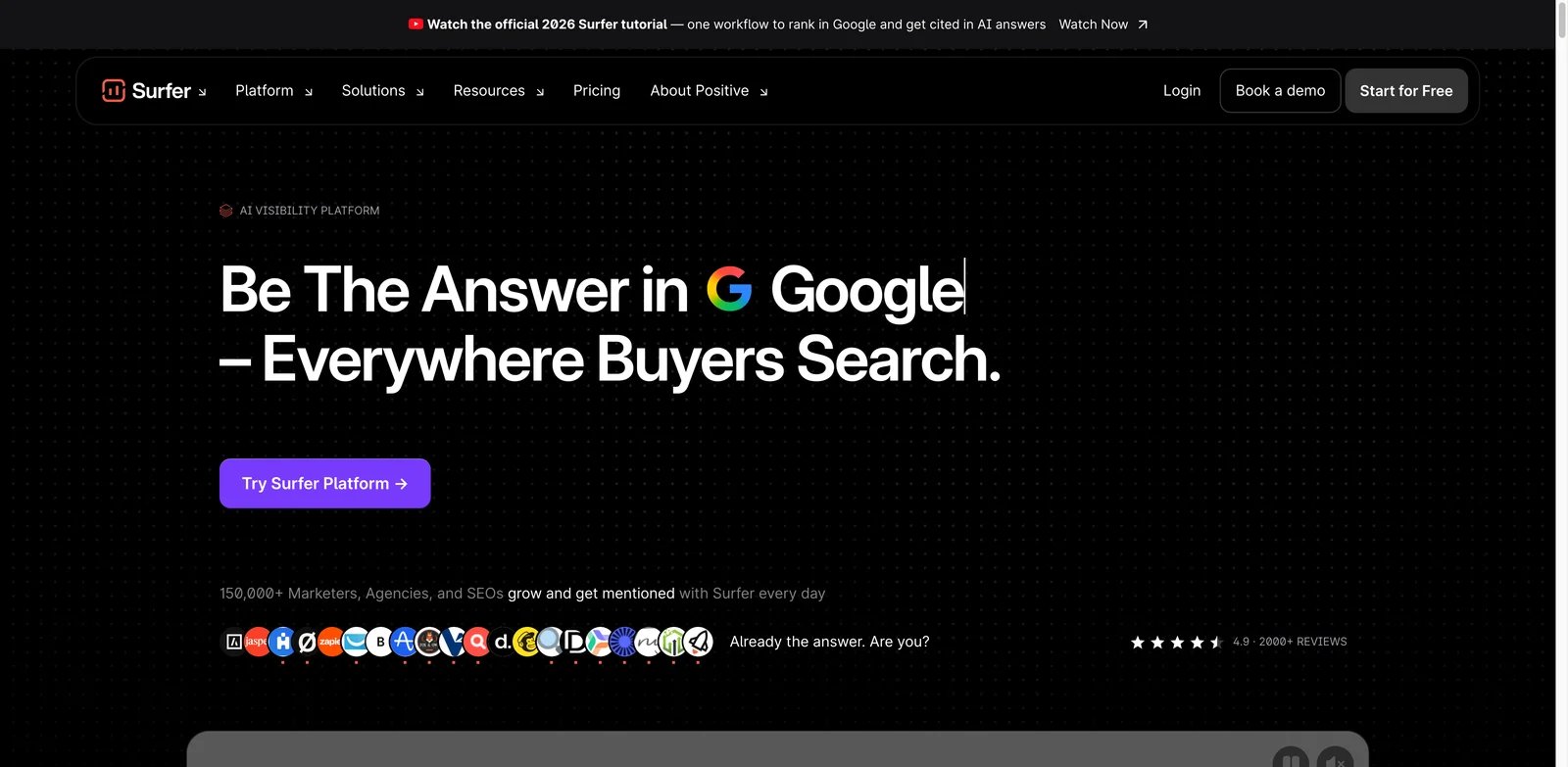
Surfer SEO is the most obvious Clearscope alternative when the buyer still wants a content editor, score, and optimization workflow, but does not want to stop there. Surfer has spent years expanding from page-level content guidance into audits, topical maps, AI article generation, and AI-search visibility. If Clearscope feels too narrow rather than too hard to use, Surfer is usually the first comparison.
What Surfer SEO solves vs Clearscope:
- Broader workflow: Surfer combines content editor, audit, topical mapping, keyword research, and AI article generation around the optimization step.
- AI-search coverage: It is moving the content optimizer into AI visibility and answer-engine tracking rather than treating GEO as a separate add-on.
- Lower entry path: Surfer's lower self-serve plans can be easier to justify than Clearscope Essentials for small teams.
- Automation angle: Surfer's AI and audit features are more useful if your bottleneck is volume, not just editorial precision.
Editor-to-suite tradeoff: Surfer is less of a pure editorial-grade scoring surface than Clearscope. That can be a feature or a liability. Teams that want one focused editor may prefer Clearscope. Teams that want optimization tied to audits, AI articles, topical planning, and visibility tracking will usually find Surfer's wider surface more useful.
Pricing vs Clearscope: Surfer's public pricing changes by billing term and plan packaging, but its entry self-serve options generally sit below Clearscope Essentials. The important comparison is not list price alone. Compare document allowances, AI prompt-tracking limits, tracked-page capacity, teammate seats, topical map access, and AI visibility features against Clearscope's included Drafts, Pages, Topic Explorations, and Prompt Tracking.
Limitations: Surfer can feel busier than Clearscope. Writers who only need clean terms, grading, and editorial handoff may not want the extra modules. Also verify which AI visibility features are available on the plan you are considering; do not assume every plan includes every monitoring surface.
Best for: Content teams that like Clearscope's core idea but want a larger SEO workflow, lower entry cost, and stronger AI-search roadmap. Not the right fit if you want the simplest possible writer-facing editor and nothing else.
Get started with Surfer SEO
The best Surfer migration test is a refresh, not a blank article. Take one page that already has a Clearscope report, run it through Surfer's editor and audit workflow, then compare three things: what terms overlap, what Surfer flags that Clearscope did not, and whether the audit suggests structural or internal-link changes that make sense. If Surfer only tells you to add different terms, the switch is mostly about price and preference. If it gives you a better refresh plan, the suite value is real.
Also test writer adoption. Surfer's broader product can tempt managers to push more dashboards onto writers. That usually fails. Keep the writer surface narrow: target query, outline, score, essential missing topics, and one revision pass. Let the SEO lead use audits, topical maps, AI visibility, and reporting separately. Surfer works best when you separate operator controls from writer instructions.
Frase
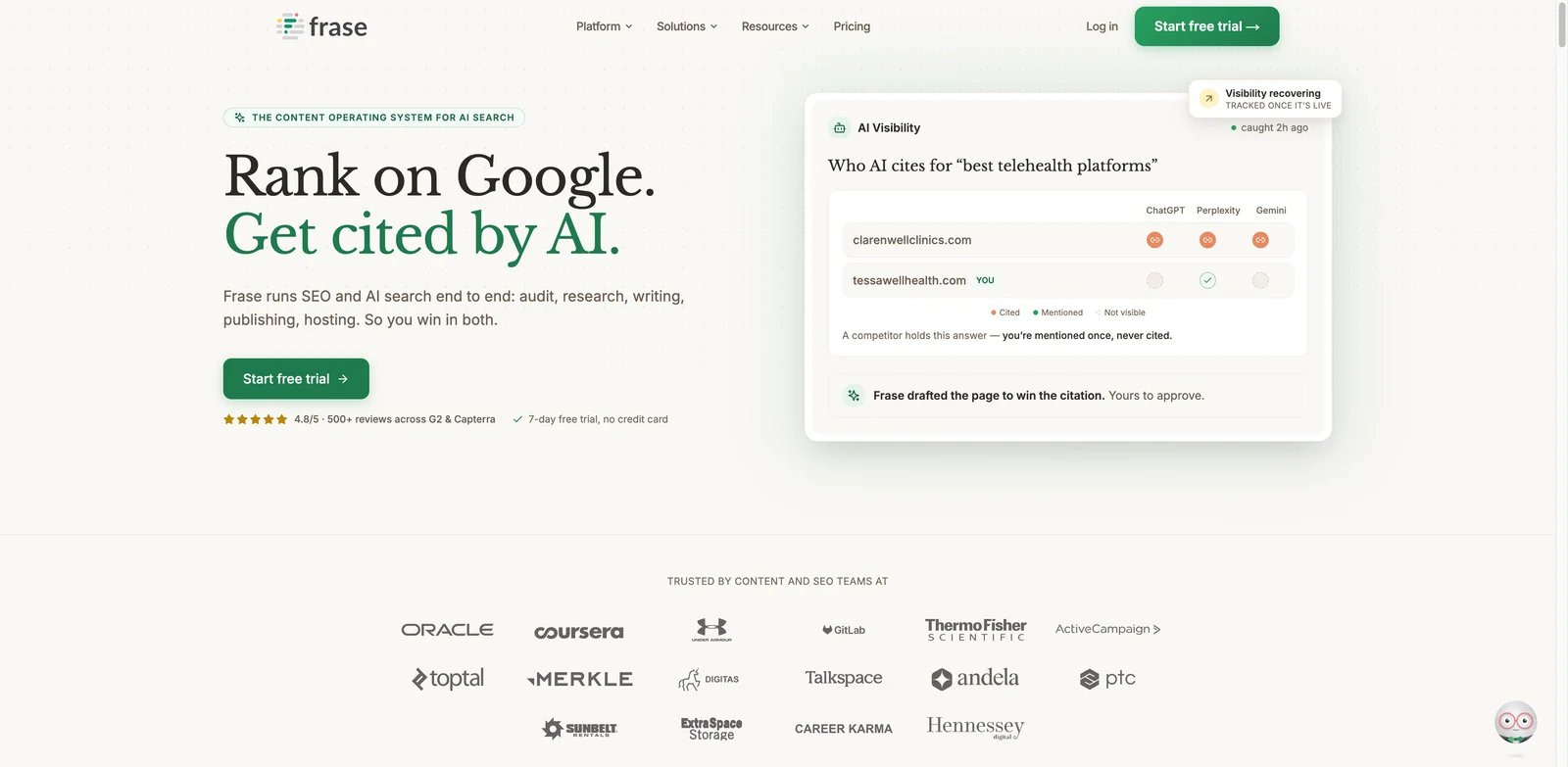
Frase is the strongest alternative when Clearscope feels too close to one step in the process. Instead of asking writers to bring a draft into an optimization surface, Frase tries to cover research, SERP analysis, brief creation, AI drafting, optimization, CMS publishing, audit pages, and AI visibility in one loop. It is not as premium-feeling as Clearscope, but it can reduce the number of handoffs.
What Frase solves vs Clearscope:
- Research-to-publish flow: Frase starts earlier than Clearscope with SERP research and briefs, then continues into drafting, scoring, and publishing.
- Budget fit: Its entry paid plans are meaningfully lower than Clearscope's public Essentials price.
- GEO direction: Frase positions around SEO and GEO scores plus AI visibility, which makes it relevant to teams worried about AI citations.
- CMS handoff: Publishing integrations can matter more than the difference between two content scores.
The loop: Frase's advantage is continuity. A small content team can research competitors, generate a brief, draft, optimize, and push toward a CMS without rebuilding context in separate tools. That is the exact workflow gap many Clearscope buyers feel after the score is done.
Pricing vs Clearscope: Frase offers a 7-day trial and lower monthly/annual entry pricing than Clearscope. The tradeoff is capacity and polish. Check article limits, audit pages, AI visibility access, and publishing integrations for your plan before assuming it is automatically cheaper per finished article.
Limitations: Frase's breadth means some modules may feel less refined than specialist tools. If your team has a mature editorial process and only wants best-in-class content grading, Clearscope may still feel cleaner. Also treat AI-drafted content as a starting point, not a publish-ready asset.
Best for: Small and mid-sized teams that want a practical content production workflow instead of a premium editor alone. Not the right fit if your editors strongly prefer a narrow optimization surface and already have separate research and publishing systems.
Get started with Frase
The right Frase pilot is one end-to-end article. Start from a keyword, create the brief, draft the article, optimize the draft, and push toward the CMS or export path your team actually uses. Measure how many times the editor has to leave Frase. If the answer is still "constantly," you may not get the workflow savings that justify switching. If the handoff is clean, Frase can replace more than Clearscope.
Frase is also a good fit when the team has junior writers or external freelancers. A Clearscope score can tell them what to add, but it may not explain why the article should exist or what the SERP expects. Frase's brief-first workflow gives more context before drafting begins; ToolWorthy's Frase profile is useful if you want a separate product-level review. That context can reduce editor cleanup, especially when the writer is not a senior SEO.
MarketMuse
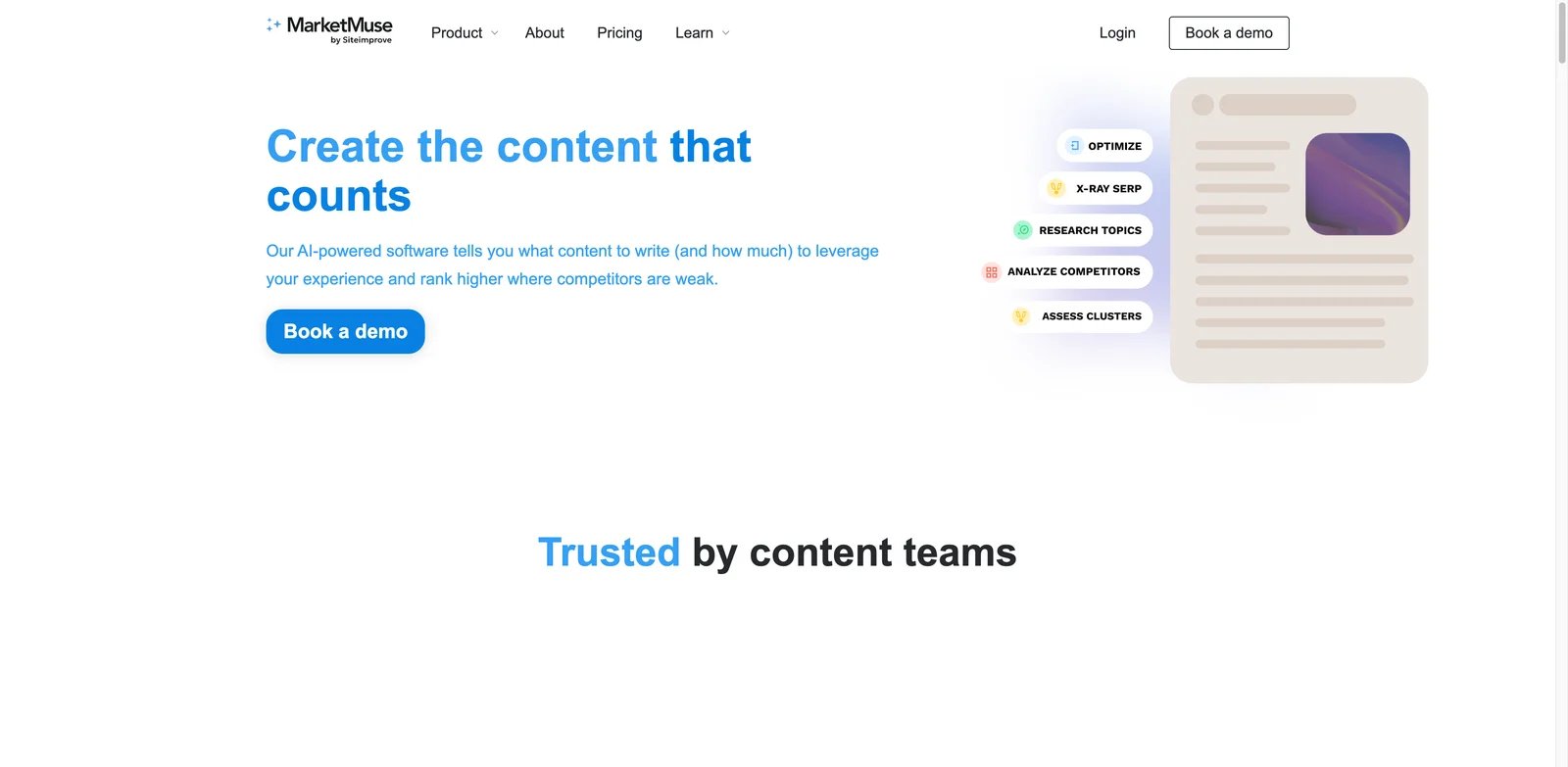
MarketMuse is not the cleanest one-to-one Clearscope replacement. It is the alternative to consider when the real problem is topic strategy, content inventory, authority gaps, and prioritization across a site. If Clearscope helps a writer improve one page, MarketMuse helps a strategist decide which pages, topics, and briefs deserve work in the first place.
What MarketMuse solves vs Clearscope:
- Site inventory and tracked topics move the workflow beyond single-document optimization.
- Personalized difficulty and topic authority help teams prioritize based on their own domain, not generic SERP difficulty alone.
- Content briefs and strategy documents support planning across a content calendar.
- The free tier gives low-volume users a way to test the model before a sales conversation.
Pricing vs Clearscope: MarketMuse currently lists a Free tier with 10 queries/month and paid tiers such as Optimize, Research, and Strategy, but its public pricing page does not expose stable dollar amounts for those paid tiers. That makes MarketMuse easier to test at low volume but harder to budget for production without contacting sales. Clearscope is more transparent at the Essentials and Business levels.
Limitations: MarketMuse can be too heavy if you only want a writer-facing content score. It asks teams to think in inventories, authority, briefs, topics, and planning workflows. That is powerful for mature content operations and wasteful for a freelancer optimizing a handful of posts.
Best for: Content strategists, publishers, and B2B teams that care more about topical authority and page prioritization than squeezing one more point out of a draft score. Not the right fit if the primary job is fast, low-friction writer feedback.
Get started with MarketMuse
MarketMuse should be piloted at the portfolio level. Pick a topic cluster, import or map the existing pages, and ask which pages need updates, which gaps deserve new content, and which opportunities are realistic for your domain. If your team only tests one draft editor, MarketMuse will look slower than Clearscope. That is the wrong test. ToolWorthy's MarketMuse review gives the product baseline; the migration test should focus on whether it changes prioritization. Its value appears when you stop treating every keyword as equally worth publishing.
The buying risk is organizational. MarketMuse needs a content strategist or SEO lead who will actually use inventory, authority, and prioritization data. If leadership still assigns articles from ad hoc keyword requests, MarketMuse becomes expensive shelfware. If the team is ready to build topical roadmaps and defend content investment, it can create decisions Clearscope was never designed to make.
Dashword
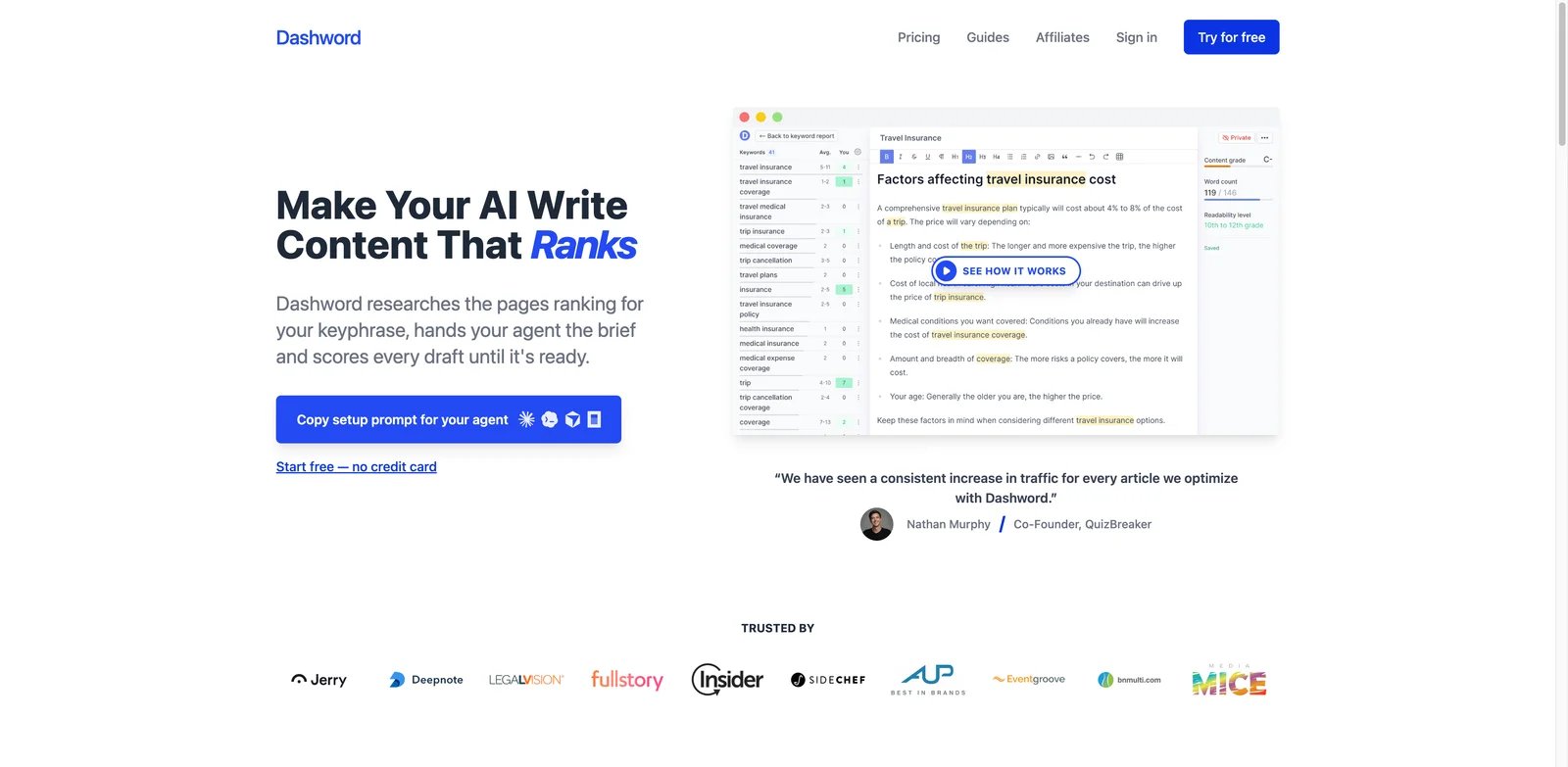
Dashword is the lightweight Clearscope alternative for teams that want briefs, scoring, monitoring, and enough structure without adopting a heavyweight SEO suite. It is also relevant for AI-assisted workflows because Dashword exposes API and MCP-oriented paths that can fit teams building their own content system around general AI.
What Dashword solves vs Clearscope:
- It keeps content optimization simple and easier to explain to writers.
- A free first report can reduce evaluation friction.
- Startup pricing sits below Clearscope Essentials while still supporting content briefs and scoring.
- API/MCP posture makes it more useful for teams wiring SEO data into custom AI workflows.
Pricing vs Clearscope: Dashword lists a free first report and paid plans such as Startup at $99/month and Business at higher team pricing. That makes it cheaper than Clearscope's entry public plan for teams that do not need Clearscope's full prompt-tracking allowance or premium editorial workflow.
Limitations: Dashword is not trying to be an enterprise content strategy platform or a full AI-search command center. If your reason for leaving Clearscope is "we need a broader suite," Dashword may still be too narrow. If your reason is "we need a simpler, cheaper optimizer," it is a better fit.
Best for: Lean SEO teams, agencies, and builders who want a lighter content optimizer or a data layer for custom AI workflows. Not the right fit if you want integrated publishing, advanced governance, or large-scale strategy planning.
Get started with Dashword
Dashword is worth testing with two user types: the SEO manager and the AI workflow builder. The SEO manager should verify whether the report is clear enough for writers and whether the monitoring view catches important page drift. The builder should check whether the API or MCP path can feed terms, briefs, or scoring data into an internal Claude or ChatGPT workflow without manual copy-paste.
That second path is increasingly important. Some teams do not want to buy a giant SEO platform; they want a reliable content-optimization signal inside a custom system. Dashword can be useful when the score is data, not the whole product experience. If your team has engineering or automation capacity, this can be more flexible than switching to another closed editor.
Content Harmony
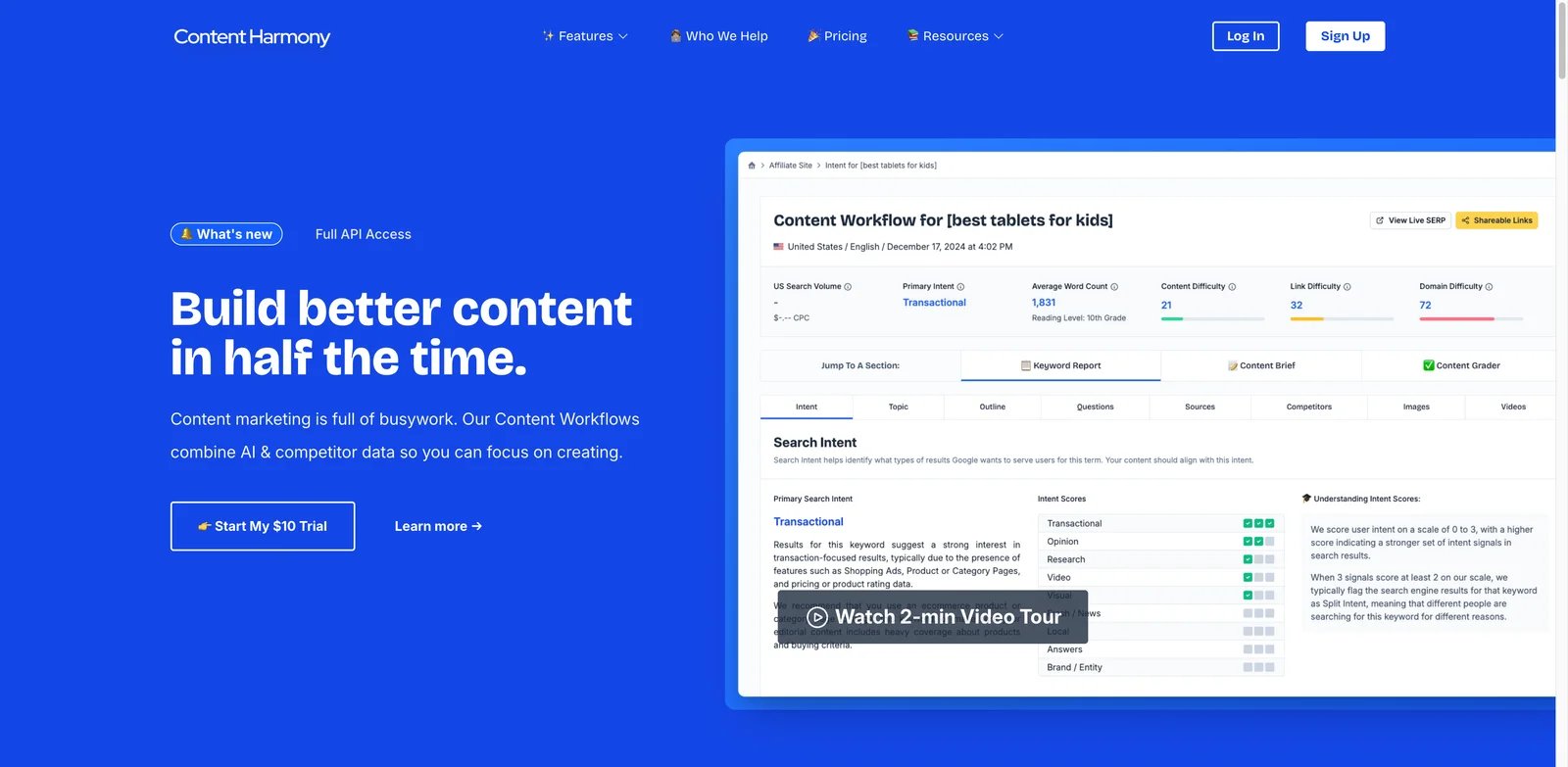
Content Harmony is a better alternative when the deliverable is a brief, not a score. Clearscope shines once a draft exists. Content Harmony focuses earlier: search intent, competitor analysis, questions, outlines, visual examples, and writer handoff. For agencies and editorial teams, that can be the higher-leverage step.
What Content Harmony solves vs Clearscope:
- It turns SERP research into structured content briefs for writers.
- Search intent and competitive analysis are explicit parts of the workflow.
- Workflow-based pricing can be easier to map to briefing volume.
- It can reduce the manual research burden before a writer opens a draft.
Pricing vs Clearscope: Content Harmony offers a paid trial and volume-based monthly workflow packages. Lower tiers can cost less than Clearscope Essentials when a team needs a limited number of briefs. High-volume teams should compare cost per workflow against the number of Clearscope Drafts or Topic Explorations they actually use.
Limitations: Content Harmony is not a full replacement for every Clearscope use case. If your editors depend on live term scoring inside the writing process, you may need to pair it with another optimizer or accept a different review rhythm.
Best for: Agencies, publishers, and content managers who want better search-intent briefs before writing begins. Not the right fit if your main pain is AI-search monitoring or live scoring inside the draft.
Get started with Content Harmony
Content Harmony's pilot should start before the writer touches the draft. Take one keyword where your old workflow produced mediocre content, generate a brief, and ask whether the brief clarifies intent, content format, questions, examples, and competitor angles better than your current process. If the brief changes the writer's plan before writing, Content Harmony is doing its job.
It is also a strong agency tool because it creates a more reviewable artifact. Clients can understand a brief more easily than a content score. Editors can approve direction before paying for a draft. Writers can see why certain sections belong in the piece. That can reduce revisions even when you still use another tool for final optimization.
NeuronWriter
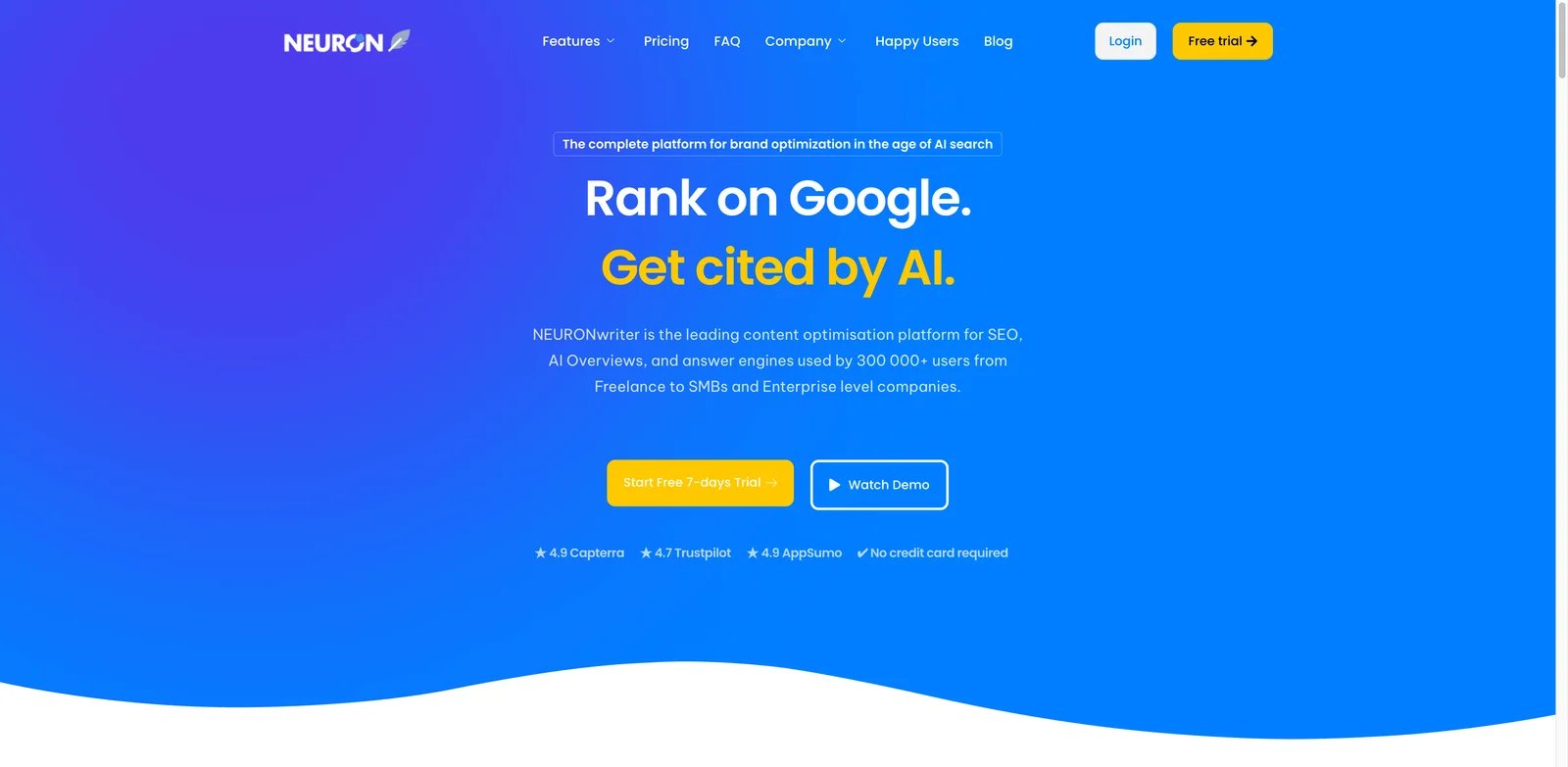
NeuronWriter is the budget pressure test for Clearscope. It does not have the same premium brand signal, but it offers NLP optimization, AI writing, competitor analysis, integrations, and monitored questions at a fraction of Clearscope's public entry price. If price is the first switching reason, NeuronWriter belongs near the top of the shortlist.
What NeuronWriter solves vs Clearscope:
- Low entry pricing makes it realistic for freelancers, niche-site operators, and small teams.
- NLP-based content recommendations cover the core "optimize this draft" job.
- AI writing and integrations reduce the need for a separate drafting layer.
- Monitored questions and AI-adjacent features help teams experiment with AI-search intent at lower cost.
Budget math: NeuronWriter's Bronze plan is far below Clearscope Essentials. That does not make it equal. It means a buyer should ask whether Clearscope's editorial polish, data confidence, collaboration, and Prompt Tracking are worth the price delta for their workflow.
Pricing vs Clearscope: NeuronWriter lists monthly tiers from Bronze upward, with a 7-day Gold trial and annual discounts. Compared with Clearscope's $129/month entry, NeuronWriter is the lower-risk trial for teams that need basic content optimization volume.
Limitations: The UX, brand trust, enterprise readiness, and recommendation quality may not match Clearscope for mature editorial teams. It is also easier to overvalue cheap tools if the output still needs extensive human review.
Best for: Budget-conscious SEOs, solo publishers, and small agencies that need credible NLP optimization without a premium subscription. Not the right fit if executive trust, enterprise workflow, or premium editorial polish is the main buying criterion.
Get started with NeuronWriter
The NeuronWriter test should be brutally practical: pick five pages you would not justify running through a $129/month premium optimizer, then see whether NeuronWriter improves them enough to matter. Budget tools make sense when they unlock more optimization coverage across long-tail pages, not when they pretend to be identical to an enterprise editor.
Pay attention to governance. Lower-cost tools can make it easy for inexperienced writers to chase scores mechanically. Set rules: do not add terms that break readability, do not expand sections just to satisfy a target, and do not publish AI-written passages without fact review. NeuronWriter is useful when it gives editors more coverage; it is risky when it becomes a scoreboard for thin content.
Rankability
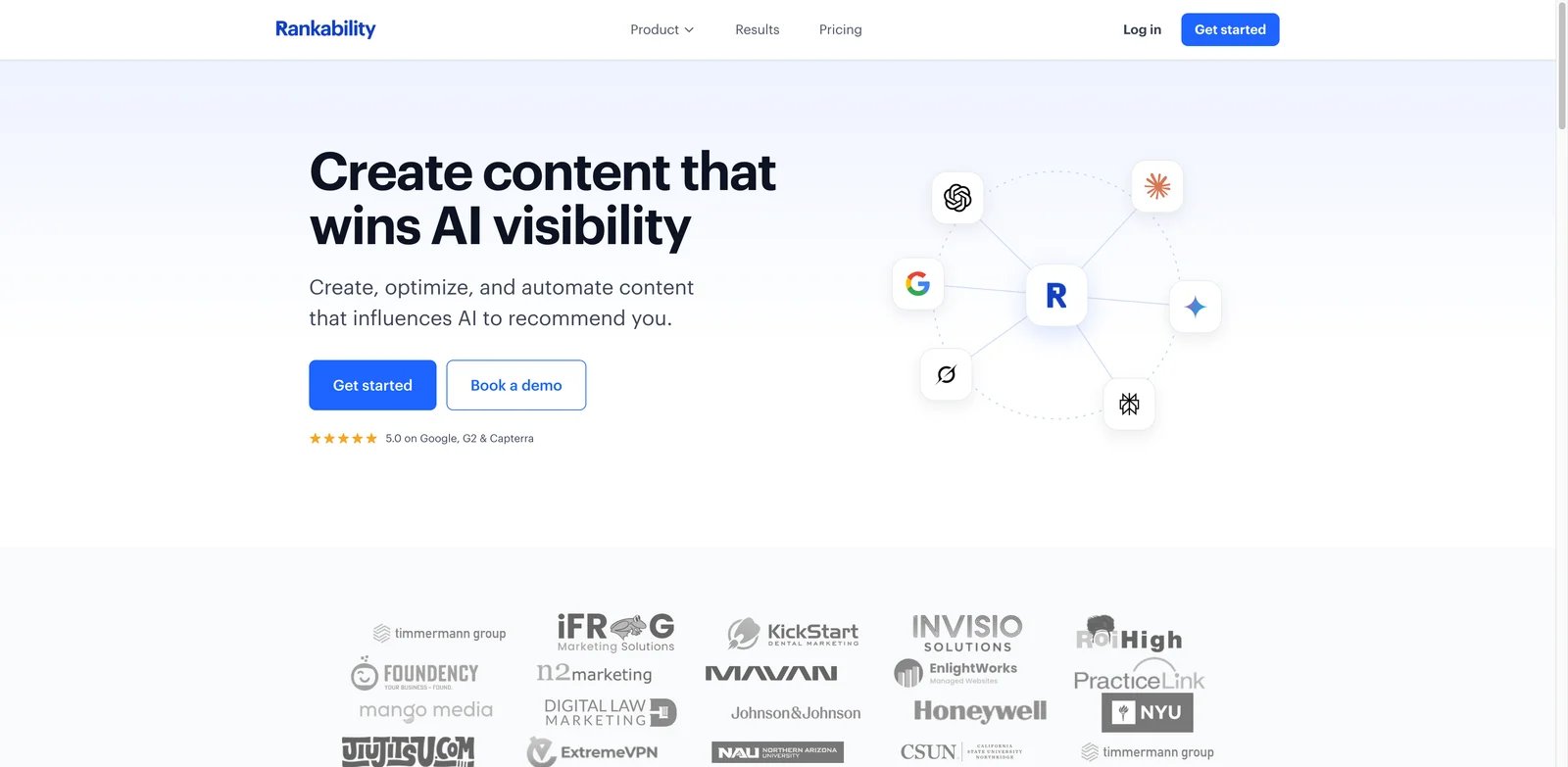
Rankability is the alternative for teams that say, "The score is not the bottleneck anymore." It is built around a wider production path: research, creation, optimization, approval, publishing, scheduled routines, integrations, API, and MCP. That makes it less like a pure Clearscope clone and more like an execution layer for content operations.
What Rankability solves vs Clearscope:
- It connects optimization to approvals and publishing instead of stopping at recommendations.
- WordPress and Webflow publishing matter when the final bottleneck is moving approved content live.
- Scheduled routines support repeatable refresh and optimization workflows.
- API/MCP support makes it more useful for AI-assisted operations.
Execution layer: Rankability's appeal is not that every scoring suggestion beats Clearscope. It is that an editor, manager, and operator can work inside a more complete process. For teams producing and refreshing many pages, that can matter more than the elegance of the scoring panel.
Pricing vs Clearscope: Rankability's Core plan starts below Clearscope Business and around the same general market band as serious optimization tools; higher tiers rise quickly for teams. Compare not just monthly price, but whether it replaces project management, publishing handoff, and refresh tooling.
Limitations: A broader workflow introduces adoption cost. If writers only need a clean grade and term list, Rankability may feel like too much product. Also verify which integration and API features sit on the plan you plan to buy.
Best for: Content operations teams that want optimization connected to approvals, CMS publishing, and repeatable refresh routines. Not the right fit if you only need a lightweight editor for a few pages per month.
Get started with Rankability
Rankability's evaluation should include a real approval chain. Give one article to a writer, one to an editor, one to an SEO lead, and one to whoever pushes content live. If the platform makes those handoffs visible and repeatable, it is solving a different problem from Clearscope. If everyone still works in docs, Slack, and spreadsheets, Rankability's execution promise may not land.
This also makes Rankability attractive for refresh programs. A recurring routine that identifies pages, assigns updates, produces optimization guidance, gets approval, and pushes changes can be more valuable than a better one-off score. Teams leaving Clearscope for Rankability are usually not saying "the terms were bad." They are saying "we could not operationalize the work fast enough."
Search Atlas
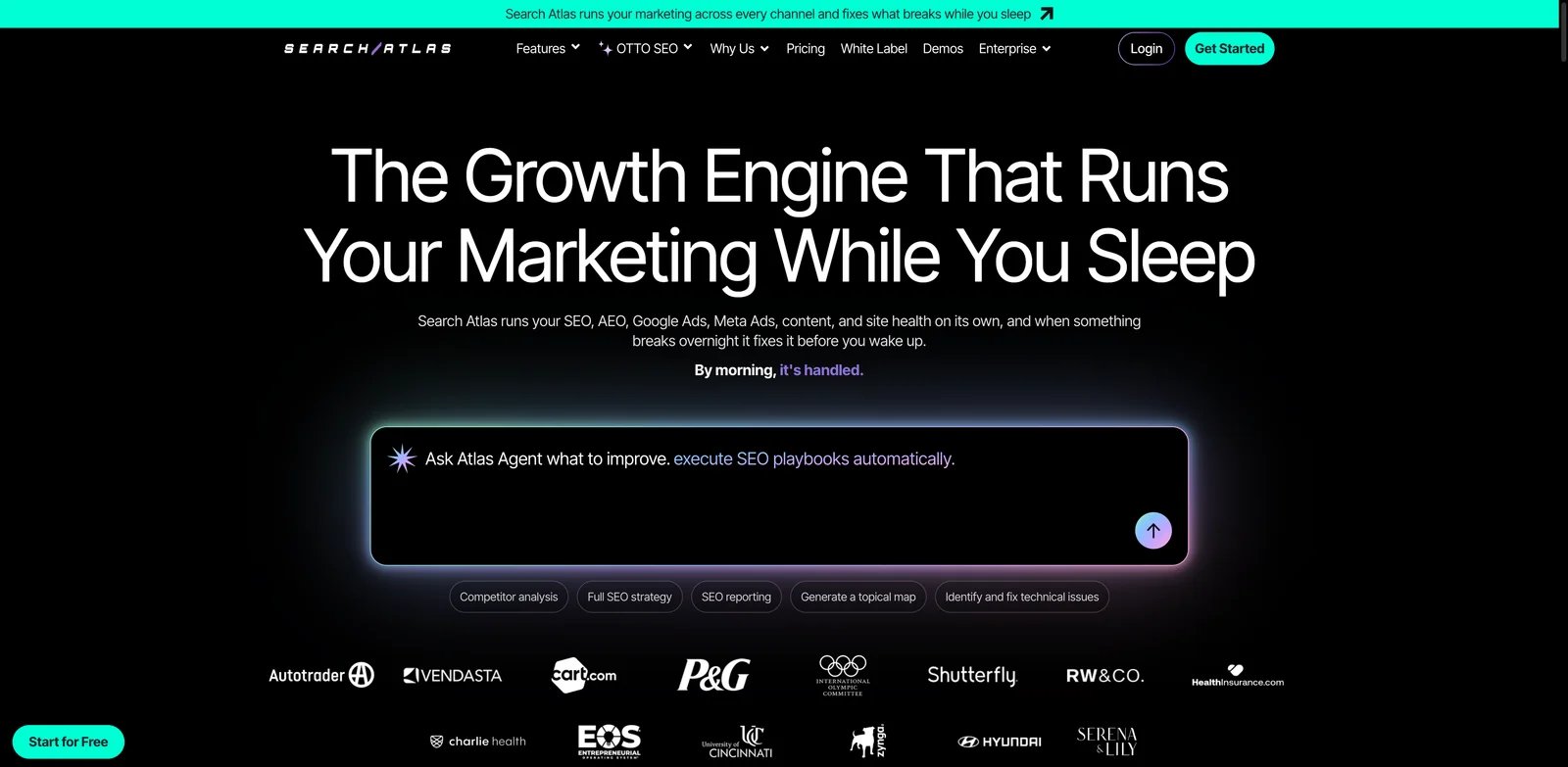
Search Atlas is for buyers who do not want a standalone Clearscope replacement. They want fewer tools. The platform combines content optimization with broader SEO tooling, OTTO automation, technical SEO support, keyword workflows, and AI visibility. That makes it relevant when Clearscope is only one piece of an expensive SEO stack.
What Search Atlas solves vs Clearscope:
- It consolidates content optimization with a broader SEO platform.
- OTTO-style automation can move recommendations closer to implementation.
- AI visibility features make it relevant to teams tracking answer-engine presence.
- Agencies may prefer one platform for content, technical, local, and reporting workflows.
Pricing vs Clearscope: Search Atlas pricing starts near serious SEO suite territory, so it is not automatically cheaper than Clearscope. The case for Search Atlas is replacement value. If it reduces several subscriptions or operational handoffs, it may be cheaper in workflow cost even when the plan price is similar or higher.
Limitations: Suite products create surface area. Teams that bought Clearscope for editorial simplicity may dislike a broader platform. You also need to verify whether the automation features are safe for your site and approval process before letting them touch production SEO changes.
Best for: Agencies and SEO teams that want content optimization, automation, and AI visibility in one broader platform. Not the right fit if you are happy with your existing SEO stack and only want to swap the content editor.
Get started with Search Atlas
Search Atlas should be tested against total stack cost. List every SEO and content tool your team pays for, then identify which modules Search Atlas could realistically replace. Do not count theoretical replacements. Count only workflows you can migrate in a two-week pilot: content optimization, technical audits, keyword tracking, AI visibility, local SEO, reporting, or automation.
The second test is approval safety. Automation is valuable only when changes are reviewable. If the team cannot explain which recommendations will be applied, who approves them, and how rollback works, keep automation in advisory mode. Search Atlas can be powerful, but the migration should be staged: visibility first, recommendations second, controlled implementation third.
Scalenut
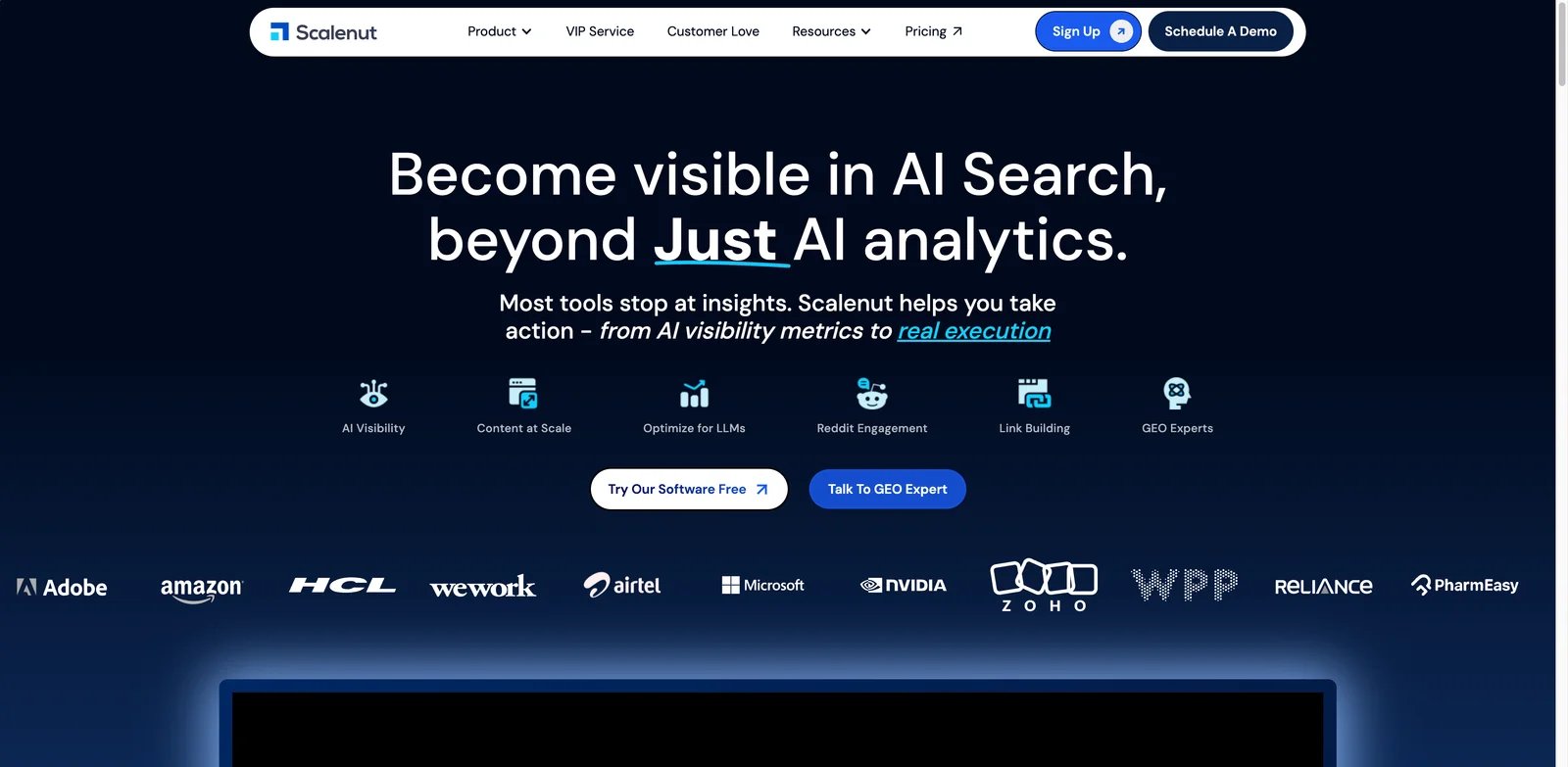
Scalenut has shifted hard toward AI visibility and GEO positioning. Its pricing page now frames plans around prompts tracked, GEO articles, existing-article optimization, keyword clusters, AI engines, and a GEO Action Center. That makes it a very different buyer conversation from the old "AI writer plus SEO" category.
What Scalenut solves vs Clearscope:
- GEO and AI visibility are central to the current product narrative.
- Starter, Plus, and Professional tiers give lean teams a self-serve path.
- Existing-article optimization, keyword clusters, and GEO audits can reduce tool switching.
- Auto-publish and collaboration features make it more execution-oriented than a pure score.
Pricing vs Clearscope: Scalenut's stable list prices show Starter, Plus, and Professional tiers below or around the serious SEO-tool range, with temporary promotional pricing often displayed. Use list prices for budgeting, not limited-time discounts. Compared with Clearscope, Scalenut may be cheaper at entry and stronger on GEO workflow, but the scoring model and editorial polish are different.
Limitations: Dynamic promotions can confuse budget comparisons. Also verify which answer engines, prompt volumes, article limits, and audit features are included in the plan you choose. GEO features are evolving quickly across the category.
Best for: Small teams that want SEO and GEO content workflows in one self-serve tool. Not the right fit if you want Clearscope's premium editorial simplicity or a strategy-heavy inventory platform.
Get started with Scalenut
Scalenut's pilot should focus on AI-search deliverables. Track a small set of prompts, create or optimize a few pages, and then check whether the tool gives a clear path from visibility gap to content action. GEO dashboards are easy to admire and hard to operationalize. The value is in whether an editor knows exactly what to change next; compare that against ToolWorthy's Scalenut profile if you need product-level context.
Also separate promotion price from operating price. Scalenut often presents discounts alongside list prices, and those discounts can make the initial comparison look unusually favorable. Budget against the recurring list price and the limits you need after the promotion ends. If the workflow still works at that number, the tool is a legitimate Clearscope alternative rather than a discounted experiment.
PageOptimizer Pro
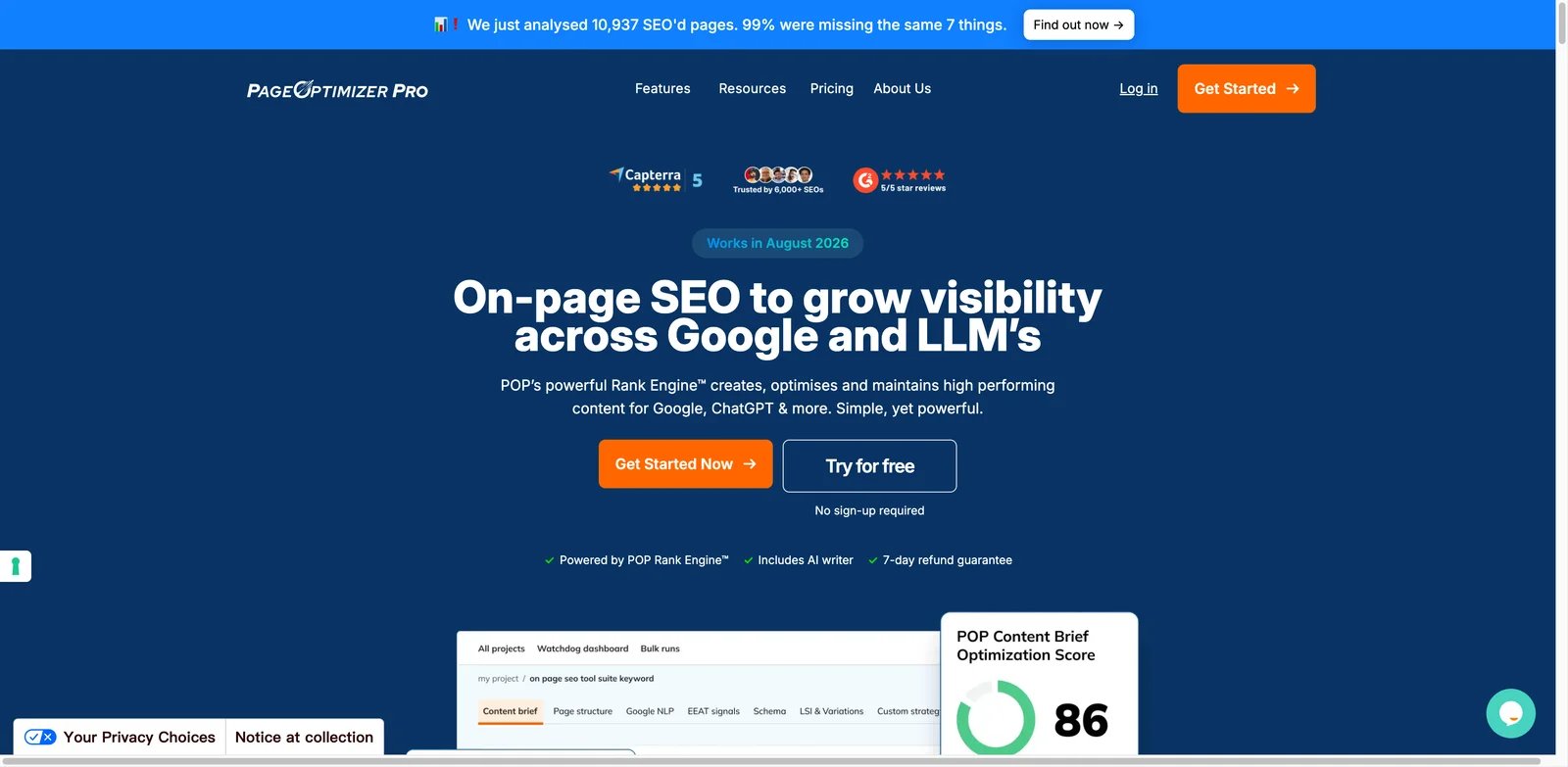
PageOptimizer Pro is the technical SEO alternative. It is less about premium editorial comfort and more about on-page optimization signals, NLP/TF-IDF, E-E-A-T checks, Watchdog monitoring, AI Writer, and AI Visibility Tracker. If your team wants lower-cost optimization with more technical control, it deserves a test.
What PageOptimizer Pro solves vs Clearscope:
- Lower entry pricing than Clearscope for teams comfortable with technical SEO.
- On-page recommendations are built for people who want precise optimization tasks.
- Watchdog and AI visibility features push it beyond a static content score.
- Credit-based expansion can fit agencies with variable client workloads.
Pricing vs Clearscope: POP's Basic, Unlimited, and Teams tiers are below Clearscope Business and can start well below Clearscope Essentials depending on billing. Compare POP credits, team limits, and report capacity against how many Clearscope pages and drafts your team uses.
Limitations: PageOptimizer Pro is less writer-friendly than Clearscope for teams that want an elegant editorial workflow. The recommendations can feel more technical, and non-SEO writers may need more guidance from an editor.
Best for: Technical SEOs, agencies, and on-page specialists who want lower-cost optimization and AI visibility tracking. Not the right fit if your writers need the cleanest possible content editor.
Get started with PageOptimizer Pro
PageOptimizer Pro's best migration test is a technical content refresh. Pick a page where the editor has already improved clarity, then ask POP what on-page opportunities remain. This helps separate editorial feedback from technical optimization. If POP finds concrete structural, entity, or on-page gaps that your current process misses, it earns a place in the stack.
It is less useful when the writer needs handholding. POP assumes the user can interpret optimization advice without turning the article into keyword stuffing. For agencies with SEO specialists, that is fine. For content teams that rely on freelance writers, pair POP recommendations with an editor-owned checklist rather than sending raw technical instructions directly to writers.
Honorable Mentions
AirOps
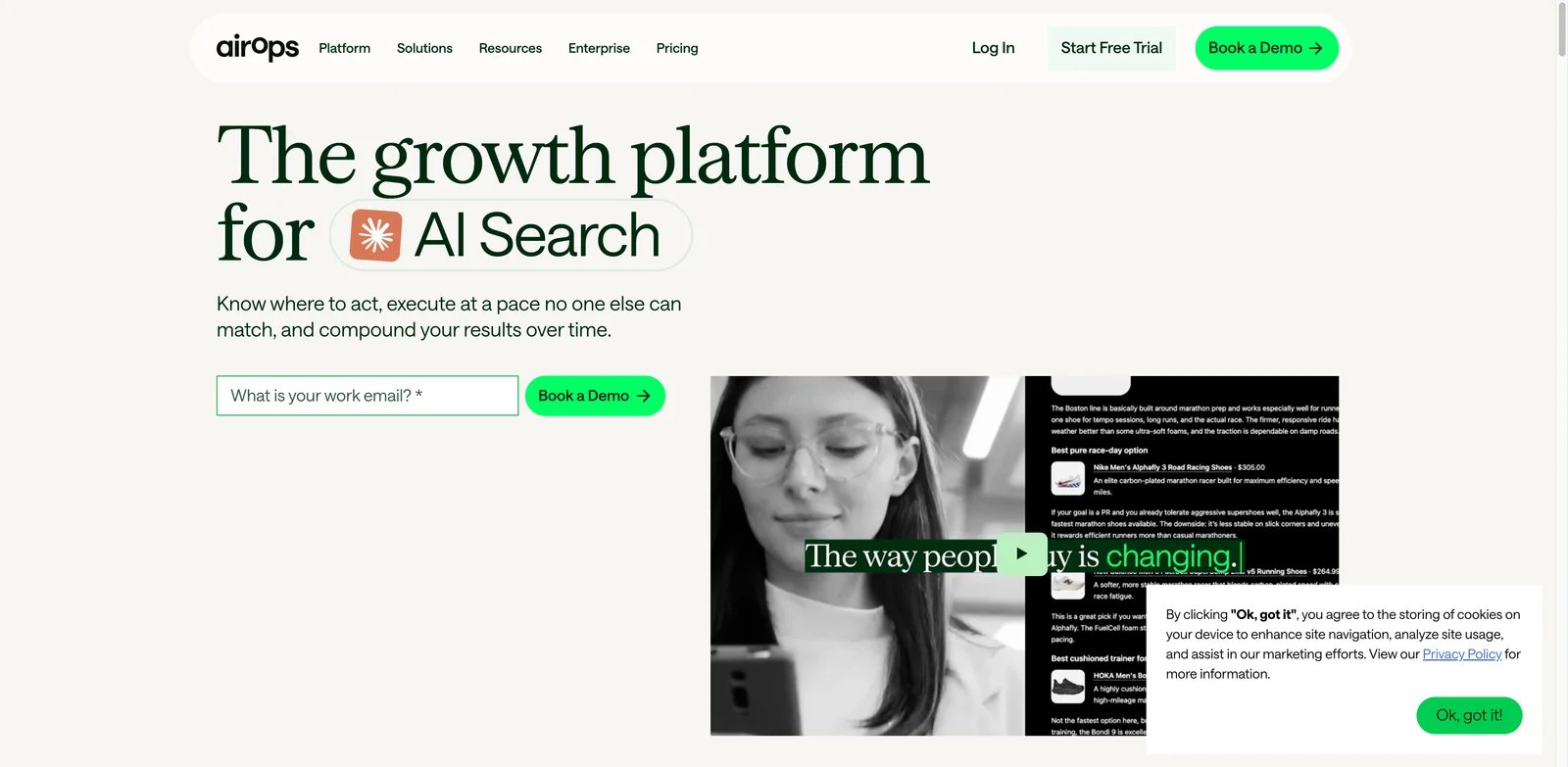
AirOps is the adjacent pick when "replace Clearscope" really means "turn AI-search insights into content operations." Its pricing page shows an Insights tier starting at $0/month, Solo and Pro start-free paths, Pages as custom, and task-based usage. It is powerful for workflows, production, CMS integrations, and AI-search insights, but recurring Solo/Pro dollar amounts are not publicly stable enough to compare casually. Use AirOps when execution and scale matter more than writer-facing simplicity.
Semrush
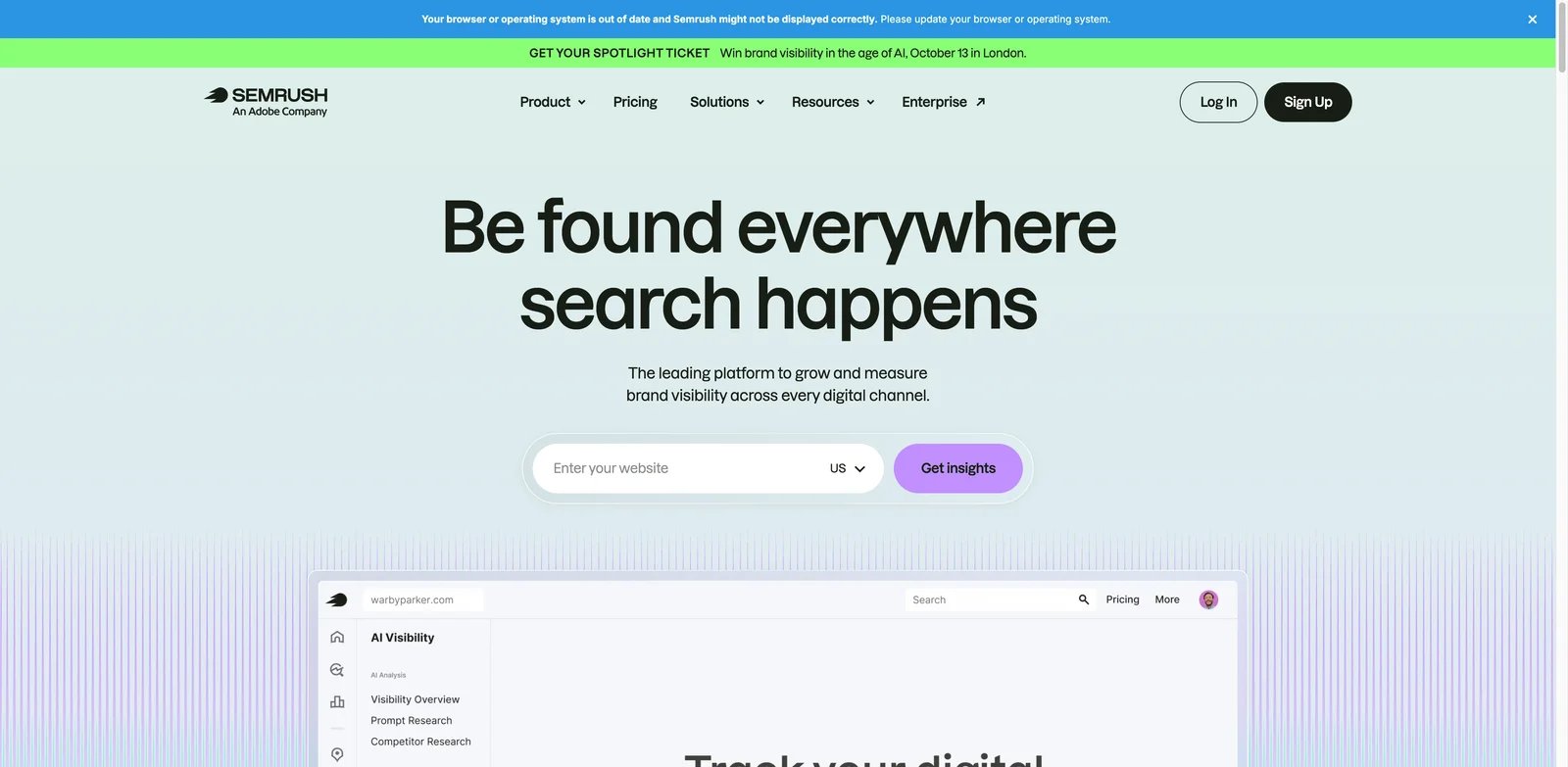
Semrush is not a Clearscope clone, but it may replace the surrounding stack. If your team pays for keyword research, competitive analysis, rank tracking, technical audits, and emerging AI-search features separately, Semrush can consolidate parts of that budget. It is less focused as a content editor, so use it as a broader SEO-suite decision, not a direct Clearscope swap.
Ahrefs
Ahrefs is similar: it is a data platform first. Ahrefs Free tools and Starter can help smaller teams, while higher plans and Brand Radar address more serious SEO and AI-visibility work. It does not replace Clearscope's editorial optimization UI, but ToolWorthy's Ahrefs profile can help frame the data-platform side of the decision.
Claude
Claude is the DIY path. With Projects, long context, custom instructions, structured prompts, and your own SEO data, a disciplined team can build a Clearscope-like briefing and review workflow. That is not the same as buying a shared SaaS editor. It works only if you have source data, prompt discipline, QA, and a human editor who can catch confident nonsense.
HubSpot Content Hub
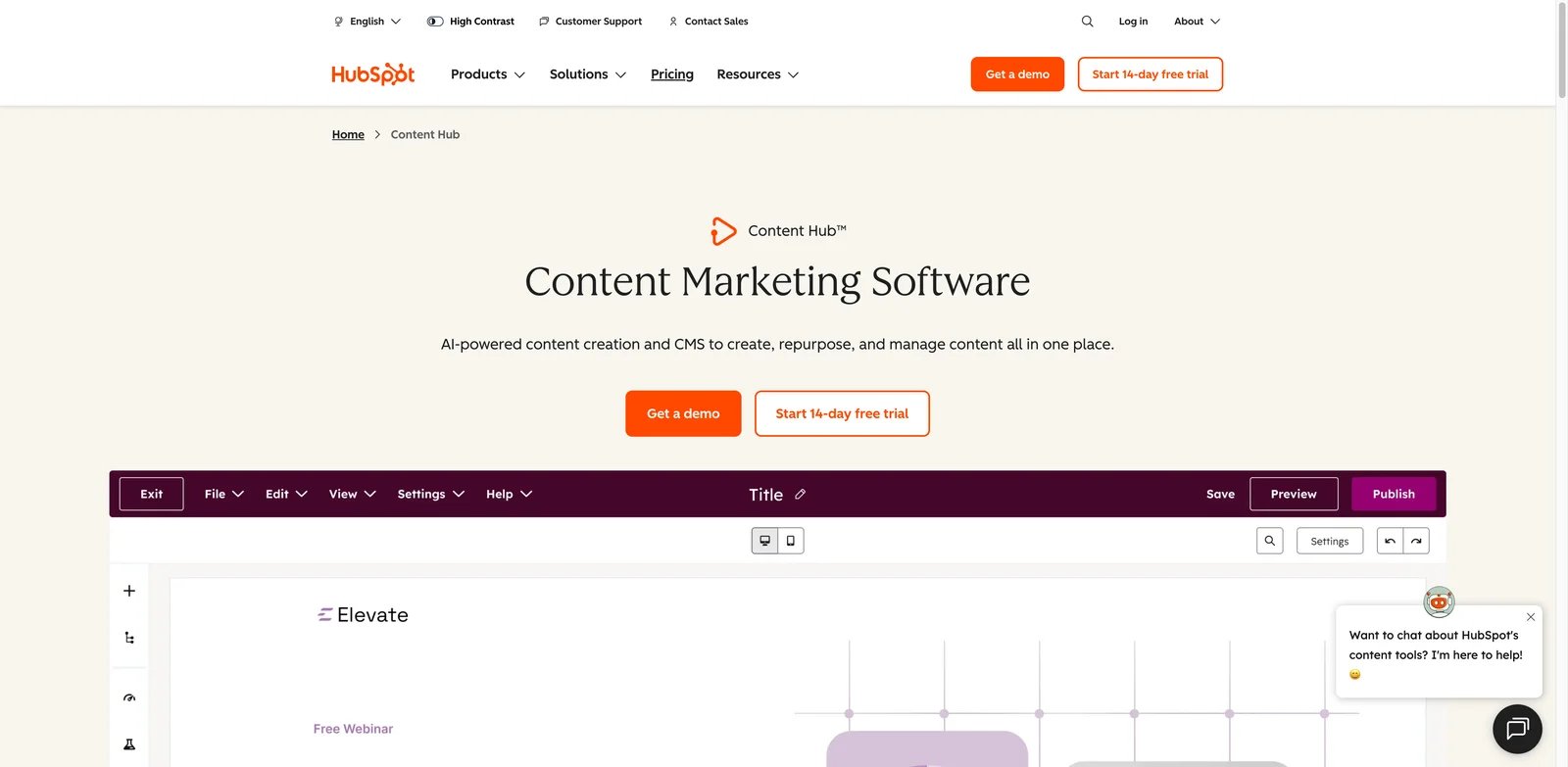
HubSpot Content Hub matters when content optimization belongs inside CMS, CRM, approvals, campaigns, and AEO. HubSpot's current Content Hub pricing includes a Free tier, Starter per-seat pricing, Professional from $450/month annually, and Enterprise from $1,500/month. HubSpot AEO is also available as a dedicated $50/month solution or through supported Marketing Hub plans. This is not a cheap Clearscope replacement; it is a platform consolidation move.
The honorable mentions are deliberately not in Detailed Reviews because they are not writer-facing content optimizers in the same way. They are valid alternatives only if your Clearscope problem is adjacent: execution at scale, platform consolidation, SEO data ownership, custom AI workflows, or CMS/CRM integration. If you mainly want a draft score, keep them out of your first buying round. If you want to reduce the number of content and SEO systems your team manages, they may matter more than another optimizer.
Migrating from Clearscope - A Practical Guide
Data and Account Migration
Start by exporting or preserving the assets that encode your current editorial process: high-performing Clearscope reports, target keywords, preferred term ranges, writer briefs, Google Docs links, WordPress or CMS handoff notes, Prompt Tracking prompts, tracked pages, and client-specific scoring expectations. Most teams underestimate this step because Clearscope feels simple. The process around it is not simple.
Then map each asset to the new tool. Surfer, Frase, Dashword, NeuronWriter, and Scalenut are easiest for document-level optimization. MarketMuse needs a topic and inventory mapping step. Rankability, Search Atlas, AirOps, HubSpot, and Semrush need a broader operational plan because they touch more of the workflow. Claude needs the most explicit migration design because you are rebuilding process, not changing software.
Learning Curve by Alternative
Near-zero switches include Surfer SEO, Frase, Dashword, and NeuronWriter. Writers will recognize the editor, score, and recommendations quickly. The risk is not learning curve; it is overtrusting the score.
Medium switches include Content Harmony, Rankability, Scalenut, PageOptimizer Pro, and Search Atlas. These tools change the workflow around the draft, so editors and operators need shared rules before production use.
High-effort switches include MarketMuse, AirOps, Semrush, Ahrefs, Claude, and HubSpot Content Hub. These are strategic or platform moves. They can pay off, but only when the team names the process it is replacing.
Pricing Brackets vs Clearscope Essentials $129/mo
If your main reason is price, test NeuronWriter, PageOptimizer Pro, Content Harmony, Frase Starter, Scalenut Starter, and Surfer's lower tiers first. If your reason is team workflow, compare Rankability, Search Atlas, Scalenut Plus/Professional, Frase higher tiers, and Dashword Business. If your reason is platform consolidation, the comparison moves to MarketMuse, AirOps, Semrush, Ahrefs, HubSpot, or a custom Claude workflow.
Do not compare only monthly list prices. Compare cost per finished page after research, writing, editing, optimization, approval, publishing, refreshing, and AI-search monitoring.
A practical migration spreadsheet should include at least eight columns: content brief cost, draft optimization cost, AI writing cost, editor time, publishing handoff time, refresh workflow, AI-search monitoring, and reporting. Clearscope may look expensive in the plan-price column and still win if it saves senior editorial time. A cheaper alternative may win if it lets you optimize many more pages with acceptable quality. A broader platform may win only when it replaces other subscriptions.
Run the first overlap on work that matters but is not business-critical. Avoid your top revenue page as the first test. Choose one mid-value refresh, one new blog post, and one page where AI-search visibility matters. Keep Clearscope as the baseline for two weeks, not two days. Short tests reward novelty; longer tests reveal whether writers, editors, and managers can actually live with the new workflow.
Best Clearscope Alternatives by Use Case
If Your Reason Is "I want a much lower monthly entry cost"
Start with NeuronWriter, PageOptimizer Pro, Content Harmony, and Scalenut. These tools give you credible optimization or briefing workflows at lower entry prices than Clearscope's public Essentials tier. The tradeoff is polish, data confidence, or workflow fit.
If Your Reason Is "I want a Clearscope-like editor but with stronger AI-search coverage"
Start with Surfer SEO, Frase, and NeuronWriter. Surfer is closest when you still want a serious content editor. Frase is better when you also want research and publishing. NeuronWriter is the budget experiment.
If Your Reason Is "I need the tool to act and publish, not just score my draft"
Start with Rankability, Search Atlas, Frase, Scalenut, and AirOps. The deciding question is whether you need approvals, routines, CMS publishing, automation, or workflow monitoring after the optimization pass.
If Your Reason Is "I want fewer disconnected tools in my content stack"
Start with Search Atlas, Scalenut, Frase, HubSpot Content Hub, and Semrush. These are not all cheaper than Clearscope, but they may reduce total stack cost if they replace multiple tools.
If Your Reason Is "I'd rather build my own SEO workflow with general AI"
Start with Claude plus a structured data source such as Dashword, Ahrefs, Semrush, GSC exports, or your own SERP pipeline. This path is powerful and dangerous. It can lower cost and increase control, but only if you create repeatable prompts, source citations, QA rules, and publishing checks.
If Your Reason Is "I care more about topical strategy than squeezing another point out of a content score"
Start with MarketMuse and Content Harmony. MarketMuse is stronger for inventory and topic authority. Content Harmony is stronger for intent-rich writer briefs. Both shift the decision upstream from "optimize this draft" to "what should we publish and why?"
If Your Reason Is "My primary goal is earning AI citations and GEO visibility"
Start with Surfer SEO, Frase, Scalenut, Rankability, and AirOps. Clearscope's Prompt Tracking means you should not exclude Clearscope from this shortlist, but compare whether each platform turns visibility gaps into content actions you can actually execute.
How to Choose the Right Clearscope Alternative
First, diagnose the real reason you are switching. If the answer is price, do not buy a broad suite. If the answer is AI-search visibility, do not buy a cheap content scorer and hope it becomes a GEO platform. If the answer is execution, do not choose a tool that ends at recommendations.
Second, validate pricing with one real workflow. Run the same article through Clearscope and the alternative. Count the report, brief, AI draft, editor access, prompt tracking, CMS export, and refresh steps. A lower plan price can disappear if the workflow needs paid add-ons or another tool.
Third, verify AI-search claims before committing. Ask which engines are tracked, how often prompts run, whether responses are stored, whether citations are shown, whether competitor domains can be added, and whether the tool recommends content actions after visibility gaps appear.
Fourth, run a two-week overlap. Pick one new article, one refresh, one competitive comparison, and one AI-citation prompt set. Have the same editor score the final output, not the demo. The right alternative should reduce review time or increase decision confidence within two weeks.
Use a pass/fail gate before canceling Clearscope. The replacement should pass five checks: writers understand the recommendations without SEO translation, editors trust the suggestions enough to act on them, managers can see why the content was prioritized, pricing is predictable for the next quarter, and AI-search claims are backed by visible prompt or citation evidence. If any one of those fails, keep the overlap running or narrow the scope of the migration.
Finally, remember that switching tools is not a content strategy. If your pages are thin, undifferentiated, or written only to satisfy a score, a new optimizer will not fix the business problem. The right tool should make better editorial judgment easier. It should not replace judgment with a higher number in a dashboard.
Frequently Asked Questions
What is the best Clearscope alternative overall in 2026?
What is the best free alternative to Clearscope?
What is the cheapest credible Clearscope alternative?
Is Surfer SEO better than Clearscope?
Is Frase a good alternative to Clearscope?
Can Claude or another general AI tool replace Clearscope?
Which Clearscope alternative is best for GEO and AI citations?
Clearscope launched Prompt Tracking in July 2026 - is it still worth switching?
Get ToolWorthy Weekly
New AI tools, practical guides, and selected AI signals in one weekly brief.
Discover More AI Tools
Explore our comprehensive directory of AI tools, carefully curated and reviewed by experts to help you find the perfect solution for your needs.