

Overview
GLM-Image is an open-source, industrial-grade image generation model developed by Zhipu AI (Z.ai). The model combines a 9-billion-parameter autoregressive generator with a 7-billion-parameter diffusion decoder to create images with exceptional text rendering accuracy and semantic layout precision. Designed for knowledge-intensive scenarios such as posters, presentations, and science popularization diagrams, GLM-Image addresses the common challenge of garbled or inaccurate text in AI-generated images.
The hybrid architecture separates semantic planning from detail rendering: the autoregressive module handles high-level composition, layout, and instruction understanding, while the diffusion decoder focuses on texture, lighting, and fine-grained visual quality. This division enables GLM-Image to maintain coherent text and structured layouts while delivering high-resolution outputs up to 2048×2048 pixels.
GLM-Image supports both API-based usage and self-hosted deployment, making it accessible for individual creators, research teams, and commercial applications. The licensing varies by asset: the GitHub repository uses Apache-2.0, while the Hugging Face model is labeled MIT. Users should review the LICENSE file for their specific use case.
Key Features
Hybrid Architecture — Combines 9B autoregressive generator and 7B diffusion decoder, enabling superior semantic understanding for layout-heavy content while maintaining high visual fidelity through separate processing stages.
Text Rendering Accuracy — Ranks top among open-source models on text rendering benchmarks with CVTG-2K Word Accuracy 0.9116 (NED 0.9557) and LongText-Bench scores of 0.9524 (English) and 0.9788 (Chinese), significantly outperforming comparable alternatives.
Glyph Encoder Module — Incorporates specialized GlyphByT5 component for precise character-level rendering, reducing missing or garbled characters especially for Chinese text, technical diagrams, and multi-region text layouts.
Flexible Resolution Support — Generates images from 512×512 to 2048×2048 pixels in multiples of 32, supporting common aspect ratios including 1:1, 16:9, 4:3, and 3:4 for diverse content formats from social media to presentations.
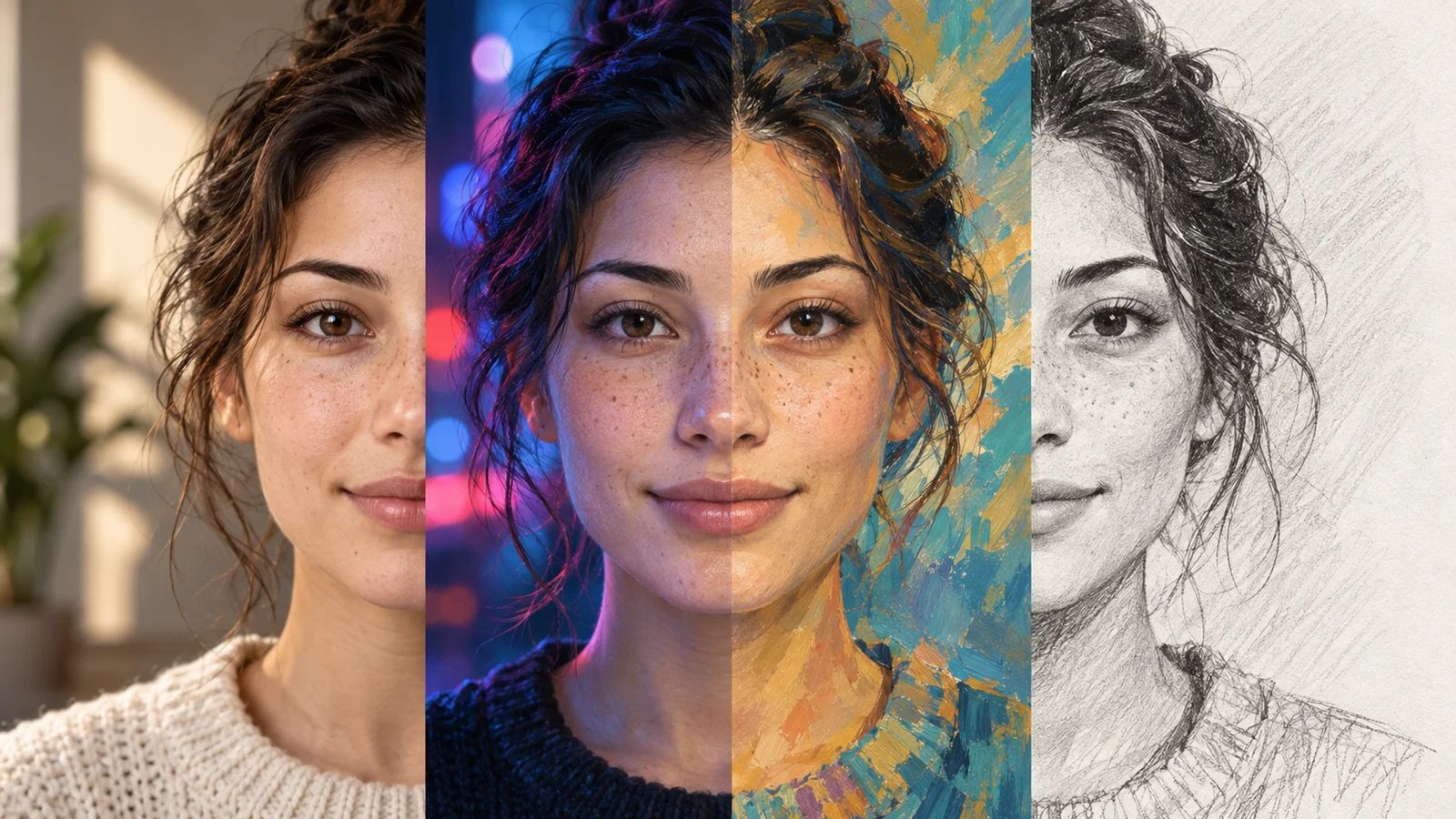
Image-to-Image Capabilities — Supports editing workflows including style transfer, identity preservation, multi-subject consistency, and background replacement while maintaining semantic coherence across transformations.
Open Source Deployment — Provides full model weights on Hugging Face, enabling local deployment using transformers and diffusers pipelines with CPU offloading support for lower VRAM configurations.
Pricing & Plans
GLM-Image offers API-based pricing and open-source deployment options:
| Plan | Price | Features |
|---|---|---|
| Pay-Per-Use | $0.015 per image | API access for all resolutions (512×512 to 2048×2048) and supported aspect ratios |
| Self-Hosted | Free | Download model weights from Hugging Face, requires GPU hardware and setup |
Z.ai lists GLM-Image at $0.015 per image via API. Any promotional credits or trial quotas for new accounts should be verified in the user billing dashboard. Self-hosted deployment permits commercial use under the applicable license terms; users must retain copyright and license notices, and comply with NOTICE or change documentation requirements where applicable.
Best For
- Marketing teams creating commercial posters, advertisements, and promotional materials with accurate brand names, slogans, and product labels
- Educational content creators producing diagrams, science popularization materials, presentations, and instructional content with multi-region text
- Social media managers generating graphics for posts, thumbnails, and branded content with embedded text
- Technical writers developing slide decks, process flows, and documentation with structured layouts
- Developers and researchers requiring self-hosted deployment for privacy-sensitive or high-volume generation workflows
FAQ
Is there a free trial available?
Z.ai may offer promotional credits to new accounts, though availability varies by region and campaign. Check your billing dashboard for current trial quota. After any trial period, generation costs $0.015 per image.
What are the system requirements for self-hosting GLM-Image?
Hardware requirements depend on your inference setup. The official Hugging Face example shows that enabling CPU offload allows operation with approximately 23GB GPU memory, while higher VRAM configurations improve speed and reduce offload overhead. The model supports optimization techniques including mixed precision and attention slicing.
What image resolutions does GLM-Image support?
GLM-Image generates images from 512×512 to 2048×2048 pixels. Both width and height must be multiples of 32. Common aspect ratios including 1:1, 16:9, 4:3, and 3:4 are supported.
Can I use GLM-Image for commercial projects?
Yes, commercial use is permitted under the applicable license. The GitHub repository uses Apache-2.0 license while the Hugging Face model is labeled MIT. Users must retain copyright and license notices, and for Apache-2.0 artifacts, comply with NOTICE file requirements and document any modifications when redistributing.
How does GLM-Image compare to DALL-E or Midjourney for text rendering?
Z.ai reports strong text rendering scores for GLM-Image on CVTG-2K and LongText-Bench benchmarks, positioning it as a top performer among open-source models. Direct comparisons to closed models like DALL-E or Midjourney require testing on identical prompts and metrics, as these models may not publish scores in the same benchmark format. Users prioritizing text accuracy in generated images should evaluate sample outputs across models.
What payment methods are accepted for API usage?
Z.ai's documentation mentions linked payment methods including bank card and PayPal. Availability may vary by region and account type. Verify accepted payment methods in your billing settings or contact Z.ai support for region-specific options.
Can I cancel or modify my API usage anytime?
API usage operates on a pay-per-use basis at $0.015 per image with no subscription commitments. You can start or stop using the service without cancellation procedures. Self-hosted deployment involves no recurring API fees.
Is my data secure when using GLM-Image API?
Data security policies depend on Z.ai's infrastructure and terms of service. For privacy-sensitive applications or scenarios requiring complete data control, self-hosted deployment using the open-source model weights eliminates reliance on external APIs and provides full control over data handling.