



Overview
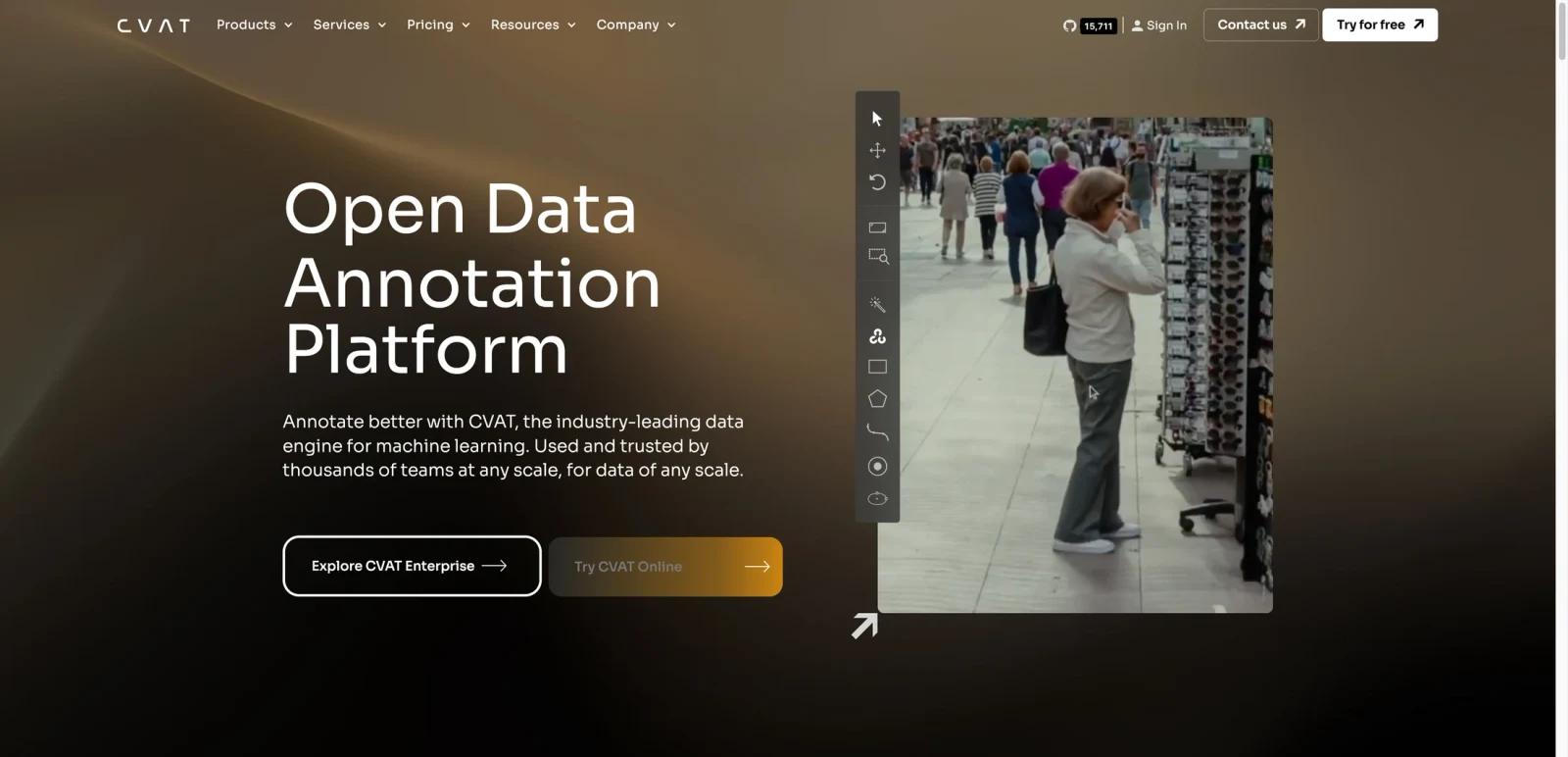
CVAT is one of the better-known annotation platforms in computer vision, and its homepage describes it plainly as an open data annotation platform. That is accurate, but it undersells the product slightly: CVAT is now both an open-source annotation standard for many teams and a hosted commercial platform with paid collaboration tiers for organizations that want easier operations.
The platform is a fit for teams labeling images and video for model training, QA, and production computer vision workflows. It supports the classic needs in this category: annotation tooling, collaboration, project management, and a path from individual experimentation to team-scale execution. That makes it useful for startups, labs, robotics teams, and enterprises that want annotation infrastructure without building everything themselves.
As of April 26, 2026, CVAT publicly lists a free plan, a Solo plan at $33/month or $23/month annually, a Team plan starting at $66/month or $46/month annually for two seats, and Enterprise pricing beginning around $12,000 per year. That level of public pricing transparency is stronger than many enterprise-adjacent annotation competitors.
For adjacent research, compare AI video generator tools, AI video editor tools, AI thumbnail maker tools.
Key Features
- Open annotation platform — CVAT benefits from open-source familiarity and broad adoption in computer vision communities.
- Hosted paid tiers — Teams can move from free use into paid hosted plans without switching products.
- Team collaboration — Paid plans support shared work and make the platform more practical for production labeling operations.
- Computer vision workflow fit — The product is built around image and video annotation for training-data pipelines.
- Enterprise option — Larger organizations can buy commercial support and broader operational capability.
- Professional services adjacency — CVAT also references annotation services for teams that need help beyond software.
Pricing & Plans
CVAT is one of the more transparent annotation tools in this backlog segment.
| Plan | Public pricing posture | Best fit |
|---|---|---|
| Free | Free plan for getting started and validating workflows | Individuals, researchers, and small experiments |
| Solo | $33/month, or $23/month billed annually | Independent practitioners who need hosted convenience |
| Team | Starts at $66/month, or $46/month billed annually, for two seats | Small teams running shared annotation work |
| Enterprise | Starts around $12,000/year | Organizations needing broader support, scale, and procurement-friendly packaging |
This structure makes CVAT appealing because users can start small and scale up without losing product continuity. The main question is whether you want an open-source-friendly hosted service like CVAT or a broader platform with more enterprise data-ops layers on top.
Best For
- Computer vision teams that want open-source familiarity plus hosted convenience
- Startups moving from individual labeling to small-team workflows
- Labs and applied-AI teams managing image or video datasets
- Buyers who prefer transparent pricing instead of sales-only gating
FAQ
What is CVAT?
CVAT is an open data annotation platform for computer vision teams working with image and video datasets.
Is CVAT free?
Yes. CVAT offers a free plan, along with paid Solo, Team, and Enterprise options for users who need more collaboration or support.
How much does CVAT cost?
Public FAQ pricing lists Solo at $33/month or $23/month annually, Team starting at $66/month or $46/month annually for two seats, and Enterprise from roughly $12,000/year.
Who should use CVAT?
It is best for computer vision teams that want a credible annotation platform with a clear path from free experimentation to hosted team use.
Does CVAT replace human review?
No. It can speed up the workflow, but important outputs should still be checked for accuracy, quality, and fit before production use.
What should teams test before buying CVAT?
Test the real workflow with representative inputs, exports, integrations, collaboration needs, and any compliance requirements.