Overview
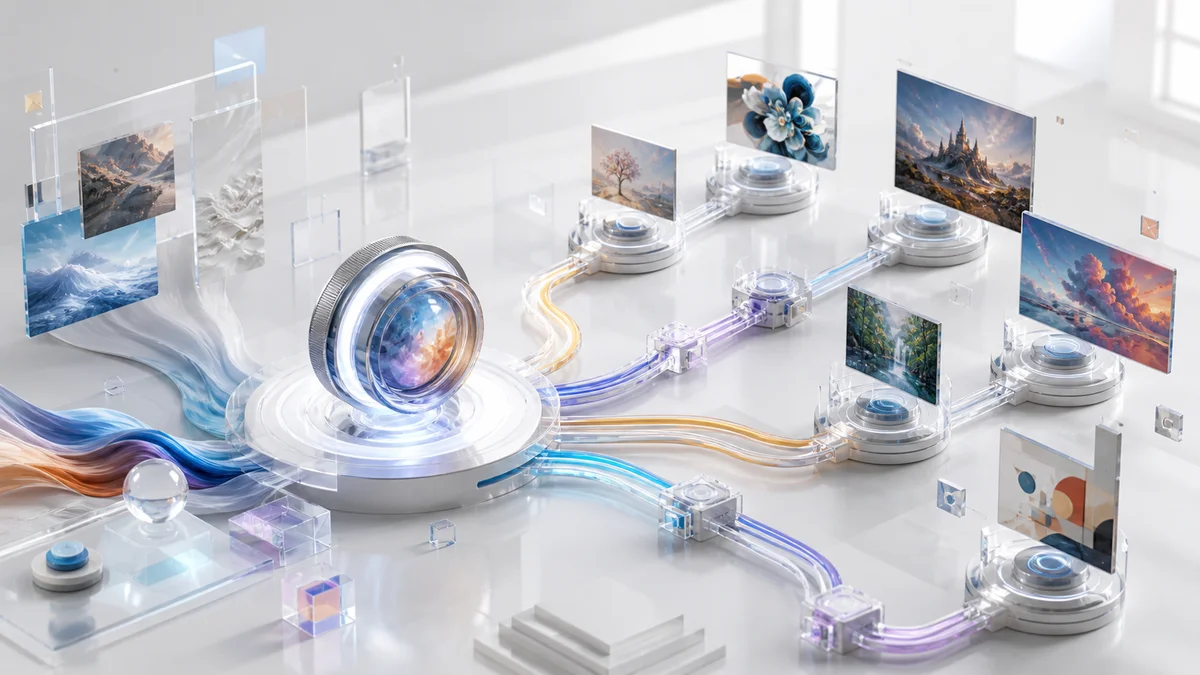
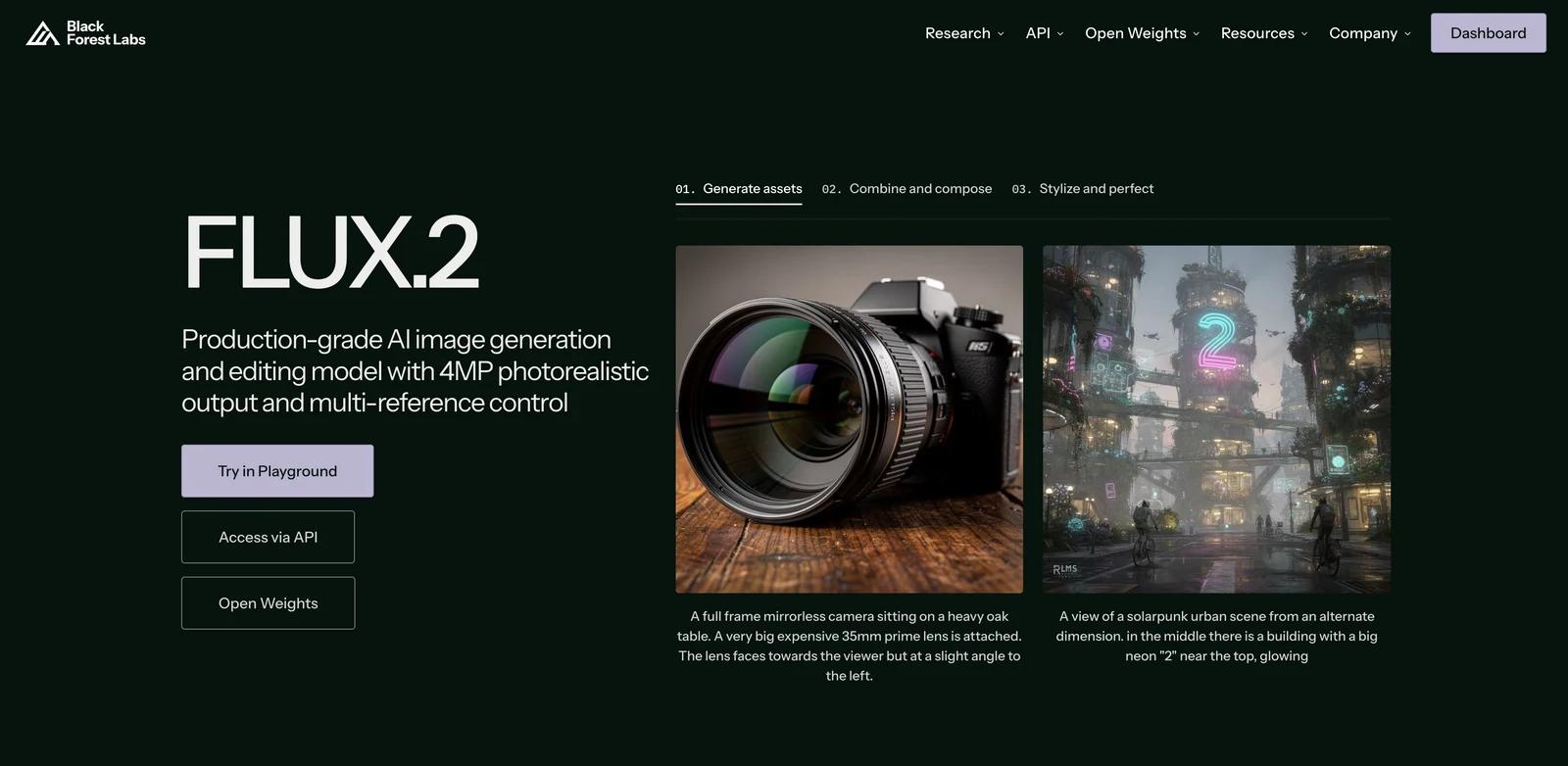
FLUX.2 is an advanced AI image generation and editing model developed by Black Forest Labs. It combines a Mistral-3 24-billion parameter vision-language model with a rectified flow transformer architecture, enabling both text-to-image synthesis and multi-reference image editing within a single framework. The model generates photorealistic outputs at resolutions up to 4 megapixels and officially supports referencing up to 10 images simultaneously for character and style consistency, though specific limits may vary by platform.
FLUX.2 targets professional creatives, product designers, marketing teams, and developers who require high-quality visual content with precise control over composition, styling, and multi-element consistency. The model family offers variants optimized for different use cases, from commercial applications requiring maximum quality to open-source deployment flexibility.
Black Forest Labs provides FLUX.2 through multiple access methods including API integration, web-based playground, partner platforms, and open-weight models for local inference. This flexibility allows users to balance between managed cloud services and self-hosted deployments based on their technical capabilities and commercial requirements.
Key Features
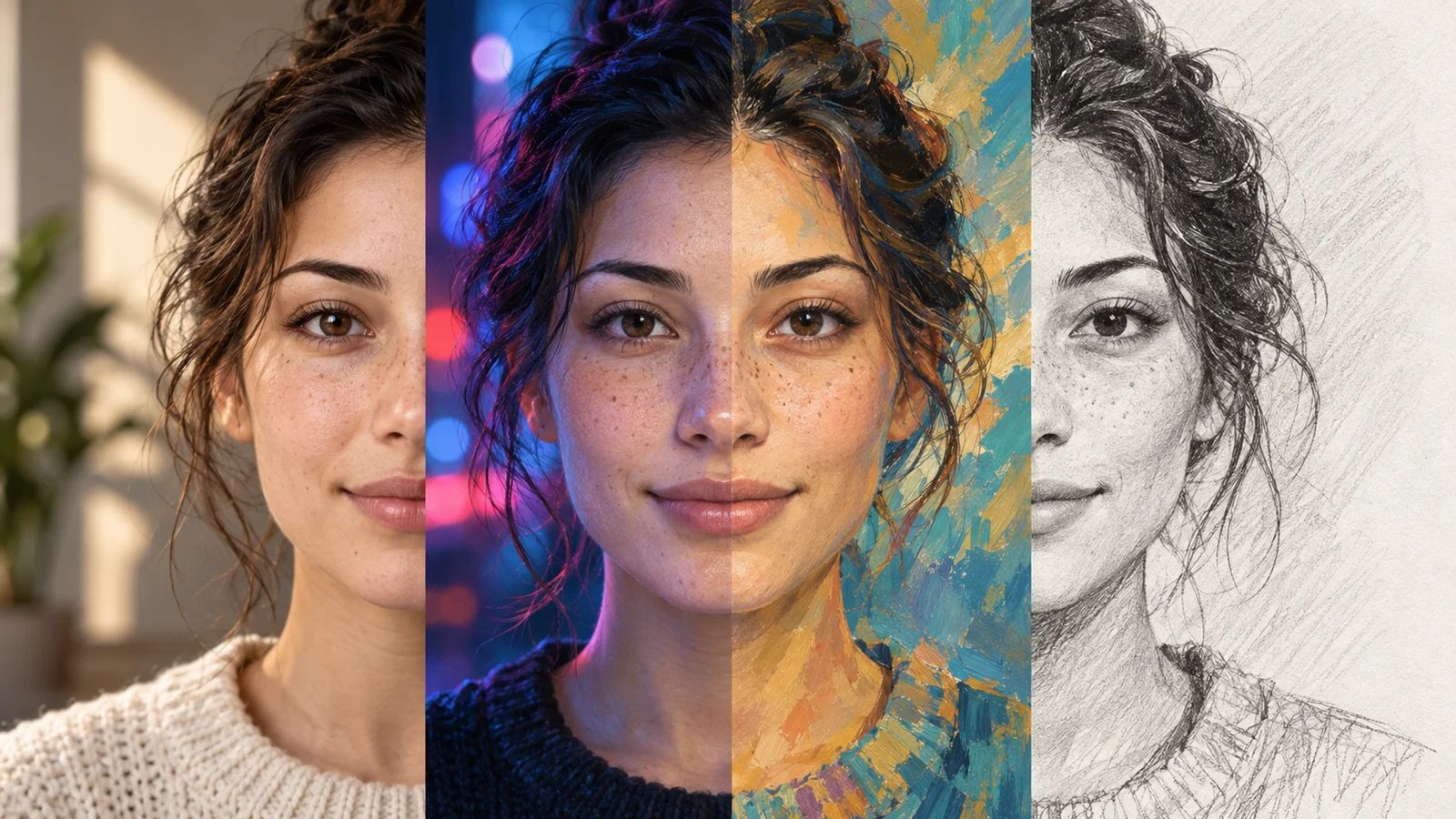
Multi-Reference Support — Process up to 10 input images simultaneously to maintain character consistency, style coherence, and compositional logic across complex scenes, enabling workflows that require visual continuity.
High-Resolution Output — Generate and edit images up to 4 megapixels with flexible aspect ratios, delivering detail suitable for product photography, architectural visualization, and print-ready materials.
Enhanced Text Rendering — Produce legible typography and accurate text integration in infographics, memes, UI mockups, and branded content, addressing a common limitation in AI image generation.
Advanced Prompt Adherence — Follow complex, structured instructions including multi-part prompts, compositional constraints, and specific attribute requirements with improved accuracy compared to predecessor models.
World Knowledge Integration — Apply real-world understanding of lighting physics, spatial relationships, and material properties to create scenes with accurate shadows, reflections, and environmental logic.
Flexible Model Variants — Choose between FLUX.2 [pro] (maximum image quality), FLUX.2 [flex] (enhanced precision and typography), and FLUX.2 [dev] (open-weight for self-hosting). The FLUX.2 [Klein] model and VAE are available under Apache 2.0 license for fully open-source deployment.
Pricing & Plans
FLUX.2 offers multiple access methods with varying cost structures:
API and Managed Services
FLUX.2 [pro] and [flex] are available through Black Forest Labs' API and partner platforms including Replicate and fal.ai. Black Forest Labs provides a public pricing calculator on its website. As of late 2025, Replicate lists FLUX.2 [pro] at approximately $0.015 per input and output megapixel, and FLUX.2 [flex] at around $0.06 per megapixel. Enterprise customers can contact Black Forest Labs for volume discounts or custom service agreements.
Benchmark data from Black Forest Labs suggests that FLUX.2 [pro] delivers state-of-the-art image quality at competitive price-per-megapixel rates, particularly for single-image generations. However, independent analyses indicate that costs can vary significantly based on workload characteristics, such as multi-reference scenarios, so teams should evaluate pricing against their specific use cases.
Open-Weight Models
FLUX.2 [dev]: Open weights are available on Hugging Face under a non-commercial license. For production deployments, Black Forest Labs offers a self-hosted Dev license priced at $1,999 per month (including up to 200,000 images, with additional images at $0.01 each as of late 2025). Commercial deployments require both infrastructure costs and the Dev license fee.
FLUX.2 [Klein] and VAE: Released under the Apache 2.0 license, allowing commercial and non-commercial use in compliance with Apache 2.0 terms. These components can be downloaded from Hugging Face and deployed without model licensing fees, though users still cover their own compute costs.
Hardware Considerations
Community benchmarks indicate that running FLUX.2 [dev] at full precision can require around 80–90GB of VRAM for the 32-billion parameter architecture. With FP8 quantization and VRAM offloading techniques developed in collaboration with NVIDIA, users have successfully deployed the model on GPUs with 18–24GB of VRAM. Systems with lower VRAM (e.g., 8GB) require at least 32GB of system RAM for offloading, though this significantly reduces generation speed.
Best For
- Professional photographers and product designers who need 4-megapixel resolution outputs with precise control over lighting and composition
- Marketing teams creating brand-consistent visual content across multiple assets that require character or style continuity
- Developers building image generation workflows who prefer open-weight models and have technical expertise to manage local deployment with FLUX.2 [dev] or [Klein]
- Content creators producing infographics, social media graphics, and UI mockups that require accurate text rendering within images
- Organizations with high-end GPU infrastructure (18–24GB VRAM with quantization or 80–90GB for full precision) seeking self-hosted generation
- Researchers and experimenters in non-commercial contexts who want access to state-of-the-art image generation capabilities through FLUX.2 [dev] or fully open-source FLUX.2 [Klein]
FAQ
What are the differences between FLUX.2 variants?
FLUX.2 [pro] is the flagship proprietary model offering maximum image quality, prompt adherence, and detail, available through API for commercial use. FLUX.2 [flex] emphasizes enhanced precision and typography, particularly suited for complex multi-reference tasks. FLUX.2 [dev] is an open-weight variant with quality approaching [pro], intended for non-commercial use, though commercial licensing is available at $1,999/month for self-hosted deployments. FLUX.2 [Klein] is released under Apache 2.0 license, enabling fully open-source deployment for both commercial and non-commercial applications.
What hardware do I need to run FLUX.2 locally?
Based on community benchmarks, the 32-billion parameter FLUX.2 model requires approximately 80–90GB of VRAM for full-precision inference. Using FP8 quantization and offloading techniques reduces this to around 18–24GB of VRAM, making it feasible on high-end consumer GPUs like NVIDIA GeForce RTX series. For systems with 8GB VRAM, at least 32GB of system RAM is needed for offloading, though this significantly slows generation speed. Cloud-based API access eliminates hardware requirements entirely.
Can FLUX.2 generate consistent characters across multiple images?
Yes, FLUX.2 officially supports multi-reference input of up to 10 images, enabling character and style consistency across complex scenes. This feature maintains visual continuity for character appearances, clothing details, and artistic styles when generating variations or editing existing images. Note that partner platforms may have different limits—for example, Replicate's FLUX.2 [pro] endpoint currently supports up to 8 reference images, while [flex] supports the full 10. FLUX.2 [dev] performs particularly well on multi-reference editing, achieving roughly a 63.6% human-preference win rate in benchmarks comparing it against other open-weight models.
Is FLUX.2 free to use?
FLUX.2 [Klein] and the FLUX.2 VAE are released under the Apache 2.0 license and can be used commercially without model licensing fees, though you still need to cover your own compute costs. FLUX.2 [dev] is free to download for non-commercial use but requires a paid self-hosted Dev license ($1,999/month as of late 2025) for commercial deployments. FLUX.2 [pro] and [flex] are proprietary models available through pay-per-use API access, with public pricing available via Black Forest Labs' pricing calculator and partner platforms like Replicate.
How fast is FLUX.2 image generation?
Generation speed varies by variant and hosting platform. On Replicate, FLUX.2 [dev] typically generates images in about 2.5 seconds, FLUX.2 [pro] in around 6 seconds, and FLUX.2 [flex] in roughly 22 seconds for standard resolutions. On fal.ai's infrastructure, FLUX.2 can return results in under two seconds for real-time use cases. Black Forest Labs' benchmarks emphasize sub-10-second generation speeds for 4-megapixel outputs. Actual performance depends on resolution, hardware specifications, and the number of inference steps.
What resolution images can FLUX.2 generate?
FLUX.2 supports output resolutions up to 4 megapixels with flexible aspect ratios. This high-resolution capability enables detailed product shots, architectural visualization, and print-ready materials without requiring separate upscaling processes. The model maintains image quality across different aspect ratios, allowing both portrait and landscape orientations suitable for various commercial applications.
Does FLUX.2 work well with text in images?
FLUX.2 includes enhanced text rendering capabilities, producing legible typography in generated images. This improvement addresses a common limitation in AI image generation models, making it suitable for creating infographics, memes, UI mockups, and branded content that require integrated text elements. While significantly improved over predecessor models, complex or lengthy text may still require verification and potential iteration.
Can I use FLUX.2 for commercial projects?
Commercial use depends on the variant. FLUX.2 [Klein] is available under Apache 2.0 license for commercial use in compliance with Apache 2.0 terms. FLUX.2 [pro] and [flex] are designed for commercial applications and available through API access. FLUX.2 [dev] requires a self-hosted Dev license ($1,999/month) for commercial deployments, as the open weights are primarily intended for non-commercial experimentation. Review the specific license terms for your chosen variant before commercial deployment.
*** End Patch