
15 Best Surfer SEO Alternatives 2026 - Better Value, Cleaner Content
On April 17, 2026, a Surfer SEO user described the moment the value equation changed: "My legacy plan is about to cost 3x as much". That is one user's report, not proof of a universal increase, but the reaction captures why people search for alternatives. A content score is useful until the subscription costs more than the workflow it replaces.
The 15 alternatives below split into four paths: close editor replacements, editorial-first research tools, full SEO suites, and a manual stack built around first-party data. Some preserve Surfer's brief-score-optimize loop. Others reject the idea that one score should drive the article. The right switch depends less on who has the longest feature list and more on which part of Surfer AI you actually use.
| Tool | Best For |
|---|---|
| Frase | Closest Brief-And-Optimization Workflow |
| NeuronWriter | Budget NLP Scoring And Content Editing |
| Clearscope | Editorial Teams That Prioritize Readability |
| MarketMuse | Topic Authority And Content Strategy |
| Content Harmony | Research-Heavy Writer Briefs |
| PageOptimizer Pro | Factor-Driven On-Page Optimization |
| Dashword | Simpler Briefs, Monitoring, And Team Handoffs |
| Scalenut | AI SEO Production With GEO Positioning |
| Semrush | A Broader SEO And AI Visibility Suite |
| Ahrefs | Search Intelligence Plus Content Workflows |
| Google Search Console | First-Party Query And Page Performance Data |
| Screaming Frog SEO Spider | Technical Crawling And Content Audits |
| LowFruits | Low-Competition SERP And Keyword Research |
| Perplexity | Cited Answer-Engine Research |
| Keyword Insights | Keyword Clustering, Intent, And Brief Planning |
Why People Are Leaving Surfer SEO in 2026
Surfer remains a capable content optimization platform among today's AI SEO tools. Its current plans combine Content Editor, content audits, topical maps, internal linking, AI writing assistance, and AI visibility tracking. These seven switching reasons are not a verdict that the product stopped working. They show where a strong integrated platform can become the wrong fit for a narrower team.
1. A reported legacy-plan increase changed the cost equation. The April 2026 Reddit post about a legacy plan costing roughly three times more is the freshest switching signal in this research. Another commenter called Surfer "an absolute rip off". Neither quote establishes a company-wide policy. It does establish a real evaluation trigger: when the renewal price changes materially, users stop comparing features in isolation and start calculating the cost per optimized article, tracked page, prompt, and team seat.
Surfer's public annual-billing prices currently start at $49 per month for Discovery, then rise to $99 for Standard, $182 for Pro, and $299 for Peace of Mind. Enterprise is shown from $999 per month with tailored limits. Those plans now cover more than a content editor, so the comparison is not automatically unfavorable. The problem appears when a customer values one module but pays for a broader platform direction.
2. Some users only need Content Editor, not an expanding platform bundle. In the same discussion, the original poster said, "That's the only part of Surfer I need". That is a different complaint from "too expensive." It is a packaging mismatch. A solo SEO who needs 20 briefs and optimization reports has a different buying problem from an agency that wants audits, AI prompt tracking, collaboration, API access, and hundreds of documents.
Focused products can win here even when they are not cheaper in every scenario. Content Harmony prices around workflows. PageOptimizer Pro centers on reports and on-page factors. Clearscope sells a cleaner team workflow with unlimited users. The value question is not which sticker price is lowest. It is whether the plan maps cleanly to the work the team repeats every month.
3. Content scores can create false confidence. One Reddit response summarized the trust gap: "Those scores are their metrics not from Google". Surfer, Clearscope, MarketMuse, Frase, NeuronWriter, and similar tools all create proprietary models. Those models can reveal missing subtopics, unusual term usage, structural gaps, and competitive patterns. They cannot certify that Google will rank a page.
The score becomes harmful when a team treats 85 as evidence and 72 as failure without considering search intent, information gain, brand expertise, links, technical health, or how the page performs after publication. Some users therefore switch to tools with a different scoring philosophy. Others keep an optimizer but make Google Search Console the final judge.
4. Optimization guidance can turn into keyword soup. The sharpest phrase in the research was "unreadable keyword soup". Another discussion criticized "keyword density obsession". This is not unique to Surfer. Any term-based optimizer can encourage writers to force one more phrase into a paragraph because the interface rewards visible completion.
Editorial teams should evaluate how a tool behaves when the draft is already good. Does it help explain coverage gaps, or does it keep demanding synonyms? Can an editor dismiss irrelevant recommendations? Does the brief capture intent and evidence, or only terms and headings? Clearscope, Content Harmony, MarketMuse, and Frase make different tradeoffs here, but none removes the need for editorial judgment.
5. AI Search and GEO created a new job that classic scoring may not fully solve. A 2025 SEO thread asked whether on-page tools help with "getting content to rank for AI Search". By April 2026, another discussion described a "shift toward AI search visibility". Surfer has responded: its public plans now include AI visibility tracking, with prompt limits and refresh frequency varying by tier.
The decision is still broader than a checkbox labeled GEO. AI visibility can mean prompt tracking, citation monitoring, brand sentiment, query fan-out, entity coverage, cited research, or content recommendations. Scalenut, Clearscope, Frase, Semrush, Ahrefs, and AI search engines approach different parts of that problem. Buyers should test the exact platforms, prompts, locations, and refresh cadence they need.
6. Experienced SEOs are rebuilding the workflow around SERPs and GSC. One practitioner said, "Manual SERP analysis still beats all of them". Another recommendation was to "analyze GSC after you publish". This is the strongest case for not buying a direct replacement at all.
A manual stack can use Google Search Console for actual queries, Screaming Frog for technical and content inventories, LowFruits or Keyword Insights for opportunity discovery, and an LLM for summarization or brief drafting. It costs less in software but more in process design. Teams without a disciplined content lead may save subscription money and lose it again in inconsistent research and writer rework.
7. Integrated AI writing can produce generic content at scale. A content marketer described the output from some AI SEO systems as "generic content that ends up feeling pretty spammy". Another said the generation side is usually the weakest part. The problem is not that AI cannot draft. It is that a system optimized for producing and scoring text may reward completeness before originality.
Teams leaving for this reason should not simply choose the alternative with more AI credits or the broadest AI content generator. They should inspect source controls, reference documents, brand voice, fact review, edit history, and whether the workflow makes it easy to add proprietary evidence. Frase and Scalenut lean further into production. Content Harmony and Clearscope can sit closer to a human-led writing process. MarketMuse focuses more on strategy and authority. The correct replacement depends on how much writing autonomy you want the software to have.
Top 15 Surfer SEO Alternatives Compared
The first row is Surfer SEO as the baseline. The next ten tools link to full reviews. The final five are adjacent options for teams replacing only research, auditing, clustering, or AI-answer analysis.
| Tool | Pricing Shape | Primary Workflow | AI Search / GEO Fit | Migration Effort |
|---|---|---|---|---|
| Surfer SEO (baseline) | Discovery $49/mo annually; Standard $99; Pro $182; Peace of Mind $299 | Content editor, audits, planning, AI writing | Prompt tracking and AI visibility by plan | Baseline |
| Frase | $49 Starter; $129 Professional; $299 Scale monthly | Briefs, optimization, AI production | SEO + GEO scoring and visibility features | Low |
| NeuronWriter | $23 Bronze to $117 Diamond monthly; annual discounts | NLP scoring and content editing | Limited compared with GEO suites | Low |
| Clearscope | $129 Essentials; $399 Business; Enterprise custom | Editorial optimization and monitoring | Prompt and brand visibility included | Low |
| MarketMuse | Free plan; Optimize $99/mo; Research $249/mo; Strategy $499/mo, with annual discounts available | Topic authority and content strategy | Strategic coverage rather than prompt tracking | Medium |
| Content Harmony | $50 for 5 workflows; $99 for 12; volume tiers | Search intent research and briefs | Limited direct visibility tracking | Medium |
| PageOptimizer Pro | $40 Basic monthly; $72 Unlimited and $143 Teams billed annually | Factor-driven on-page optimization | Limited direct visibility tracking | Medium |
| Dashword | First report free; $99 Startup; Business from $349 | Briefs, optimization, monitoring | Moderate content-led fit | Low |
| Scalenut | $59 Starter; $89 Plus; $199 Professional before promotions | AI content operations and GEO | Strong GEO and prompt-tracking focus | Medium |
| Semrush | Content Toolkit $60/mo; broader SEO suites sold separately | Full SEO data plus content workflows | AI visibility available across products | Medium to high |
| Ahrefs | Free account; $29 Starter; $129 Lite; $249 Standard; $449 Advanced; Enterprise from $1,499 | Search intelligence and content research | Brand Radar and prompt tracking options | Medium to high |
| Google Search Console | Free | First-party query and page performance | Indirect validation through Google data | High; adjacent stack component |
| Screaming Frog SEO Spider | Free to 500 URLs; £199/year, commonly shown around $279/user/year | Technical crawling and audits | Limited | High; adjacent stack component |
| LowFruits | Premium $79.90/mo or $62.45/mo billed yearly; PAYG credits from $25 | Low-competition SERP research | Limited | High; adjacent stack component |
| Perplexity | Free; Pro $20/mo or $17/mo billed annually | Cited answer-engine research | Direct research environment | High; adjacent stack component |
| Keyword Insights | $1 trial; $58 Basic; $99 Professional; Enterprise custom | Clustering, intent, and briefs | Moderate content-research fit | Medium to high; adjacent stack component |
Prices are public list prices checked in June 2026. Annual discounts, temporary promotions, regional currencies, usage add-ons, and enterprise quotes can change the effective total.
Detailed Reviews
Frase
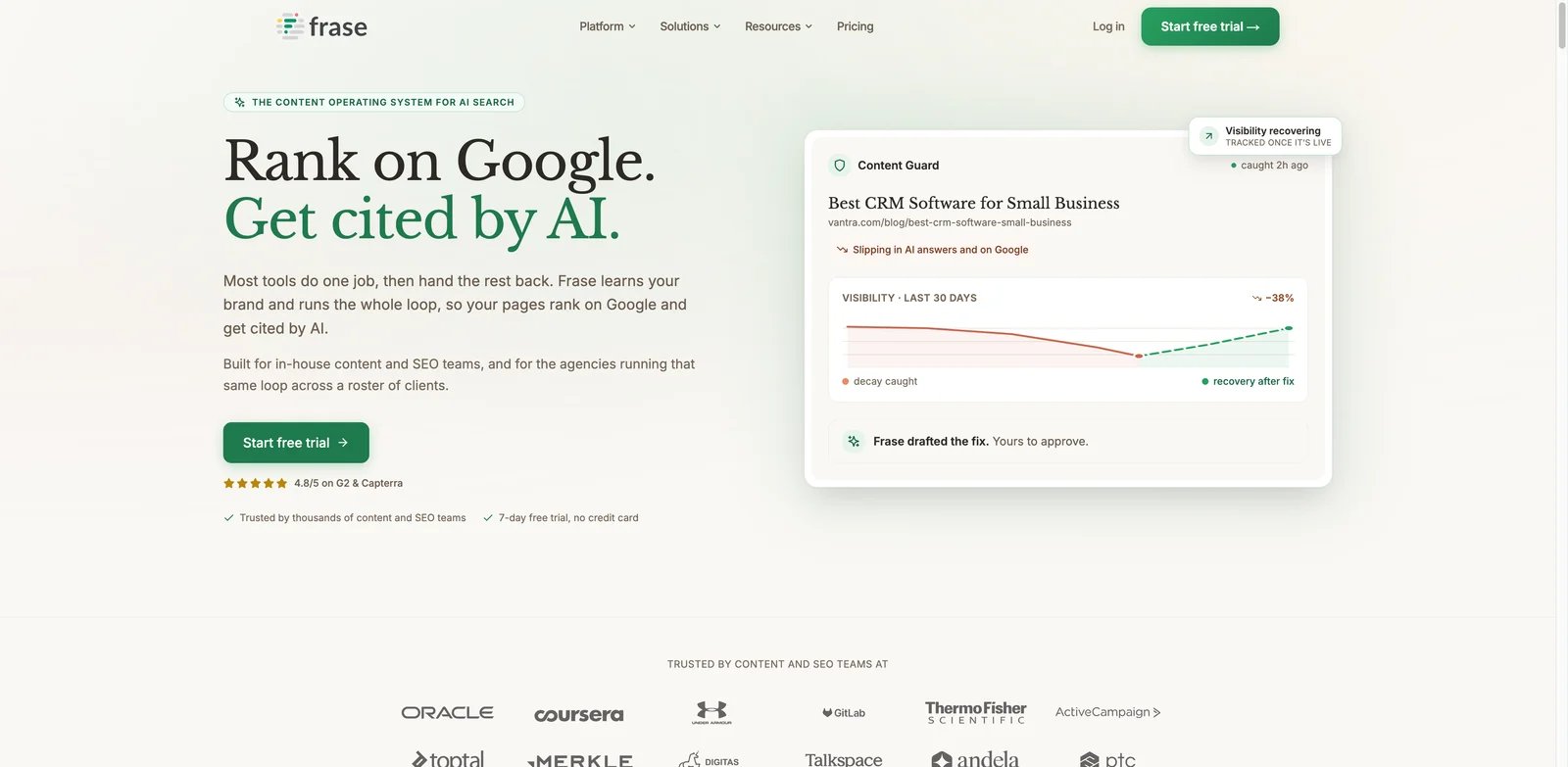
Frase is the closest direct Surfer replacement in this list. It keeps the familiar loop - enter a query, inspect competing pages, build a brief, draft, optimize, and monitor - while positioning the platform around both SEO and generative search. A Surfer user can understand the basic workflow without rebuilding the team's operating model.
What Frase solves vs Surfer SEO:
- Brief-first workflow: Frase combines SERP research, outlines, optimization, reference material, and writer handoff instead of making the score the only visible artifact.
- SEO and GEO together: Current Frase plans present traditional optimization and AI-search visibility as one workflow, with platform coverage and prompt limits scaling by tier.
- Production controls: Brand voices, reference documents, preferred terms, content opportunities, and CMS connections help teams move from one document to an operating system.
- Lower entry comparison: Starter is close to Surfer Discovery in monthly sticker price, making a real-document pilot straightforward.
Pricing vs Surfer SEO: Frase currently lists Starter at $49 per month or $39 billed annually, Professional at $129 or $103 annually, and Scale at $299 or $239 annually. A seven-day trial is available. Surfer's annual-billing Discovery plan is also $49 per month, while Standard is $99 and Pro is $182. Frase is not automatically cheaper; its value depends on article limits, domains, seats, prompt tracking, and whether its broader production features replace other tools.
Limitations: Frase is becoming a larger content operations platform, so users leaving Surfer because they dislike bundles may recreate the same problem. Its GEO claims also need practical testing with your prompts and markets. Do not assume a GEO score predicts citations any more reliably than a content score predicts rankings.
Best for: Frase is best for teams that want the nearest operational replacement with briefs, optimization, AI assistance, analytics, and growing GEO support. Not the right fit if you only need occasional term recommendations and want the lowest possible bill.
Get started with Frase.
NeuronWriter
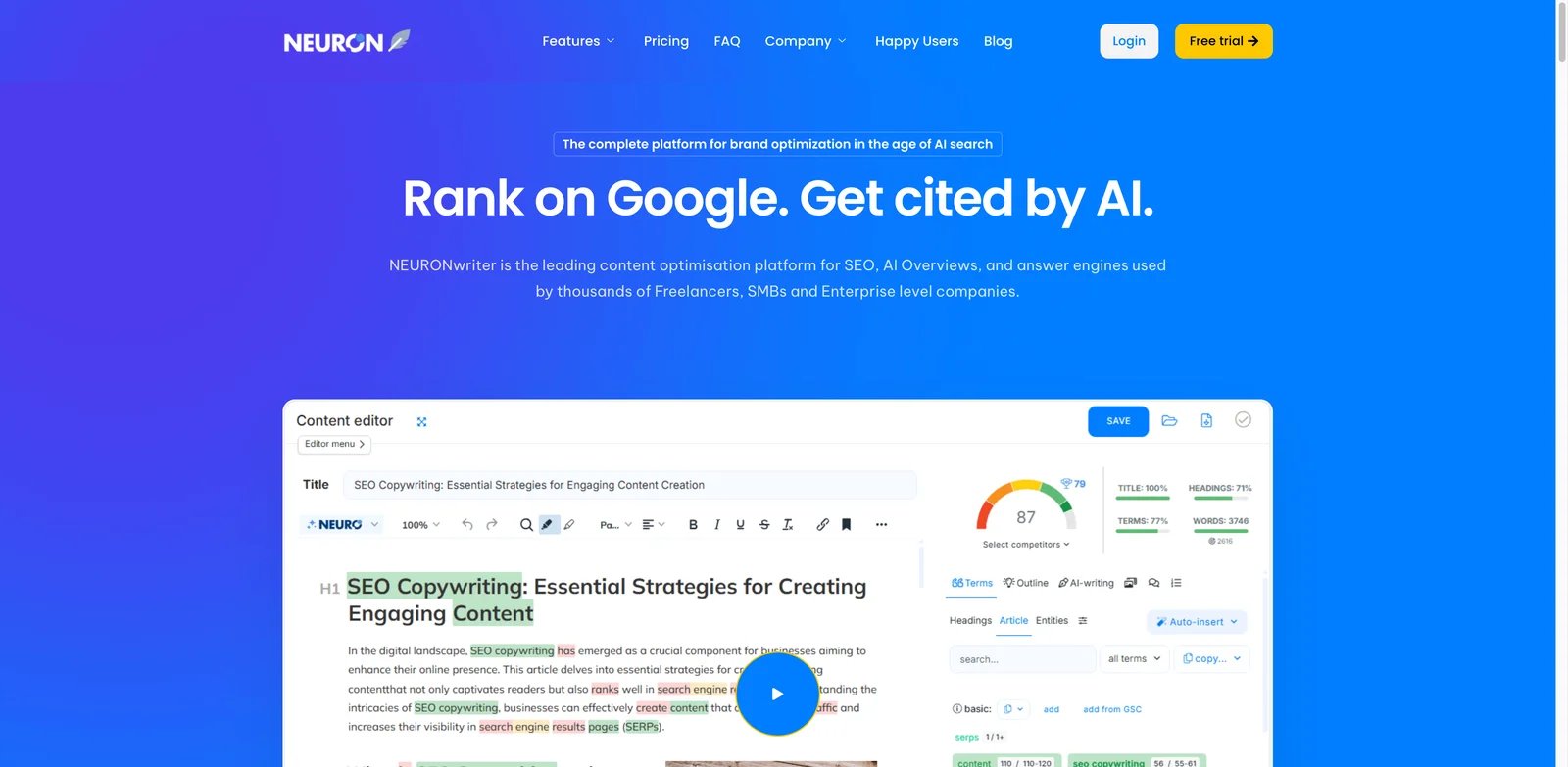
Five public tiers from $23 to $117 per month make NeuronWriter the clearest budget answer for users who mainly want an optimizer. It preserves the recognizable content-editor experience: analyze competitors, receive semantic term suggestions, structure a draft, and improve coverage without buying an enterprise research suite.
What NeuronWriter solves vs Surfer SEO: NeuronWriter narrows the job to content analysis, NLP guidance, projects, AI credits, and increasingly advanced workflow features on higher tiers. That focus is useful when the Surfer modules you value are Content Editor and basic planning rather than prompt tracking, API access, large-team governance, or a broad auditing layer.
Pricing vs Surfer SEO: The math: Bronze is $23 per month or $19 on annual billing; Silver is $45 or $37 annually; Gold is $69 or $57 annually. Platinum and Diamond rise to $93/$77 and $117/$97. Even Gold remains below Surfer Standard's current $99 annual-billing monthly equivalent. Compare analyses, projects, AI credits, integrations, and collaboration rather than assuming the lowest plan can support an agency workload.
Limitations: NeuronWriter is a closer substitute for classic on-page optimization than for Surfer's newer AI visibility direction. Its interface and workflow may feel more utilitarian, and advanced features are concentrated in higher plans. Teams that need editorial governance, extensive prompt tracking, or sophisticated inventory strategy should also test Clearscope, Frase, MarketMuse, or a suite.
Best for: NeuronWriter is best for freelancers, affiliate teams, and small publishers that want familiar NLP scoring at a lower recurring price. Not the right fit if AI Search visibility and enterprise collaboration are the primary reasons for switching.
Get started with NeuronWriter.
Clearscope
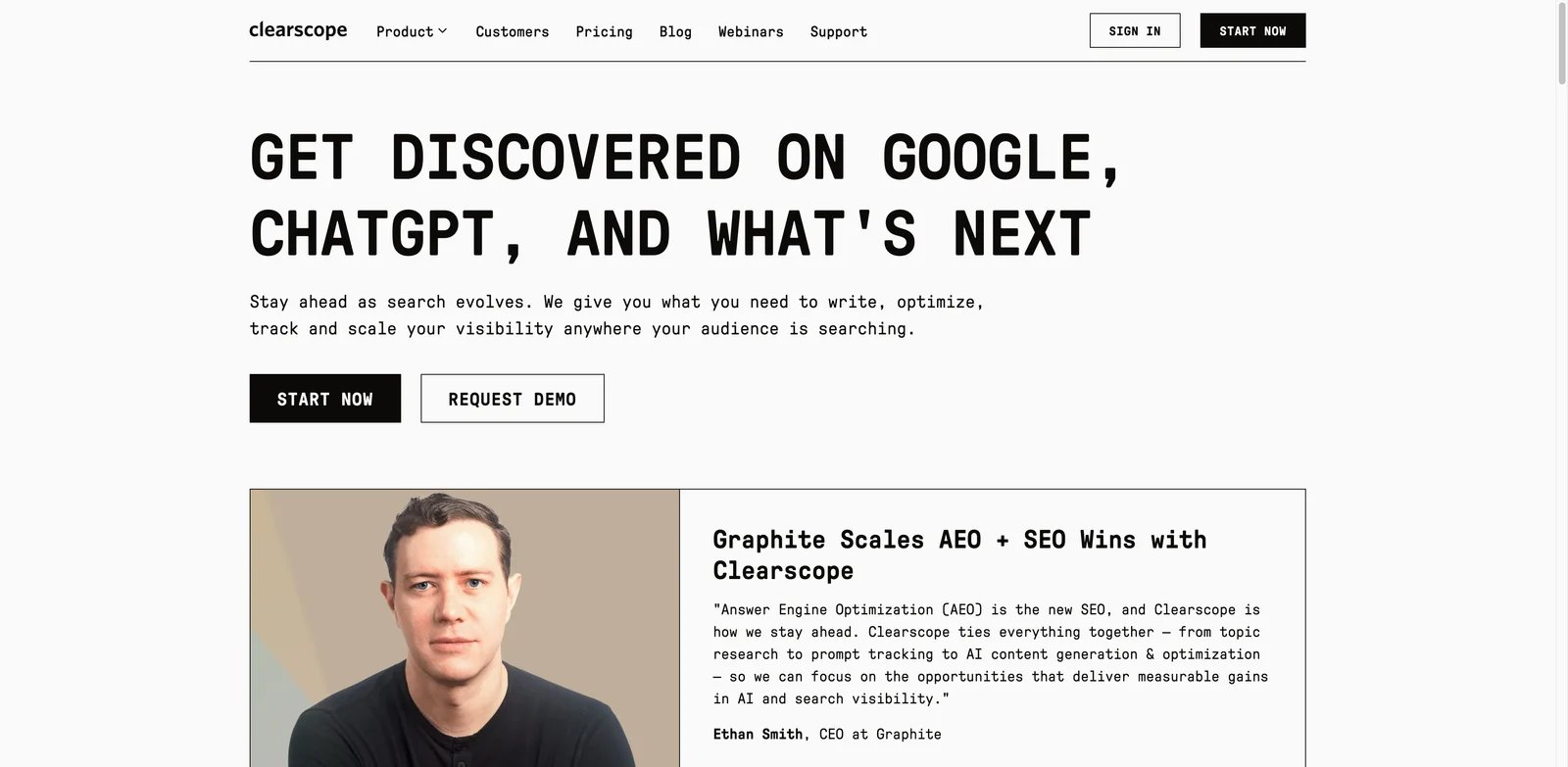
$129 per month, unlimited users, 20 monthly Topic Explorations, 20 monthly Drafts, and 50 Pages: Clearscope's Essentials plan makes its priorities unusually legible. This is not the bargain alternative. It is the editorial-team alternative for organizations willing to pay for a cleaner shared workflow and less friction between SEO recommendations and writers.
What Clearscope solves vs Surfer SEO:
- Editorial signal: Clearscope emphasizes intent-aware recommendations and an interface writers can use without turning every paragraph into a scoring exercise.
- Unlimited users and projects: Essentials and Business include unlimited users and projects, which can simplify agency or cross-functional access calculations.
- Monitoring: Tracked Topics and Pages connect optimization work to an ongoing content program rather than a one-off draft.
- AI visibility: Current plans include prompt tracking, brand visibility, and query fan-out awareness across search and AI systems.
Pricing vs Surfer SEO: Essentials is $129 per month and Business is $399, with Enterprise custom. That puts Clearscope above Surfer Standard and below Surfer Peace of Mind at entry, but the packaging differs. Unlimited users can offset a higher base price for a larger editorial team. Additional page and draft usage has separate charges, so model the real monthly volume before switching.
Limitations: Clearscope is expensive for a solo operator, and 20 Drafts on Essentials may be restrictive for high-volume publishing. It also remains a proprietary recommendation system. A cleaner score is still not first-party ranking evidence.
Best for: Clearscope is best for editorial teams, agencies, and brands that value adoption, collaboration, and readable content over the cheapest optimizer. Not the right fit for solo users who need dozens of reports at a low monthly cost.
Get started with Clearscope.
MarketMuse
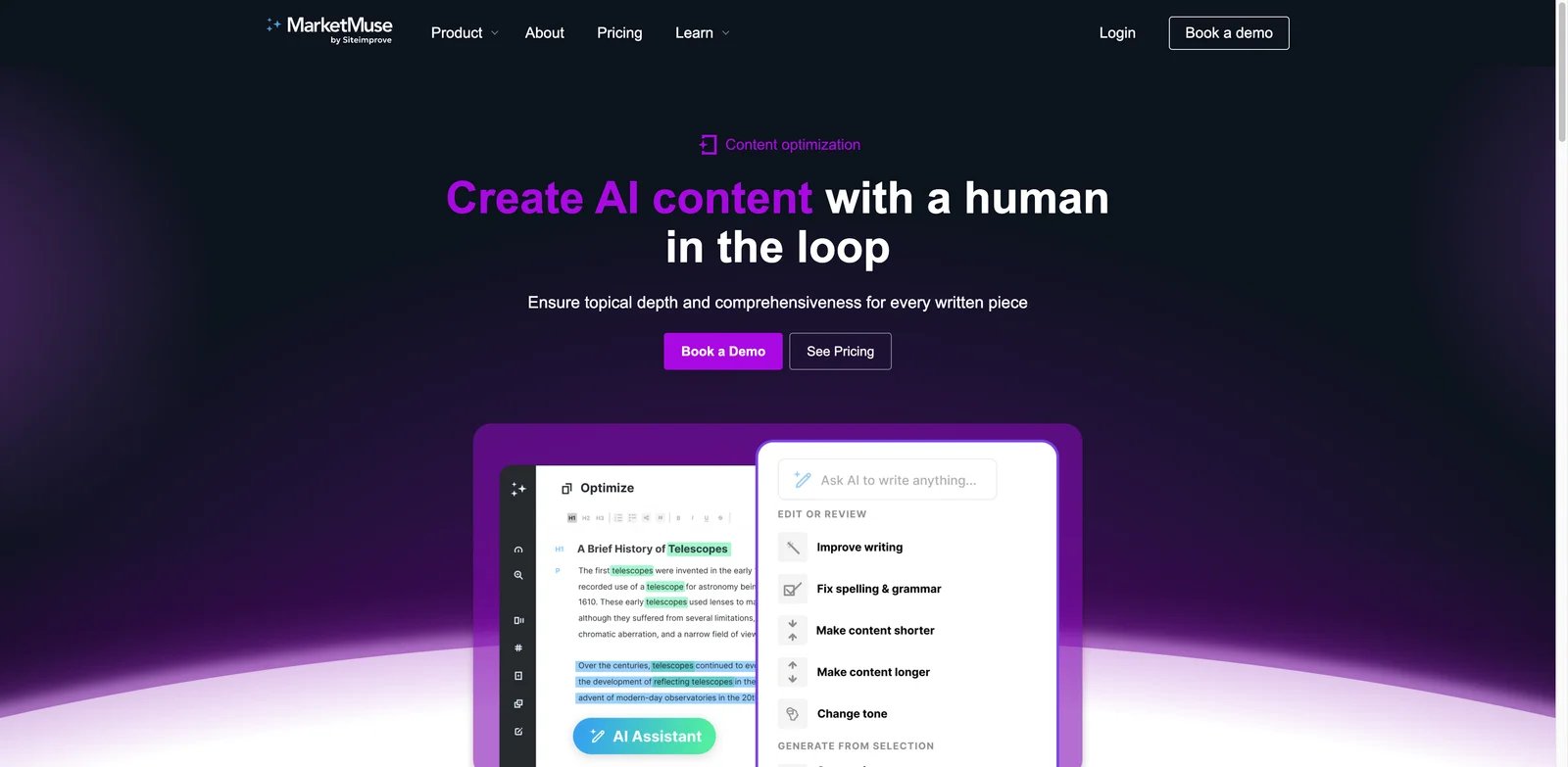
MarketMuse was built around a different question: not "How do I raise this document's score?" but "Which topics can this site realistically win, and what should we create or update next?" That shift from document optimization to inventory intelligence is why MarketMuse is a meaningful alternative even though it also calculates content scores.
What MarketMuse solves vs Surfer SEO:
- Personalized difficulty and authority: MarketMuse evaluates opportunity relative to the site's existing coverage instead of treating every domain as equally positioned.
- Inventory strategy: Site inventories, tracked topics, heatmaps, and strategy documents help prioritize an entire content portfolio.
- Multiple brief types: Higher tiers support workflows beyond a standard article, including comparisons, FAQs, guides, local pages, and product reviews.
- Research depth: SERP X-ray, heatmaps, topic models, and competitive analysis support strategists before a writer opens the editor.
Pricing vs Surfer SEO: MarketMuse offers a Free plan with one user and ten queries per month. Paid Optimize, Research, and Strategy plans scale tracked topics, briefs, strategy documents, users, and query limits, and current pricing snapshots list Optimize at $99/month ($999/year), Research at $249/month ($2,499/year), and Strategy at $499/month ($5,499/year), with enterprise/custom terms to confirm before purchase. Use the published monthly or annual pricing as the baseline, then compare the cost with Surfer Pro or Peace of Mind only after matching sites, users, briefs, and strategic workflows.
Limitations: MarketMuse requires a larger conceptual shift than Frase or NeuronWriter. The interface and metrics reward teams with a mature content inventory and a strategist who can act on prioritization data. Small teams that only want a writing score may pay for complexity they do not use.
Best for: MarketMuse is best for publishers, established content teams, and agencies managing topic authority across many pages. Not the right fit if the requirement is a cheap, fast replacement for Surfer Content Editor.
Get started with MarketMuse.
Content Harmony
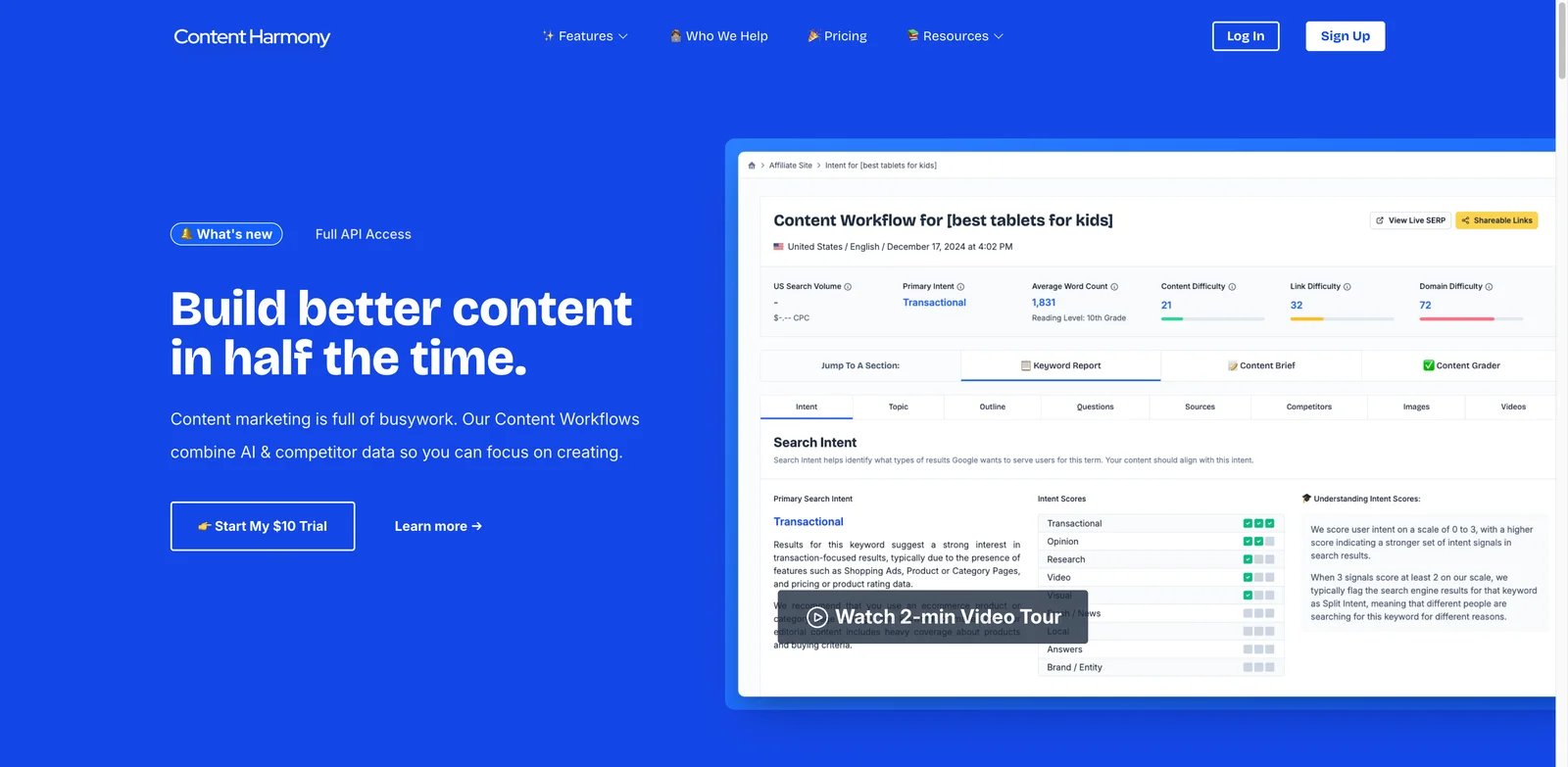
Content Harmony prices the unit of work directly. A Content Workflow includes a keyword report, content brief, and content grader for one page. That model is easier to understand for an agency assigning briefs to writers than a platform with overlapping document, audit, AI, and prompt limits.
What Content Harmony solves vs Surfer SEO: Content Harmony puts more weight on search intent, competitor outlines, questions, visual and video analysis, and customizable briefs before drafting. Unlimited users and projects are included, and credits remain valid for 90 days. For a team whose bottleneck is research consistency and writer handoff, this is more specific than an all-in-one optimization suite.
Pricing vs Surfer SEO: Standard 5 costs $50 per month for five workflows, or about $42 monthly on annual billing. Standard 12 costs $99 per month, with larger 25-, 50-, 100-, and 150-workflow tiers available. A $10 trial includes ten workflow credits and does not auto-renew. Compared with Surfer, low-volume teams may pay more per document but gain a clearer research-and-brief unit; high-volume teams should calculate the workflow cost carefully.
Limitations: Content Harmony is not positioned as a broad AI visibility platform, and teams wanting automated full drafts may find it deliberately less aggressive. International data coverage and specific locale support should be checked before committing. The workflow model can also become expensive if every minor refresh consumes a new credit.
Best for: Content Harmony is best for agencies and editorial teams that need repeatable research, intent classification, and briefs for human writers. Not the right fit if the goal is maximum AI article output or extensive prompt tracking.
Get started with Content Harmony.
PageOptimizer Pro
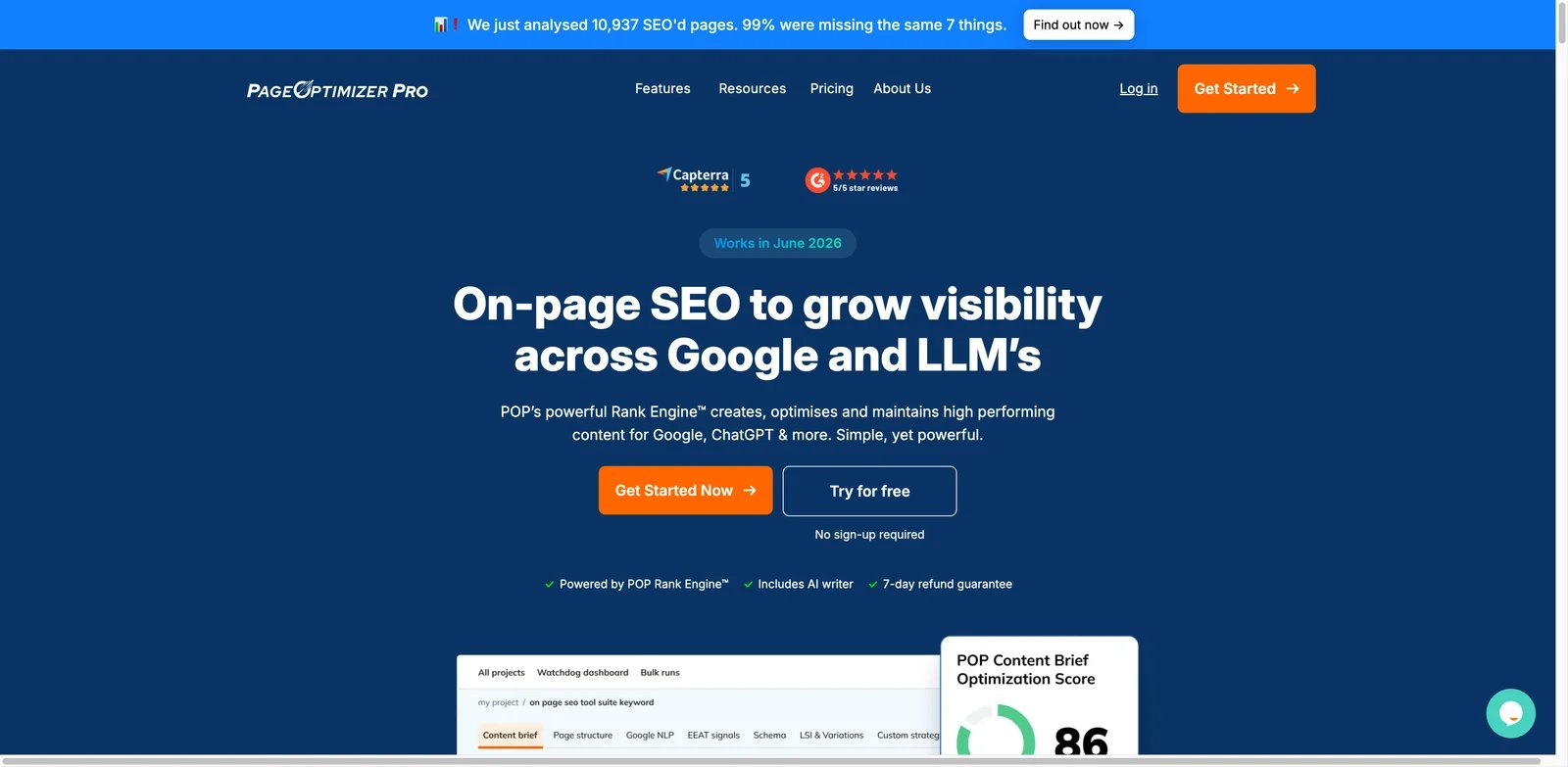
Before comparing prices, understand the bet: PageOptimizer Pro argues that on-page optimization should expose specific factors, reports, and monitoring rather than collapse the decision into a broad writing platform. That transparency appeals to SEOs who distrust a single content score but still want a quantitative model.
What PageOptimizer Pro solves vs Surfer SEO:
- Scoring philosophy: POP Rank Engine reports make on-page factors and recommendations central, while NLP and E-E-A-T tools are handled through credits.
- Monitoring: Watchdog reports track selected pages for changes and ongoing optimization signals.
- Editing flexibility: Recommendations can be used with Google Docs, WordPress, and many website editors.
- Team structure: The Teams plan adds sub-accounts and project-level access for staff, contractors, and clients.
Pricing vs Surfer SEO: Basic is $40 per month with 20 monthly credits. Unlimited is $72 per month billed annually, with unlimited core reports and 50 credits. Teams is $143 per month billed annually and starts with five sub-accounts. That undercuts comparable Surfer tiers when the required job is on-page reporting. It is less directly comparable if you also need Surfer's content planning and AI visibility modules.
Limitations: More granular factors do not become Google metrics simply because they are exposed separately. POP can still encourage checklist optimization, and its credit model requires attention when teams use AI Writer, E-E-A-T, NLP, and Watchdog features. The product is also less of a polished end-to-end content operations environment.
Best for: PageOptimizer Pro is best for consultants and hands-on SEOs who want factor-driven reports, monitoring, and lower entry pricing. Not the right fit for teams seeking one unified writing, planning, and GEO workspace.
Get started with PageOptimizer Pro.
Dashword
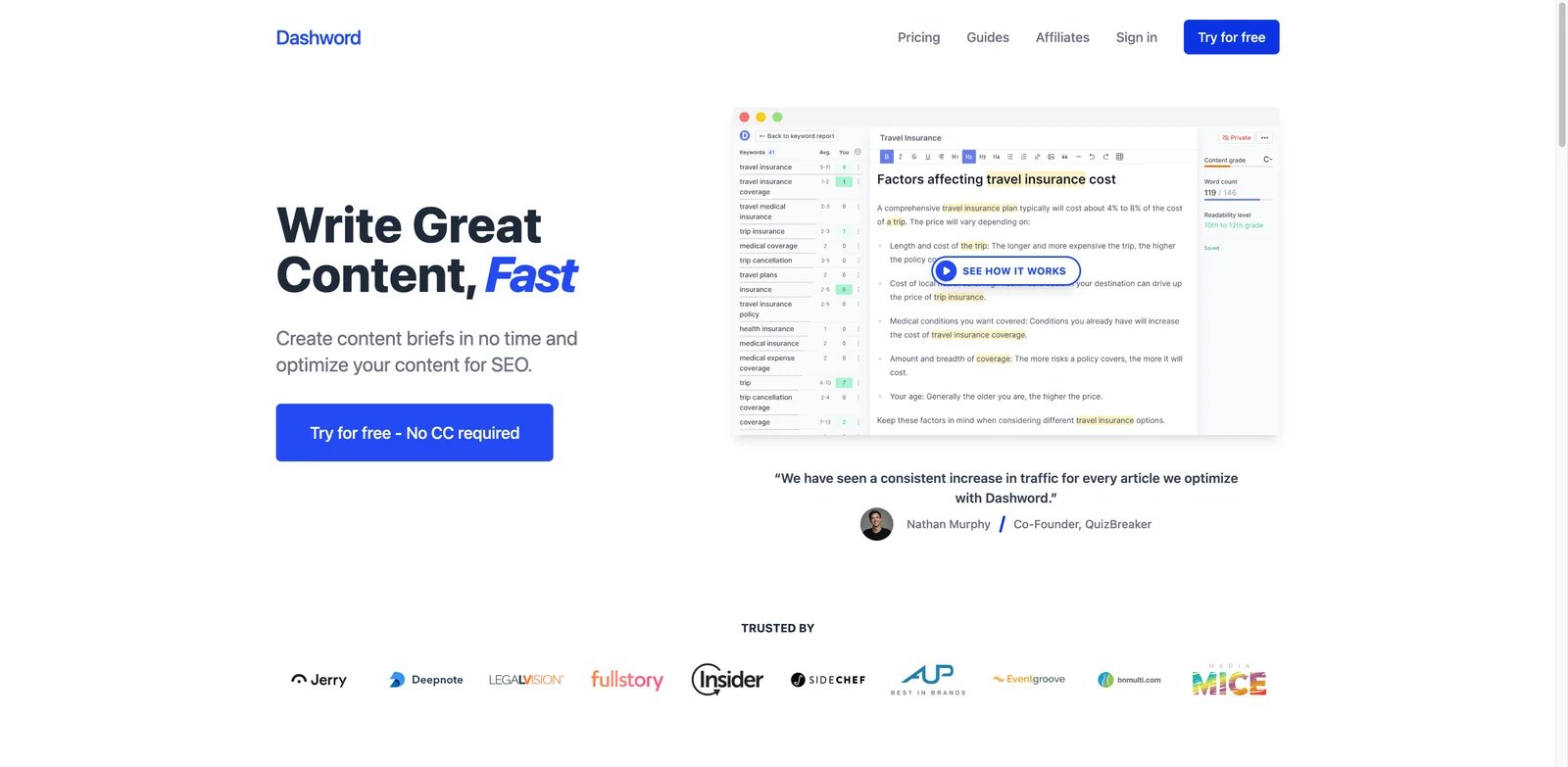
If the migration goal is simplification, Dashword is easier to explain than most platforms in this list. Create content reports, build briefs, write or optimize, then monitor published work. It has fewer strategic layers than MarketMuse and less suite breadth than Semrush, which is the point.
What Dashword solves vs Surfer SEO: Dashword gives small teams a direct workflow for briefs, optimization, AI-assisted writing, and content monitoring. Startup includes five user seats, so it can support an editor, SEO lead, and writers without immediate seat expansion. The first report is free, which makes it possible to compare recommendations on the same article before committing.
Pricing vs Surfer SEO: Startup is $99 per month for 30 content reports, five seats, briefs, and 100,000 AI Writer words. Business starts at $349 for 100 reports, ten seats, bulk report creation, API access, and SSO. Annual billing is discounted by 20%. Startup aligns closely with Surfer Standard's $99 annual-billing monthly equivalent, so the choice is about report volume, seats, monitoring, and workflow preference rather than headline price.
Limitations: Dashword's simple plan structure becomes a large jump from Startup to Business. Teams that need extensive AI prompt tracking, sitewide strategy, or a full keyword and backlink suite will need additional products. A smaller feature surface is valuable only if it covers the actual work.
Best for: Dashword is best for small content teams that want a clean brief-editor-monitor loop with multiple included seats. Not the right fit if AI visibility tracking or enterprise-wide SEO research is the primary need.
Get started with Dashword.
Scalenut
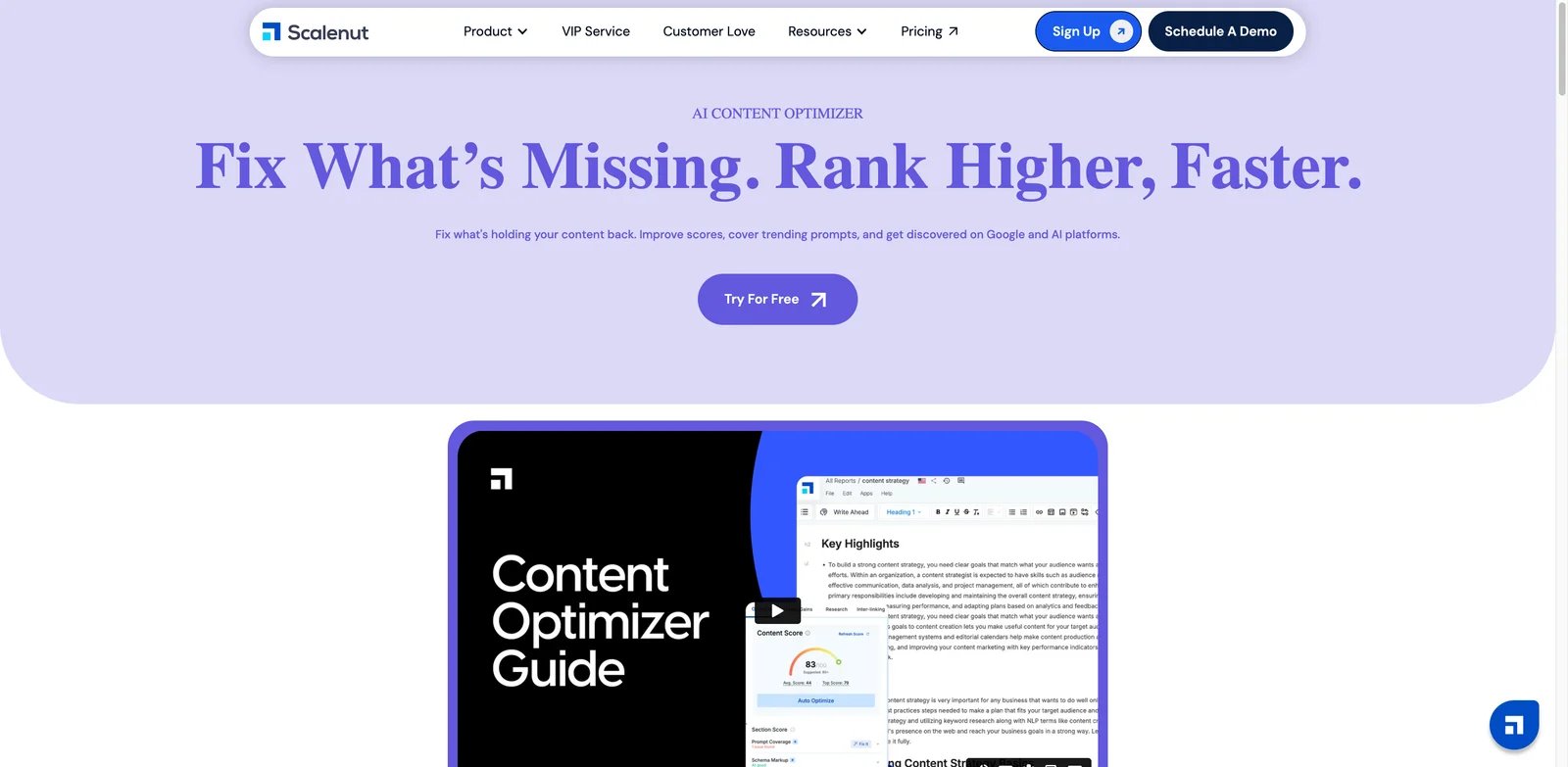
Scalenut is not retreating from AI production. It is moving further into it. The platform now frames Starter, Plus, and Professional around AI visibility prompts, GEO articles, optimization, keyword clusters, and supported answer engines. That makes it the alternative for teams whose complaint is that Surfer is not automation-first enough.
What Scalenut solves vs Surfer SEO:
- GEO pivot: Every paid plan combines AI visibility tracking with content creation and optimization, rather than treating prompt data as a separate research dashboard.
- Execution volume: Plus and Professional increase article, optimization, cluster, audit, workspace, and collaboration limits.
- Platform coverage: Starter and Plus include ChatGPT and Google AI Overview; Professional adds Perplexity on the current public plan.
- Content operations: Internal linking, topic gaps, ideas, optimization, humanization, and planning sit inside one production environment.
Pricing vs Surfer SEO: Standard monthly prices are $59 for Starter, $89 for Plus, and $199 for Professional, with a seven-day trial. Scalenut currently advertises large annual promotional discounts, but promotional prices should not anchor a long-term comparison. Against Surfer's $49 Discovery, $99 Standard, and $182 Pro annual-billing prices, the two platforms occupy similar bands with different limits and GEO packaging.
Limitations: Scalenut concentrates the same risk that drives some users away from Surfer: more platform modules, more AI output, and more proprietary scores in one system. Weekly prompt refresh may be too slow for fast-moving reputation work. Teams should inspect sample output for generic language before scaling production.
Best for: Scalenut is best for teams that want AI-led SEO production and built-in GEO execution at meaningful volume. Not the right fit if the switching goal is less automation and more human editorial control.
Get started with Scalenut.
Semrush
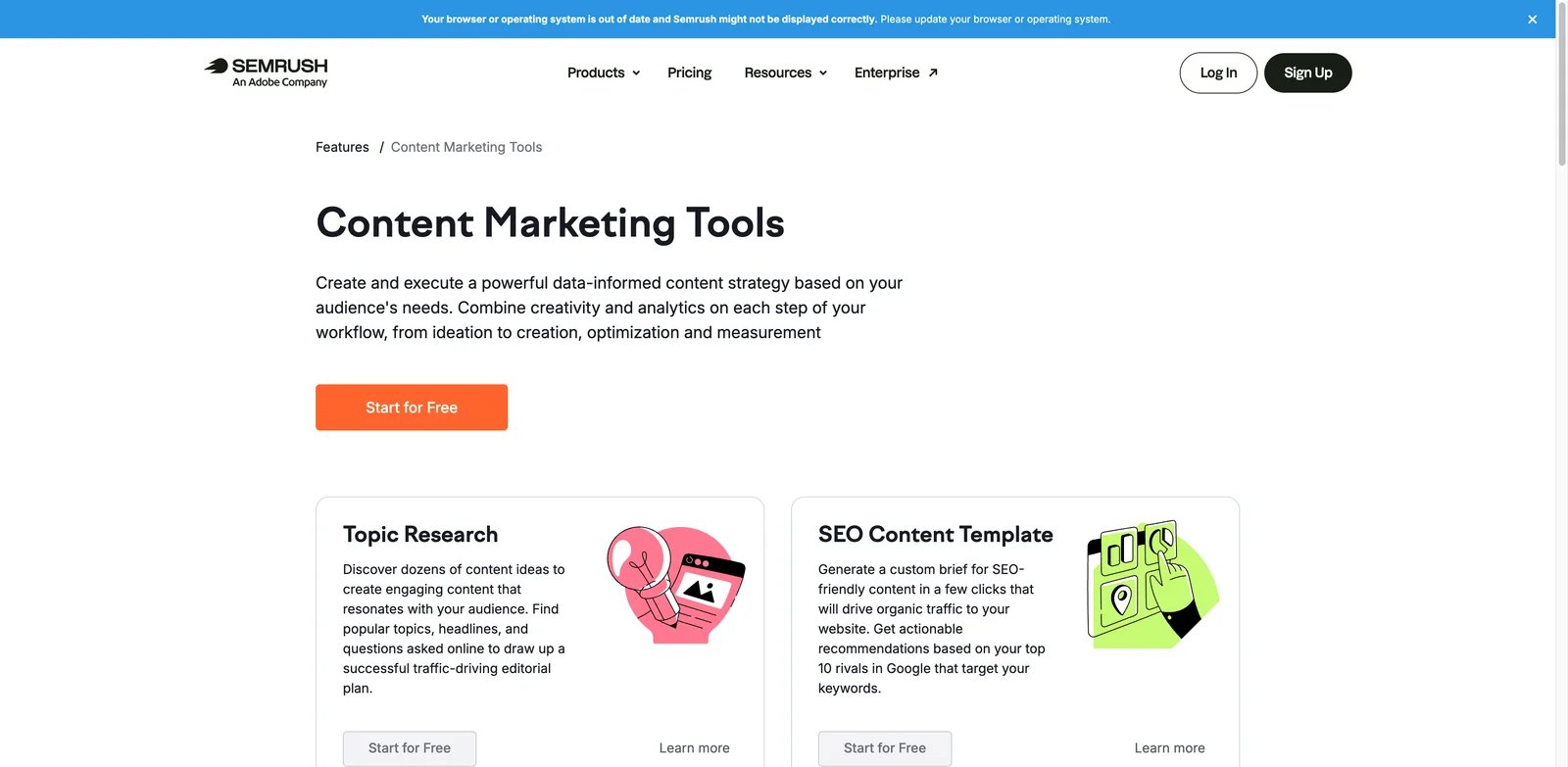
Semrush replaces Surfer only when the purchasing decision is larger than content optimization. The platform can cover keyword research, competitive analysis, site audits, rank tracking, backlinks, content workflows, and AI visibility across different products. It is a consolidation move, not a drop-in editor swap.
What Semrush solves vs Surfer SEO:
- Broader evidence: Keyword, competitor, backlink, technical, and rank data can inform the brief before a writer sees recommendations.
- Content Toolkit: The current standalone toolkit includes briefs, content optimization, AI writing, unlimited standard articles, and a set number of SEO-boosted articles.
- Post-publication workflow: Rank and site data make it easier to connect content changes with broader SEO operations.
- AI visibility options: Semrush offers AI visibility capabilities, but packaging varies across Semrush One and other products.
Pricing vs Surfer SEO: Suite cost reality: Semrush's Content Toolkit is $60 per month with a seven-day trial, unlimited standard articles, and five SEO-boosted articles monthly; ten additional boosted articles cost $30. Broader SEO and AI visibility plans are separate and can raise the total well above Surfer. Compare the combined cost of the exact toolkits you need, not a single Semrush entry price against a bundled Surfer tier.
Limitations: Product packaging is more complex than the alternatives in this list, and the interface spans many jobs. A content team can pay for research depth it rarely uses. Semrush also does not remove the need to decide which metric governs editorial quality.
Best for: Semrush is best for teams that want to consolidate content optimization into a broader SEO and competitive intelligence system. Not the right fit if the only goal is a simpler, cheaper writing optimizer.
Get started with Semrush.
Ahrefs
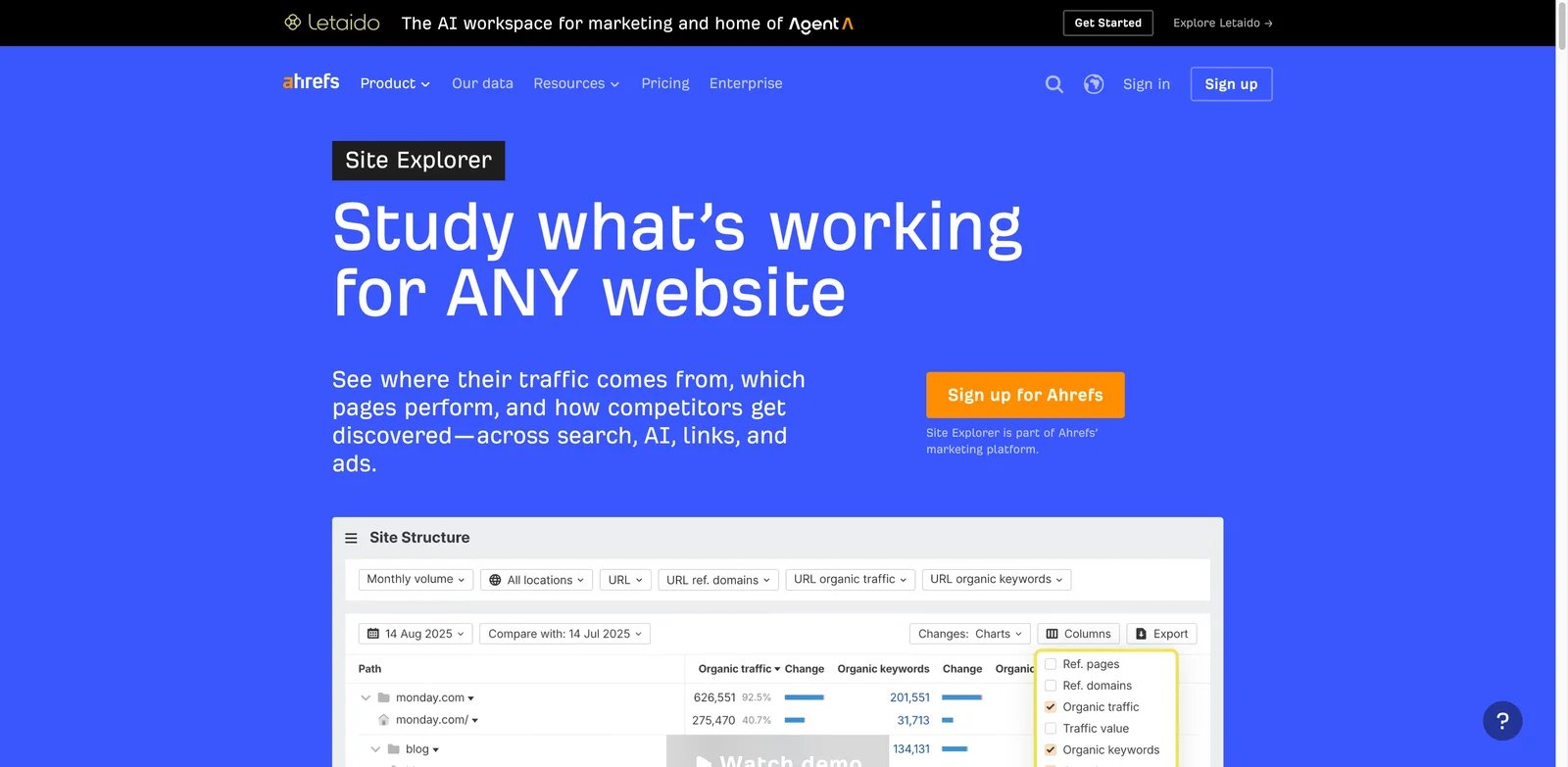
$29 Starter, $129 Lite, $249 Standard, and $449 Advanced make Ahrefs easy to place on a budget ladder, but it is not a Surfer clone at any tier. Ahrefs is a search intelligence platform first. Its value comes from web-scale keyword, backlink, competitor, site audit, and increasingly AI visibility data.
What Ahrefs solves vs Surfer SEO: Ahrefs helps teams choose topics, inspect competitors, understand links, audit technical issues, track rankings, and investigate brand visibility. That can replace the research assumptions surrounding a Surfer brief. Content Kit and AI features extend the workflow, but the core reason to switch is better upstream and downstream SEO evidence, not a nearly identical editor.
Pricing vs Surfer SEO: Ahrefs offers a limited Free account, Starter at $29 per month, Lite at $129, Standard at $249, Advanced at $449, and Enterprise from $1,499 in the current US pricing guidance. Starter has strict credits and no exports, while higher plans materially expand data and historical access. A team buying Ahrefs plus content-specific add-ons may spend more than Surfer; a team already paying for Ahrefs may avoid another overlapping research subscription.
Limitations: Ahrefs is not the easiest migration for writers trained to work inside Surfer Content Editor. Credit and feature differences across plans require careful review, and AI visibility products can add cost. You may still need Frase, Clearscope, Content Harmony, or a custom brief process for day-to-day writing guidance.
Best for: Ahrefs is best for SEO teams that prioritize keyword, competitor, link, technical, and search-intelligence depth and can design their own content workflow. Not the right fit if writers need a direct score-and-optimize replacement on day one.
Get started with Ahrefs.
Honorable Mentions
Google Search Console
Google Search Console is free and reports the queries, clicks, impressions, positions, pages, and indexing signals tied to your own site. It cannot produce a pre-publication brief, but it is the strongest antidote to treating a third-party score as performance proof. Best for teams building a publish-measure-refresh workflow.
Screaming Frog SEO Spider
Screaming Frog SEO Spider is free for crawls up to 500 URLs; the paid license is $279 per user per year. It audits technical and content patterns, integrates with analytics and Search Console, and supports custom extraction. Best for site inventories and diagnostics, not writer-facing optimization.
LowFruits
LowFruits uses pay-as-you-go and subscription credits for keyword and weak-SERP research. It is useful when the real Surfer job is finding attainable topics rather than scoring drafts. Pair it with Search Console and a repeatable brief template; do not expect a full content editor.
Perplexity
Perplexity has a Free plan and Pro at $17 per month when billed annually. It is useful for cited answer-engine research, source discovery, and testing how topics are framed in an AI-native interface. It does not track rankings or replace a governed SEO optimizer.
Keyword Insights
Keyword Insights offers a $1 seven-day trial, Basic at $58 per month, and Professional at $99. Its credit system covers clustering, intent, briefs, writing assistance, and SERP analysis. Best for upstream topic architecture and brief planning rather than a Surfer-style score-first workflow.
Migrating from Surfer SEO - A Practical Guide
Data and Account Migration
Start with an inventory, not a cancellation. List every domain, Content Editor draft, exported brief, Content Audit, Topical Map, tracked page, shared link, custom template, team seat, API workflow, WordPress connection, Google Docs workflow, and Search Console integration. Download source documents and final copy to storage your team controls. Surfer scores and historical recommendations are proprietary; assume they will not transfer as meaningful data to another optimizer.
Choose one representative article and recreate the full workflow in the alternative: research, brief, writer handoff, optimization, editor approval, CMS transfer, publication, and a refresh after search data arrives. Keep Surfer active during a two-week overlap. Do not compare a Surfer score of 82 with a Clearscope grade or NeuronWriter score as if they share a scale. Compare time spent, editorial changes, missed topics, adoption, and post-publication evidence.
Learning Curve by Alternative
Near-zero migration: Frase, NeuronWriter, Clearscope, and Dashword preserve a recognizable document-centered workflow. Writers still receive a brief and optimization guidance. The main work is rebuilding templates, permissions, and team habits.
Medium migration: Content Harmony, PageOptimizer Pro, Scalenut, Keyword Insights, and LowFruits change either the unit of work or the emphasis. Teams need to redefine when research ends, when optimization begins, and which metrics matter.
High migration: MarketMuse, Semrush, Ahrefs, and a Search Console plus Screaming Frog manual stack require an operating-model change. They can improve strategic evidence, but they need a content lead to translate research into consistent briefs and decisions.
Pricing Brackets vs Surfer SEO
Lower-cost focused optimizers: NeuronWriter, PageOptimizer Pro Basic, and smaller Content Harmony plans can reduce recurring spend when the team mainly needs reports, scoring, or briefs. Check document and credit limits before projecting savings.
Similar content-team spend: Frase, Dashword Startup, Clearscope Essentials, and Scalenut sit around the same broad budget bands as Surfer Discovery, Standard, and Pro. Savings depend on seats, volume, AI limits, and whether another subscription can be removed.
Higher total suite spend: Semrush, Ahrefs with content or visibility add-ons, and upper MarketMuse workflows can cost more than Surfer. They make sense when they replace multiple SEO products or provide evidence the organization already needs.
Free or usage-based manual stack: Search Console, Screaming Frog's free tier, LowFruits credits, Perplexity Free, and an internal brief template minimize fixed software cost. The hidden expense is senior SEO time and process maintenance.
Best Surfer SEO Alternatives by Use Case
If Your Reason Is "I Want To Escape A Legacy-Plan Price Hike"
Start with NeuronWriter and PageOptimizer Pro if the essential job is content scoring. Test Frase when you also need research, briefs, AI assistance, and monitoring. Use Content Harmony when paying per complete writer workflow is easier to budget than overlapping document and platform limits.
Do not migrate on price alone. Run last quarter's real document volume through each plan, including re-runs, team seats, AI credits, add-ons, and annual commitments.
If Your Reason Is "I Do Not Trust Content Scores As Quality Signals"
MarketMuse provides a more strategic authority and inventory model, while Content Harmony emphasizes research and intent before scoring. Google Search Console should become the final performance layer regardless of optimizer.
No alternative removes proprietary metrics. The safer process is to treat scores as prompts for review, record which recommendations an editor rejects, and judge changes against queries, engagement, conversions, and links after publication.
If Your Reason Is "I Want To Avoid Keyword-Stuffed Content"
Pilot Clearscope, Content Harmony, Dashword, and Frase with a draft that already reads well. The useful product is the one that identifies missing concepts without pressuring the editor to add irrelevant variants.
Ask writers to flag recommendations that weaken clarity. A tool that reaches a higher score only after worse edits is not an optimization system for your team.
If Your Reason Is "I Need AI Search, AEO, Or GEO Visibility"
Scalenut is the strongest production-oriented option here. Clearscope and Frase combine content workflows with emerging visibility features. Semrush and Ahrefs fit teams that also need broad search intelligence. Perplexity helps with manual cited-answer research.
Before buying, define the platforms, prompts, countries, refresh frequency, citations, competitors, and brand mentions you need. "Supports GEO" is too vague to compare.
If Your Reason Is "I Mostly Refresh Old Content After Publishing"
Build around Search Console first. Add Ahrefs or Semrush for broader keyword and competitor movement, then use Dashword or Clearscope when an editor needs document-level guidance.
This workflow reverses Surfer's usual center of gravity: actual query movement chooses the page, and the optimizer helps execute the refresh.
If Your Reason Is "I Run Agency Briefs For Writers"
Content Harmony has the clearest workflow-based packaging and unlimited users. Clearscope supports broad team access. Frase balances briefs with production and monitoring. MarketMuse adds strategy for clients with substantial content inventories.
Test guest access, exports, custom templates, comments, version history, and whether freelancers need paid seats. Those workflow details often matter more than a five-point score difference.
If Your Reason Is "I Want A Cheaper Manual SEO Stack"
Use Google Search Console for first-party performance, Screaming Frog for crawls, LowFruits or AI keyword research tools for opportunity discovery, and Perplexity for cited exploratory research.
The stack is cheaper only if you document the process: who selects competitors, how intent is classified, what a brief contains, when a page is refreshed, and which metrics trigger action. Otherwise every writer receives a different research standard.
How to Choose the Right Surfer SEO Alternative
1. Diagnose the switching reason and test one real article. Name the failure precisely: renewal price, unused bundle, writer adoption, weak research, over-optimization, AI output quality, or missing visibility data. Use the same target query, draft, and editor across trials.
2. Verify pricing shape and availability. Record monthly and annual cost, documents, re-runs, credits, seats, domains, tracked pages, prompts, refresh cadence, exports, API access, and add-ons. Ignore temporary discounts when calculating the two-year decision.
3. Decide what evidence governs the workflow. Document whether the team trusts topic models, intent research, editor review, SERP patterns, Search Console data, conversion data, or a combination. A tool should support that hierarchy rather than quietly replacing it with its own score.
4. Run a two-week overlap and one refresh cycle. Preserve the original brief and source document, publish through the new workflow, then revisit the page after query data arrives. Cancel Surfer only after the alternative survives both creation and maintenance.
Frequently Asked Questions
What is the best Surfer SEO alternative overall?
What is the best cheaper alternative to Surfer SEO?
Is there a free Surfer SEO alternative?
Is Frase better than Surfer SEO?
Is Clearscope better than Surfer SEO for content teams?
Does the Surfer SEO Content Score still matter in 2026?
Should I switch because of reported Surfer SEO legacy pricing changes?
Which Surfer SEO alternative is best for AI Search, AEO, or GEO?
Get ToolWorthy Weekly
New AI tools, practical guides, and selected AI signals in one weekly brief.
Discover More AI Tools
Explore our comprehensive directory of AI tools, carefully curated and reviewed by experts to help you find the perfect solution for your needs.