
AI Medical Scribe Complete Guide 2026

If you're a physician, you probably know this feeling all too well: You've just finished seeing your last patient of the day, but your work is far from over. Ahead of you lies hours of documentation—typing clinical notes, updating electronic health records, and ensuring every detail is captured accurately. This "pajama time" has become an unwelcome reality for healthcare providers worldwide.
The numbers tell a sobering story: physicians spend an average of 16 minutes on electronic health record (EHR) tasks for every patient encounter, and for every hour spent with patients, nearly two additional hours go to documentation and administrative work. This burden doesn't just eat into personal time—it's a leading contributor to physician burnout, affecting the quality of patient care and the sustainability of medical practices.
Enter AI medical scribes: intelligent systems that promise to revolutionize clinical documentation by automatically capturing, transcribing, and structuring patient-physician conversations into comprehensive clinical notes. But are they really the solution healthcare has been waiting for? How do they work? What are the risks? And most importantly, should you adopt one for your practice?
This comprehensive guide will answer all these questions and more. Whether you're a solo practitioner considering your first AI tool or a healthcare administrator evaluating options for your organization, you'll find everything you need to make an informed decision about AI medical scribes in 2026.

What Is an AI Medical Scribe?
Defining the Technology
An AI medical scribe is an artificial intelligence-powered system designed to automatically document clinical encounters between healthcare providers and patients. Unlike traditional human medical scribes who physically accompany physicians and manually type notes, AI medical scribes use advanced technologies—including speech recognition, natural language processing, and machine learning—to listen to conversations, extract relevant medical information, and generate structured clinical documentation.
Think of it as having an invisible assistant in the exam room who never gets tired, never makes transcription errors due to fatigue, and is available 24/7. The AI listens to your conversation with the patient, understands the medical context, identifies key information like symptoms, diagnoses, and treatment plans, and then organizes everything into a properly formatted clinical note—all without you having to type a single word.
The Evolution from Human to AI Scribes
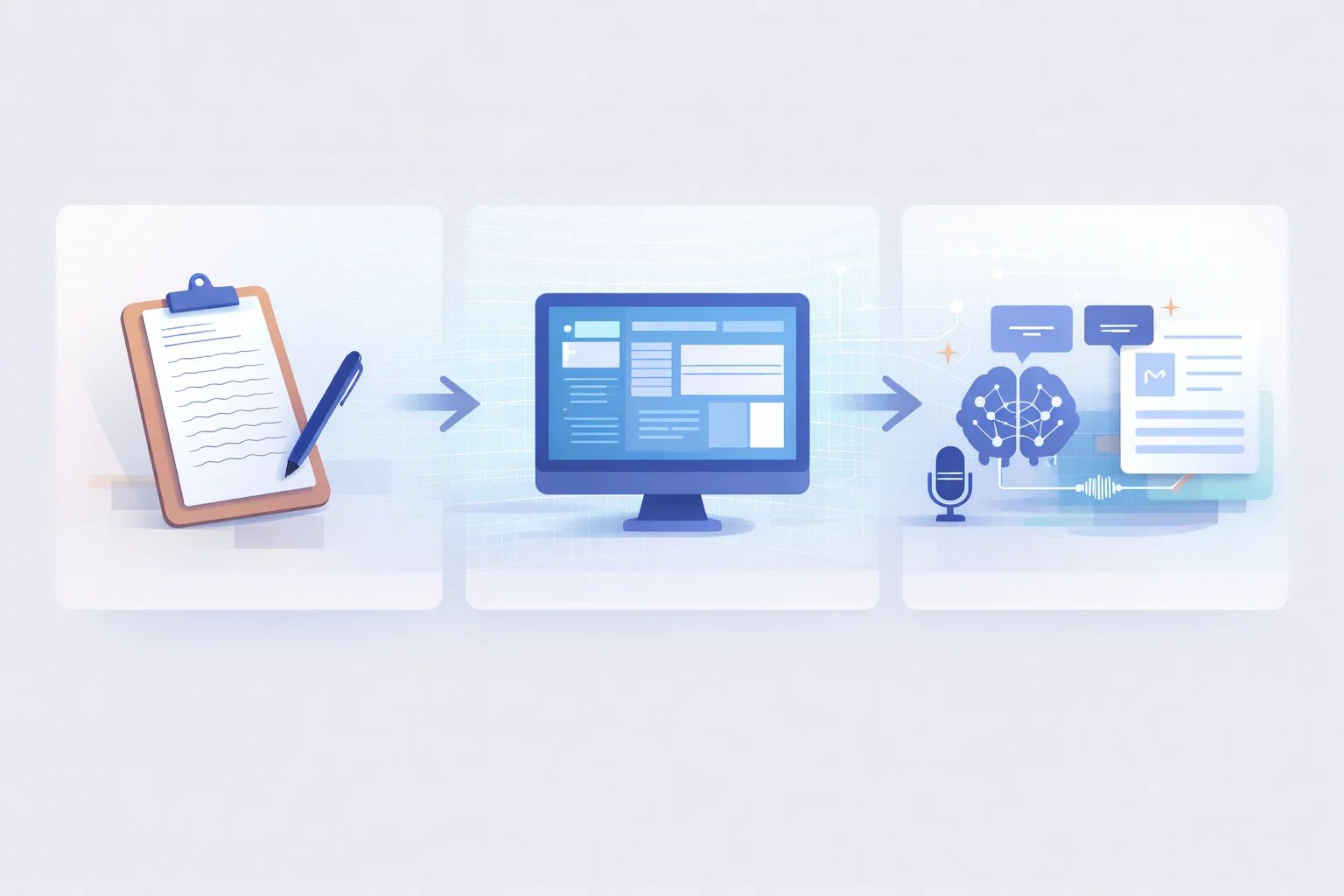
To understand AI medical scribes, it helps to know where they came from. Medical documentation has evolved through three distinct eras:
The Manual Era (Pre-2000s): Physicians handwrote notes during or after patient visits. This method was time-consuming, often illegible, and made information sharing difficult.
The Human Scribe Era (2000s-2010s): As EHR adoption accelerated—driven by government incentive programs, reimbursement requirements, and industry standardization—many practices hired human medical scribes. These trained professionals accompanied physicians during patient encounters and entered information directly into the EHR. While this reduced the physician's documentation burden, it came with significant costs (typically $15-25 per hour), training challenges, and privacy concerns about having additional personnel in the exam room.
The AI-Assisted Era (mid-2010s-present): Advances in speech recognition and natural language processing made it possible to automate the scribe function. Early systems required specific voice commands and produced rough transcripts. More recently, large language models have enabled ambient documentation that can understand natural conversations, extract clinical meaning, and generate structured notes—though physician review remains essential to ensure accuracy.
Core Capabilities
Modern AI medical scribes offer several key capabilities that distinguish them from simple voice-to-text dictation:
Ambient Listening: Unlike traditional dictation software that requires you to speak directly into a microphone using specific commands, AI medical scribes use ambient listening technology to capture natural conversations between you and your patient. Performance varies based on factors like background noise, speaker overlap, accents, and microphone placement, so it's important to test the system in your actual exam room conditions during a trial period.
Speaker Identification: The AI can distinguish between different voices in the room—identifying when the physician is speaking versus the patient or family members. This ensures that information is correctly attributed in the clinical note.
Medical Context Understanding: These systems are trained on vast amounts of medical data and can recognize medical terminology, understand clinical contexts, and differentiate between a patient describing symptoms and a physician making a diagnosis.
Structured Note Generation: Rather than simply producing a transcript, AI medical scribes organize information into standardized clinical note formats like SOAP (Subjective, Objective, Assessment, Plan) notes, ensuring consistency and completeness.
EHR Integration: Most modern AI medical scribes can integrate with electronic health record systems, automatically populating the appropriate fields or providing notes that can be easily transferred with a few clicks.
What AI Medical Scribes Are NOT
It's equally important to understand what AI medical scribes don't do:
-
They don't replace physician judgment: The AI generates documentation based on what it hears, but you remain responsible for reviewing, editing, and approving all clinical notes.
-
They're not diagnostic tools: While they can capture and organize clinical information, they don't make diagnoses or treatment recommendations (though some advanced systems may offer clinical decision support as an additional feature).
-
They're not fully autonomous: Current AI medical scribes require physician review and approval before notes are finalized. You're still the author of your clinical documentation.
-
They're not one-size-fits-all: Different specialties, practice settings, and workflow preferences may require different AI scribe solutions.
If you're ready to explore specific AI medical scribe products and compare their features, pricing, and capabilities, check out our detailed comparison of the 7 best AI medical scribes for 2026.
How Do AI Medical Scribes Work?
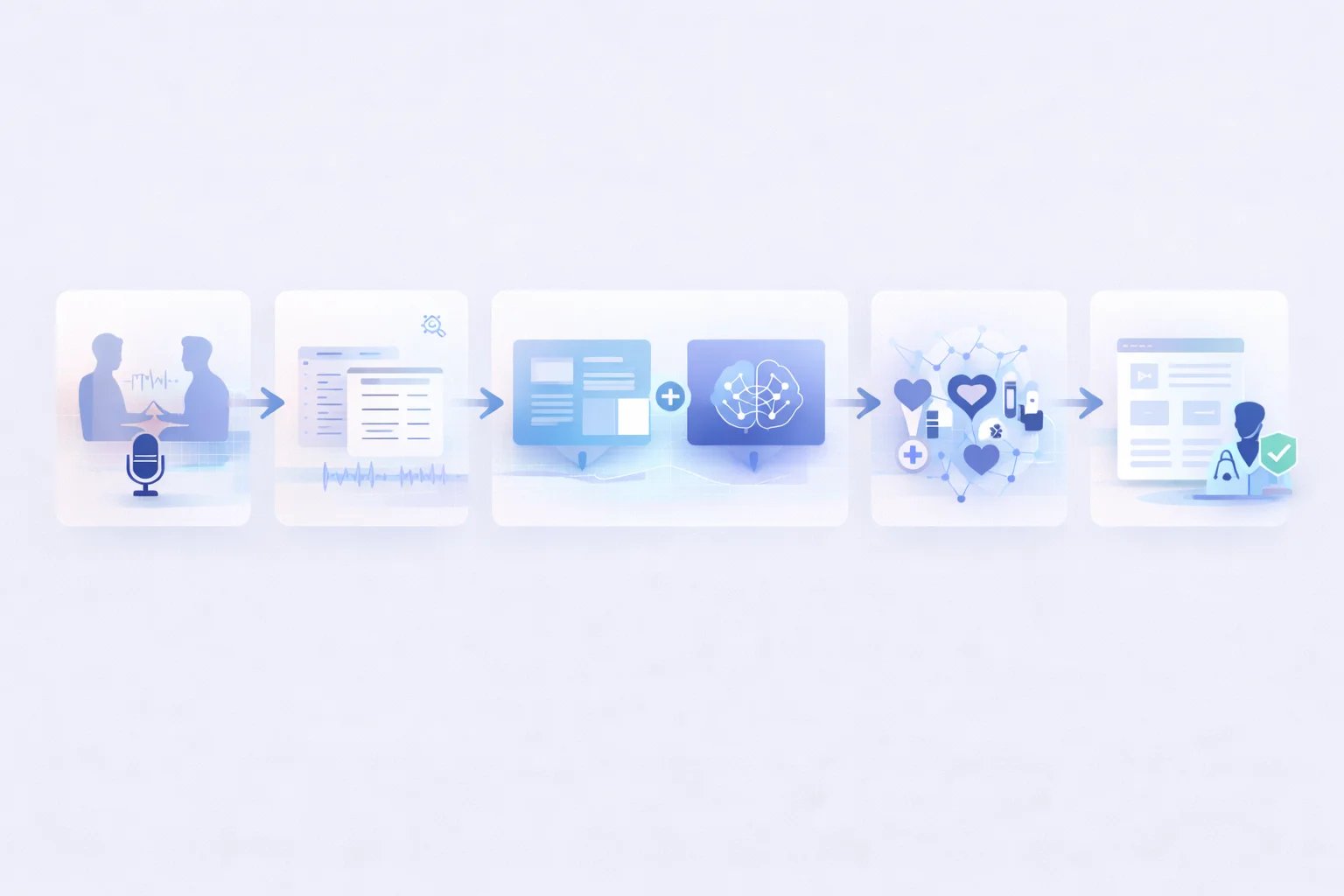
Understanding the technology behind AI medical scribes can help you evaluate different solutions and set realistic expectations. Let's break down the process step by step.
The Technology Stack
AI medical scribes rely on several interconnected technologies working together:
1. Speech Recognition (Automatic Speech Recognition - ASR)
The first step is converting spoken words into text. Modern AI medical scribes use advanced automatic speech recognition systems that can:
- Handle multiple speakers: Distinguish between the physician, patient, and other people in the room
- Work in noisy environments: Filter out background noise from medical equipment, hallway conversations, or other ambient sounds
- Recognize medical terminology: Accurately transcribe complex medical terms, drug names, and anatomical references
- Adapt to accents and speech patterns: Understand different accents, speaking speeds, and speech patterns
Vendors often report high performance under controlled conditions, but real-world quality varies based on audio quality, speaker clarity, terminology complexity, and your specific specialty. During trials, evaluate the system using practical metrics like missed diagnoses or medications, incorrect negations, and the time needed to review and correct notes.
2. Natural Language Processing (NLP) vs. Large Language Models (LLMs)
This is where the "intelligence" comes in. After converting speech to text, the system needs to understand what was said and extract meaningful clinical information. There are two main technological approaches:
Traditional NLP Approach:
- Uses rule-based systems and statistical models
- Excels at recognizing standard medical terminology and structured patterns
- More computationally efficient and faster
- Highly reliable for routine clinical scenarios
- Better at extracting specific data points (like medication names, dosages, lab values)
Large Language Model (LLM) Approach:
- Uses advanced AI models trained on massive amounts of text data
- Superior at understanding context and handling ambiguous language
- Can maintain context across lengthy conversations
- Better at handling unusual phrasings or complex clinical scenarios
- More adaptable to different specialties and documentation styles
Hybrid Approach: Many current AI medical scribes combine rule-based structuring with LLM summarization and physician review, aiming to balance consistency for routine documentation with flexibility for complex situations. The exact architecture and approach varies by vendor.
3. Clinical Information Extraction
Once the system understands the conversation, it needs to identify and extract clinically relevant information:
- Chief complaint: Why the patient came in
- History of present illness: Timeline and details of current symptoms
- Past medical history: Relevant previous conditions and treatments
- Medications: Current medications, dosages, and compliance
- Physical examination findings: Objective observations from the exam
- Assessment: Clinical impressions and diagnoses
- Plan: Treatment plans, prescriptions, follow-up instructions
Advanced systems use medical knowledge graphs and clinical ontologies to ensure extracted information is medically accurate and properly categorized.
4. Structured Note Generation
The final step is organizing extracted information into a properly formatted clinical note. The AI:
- Selects the appropriate note template (SOAP, H&P, progress note, etc.)
- Organizes information into the correct sections
- Uses standard medical terminology and formatting
- Ensures completeness by identifying missing information
- Generates clear, concise language that meets documentation standards
The Complete Workflow
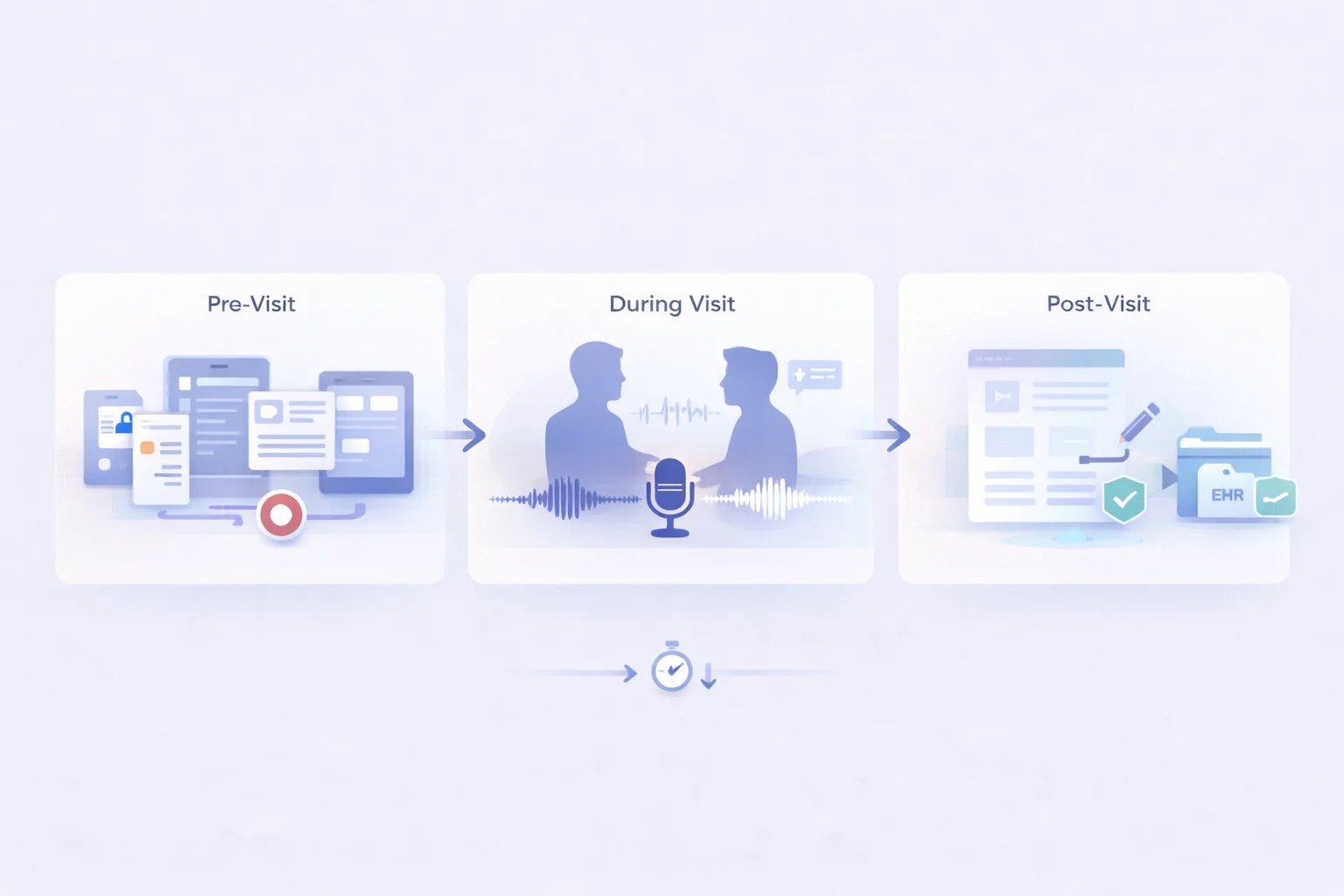
Here's how an AI medical scribe works in a typical patient encounter:
Before the Visit:
- You open the AI scribe app on your phone, tablet, or computer
- The system may pull relevant patient information from your EHR (previous visits, medications, allergies)
- You start recording when you enter the exam room
During the Visit:
- The AI listens to your conversation with the patient in real-time
- It identifies speakers and begins transcribing the conversation
- The system extracts key clinical information as the conversation unfolds
- Some advanced systems can provide real-time prompts or reminders (e.g., "Remember to document smoking status for quality measures")
After the Visit:
- You stop the recording when the visit concludes
- The AI processes the conversation and generates a structured clinical note
- You review the note carefully, making any necessary edits or additions
- You approve the note and it's transferred to your EHR system
Time Investment: Actual time savings vary based on visit complexity, specialty, and how well the system integrates with your workflow. Early studies show meaningful reductions in documentation time for some clinicians, though results vary. Plan to measure your own documentation time before and after implementation to determine real-world impact.
EHR Integration: How It Actually Works
One of the most important aspects of AI medical scribes is how they connect with your electronic health record system. Integration levels range from simple copy-paste to deep native integration:
Basic Integration: You manually copy AI-generated notes and paste them into your EHR. Works with any system but requires extra steps.
Advanced Integration: The AI connects directly to your EHR through APIs, automatically pulling patient data and pushing completed notes to the appropriate sections. This seamless workflow is available with major EHR platforms like Epic, Cerner, and Athenahealth.
When evaluating AI medical scribes, verify compatibility with your specific EHR system and ask about the depth of integration available. The level of integration can significantly impact your daily workflow and time savings.
Data Security and Privacy
Given that AI medical scribes process sensitive patient information, understanding how they protect data is crucial:
During Recording:
- Audio is typically encrypted in transit using industry-standard protocols (TLS/SSL)
- Some systems process audio locally on your device before sending to the cloud
- Others stream encrypted audio to secure cloud servers for processing
During Processing:
- Data is processed in HIPAA-compliant cloud environments
- Access is restricted to authorized systems and personnel
- Processing typically occurs in isolated, secure environments
After Processing:
- Audio and transcript retention varies widely by vendor—some delete recordings immediately after note generation, while others may retain data for quality control, dispute resolution, or model improvement
- Generated notes are encrypted at rest
- Access logs track who viewed or modified notes
- Always verify with vendors: (1) whether audio is stored, (2) retention duration, (3) who can access it, and (4) what data is used for system improvements
Key Security Features to Look For:
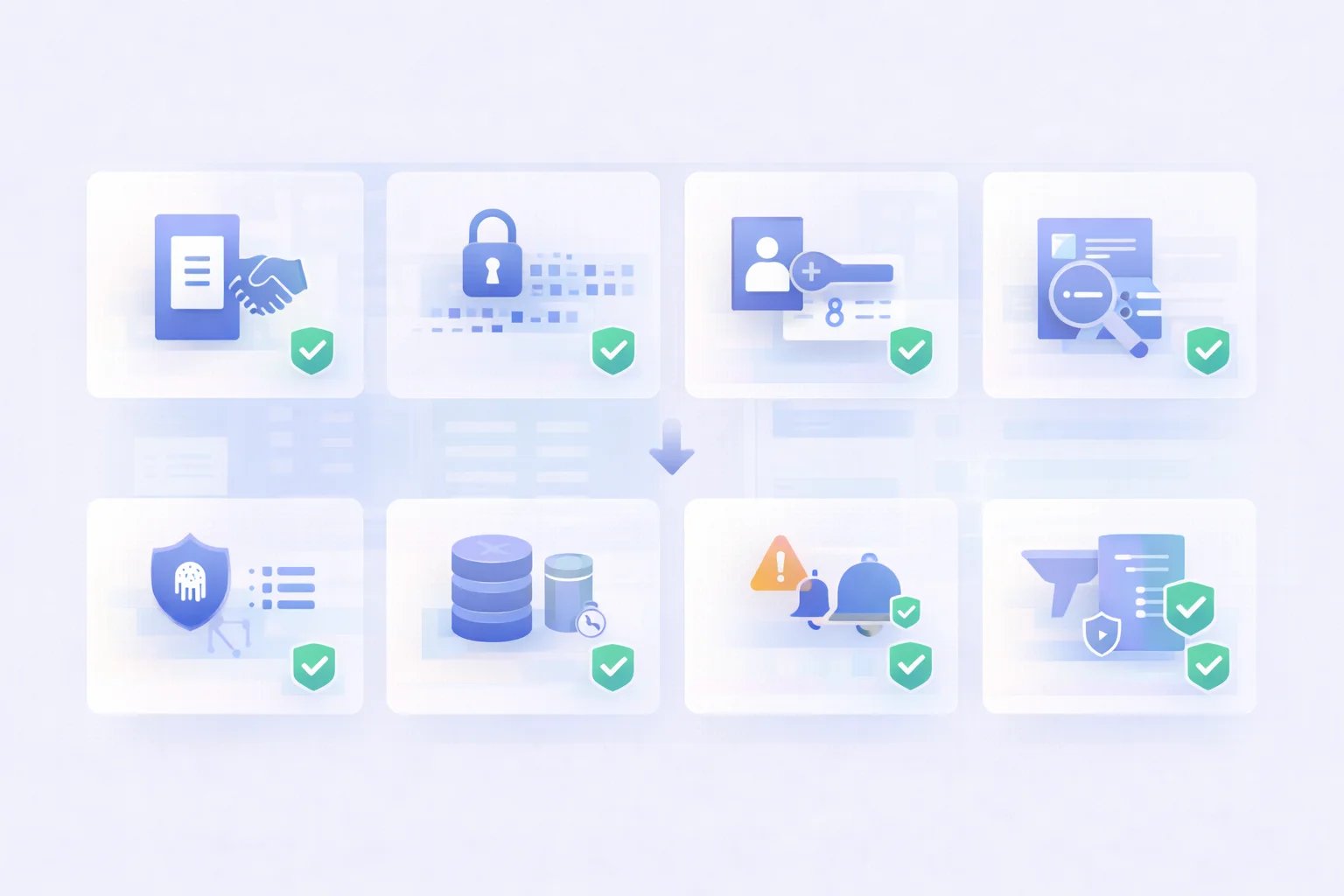
- HIPAA compliance certification
- SOC 2 Type II compliance
- Business Associate Agreement (BAA) provided
- End-to-end encryption
- Clear data retention and deletion policies
- Regular security audits and penetration testing
Benefits of AI Medical Scribes
Now that you understand how AI medical scribes work, let's explore the concrete benefits they offer to physicians, practices, and patients.
Time Savings
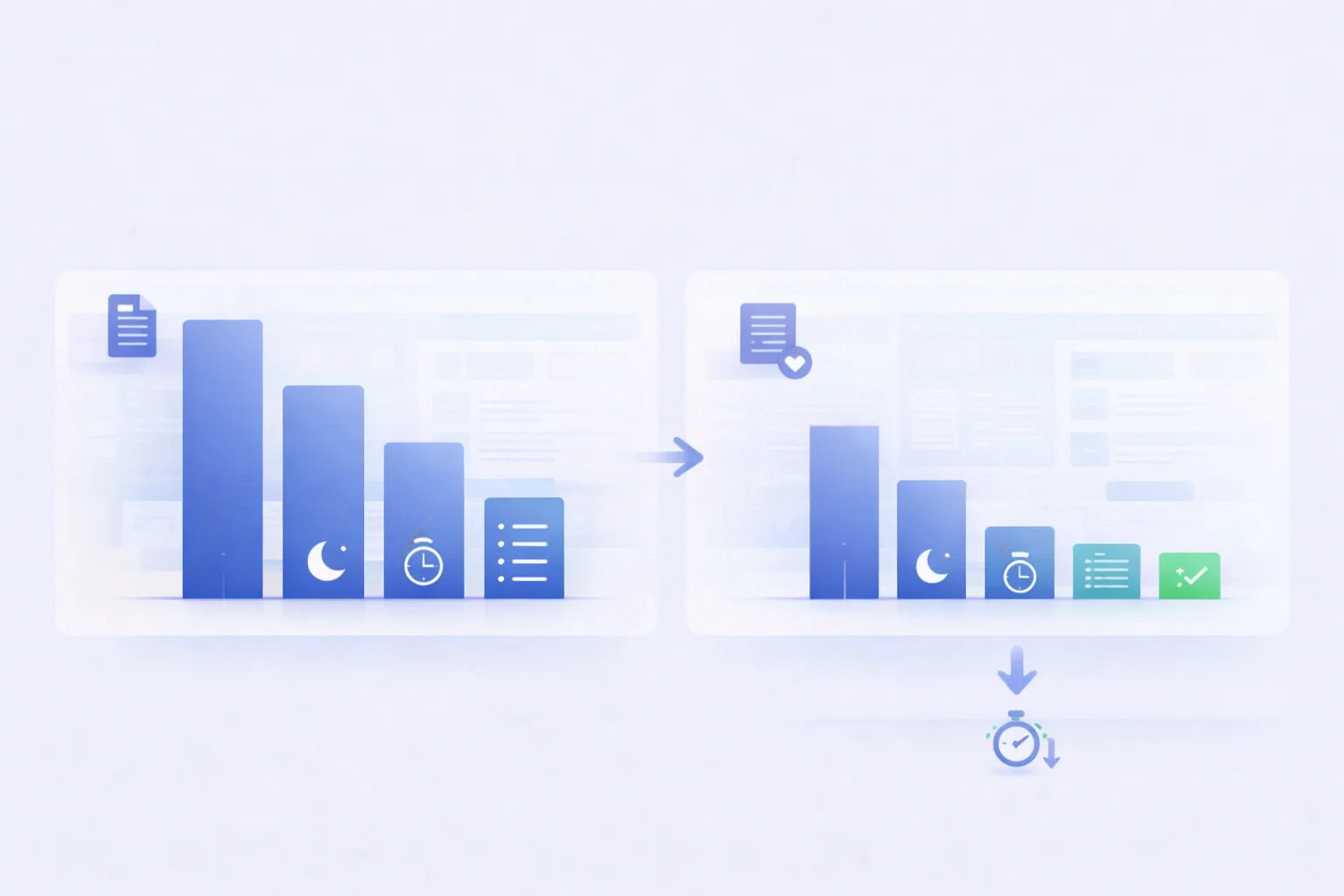
Time savings are a key potential benefit, though the actual impact varies significantly across specialties, workflows, and practice settings.
What Early Studies Show: Some clinicians report meaningful reductions in documentation time, ranging from modest improvements to substantial decreases in after-hours work. The magnitude depends on factors like:
- Your current documentation method and efficiency
- How well the AI integrates with your EHR
- Visit complexity and specialty
- Your comfort level with reviewing and editing AI-generated notes
Measuring Your Impact: Rather than assuming universal time savings, track your own metrics:
- Documentation time per patient (before and after)
- After-hours "pajama time" spent on notes
- Time to chart closure
- Quality of documentation (completeness, accuracy)
Organizations that pilot AI scribes carefully—with baseline measurements and realistic expectations—are better positioned to determine whether the investment delivers value for their specific situation.
Reduced Physician Burnout
The administrative burden of clinical documentation is one of the leading causes of physician burnout. AI medical scribes address this in several ways:
Reduced Cognitive Load: You can focus fully on the patient during the encounter rather than mentally composing documentation or worrying about remembering details for later note-writing.
Improved Work-Life Balance: Less after-hours documentation means more time with family, for hobbies, or simply to rest and recharge.
Decreased Frustration: Eliminating the tedious aspects of documentation reduces daily frustration and improves job satisfaction.
Real-World Impact: Some studies and surveys report improvements in burnout-related measures after adopting AI documentation tools, though results vary. The magnitude of benefit depends heavily on your starting level of documentation burden and how successfully the system integrates into your workflow. Track your own burnout indicators and work-life balance metrics locally rather than assuming a specific percentage improvement.
Enhanced Patient Experience
When you're not focused on typing or taking notes, you can give patients your full attention:
More Eye Contact: Patients report feeling more heard and valued when physicians maintain eye contact rather than staring at a computer screen.
Better Communication: With cognitive resources freed from documentation concerns, you can focus on explaining diagnoses and treatment plans more clearly.
Longer Effective Visit Time: While visit duration may not change significantly, patients perceive visits as longer and more thorough when physicians aren't distracted by documentation.
Patient Satisfaction: In vendor-reported surveys, many clinicians say ambient documentation helps them maintain better eye contact and engagement with patients. While these self-reported findings are promising, patient satisfaction outcomes should be measured in your own practice setting to determine actual impact.
Improved Documentation Quality
Counterintuitively, spending less time on documentation often results in better notes:
Completeness: AI scribes capture everything said during the encounter, reducing the risk of forgetting important details by the time you sit down to document hours later.
Consistency: AI-generated notes follow standardized formats and include all required elements, improving consistency across your documentation.
Accuracy: With immediate capture and review, there's less risk of memory errors or confusion between similar patients seen on the same day.
Compliance: Structured notes ensure you're capturing all required elements for quality measures, billing compliance, and medicolegal protection.
Financial Benefits
While AI medical scribes require an investment, they often deliver positive ROI through several mechanisms:
Increased Patient Volume: Time saved on documentation can be redirected to seeing more patients
- Average: 2-4 additional patients per day possible
- Annual revenue increase: $50,000-$150,000 depending on specialty and reimbursement rates
Improved Coding Accuracy: Better documentation often supports more accurate billing codes
- Studies show 3-5% improvement in appropriate coding levels
- Reduced risk of downcoding due to incomplete documentation
Reduced Scribe Costs: For practices currently using human scribes
- Human scribe cost: $30,000-$50,000 per year per physician
- AI scribe cost: $1,200-$7,200 per year per physician
- Net savings: $23,000-$48,000 per year per physician
Faster Chart Closure: Completing notes immediately after visits rather than days later improves cash flow and reduces compliance risks from delayed documentation.
ROI timelines vary widely depending on how time savings translate to revenue, workflow efficiency, or quality of life improvements. Some organizations report rapid payback, while others see more modest gains. A structured pilot with baseline and post-implementation metrics is recommended before making organization-wide commitments.
Additional Benefits
Beyond the major categories above, AI medical scribes offer several other advantages:
Reduced Risk of Repetitive Strain Injuries: Less typing means less risk of carpal tunnel syndrome and other repetitive strain injuries.
Better Teaching Tool: For academic practices, AI-generated notes can serve as teaching examples for residents and medical students.
Improved Continuity of Care: Complete, structured notes make it easier for other providers to understand patient history and treatment plans.
Data for Quality Improvement: Structured data from AI scribes can be analyzed to identify patterns, improve care protocols, and support population health initiatives.
Potential Problems and Limitations
While AI medical scribes offer significant benefits, they're not perfect. Understanding their limitations is essential for setting realistic expectations and making informed decisions.
Accuracy and Reliability Issues
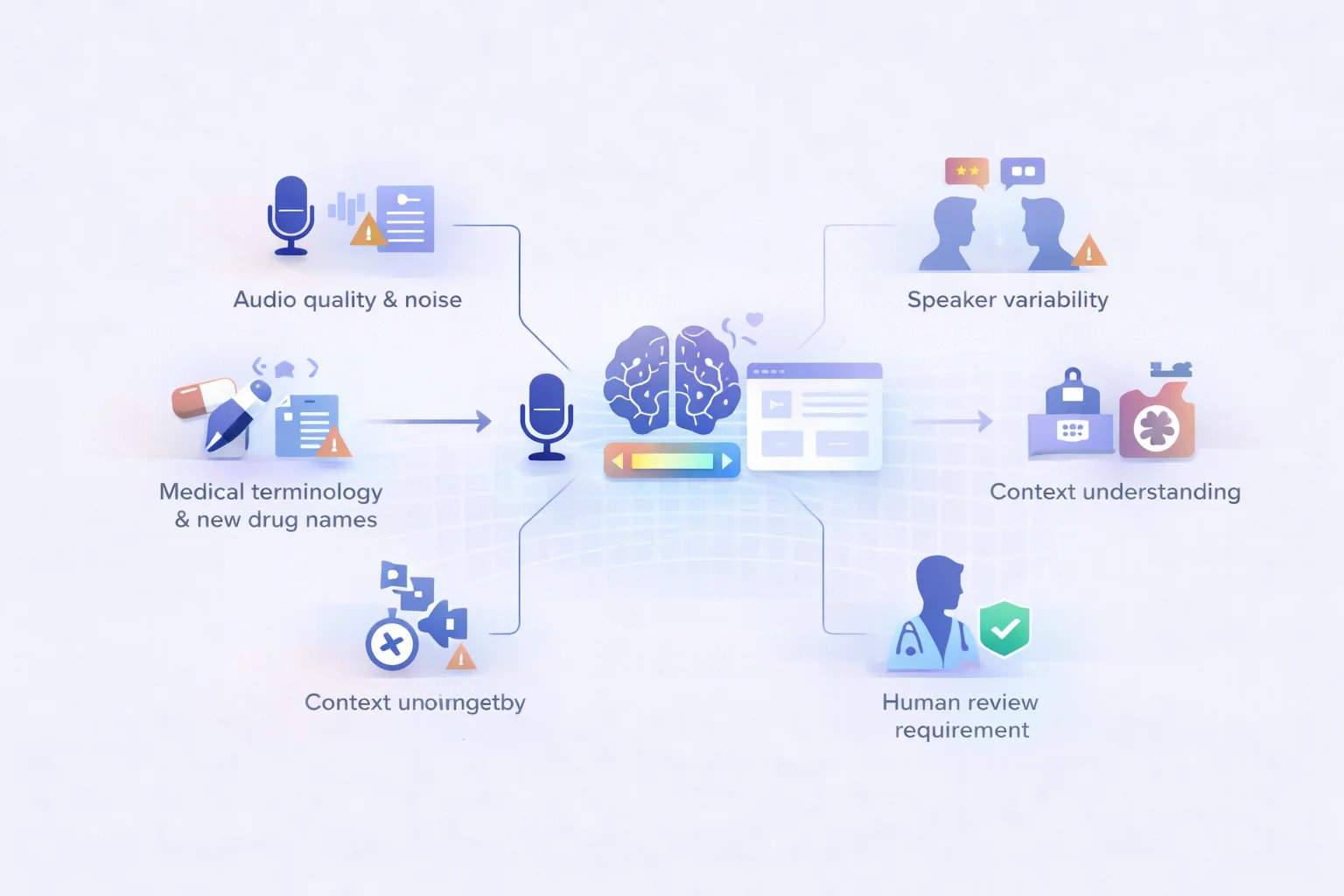
Speech Recognition Errors: Despite impressive accuracy rates (95%+), AI systems still make mistakes:
- Misheard words, especially with similar-sounding medical terms (e.g., "hyper" vs. "hypo")
- Difficulty with strong accents or unusual speech patterns
- Challenges in noisy clinical environments
- Confusion with uncommon medical terminology or new drug names
Contextual Misunderstandings: LLMs and NLP systems can misinterpret meaning:
- Confusing patient history with current symptoms
- Misattributing statements (e.g., recording a patient's question as a physician's statement)
- Missing subtle clinical nuances or implied information
- Difficulty with sarcasm, humor, or colloquial language
Specialty-Specific Challenges: Accuracy varies by medical specialty:
- Best performance: Primary care, internal medicine, family medicine (standardized terminology and workflows)
- Good performance: Cardiology, pulmonology, gastroenterology (well-defined terminology)
- More challenging: Psychiatry (nuanced conversations), emergency medicine (rapid, fragmented conversations), surgery (technical procedures)
The Bottom Line: You must always review and verify AI-generated notes. Never blindly approve documentation without reading it carefully.
Privacy and Security Concerns
Data Breach Risks: Any system that processes patient information creates potential security vulnerabilities:
- Cloud-based systems could be targets for cyberattacks
- Unauthorized access to audio recordings or transcripts
- Data breaches at vendor companies
Patient Consent Issues: Recording patient conversations raises ethical and legal questions:
- Do patients need to explicitly consent to AI recording?
- How do you handle patients who refuse to be recorded?
- What are your obligations regarding data retention and deletion?
Third-Party Data Sharing: Understanding how vendors handle your data:
- Is patient data used to train AI models?
- Are recordings or transcripts shared with third parties?
- What happens to data if you terminate your contract?
Compliance Challenges: Ensuring HIPAA compliance:
- Are Business Associate Agreements (BAAs) in place?
- Do vendors meet all HIPAA technical safeguards?
- How are data breaches reported and managed?
Mitigation Strategies:
- Choose vendors with strong security track records and certifications
- Implement clear policies for patient notification and consent
- Regularly review vendor security practices and compliance
- Have contingency plans for security incidents
Technical Limitations and Dependencies
Internet Connectivity Requirements: Most AI medical scribes require reliable internet:
- Cloud-based processing means no internet = no functionality
- Slow connections can delay note generation
- Rural or underserved areas may face connectivity challenges
Hardware Requirements: Some systems have specific device needs:
- May require recent smartphones or tablets
- Quality microphones for optimal audio capture
- Sufficient processing power for local AI features
EHR Compatibility Issues: Integration challenges can limit functionality:
- Not all AI scribes work with all EHR systems
- Integration depth varies (from copy-paste to deep API integration)
- Updates to your EHR may break integrations
- Custom EHR configurations may not be supported
System Downtime: Technology fails, and when it does:
- Vendor server outages prevent note generation
- Software bugs can cause crashes or errors
- Updates may temporarily disrupt service
Backup Plans: Always have a fallback documentation method for when technology fails.
Workflow and Adoption Challenges
Learning Curve: Adapting to AI medical scribes takes time:
- Initial period of lower efficiency while learning the system
- Need to develop new habits and workflows
- May require changes to how you conduct patient encounters
Resistance to Change: Not everyone embraces new technology:
- Some physicians prefer traditional documentation methods
- Staff may be skeptical or resistant
- Patients may be uncomfortable with recording
Workflow Disruptions: Integration into existing processes can be challenging:
- May conflict with established documentation workflows
- Requires coordination with medical assistants and nurses
- Can complicate teaching environments with residents and students
Customization Limitations: AI-generated notes may not match your style:
- Templates may not fit your specialty's needs
- Generated language may feel impersonal or generic
- Difficulty capturing your unique documentation preferences
Time Investment: Despite time savings, there's an initial investment:
- Training time to learn the system
- Time spent reviewing and editing notes during the adaptation period
- Ongoing time for system maintenance and updates
Legal and Liability Concerns
Documentation Responsibility: Critical legal considerations:
- You remain legally responsible for all documentation, even if AI-generated
- Errors in AI-generated notes could lead to malpractice claims
- Must maintain the same standard of care in reviewing AI notes as manual notes
Regulatory Uncertainty: The legal landscape is still evolving:
- Unclear regulations around AI-generated medical documentation in some jurisdictions
- Potential future requirements for AI disclosure in medical records
- Liability questions when AI errors contribute to adverse outcomes
Medicolegal Risks: Specific concerns:
- Are AI-generated notes admissible in court?
- How do you prove you reviewed and approved AI-generated content?
- What happens if the AI vendor goes out of business and historical notes become inaccessible?
Informed Consent: Legal requirements vary:
- Some states require patient consent for recording
- Unclear whether AI scribing constitutes "recording" under state laws
- Potential liability for recording without proper consent
Cost Considerations
While we'll cover detailed pricing later, it's worth noting that AI medical scribes aren't free:
Direct Costs:
- Subscription fees ($99-$600+ per month per physician)
- Implementation and setup fees
- Training costs
- Hardware upgrades if needed
Hidden Costs:
- IT support for integration and troubleshooting
- Productivity loss during initial adoption period
- Ongoing maintenance and updates
- Potential need for backup human scribes during outages
ROI Uncertainty: Not every practice sees positive returns:
- Low-volume practices may not save enough time to justify costs
- Specialties with simple documentation may see minimal benefit
- Practices with efficient existing workflows may not improve significantly
Regulation and Compliance
Understanding the regulatory landscape is essential for safely and legally implementing AI medical scribes in your practice.
Important Note: This section provides general information about regulations that may apply to AI medical scribes. It does not constitute legal, compliance, or regulatory advice. Before implementing any AI documentation tool, consult with your organization's compliance team, legal counsel, and privacy officer to ensure alignment with applicable federal, state, and local requirements.
HIPAA Compliance
The Health Insurance Portability and Accountability Act (HIPAA) is the primary federal law governing patient health information in the United States. AI medical scribes must comply with HIPAA's Privacy Rule, Security Rule, and Breach Notification Rule.
Key HIPAA Requirements for AI Medical Scribes
Business Associate Agreement (BAA):
- If the vendor creates, receives, maintains, or transmits PHI on your behalf, they are generally a HIPAA business associate
- You must have a signed BAA with the vendor before any PHI is processed
- The BAA specifies how the vendor will protect PHI and their obligations in case of a breach
- Red flag: If a vendor won't sign a BAA, don't use their service for any PHI-related documentation
Technical Safeguards:
- Encryption: Encryption in transit and at rest is widely expected as best practice for protecting ePHI. Specific requirements depend on your organization's risk assessment and evolving regulations
- Access controls: Only authorized users should be able to access patient data
- Audit trails: Systems should log who accessed what data and when
- Authentication: Strong user authentication (passwords, multi-factor authentication)
Privacy Safeguards:
- Minimum necessary: Apply role-based access and data minimization wherever feasible. Note that HIPAA's "minimum necessary" standard has explicit exceptions (such as certain treatment-related disclosures), but least-privilege access controls remain a best practice
- Data use limitations: PHI can only be used for permitted purposes (treatment, payment, operations)
- Patient rights: Patients have rights to access, amend, and receive accounting of disclosures
Breach Notification:
- Vendors must notify you of any breach of unsecured PHI
- You must notify affected patients and, in some cases, the media and HHS
- Breaches affecting 500+ individuals must be reported to HHS within 60 days; for smaller breaches, reporting is typically aggregated and submitted annually (confirm requirements with your compliance team)
What to Ask Vendors
Key HIPAA-related questions for vendors:
- "Will you sign a Business Associate Agreement?"
- "What encryption and security certifications do you have?" (look for SOC 2 Type II, HITRUST)
- "How long do you retain data, and what happens when we terminate service?"
- "Have you had any security breaches?"
FDA Regulation
The Food and Drug Administration (FDA) regulates medical devices, including some medical software. The regulatory status of AI medical scribes is nuanced:
Current FDA Stance (as of 2025):
- Documentation-only tools are often treated as low-risk administrative functions
- However, products that provide clinical recommendations, interpret medical data, or drive clinical decisions may fall under FDA's digital health frameworks
- The regulatory boundary depends on whether the software's primary function is administrative documentation versus clinical decision support
What This Means for You:
- AI scribes focused purely on transcription and note generation typically don't require FDA clearance
- If a vendor claims FDA approval, verify what specific features or claims were actually approved
- Be aware that adding clinical decision support features (diagnosis suggestions, treatment recommendations) to a documentation tool can change its regulatory status
- Ask vendors to be transparent about which functions are purely administrative versus clinical decision support
State and Local Regulations
Recording Consent Laws: Recording consent laws vary significantly by state. Some states require only one-party consent (where you as the physician can consent to the recording), while others require all-party consent (where the patient must also consent). For example, California, Florida, and Pennsylvania are commonly treated as all-party consent states. Regardless of your state's specific law, best practice is to consistently inform patients that you're using an AI documentation assistant and give them the option to opt out.
State Medical Board Requirements: Check with your state medical board for specific guidance on AI use in medicine, including documentation and patient consent requirements.
International Considerations: If you practice internationally, be aware of regulations like GDPR in the European Union. Under GDPR, health data is classified as "special category data" requiring both a lawful basis (Article 6) and a specific condition under Article 9. While explicit consent is one option, healthcare delivery may rely on other legal conditions depending on local law and context—consult with your Data Protection Officer or legal counsel for guidance specific to your situation.
Professional Liability and Malpractice
Documentation Standards:
- AI-generated notes must meet the same standards as manually created notes
- You remain professionally responsible for all documentation
- Courts have not yet established clear precedents for AI-generated medical documentation
Malpractice Insurance:
- Check with your malpractice insurance carrier about AI scribe use
- Some policies may have exclusions or requirements
- Document your review and approval process for AI-generated notes
Best Practices for Liability Protection:
- Always review AI-generated notes carefully before approving
- Make edits and corrections as needed—don't blindly accept AI output
- Document your use of AI scribes in your practice policies
- Maintain audit trails showing you reviewed and approved notes
- Have a clear process for handling AI errors
Staying Compliant
The regulatory landscape for AI in healthcare is evolving. Stay informed by subscribing to updates from your medical specialty society, monitoring state medical board announcements, and consulting with healthcare attorneys familiar with AI regulations. Future regulations may require disclosure of AI use in medical records and certification of AI healthcare applications.
Should You Use an AI Medical Scribe?
Now that you understand what AI medical scribes are, how they work, their benefits, and their limitations, the key question remains: Should you actually use one? The answer depends on your specific situation. Let's work through a systematic decision framework.

Decision Framework
Step 1: Assess Your Current Documentation Burden
Start by honestly evaluating your current situation. Ask yourself:
Time Assessment:
- How many hours per day do you spend on clinical documentation?
- How much documentation do you complete after hours ("pajama time")?
- How long does it take you to complete a typical patient note?
- Are you consistently behind on chart closure?
Quality Assessment:
- Are your notes consistently complete and thorough?
- Do you ever forget important details by the time you document?
- Have you received feedback about documentation quality or completeness?
- Do you struggle with billing compliance due to documentation issues?
Burnout Assessment:
- Do you feel overwhelmed by documentation demands?
- Does documentation prevent you from seeing more patients?
- Do you resent the time spent on documentation?
- Has documentation burden affected your job satisfaction or work-life balance?
Scoring: If you answered "yes" to most of these questions, you're likely a good candidate for an AI medical scribe.
Step 2: Evaluate Your Practice Characteristics
Not all practices benefit equally from AI medical scribes. Consider these factors:
Patient Volume:
- High volume (20+ patients/day): Strong candidate—time savings multiply across many encounters
- Medium volume (10-20 patients/day): Good candidate—meaningful time savings possible
- Low volume (<10 patients/day): Marginal candidate—ROI may be harder to achieve
Specialty Considerations: AI medical scribes work best for specialties with:
- Conversational patient encounters (vs. procedure-focused)
- Standardized documentation formats
- High documentation burden relative to visit complexity
Best-fit specialties:
- Primary care (family medicine, internal medicine, pediatrics)
- Emergency medicine
- Psychiatry and behavioral health
- Cardiology
- Pulmonology
- Gastroenterology
More challenging specialties:
- Surgery (procedure-focused, less conversation)
- Radiology (image-focused)
- Pathology (lab-focused)
- Anesthesiology (brief encounters, lots of numerical data)
Practice Setting:
- Private practice: Full control over technology decisions, can move quickly
- Hospital employed: May need institutional approval, but can leverage enterprise pricing
- Academic medical center: Teaching environment may complicate use, but offers research opportunities
- Telemedicine: Works well for virtual visits, but check audio quality
EHR System:
- Does the AI scribe integrate with your specific EHR?
- What level of integration is available?
- Will you need IT support for implementation?
Step 3: Calculate Potential ROI
Let's work through a realistic ROI calculation:
Time Savings Calculation:
Current documentation time per patient: 15 minutes
AI scribe documentation time per patient: 3 minutes
Time saved per patient: 12 minutes

Patients per day: 20
Daily time savings: 240 minutes (4 hours)
Annual time savings: 1,000 hours (assuming 250 work days)
Value of Time Saved:
Option A - See More Patients:
Additional patients possible per day: 3
Additional annual revenue: $75,000-$150,000 (specialty dependent)

Option B - Reduce Hours:
Hours reduced per week: 5
Value: Improved work-life balance, reduced burnout

Option C - Improve Quality:
Time reinvested in patient care, education, research
Value: Harder to quantify but significant
Cost Calculation:
AI scribe subscription: $200/month = $2,400/year
Implementation and training: $500 (one-time)
First-year total cost: $2,900

ROI = (Value - Cost) / Cost
If seeing 3 more patients/day generates $100,000 additional revenue:
ROI = ($100,000 - $2,900) / $2,900 = 3,348% (or 33.5x return)

Break-even time: Less than 2 weeks
Your Calculation: Use your own numbers to calculate potential ROI for your practice.
Step 4: Assess Implementation Readiness
Beyond financial ROI, consider whether your practice is ready for implementation:
Technical Readiness:
- Do you have reliable internet connectivity?
- Do you have compatible devices (smartphones, tablets, computers)?
- Do you have IT support available if needed?
- Is your EHR system compatible with AI scribe options?
Organizational Readiness:
- Are you and your staff open to new technology?
- Do you have time for training and initial adjustment?
- Can you tolerate a temporary productivity dip during the learning curve?
- Do you have support from practice leadership or partners?
Patient Considerations:
- Will your patients be comfortable with AI recording?
- Do you have a plan for patients who opt out?
- Can you clearly explain the technology to patients?
Step 5: Consider Alternatives
Before committing to an AI medical scribe, consider whether other solutions might better address your needs:
Alternative Solutions:
Human Medical Scribes:
- Pros: More flexible, can handle complex situations, can perform other tasks
- Cons: More expensive ($30,000-$50,000/year), scheduling challenges, privacy concerns
- Best for: Practices with complex documentation needs or those uncomfortable with AI
Voice Dictation Software:
- Pros: Lower cost, no privacy concerns with third-party vendors
- Cons: Still requires you to actively dictate, less time savings than AI scribes
- Best for: Physicians comfortable with dictation who want a low-cost solution
Template-Based Documentation:
- Pros: Fast for routine visits, low cost
- Cons: Can feel impersonal, may not capture nuances, risk of copy-paste errors
- Best for: High-volume practices with standardized visits
Improved Workflow Processes:
- Pros: No technology required, addresses root causes
- Cons: Limited impact if documentation itself is the bottleneck
- Best for: Practices with inefficient processes beyond just documentation
Combination Approaches: Many practices find success combining solutions:
- AI scribe for routine visits + human scribe for complex cases
- AI scribe for in-person visits + templates for telehealth
- AI scribe during the day + voice dictation for after-hours catch-up
Who Should (and Shouldn't) Use AI Medical Scribes
Based on the framework above, here's a quick reference guide:
Ideal Candidates ✅
You're likely an ideal candidate if you:
- See 15+ patients per day with conversational encounters
- Spend 2+ hours daily on documentation
- Work in primary care, emergency medicine, or conversational specialties
- Experience burnout related to documentation burden
- Have reliable technology infrastructure
- Are comfortable with technology and willing to learn new tools
- Currently use human scribes and want to reduce costs
- Practice in a state with one-party recording consent
Good Candidates ✓
You're probably a good candidate if you:
- See 10-15 patients per day
- Spend 1-2 hours daily on documentation
- Work in a specialty with moderate documentation burden
- Have some technology infrastructure in place
- Are open to trying new approaches
- Have support from your practice or health system
Marginal Candidates ⚠️
You might benefit, but ROI is uncertain if you:
- See fewer than 10 patients per day
- Have relatively simple documentation needs
- Work in a procedure-focused specialty
- Have limited technology infrastructure
- Are uncomfortable with technology
- Practice in a two-party consent state without patient consent processes
Poor Candidates ❌
AI medical scribes are probably not right for you if you:
- See very few patients (< 5 per day)
- Have minimal documentation burden
- Work in a specialty where AI scribes don't work well (radiology, pathology, etc.)
- Lack basic technology infrastructure (reliable internet, compatible devices)
- Are strongly opposed to AI or new technology
- Have patients who would largely refuse recording consent
- Cannot afford even modest subscription costs
Making the Final Decision
After working through this framework, you should have a clear sense of whether an AI medical scribe is right for you. Here's how to make the final call:
If you're a clear "yes":
- Move forward with researching specific products
- Plan for a trial period to test in your actual workflow
- Set clear success metrics to evaluate performance
If you're on the fence:
- Start with a free trial or pilot program
- Test with a subset of patients or visit types
- Gather data on actual time savings and satisfaction
- Reassess after 30-60 days of real-world use
If you're a clear "no":
- Don't force it—AI medical scribes aren't for everyone
- Consider alternative solutions to address documentation burden
- Revisit the decision in 6-12 months as technology improves
Next Steps: If you've decided to move forward, the next section will guide you through selecting the right AI medical scribe for your needs.
How to Select the Right AI Medical Scribe
Once you've decided an AI medical scribe is right for your practice, here are the key factors to evaluate:
Essential Selection Criteria
1. Accuracy and Specialty Fit: Look for 95%+ accuracy rates and verify the system performs well with your specialty's terminology. Request specialty-specific case studies and test with actual patient encounters during trials.
2. EHR Integration: Verify compatibility with your specific EHR system. Integration ranges from simple copy-paste to seamless API connections that automatically sync notes. Deeper integration saves more time.
3. Ease of Use: The system should fit naturally into your workflow with minimal training. Test the interface during demos—can you start recording with one tap? Is note review intuitive?
4. Pricing and Transparency: Understand the total cost including subscription ($99-$600/month typical), setup fees, and any hidden costs. Clarify contract terms and cancellation policies.
5. Security and Compliance: Ensure HIPAA compliance, verify they'll sign a Business Associate Agreement (BAA), and check for security certifications like SOC 2 Type II.
Quick Evaluation Process
- Research: Create a requirements list and shortlist 3-5 options based on your must-haves
- Compare: Review our detailed comparison of the 7 best AI medical scribes for feature analysis, pricing, and specialty-specific recommendations
- Demo: Schedule demonstrations with your top choices
- Trial: Test your top 2-3 options for 2-4 weeks in real clinical practice
- Decide: Compare results using objective criteria and involve key stakeholders
Implementation Tips
Start with a soft launch using the system for routine encounters first, gradually expanding to complex cases over 4-8 weeks. Maintain backup documentation methods during the transition period and set clear success metrics to evaluate performance.
The Future of AI Medical Scribes
As we look ahead, AI medical scribes are poised for significant evolution. Understanding emerging trends can help you make forward-looking decisions and prepare for what's coming.
Emerging Technological Trends
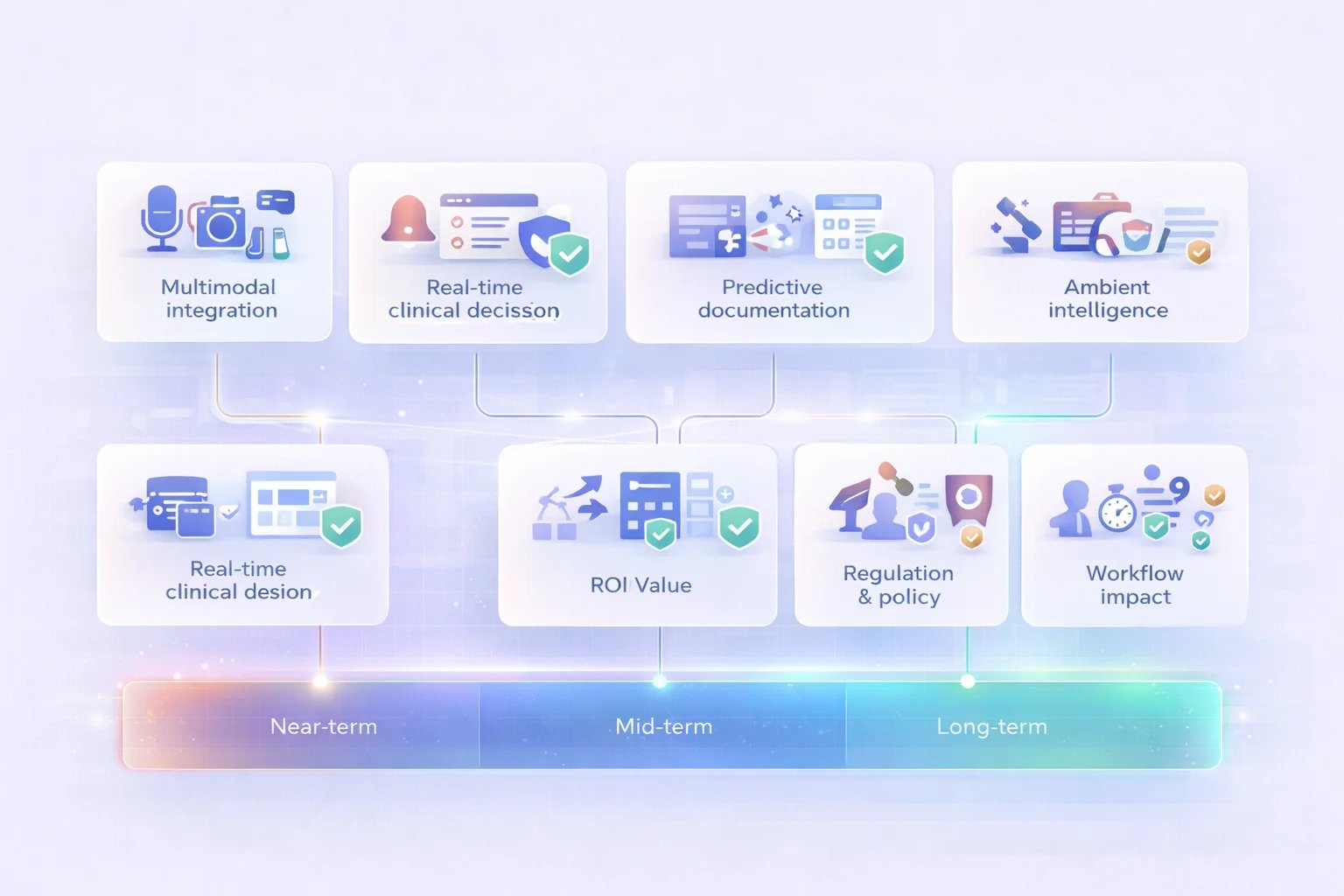
Multimodal AI Integration The next generation of AI medical scribes will go beyond just listening to conversations:
- Visual analysis: Incorporating images from physical exams, wound photos, or diagnostic images
- Vital signs integration: Automatically pulling data from blood pressure cuffs, pulse oximeters, and other devices
- Lab and imaging results: Contextualizing conversations with relevant test results
- Wearable data: Integrating patient-generated health data from smartwatches and fitness trackers
Real-Time Clinical Decision Support Future AI scribes will do more than just document—they'll actively assist during encounters:
- Guideline reminders: Prompting you about relevant clinical guidelines during the visit
- Drug interaction alerts: Warning about potential interactions when medications are discussed
- Preventive care reminders: Suggesting overdue screenings or vaccinations
- Coding optimization: Real-time suggestions for appropriate billing codes based on conversation
Predictive Documentation AI will anticipate documentation needs:
- Pre-populated notes: Generating draft notes based on patient history and chief complaint before the visit
- Intelligent templates: Dynamically adjusting note structure based on the conversation flow
- Automated follow-up: Generating patient instructions, prescription details, and follow-up orders
Ambient Intelligence The technology will become increasingly invisible:
- No device needed: Room-based microphones and processing
- Automatic activation: Starting recording when you enter the exam room
- Seamless integration: Documentation appearing in your EHR without any action on your part
Market Evolution
Consolidation and Standardization The AI medical scribe market is maturing:
- Vendor consolidation: Smaller players being acquired by larger health IT companies
- EHR integration: Major EHR vendors (Epic, Cerner) developing or acquiring AI scribe capabilities
- Standardization: Industry standards emerging for accuracy, security, and interoperability
Pricing Trends Economic factors will shape the market:
- Decreasing costs: As technology improves and competition increases, prices are likely to fall
- Value-based pricing: More options tied to demonstrated outcomes rather than flat subscriptions
- Bundling: AI scribes included as part of broader health IT packages
Specialization Expect more specialty-specific solutions:
- Vertical focus: AI scribes optimized for specific specialties (dermatology, orthopedics, etc.)
- Procedure documentation: Systems designed for procedural specialties
- Behavioral health: Solutions tailored for mental health documentation needs
Regulatory and Policy Developments
Increased Oversight As AI medical scribes become mainstream, expect more regulation:
- Quality standards: Government or industry-mandated accuracy and reliability standards
- Transparency requirements: Possible mandates to disclose AI use in medical records
- Certification programs: Third-party certification for AI medical scribe products
Reimbursement Changes Healthcare payment models may evolve:
- Documentation efficiency incentives: Payers rewarding efficient documentation practices
- Quality measure integration: AI-generated documentation data used for quality reporting
- Time-based billing: Changes to E/M coding that value physician time over documentation complexity
Liability Clarification Legal frameworks will mature:
- Clear liability standards: Court precedents and legislation clarifying responsibility for AI-generated documentation
- Malpractice insurance evolution: Policies explicitly addressing AI tool use
- Professional standards: Medical boards and specialty societies issuing clear guidance
Impact on Healthcare Delivery
Transformation of the Physician Role AI medical scribes are part of a broader shift:
- Return to patient focus: Physicians spending more time on clinical reasoning and patient relationships
- Cognitive support: AI handling routine cognitive tasks, freeing physicians for complex decision-making
- Team-based care: AI facilitating better coordination among care team members
Changes to Medical Education Training will adapt to the AI era:
- Documentation skills: Less emphasis on typing speed, more on reviewing and editing AI output
- AI literacy: Teaching medical students and residents how to effectively use AI tools
- Clinical reasoning: Greater focus on skills that AI can't replicate
Workforce Implications The healthcare workforce will evolve:
- Human scribe roles: Shifting from documentation to other support functions
- New roles: Emergence of "AI scribe specialists" who optimize and manage these systems
- Efficiency gains: Potential for physicians to see more patients or work fewer hours
Timeline: Potential Evolution
Near-term (12-24 months)
- Broader pilots and tighter EHR integrations are likely as major vendors invest in this space
- Continued refinement of accuracy and review workflows
- Growing evidence base from real-world implementations
Mid-term (2-5 years)
- More structured outputs and quality controls may emerge
- Possible multimodal capabilities (voice + visual data + device inputs)
- Greater specialization for specific medical fields
- Evolving regulatory frameworks as evidence accumulates
Long-term (5+ years)
- Potential shift toward more continuous documentation workflows
- Possible integration of clinical decision support features (subject to regulatory requirements)
- Evolution highly dependent on evidence of safety and effectiveness, regulatory clarity, and clinician acceptance
These are scenarios, not certainties. The actual trajectory will depend on technological progress, regulatory developments, evidence generation, and healthcare system readiness.
Preparing for the Future
How to Future-Proof Your Choice:
- Choose vendors with strong R&D: Look for companies actively developing next-generation features
- Prioritize interoperability: Select systems that work with multiple platforms and standards
- Stay flexible: Avoid long-term contracts that lock you into outdated technology
- Invest in learning: Develop skills in working with AI tools, not just using specific products
- Engage with the community: Participate in user groups and provide feedback to shape future development
Questions to Ask Vendors About the Future:
- "What's on your product roadmap for the next 12-24 months?"
- "How do you plan to incorporate multimodal AI capabilities?"
- "What's your strategy for real-time clinical decision support?"
- "How will you adapt to emerging regulations and standards?"
- "What's your long-term vision for AI in clinical documentation?"
How Much Does an AI Medical Scribe Cost?
Understanding the true cost of AI medical scribes is essential for making an informed decision. Let's break down the various pricing models, hidden costs, and how to calculate return on investment.
Pricing Models
AI medical scribe vendors use several different pricing structures:
1. Flat Monthly Subscription
How it works: Pay a fixed monthly fee per physician for unlimited use
Typical pricing:
- Budget tier: $99-$149/month per physician
- Mid-tier: $150-$300/month per physician
- Premium tier: $300-$600/month per physician
Pros:
- Predictable costs
- No usage anxiety—use as much as you need
- Simple budgeting
Cons:
- May pay for more than you use if patient volume is low
- Annual contracts often required for best pricing
Best for: High-volume practices with consistent patient loads
Note: Pricing examples vary by vendor and change frequently. Always verify current pricing directly with vendors, as published rates may differ from what you see during this guide's publication date.
2. Per-Encounter Pricing
How it works: Pay for each patient encounter documented
Typical pricing: $1-$5 per encounter
Pros:
- Pay only for what you use
- Lower risk if you're unsure about adoption
- Scales with your practice volume
Cons:
- Unpredictable monthly costs
- Can become expensive for high-volume practices
- May create usage hesitation
Best for: Low to medium volume practices, those wanting to test before committing
3. Tiered Pricing
How it works: Different service levels with different features and pricing
Typical structure:
- Basic tier: Core documentation features ($99-$199/month)
- Professional tier: Advanced features, better integration ($200-$400/month)
- Enterprise tier: Full features, dedicated support, custom integration ($400-$600+/month)
Pros:
- Choose the level that matches your needs
- Can upgrade as you grow
- Often better value than à la carte pricing
Cons:
- Can be confusing to compare
- May be tempted to pay for features you don't need
Best for: Practices that want flexibility to scale
Example: Augmedix (Go, Assist, Live tiers)
4. Enterprise Pricing
How it works: Custom pricing for large organizations based on number of users, features, and implementation needs
Typical approach: "Contact sales for pricing"
Pros:
- Negotiable based on your specific needs
- Volume discounts for large deployments
- Customization options
- Dedicated account management
- Priority support
Cons:
- Lack of pricing transparency
- Lengthy sales process
- May require minimum commitments
- Can be significantly more expensive
Best for: Large health systems, hospitals, multi-location practices
Examples: DeepScribe, Microsoft Dragon Copilot, Notable
Cost Comparison Table
Here's a realistic comparison of total costs across different solutions and alternatives:
| Solution | Monthly Cost | Annual Cost | Setup/Implementation | Training | Total First Year |
|---|---|---|---|---|---|
| AI Medical Scribes | |||||
| Budget AI Scribe | $99-149 | $1,188-1,788 | $0-500 | Minimal | $1,188-2,288 |
| Mid-Tier AI Scribe | $200-300 | $2,400-3,600 | $500-1,000 | Included | $2,900-4,600 |
| Premium AI Scribe | $400-600 | $4,800-7,200 | $1,000-2,000 | Included | $5,800-9,200 |
| Traditional Alternatives | |||||
| Human Scribe (Part-Time) | $2,500-3,500 | $30,000-42,000 | $1,000-2,000 | $500-1,000 | $31,500-45,000 |
| Human Scribe (Full-Time) | $4,000-6,000 | $48,000-72,000 | $1,000-2,000 | $500-1,000 | $49,500-75,000 |
| Voice Dictation Software | $50-150 | $600-1,800 | $0-200 | Minimal | $600-2,000 |
| Manual Documentation | $0 | $0 | $0 | N/A | $0* |
*Manual documentation has zero direct costs but significant opportunity costs in physician time
Hidden Costs to Consider
Beyond the obvious subscription fees, factor in these additional costs:
Implementation and Integration Costs:
- Technical setup and EHR integration: $0-$2,000
- IT support time: $500-$1,500
- Workflow redesign and optimization: $200-$1,000
- Testing and pilot phase: Opportunity cost of 10-20 hours
Training and Onboarding:
- Initial training for physicians: 2-4 hours per physician
- Staff training: 1-2 hours per staff member
- Ongoing education and optimization: 1-2 hours per quarter
- Learning curve productivity loss: 1-2 weeks at reduced efficiency
Hardware and Infrastructure:
- Smartphone or tablet upgrades (if needed): $0-$1,000
- Quality microphones or headsets: $0-$200
- Reliable internet upgrade: $0-$500
- Cloud storage expansion: $0-$100/year
Ongoing Operational Costs:
- IT support and maintenance: $200-$500/year
- System updates and upgrades: Usually included
- Additional user licenses as you grow: Variable
- Backup documentation method: $0-$500/year
Opportunity Costs During Transition:
- Reduced productivity during learning curve: 10-20% for 2-4 weeks
- Time spent troubleshooting issues: 2-5 hours in first month
- Adjustment of workflows and processes: 5-10 hours
- Patient communication and education: 1-2 hours
Total Hidden Costs Estimate: $1,000-$5,000 in first year, $500-$2,000 in subsequent years
ROI Calculation Template
Use this framework to calculate your specific return on investment:
Step 1: Calculate Your Time Investment
Current documentation time per patient: _____ minutes
Expected AI scribe documentation time per patient: _____ minutes
Time saved per patient: _____ minutes

Patients per day: _____
Daily time savings: _____ minutes (_____ hours)
Annual time savings (250 work days): _____ hours
Step 2: Assign Value to Time Saved
Choose how you'll use the time saved:
Option A - See More Patients:
Additional patients possible per day: _____
Revenue per patient: $_____
Additional daily revenue: $_____
Additional annual revenue: $_____ (x 250 days)
Option B - Reduce Work Hours:
Hours reduced per week: _____
Value of personal time: Improved work-life balance, reduced burnout
Monetary equivalent (optional): $_____ per hour
Annual value: $_____
Option C - Improve Quality/Efficiency:
Time reinvested in patient care: _____ hours/week
Time for professional development: _____ hours/week
Value: Better patient outcomes, career advancement, job satisfaction
Monetary equivalent (if quantifiable): $_____
Step 3: Calculate Total Costs
AI scribe subscription: $_____ per year
Implementation costs: $_____
Training costs: $_____
Hidden costs: $_____
Total first-year cost: $_____
Ongoing annual cost: $_____ (years 2+)
Step 4: Calculate ROI
Formula: ROI = (Gain - Cost) / Cost × 100%

Gain from time savings: $_____
Total cost: $_____
Net benefit: $_____ (Gain - Cost)
ROI percentage: _____%

Break-even time: _____ months
Example Calculation (Illustrative Scenario):
Assumed time savings: 3 hours per day
Current patient volume: 20 patients/day
Assumed additional patients possible: 3 per day
Average revenue per patient: $150
Potential additional annual revenue: $112,500

AI scribe cost: $2,400/year
Estimated total first-year costs: $3,500
Potential net benefit: $109,000
Theoretical ROI: 3,114%Important: This is a best-case scenario for illustration purposes. Actual results will vary significantly based on your specialty, workflow, whether you can realistically see more patients, and many other factors. Many physicians choose to use time savings for improved work-life balance rather than seeing more patients, which has value but is harder to quantify financially. Always calculate ROI using your own realistic assumptions.
When AI Medical Scribes DON'T Make Financial Sense
Be honest about situations where the numbers don't work:
Low-Volume Practices:
- Seeing fewer than 8-10 patients per day
- Part-time clinical work
- Practices with long, complex visits but few patients
Simple Documentation Needs:
- Procedures with standardized documentation
- Brief follow-up visits with minimal documentation
- Practices already using efficient template systems
Limited Financial Resources:
- Startup practices with tight cash flow
- Practices already struggling financially
- When ROI period exceeds 6-12 months
Alternative: In these cases, consider free trials to test actual value, per-encounter pricing to reduce fixed costs, or wait until your practice volume grows.
Maximizing Your ROI
Strategies to increase return on investment:
- Negotiate pricing: Ask about annual payment discounts, multi-user discounts, or promotional offers
- Start with high-volume days: Use the AI scribe on your busiest days to maximize impact
- Optimize workflows: Continuously refine how you use the system to reduce review time
- Leverage improved coding: Ensure complete documentation supports appropriate billing levels
- Reduce other costs: If switching from human scribes, redirect those savings
- Track metrics: Monitor actual time savings and financial impact to optimize usage
- Expand gradually: Add more physicians as ROI is proven
Comparing Costs: AI Scribe vs. Alternatives
AI Scribe vs. Human Scribe:
- AI saves $25,000-$70,000 annually per physician
- ROI positive within first month for most practices
- Clear financial winner for most situations
AI Scribe vs. Manual Documentation:
- AI costs $1,200-$7,200 annually
- Value depends on opportunity cost of physician time
- ROI positive if time saved generates >$1,200 in value
- Typically positive for physicians earning >$200,000/year
AI Scribe vs. Voice Dictation:
- AI costs $600-$6,000 more than basic dictation
- Value comes from reduced active documentation time
- ROI positive if you value hands-free documentation
- Typically positive for high-volume practices
Frequently Asked Questions
Do I need patient consent to use an AI medical scribe?
How long does it take to learn to use an AI medical scribe?
What happens if the AI makes an error in my documentation?
Can I use an AI medical scribe for telemedicine visits?
Will my malpractice insurance cover AI-generated documentation?
How much time will I actually save with an AI medical scribe?
What happens to my data if I cancel my subscription?
Can AI medical scribes handle multiple languages?
Do AI medical scribes work offline?
How do I explain AI medical scribes to my patients?
Will AI replace human medical scribes?
Conclusion
AI medical scribes represent a promising approach to addressing the documentation burden that has plagued physicians for decades. As we've explored throughout this guide, these systems use speech recognition, natural language processing, and machine learning to capture and structure clinical encounters into documentation—with the potential to meaningfully reduce time spent on administrative tasks.
The technology is maturing rapidly. Early studies show measurable improvements in documentation efficiency for many clinicians, though results vary by specialty, workflow, and practice setting. Costs are often lower than traditional human scribe models ($1,200-$7,200 annually per physician versus $30,000-$50,000 for human alternatives), but outcomes depend on factors like workflow fit, data governance, EHR integration quality, and realistic expectations about accuracy and review requirements.
However, AI medical scribes aren't a magic solution for everyone. They require reliable technology infrastructure, a willingness to adapt workflows, careful attention to privacy and compliance requirements, and—most importantly—a commitment to reviewing and verifying all AI-generated documentation. Current evidence for clinical and operational benefits is growing but still evolving, so a structured pilot with clear success metrics is essential before widespread adoption. Specialties with high patient volumes and conversational encounters may see more benefit, while those with simple documentation needs or very low volumes may find the investment harder to justify.
The regulatory landscape continues to evolve, but current frameworks under HIPAA and FDA guidance provide clear paths for compliant implementation. The key is choosing reputable vendors who prioritize security, provide Business Associate Agreements, and demonstrate commitment to data protection.
Looking ahead, AI medical scribes will only become more sophisticated. We can expect multimodal capabilities integrating visual data and diagnostic results, real-time clinical decision support, predictive documentation that requires minimal physician review, and eventually ambient intelligence systems that make documentation a seamless byproduct of care rather than a separate task.
For physicians experiencing documentation-related burnout, struggling with after-hours "pajama time," or simply wanting to redirect their time toward more meaningful patient interactions, AI medical scribes offer a proven, practical solution. The technology is mature, the financial case is compelling, and the impact on physician well-being and patient experience is substantial.
Your next steps:
- If you're ready to move forward: Review our detailed comparison of the 7 best AI medical scribes to find the right solution for your practice
- If you're still exploring: Start with free trials from 2-3 vendors to experience the technology firsthand in your actual clinical workflow
- If you're uncertain: Revisit this decision in 6-12 months as the technology continues to improve and costs continue to decline
The future of clinical documentation is here. The question isn't whether AI will transform medical documentation—it already has. The question is when you'll make the transition to reclaim your time, reduce your burnout, and return your focus to what matters most: caring for your patients.
For the latest updates on AI medical scribes and other healthcare technology, explore our comprehensive directory of AI tools for healthcare.
Get ToolWorthy Weekly
New AI tools, practical guides, and selected AI signals in one weekly brief.
Related Posts

8 Best AI Medical Scribes 2026: Complete Comparison Guide
Compare the top 8 AI medical scribes of 2026 with features, pricing, and EHR integration to find the best solution for streamlining clinical documentation.

How to Create Starter Pack Figurines: ChatGPT Prompt Guide
Create collectible Starter Pack Figurines with ChatGPT. Learn effective prompts and tips to design custom action figures quickly.

How to Make AI Action Figure: A Step-by-Step Guide
Transform yourself into collectible action figures using ChatGPT's AI image generation. This guide covers everything from photos to prompts.
Discover More AI Tools
Browse maintained AI tool listings and source-based editorial guides, then verify current product details with the vendor for your use case.